Taking a journey with a tour guide who knows the terrain and the customs is always so much more rewarding than simply following the directions of some far-removed travel agent. In journeying through the four Gospels of the New Testament, a premier tour guide is close by in Kenneth Bailey and his book Jesus Through Middle Eastern Eyes.
All of us bring our own paradigms with us wherever we go. There is a certain way we see the world, and everything gets processed through those lenses. My natural bias, when I pick up the New Testament is to read it through my lenses of a 21st-century American. But Jesus lived in a specific time and place in world history. He lived as a Jewish man in Israel during the time the Roman Empire held sway over world affairs.
If I try to read about a 1st-century Eastern world through 21st-century Western eyes, I will be missing so much of the richness. Kenneth Bailey lived and taught and was immersed in the middle eastern culture for decades. So with his western understandings and middle-eastern insights, he treats us to vistas of Scripture that I hadn’t seen before.
Bailey is a first-rate scholar, but by no means is this book an academic study. On the contrary, Bailey’s scholarship will make the accounts of the life of Jesus come to life before your eyes! You will be noticing nuances and insights that you probably missed in all your previous readings.
If you want to experience the Gospels in a new, exciting way, I cannot recommend strongly enough that you take Jesus Through Middle Eastern Eyes along with you for the journey!
what awesome miracles He performs for people! (66:1-5 NLT)
I’d like to explore with you this phrase—come and seewhat our God has done.
In so many of the Psalms we get at least a little context. We might be told the type of song it is or the kinds of musical instruments to be sung. We might know who wrote the psalm or at least why he wrote it. We might even hear what was happening in the psalmist’s world at the time he wrote the song or maybe at what event he wanted the song to be sung. All of these things would give us context clues into when/where to use the song—when I’m afraid? when I’m under attack? when I’m happy? when I’m depressed?
For this psalm all the context we know is—For the choir director: A song. A psalm.
But let me ask you: does it really matter? If you’re up or down, flush with cash or barely hanging on, winning the fight or feeling like you’re being beaten down—in any circumstance, can you still say come and see what our God has done?
I think the answer is yes. I think this is the reason why no context is given us, because this psalm is appropriate regardless of the circumstances.
Just as the apostle Paul wrote, “I know how to live on almost nothing or with everything. I have learned the secret of living in every situation, whether it is with a full stomach or empty, with plenty or little. For I can do everything through Christ, who gives me strength” (Philippians 4:12-13).
As Christians, we’ve been called to step alongside people in their messy, broken lives. Yes, we are to weep with those who weep, but we’re not to keep them there but to take them to the One who can heal their messy, broken lives.
The reasons to say, “Come and see what our God has done” are all around us.
Earth’s crammed with heaven,
And every common bush afire with God;
But only he who sees, takes off his shoes,
The rest sit round it and pluck blackberries,
And daub their natural faces unaware. —Elizabeth Barrett Browning
Don’t just pluck blackberries; realize that those berries are the produce of a loving Creator. Don’t miss the opportunities to give God glory. Good times are wonderful opportunities to start. But those are just the starting points. Find the reasons even in hard times—I have learned the secret of being content in any and every situation, whether well fed or hungry, whether living in plenty or in want.
Anywhere … everywhere … no matter the context … HE IS STILL GOD. He is still worthy to be praised. There is still ample reason for us to say, “Come and see what our God has done!”
This is a weekly series with things I’m reading and pondering from Oswald Chambers. You can read the original seed thought here, or type “Thursdays With Oswald” in the search box to read more entries.
The Leap Of Faith
Suppose Jesus tells you to do something that is an enormous challenge to your common sense, what are you going to do—hang back? If once your nerves are in the habit of doing anything physically, you will do it every time, until you break the habit deliberately; and the same is true spiritually. Over and over again you will get up to what Jesus wants and turn back every time when it comes to the point, like a man balking a hurdle, until you break the habit and abandon resolutely. Jesus Christ demands of the man who trusts in Him the same reckless sporting spirit that the natural man in exhibits in his life. If a man is going to do anything worthwhile, there are times when he has to risk everything on a leap, and in the spiritual world Jesus Christ demands that we risk everything we hold by our common sense and the leap into what He says. Immediately we do, we find that what He says fits on as solidly as our common sense.
Following Jesus Christ is a risk absolutely; we must yield right over to Him, and that is where our infidelity comes in, we will not trust what we cannot see, we will not believe what we cannot trace, then it is all up with our discipleship. The great word of Jesus to His disciples is Abandon. When God has brought us into the relationship of disciples, we have to venture on His Word; trust entirely to Him and watch that when He brings us to the venture, we take it. …
It is not only wrong to worry, it is real infidelity because it means we do not believe God can look after the little practical details of our lives, it is never anything else that worries us. Notice what Jesus said would choke the Word He puts in—the devil? No, the cares of this world. That is how infidelity begins. It is ‘the little foxes that spoil the vines,’ the little worries always. The great cure for infidelity is obedience to the Spirit of God. Refuse to be swamped by the cares of this world, cut out nonessentials and continually revise your relationship to God and see that you are concentrated absolutely on Him. …
At the bar of common sense Jesus Christ’s statements are those of a fool; but bring them to the bar of faith and the Word of God, and you begin to find with awestruck spirit that they are the words of God.
From Studies In The Sermon On The Mount
Wow, I don’t think I can add anything else to that! Except to repeat Chamber’s words: “If a man is going to do anything worthwhile, there are times when he has to risk everything on a leap.”
Do you trust God enough to take a faith leap beyond your common sense?
The skeptics were always watching Jesus. As with our Master, so with us.
They wanted to find an inconsistency with which they could discount all that Jesus stood for. Thankfully, they found none! May the same be said of you and me.
May our lives and speech (or silence) never cause skeptics to discount the Gospel or—even worse—blaspheme God, nor may our lives cause a weak Christian to doubt or stumble.
This requires from us—
Self-awareness … I have to know my tendencies and avoid those things that cause offense.
Boldness … to speak the truth in love.
Knowledge of the Scripture … and its correct application.
God-confidence … so that we’re not intimidated by man’s disapproval.
Humility … to not seek things for our own benefit.
Charity … as we demonstrate our faith in loving action.
Focus … on eternity and on the greater treasure in Heaven.
Holy Spirit, empower us to live like our Master every day. “Adam’s likeness now efface, stamp Thine image in its place.” May people see and hear Jesus in us. No matter how closely they watch us, may they see no inconsistencies.
I love to read (just take a peek at the number of books I read and reviewed last year). But without a doubt, hands-down, the clear runaway favorite read is my Bible.
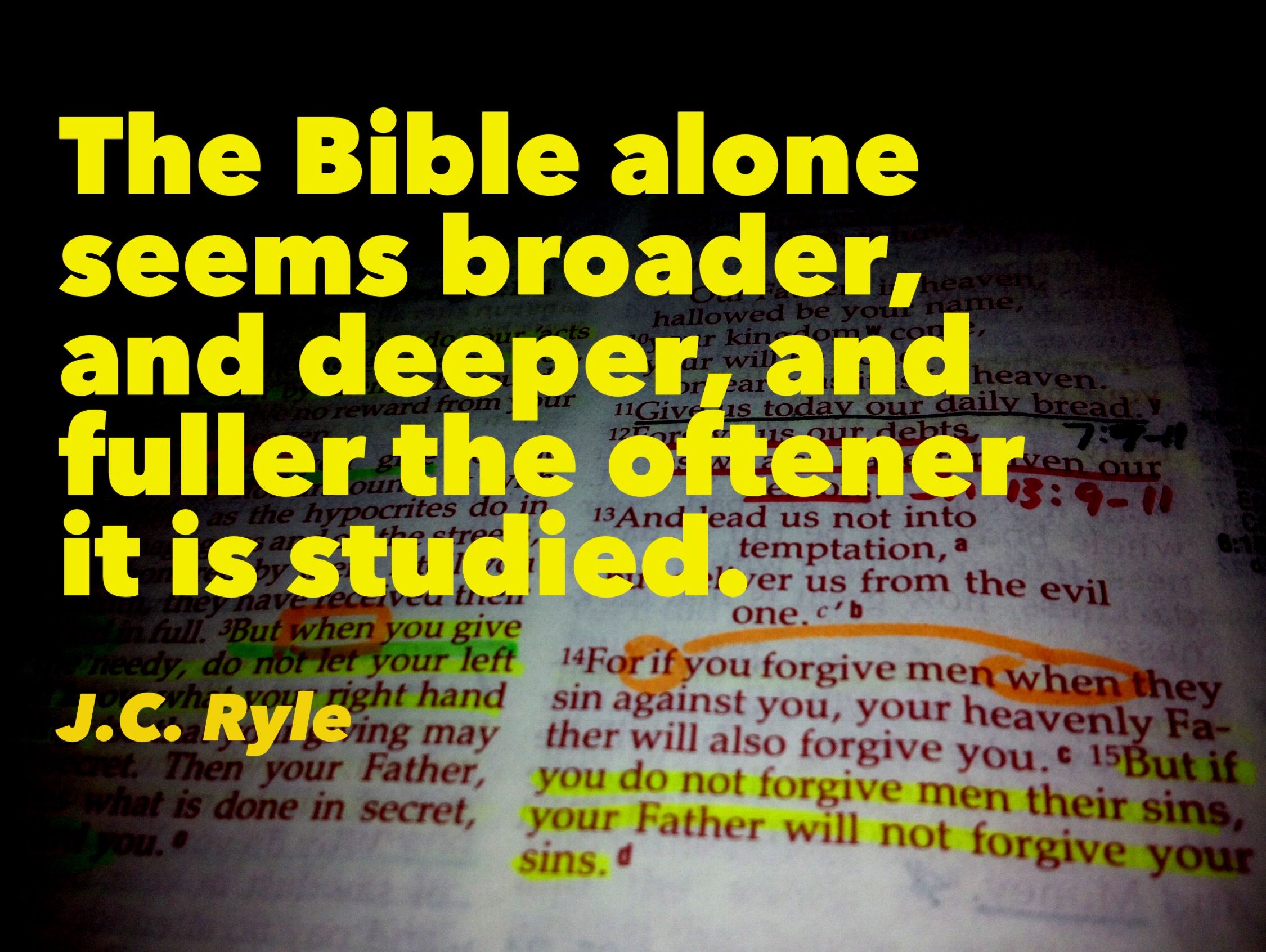
“The Bible alone seems broader, and deeper, and fuller the oftener it is studied. We have no need to look for allegorical and mystical meanings. The fresh truths that will constantly spring up before our eyes are simple, plain, and clear. Of such truths the Bible is an inexhaustible mine. Nothing can account for this but the great fact that the Bible is the Word, not of man, but of God.” —J.C. Ryle
I thought I’d share with you some of the current Bible study tools I’m utilizing—
I am reading through the Bible on YouVersion’s plan called As It Happened. This takes you through the Scripture in chronological order.
Along with this chronological plan, I have also subscribed to the daily devotional called Missionary God—Missionary Bible. This comes as a daily email from premier missiologist Dick Brogden, and follows the readings of the chronological Bible.
I am reading through the John Maxwell Leadership Bible, where events and characters are studied through a leadership lens.
Allow me to introduce myself in the Aramaic fashion—I am Craig bar Raymond. I am proud of my father and want my name to always be associated with his, so I remember my heritage by telling people I am Craig son of Raymond.
If I wanted to be a little more formal I might introduce myself as Craig Bar Raymond Bar Colson, or even Craig Bar Raymond Bar Colson Bar Walker, to honor my forefathers back four generations.
People took great pride in their family heritage. They wanted to keep their connection to their family and their tribe intact and known to those around them. It’s how they kept their standing in their community.
That’s why it’s odd that Luke—the premier historian that he is—introduces us to a man he simply calls “a blind man” in the city of Jericho. Luke was always so precise in mentioning names throughout both his Gospel and the Book of Acts, and it appears that this man does have a name. In the Gospel of Mark he is called Bartimaeus, and presumably Luke used Mark as one of his source documents. So why would Luke omit this guy’s name?
Keep in mind that “bar” simply means “son of,” so although Mark calls him Bartimaeus, his name is really something like “_________ son of Timaeus.” Is that because he was born blind and his parents didn’t even name him? Or was he thought so little of that people couldn’t remember his first name? Maybe it’s because Timaeus means unclean, defiled, polluted. So this blind beggar is really just the Anonymous son of Filth!
This beggar is looking for alms in Jericho when he hears a commotion. He asks what is happening and is told, that Jesus of Nazareth is passing by.
This man knows the reputation of Jesus, recalling that He has even opened blind eyes. Immediately he shouts, “Jesus, son of David have mercy on me!” Son of David is a title only used twice in the New Testament (also see Matthew 15:22), and both times by desperate people who wouldn’t take “no” for an answer.
Actually, his phrase is in the form of a command, so he really says, “Jesus, son of David, have mercy on me NOW!”
“Who do you think you are, you nameless beggar,” the townspeople rebuke him. “How dare you demand anything of anyone! Shut your mouth, you worthless piece of filth!”
Undeterred, this man now raises his voice to a shriek and repeats, “JESUS, SON OF DAVID, HAVE MERCY ON ME NOW!”
This shriek gets Christ’s attention and He stops dead in His tracks. He commands that this man be brought to him.
Check out the confidence this blind man shows—he throws his cloak aside to get to Jesus. Why is that significant? Because he’s blind! If he can’t see, how is he going to find his cloak again? Who would ever want to help him?
Jesus asks him, “What do you want me to do for you?” He was testing him: did he want a hand-out? did he want revenge on the cruel people in Jericho? did he want to get back at his parents?
He specifically prays, “I want to see.” Jesus is moved by compassion (Matthew 20:34) and says, “Your faith has made you whole.” The blind man immediately is healed!
What was his faith that healed him? It was a loud, insistent, persistent, won’t-take-no-for-an answer, audacious request. The crowd said he was asking too much, but Jesus was moved to compassion by his insistence and boldness and answered his prayer.
That community may have forgotten that man’s name. Maybe the blind man had even forgotten his own name. But God hadn’t!
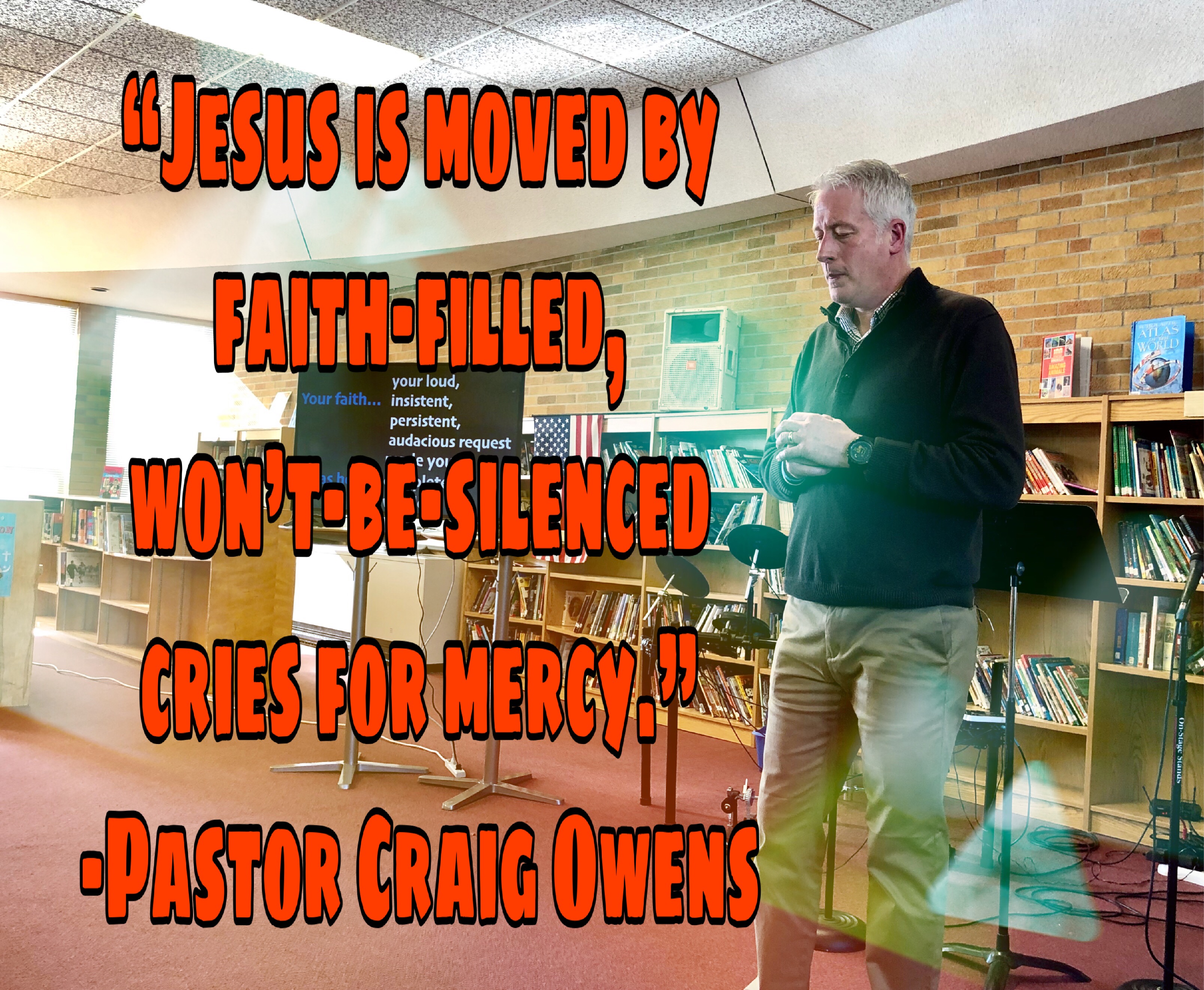
Jesus is moved by faith-filled, won’t-be-silenced cries for mercy. He wants to answer your specific requests. You aren’t an anonymous son or daughter of filth. You aren’t marginalized, worthless, or overlooked by your Heavenly Father.
God knows your name. He knows your need. He is passing by. Cry out to Him again and again and again! When He answers your prayer, you are made whole and our Heavenly Father is glorified.
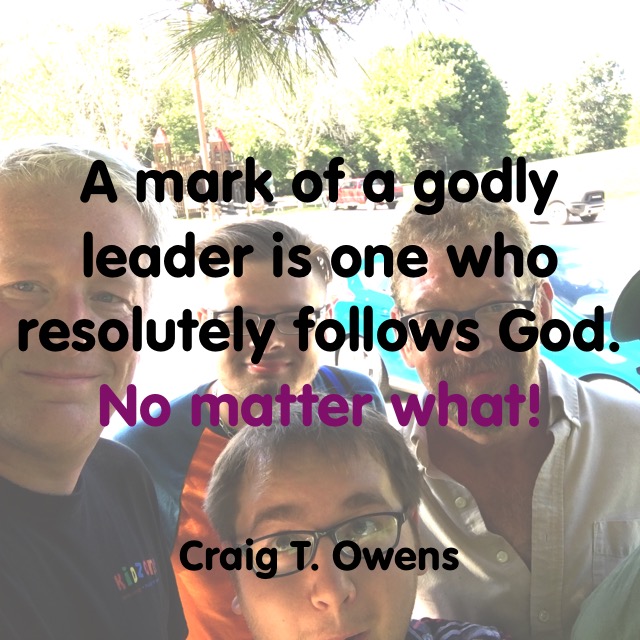
A mark of a godly leader is one who resolutely follows God. No matter what!
Jesus calls His followers to the same path He walked—“No one who puts a hand to the plow and looks back is fit for service in the kingdom of God” (Luke 9:62)
It’s hard because people reject a resolute man.
It’s hard because the accommodations along the way are uncertain.
It’s hard because I have to give up my right to myself.
But the reward is incomparable—Heaven forever with Jesus!
This is part 33 in my series on godly leadership. You can check out all of my posts in this series by clicking here.
Steve Martin had a comedy routine where he said, “I will tell you how to have a million dollars and never pay one cent of income tax on it. First, get a million dollars.” 😂
Solomon says something in Proverbs 4 that on the surface sounds just as comical: “I will tell you how to have wisdom and reap all the amazing benefits from it. First, get wisdom.”
Here’s what he wrote: “The beginning of wisdom is: Acquire wisdom; and with all your acquiring, get understanding” (v. 7).
The Hebrew word for “get” means acquire, create, buy, possess. But Solomon uses this verb in the imperative sense—which means it’s not a suggestion, but a command! He doesn’t say, “It’s a good idea to get wisdom,” but, “There is no other way: you must have wisdom.”
Throughout the Proverbs, Solomon personifies wisdom as Lady Wisdom. She is constantly calling out to people, “I have what you need. Come and get it.” James tells us the same thing, “If you need wisdom, ask God for it” (see James 1:5).
So… how does one get wisdom? Simply by wanting to have wisdom, and then going to the right source. In the rest of Proverbs 4, Solomon echoes the same thought—
—“Prize her [Wisdom], and she will exalt you; she will honor you if you embrace her.” (v. 8)
—“Take hold of instruction; do not let go. Guard her, for she is your life.” (v. 13)
—“My son, give attention to my words; incline your ear to my sayings. Do not let them depart from your sight; keep them in the midst of your heart.” (vv. 20, 21)
—“Watch over your heart with all diligence, for from it flow the springs of life.” (v. 23)
How do you get wisdom? You go to Wisdom and get what she has to offer!
Have you ever been in the right place at the right time to experience something wonderful? Maybe you got to meet someone important, or you got the job, or you got the money, or you got to ride in that fancy car.
Some will call you “lucky” or say you “caught a break,” but both of those statements imply that something unexpected happened to you.
Is it still “lucky” to be in the right place at the right time if you knew ahead of time that it was coming? For praying Christians, to be in the right place at the right time when we are expecting God to provide is called “an answer to prayer.”
David prayed, “In the morning, Lord, You hear my voice; in the morning I lay my requests before You and wait expectantly” (Psalm 5:3). The Aramaic word for prayer means “to set a trap.” If we pray, and we live in expectation, then it isn’t luck when we’re in the right place at the right time, but it’s a “trap” that caught the answer to our prayer.
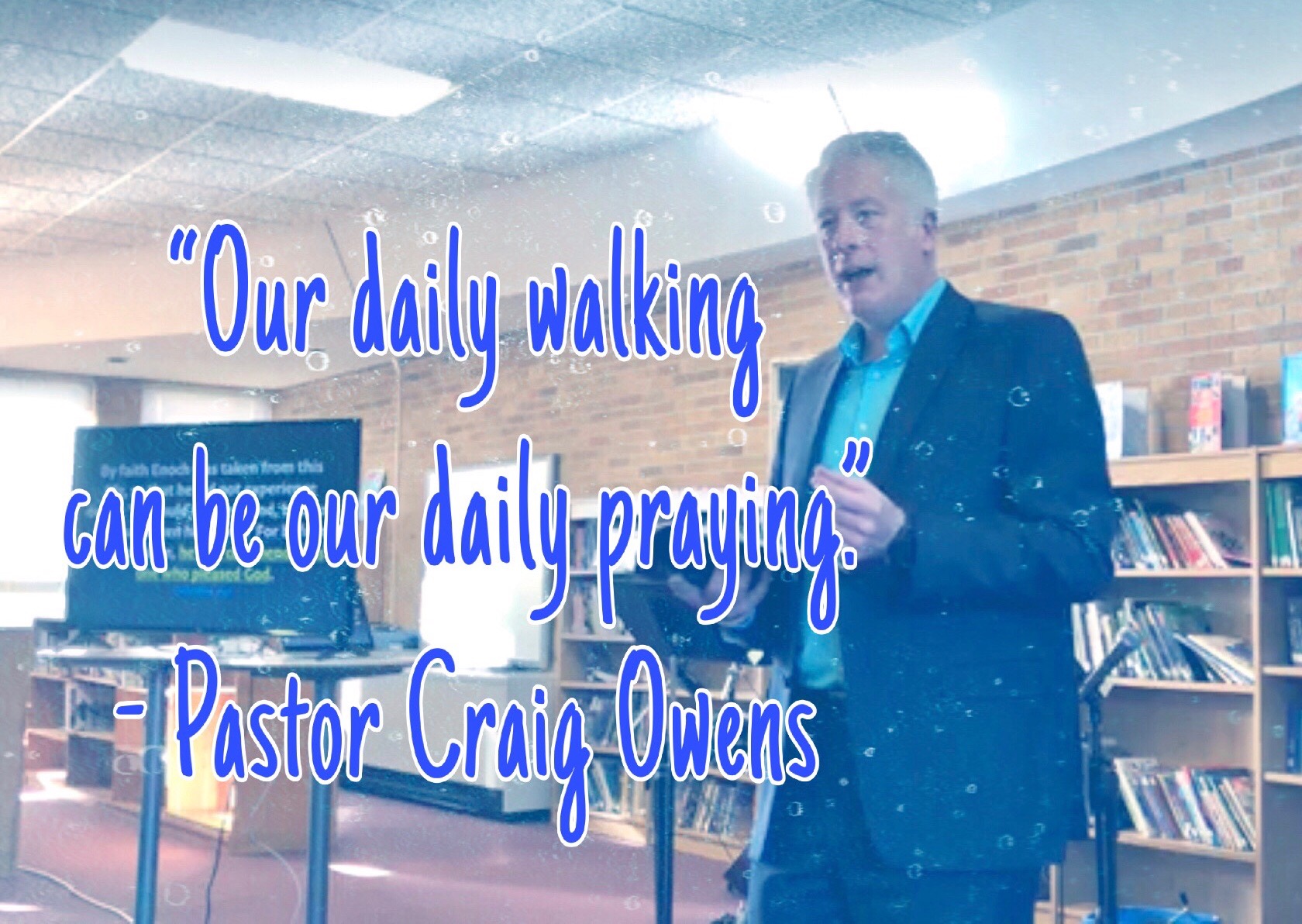
Our daily walking can be our daily praying, as long as we’re walking in faith in the direction God pointed us.
One man who—literally!—walked this principle out was Elisha.
Before we look at Elisha’s expectant, prayerful walking, let’s look at his prayer request—
When they reached the other side, Elijah said to Elisha, “What can I do for you before I’m taken from you? Ask anything.” Elisha said, “Your life repeated in my life. I want to be a holy man just like you” (2 Kings 2:9 MSG).
Elisha was essentially asking to be like Elijah’s firstborn son, to be his spiritual heir. This was the original promise God gave when He told Elijah to anoint Elisha as his successor (1 Kings 19:16). From that point onward, Elisha steadily walked in expectation of God answering this prayer.
Elisha wouldn’t stay in a place of military victory, or in a significantly spiritual place, or even in a place surrounded by godly leaders. Elisha wouldn’t be held back by a lucrative family business, or the warning words of friends or his spiritual mentor, or even the seemingly uncrossable Jordan River. He kept on walking (see 2 Kings 2:1-15).
He kept on walking.
He kept on walking until “suddenly” God showed up and answered his prayer.
But was it really “suddenly”? Elisha knew it was coming. He believed what God had promised. He clung to it even when Elijah told him he had asked “a difficult thing.” Elisha kept on walking until he was in the right place at the right time to receive all that God had planned.
If you have prayed in faith, start walking. Settling anywhere else is robbing yourself of a blessing and robbing God of glory.
Just keep walking! And let your walking be your praying.Don’t get discouraged. Don’t settle. Don’t stop eagerly expecting that the next step you took could be the “suddenly” you’ve been waiting for. Just keep walking!
Join me this Sunday as we learn a valuable lesson from another bold pray-er from the Bible.
This is a weekly series with things I’m reading and pondering from Oswald Chambers. You can read the original seed thought here, or type “Thursdays With Oswald” in the search box to read more entries.
What Is Mammon?
You cannot serve God and Mammon [Matthew 6:24]. A man of the world says we can; with a little subtlety and wisdom and compromise (it is called diplomacy or tact), we can serve both. The devil’s temptation to our Lord to fall down and worship him, i.e., to compromise, is repeated over and over again in Christian experience. We have to realize that there is a division as high as heaven and as deep as hell between the Christian and the world. ‘Whosoever therefore will be a friend of the world is the enemy of God’ [James 4:4]. …
Never compromise with the spirit of Mammon. When you are right with God, you become contemptible in the eyes of the world. Put into practice any of the teaching of the Sermon on the Mount and you will be treated with amusement at first; then if you persist, the world will get annoyed and will detest you. … What is Mammon? The system of civilized life which organizes itself without considering God. …
When we become mature in godliness God trusts His own honor to us by placing us where the world, the flesh, and the devil may try us, knowing that ‘greater is He that is in you than he that is in the world’ [1 John 4:4].
From Studies In The Sermon On The Mount
Mammon wants to get what it wants to get, without considering God and without regard to the long-term consequences. Mammon wants satisfaction right now!
Mammon is the system of the world. People are constantly driven by what they can get for themselves right now, with little—if any—thought to what God thinks or to what the inevitable outcome is going to be.
A Christian is different.
A Christian is focused on something which cannot be seen right now. But just because the rewards cannot be seen doesn’t make them any less real. In fact, Jesus teaches that the rewards He gives are Reality itself.
When a Christian insists on doing things God’s way, the devil will sneer and people will laugh. But God’s Spirit in you is greater than all of that, and He will help you to stand firm in Him, not compromising with the lure of Mammon.



 Taking a journey with a tour guide who knows the terrain and the customs is always so much more rewarding than simply following the directions of some far-removed travel agent. In journeying through the four Gospels of the New Testament, a premier tour guide is close by in Kenneth Bailey and his book Jesus Through Middle Eastern Eyes.





 Craig T. Owens