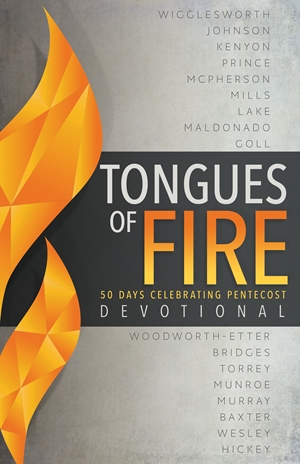
I am blessed to be the son of Pentecostal parents; and both of my parents come from Pentecostal parents too, as well as two Pentecostal great-grandmothers. That makes me a fourth-generation “holy roller”! But my Pentecostal heritage actually goes back farther than that, which made reading Tongues Of Fire such an enjoyable read.
This book is billed as a 50-day devotional, with excerpts from sermons and writings of some of the best-known Pentecostals of the last 150 years. Yes, there are some “newcomers” that have some essays in this book as well, but I found the real substantive, enlivening writings to be from those old-timers.
One of those old-timers said, “The Spirit is the first power we practically experience, but the last power we come to understand” (Oswald Chambers). How sadly true that so many Christians dig no deeper after their moment of conversion!
It took me much longer than 50 days to read through these devotionals because I spent time pondering the messages and introspecting on their application to my life.
Whether you are a seasoned Pentecostal, a newcomer, or someone simply hungry for more of God’s Spirit to be manifested in your life, you will enjoy diving into Tongues Of Fire.
A mark of a maturING saint is one who when he realizes he is in a trough begins to praise God in anticipation of the blessings which are coming! Even the most mature Christian you know hasn’t “arrived”; we are all a work-in-progress. Going through the dark nights is one way God helps mature our understanding of contentment.
You know the differences between a need and a want: a need is something vital, something I require to survive; a want is something that would be nice to have.
In good times I can convince myself that my wants are really the same as my needs. In the bright, sunny times a lot of wants mistakenly get called needs. But in the dark nights, this confusion is quickly clarified!
In Philippians 4, Paul explains what he has learned about needs as he went through some very challenging, dark times. When he says he knows what a need is, he isn’t exaggerating a bit (see 2 Corinthians 11:24-28). And yet the Amplified Bible has Paul saying, “Not that I am implying that I was in any personal want.”
That’s because Paul was learnING contentment. The verb tense here means I have learned, I am learning, and I will keep on learning. It was an ongoing process that helped him clarify needs from wants. The word Paul uses for content is unique in all the New Testament and it means independent of external circumstances, or as the Amplified Bible says, “satisfied to the point where I am not disturbed or disquieted in whatever state I am.”
Paul uses another unique word in verse 12 when he says “I have learned.” This is a different Greek word from the previous verse. This time it means disciplined by experience to know how to respond. In other words, Paul disciplined himself to reflect on the lessons he learned in the night. The cliche “Experience is the best teacher” isn’t necessarily true. Lots of people go through experiences and never learn a single thing. Instead, we should say, “Evaluatedexperience is the best teacher.” That’s exactly what Paul is saying here: “I have learned lessons in my time of meditation after going through a dark night.”
The English dictionary defines contentment in two important phrases:
Satisfied with what I have. In Psalm 16, David learned that he had everything he needed in God, and Jesus reminded us that “your Father knows what you NEED before you ask Him” (Matthew 6:8).
Satisfied with who I am. Paul knew that “God, who set me apart from my mother’s womb and called me by His grace, was pleased” (Galatians 1:15). God made Paul on purpose and for a purpose, and Paul was satisfied with who he was in Christ. God made you on purpose too!
Our relationship with Jesus is a maturING one. It’s only IN Christ that I can be satisfied with what I have, and satisfied with who I am. It’s only IN the night that my wants get separated from my needs, by learnING contentment.
I can be thankful in the night because I am learning contentment.
This is a weekly series with things I’m reading and pondering from Charles Spurgeon. You can read the original seed thought here, or type “Thursdays With Spurgeon” in the search box to read more entries.
Not Carried Away
He will glorify Me, for He will take of what is Mine and declare it to you. All things that the Father has are Mine. Therefore I said that He will take of Mine and declare it to you. (John 16:14-15)
[The Holy Spirit] does not aim at any originality. … The Spirit takes of the things of Christ and of nothing else. Do not let us strain at anything new. The Holy Spirit could deal with anything in heaven above or in the earth beneath—the story of the ages past, the story of the ages to come, the inward secrets of the earth, the evolution of all things, if there is an evolution. He could do it all! Like the Master, He could handle any topic He chose, but He confines Himself to the things of Christ and therein finds unutterable liberty and boundless freedom. …
When, therefore, anybody whispers in my ear that there has been revealed to him this or that, which I do not find in the teaching of Christ and His apostles, I tell him that we must be taught by the Holy Spirit. … If we do not remember this, we may be carried away by quirks, as many have been.
From Honey In My Mouth
How many arguments have devastated people, how many friendships have been lost, how many churches have split because of a clinging to doctrines which aren’t found in the Bible?! How this must break our Father’s heart!
Quite simply put: we argue and take sides over things on which the Word of God makes no distinction. Oh, foolish pride!
The Holy Spirit never reveals a unique or private or exclusive word to anyone. He only makes clear what has already been revealed in the Word of God. Does that mean we cannot have an opinion on something? Of course not!
But love for Christ and for His Bride means that my opinions must never become my doctrines.
Holy Spirit, help me to listen to Your voice alone as You illuminate what has already been inspired. Jesus, may Your love for the Church be my love for the Church. Root out this accursed pride in my heart that makes me fight for my opinions. Father, may You be glorified in Your Church as we are unified around Your revealed truth.
This is a weekly series with things I’m reading and pondering from Charles Spurgeon. You can read the original seed thought here, or type “Thursdays With Spurgeon” in the search box to read more entries.
Honey In My Mouth
He will glorify Me, for He will take of what is Mine and declare it to you. All things that the Father has are Mine. Therefore I said that He will take of Mine and declare it to you. (John 16:14-15)
So we actually receive, through Jesus Christ, by the Spirit, what is in the Father!
Ralph Erskine, in the preface to a sermon upon the fifteenth verse, has a notable piece. He speaks of grace as honey for the cheering of the saints, for the sweetening of their mouths and hearts. But he says that in the Father, ‘The honey is in the flower….’ In the Son, ‘the honey is in the comb…. But then we have honey in the mouth. That is the Spirit taking all things and making application of them, by showing them to us and making us to eat and drink with Christ and share of these things….’
From Honey In My Mouth
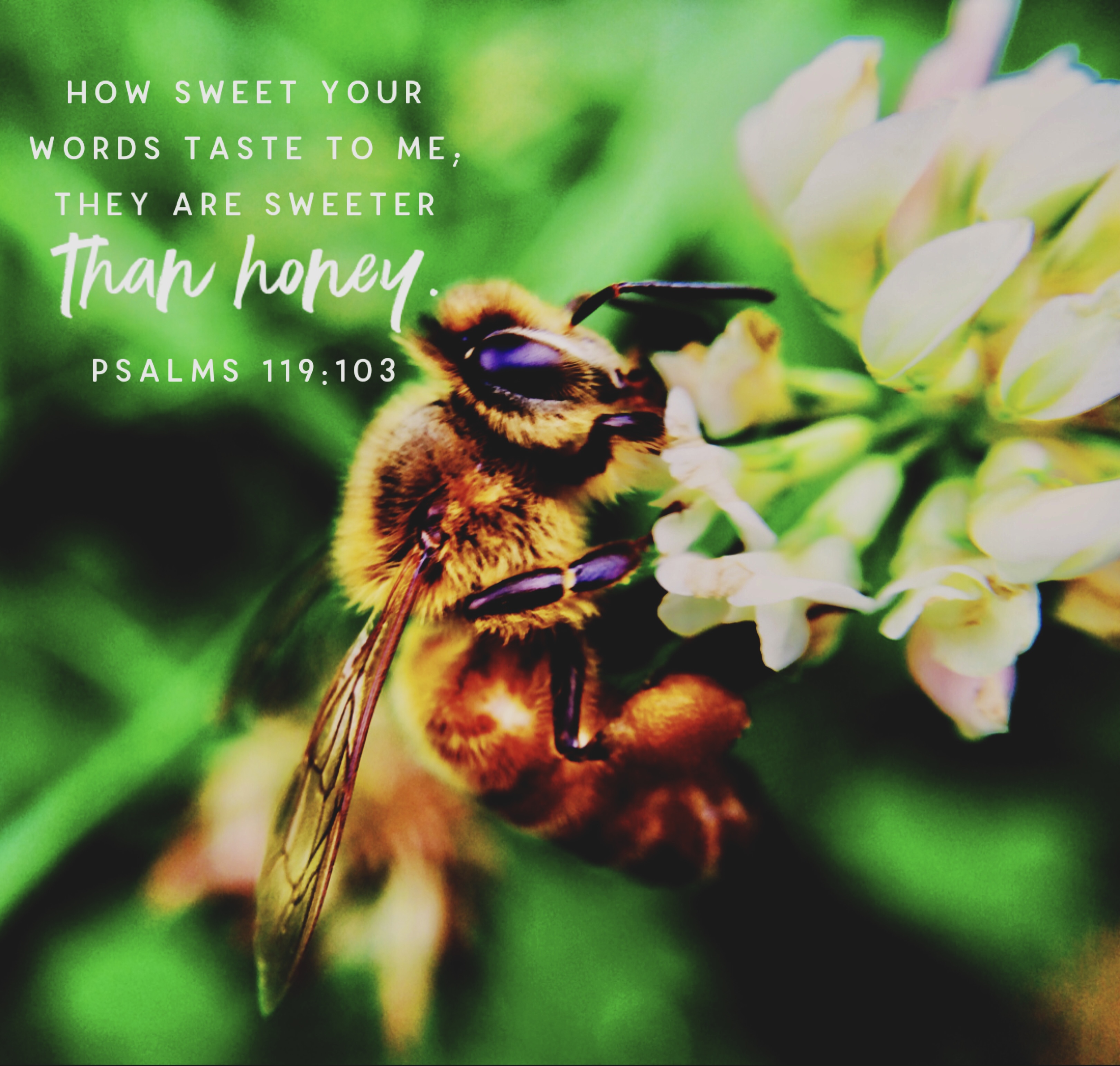
My grandfather had honeybees on his farm and I was fascinated by them. So much so that in my ecology class in college, I wrote my final research paper on the fascinating inner workings of the honeybee hive. My grandfather would often plant various crops so that the nectar from those flowers would give a distinct flavor to the honey.
The nectar of a flower has everything in it to make honey except for one thing: a honeybee’s care. The nectar has to be transported back to the hive where it then undergoes the process of being transformed into honey—precise temperatures, storage, and evaporation processes are perfectly overseen by the bees until edible honey emerges.
Ralph Erskine’s analogy of this nectar-to-honey process is very apropos to the things of God. Our Heavenly Father said that His thoughts are higher than our thoughts: they are inaccessible by our finite human minds (Isaiah 55:8-9). Jesus came as the revelation of all of the things of the Father, declaring to us all that God has for us. Jesus added, “I still have many things to say to you, but you cannot bear them now” (John 16:12), which is why the Holy Spirit illuminates the inspired Word of God.
Do you see the whole Trinity active in this process? The Father creates, the Son reveals, and the Spirit makes accessible (or, if you will, the Spirit makes edible).
The Holy Spirit not only makes the things of God edible to us, but He gives us new tastebuds. No longer will the things of the world satisfy our tastes, no longer will we find any satisfaction in them, no longer will those earthly things nourish us. What the Father has created, and the Son has revealed, the Spirit will make real—and delicious!—to us.
Some people mistakenly think that the maturity of a Christian is a steady climb, and anything short of that is not God-honoring. They feel the graph has to always be moving up and to the right. In reality—if we zoom in—we will see lots of peaks and troughs that are in the climb.
For instance, we read the worship leader of Psalm 42 saying, “By day the Lord directs His love, at night His song is with me—a prayer to the God of my life,” and we think, “Yeah, that’s what I expect from a saintly psalmist!”
But let’s get the context. In the opening verses, this same worship leader talks about his profound thirst, his tears, and the taunts of his enemies. Twice in this psalm, he laments, “Why are you so downcast, O my soul? Why so disturbed within me?”
Many people have gone through what has been called “the dark night of the soul.” I doubt anyone has ever given thanks because of those dark times, but they have learned to give thanks during those dark times.
Consider David’s beautiful words in Psalm 23. He points out that the Good Shepherd leads us into green pastures AND into dark valleys, beside quiet waters AND into the presence of enemies.
But notice this: the Shepherd of our soul provides what we need in both daytime AND nighttime. He pours out blessings in the presence of our enemies, and as my grandfather wrote in the margin of his Bible next to verse 4, “Where there is shadow there must be light.”
Consider the example of Paul who wrote to the Philippians, “Rejoice in the Lord always. I will say it again: Rejoice!” (4:4). He wrote this to the church that was birthed by Paul’s miraculous deliverance from prison, while Paul and Silas were doing just that: Praying and singing hymns to God!
In The Screwtape Letters, C.S. Lewis gives us insight into how the demons view the temptation of Christians. Uncle Screwtape wrote to his nephew, “It may surprise you to learn that in God’s efforts to get permanent possession of a soul, He relies on the troughs even more than on the peaks; some of His special favorites have gone through longer and deeper troughs than anyone else. … It is during such trough periods, much more than during the peak periods, that the human is growing into the sort of creature He wants it to be. Hence the prayers offered in the state of dryness are those which please Him best.”
A mark of a maturing saint is one who when he realizes he is in a trough begins to praise God in anticipation of the blessings which are coming!
Don’t feel like you need to praise God FOR your troughs, but you can and should praise Him BECAUSE of His presence even in your driest, darkest trough. God is doing something in this trough time that He could accomplish in no other way. As David said, our Good Shepherd leads us in both sunlit and dark paths “for His name’s sake”—He will be glorified and you will be rewarded!
How did Nahum respond to this word of judgment God spoke through him? His opening words say, “The burden against Nineveh. The book of the vision of Nahum the Elkoshite” (NKJV). The Hebrew word for “burden” is almost always associated with a word God has spoken. It’s a realization of God’s weighty glory; it’s never, ever something we should trivialize!
Prophets don’t just prophesy future events, they also announce in the present tense where people have departed from a lifestyle that robs God of His glory and how they can be forgiven of sins.
“The prophets foretell (speak to what will happen in the future) and forth-tell (speak to what we should be doing in the present), both in the light of God’s heart for His own glory among all peoples of the world.” —Dick Brogden
God never makes idle threats nor empty promises. Truly His Word is His bond. Through Nahum, God foretold that Assyria would be utterly destroyed, twice saying, “I am against you” (Nahum 2:13-3:7).
The world may rejoice at God’s justice on evil (3:19), but how does God feel about carrying out His judgment? Ezekiel records God saying, “Do I take any pleasure in the death of the wicked,” declares the Sovereign Lord. “Rather, am I not pleased when they turn from their ways and live?” (Ezekiel 18:23)
And Jesus declared, “For God so loved the world that He gave His one and only Son, that whoever believes in Him shall not perish but have eternal life. For God did not send His Son into the world to condemn the world, but to save the world through Him.” (John 3:16-17)
The Bible shows that when I sin, God’s first response is not anger toward me but broken-hearted grief. This is the message that must be both foretold and forth-told by Christians.
“But what can I do,” you might ask. “I’m just one person. I’m not a big-time evangelist.” That sounds a lot like Nahum. He was just a guy from Elkosh—no special family lineage, no large city to claim as his home.
Foretelling God’s judgment is a burden. Forth-telling God’s forgiveness is a joy. All Christians have been given the joyful burden of this both-and ministry!
This is a weekly series with things I’m reading and pondering from Charles Spurgeon. You can read the original seed thought here, or type “Thursdays With Spurgeon” in the search box to read more entries.
The Holy Spirit Is Our Teacher
The question arises: How may I know whether I am enlightened by the Spirit’s influence and led into all truth? First, you may know the Spirit’s influence by its unity. He guides us into all truth. Second, by its universality. He guides us into all truth. …
The true child of God will not be led into some truth but into all truth. When he first starts he will not know half the truth. He will believe it but not understand it. He will have the germ of it but not the sum total in all its breadth and length. There is nothing like learning by experience. A man cannot set up for a theologian in a week. Certain doctrines take years to develop themselves. …
It needs but little intellect to be taught of God. If you feel your ignorance, do not despair. Go to the Spirit, the great Teacher, ask His secret influence, and it will come to pass that He will guide you into all truth. …
Whenever any of our brethren do not understand the truth, let us take a hint as to the best way of dealing with them. Do not let us controvert with them. I have heard many controversies but never heard of any good from one of them. … Few men are taught by controversy, for ‘a man convinced against his will is of the same opinion still.’ Pray for them that the Spirit of truth may lead them into all truth. Do not be angry with your brother, but pray for him. Cry, ‘Lord! Open his eyes that he may “behold wondrous things from Your law”’ (Psalm 119:18).
From The Holy Spirit: The Great Teacher
The Holy Spirit wants to help us understand the Book that He inspired. Jesus said that the Holy Spirit would guide us into all truth (John 16:13).
Since all of God’s Word is inspired, use all of God’s Word. Don’t get bogged down in a single verse or passage, but ask the Spirit to show you the full counsel of the Bible.
Learn how to handle difficult passages in a productive way (check out this post).
Strive for unity among fellow believers.
Avoid controversies among fellow believers and non-believers. Simply present the Word of God and let the Spirit do the work that needs to be done.
May our study of Scripture with the Spirit’s help bring illumination, empowerment, and unity.
This is a weekly series with things I’m reading and pondering from Charles Spurgeon. You can read the original seed thought here, or type “Thursdays With Spurgeon” in the search box to read more entries.
Light In A Dark Cave
Now I must have an illustration. I must compare truth to some cave or grotto that you have heard of, with wondrous stalactites hanging from the roof and others starting from the floor—a cavern, glittering with spar and abounding in marvels. Before entering the cave you inquire for a guide, who comes with his lighted flambeau. He conducts you down a considerable depth and you find yourself in the midst of the cave. He leads you through different chambers. Here he points to a little stream rushing from amid the rocks and indicates its rise and progress. There he points to some peculiar rock and tells you its name. Then he takes you into a large natural hall, tells you how many persons once feasted in it, and so on. Truth is a grand series of caverns. It is our glory to have so great and wise a Conductor. Imagine that we are coming to the darkness of it. He is a light shining in the midst of us to guide us. And by the light He shows us wondrous things. In three ways the Holy Spirit teaches us—by suggestion, direction, and illumination.
First, He guides us into all truth by suggestion. There are thoughts that dwell in our minds that were not born there but that were exotics brought from heaven and put there by the Spirit. It is not a fancy that angels whisper into our ears and that devils do the same. Both good and evil spirits hold converse with men. …
Sometimes He leads us by direction. … The Spirit gives a direction and tendency to our thoughts. Not suggesting a new one but leading a particular thought, when it starts, to take such and such a direction. …
Perhaps the best way in which the Holy Spirit leads us into all truth is by illumination. … Beloved, you may read to all eternity and never learn anything by it, unless the Holy Spirit illuminates it. And then the words shine forth like stars. … Blind men may read the Bible with their fingers, but blind souls cannot. We want a light to read the Bible by; there is no reading it in the dark. Thus the Holy Spirit leads us into all truth by suggesting ideas, by directing our thoughts, and by illuminating the Scriptures when we read them.
From The Holy Spirit: The Great Teacher
A good prayer every time you open your Bible is this: “Open my eyes to see wonderful things in Your Word” (Psalm 119:18).
Sometimes the naming of things gives us an inaccurate picture of the thing being named. For instance, many people think the “old” in Old Testament means outdated or perhaps updated by the “new” in the New Testament. When in fact, both Testaments are needed to give us the full picture of God’s love and glory.
A similar thing happens with the headings “major prophets” and “minor prophets.” It makes it sound like the major prophets have something major to say to us, while we could take or leave the minor messages of the minor prophets.
In reality, they were given these headings simply because of the volume of writing—the five major prophets consist of 182 chapters, whereas the 12 minor prophets only have 67 chapters. The volume of their writing may be minor, but their content carries major messages of meteoric power!



 I am blessed to be the son of Pentecostal parents; and both of my parents come from Pentecostal parents too, as well as two Pentecostal great-grandmothers. That makes me a fourth-generation “holy roller”! But my Pentecostal heritage actually goes back farther than that, which made reading Tongues Of Fire such an enjoyable read.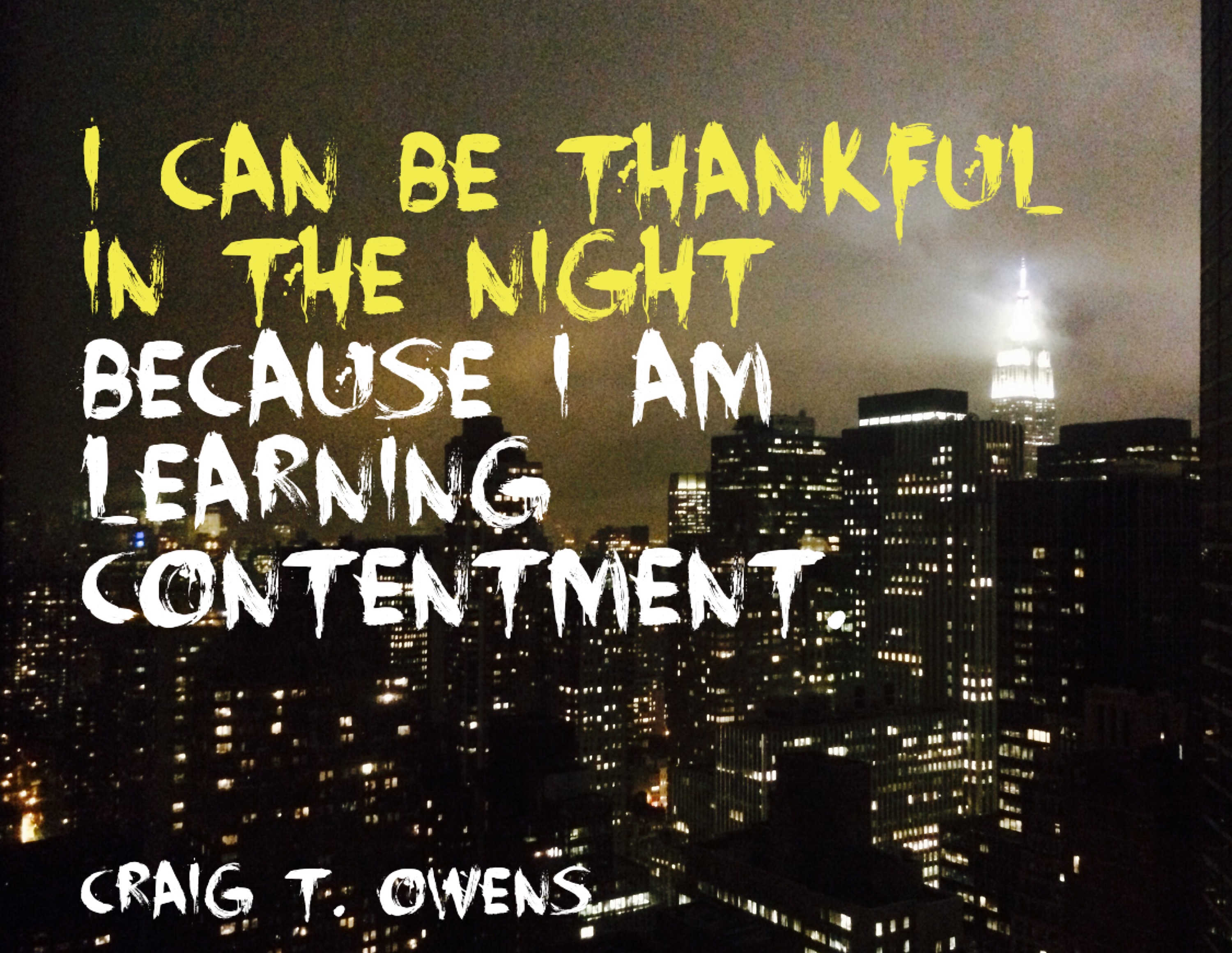








 Craig T. Owens