Doug Clay, the General Superintendent of the Assembly of God wrote, “Our nation needs revival!
“Culture may well be at a deeply dark moment, but that’s when the Church can shine the brightest as Christ’s witness to the world. I’m reminded of Romans 8:19 (Message), ‘The created world itself can hardly wait for what’s coming next.’
“A.W. Tozer once said, ‘The world is waiting to hear an authentic voice, a voice from God—not an echo of what others are saying, but an authentic voice.’ Let’s rise and be that authentic voice to a generation that is desperately in need.”
“What satan put into the heads of our remote ancestors was the idea that they could ‘be like gods’—could set up on their own as if they had created themselves—be their own masters—invent some sort of happiness for themselves outside God, apart from God. And out of that hopeless attempt has come nearly all that we call human history—money, poverty, ambition, war, prostitution, classes, empires, slavery—the long terrible story of man trying to find something other than God which will make him happy.” —C.S. Lewis
Meet Piper. She was abandoned with her mother and one other sibling. The mother then left the two kittens behind, who were hiding in a storm pipe. We were able to rescue this little calico and named her Piper as a reminder of where she was rescued from.
Physicist Brian Cox discusses where God fits into scientists’ understanding of the universe. Two statements that are interesting to me—“we don’t know all the laws of science” (at 1:17), and “science is only an observational framework” (at 2:40). Both of these statements fit well with my biblical creationist paradigm.
“It were a good strife amongst Christians, one to labor to give no offense, and the other to labor to take none. The best men are severe to themselves, tender over others.” —Richard Sibbes
Listen to the podcast of this post by clicking on the player below, and you can also subscribe on Apple, Spotify, or Audible.
C.S. Lewis, like many atheists, wondered if the God of the Bible might be an egomaniac because He is always encouraging people to praise Him. In his book Reflections on the Psalms, Lewis wrote a thoughtful response to this after he had become a Christian:
“Just as men spontaneously praise whatever they value, so they spontaneously urge us to join them in praising it. ‘Isn’t she lovely? Wasn’t it glorious? Don’t you think that magnificent?’ … I think we delight to praise what we enjoy because the praise not merely expresses but completes the enjoyment; it is its appointed consummation. It is not out of compliment that lovers keep on telling one another how beautiful they are; the delight is incomplete till it is expressed. … This is so even when our expressions are inadequate, as of course they usually are. But how if one could really and fully praise even such things to perfection—utterly ‘get out’ in poetry or music or pain the upsurge of appreciation which almost bursts you? Then indeed the object would be fully appreciated and our delight would have attained perfect development. The worthier the object, the more intense this delight would be.”
His phrase, “our expressions are inadequate” is especially true when we are attempting to appreciate and praise the Infinite, the Eternal, the Omnipresence, the Omnipotence of our God and Savior! But the biblical authors call for Christians to mature in this—we want to keep praising, keep expressing, until we finally find the perfect fulfillment in His presence.
Paul talks about the maturing nature of love—when I was a child, I talked like a child, I thought like a child, I reasoned like a child (1 Corinthians 13:11)—but then he prays for us to grow in both our understanding and our expressions of our Savior’s love (Ephesians 1:17-19).
I like the wording of Ephesians 1:19 in the King James Version: the exceeding greatness of His power to us-ward. The word “exceeding” means God pours out in a way that is beyond human imagining. The Greek word that Paul uses for “greatness” is only used here, and it reinforces the truth that God is beyond our full comprehension. And then Paul adds that this overflowing, incomparable power is directed “to us-ward”!
Paul then prays for us to be able to understand ever-increasing new dimensions of this transcendent power and ability that God directs to us through His Son Jesus, and for us to be able to express it (Ephesians 3:14-19). In other words, we are to grow in our experience of Jesus so that we can grow in our praise to Jesus.
The incomparable Jesus means at least four things for us. It means Jesus is…
…beyond comparison. Isaiah, God Himself, and the psalmists ask rhetorically, “Who is like God? Who could ever compare to Him?” (Isaiah 40:13-14, 18, 25; Psalm 89:5-8).
…matchless in His power. Isaiah 40:12 says God holds the waters of the world in the hollow of His hand. How much water is this? Scientists estimate the Earth’s water supply to be 326 quintillion gallons of water (that’s 326 followed by 18 zeros)! Not only does God hold all of the water, but He directs its activities on behalf of His children (Exodus 15:11-13).
…unequaled in knowledge.Isaiah 40:12, 26 tell us that all of the stars in our universe fit onto God’s outstretched hand, and that He knows all of the stars by name. How many stars is this? Astronomers calculate the heavens to contain 10 septillion stars (that’s 10 followed by 24 zeros)! Not only does God know each star by name, He knows each human by name, and thesmallest of details about each of them (Isaiah 49:16; Matthew 10:29-31).
…inimitable in His care. We humans can get to the end of our strength, but God never does. He cares for us unlike anyone else or anything else ever can (Isaiah 40:28-31). The Lord hears His people when they call to Him for help. He rescues them from all their troubles (Psalm 34:17).
Knowing we have a Savior like this, why would you ever settle for anything less The Genuine?!
Our incomparable Jesus wants us to pray in His incomparable name so that our incomparable Father can answer in a way that brings Him incomparable glory! We’re helped, He’s lifted up, and others are drawn to Him.
Listen to the podcast of this post by clicking on the player below, and you can also subscribe on Apple, Spotify, or Audible.
I love reading, and I love sharing my love of good books with others! Here is a list of the books I read and reviewed in 2021. Click on a title to be taken to that review.
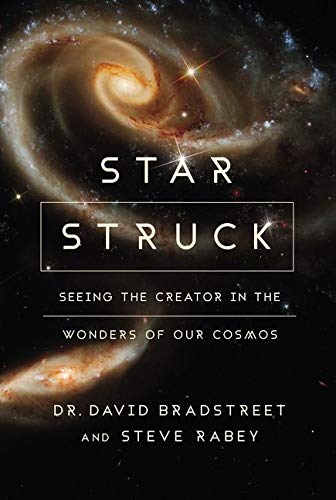
Star Struck by Dr. David Bradstreet is an insightful book for astronomical issues, but I found it lacking in the way he missed multiple opportunities to use the mind-boggling discoveries in astronomy to point to a majestic Creator. Check out my full book review by clicking here.
“Those who study the stars have God for a teacher.” —Tycho Brahe, a sixteenth-century astronomer
“Almost all ancient civilizations believed that the universe had existed forever. Throughout the ancient world there was just one civilization that didn’t subscribe to this cyclical vision of eternity. Jewish Scripture, with the story of the Creation, stated clearly that the world had a beginning.” —Martin Gorst, historian
“Science is great as science, but it makes a lousy religion.” —Guy Consolmagno
“The atoms that so liberally and congenially flock together to form living things on Earth are exactly the same atoms that decline to do it elsewhere.” —Bill Bryson
“Eratosthenes of Alexandria (276–194 BC) “did the math, concluding that the earth was 24,662 miles around. His results were shockingly accurate: within 1 percent of our current estimate of 24,859 miles.” —Dr. David Bradstreet
“The sun is so powerful that we sometimes must shield ourselves from its heat, even after that heat has taken an eight-minute journey to earth, losing a third to half of its radiant energy to the protective atmosphere of our clouds. ‘Nothing is deprived of its warmth,’ says the psalmist (Psalm 19:6).” —Dr. David Bradstreet
“I wanted to become a theologian. For a long time I was restless. Now, however, behold how through my effort God is being celebrated in astronomy.” —Johannes Kepler
“Science keeps religion from sinking into the valley of crippling irrationalism and paralyzing obscurantism. Religion prevents science from falling into the marsh of obsolete materialism and moral nihilism.” —Dr. Martin Luther King, Jr.
“If we study science without Scripture, we risk falling into the ditch of atheistic evolutionism; on the other hand, the study of Scripture separated from God’s laws in nature risks ideologies that misinterpret God and distort His character.” —Timothy Jennings
“Holy Scripture and nature are both emanations from the divine Word.” —Galileo
“God cannot be reduced to the role of a scientific hypothesis.” —Father Georges Lemaître
Interesting astronomical tidbits:
Unlike everyone else in the neighborhood, Venus rotates backwards.
Jupiter rotates on its axis in slightly less than ten hours, faster than on any other planet.
Saturn is twice as far away from the sun, lowering its temperature and stretching out its orbital period to nearly thirty Earth years.
Neptune is so far away that it takes 164 years to orbit the Sun.
Uranus’ North Pole is tipped a whopping 98 degrees to its orbital plane.
Every day our powerful atmospheric shield hijacks some 100 tons of small rocks and other pieces of space stuff heading our way, breaking up and incinerating everything before it can hit us.
Our own Milky Way galaxy is home to more than 200 billion stars. There are more than 200 billion additional galaxies in the cosmos. These galaxies serve as gigantic star factories, each of which has its own 100 to 300 billion stars. Do the math and the numbers are mind-boggling: our Sun is merely one among some 100,000,000,000,000,000,000,000 stars.
Listen to the podcast of this post by clicking on the player below, and you can also subscribe on Apple, Spotify, or Audible.
Because of my science background, I’m always fascinated by the discoveries of scientists that bring glory to God. So I was drawn in especially by the subtitle of Dr. David Bradstreet’s book Star Struck: Seeing The Creator in the Wonders of Our Cosmos.
This book is part autobiographic in how Dr. Bradstreet got into astronomy, part historical as he walks us through the advancements in the study of the heavens, and part devotional as he attempts to tie in biblical passages with these fascinating astronomical discoveries. But for me, this attempt to be all-encompassing didn’t “scratch the itch” that I thought it would when I first saw the subtitle. I think I would have appreciated it more if this were presented as three books: memoir, history, and devotional.
For me, the best part of Star Struck was the history of astronomy. Hearing from an astronomer how his predecessors thought, reasoned, hypothesized, and then presented their findings to an often skeptical world (and usually an even more skeptical church) was quite fascinating. I especially enjoyed some of the many tidbits about stars and planets, particularly the look at our Sun, Earth, and Moon.
I would not, however, recommend this book as a means to understand how astronomy shines such a clear light on the majesty of the Creator seen in the pages of the Bible, as I found that attempt quite lacking.
As a pure astronomy history book, Star Struck is a great read for anyone, from students to adults.
Listen to the podcast of this post by clicking on the player below, and you can also subscribe on Apple or Spotify.
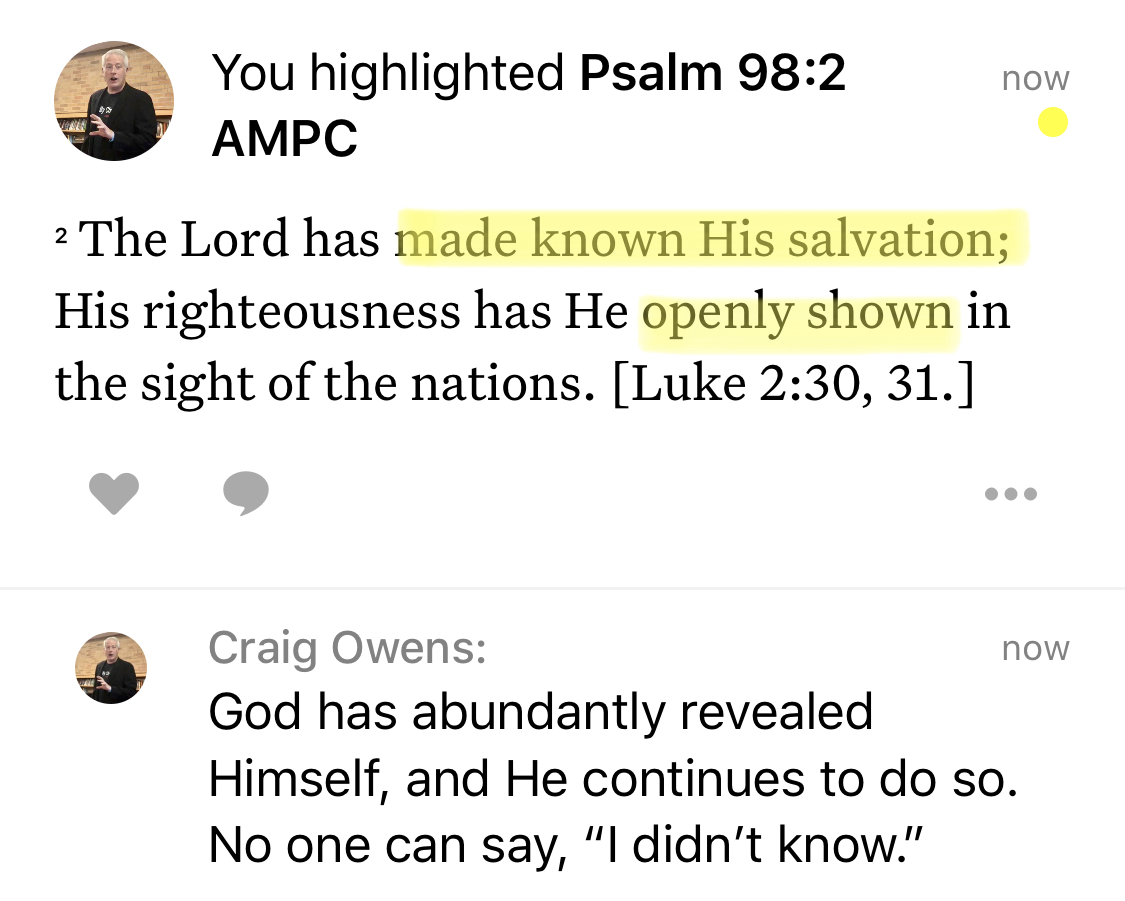
…God has done marvelous things; His right hand and His holy arm have wrought salvation for Him (Psalm 98:1 AMP).
I like The Message paraphrase of this verse too: “Sing to God a brand-new song. He’s made a world of wonders! He rolled up His sleeves, He set things right!”
This psalmist happily extols all of the ways God the Creator has revealed Himself to mankind:
He has done marvelous things
the Lord has made His salvation known
He has revealed His righteousness to the nations
the ends of the earth have seen the salvation of our God
let the sea resound, and everything in it
let the world praise, and all who live in it
let the rivers clap their hands
let the mountains sing together for joy
This tells me how fitting it is for us to use all of the sciences—every “ology” to declare God’s greatness: biology, astronomy, cosmology, chemistry, psychology, anthropology, and even theology. All observations point to the glory of God.
C.S. Lewis wrote,
“If I swallow the scientific cosmology as a whole (that excludes a rational, personal God), then not only can I not fit in Christianity, but I cannot even fit in science. If minds are wholly dependent on brains, and brains on biochemistry, and biochemistry (in the long run) on the meaningless flux of the atoms, I cannot understand how the thought of those minds should have any more significance than the sound of the wind in the trees. And this is to me the final test. … Christian theology can fit in science, art, morality, and the sub-Christian religions. The scientific point of view cannot fit in any of these things, not even science itself. I believe in Christianity as I believe that the Sun has risen not only because I see it but because by it I see everything else.”
The apostle Paul agreed with this psalmist, telling us that creation itself is enough proof that there is a God. But God went further: He gave us His word, He gave us prophets to remind us of His word, and ultimately, He sent His Son Jesus to earth. Paul concluded that “men are without excuse—altogether without any defense or justification” for refusing to believe in God.
Don’t ever buy into the lie that science and Christianity are incompatible. All of the discoveries of science point to a Creator. We use all of these “ologies” because we never know which one may eventually get someone’s attention.
Famed scientist Sir Isaac Newton noted, “In the absence of any other proof, the thumb alone would convince me of God’s existence.”
Let’s join our minds, our hearts, and our voices in declaring the greatness of our Creator at every opportunity we have!
I love reading, and I love sharing my love of good books with others! Here is a list of the books I read and reviewed in 2020. Click on a title to be taken to that review.
Creationists (especially young-Earth creationists) have often been stymied to reconcile the biblical evidence for the creation of Earth with the astronomical evidence of observable stars and universes being billions of light-years away. As D. Russell Humphreys notes in his book Starlight And Time, “Good science requires that we try to reconcile both the young-earth data and the cosmological data.”
So how can both things be true: an Earth that was created 6000 years ago and a distant star appearing to be billions of light-years old? Using the theories of general relativity applied to the best cosmological data, Dr. Humphreys presents a novel hypothesis that appears to accommodate all of the data we have gathered.
The equations of general relativity have always indicated that time itself had a beginning, which means we have to be open to the idea that something outside of Time—outside of our universe—had a hand in the beginning of our universe. Dr. Humphreys does an excellent job of unpacking these equations to show how accurately they end up being in agreement with the biblical account of Creation. In fact, he notes that “as measured by clocks on earth, the age of the universe today could be as small as the face-value biblical age of about 6000 years.”
I’ll admit that physics wasn’t my favorite subject in school. However, after leaving school I was determined to get a better grasp on it, and found myself actually enjoying the studies of physics and cosmology. With my rudimentary grasp of these concepts, I still struggled to conceive the impact of all the equations that Dr. Humphreys laid out, but that didn’t keep me from being astounded at how well his theory fits all the evidence.
The physics equations shouldn’t stop you from picking up a copy of this book either. In fact, if you enjoy creationist apologetics, this book needs to be on your “must read” list.




 Meet Piper. She was abandoned with her mother and one other sibling. The mother then left the two kittens behind, who were hiding in a storm pipe. We were able to rescue this little calico and named her Piper as a reminder of where she was rescued from.