Links & Quotes

When the Holy Spirit shines His light on a biblical promise, and you turn that into a prayer, write it down! You may need to go back to this again and again. When God answers your prayer, write it down again! This can become a testimony journal that you and others can use to recall God’s provision. 

I have a lot of new video content on my YouTube channel every week. Please check it out and subscribe so you don’t miss anything.

“The pathway to maturity and to solid biblical food is not first becoming an intelligent person, but becoming an obedient person.” —John Piper 

“Somehow or other an extraordinary idea has arisen that the disbelievers in miracles consider them coldly and fairly, while believers in miracles accept them only in connection with some dogma. The fact is quite the other way. The believers in miracles accept them (rightly or wrongly) because they have evidence for them. The disbelievers in miracles deny them (rightly or wrongly) because they have a doctrine against them.” —G.K. Chesterton 

“At every moment, we always have a choice, even if it feels as if we don’t. Sometimes that choice may simply be to think a more positive thought.” —Tina Turner 

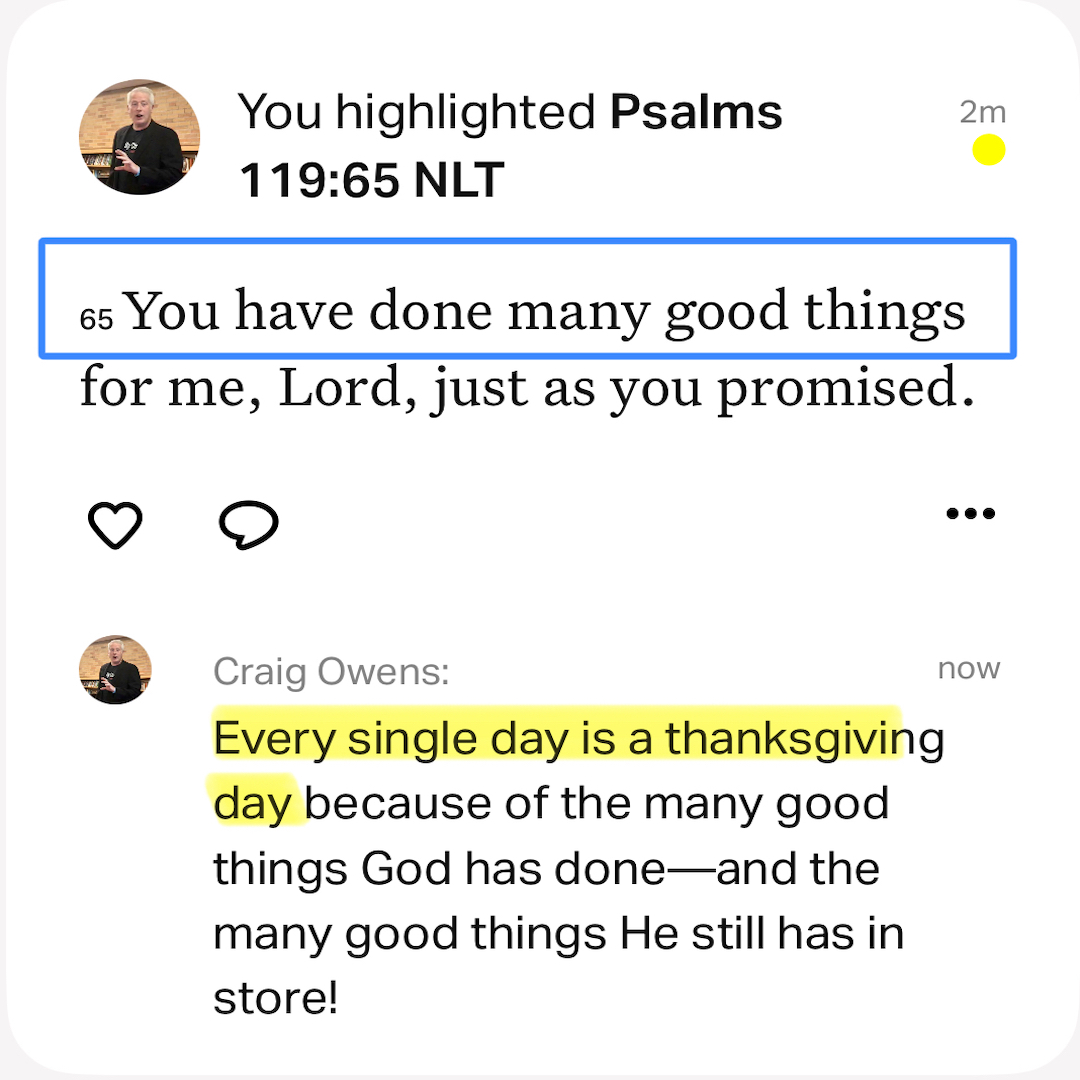
Every day should be a day of thanksgiving!

“We are strangers on Earth; our homeland is in Heaven. Our walk is here; our hearts are there.” —Dr. Henry Halley

Did Jesus “confess” He was God? J. Warner Wallace says He did, but not as some people define the word “confession.” 

I have already shared the first two posts in the latest archeological research on the biblical city of Jericho. Here is part three.

“Success is no accident. It is hard work, perseverance, learning, studying, sacrifice, and most of all, love of what you are doing or learning to do.” —Pelé 

“The greatest leader is not necessarily the one who does the greatest things. He is the one who gets people to do the greatest things.” —Ronald Reagan 

Links & Quotes

If I want to present my best ideas, I need to be open to the helpful, sharpening critique that people close to me have to offer. My first idea sounds great, until others come along to make it better.

I have a lot of new video content on my YouTube channel every week. Please check it out and subscribe so you don’t miss anything.

“In so far as I am Man I am the chief of creatures. In so far as I am a man I am the chief of sinners.” —G.K. Chesterton 

Cold case detective J. Warner Wallace applies the same scrutiny to examining the evidence of the New Testament as he does with a suspect. “There are four critical questions that must drive our examination of any eyewitness, ancient or modern: Were they actually present to see what they claim? Can their account be corroborated in some fashion, even indirectly? Have the key elements of their story shifted over time? And finally, do they possess ulterior motives or bias that would tempt them to lie or embellish? This is not a uniquely religious or anti-religious method; it is simply good investigative practice.”

“Few men, if any, step into responsible positions without preparation. Sometimes in our shortsightedness we seem to get the idea in regard to Bible characters that they come on the scene ready-made, fully prepared; here they are, God’s gift to the world! They take up the work, and that’s all there is to it. But if you will read more carefully, you will find that usually—I think we could even say always—there is a period of preparation behind them. God lays His plans well in advance.” —William Sanford LaSor 

Links & Quotes

When you are waiting for God to fulfill His promise, keep watching with a smile. Let your childlike trust become your testimony as you entrust yourself to your heavenly Father.

I have a lot of new video content on my YouTube channel every week. Please check it out and subscribe so you don’t miss anything.

“The case for the reliability of the New Testament Gospel eyewitness accounts is dependent on the trustworthiness of its authors. In cold-case criminal trials, eyewitness accounts are typically evaluated through the lens four critical questions.” J. Warner Wallace then gives a succinct overview of each of these four questions and the evidence supporting them.

“One can sometimes do good by being the right person in the wrong place.” —G.K. Chesterton 

“A great leader never sets himself above his followers except in carrying responsibility.” —Jules Ormont 

“There is a great difference between worry and concern. A worried person sees a problem, and a concerned person solves a problem.” —Harold Stephens

Avoiding Foolish Controversies

Listen to the podcast of this post by clicking on the player below, and you can also subscribe on AppleSpotify, or Audible. 

Jude calls Christians to contend for the faith without contention and without compromise. Instead, we are to loving serve Jesus by engaging with others mercifully, peacefully, and lovingly. This means we have to contend without quarreling. 

But that’s easier said than done because people love to pick fights, and we hate to lose an argument. 

Look at the ministry of Jesus. His adversaries couldn’t get around the perfect logic that He used based on Scripture, so they came up with all sorts of controversies in the hope of tripping Him up and silencing Him. They posed seemingly unanswerable dilemmas like: In heaven, which one of the seven brothers will be married to the woman they all married on earth? Should we pay taxes to Caesar? Should we pay the temple tax? What’s the greatest commandment of all? They tried to get Him to take the bait about religious traditions, laws concerning the Sabbath, and the punishment for a woman caught in adultery. 

Jesus never got fluster or frustrated—He never took the bait to quarrel with them, but He simply stood unwaveringly and lovingly on God’s Word. But once again, that’s easier said than done! 

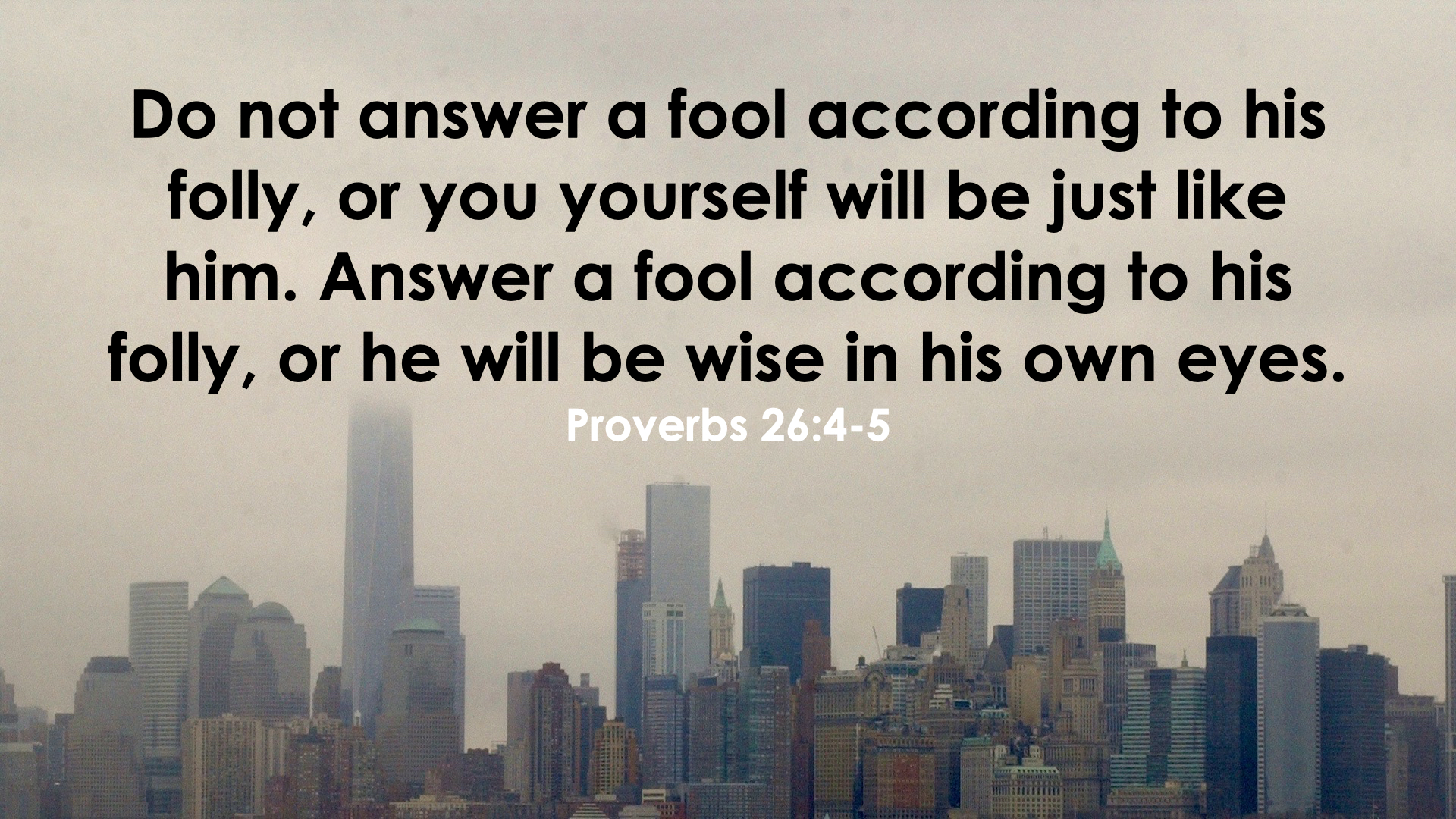
King Solomon pointed out the difficulty of this in Proverbs 26:4-5. Do we answer a fool or not? Yes, but we answer wisely not foolishly. 

(Check out all of the Scriptures in this post by clicking here.)

I believe Jude would agree with Solomon, Jesus, Paul, and Peter, but then he uses three examples that could spark a controversy:  

  • the fate of fallen angels (Jude 6) 
  • Michael and the devil arguing over the body of Moses (v. 9) 
  • Enoch prophesying (v. 14) 

But notice that how Jude uses these examples by not addressing any more than what we already know from Scripture. In this way, Jude keeps this from becoming a foolish, quarrelsome controversy (v. 10). 

Notice the consistent instruction of the Bible on how to handle critics: 

  • Michael the archangel: The Lord rebuke you! (also 2 Peter 2:11) 
  • Jesus: Away from Me! (Matthew 4:10) and Get behind Me! (Mark 8:33) 
  • James: Submit to God and then resist the devil (James 4:7) 
  • Peter: speak gently, respectfully, and with a clear conscience (1 Peter 3:15-16) 
  • Paul: warn people without becoming quarrelsome (2 Timothy 2:14, 16, 23-25) 

In Luke 13:1-5, Jesus addresses two events that could have become quite controversial, but Jesus defused the controversy by simply saying, “No matter what, everyone needs to have their sins forgiven by God.” Paul continued this singleminded focus on Jesus. I love how the Amplified Bible captures his words in 1 Corinthians 2:2. And then Paul encourages his friend Timothy to operate the same way (1 Timothy 1:15-17). 

Don’t let foolish controversies sidetrack you from the faith entrusted to us, but take everything back to Jesus as He is revealed in the Scripture. 

If you’ve missed any of the other messages in our series called Earnestly Contending, you can find them all here. 

►► Would you please prayerfully consider supporting this ministry? My Patreon supporters get behind-the-scenes access to exclusive materials. ◀︎◀︎

Links & Quotes

When leaders come into a new organization, they need to be aware that they have to overcome the expectations—good or bad—that others have from their former leader.

I have a lot of new video content on my YouTube channel every week. Please check it out and subscribe so you don’t miss anything.

Greg Morse has an intriguing question for preachers: “Lawyers, politicians, celebrities, actors, podcasters, YouTubers all train to improve their voices—why not those who speak the very oracles of God?” But he also concludes, “Yet the aim is to speak like you—not like Chrysostom, Whitefield, Spurgeon, or your favorite preacher, though we learn from them. God made you to sound like you.”

J. Warner Wallace makes the case for why we can trust the “chain of evidence” that speaks to the reliability of the Bible. 

Researchers discovered tree amber where it shouldn’t be: deep within the ocean! “These sedimentary rocks contain more than amber. The researchers found abundant plant debris, including pieces of large tree trunks, some longer than four feet, mixed into the layers. The tree trunks showed no sign of erosion from transport or borings from shallow marine organisms, indicating they moved fast out to the deep water and were quickly buried.” This is more evidence for the worldwide Flood described in the Bible.

Axis’ Culture Translator shared this important note especially for parents: “In his book Achilles in Vietnam, Veterans Affairs psychologist Jonathan Shay unpacks the psychological devastation of war and the causes of PTSD. He makes the argument that PTSD isn’t just caused by witnessing trauma, but by seeing people in authority choose not to act against evil—what he calls a ‘moral injury.’ War correspondent Sebastian Junger takes this research a step further. In his book Tribe, he concludes that being exposed to a traumatic event without any resilience training, and without a strong, cohesive community to help us process violence, are two strong risk factors for PTSD—stronger even than experiencing prolonged, bloody, hand-to-hand conflict. We see evidence for this theory in emerging research about drone operators and intelligence officers, who appear to experience PTSD at higher rates than other veterans. When our kids open their social media feeds, they encounter a war zone, and they haven’t even had basic training. They are looking to those in authority to help them understand what they just saw. But instead, they often get a cacophony of competing voices and no clear answer. They get a moral injury. Our broken society makes cult heroes of deeply disturbed individuals who are controlled by evil forces and motivated by their own pain. But Proverbs 3:31 is absolutely clear that we are never to envy those who do violence, and not to choose any of their ways. His private counsel, His intimacy, His secret—lies with the upright, and we can have it. But only if we dare to make distinctions, refuse to celebrate wrongdoing no matter the circumstances, and unapologetically stand up for human life.”

Links & Quotes

In biblical times, the Jews looked down on the Samaritans. But not Jesus. One of His longest conversations is with a Samaritan woman. If He had a poor attitude about her, she would have felt that. Instead, she felt His love. Jesus died so that “whoever believes in Him would not die but would have eternal life.” We need to treat everyone like one of the whoever’s that Jesus died to save.

I have a lot of new video content on my YouTube channel every week. Please check it out and subscribe so you don’t miss anything.

One hundred years ago, William M. Faux called the churches in the Assemblies of God to pray more for our missionaries. “Pray, beloved, pray for missions. Are more workers needed? Yes. Praying is the secret of securing them. Are more funds needed? Yes. Prayer is the force that opens men’s hearts to give to God their resources. Is greater spirituality needed? Yes, surely. Prayer is the agency that brings greater spirituality to the entire church (Matthew 9:38). Louder than the Macedonian cry ‘Come over and help us,’ which rang out to Paul, sounds the cry today, ‘Brethren, pray for us.’ Let the Scripture warning ring in our souls—‘God forbid that I should sin against the Lord in ceasing to pray for you.’ Prayer is the greatest force that we can wield. It is the greatest talent which God has granted us. And this talent He has given to every Christian.”

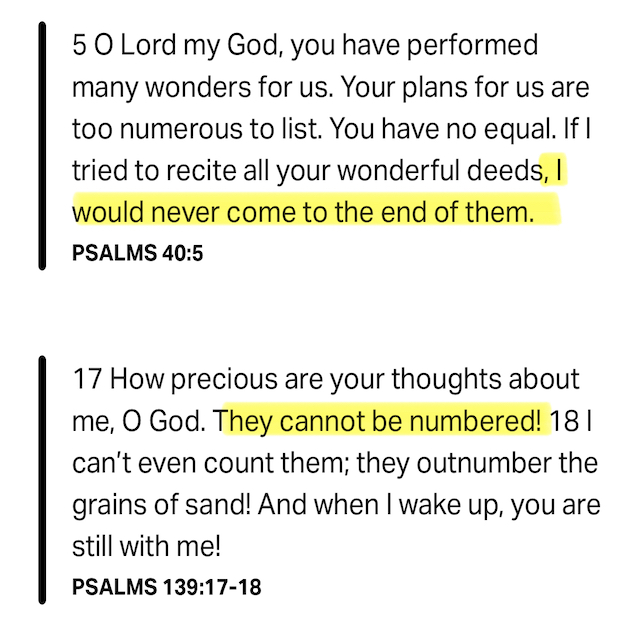
“Faith knows that every seashore on earth has less sand than God has wondrous deeds and thoughts toward us.” —Tanner Swanson

“I had always vaguely felt facts to be miracles in the sense that they are wonderful: now I began to think them miracles in the stricter sense that they were willful. I mean that they were, or might be, repeated exercises of some will. In short, I had always believed that the world involved magic: now I thought that perhaps it involved a magician. And this pointed a profound emotion always present and sub-conscious; that this world of ours has some purpose; and if there is a purpose, there is a person. I had always felt life first as a story: and if there is a story there is a story-teller.” —G.K. Chesterton 

John Piper discusses how Christian apologists can contend for the faith properly without sliding into “word fights.” 

7 Quotes From “God in the Dock”

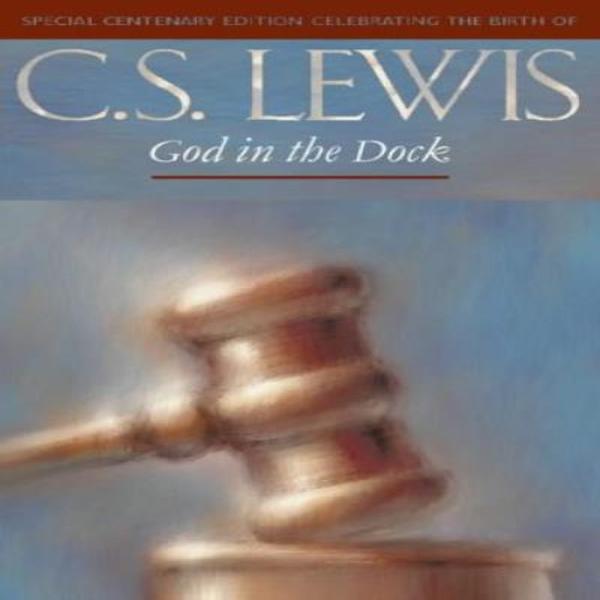
God in the Dock is quite a challenging read, but it has an amazing payoff for those who will persevere to grasp the immense intellect of C.S. Lewis. You can check out my full book review here. 

“The miracles in fact are a retelling in small letters of the very same story which is written across the whole world in letters too large for some of us to see. Of that larger script part is already visible, part is still unsolved. In other words, some of the miracles do locally what God has already done universally: others do locally what He has not yet done, but will do. In that sense, and from our human point of view, some are reminders and others prophecies.” 

“Men look on the starry heavens with reverence: monkeys do not. The silence of the eternal spaces terrified [Blaise] Pascal, but it was the greatness of Pascal that enabled him to do so. …  If the world in which we found ourselves were not vast and strange enough to give us Pascal’s terror, what poor creatures we should be! Being what we are, rational but also animate, amphibians who start from the world of sense and proceed through myth and metaphor to the world of spirit, I do not see how we could have come to know the greatness of God without that hint furnished by the greatness of the material universe. Once again, what sort of universe do we demand? If it were small enough to be cozy, it would not be big enough to be sublime. If it is large enough for us to stretch our spiritual limbs in, it must be large enough to baffle us. Cramped or terrified, we must, in any conceivable world, be one or the other. I prefer terror. I should be suffocated in a universe that I could see to the end of.” 

“The doctrines that God is love and that He delights in men, are positive doctrines, not limiting doctrines. He is not less than this. What more He may be, we do not know; we know only that He must be more than we can conceive. It is to be expected that His creation should be, in the main, unintelligible to us.” 

“Christianity does not replace the technical. When it tells you to feed the hungry it doesn’t give you lessons in cookery. If you want to learn that, you must go to a cook rather than a Christian. If you are not a professional Economist and have no experience of Industry, simply being a Christian won’t give you the answer to industrial problems.” 

“That definite distinction that Christians make between hating sin and loving the sinner is one that you have been making in your own case since you were born. You dislike what you have done, but you don’t cease to love yourself. You may even think that you ought to be hanged. You may even think that you ought to go to the Police and own up and be hanged. Love is not affectionate feeling, but a steady wish for the loved person’s ultimate good as far as it can be obtained.” 

“Now as myth transcends thought, Incarnation transcends myth. The heart of Christianity is a myth which is also a fact. The old myth of the Dying God, without ceasing to be myth, comes down from the heaven of legend and imagination to the earth of history. It happens—at a particular date, in a particular place, followed by definable historical consequences. We pass from a Balder or an Osiris, dying nobody knows when or where, to a historical Person crucified (it is all in order) under Pontius Pilate. By becoming fact it does not cease to be myth: that is the miracle. I suspect that men have sometimes derived more spiritual sustenance from myths they did not believe than from the religion they professed. To be truly Christian we must both assent to the historical fact and also receive the myth (fact though it has become) with the same imaginative embrace which we accord to all myths. The one is hardly more necessary than the other.” 

“We are defending Christianity; not ‘my religion.’ When we mention our personal opinions we must always make quite clear the difference between them and the Faith itself. St. Paul has given us the model in 1 Corinthians 7:25: on a certain point he has ‘no commandment of the Lord’ but gives ‘his judgement.’ No one is left in doubt as to the difference in status implied.” 
As always, my Patreon supporters had access to this quotes—and many, many more—ahead of time. Please consider joining them to get access to early releases and exclusive materials.


God In The Dock (book review)

Listen to the podcast of this post by clicking on the player below, and you can also subscribe on AppleSpotify, or Audible. 

Let me give you the bottom line right at the top: God in the Dock by C.S. Lewis is a challenging book, but it is so worth your time to work your way through it! 

Sometimes I feel that Lewis is from a different planet that allows his mind to move so beyond the things the rest of us are observing. It reminds me a little of Edwin Abbott’s book Flatland where 3-dimensional Sphere is talking with 2-dimensional Square. Sphere can see so much more than Square can, but he is trying to describe it in terms that Square can grasp. 

This is why I say that God in the Dock is a challenging read. The phrase “in the dock” is how the English would describe someone who is on trial, listening to the evidence against them and presenting evidence in their own favor. Imagine that Person on trial was God! As Lewis himself notes, “The ancient man approached God (or even the gods) as the accused person approaches his judge. For the modern man the roles are reversed. He is the judge: God is in the dock.”

This book is made up of Lewis’ essays, responses to critical attacks on his other written works, conversations with atheists, and correspondence with people of all levels of society. His arguments are witty, biblical, philosophical, logical, sophisticated, and frequently other-worldly. This is why I said it is a challenge to keep up with his line of reason. But I promise you that those who persevere through this book will be the better for it.

►► Would you please prayerfully consider supporting this ministry? My Patreon supporters get behind-the-scenes access to exclusive materials. ◀︎◀︎

Eyewitnesses And Embarrassment

Listen to the podcast of this post by clicking on the player below, and you can also subscribe on AppleSpotify, or Audible. 

In his Gospel, John gives eyewitness testimony to the physical death of Jesus. “Instead, one of the soldiers pierced Jesus’ side with a spear, bringing a sudden flow of blood and water. The man who saw it has given testimony, and his testimony is true. He knows that he tells the truth, and he testifies so that you also may believe” (John 19:34-35). 

John was at Calvary to report this event as an eyewitness, and so were the women who had been so involved with the public ministry of Jesus. 

Matthew, however, was not there. He ran away when Jesus was arrested. So in his historical account, he shares the eyewitness testimony of those who were there—

When the centurion and those with him who were guarding Jesus saw the earthquake and all that had happened, they were terrified, and exclaimed, ‘Surely He was the Son of God!’ Many women were there, watching from a distance. They had followed Jesus from Galilee to care for His needs. Among them were Mary Magdalene, Mary the mother of James and Joseph, and the mother of Zebedee’s sons. (Matthew 27:54-56)

These details in both Matthew and John’s Gospels are what lends credibility to this whole event. I’m sure it was embarrassing to Matthew for him to admit, “I ran away and hid in fear.” I’m sure it pained him again and again when he heard John, the women, and the Roman centurion recounting their eyewitness testimony. 

But this is what makes the reporting of this account real. 

If Matthew and John were attempting to perpetuate a hoax on the world—if they were concocting a conspiracy to fool people about the resurrection of Jesus—they certainly would have told their stories the same way. Matthew could have inserted himself as personally there on Calvary. John and Mark could have listed the names of the other disciples as eyewitnesses. The disciples could have given falsified information to Luke for his Gospel. And all of them could have left out the part about the female testimony, since in their day women were deemed unreliable witnesses in the courtroom. 

The fact that all four of the Gospels relate their accounts as they do—with the embarrassing details intermingled with the eyewitness accounts—is precisely what gives legitimacy to this historical event. 

Details like these are just another factor in a long, long list of evidences that attest to the historicity of all that is recorded in the Bible. 

Earlier in his Gospel, Matthew tells about the doubts of John the Baptizer (Matthew 11:2-6). John was imprisoned and sent his friends to ask Jesus, “Are You really the One?” Jesus sends John’s friends back with eyewitness testimony, and with these words: “Blessed is anyone who does not stumble on account of Me” (v. 6). 

The testimonies of both eyewitnesses and those who were embarrassed that they couldn’t give eyewitness testimony should bolster your faith in all that the Bible says. If you don’t stumble away from these testimonies, you can know the blessing of your faith in Jesus. 

►► Would you please prayerfully consider supporting this ministry? My Patreon supporters get behind-the-scenes access to exclusive materials. ◀︎◀︎

Links & Quotes

Christian parents often experience both a weight and a wait as they pray for their children. Biblical waiting is always active, calling us to continue to pray for our kids—not matter how old they are!

I have a lot of new video content on my YouTube channel every week. Please check it out and subscribe so you don’t miss anything.

The Institute for Creation Research reported: “Perhaps one of the top evidences for creation are the subcellular and incredibly efficient molecular protein machines that clearly function by known engineering principles. They are hardly simple. Determining just a part of their function requires the best science has in twenty-first-century technology: ‘While belonging to the nanoscale, protein machines are so complex that tracing even a small fraction of their cycle requires weeks of calculations on supercomputers.’”

Dr. Thaddeus Williams said, “What do you think is the most repeated phrase in the entire Bible? It’s, ‘Thus says the Lord…’ which clocks in at over 400 occurrences. The God of the Bible is not the stone-cold silent god of the ancient Greeks. Nor is He the stone-cold silent god of the ancient Stoics or Epicureans, too busy enjoying the amenities of divine bliss to bother with humanity. No. The God who exists is a God who speaks.” What does this mean for us? Dr. Williams talks about what happens to people who make time to regularly hear what God has to say to them through His Word.

“Work is the outcome of effort; fruit, of life. A bad man may do good work, but a bad tree cannot bear good fruit.” —Hudson Taylor 

I love studying my Bible, and I also enjoy passing along things that encourage others to begin studying their own Bibles. This is a really cool infographic from Wesley Huff, giving a great overview of the Bible.

Dr. Steve Nichols has an interesting mini-biography of King Louis IX, whom some have called “the greatest king of the Middle Ages.”

J. Warner Wallace leads us all along “the fuse” that led up to the arrival of Jesus as the Messiah, the One to whom the Old Testament prophets predicted.