In, On, And Through

Listen to the podcast of this post by clicking on the player below, and you can also subscribe on AppleSpotify, or Audible. 

I’ve talked before about the benefits of calling the Old and New Testaments the First and Second Testaments. This helps me not to subconsciously slip into the thought that “old” means outdated or that “new” means a replacement of what came before it. When I say First and Second I remember that there cannot be a Second without a First, that the First anticipates the Second and the Second fulfills the First. 

The people of the First Testament experienced the Spirit of God in an often-repeated phrase: “the Spirit of the Lord came on” someone. It usually came on them for a specific task or season. For instance…

  • 70 leaders to help Moses (Numbers 11:25)
  • the judges that delivered Israel from their enemies (Judges 3:10, 6:34, 11:29, 14:6, 15:14)
  • the anointing for Israel’s king (1 Samuel 16:13)
  • empowerment for prophets to prophesy (Ezekiel 11:5)

(Check out all of the above references by clicking here.)

When the Holy Spirit came on these men, there was a noticeable supernatural anointing and empowerment, but more times than not these men also had visible and sometimes crippling stumbles. 

What happens on the outside often stays on the outside. Sort of like the little boy whose mom brought him to church one Sunday. The little boy was constantly standing up on his chair and disturbing everyone around him. Finally, the exasperated mother whispered, “If you don’t sit down I’m going to take you to the restroom and spank you.” The little boy immediately sat down with his arms tightly crossed. He looked at his mom and said, “Outside I may be sitting down but inside I’m standing up!” 

God looks at the heart. He told the Israelites that their inward defiance didn’t outweigh their outward religious practices. And Jesus said that people who prophesied, cast out demons, and performed miracles, but still had an unrepentant heart, would hear Him say, “I never knew you” (Isaiah 1:12-13; Matthew 7:21-23). 
In the First Testament, we see a desire for the Holy Spirit to be more than on—a desire for Him to come in. David prayed, “Create in me a pure heart, O God, and renew a steadfast spirit within me” (Psalm 51:10). And God promised His people, “I will give them an undivided heart and put a new spirit in them … And I will put My Spirit in you and move you to follow my decrees and be careful to keep My laws” (Ezekiel 11:19, 36:27). 

That is exactly what happened on that Pentecost Sunday immediately following Christ’s resurrection and ascension. The Christians were baptized in the Holy Spirit. He came in them and brought them into the Godhead (John 14:20). 

Jesus described this “in-ness” in the picturesque language of a branch joined to the vine. The branch cannot produce any fruit on its own, but it abides in the vine so that the fruit-producing power can flow into the branch (see John 15:1-5). 

Paul identified this fruit of the Spirit as “love, joy, peace, forbearance, kindness, goodness, faithfulness, gentleness and self-control,” and he concluded with the phrase, “against such things there is no law” (Galatians 5:22-23). The law always sets limits, but when the Holy Spirit abides in us, the production of fruit is limitless! 

Being baptized in the Holy Spirit means that we allow Him to come in us and then to work on us. It’s only when the Holy Spirit has worked in us that can He flow through us to others. Jesus said that we would receive the Spirit’s empowerment to be witnesses—that’s an inward change that produces an outward fruit.

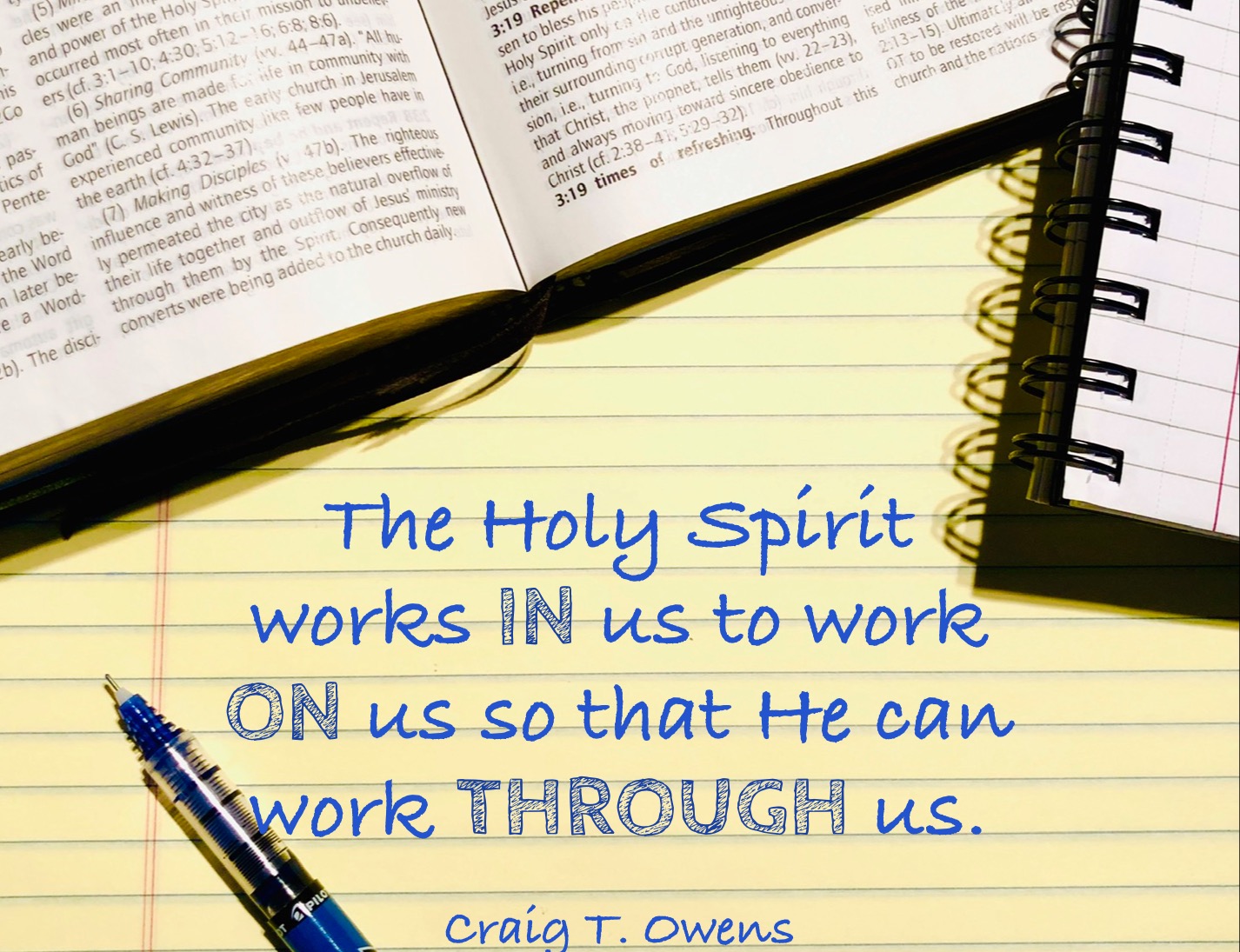
The Holy Spirit works in us to work on us so that He can work through us. So don’t stop at just salvation, but be baptized in the Holy Spirit! 

If you’ve missed any of the messages in our series on the Pentecostal experience, you can find all of those messages by clicking here. 

►► Would you please prayerfully consider supporting this ministry? My Patreon supporters get behind-the-scenes access to exclusive materials. ◀︎◀︎

Thursdays With Spurgeon—My Element

This is a weekly series with things I’m reading and pondering from Charles Spurgeon. You can read the original seed thought here, or type “Thursdays With Spurgeon” in the search box to read more entries.

Listen to the podcast of this post by clicking on the player below, and you can also subscribe on AppleSpotify, or Audible. 

My Element

But our citizenship is in heaven. And we eagerly await a Savior from there, the Lord Jesus Christ, Who, by the power that enables Him to bring everything under His control, will transform our lowly bodies so that they will be like His glorious body. Therefore, my brothers and sisters, you whom I love and long for, my joy and crown, stand firm in the Lord in this way, dear friends! (Philippians 3:20—4:1). 

     Do you know what it is to feel that the life that is in you is first in Christ and still flows from Him, even as the life of the branch is mainly in the stem? ‘I live; yet not I, but Christ lives in me’ (Galatians 2:20). This is to be in Christ! …     

     This expression is very short but very full: ‘In Christ.’ Does it not mean that we are in Christ as the birds are in the air that buoys them up and enables them to fly? Are we not in Christ as the fish are in the sea? Our Lord has become our element—vital and all surrounding! In Him we live, move, and have our being. He is in us, and we are in Him. We are filled with all the fullness of God because all fullness dwells in Christ and we dwell in Him.

From The Watchword For Today: “Stand Fast”

Years ago I was taking a class, and the teacher asked us to write down some of the different roles we had in our life. I wrote down things like son, brother, employee, team captain. After everyone had finished their lists, the teacher asked the students to share some of their roles. As each one listed a role, the rest of the class would raise a hand if that role also applied to them. One person said, “Christian,” and nearly every hand in the classroom went up. Except mine.

Being a Christian is not a role I step into; it’s who I am. It impacts everything I think and everything I do. 

Birds don’t step into the air when they want to fly. Fish don’t run to the water when they want to swim. Birds and fish always live in their element. We are in our element in Christ when we can always say, “In Him I live, and move, and have my being.” 

The devil has always used doubt and uncertainty—“Did God really say…” he asked Eve, and “Are you really the Son of God,” he mocked Jesus. He wants to do the same thing to you today, making you think you have somehow missed out on being in Christ. 

But if Christ is your Savior and your Lord, stand fast in that. Let nothing move you. Counteract the devil’s doubt-inciting accusations with truthful as-it-is-written statements from God’s Word. Immerse yourself in Christ and make Him your constant element—just as a branch connected to a stalk, or a bird in the air, or a fish in the ocean. You are in Christ, Christ is in you, and Christ is in the Father. Which means Jesus has taken you into the Father with Him. Live, and move, and have your very being in His presence every single moment!

►► Would you please prayerfully consider supporting this ministry? My Patreon supporters get behind-the-scenes access to exclusive materials. ◀︎◀︎
Thursdays With Spurgeon—Three Keys To Effective Prayer

This is a weekly series with things I’m reading and pondering from Charles Spurgeon. You can read the original seed thought here, or type “Thursdays With Spurgeon” in the search box to read more entries.

Listen to the podcast of this post by clicking on the player below, and you can also subscribe on AppleSpotify, or Audible. 

Three Keys To Effective Prayer 

     Why is this extraordinary power of prayer given to those who abide in Christ? May what I have to say encourage you to make the glorious attempt to win this pearl of great price! Why is it, that by abiding in Christ and having His words abide in us, we get to this liberty and prevalence in prayer? … 

     I answer, first, because of the fullness of Christ. … I see clearly enough why the branch gets all it wants while it abides in the stem, since all it wants is already in the stem and is placed there for the sake of the branch. What does the branch want more than the stem can give it? If it did want more, it could not get it. For it has no other means of living but by sucking its life out of the stem. O my precious Lord, if I want anything that is not in You, I desire always to be without it. I desire to be denied a wish that wanders outside of You. But if the supply of my desire is already in You for me, why should I go elsewhere? You are my all, where else should I look? … 

     The next reason for this is the richness of the Word of God. … The best praying man is the man who is most believingly familiar with the promises of God. After all, prayer is nothing but taking God’s promises to Him and saying to Him, ‘Do as You have said.’ … If the Word of God abides in you, you are the man who can pray because you meet the great God with His own words…. 

     A man will succeed in prayer when his faith is strong. And this is the case with those who abide in Jesus. It is faith that prevails in prayer. The real eloquence of prayer is a believing desire. ‘All things are possible to him who believes’ (Mark 9:23). A man abiding in Christ, with Christ’s words abiding in him, is eminently a believer and consequently eminently successful in prayer.

 From The Secret Of Power In Prayer

God Himself has told us, “Call to Me and I will answer you and tell you great and unsearchable things you do not know” (Jeremiah 33:3). Not “I might answer you,” but “I will answer you.” 

God also tells us how to receive what we ask in prayer:

  1. Abide in Jesus. Desire nothing else but to know His heart more intimately. 
  2. Know God’s Word. The Bible isn’t just a Book to be read through, but it’s a Book to be prayed through. 
  3. Stretch your faith. A desperate father said to Jesus, “If You can, please help us.” Jesus admonished that father—and all of us too—to believe that Jesus is able to accomplish what we ask of Him. And then comes this great exclamation from that same desperate father: “I do believe; help me overcome my unbelief!” The God that wants us to have faith in Him for answered prayers is the same God Who imparts that faith to us. How? By abiding in Jesus and taking God at His Word. 

Don’t give up, my friend. Keep praying. There is no other way to learn to pray more effectively than to keep on abiding in Jesus, keep on claiming the biblical promises, and keep on stretching your faith to present your prayer request to Him again.

►► Would you please prayerfully consider supporting this ministry? My Patreon supporters get behind-the-scenes access to exclusive materials. ◀︎◀︎
Thursdays With Spurgeon—How Pruning Helps Prayer

This is a weekly series with things I’m reading and pondering from Charles Spurgeon. You can read the original seed thought here, or type “Thursdays With Spurgeon” in the search box to read more entries.

Listen to the podcast of this post by clicking on the player below, and you can also subscribe on AppleSpotify, or Audible. 

How Pruning Helps Prayer 

If you remain in Me and My words remain in you, ask whatever you wish, and it will be done for you. (John 15:7)

     How is this privilege of mighty prayerfulness to be obtained? The answer is, ‘If you abide in Me and My words abide in you.’ … Beloved, the first line tells us that we are to abide in Christ Jesus our Lord. … 

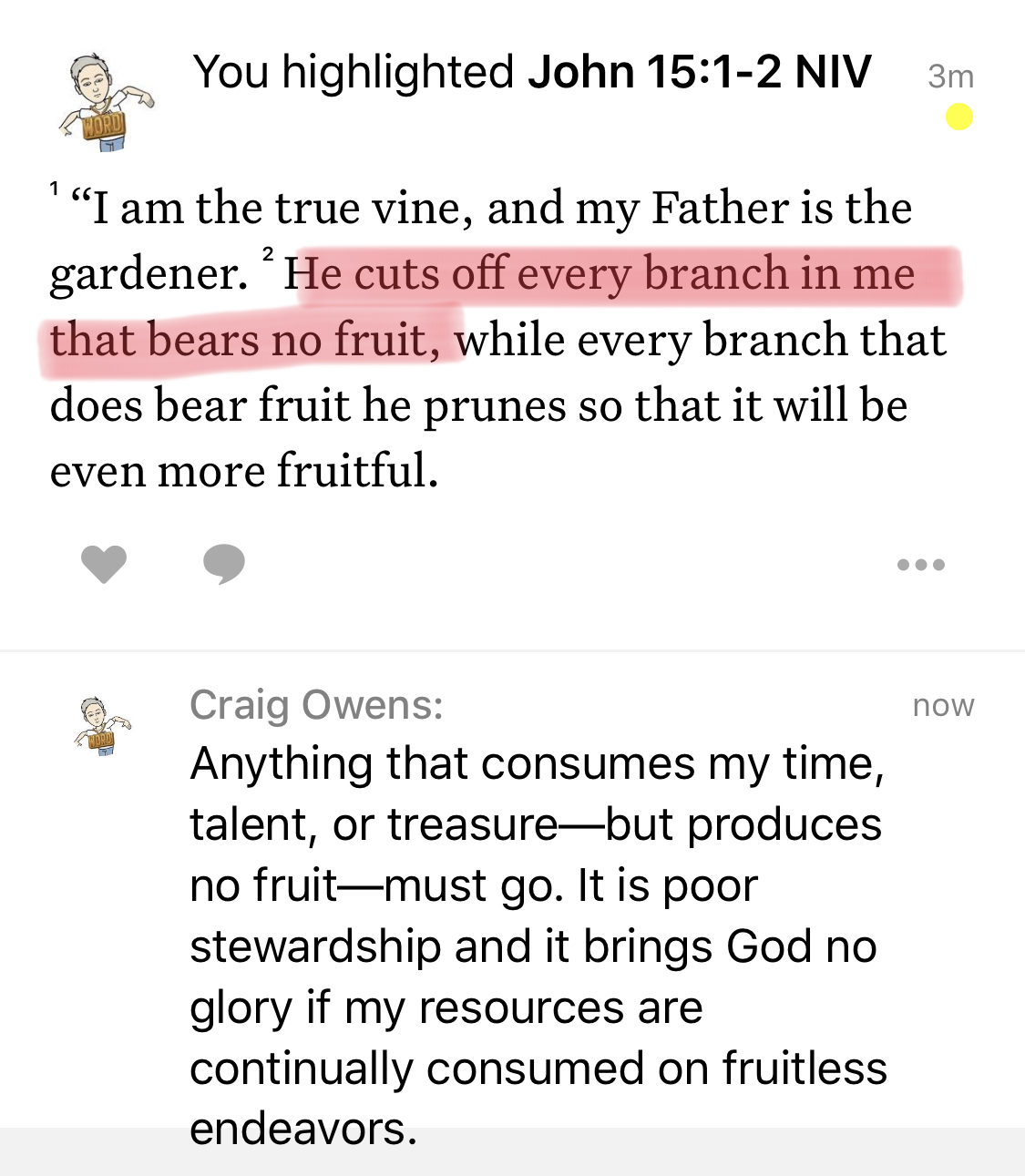
     As if to help us understand this, our gracious Lord has given us a delightful parable. Let us look through this discourse of the vine and its branches. Jesus says, ‘Every branch in Me…that bears fruit He prunes’ (John 15:2). Take care that you abide in Christ when you are being purged. ‘Oh,’ says one, ‘I thought I was a Christian. But alas! I have more troubles than ever. Men ridicule me, the devil tempts me, and my business affairs go wrong.’ Brother, if you are to have power in prayer, you must take care that you abide in Christ when the sharp knife is cutting everything away. …  

     Take care, also, that when the purging operation has been carried out you still cleave to your Lord. … When you see the work of the Spirit increasing in you, do not let the devil tempt. He will try to get you to boast that now you are somebody; you need not come to Jesus as a poor sinner and rest in His precious blood alone for salvation. Abide still in Jesus. … Your work for Christ must be Christ’s work in you or else it will be good for nothing.

 From The Secret Of Power In Prayer

Our Heavenly Father wants us to be fruitful because that brings Him glory and lifts Jesus up for others to see. 

We have to commit to abiding in Jesus despite the pruning process. It’s helpful to remember that the reason the Husbandman prunes us is because He has seen fruitfulness in us, but He wants us to be even more fruitful. When we stay in the process during the uncomfortable—and sometimes painful—pruning, more fruit will begin to appear in our lives. 

It’s at this point that we have to guard against pride. The devil loves for me to get proud of “my accomplishments.” But I have to remind myself that apart from the Vine I am worse than fruitless; I’m just a dead branch only fit for the fire. I’ve learned that there is a danger in success, so I must constantly choose humility over pride, and abiding over self-sustaining. 

As we abide, our prayers take on an ever-increasing vitality so that conversation with our Lord becomes as natural as breathing. I hope none of us will ever settle for anything less than this intimate, ongoing communion with our Master!

►► Would you please prayerfully consider supporting this ministry? My Patreon supporters get behind-the-scenes access to exclusive materials. ◀︎◀︎
Thursdays With Spurgeon—The Natural Out-Gushing

This is a weekly series with things I’m reading and pondering from Charles Spurgeon. You can read the original seed thought here, or type “Thursdays With Spurgeon” in the search box to read more entries.

Listen to the podcast of this post by clicking on the player below, and you can also subscribe on AppleSpotify, or Audible. 

The Natural Out-Gushing

If you remain in Me and My words remain in you, ask whatever you wish, and it will be done for you. (John 15:7) 

   He does not say, ‘If you abide in Me, and My words abide in you, you will do spiritual things,’ but ‘you will ask.’ By prayer you will be enabled to do. But before all attempts to do, you will ask. The choice privilege here given is a mighty prevailing prayerfulness. Power in prayer is very much the gauge of our spiritual condition. …  

     Prayer comes spontaneously from those who abide in Jesus. … Prayer is the natural out-gushing of a soul in communion with Jesus. Just as the leaf and the fruit will come out of the vine without any conscious effort on the part of the branch but simply because of its living union with the stem, so prayer buds and blossoms and produces fruit out of souls abiding in Jesus. … They do not say to themselves, ‘Now is the time for us to get to our task and pray.’ No, they pray as wise men eat—namely, when the desire for it is upon them. …  

     Habitual asking comes out of abiding in Christ. You will not need urging to pray when you are abiding with Jesus. … 

     ‘If you abide in Me, and My words abide in you, you will ask’—and you will not wish to cease from asking. He has said, ‘Seek My face,’ and your heart will answer, ‘Your face, Lord, I will seek’ (Psalm 27:8). … 

     This power in prayer is like the sword of Goliath. Wisely may every David say, ‘There is none like it; give it to me’ (1 Samuel 21:9). This weapon of all-prayer beats the enemy and at the same time enriches its possessor with all the wealth of God.

 From The Secret Of Power In Prayer

When I first met the beautiful young lady that would eventually become my wife, we spent hours and hours and hours talking with each other. It was how I got to know her heart, and how she got to know mine. My conversations with Betsy are still some of the most cherished times I have. 

But what if after we got married I said to Betsy, “I love you, my darling, and I’m so looking forward to a lifetime with you! I will make it a priority to give you my undivided attention for 90 minutes every Sunday morning. Other than that, I’ll be thinking about you while I go about my busy life.” How intimate is this relationship going remain? 

Sadly, this is how many Christians treat their relationship with Jesus. “Thank You for saving me from the penalty of my sin, Jesus! I love You and I’m so looking forward to an eternity with You in Heaven. I will make it a priority to give You my undivided attention every week at church. Other than that, I’ll be thinking about You while I go about my busy life.” 

This is not abiding. 

No branch can remain healthy and produce any fruit if it is only occasionally attached to the vine. In order for the branch to be fruitful, it must be continually abiding in the life-giving sap of the vine. 

Intimacy with Jesus means abiding with Him at all times. It means engaging in conversation with Him at all times. Brother Lawrence commented, “The time of business does not with me differ from the time of prayer; and in the noise and clatter of my kitchen, I possess God in as great tranquility as if I were upon my knees at the blessed sacrament.” 

My friend, let’s all seek to become more aware of the closeness of Jesus. Let us “take delight in the Lord” (Psalm 37:4) and continually engage Him in intimate conversation. As we do, the fruitfulness of our prayer life cannot help but blossom into beautiful things that give God great joy and glory.

►► Would you please prayerfully consider supporting this ministry? My Patreon supporters get behind-the-scenes access to exclusive materials. ◀︎◀︎

Thursdays With Spurgeon—Where We Live

This is a weekly series with things I’m reading and pondering from Charles Spurgeon. You can read the original seed thought here, or type “Thursdays With Spurgeon” in the search box to read more entries.

Listen to the podcast of this post by clicking on the player below, and you can also subscribe on AppleSpotify, or Audible. 

Where We Live

If you remain in Me and My words remain in you, ask whatever you wish, and it will be done for you. (John 15:7) 

     Believers do not enjoy the gifts of divine grace all at once. Coming to Christ, we are saved by a true union with Him. But it is by abiding in that union that we further receive the purity, the joy, the power, and the blessedness that are stored up in Him for His people. See how our Lord states this when He speaks to the believing Jews in the eighth chapter of this gospel, at the thirty-first and thirty-second verses: ‘Then Jesus said to those Jews who believed Him, “If you abide in My word, you are My disciples indeed. And you shall know the truth, and the truth shall make you free.”’ We do not know all the truth of God at once; we learn it by abiding in Jesus. 

     Perseverance in divine grace is an educational process by which we learn the truth of God fully. The emancipating power of the truth is also gradually perceived and enjoyed. The truth will make you free. One bond after another snaps, and we are free indeed. …  

     Every believer should be an abider, but many have hardly earned the name as yet. … You have to live with Christ to know Him, and the longer you live with Him, the more you will admire and adore Him, and the more you will receive from Him, even grace for grace. … Jesus, in the esteem of abiding believers, grows sweeter and dearer, fairer and lovelier each day. Not that He improves in Himself, for He is perfect. But as we increase in our knowledge of Him, we appreciate more thoroughly His matchless excellences. 

From The Secret Of Power In Prayer

All of us probably know what “house rules” are. In my home growing up, we took off our shoes when we came in the door; family members came in through the garage door, unless we were bringing a friend home, and then we came in through the front door. A casual observer may not catch these things, but the longer you were in our home, the more clearly you would see these things. 

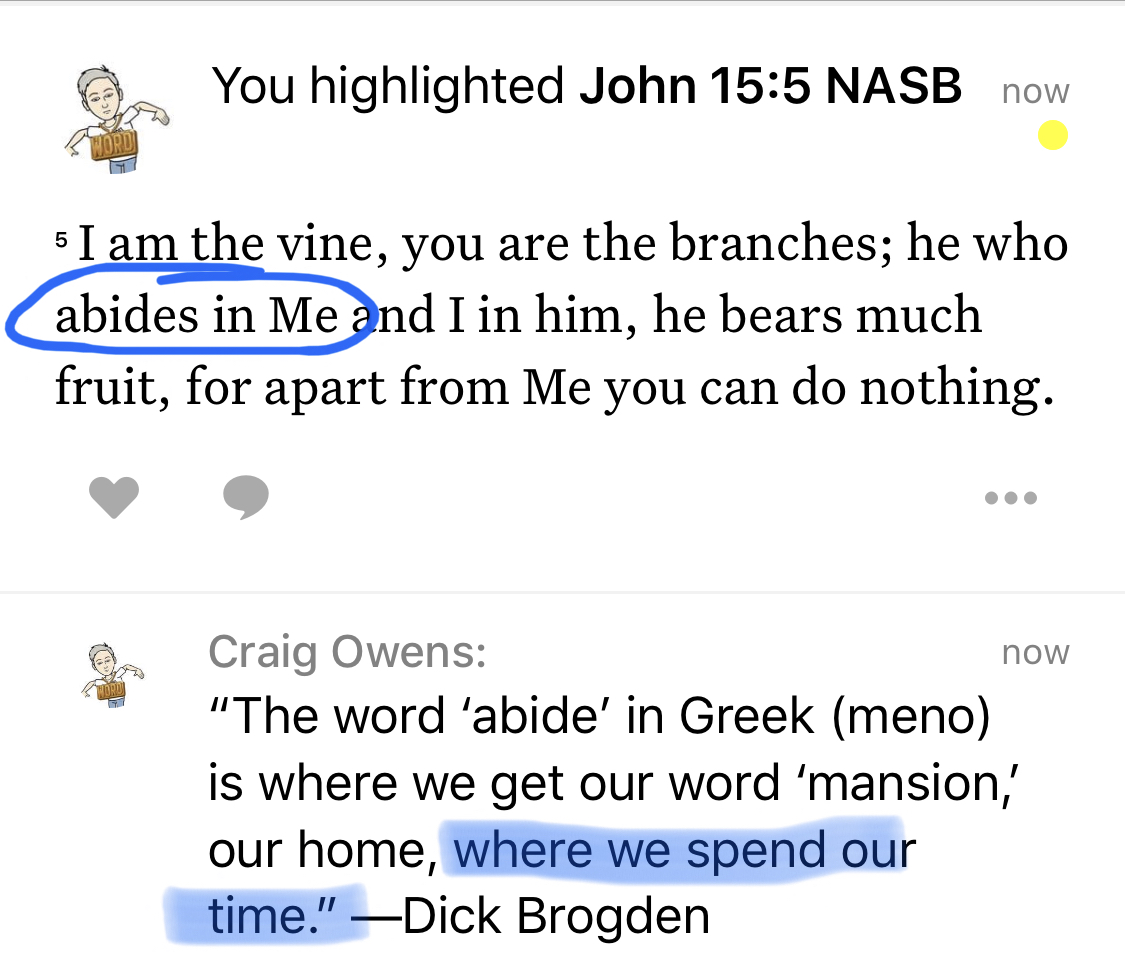
In the same way, we get more familiar with the “house rules” of our heavenly home the more time we spend there. My cousin Dick Brogden pointed out, “The word ‘abide’ in Greek (meno) is where we get our word mansion, our home, where we spend our time.” 

It’s also as we abide with Jesus that we get to know His heart. And then as we get to know Him better we can pray prayers more aligned to His will, prayers that He delights to answer. This makes our relationship with Him sweeter and sweeter. Just as the old chorus says—

He gets sweeter and sweeter as the days go by
Oh what a love between my Lord and I
I keep falling in love with Him
Over and over and over and over again

►► Would you please prayerfully consider supporting this ministry? My Patreon supporters get behind-the-scenes access to exclusive materials. ◀︎◀︎
Thursdays With Spurgeon—Present Communion With Jesus

This is a weekly series with things I’m reading and pondering from Charles Spurgeon. You can read the original seed thought here, or type “Thursdays With Spurgeon” in the search box to read more entries.

Listen to the podcast of this post by clicking on the player below, and you can also subscribe on iTunes or Spotify.

Present Communion With Jesus

     The desire of a renewed soul is to find Christ and to be with Him. … Past communion with Christ is very well: ‘Therefore I will remember Thee from the land of Jordan…’ (Psalm 42:6). But these are only stale meats, and a loving soul wants fresh food every day from the table of Christ. … 

     A true loving soul, then, wants present communion with Christ. So the question is, ‘Tell me where You feed. Where do You get Your comfort from, O Jesus? I will go there. … Where do You feed Your flock? In Your house? I will go there, if I may find You there. In private prayer? Then I will not be slack in that. In the Word? Then I will read it night and day. Tell me where You feed; wherever You stand as the Shepherd, there will I be, for I want You. I cannot be satisfied to be apart from You. My soul hungers and thirsts to be with You.’

From The Church’s Love To Her Loving Lord

There are so many pictures in the Bible about our continual reliance on God’s presence—from the manna that was only good for each day, to Jesus teaching us to pray for “our daily bread,” to the vivid example of Christians being as dependent on Jesus as a branch is dependent on the vine (see Exodus 16:4-5, 14-17; Matthew 6:11; John 15:1-8).  

All of these mean that we need to constantly abide with our Savior. 

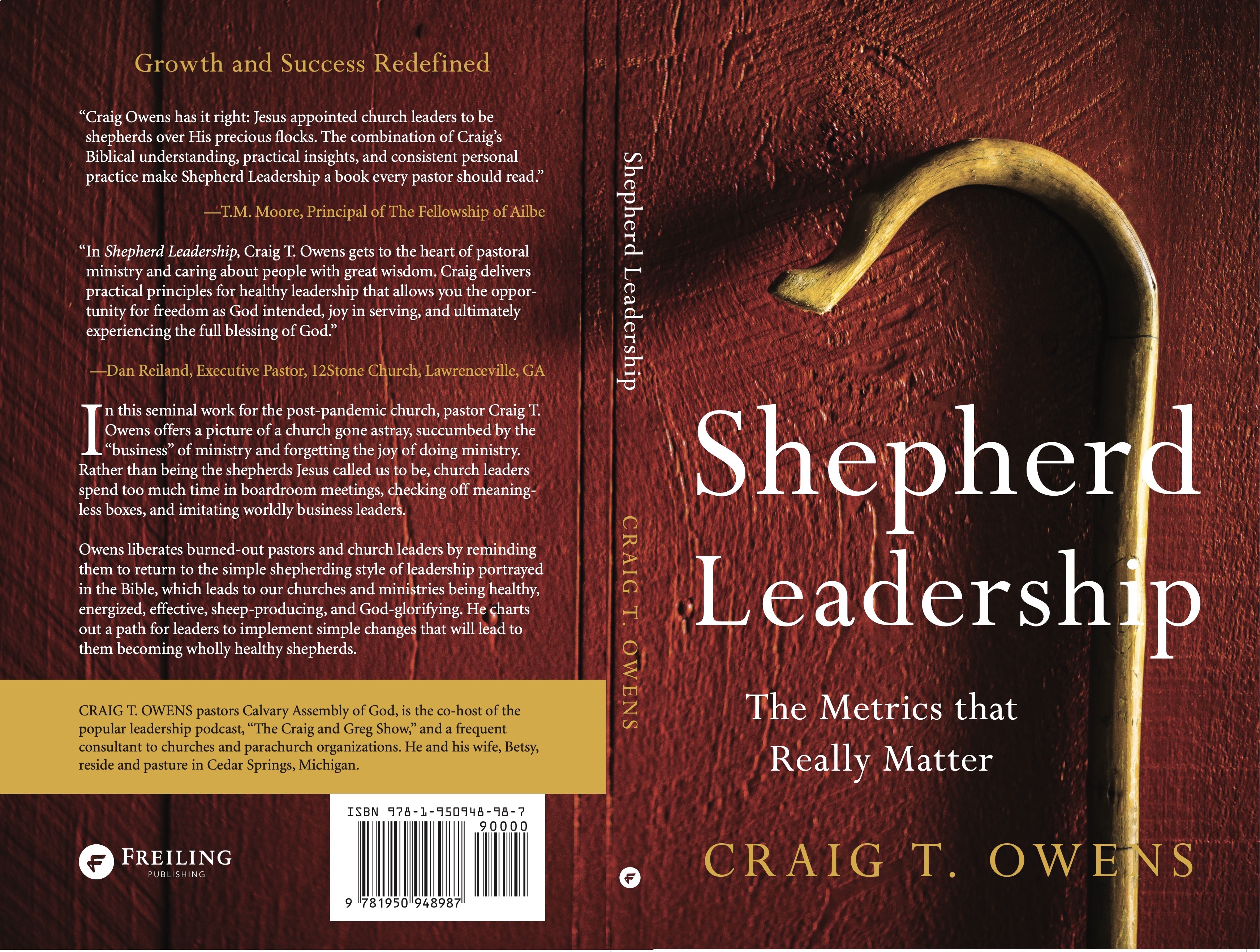
In my book Shepherd Leadership: The Metrics That Really Matter, I spend two chapters talking to leaders about the need to rest—or sabbath. In fact, I call it sabbathing to give it the emphasis on the ongoing nature of this activity. I wrote—

“Without building in sabbath breaks, we run down emotionally, spiritually, mentally, and physically, which means loving God becomes a chore, not a delight (Mark 12:30). This then means loving your neighbor becomes nearly impossible (Mark 12:31). Ultimately, this means that we aren’t able to be the compassionate, wise, strong shepherds that the sheep under our care need us to be. … 

“The goal of sabbathing is to infuse more vitality into the shepherd leader for the purpose of pasturing the sheep under that leader’s care. You cannot give hope to others unless you are hope-filled; you cannot give health to others unless you are healthy; you cannot consistently speak wisdom to others unless you are growing in wisdom. All of this healthy growth for the shepherd leader takes place while sabbathing….” 

To reiterate what Pastor Spurgeon said: “A true loving soul, then, wants present communion with Christ.” I hope you will always seek that for yourself.

►► Would you please prayerfully consider supporting this ministry? ◀︎◀︎

8 Quotes From “Words To Winners Of Souls”

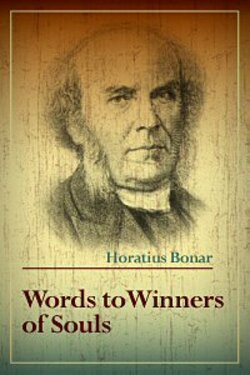
I don’t say this very often, but Words To Winners Of Souls by Horatius Bonar is a must-read for those in pastoral ministry. You can check out my full book review by clicking here. 

“The question, therefore, which each of us has to answer to his own conscience is, ‘Has it been the end of my ministry, has it been the desire of my heart to save the lost and guide the saved? Is this my aim in every sermon I preach, in every visit I pay? Is it under the influence of this feeling that I continually live and walk and speak? Is it for this I pray and toil and fast and weep? Is it for this I spend and am spent, counting it, next to the salvation of my own soul, my chiefest joy to be the instrument of saving others? Is it for this that I exist?’” 

“It is not opinions that man needs: it is truth. It is not theology: it is God. It is not religion: it is Christ. It is not literature and science; but the knowledge of the free love of God in the gift of His only-begotten Son.” 

“Our power in drawing men to Christ springs chiefly from the fullness of our personal joy in Him, and the nearness of our personal communion with Him.” 

“Why so many meetings with our fellow men, yet so few meetings with God?” 

“Our life has not been a lying-in-wait for the voice of God. ‘Speak, Lord; for Thy servant heareth,’ has not been the attitude of our souls, the guiding principle of our lives. Nearness to God, fellowship with God, waiting upon God, resting in God, have been too little the characteristic either of our private or our ministerial walk. Hence our example has been so powerless, our labors so unsuccessful, our sermons so meager, our whole ministry so fruitless and feeble.” 

“It is easier to speak or write about revival than to set about it. There is so much rubbish to be swept out, so many self-raised hindrances to be dealt with, so many old habits to be overcome, so much sloth and easy-mindedness to be contended with, so much of ministerial routine to be broken through, and so much crucifixion, both of self and of the world, to be undergone. As Christ said of the unclean spirit which the disciples could not cast out, so we may say of these: ‘This kind goeth not out but by prayer and fasting.’” 

“These must be days of strenuous, ceaseless, persevering, and, if God bless us, successful toil. We shall labor till we are worn out and laid to rest.” 

“It is unbelief that makes ministers handle eternal realities with such irreverence. It is unbelief that makes them ascend with so light a step ‘that awful place the pulpit,’ to deal with immortal beings about heaven and hell.” 

Keep Up Your Spiritual Health

In Workmen Of God, we have a collection of lectures Oswald Chambers delivered to those “reliable men” and women (see 2 Timothy 2:2) who were either already working in pastoral ministry or preparing to do so. Chambers talks to pastors about their work among those entrenched in their unbelief, those who are skeptical, those who are backslidden, those who are hypocrites, and those who have sick souls. He especially challenges pastors on how to minister to themselves so that they are prepared to minister to any soul in which God brings them in contact.

It’s in that light that I think this passage is so vital for anyone involved in Christian ministry—

“So remember, it is absolutely necessary to be like the cedars of Lebanon. Do you know the characteristic of a Lebanon tree? The cedars of Lebanon have such extraordinary power of life that instead of nourishing the parasites it kills them, the life within is so strong and so robust that instead of feeding the parasites it chokes them off. God grant that we may be so filled with His life, may flourish as the cedars of Lebanon, so that He can trust us down in all the dark, difficult places amongst the souls of our brother men and be able to pour His tremendous health and power through us. … 

“Do you remember, then, that it is necessary for the worker to be healthy, and beware of this mistake, that by working for God amongst men, you develop your own Christian life; you do not unless your Christian life is there first. It is so obvious that it needs to be said over again—you cannot develop your own Christian life unless it is there. The advice given that if you work for God you develop your own life often means that if you work for God you get right yourself; you do not, you have to be right with God first.” 

Pastors and other Christian workers, remember that you cannot give to others what you do not have yourself. You MUST make regular time to abide with Jesus, not for sermon preparation, but for your own robust spiritual health. 

Although written over 100 years ago, this book is still a treasure-trove for anyone in church ministry today!

Poetry Saturday—Out Of Touch With Your Lord

Only a smile, yes, only a smile,
That a woman o’er burdened with grief
Expected from you; ‘twould have given relief
For her heart ache sore the while;
But weary and cheerless she went away,
Because as it happened, that very day
You were “out of touch“ with your Lord.

Only a word, yes, only a word,
That the Spirit’s small voice whispered, “Speak”;
But the worker passed onward, unblessed and weak,
Whom you were meant to have stirred
To courage, devotion and love anew,
Because when the message came to you,
You were “out of touch“ with your Lord.

Only a note, yes, only a note,
From a friend in a distant land;
The Spirit said, “Write,” but then you had planned
Some different work, and you thought
It mattered little, you did not know
‘Twould have saved a soul from sin and woe;
You were “out of touch“ with your Lord.

Only a song, yes, only a song,
That the Spirit said, “Sing tonight—
Thy voice is thy Master’s by purchased right“;
But you thought, “Mid this motley throng
I care not to sing of the City of Gold,”
And the heart that your words might have reached grew cold;
You were “out of touch“ with your Lord.

Only a day, yes, only a day!
But, oh, can you guess, my friend,
Where the influence reaches, and where it will end
Of the hours that you frittered away?
The Master’s command is, “Abide in Me,”
And fruitless and vain will your service be,
If “out of touch“ with your Lord. —Jean H. Watson