Surprised By Paradox (book review)

Many years ago, as I struggled with some of the either-or challenges of Christianity, I read C.S. Lewis’ wisdom that the safest course between two either-or extremes was a course straight between them. Jen Pollock Michel embraces this profound wisdom in her thoughtful book Surprised By Paradox—The Promise of And in an Either-Or World.

Jen wrestled with many of the same either-or struggles I wrestled with, which I actually found encouraging. The reason I find this encouraging is that it tells me that I’m not alone in my wrestling, and you aren’t either! So embracing the same C.S. Lewis wisdom that helped guide me, Jen opens up her heart to us in an intimate journey of discovery. 

Surprised By Paradox felt like I was getting a glimpse at Jen’s personal diary. Every chapter seemed like it could start out “Dear Diary…” with Jen sharing what prompted her wrestling thoughts, the alternatives she considered, and then the AND solution that God revealed to her. I could feel her growing in insight and confidence as I turned to each successive chapter. 

This book will cause you to question and ponder and wrestle as well. And that’s a good thing! To help you along the way, there are some very helpful discussion questions sprinkled throughout the book. Although these would be fine questions for you to answer on your own, I encourage to invite someone else alongside you on your journey. Surprised By Paradox will help you and your friends grow in your spiritual maturity. 

I am an IVP book reviewer. 
5 Lessons From An Amazing Mother

There is a Pentecostal Christian woman that we first meet in the Book of Acts, and then we see her name scattered throughout Paul’s letters. She may be the most prominent woman among all of the Apostle Paul’s companions and probably is responsible for spreading the Gospel more and farther than any other woman recorded in the Bible. 

Scripture doesn’t tell us if she had children of her own but she is certainly the spiritual mother of more Christians than we will ever be able to count!

Prisca is her birth name. She is a Jew, and most likely a freeborn Roman (just as Paul was). She is from the prominent Acilius family, so combined with Prisca her name is called Priscilla. She married Aquila and they both worked as leather makers (also known as tentmakers). 

Let’s take a look at Priscilla’s travel itinerary—

Pricilla left Rome because of Emperor Claudius’ decree in 49 AD and traveled to Corinth, where she met Paul (Acts 18:1-3, 11, 18-19). 

After spending almost 2 years with Paul in Corinth, they traveled to Ephesus with Paul, where she met and mentored Apollos (Acts 18:24-26). Apollos became a trusted friend to Paul; in fact, Paul calls him a synergos (where we get our English word for synergy). In other words, Paul thought his ministry was more effective because of his partnership with Apollos, but that is all thanks to Priscilla’s involvement! 

Priscilla returned to Rome sometime after Claudius’ death in 54 AD. She probably returned home to prepare the way for Paul’s visit there (Romans 1:10-11; 15:23-24; 16:3). 

And at some point she returned to Ephesus, probably to help Timothy as he pastored the church there (2 Timothy 4:19). 

Here are 5 lessons we can learn from Priscilla’s life—

  1. Be baptized in the Holy Spirit. This is what she taught to others, so it is undoubtedly how she lived as well. 
  1. Use the gifting God has given you. Except for one place, Priscilla is always listed first ahead of her husband. This is unprecedented anywhere else in the New Testament. That tells us that despite what the Greco-roman culture tried to enforce, Priscilla was the predominant teacher/preacher in her family.
  1. Work hard. Priscilla had to be fairly well-to-do to be able to travel to at least three major cities and to host churches in her home, and yet we see her working with her hands to provide for her family and for the church. 
  1. Be bold. Jesus said the baptism in the Holy Spirit would give us boldness, and Priscilla demonstrated that powerfully (Romans 16:4). 
  1. Be synergistic. Paul also called Priscilla a synergos. Paul used this word sparingly for people who had put everything on the line for the sake of the Gospel. He used synergos for people like Apollos, Timothy, Titus, and Luke. Priscilla is the only woman who gets this invaluable term.  

We don’t know if Priscilla was a biological mom, but she was definitely a spiritual mom. She was empowered by the Holy Spirit, and probably is responsible for spreading the Gospel more than any other woman recorded in the Bible. You can follow in her footsteps! 

If you missed any of the messages in this series, you can access the full list of messages by clicking here. 

Poetry Saturday—A Mother’s Day Wish

When I consider how my life is spent
The most that I can do will be to prove
‘Tis by His side, each day, I seek to move.
To higher, nobler things my mind is bent
Thus giving of my strength, which God has lent,
I strive some needy souls’ unrest to soothe
Lest they the path of righteousness lose
Through fault of mine, my Maker to present.
If I should fail to show them of their need
How could I hope to meet Him, face to face,
Or give a just account of all my ways.
In thought of mind, in word, and in each deed
My life must prove the power of His grace
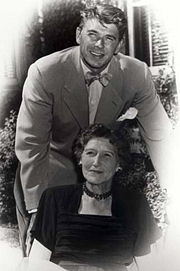
By every action through my living days. —Nelle Reagan (President Ronald Reagan’s mother)

“Ye Shall Be As Gods”

“By two great lies was man led away from God. By the same two lies has the estrangement been kept up. On these two lies the world has been feeding ever since the Fall. Their fruit has been woe and death—‘Ye shall not die’ and ‘Ye shall be as gods.’ …

“The world’s history is the same. Our race has been eating the fruit of lies [Hosea 10:13]; not simply of sin, but of lies. The sorrows, sighs, tears, pains of our race are the fruit of lies—the original lie of Paradise, and a thousand such since then. …

“The two original satanic lies are continually coming up, and along with them myriads of others, all leading us astray. Each day brings forth the lie, the fruit, the eating thereof. satan, or the world, or the flesh, or a friend, or a book, or a scene whispers the lie; it is fair and specious, we believe it; it brings forth fruit, we eat of it, and the end is bitterness and disappointment. We feed on lies. … We persuade ourselves that this world is good, and pleasant, and excellent, so we pursue it in preference to the world to come. …

“Jesus says, ‘Yes, ye shall not surely die, but that deliverance shall not be in the way you think. Death is the wages of sin, yet I bring life to the sinner, everlasting life, life through the belief of the Truth, even as death came through the belief of a lie. Yes, ye shall be as gods, but not in your way. I will make you partakers if the divine nature, not by eating the forbidden tree, but by eating of Me.’” —Horatius Bonar, in Light & Truth—The Old Testament

Thursdays With Spurgeon—Keep The Focus On The Savior

This is a weekly series with things I’m reading and pondering from Charles Spurgeon. You can read the original seed thought here, or type “Thursdays With Spurgeon” in the search box to read more entries.

Keep The Focus On The Savior

     I have heard men tell the story of their conversion, and of their spiritual life, in such a way that my heart has loathed them and their story, too, for they have told of their sins as if they did boast in the greatness of their crime, and they have mentioned the love of God, not with a tear of gratitude, not with the simple thanksgiving of the really humble heart, but as if they as much exalted themselves as they exalted God. Oh! When we tell the story of our own conversion, I would have it done with great sorrow, and with great joy and gratitude, remembering how little we deserve these things. … 

     My Master, I cannot understand how You stoop Your awful head to such a death as the death of the Cross, how You could take from Your brow the coronet of stars that from old eternity had shone resplendent there. But how You should permit the thorn-crown to gird Your temples astonishes me far more. That You should cast away the mantle of Your glory, the azure of Your everlasting empire, I cannot comprehend. But how You should have become veiled in the ignominious purple for a while and then be mocked by impious men who bowed to You as a pretended king; and how You should be stripped naked to Your shame, without a single covering, and die a felon’s death. This is still more incomprehensible. But the marvel is that You should have suffered all this for me! … 

     I, a lad, found the Lord of glory. I, a slave to sin, found the great Deliverer. I, the child of darkness, found the Light of Life. I, the uttermost of the lost, found my Savior and my God. I, widowed and desolate, found my Friend, my Beloved, my Husband. Oh, how I wondered that I should be pardoned! It was not the pardon that I wondered at so much; the wonder was that it should come to me. 

From The Autobiography Of Charles Spurgeon

How sad that many times the story of our salvation focuses more on how bad we were, and gives so little glory to how amazing our Savior’s rescue was. 

Just as the Apostle Paul called himself the chief of sinners, and stood in amazement that Christ’s love would reconcile him to God, so Spurgeon stood amazed that Jesus would stoop to die for “the uttermost of the lost.” 

It’s fine to tell people what used to be, but please make sure your story focuses more on how amazing it is that God’s love saved you from those sins. Amazing love! How can it be that You, my King, would die for me? 

Let’s keep the focus on the Savior! 

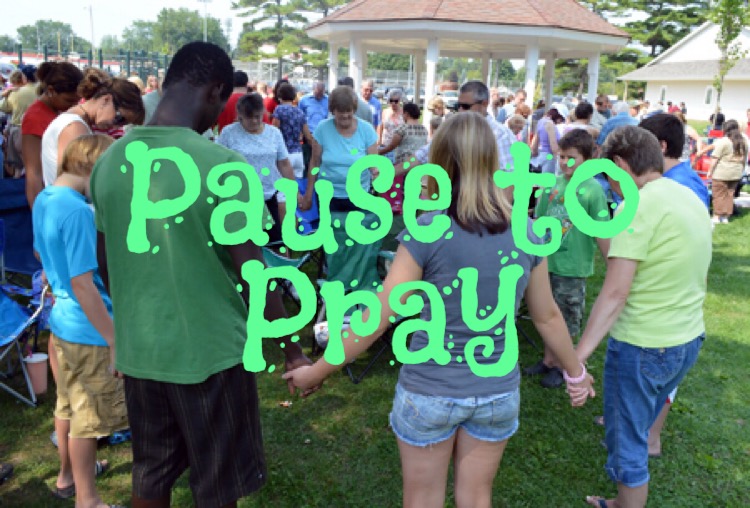
Pause To Pray

…Now the Philistines had come and spread out in the Valley of Rephaim; so David inquired of the Lord, “Shall I go and attack the Philistines? Will You deliver them into my hands?” … (2 Samuel 5:17-25)

The enemy poised to attack, but David paused. 

David is a man of action. But without a doubt, he is a more successful man of action when he is first a man of prayer. 

The Philistines encamped in the valley, preparing themselves to attack Israel. David has had no problem dealing with this enemy before so no one would have questioned David saying to his army, “God is with us. Let’s go attack these Philistines.” 

But David paused to pray and only went to war when God said, “Go—attack them straight on.” David obeyed and won a great victory (vv. 20-21). 

The Philistines returned to the exact same valley. Again no one would have faulted David for saying, “This is the same scenario as last time. God told us to attack before, so we already have His permission to go attack again.” 

But David paused to pray and this time God gave him a different battle strategy: “Circle behind them.” Same scenario, different battle tactic, but still the same victorious result (vv. 22-25). 

Just because something seems automatic doesn’t mean we should act quickly and prayerlessly.

Just because something seems the same doesn’t mean we should act on auto-pilot. 

In each situation: Pause to pray, wait for God’s direction, then follow through exactly as He says.

The Mysteries Of God

“Relinquish your demand to understand; accept the fact that many things are simply beyond your comprehension. Because I am infinite and you are finite, the limitations of your mind make it impossible for you to understand much of what happens in your life—and in the world. So it’s vital to make room for mystery in your worldview.

“You are privileged to know many things that were formally mysteries—things that had been kept hidden for ages and generations. The New Testament is full of revelations that came through My incarnation, life, death, and resurrection. You are immeasurably blessed to have this priceless knowledge!

“Nonetheless, the ways I work in your world are often mysterious to you—beyond tracing out. This presents you with a choice: to resent My ways or to bow before Me and wonder and worship.” —Jesus (in Sarah Young’s Jesus Always)

I hope you will choose wonder and worship—that’s what I’m trying to choose.

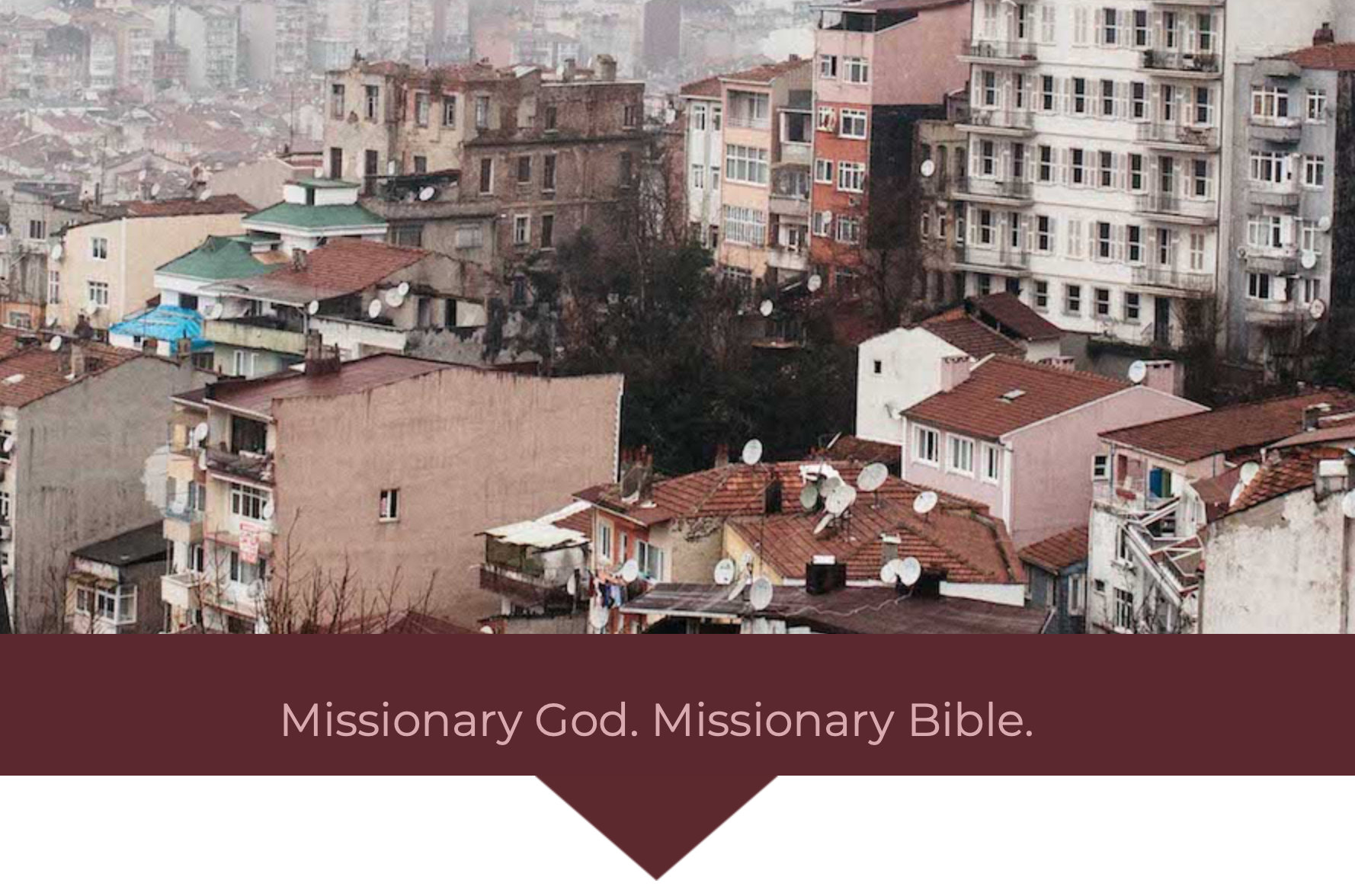
Missionary God, Missionary Bible (book review)

Technically speaking, Missionary God, Missionary Bible by Dick Brogden is a pre-book. It is being released through 2019 as a daily email and then it will be published as a book next year. But I urge you to jump in on these stirring thoughts today! 

God is a missions-minded God, so it makes sense that the Bible would be a missions-centered text, speaking to the hearts of both those who don’t know Jesus as Savior yet, and to the hearts of those Christians who should be missional in their lives. 

Dick is a veteran missionary, and he brings his decades of ministry experience to this monumental work. Dick is using The Chronological Study Bible to take us through the Bible in one year and to look at every text through a missionary lens. The Chronological Study Bible is a fascinating read in itself, as it places the biblical texts in the order in which the events happened, but then when Dick’s insights are added to those historical events, something even more powerful stirs in my heart. 

Each day’s devotional also includes a prayer focus for an unreached people group, along with the vital statistics about these precious people who need to hear the Good News of Jesus. 

This study Bible, read alongside Dick’s missional insights, and then combined with a prayer for a group that needs to receive the Gospel, makes for a life-changing devotional time. You will definitely want to get the book when it is published, but please don’t wait until then to begin to have your missionary heart enlarged and engaged in this fantastic daily study. 

You can subscribe to the daily emails by clicking here.

Don’t Stop At Salvation

The Holy Spirit is vital in everything concerning a Christian’s life. Dr. Donald Stamps emphatically said it this way: 

“It is essential that believers recognize the importance of the Holy Spirit in God’s redemptive purpose. Many Christians have no idea what difference it would make if there were no Holy Spirit in this world. Without the Holy Spirit there would be no creation, no universe, no human race (Genesis 1:2; Job 33:4). Without the Holy Spirit there would be no Bible (2 Peter 1:21), no New Testament (John 14:26; 15:26-27; 1 Corinthians 2:10-14), no power to proclaim the gospel (Acts 1:8). Without the Holy Spirit there would be no faith, no new birth, no holiness, no Christians at all in the world.” 

Sometimes I think we have in our mind that the “old” in Old Testament somehow means outdated or no longer applicable to our lives, and the “new” in New Testament should be our sole focus. But Jesus affirmed again and again that all of the Scriptures—what we now refer to as the Old Testament—all point to Him. 

The outpouring of the Holy Spirit on that Pentecost Sunday was not something new to the New Testament Christians. He was always a part of a believer’s life. Even 1000 years before Christ’s public ministry, David knew the importance of the Holy Spirit in both salvation, and in living a consistently holy lifestyle (Psalm 51:10-12, 143:10). 

The role of the Holy Spirit in Christ’s public ministry was foretold in the Old Testament Scriptures and then fulfilled in the New Testament era (see Isaiah 11:1-2; Luke 3:21-22; Isaiah 61:1-2; Luke 4:18-21). 

If Jesus needed the baptism in the Spirit to empower Him, direct Him, and give Him success, how much more do we need this?! That’s why Jesus imparted the Holy Spirit to His followers at their moment of salvation, but then admonished them to eagerly expect the baptism in the Holy Spirit as well (John 20:22; Luke 24:49; Acts 1:8). 

Quite simply Jesus is sayingDON’T STOP AT SALVATION

Jesus didn’t, the apostles didn’t, Paul didn’t, Apollos didn’t, the Ephesian Christians didn’t, I didn’t, and you shouldn’t either! 

Keep on going…

  1. Ask Jesus to forgive you of your sins
  2. Eagerly desire the baptism in the Spirit 
  3. Ask God to baptize you in His Spirit
  4. Expect that He will answer that prayer (Acts 2:38; Isaiah 44:3; John 7:37-39; Luke 11:13; Mark 11:24)

Join me again this Sunday as we continue to learn what it means for Christians today to be Pentecostal. 

If you missed any of the messages in this series, you can access the full list of messages by clicking here.

Poetry Saturday—Thanksgiving

We walk on story fields of white
And do not see the daisies, 
For blessings common in our sight 
We rarely offer praises. 
We sigh for some supreme delight 
To crown our lives with splendor, 
And quite ignore our daily store 
Of pleasures sweet and tender.

Our cares are bold and push their way 
Upon our thought and feeling; 
They hang about us all the day, 
Our time from pleasure stealing. 
So unobtrusive many a joy 
We pass by and forget it, 
But worry strives to own our lives, 
And conquers if we let it.

There’s not a day in all the year 
But holds some hidden pleasure, 
And, looking back, joys oft appear 
To brim the past’s wide measure. 
But blessings are like friends, I hold, 
Who love and labor near us. 
We ought to raise our notes of praise 
While living hearts can hear us.

Full many a blessing wears the guise 
Of worry or of trouble; 
Far-seeing is the soul, and wise, 
Who knows the mask is double. 
But he who has the faith and strength 
To thank his God for sorrow 
Has found a joy without alloy 
To gladden every morrow.

We ought to make the moments notes
Of happy, glad thanksgiving; 
The hours and days a silent phrase 
Of music we are living. 
And so the theme should swell and grow 
As weeks and months pass o’er us, 
And rise sublime at this good time, 
A grand thanksgiving chorus. —Ella Wheeler Wilcox