Leaders need to give their teammates permission to try some things, to take some chances.
If they are just standing still, doing nothing, that means there is nothing for you to coach. Let them take some chances and see what happens! You never know when their big swing is going to result in something amazing!
This is a weekly series with things I’m reading and pondering from Charles Spurgeon. You can read the original seed thought here, or type “Thursdays With Spurgeon” in the search box to read more entries.
Listen to the podcast of this post by clicking on the player below, and you can also subscribe on iTunes or Spotify.
Always Follow The Example Of Jesus
The heathen moralists, when they wished to teach virtue, could not point to the example of their gods, for, according to their mythologists, the gods were a compound of every imaginable and, I had almost said, unimaginable vice! Many of the classic deities surpassed the worst of men in their crimes—they were as much greater in iniquity as they were supposed to be superior in power. It is an ill day for a people when their gods are worse than themselves! The blessed purity of our holy faith is conspicuous, not only in its precepts, but in the character of the God whom it reveals. There is no excellence that we can propose, but we can see it brightly shining in the Lord our God! There is no line of conduct in which a believer should excel, but we can point to Christ Jesus our Lord and Master as the pattern of it! In the highest places of the Christian faith, you have the highest virtue, and to God our Father and the Lord Jesus be the highest praise.
From Forgiveness Made Easy
If you’ve ever studied ancient mythologies, the gods and goddesses of those stories did not live a life worthy of emulation! But Jesus is an entirely different story. Even people who don’t want to acknowledge the deity of Jesus still find His lifestyle worthy of following.
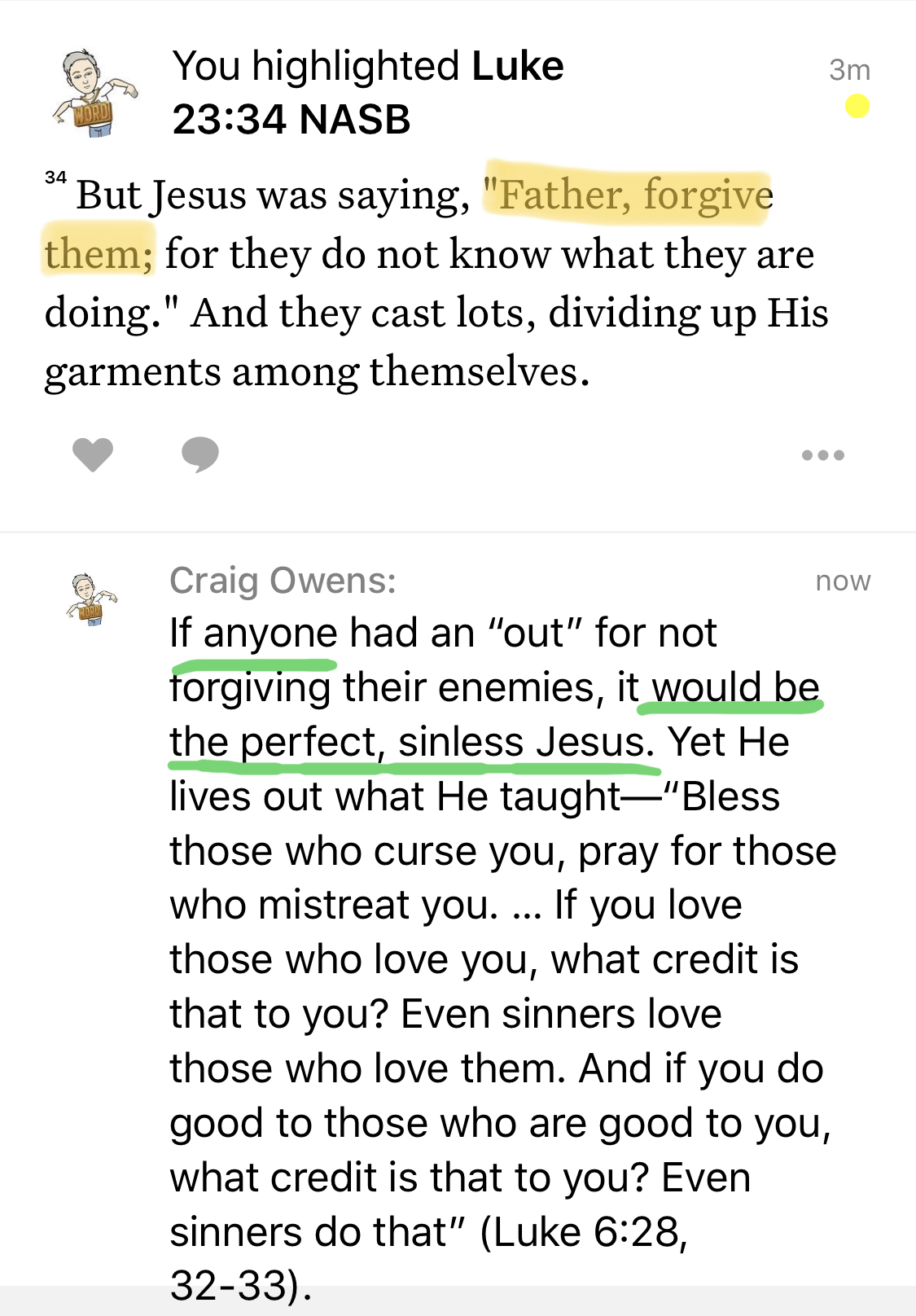
So not only did Jesus say, “Bless those who curse you, pray for those who mistreat you,” but He lived it out. “When they hurled their insults at Him, He did not retaliate; when He suffered, He made no threats. Instead, He entrusted Himself to Him who judges justly,” and said, “Father, forgive them, for they do not know what they are doing.” (See Luke 6:28; 1 Peter 2:21-23; Luke 23:34).
Don’t say, “That person really injured me. It was unfair! I cannot forgive them.” Instead, follow the example of Jesus, the only one who ever lived an absolutely perfect life and yet He was still shamefully mistreated. Peter reminds us that by forgiving His tormenters, Jesus was entrusting Himself to the Perfect Judge—He trusted God to take care of it.
It may seem impossible, but the same Holy Spirit that empowered Jesus to do these things is living in you and He will empower you too. Always, always, always follow the example of Jesus.
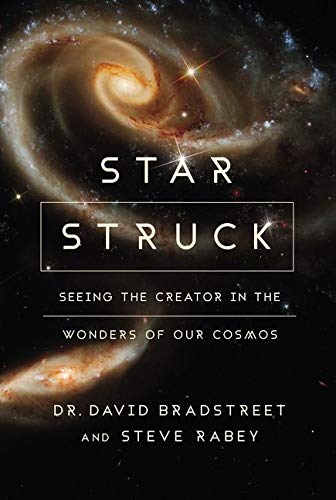
Star Struck by Dr. David Bradstreet is an insightful book for astronomical issues, but I found it lacking in the way he missed multiple opportunities to use the mind-boggling discoveries in astronomy to point to a majestic Creator. Check out my full book review by clicking here.
“Those who study the stars have God for a teacher.” —Tycho Brahe, a sixteenth-century astronomer
“Almost all ancient civilizations believed that the universe had existed forever. Throughout the ancient world there was just one civilization that didn’t subscribe to this cyclical vision of eternity. Jewish Scripture, with the story of the Creation, stated clearly that the world had a beginning.” —Martin Gorst, historian
“Science is great as science, but it makes a lousy religion.” —Guy Consolmagno
“The atoms that so liberally and congenially flock together to form living things on Earth are exactly the same atoms that decline to do it elsewhere.” —Bill Bryson
“Eratosthenes of Alexandria (276–194 BC) “did the math, concluding that the earth was 24,662 miles around. His results were shockingly accurate: within 1 percent of our current estimate of 24,859 miles.” —Dr. David Bradstreet
“The sun is so powerful that we sometimes must shield ourselves from its heat, even after that heat has taken an eight-minute journey to earth, losing a third to half of its radiant energy to the protective atmosphere of our clouds. ‘Nothing is deprived of its warmth,’ says the psalmist (Psalm 19:6).” —Dr. David Bradstreet
“I wanted to become a theologian. For a long time I was restless. Now, however, behold how through my effort God is being celebrated in astronomy.” —Johannes Kepler
“Science keeps religion from sinking into the valley of crippling irrationalism and paralyzing obscurantism. Religion prevents science from falling into the marsh of obsolete materialism and moral nihilism.” —Dr. Martin Luther King, Jr.
“If we study science without Scripture, we risk falling into the ditch of atheistic evolutionism; on the other hand, the study of Scripture separated from God’s laws in nature risks ideologies that misinterpret God and distort His character.” —Timothy Jennings
“Holy Scripture and nature are both emanations from the divine Word.” —Galileo
“God cannot be reduced to the role of a scientific hypothesis.” —Father Georges Lemaître
Interesting astronomical tidbits:
Unlike everyone else in the neighborhood, Venus rotates backwards.
Jupiter rotates on its axis in slightly less than ten hours, faster than on any other planet.
Saturn is twice as far away from the sun, lowering its temperature and stretching out its orbital period to nearly thirty Earth years.
Neptune is so far away that it takes 164 years to orbit the Sun.
Uranus’ North Pole is tipped a whopping 98 degrees to its orbital plane.
Every day our powerful atmospheric shield hijacks some 100 tons of small rocks and other pieces of space stuff heading our way, breaking up and incinerating everything before it can hit us.
Our own Milky Way galaxy is home to more than 200 billion stars. There are more than 200 billion additional galaxies in the cosmos. These galaxies serve as gigantic star factories, each of which has its own 100 to 300 billion stars. Do the math and the numbers are mind-boggling: our Sun is merely one among some 100,000,000,000,000,000,000,000 stars.
Listen to the podcast of this post by clicking on the player below, and you can also subscribe on Apple, Spotify, or Audible.
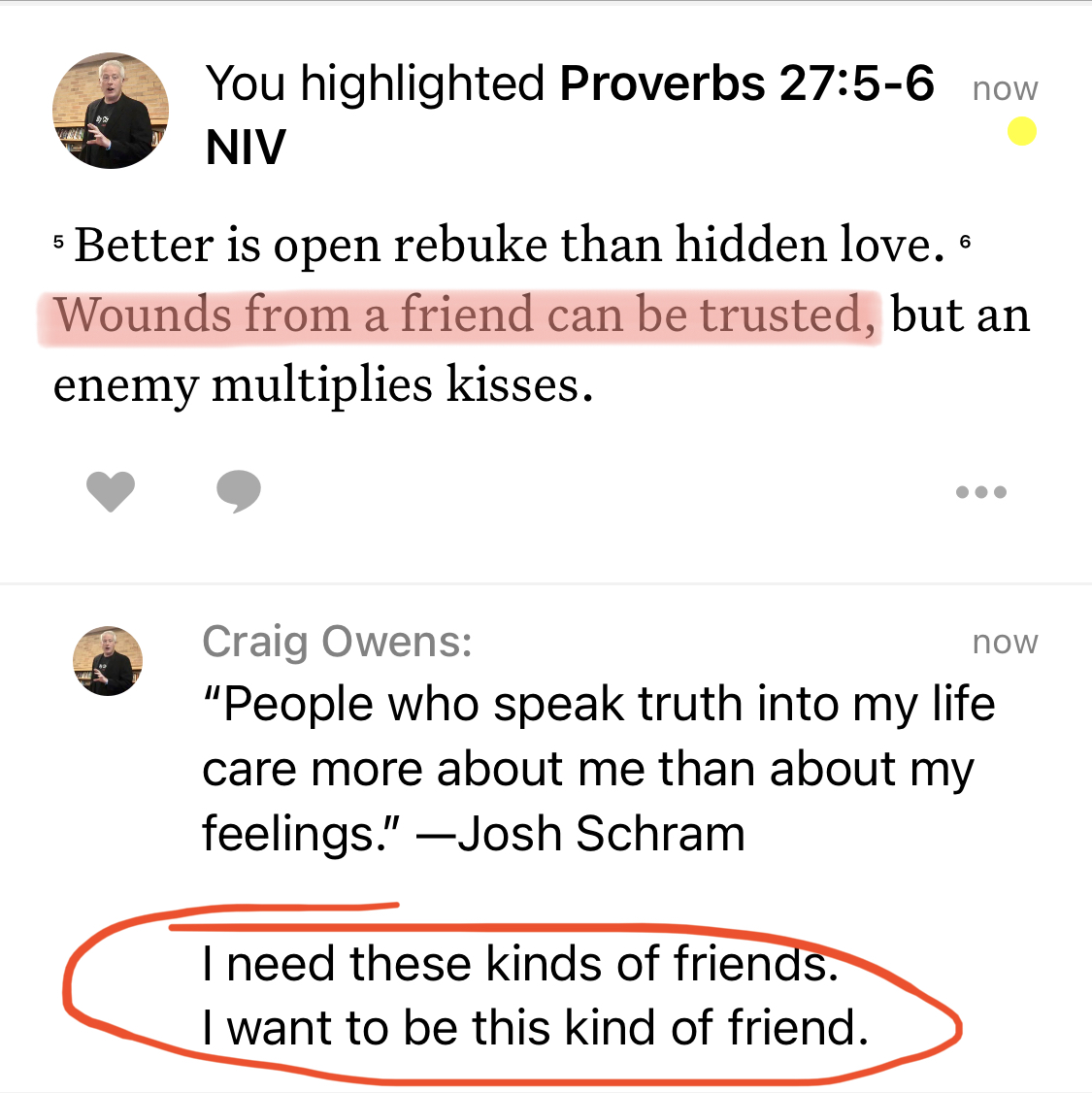
Wounds from a sincere friend are better than many kisses from an enemy (Proverbs 27:6 NLT).
Proverbs 27 may have more wisdom about our friends than any other chapter in this book. But sprinkled throughout the entire book of Proverbs is outstanding wisdom about our closest relationships. Allow me to share just a few observations with you.
Friends love me through my worst moments (17:17) because they have committed to stick closer than a brother to me (18:24).
I must be careful not to make friends with a hot-tempered person (22:24), and to be cautious of people who want to be friends with me only for what I can give them (19:4).
My true friends will wound me in love to help me become the best that God intended me to be (27:5-6, 9, 17), so I must never forsake these friends (27:10).
False friends will gossip to me and about me, but my true friends will guard my secrets and guard my reputation (16:28; 17:9).
In order to have true friends, I first have to be a true friend.
David was the gold standard for every king of Israel who followed him. Numerous times throughout the history of Israel, we will see a note that a certain king either followed God like David, or turned from God unlike David. Yet there exists a wart on David’s portrait: an adulterous affair with the wife of a man in his inner circle, and then subsequent lies and a murder to cover up the affair. “The thing David had done displeased the Lord” (see 2 Samuel 11).
But I’d like to turn your attention to when this affair occurred: “In the spring, at the time when kings go off to war…David remained in Jerusalem” (2 Samuel 11:1). He was without his usual comrades. The men who knew David best, who could probably sense if something was amiss, weren’t around to warn him. When David tried to find out the identity of the bathing beauty on the roof next door to his palace, an unnamed attendant tried to remind him, “Isn’t that Bathsheba, the wife of Uriah?” but David dismissed him.
Elijah was arguably the most forceful and fearless prophet in Israel’s history. Not only did he stand up to the evil kings of Israel, but he spoke out against the kings of surrounding nations, too. In answer to Elijah’s prayer, God brought a drought on the land, and again in answer to Elijah’s prayer, God sent rain. Elijah challenged the 450 prophets of the god Baal and the 400 prophets of the goddess Asherah to a duel to the death, which ended up in a decisive victory for Yahweh. Yet, shortly after this massive victory, Elijah was depressed to the point that he wanted to die.
What led to Elijah’s depression? Something very similar to David’s slide into adultery: He was alone. Elijah ran away from Queen Jezebel’s death threat, left his servant behind, and proceeded all by himself into the desert. It was when he was without a comrade that he prayed to God, “I’ve had enough. Take my life” (see 2 Kings 17–19).
And what about Peter? He boldly claimed his loyalty to Jesus, even to the point of wielding a sword at the guards who came to arrest his Master. But when Peter was alone, after the other disciples fled, he denied three times that he knew Jesus (Matthew 26:33, 51, 69–75).
God designed us to be in relationship with others. His statement to Adam in some of the earliest words of the Bible—“It is not good for you to be alone”—are words for us still today. —from the chapter “Going Farther”
We need true, God-fearing friends close to us. Ask God to bring those friends around you, and ask the Holy Spirit to make you into that kind of friend for those He does bring around you.
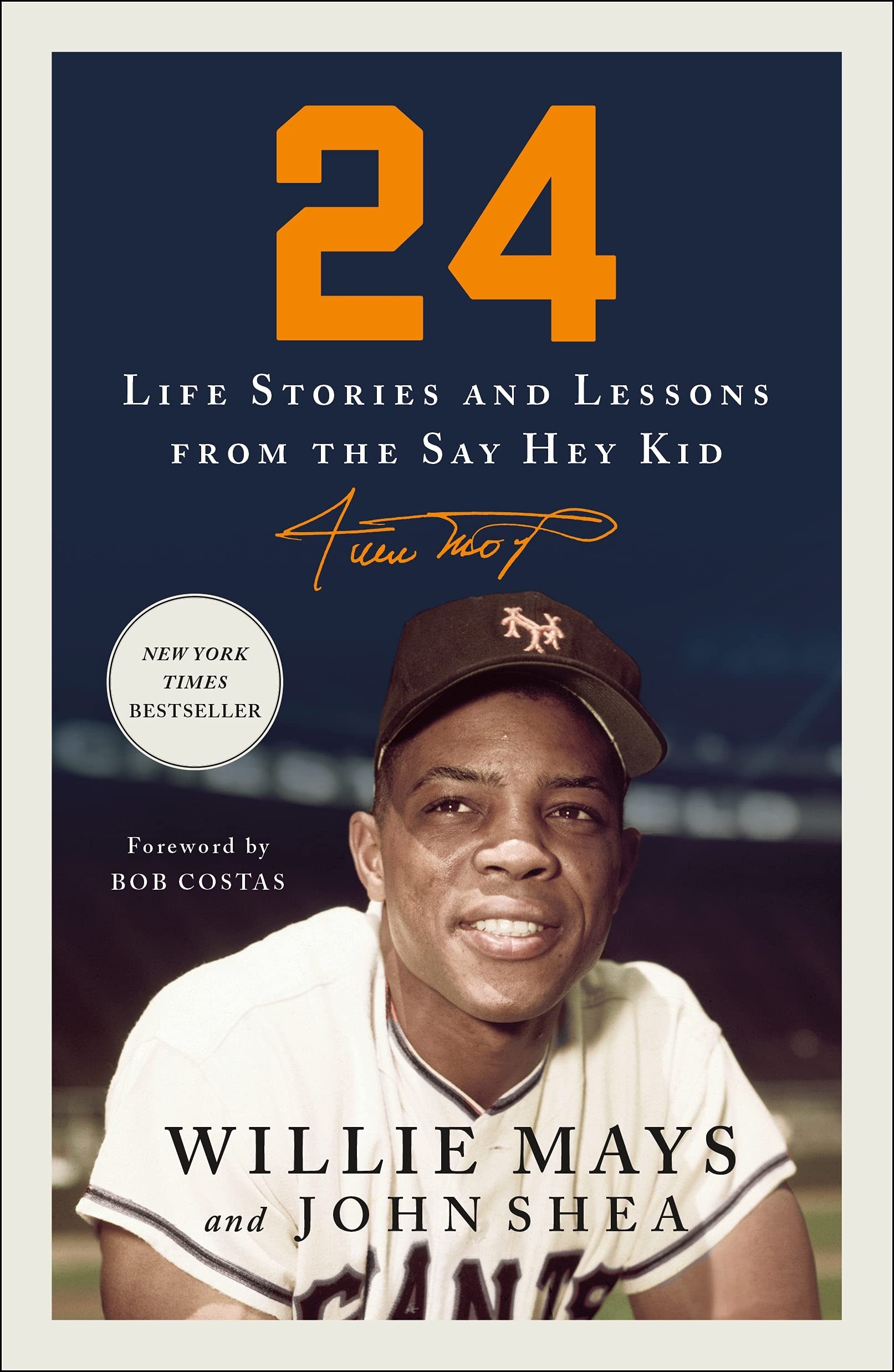
Willie Mays is arguably the best all-around player in baseball history. There’s only a few that surpass him in individual statistics like home runs, stolen bases, and fielding prowess, but combining all of his stats puts the Say Hey Kid into a rarefied category!
Willie overcame such huge obstacles and racism, took time away from baseball to serve his country during the Korean War and still racked up mind-boggling statistics, and exhibited a loyalty to both teammates and opposing players that make hardly anyone a comparable peer. He played the game competitively, seldom took a day off, always had time for the fans (especially the kids), and has remained an integral part of his beloved San Francisco Giants for more years in retirement than he even did as a player.
He accomplished all of this with class and professionalism.
John Shey compiled twenty-four life lessons from Willie Mays’ life, to match his iconic jersey number. Each chapter tells the story of his life before, during, and after baseball while elaborating on that particular leadership lesson. This book is extremely well written.
Both baseball fans and students of leadership will find many rich lessons in 24, all presented in a very enjoyable format.
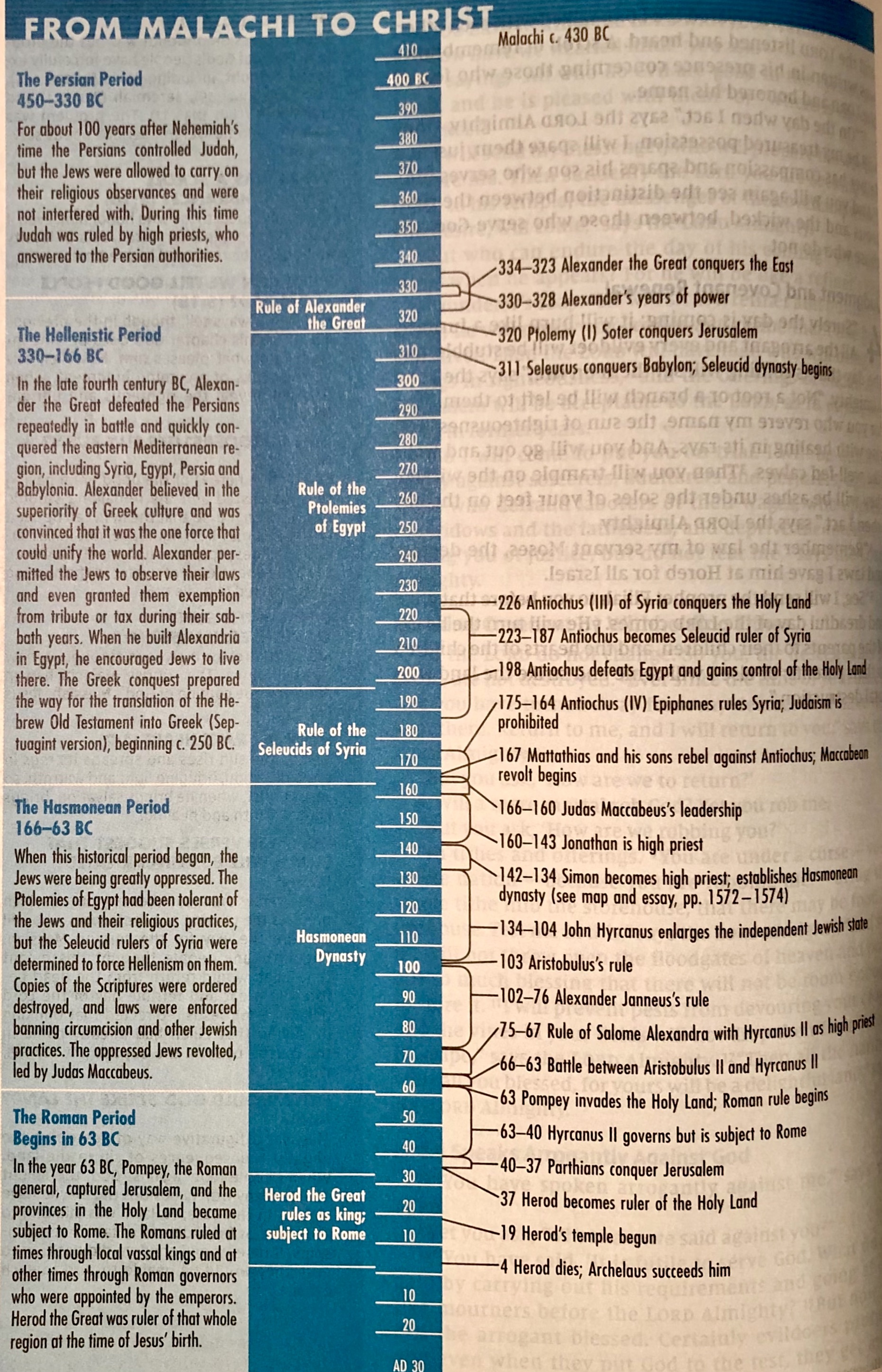
I just finished a series looking at the minor prophets. After Malachi, there is about 400 years of silence as far as what is recorded in the Bible for us. That doesn’t mean nothing is happening on the pages of history. In actuality, there is so much happening on the world scene.
Listen to the podcast of this post by clicking on the player below, and you can also subscribe on Apple, Spotify, or Audible.
I get a little leery when people are advocating for a government that is friendly to Christianity. In biblical history and world history, Christians tend to backslide when things are going smoothly for them.
As the Jews returned from their exile in Babylon, things were going fairly easily for them. And as they had done so many times before, they began to backslide. The Archeological Study Bible noted, “This generation was not guilty of the gross idolatry of its forefathers. Rather, these Israelites embraced a kind of dead orthodoxy, in which they tried to get by with the minimum that their faith required.”
Onto this scene comes a prophet named Malachi. Malachi means “My messenger,” and we don’t know if this was actually the prophet’s name or not, but he took it on as his nature, delivering the heavy words of God. In fact, he held the words of God with such respect that when he says this is “an oracle,” he literally is saying, “This is a heavy burden to bear!”
Malachi uses the phrase “LORD Almighty” (or LORD of Hosts in the KJV, and Lord of Heaven’s Armies in the NLT) twenty-four times. By contrast with the other minor prophets…
Hosea, Joel, Amos, Obadiah, and Jonah use this phrase zero times
Micah and Habakkuk each use it once
Nahum and Zephaniah each use it twice
Haggai uses it 12 times (or 32 percent of the total verses in his book)
Zechariahuses the phrase 46 times (which 22 percent of his total verses)
But Malachi’s 24 times is 44 percent of his total verses! In other words, he wanted his audience to be crystal clear that it wasn’t him who was speaking, but the King of kings was speaking to us through Malachi!
God is still speaking through Malachi to us today! Just like Israel in Malachi’s day, I think Christians today run the very real risk of backsliding. Just like Israel, when we forget the weightiness of the glory of the LORD ALMIGHTY we can begin to slip into an it’s-no-big-deal attitude.
By contrast, when we’re honoring the LORD of Hosts, and reverencing Him, and desirous of His glory being seen, it’s a very big deal that we listen to His voice and closely follow His commands.
So Malachi’s six warnings to the Israelites of his day should still be heeded by Christians today. We should examine ourselves very closely to see if we have the same it’s-no-big-deal attitude. We should ask ourselves, “Are we…
(1) …offering less-than-our-best sacrifices? Are we just giving God the leftovers?”
(2) …listening to church leaders that don’t reverence God’s name?”
(3) …honoring the sanctity of marriage?”
(4) …self-seeking instead of neighbor-loving?”
(5) …withholding the full tithe from our local church?”
(6) …following God only for personal gain?”
(Check out all of the verses for these questions by clicking here.)
If this study of the minor prophets—especially these last three—has told us anything, it’s that God keeps His word. When He says He is coming back as the righteous Judge, that will happen. In fact, it could happen at any moment!
We must be ready! We must guard our hearts against the it’s-no-big-deal attitude. We must reverence our awesome God. The things of God are a very big deal indeed (see Hebrews 10:37-39; Revelation 22:12-16).
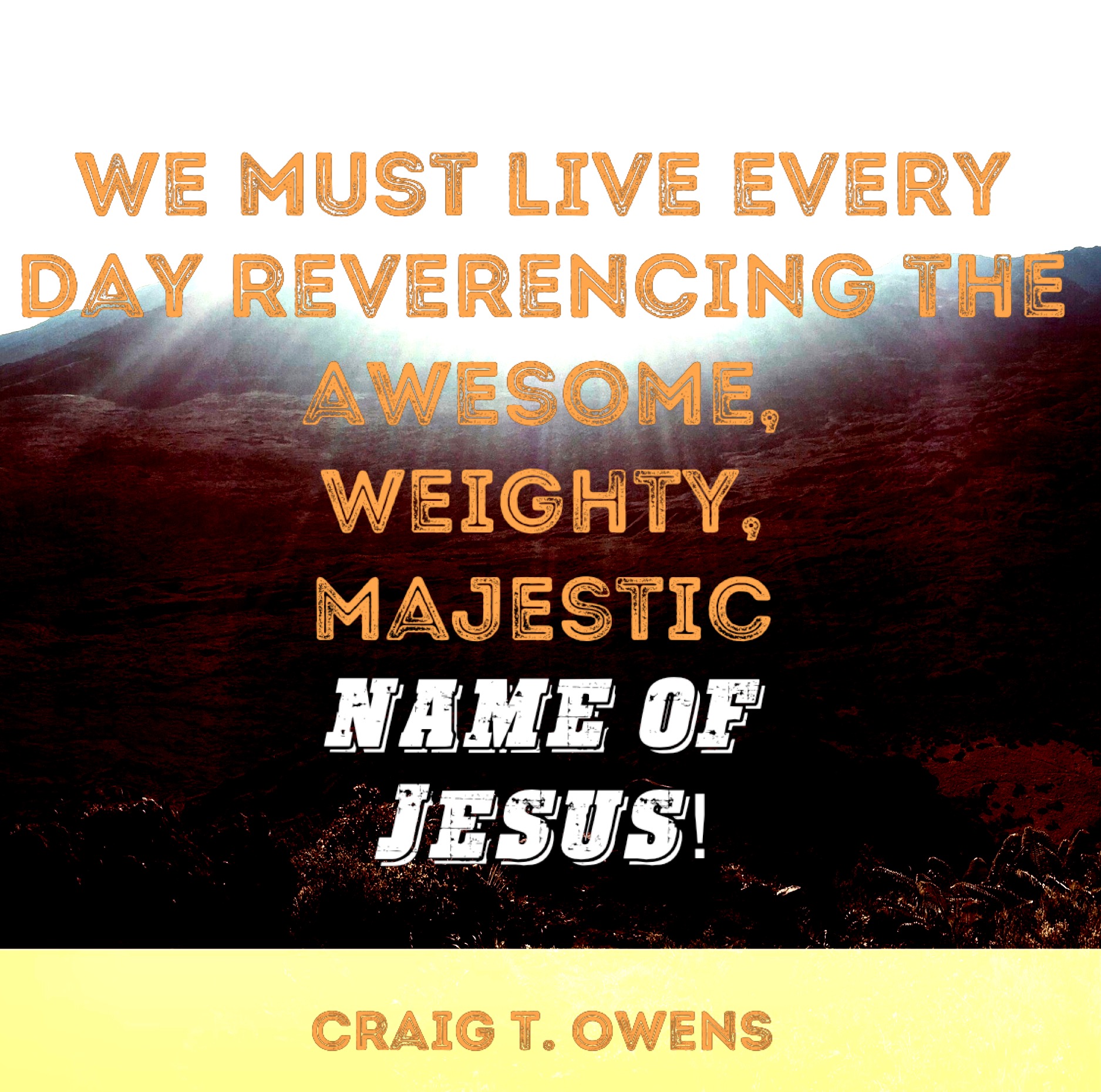
To guard ourselves against this backsliding attitude, we must live every day reverencing the awesome, weighty, majestic name of Jesus!
Listen to the podcast of this post by clicking on the player below, and you can also subscribe on Apple, Spotify, or Audible.
I had a great time on the Ailbe Podcast with Rusty Rabon.
Rusty noted that I used Jesus as the ultimate example of a Shepherd Leader, but then he wondered why I also used a man named Joseph Barnabas. Actually, I used Barnabas as a phenomenal example twice in my book—once in a chapter called “Secure to Serve” and again in a chapter about the importance of having other strong shepherds around us in the chapter “Going Farther.”
Please check out the Scriptures I mention in this snippet by clicking here.
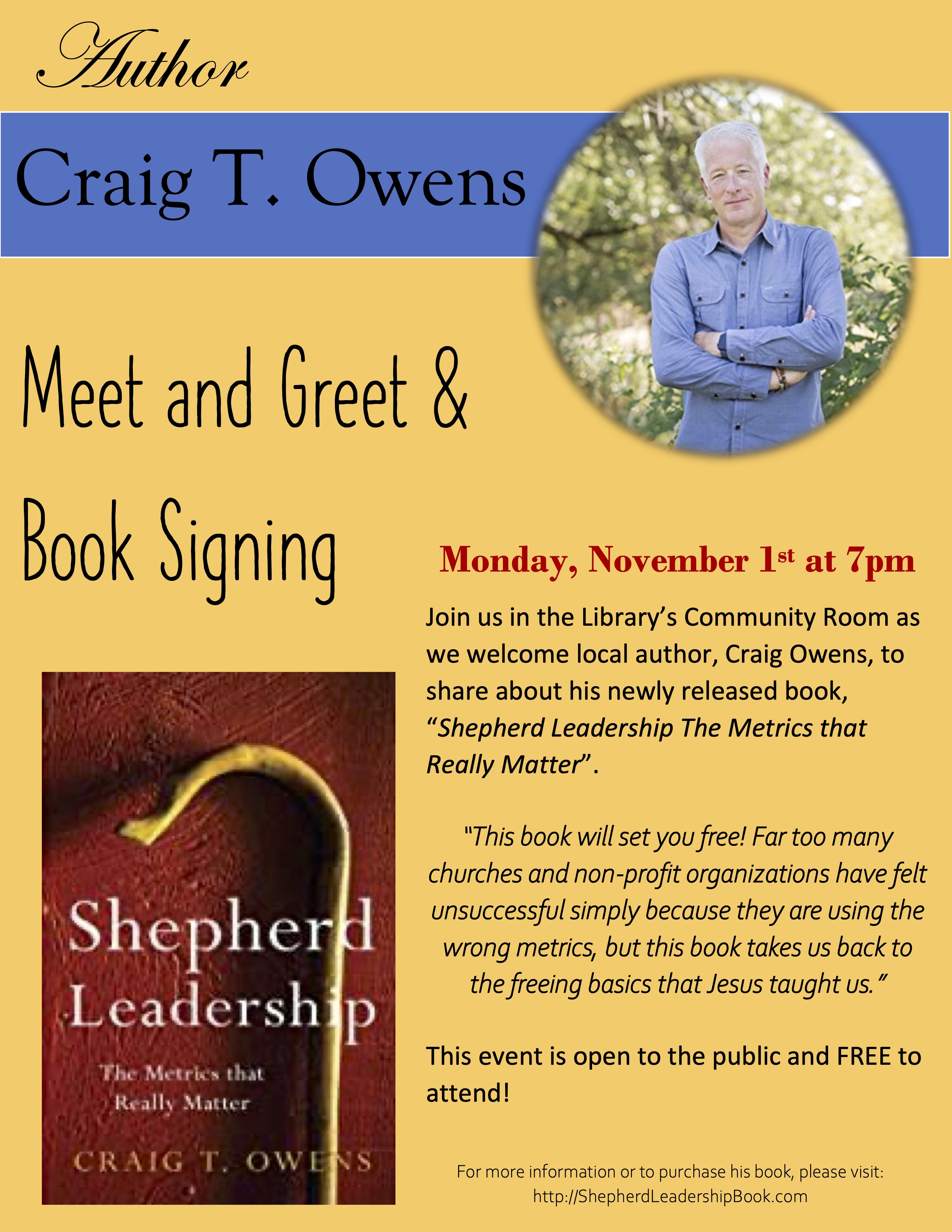
I’ll be sharing more clips from this interview soon, so please stay tuned. Shepherd Leadership: The Metrics That Really Matter is now available in print or ebook, and in audiobook through either Audible or Apple.
This is a weekly series with things I’m reading and pondering from Charles Spurgeon. You can read the original seed thought here, or type “Thursdays With Spurgeon” in the search box to read more entries.
Listen to the podcast of this post by clicking on the player below, and you can also subscribe on iTunes or Spotify.
Faith Sees Better Than Sight Does
For we walk by faith, not by sight. (2 Corinthians 5:7)
There is walking by faith, and there is walking by sight. The most of men, all men indeed, naturally walk by sight. They have a proverb that says, ‘Seeing is believing,’ and they are wise men, for they trust people as far as they can see them, and no further. … Self-reliance is the name of the principle, and according to the world, the best and grandest thing that a man can do is have faith in himself. …
I think the world must be pretty well ashamed of itself if it still considers this poor earth to be all that a soul has to live for. I feel as if I could not talk upon the matter. Solomon tried everything there was in this world—riches, power, pleasure—every sort of delicacy and delight he had, beyond the point of satisfaction. And what was his verdict upon at all? ‘Vanity of vanities, all is vanity’ (Ecclesiastes 1:2). …
If there is not another world to live for, I must say that this life is a most unutterably empty kind of thing! It is not worthy of a man! But oh, to believe what God tells me: that there is a God; that God became flesh to bear me up to Himself! To believe that I am God’s son, that I have an immortality within myself that will outlast the stars, that I will one day see His face and sing His praise forever with cherubim and seraphim! Why, there is something here! …
If you walk only by sight and believe only what you see, what do you believe? You believe that while you are living here, it is a good thing to make the best you can of it. And then you will die and be buried, and that will be the end of you! What a poor, miserable, ignorant belief this is! … But when you believe in what God reveals and come to walk by faith, how your information expands! Now riddles are all solved, and the inexplicable is understood! …
The principle of faith does best in the dark. He who walks by faith can walk in the sunlight as well as you can, for he walks with God. He has enlightened eyes, but he can walk in the dark as you cannot, for his light is still shining upon him. He trusts in the unseen and in the invisible, and his soul rejoices when present things are passing away.
The devil’s strategy hasn’t changed. He will try to get you to say, “Woe is me! Look at all of the bad things happening around me!”
But we walk by faith, not by sight. “Faith is the assurance—the confirmation, the title deed—of the things we hope for, being the proof of things we do not see and the conviction of their reality—faith perceiving as real fact what is not revealed to the senses” (Hebrews 11:1 AMP).
Don’t give in to the temptation to believe only what you see. There is so much more waiting for you. It’s all yours by faith in Jesus Christ!



 Leaders need to give their teammates permission to try some things, to take some chances.