Mental health tip: Stop beating yourself up because of what you did or didn’t do in the past. Learn from it and keep moving forward. Check out a whole series of posts and videos on a Christian’s mental health. I have lots of new content every week, which you can check out on my YouTube channel.
“God cannot part with His grace, or goodness, or strength, as an external thing that He gives us, as He gives the raindrops from heaven. No; He can only give it, and we can only enjoy it, as He works it Himself directly and unceasingly. And the only reason that He does not work it more effectually and continuously is, that we do not let Him. We hinder Him either by our indifference or by our self-effort, so that He cannot do what He would.” —Andrew Murray, Waiting on God
The unlimited genius of our All-wise Creator is seen so clearly in the unique and beautiful design of each snowflake. Check out these amazing photographs!
“You don’t have to be a fantastic hero to do certain things—to compete. You can be just an ordinary chap, sufficiently motivated to reach challenging goals.” —Sir Edmund Hillary
Biblical archaeologist Joel Kramer takes viewers into a hidden cave to show them an ancient Christian inscription that offers direct extra-biblical, archaeological evidence for Jesus.
Listen to the podcast of this post by clicking on the player below, and you can also subscribe on Apple, Spotify, or Audible.
Godly leaders are always striving to use their leadership power to serve others. What exactly does this look like? On a recent Craig And Greg Show episode, Greg and I discussed this important leadership tension.
Check out the full Craig And Greg Show episode here.
When I wrote my first book, my publisher asked me to write on “servant leadership,” but the more I dove into the topic, the more I kept coming back to Jesus as the ultimate example. But then I noticed that Jesus not only called Himself a shepherd, but many of the Old Testament prophecies foretelling His arrival also used shepherding terms. It was then that I pivoted to entitle my book Shepherd Leadership.
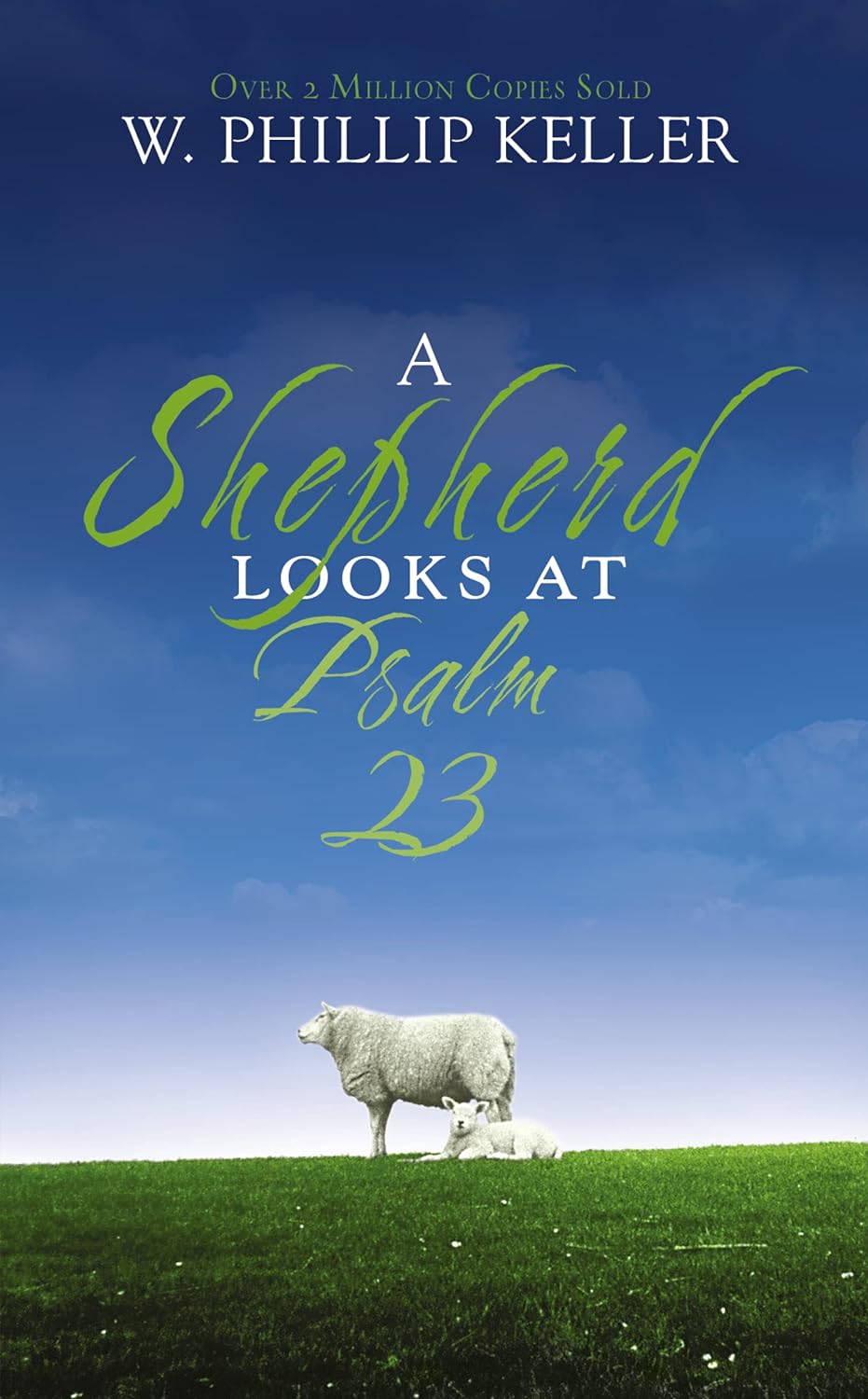
Ever since I immersed myself in the research for that book, I’ve been especially attentive to all things related to shepherding. In going through books from my Mom’s library, I stumbled upon A Shepherd Looks at Psalm 23 by Phillip Keller.
Oh my! I wish I would have discovered this amazing little book while I was writing my book! What a depth of insight I have gleaned from someone who looks after actual sheep!
As the title denotes, Keller uses the well-known Psalm 23 to give us so many eye-opening insights into our Good Shepherd. He goes phrase by phrase—“the Lord is my Shepherd,” “I shall not want,” “He makes me lie down in green pastures,” and so on—with each phrase adding a new level of intimacy with this One who cares for us so profoundly.
And as an added bonus for me, it was so sweet to see the highlights and notations my Mom had made as she read this book. This made A Shepherd Looks at Psalm 23 a double blessing for me.
(P.S. Check out some quotes I’ve shared from this book here.)
Listen to the podcast of this post by clicking on the player below, and you can also subscribe on Apple, Spotify, or Audible.
There’s an interesting verb used with both Enoch and Noah that denotes intimate fellowship—the word is “walked.”
Enoch walked with God; and he was not, for God took him. (Genesis 5:24)
These are the records of the generations of Noah. Noah was a righteous man, blameless in his generation. Noah walked with God. (Genesis 6:9)
David uses this same verb when he prays, “Vindicate me, Lord, for I have walked in my integrity, and I have trusted in the Lord without wavering. Examine me, Lord, and put me to the test; refine my mind and my heart. For Your goodness is before my eyes, and I have walked in Your truth” (Psalm 26:1-3).
And Solomon uses the same verb to say that anyone who walks in righteous integrity leaves a legacy of righteousness for his family: “A righteous person who walks in his integrity—how blessed are his sons after him” (Proverbs 20:7).
There is something important that is implied in this walking. God tells us what it is in this question: How can two walk together unless they agree to do so? (Amos 3:3).
But make no mistake, God doesn’t agree with whatever path I choose to walk, but I must agree to walk God’s path.
I must agree that God’s path is best, despite what everyone else is doing—“Then the Lord saw that the wickedness of mankind was great on the earth, and that every intent of the thoughts of their hearts was only evil continually” (Genesis 6:5). Yet Noah didn’t walk with the wicked, but he was commended because he walked with God.
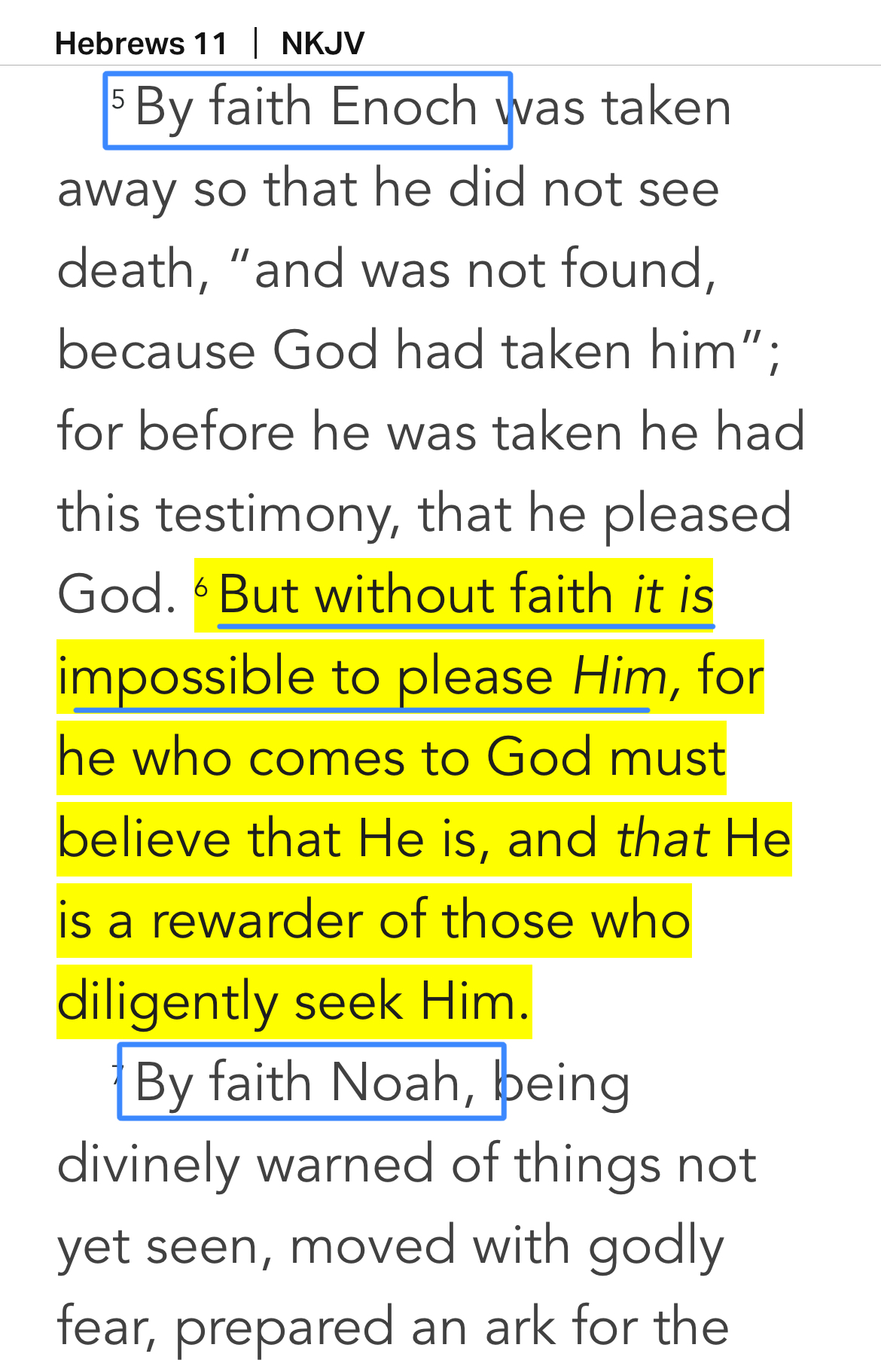
In the New Testament, Enoch and Noah are listed as back-to-back examples of faith (Hebrews 11:5, 7). The verse that connects these two men speaks of the faith-filled integrity that kept them walking with God—
And without faith it is impossible to please Him, for the one who comes to God must believe that He exists, and that He proves to be One who rewards those who seek Him. (Hebrews 11:6)
That word “seek” means to diligently crave. Enoch and Noah and David show us examples of men who diligently craved walking with God above all else. Their faithful, diligent walking made them stand out from all those around them.
What about us? Hebrews 11:6 says we can follow their example. We can choose to walk with God by faith. We can diligently crave Him above all else. When we walk righteously with God, He “rewards those” who do—for ever and ever!
Listen to the podcast of this post by clicking on the player below, and you can also subscribe on Apple, Spotify, or Audible.
We said our protocol in approaching Almighty God in prayer is found in just two words: Our Father.
Notice the transition: your Father (3x in Matthew 6:6, 8) to Our Father (6:9). How does this happen? Jesus makes it possible and the Holy Spirit continually reminds us of Christ’s completed work (Hebrews 2:11; John 14:13-14; Romans 8:15-16).
It’s not just “our Father” but “our Father in Heaven.” Let’s remember that our Father is both All-loving and All-powerful. The phrase in Heaven reminds us of His absolute sovereignty. “Our God is in heaven; He does whatever pleases Him” (Psalm 115:3). What pleases Him? To give us His kingdom (Luke 12:32).
Then there’s another phrase that is vital: Our Father in Heaven, hallowed be Your name.
Hallowed means both to acknowledge His greatness and to keep Him separate from any profane things. What is profane? The dictionary says it is irreverence or contempt for God. The opposite of profane is holiness—something set apart exclusively for God. This is not something better than something else, but something exclusively that will bring glory to our Father in Heaven.
The root word for hallowed is “holy.” We see this literally translated in the name Holy Spirit. It is a word also referring to Jesus when He is called “the Holy One of God” (see Mark 1:24). The angel uses the word twice when he says, “The Holy Spirit will come on you, and the power of the Most High will overshadow you. So the Holy One to be born will be called the Son of God” (Luke 1:35).
And that same word translated hallowed and holy is also translated saints. Literally that means “holy ones” or set apart people.
Jesus is teaching us that our prayer is BOTH an acknowledgment of how God’s name is to be hallowed AND a request that He would empower us to pray and live in ways that makes that happen.
This means our attitude needs to be focused on God’s reputation not my reputation (as in Matthew 6:5, 7:21-23).
We hallow God’s name when our prayer and daily lifestyle bring Him the supreme glory that is due exclusively to His awesome name! When we keep our eyes and hearts on Him, He will provide everything else we need (see Matthew 6:32-33).
To follow along with all of the message in this prayer series called Kingdom Praying, please click here.
We have added a lot of “stuff” to our prayer language, almost like God wouldn’t know that we were praying to Him unless we used these special words! Jesus made it simple by giving us two words: “Our Father.” I have lots of new content every week, which you can check out on my YouTube channel.
“Immersing ourselves in the Psalms and turning them into prayers teaches our hearts the ‘grammar’ of prayer and gives us the most formative instruction in how to pray in accord with God’s character and will.” —Tim Keller, in Prayer
“We best take care of others when we are judicious about self-care. We only pour our lives out for others well over time if we have taken care of our own bodies and souls well in time. … Folly neglects soul care and leaves us empty, powerless to effectively serve others. We only have resources to constantly give out if we have been diligent to constantly receive in.” —Dick Brogden, in Proverbs: Amplified and Applied
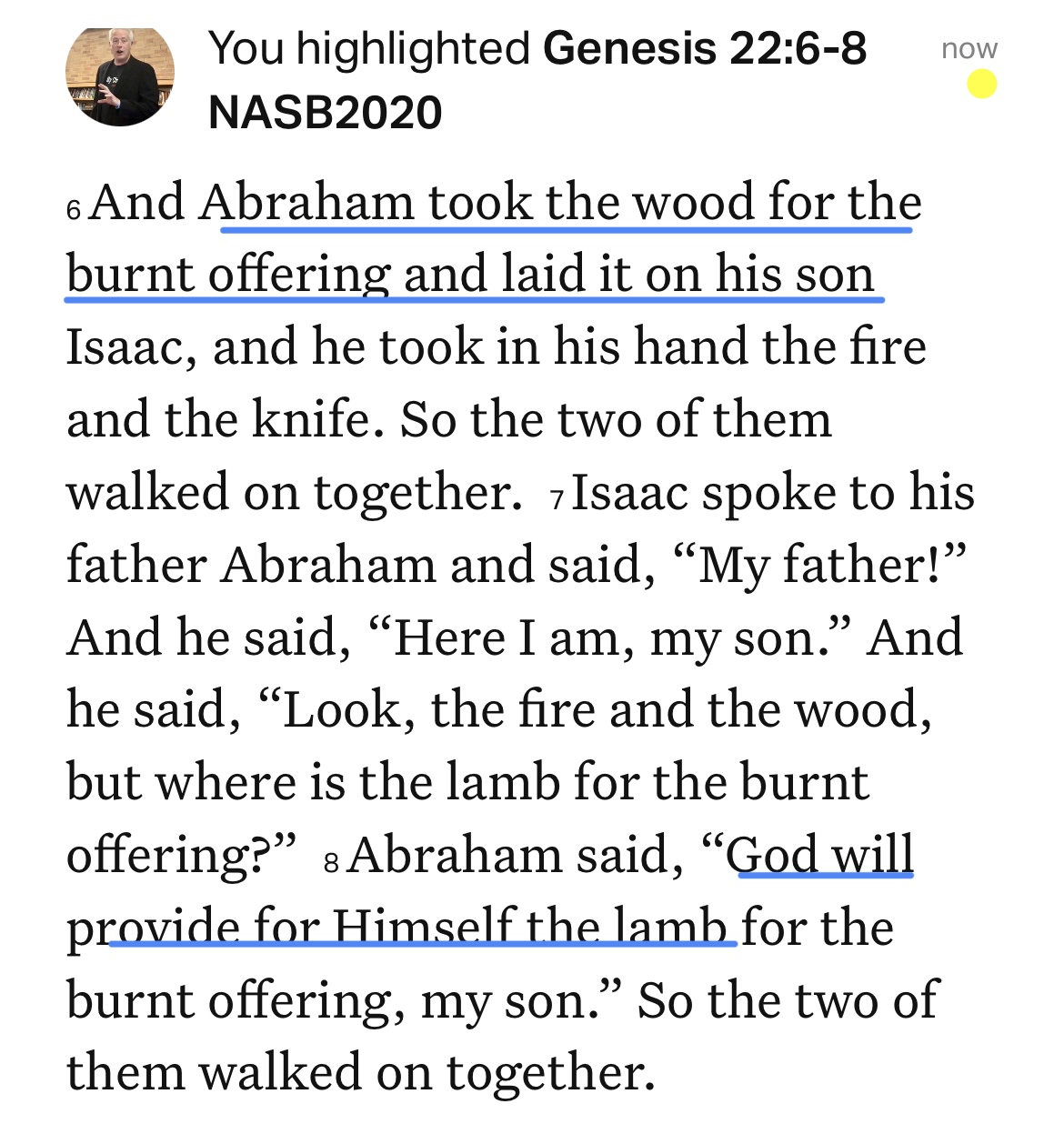
Issac is an amazing foreshadowing of Jesus. Consider these aspects:
the wood for the sacrifice is on his back
the father placed the wood on his son’s back
the son was to be the lamb offered in sacrifice as God commanded
John Stonestreet and Dr. Glenn Sunshine write, “Constantine has been a controversial figure throughout Church history. Both the genuineness of his conversion and his impact on the Church have been consistently questioned and scrutinized. Many think that Constantine’s actions to tie the Church to the empire compromised the Gospel. Often, these arguments are based on a misunderstanding of what Constantine did and fail to consider what followed from the legalization of Christianity.” Check out more of the history and the impact of Emperor Constantine.
Listen to the audio-only version of this podcast by clicking on the player below, or scroll down to watch the video.
It goes without saying, but leadership positions confer a level of power to the people who occupy them. This power is necessary for us as leaders to do our job effectively, but if we’re not very careful it can begin to corrupt us and poison our leadership. Tune in as Greg and I tackle this tricky issue.
[0:22] Leaders need both enough power to get things done, but not too much that they crush people.
[1:44] Power can corrupt us if we are unaccountable in the use of our power.
[3:12] We should always be thinking in terms of how our use of power can empower others.
[5:16] A leader’s power should always be linked to responsibility.
[6:27] We earn our power—we don’t grab it form others—to better serve.
[9:32] Greg says, “Leadership should be dangerous!”
[12:40] Sometimes we must use our power to protect those around us.
[16:00] Greg steps into “you know what”!
[16:27] Are power and serving compatible?
[18:25] What do powerful leaders not want to do?
[20:26] When it comes right down to it, the use of leadership really comes down to influence.
Check out this episode and subscribe on YouTube so you can watch all of the upcoming episodes. You can also listen to our podcast on Spotify and Apple.
Listen to the podcast of this post by clicking on the player below, and you can also subscribe on Apple, Spotify, or Audible.
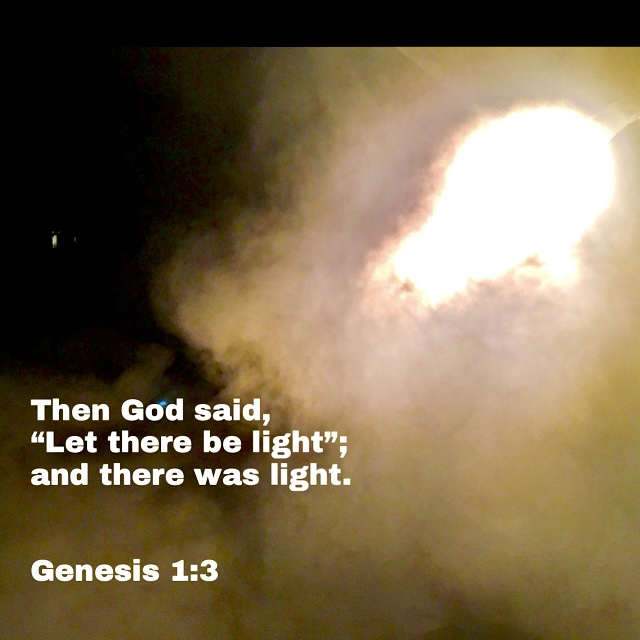
And God said, “Let there be light,” and there was light (Genesis 1:3).
“God said.” His words literally became substance!
Those who deny a Creator claim that this whole universe came into being by chance. But they still cannot get away from the fact that there was “something” there—some basic elements—that interacted to start the process. The Bible tells us that the “something” was actually Someone—Jehovah God!
“No other cosmogony, whether in ancient paganism or modern naturalism, even mentions the absolute origin of the universe. All begin with the space/time/matter universe, already existing in a primeval state of chaos, then attempt to speculate how it might have ‘evolved’ into its present form. Modern evolutionism begins with elementary particles of matter evolving out of nothing in a ‘big bang’ and then developing through natural forces into complex systems.”
Which requires more faith? To believe that all of the order and perfection in our universe—from the astronomical to the sub-atomic—came to be by mere chance? Or that the perfect design we see came into being by a Perfect Designer? It seems to me that it takes tremendously more faith to be an atheist.
Check out this recent post from the Institute for Creation Research:
“It is appropriate for Christians to begin the New Year by referring back to the beginning of the very first year. The first verse of God’s Word is also its most important verse, since it is the foundation on which everything else is built. Even God’s great work of salvation is irrelevant and futile without His prior work of creation, for only the Creator of all things could ever become the Savior of all things. If a person really believes Genesis 1:1, he or she should have no difficulty believing anything else in the Bible.”
Listen to the podcast of this post by clicking on the player below, and you can also subscribe on Apple, Spotify, or Audible.
Is New Year’s Day really the best time to make a resolution? Well, maybe! Here are some thoughts to help you be more successful whenever you resolve to make some healthy changes in your life.
Check out this episode of The Podcast.
If you would like to go a little deeper on this, check out these posts I previously shared:








 Craig T. Owens