City Of God

With “LONG LIVE THE KING!” still reverberating in our ears from Psalm 47, the sons of Korah ask us to zoom out a little farther to see how things begin to change now that the King has assumed His rightful place on the throne.

So Psalm 48 opens with the same praise with which Psalm 47 closed—Great is the Lord and most worthy of praise! The Hebrew word for great means massiveness! God is great beyond comprehension. He is larger than any problem. He is unique. He is uncontainable, unlimited, utterly beyond description. His glory is so bright that no sun is needed (see Revelation 21:23).

His glorious light reveals God’s beauty all around us. As C.S. Lewis noted, “I believe in God as I believe the sun has risen. Not because I can see it, but because by way of it I can see everything else.” Indeed, the psalmist reminds us that the city of our God has become “beautiful in its loftiness”(v. 2).

Look at how majestic our King is, and how majestic He makes His city, with phrases like the city of our Godthe city of the Great King, and the city of the Lord Almighty. 

God makes His city secure forever. 

Selah—pause and consider that. 

About 1200 years after this psalm was written, Augustine would write his book called The City of God in which he contrasted the City of God with the City of Man. He noted how the Romans had gods they trusted in, but the Romans had to “rescue” their gods from the invading barbarians. Rome ultimately fell to those invading barbarians, but, Augustine said, the City of God can never fall because it isn’t a tangible place. The City of God resides inside God’s people. 

So notice that after the Selah the word “city” doesn’t appear anymore. Instead, we read about:

    • God’s temple (v. 9; the Hebrew word is heykal) means the palace of God the King
    • the villages of Judah (v. 11) is translated daughters in the KJV, but it actually means “the beloved apple of My eye” 
    • her towers (v. 12) are something that has grown up because it’s been nourished, not something built up by brick and mortar
    • her citadels (v. 13) are the highest and strongest places, which recalls God’s massiveness that we read in verse 1 

Here’s the question for all of us to ask—Is my heart a City of God or a City of Man? 

God does not dwell in palaces made by men.

God dwells where He is enthroned! 

When people look at the “city” of my life, can they tell God is on the throne? The telling characteristics of a City of God are a city where…

  • … thoughts continually turn to my King and His unfailing love (v. 9)
  • … praise, rejoicing, and gladness are constantly rising to God (vv. 10, 11)
  • … the King is able to freely walk around His kingdom—anywhere He likes (v. 12)
  • … others can walk around and see what a God-enthroned life looks like (vv. 12, 13)

I’ll ask it again—Can people clearly see that God is the unrivaled King of your heart? 

Join me next Sunday as we continue our look at the Selahs in the Psalms. 
Poetry Saturday—An Acrostic

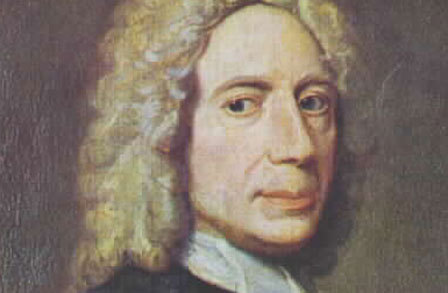
I am a vile polluted lump of earth;
So I’ve continued ever since my birth;
Although Jehovah grace does daily give me,
As sure as this monster satan will deceive me.
Come therefore, Lord, from satan’s claws relieve me.
Wash me in Thy blood, O Christ,
And grace divine impart;
Then search and try the corners of my heart,
That I in all things may be fit to do
Service to Thee, and sing Thy praises too. —Isaac Watts (written at age 7)

If We Can Dare, God Will Do

“Here and there we meet with one to whom it is given to believe in God with mighty faith. As soon as such a man strikes out on a project, or sets about a work that none but men of his mold would venture upon, straightway there arises a claimer: ‘The man is overzealous,’ or he will be charged with an innovating spirit, rashness, fanaticism, or absurdity. Should the work go on, the opposers whisper together, ‘Wait a little while, and you’ll see the end of all this wildfire.’ What said the sober semi-faithful men to Luther? The monk had read in the Scriptures this passage: ‘A man is not justified by the works of the law, but by the faith of Jesus Christ’ (Galatians 2:16). He went to a venerable divine to ask him about it, and at the same time he complained of the enormities of Rome. What was the good but weak brother’s reply? ‘Go to your cell, and pray and study for yourself, and leave these weighty matters alone.’ Here it would have ended had the brave reformer continued to consult with flesh and blood. But his faith enabled him to go forward alone, if none would accompany him. He nailed up his theses on the church door and showed that one man at least had faith in the gospel and in its God. Then trouble came, but Luther minded it not, because the Father was with him. We also must be prepared, if God gives us strong faith, to ride far ahead, like spiritual light cavalry, who bravely pioneer the way for the rank and file of the army. It were well if the church of God had more of the fleet-footed sons of Asahel—swifter than eagles in their Lord’s service—men who can do and dare alone till laggards take courage and follow in their track. These Valiant-for-Truths will pursue a solitary path full often, but let them console themselves with this thought: ‘I am not alone, but I am with the Father who sent Me’ (John 8:16). If we can believe in God, He will never be in arrears with us; if we can dare, God will do; if we can trust, God will never suffer us to be confounded, world without end. It is sweet beyond expression to climb where only God can lead, and to plant the standard on the highest towers of the foe.” —Charles Spurgeon, in his Autobiography (emphasis added)

Thursdays With Spurgeon—What God Is Doing In Depression

This is a weekly series with things I’m reading and pondering from Charles Spurgeon. You can read the original seed thought here, or type “Thursdays With Spurgeon” in the search box to read more entries.

What God Is Doing In Depression

     This depression comes over me whenever the Lord is preparing a larger blessing for my ministry; the cloud is black before it breaks, and overshadows before it yields its deluge of mercy. Depression has now become to me as a prophet in rough clothing, a John the Baptist, heralding the nearer coming of my Lord’s richer benison. So have far better men found it. The scouring of the vessel has fitted it for the Master’s use. Immersion in suffering has preceded the baptism of the Holy Spirit. Fasting gives an appetite for the banquet. The Lord is revealed in the back side of the desert, while His servant keeps the sheep and waits in solitary awe. The wilderness is the way to Canaan. The low valley leads to the towering mountain. Defeat prepares for victory. The raven is sent forth before the dove. The darkest hour of the night precedes the day-dawn.

From The Autobiography of Charles Spurgeon

Spurgeon was known to have wrestled under the dark clouds of depression frequently throughout his life. As he noted above, “So have better men found it.” Many of us battle the dark waves of depression, myself included. 

But look at how Spurgeon came to see depression in a new light. He began to note that depression was actually the forerunner of a dawn of breakthrough. Think about how many notable people in the Scriptures went through dark valleys prior to God using them in previously unimaginable ways—men like Joseph, Moses, David, Elijah, Jeremiah, Peter, Saul (who would become Paul), and even Jesus Himself. 

The writer of Hebrews records that Jesus learned something during the dark night of His soul that He wouldn’t have learned any other way. Jesus saw God’s dawn coming, so He was able to continue to go through the darksome valley. 

Depression is a serious thing. If you are battling this darkness, there is freedom in admitting it. Spurgeon did, I have, and so have many others. Admit you need help, and then get help. Talking to your doctor or a Christian counselor may be a necessary component toward your healing. 

But in all that you do, please learn to do what these notable folks in the Bible did—and what Charles Spurgeon did: begin to see depression not as your permanent residence, but merely as a dark night that is preceding a glorious dawn! 

Interrupted But Not Discouraged

…I will…if the Lord permits… (1 Corinthians 16:5-7). 

Paul had a desire to visit certain cities to share the Gospel, so he made his plans. But he was careful to add, “if the Lord permits.” He knew from personal experience that God knows best the where and the when.

In fact, the first time Paul came to Macedonia, it was only after he had been blocked from his original plans—

They tried to go to certain regions of Asia, but they were prevented by the Holy Spirit (Acts 16:6).

They headed toward Bythinia, but again the Spirit of Jesus did not allow them to go there (Acts 16:7).

While at Troas, Paul had a vision of a man from Macedonia, so they concluded that God was calling them to preach there (Acts 16:9-10).

We must know that we know that God has green-lighted an opportunity for us. Where God opens opportunities, satan is sure to attack (1 Corinthians 16:9). We don’t want to then assume that the attack means that we are in the wrong place at the wrong time, or even in the right place at the wrong time.

Paul made his plans, but he also remained interruptible.

When God said, “Go!” Paul could endure any opposition because he was assured that God had called. And when God said, “No” Paul could rest peacefully because he was assured that God knew the best place at the best time.

The same principle is true for godly leaders today—

A mark of a godly leader is one who is interruptible without becoming discouraged.

This is part 39 in my series on godly leadership. You can check out all of my posts in this series by clicking here.

Dressed For Victory

Finally, be strong in the Lord and in His mighty power (Ephesians 6:10).

Not…

  • be strong in my own ability
  • be strong in the company of another warrior

But…

  • be strong in the Lord
  • be strong in the power of His might

The armor I wear has been battle-tested by the undefeated Champion. It’s armor emblazoned with the crimson red blood of Calvary. It’s armor gleaming brightly with the glow of Resurrection victory.

I wear Christ’s armor! 

  • The belt of truth—it’s the righteousness of Jesus (Isaiah 11:1-5)
  • The breastplate of righteousness—worn by the Messiah who defeated evil (Isaiah 59:15-17)
  • The helmet of salvation—worn by Jesus as He won salvation for us (Isaiah 59:16-17)
  • The shoes of the gospel of peace—worn by our Lord as He defeated our enemies (Isaiah 52:5-7)
  • The shield of faith—God says, “I am your shield” (Genesis 15:1)
  • The sword of the Spirit—what Jesus used to strike down satan’s temptations (Isaiah 49:1-2; Luke 4:4, 8, 12)

I must continually clothe myself in God’s armor. Then I keep the armor bright by prayer—

Restraining prayer, we cease to fight 
Prayer makes the Christian’s armor bright 
And satan trembles when he sees 
The weakest saint upon his knees. (William Cowper)

Holy God, may I be dressed in YOU at every moment. May I daily use YOUR battle-tested armor and weapons to strike a blow against satan! 

(Check out all the Scripture references above by clicking here.)

Awesome God, Awesome Praise

Last I week I told you how Hebrew poetry often puts the climax in the middle. In Psalm 47 that middle climax is in verse 5—God has ascended. This is one of seven “psalms of enthronement” in the Psalter. Since all of the Scripture points to Jesus, let’s look at the definition of this word ascend and see how it fits with Jesus: 

When a king is coronated—when he is heading toward his throne—we can expect the people to be happy. So the psalmist tells us that in God’s case the people are clapping and shouting (v. 1), telling God how awesome He is (v. 2), thanking Him for subduing their enemies (v. 3), and expressing their gratitude that He has established them as His people (v. 4). 

Then comes the Selah / Pause—what is happening during this pause? The King is being crowned. He has ascended to His rightful throne. So this is selah/pause is really a deep breath that’s about to explode in a crescendo of praise! 

Now there are shouts of joy (v. 5a). In our earthly understanding, it would be something like: “LONG LIVE THE KING!!” There is also a sounding of trumpets (v. 5b) which literally means a thundering of trumpets. And then there’s the singing—lots and lots of singing. In fact, the word sing appears five times in the next two verses. 

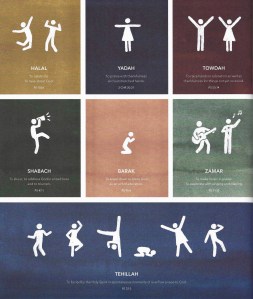
From The Infographic Bible (click the image for more)

There are so many ways to say LONG LIVE THE KING—singing, dancing, raising our hands, falling down on our knees. shouting.  

Our God is praise-worthy. He is clap-worthy! He is sing-worthy! He is dance-worthy! He is shout-worthy! He is bowing-worthy! 

Our awesome God deserves awesome praise! 

Why does it seem that we are prone to worship so quietly? Perhaps we need to take it up a notch or two (or three or four). Perhaps we haven’t gazed into His awesome beauty enough to realize just how incredible He is! 

Do you think shouting praises to the King of kings is too undignified? Did you know that when the King of kings returns, He is going to shout and there is also going to be a thundering trumpet? For the Lord Himself shall descend from heaven with a shout, with the voice of an archangel, and with the trumpet of God (1 Thessalonians 4:16)! 

Here are 4 important lessons from this Psalm of Enthronement—

  1. God is the King of all kings, enthroned on the Throne above all thrones. He is worthy of your “undignified” praise and acclamation. 
  2. God should always get your best praise. In verse 7 the phrase sing praises with understanding really means to sing with insight and skill. 
  3. God deserves a holy vocabulary. We see the word awesome in verse 2. Every time this word is used in the Scripture, it’s speaking of God. So why would we use a word like this for something like a hamburger!?!
  4. All nations and kings and peoples and tribes will bow before God at the end. They will bow in either acclamation for their King, or in abject terror of the All-Righteous Judge. Let’s remain missional so more people in the end are crowning Him as their All-Merciful King. 

I hope you can join me this next Sunday as we continue our series looking at the Selahs in the Psalms. 

Poetry Saturday—Where The Roses Never Fade

I am going to a city where the streets with gold are laid
Where the tree of life is blooming and the roses never fade.
Here they bloom but for a season—soon their beauty is decayed
But I am going to a city where the roses never fade. 

In this world we have our troubles, satan’s snares we must evade
We’ll be free from all temptation where the roses never fade.
Here they bloom but for a season—soon their beauty is decayed
But I am going to a city where the roses never fade. 

Loved one gone to be with Jesus in their robes of white arrayed
Now are waiting for my coming where the roses never fade.
Here they bloom but for a season—soon their beauty is decayed
But I am going to a city where the roses never fade. —variously attributed to Elsie Osborn, Jack Osborn, or Jim Miller (the handwritten copy is from Russell Coffield, my wife’s grandfather, and was read at his funeral) 

Truth Is The Source Of Freedom

“The university has traditionally been a unified place (Latin unum) where faculty and students gather in order to discover truth (Latin veritas). A generation ago, college was expected to be a place of freedom, particularly for expression of and engagement with different—even disagreeable—ideas. Sadly, recent events and numerous statistical surveys reveal that such days may be over. Today, many on university campuses expect to be protected or shielded from speech and ideas that could be deemed offensive, even if the free speech rights of others—as well as the pursuit of truth—are sacrificed in the process.

“The current climate, in which people are forcibly prevented from sharing ideas, has arisen because the Culture of Confusion has mistaken autonomy for freedom. In a post-truth culture, where preferences and opinions are elevated over facts and truth, anything that challenges our preferences, even if a challenge is laced with facts, is deemed offensive and oppressive. The Western contemporary concept of freedom is all about the ability to do, feel, and say whatever one wants, as long as it doesn’t hurt someone else. But this isn’t freedom—it’s autonomy (which literally means being a law unto one’s self). Freedom operates at its best within the confines of truth. The pursuit of autonomy is the root of the post-truth mindset that fuels the current Culture of Confusion. If each of our personal preferences is celebrated without truth as our guide, if we are all ‘laws unto ourselves,’ confusion is inevitable in at least three important ways.

“First, the culture seems to have lost its ability to reason—to think and act clearly and wisely. When feelings are vaunted over facts in the quest for autonomy, reason dies in the process. If the facts get in the way of unrestrained autonomy, then the facts will have to be ignored and any opposition will be silenced.

“Second, the Culture of Confusion has lost its moral accountability. If it’s true that ‘man is the measure of all things,’ as Protagoras proclaimed centuries ago, then we make the rules, not God. If there is no God to help us, then we have to help ourselves. There are atheists who claim that the ‘better angels of our nature’ will result in us reaching a rough agreement about moral values. But history has shown us that it’s only a short leap from secular humanism to self-worship and supreme authority. Moral clarity shows us the objective truth beyond our preferences. And we have to mold our desires and preferences to the truth’s boundaries. Because we don’t want to conform, moral clarity has become the vice of the day, and moral confusion the virtue.

“Third, in striving to go from bearing the Imago Dei (with accountability to God) to Deus Homo (with accountability to no one), we have lost what it means to be human and to value other human beings. When we become the measure of all things, then we determine which humans are valuable and which ones are not, meaning our sense of objective human value is lost in the process.

“There is a fundamental difference between limitless individual autonomy and true freedom. The Bible opposes the former and champions the latter (James 1:25; 2:12). The book of Judges demonstrates this well. Each time the people’s thirst for autonomy landed them in trouble, God sent a judge—a person who took his authority from God—to guide the people. But they rejected God’s authority time and again in favor of their personal sovereignty until the resultant chaos became too much. When we jettison truth as our guide, we will end up with autonomy and then chaos, but not freedom. Each one of us, individually in our hearts, needs to search for the source of freedom—truth.” —Abdu Murray, Saving Truth

Thursdays With Spurgeon—Struggling For Perfection

This is a weekly series with things I’m reading and pondering from Charles Spurgeon. You can read the original seed thought here, or type “Thursdays With Spurgeon” in the search box to read more entries.

Struggling For Perfection

     My own experience is a daily struggle with the evil within. I wish I could find in myself something friendly to grace. But hitherto I have searched my nature through and have found everything in rebellion against God. At one time, there comes the torpor of sloth, when one ought to be active every moment, having so much to do for God and for the souls of men, and so little time in which to do it. At another time, there comes the quickness of passion; when one should be calm and cool and play the Christian, bearing with patience whatever has to be endured, there come the unadvised word and the rash expression. Anon, I am troubled with conceit, the devilish whisper—I can call it no less—“How well you have done! How nobly you have played your part!” Then calls out distrust, foul and faithless, suggesting that God does not regulate the affairs of men and will not interpose on my behalf. Yet what would I not give if I might but be perfect! Sometimes I think that if God’s people mentioned in the Old and New Testaments had all been perfect, I should have despaired. But because they seem to have had just the kind of faults I grieve over in myself, I do not feel any more lenient toward my faults, but I do rejoice that I also may say with each of them, “The Lord will perfect that which concerns me.” He will most assuredly, beyond a doubt, bring to perfection my faith, my love, my hope, and every grace. He will perfect His own purposes. He will perfect His promises, He will perfect my body, and He will perfect my soul. … That day, however, I believe, shall not come until we enter into the joy of the Lord and are glorified together with Christ in heaven. Then, but not till then, shall He present us “faultless before the presence of His glory with exceeding joy” (Jude 24).

From The Autobiography of Charles Spurgeon

I love that the Bible shows us imperfect people being loved by a perfect God. 

As Spurgeon said, it’s not that we should excuse our faults and imperfections by saying, “At least I’m not as bad as him,” but that we can say, “I’m grateful God’s grace reaches even me!” 

God is for you! He wants you to stand “faultless before the presence of His glory.” So right now—today!—the Holy Spirit wants to help you. Will you let Him?