Check out this episode and subscribe on YouTube so you can watch all of the upcoming episodes. You can also listen to our podcast on Spotify and Apple.
Listen to the podcast of this post by clicking on the player below, and you can also subscribe on Apple, Spotify, or Audible.
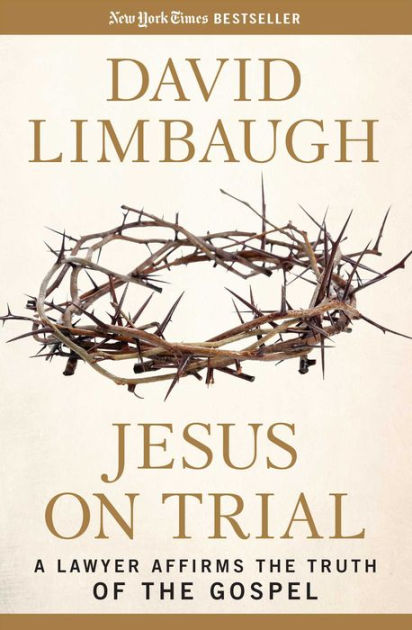
I love studying Christian apologetics and learning how to explain to skeptics and seekers the eternal value in the Bible as it points me to a deeper relationship with Jesus Christ. David Limbaugh has given apologetics a new slant in his book Jesus On Trial.
Mr. Limbaugh uses his personal story from a childhood church attendee, to a skeptic of Christianity, to a reluctant seeker of the truth, and finally to a vibrant, growing relationship with Jesus. But he also lets us see how he examined the evidence for the truth claims of the Bible through the eyes of a trained lawyer.
Throughout this book you will discover legalese terms like rules of evidence, items of probative value, rules of logic, and expert testimony. Each chapter feels like another witness Mr. Limbaugh has called to testify, or another piece of evidence that needs to be weighed and evaluated, and we the readers are empaneled as the jury deciding the case. As witness after witness takes the stand, as more evidence piles up, and as Mr. Limbaugh delivers his closing argument, the preponderance of evidence seems to make an airtight case of the truth claims in the Bible.
Whether you are looking for answers or hunting for evidence to use in discussions with your friends, Jesus On Trial is a reference book to which I believe you will repeatedly return.
Listen to the podcast of this post by clicking on the player below, and you can also subscribe on Apple, Spotify, or Audible.
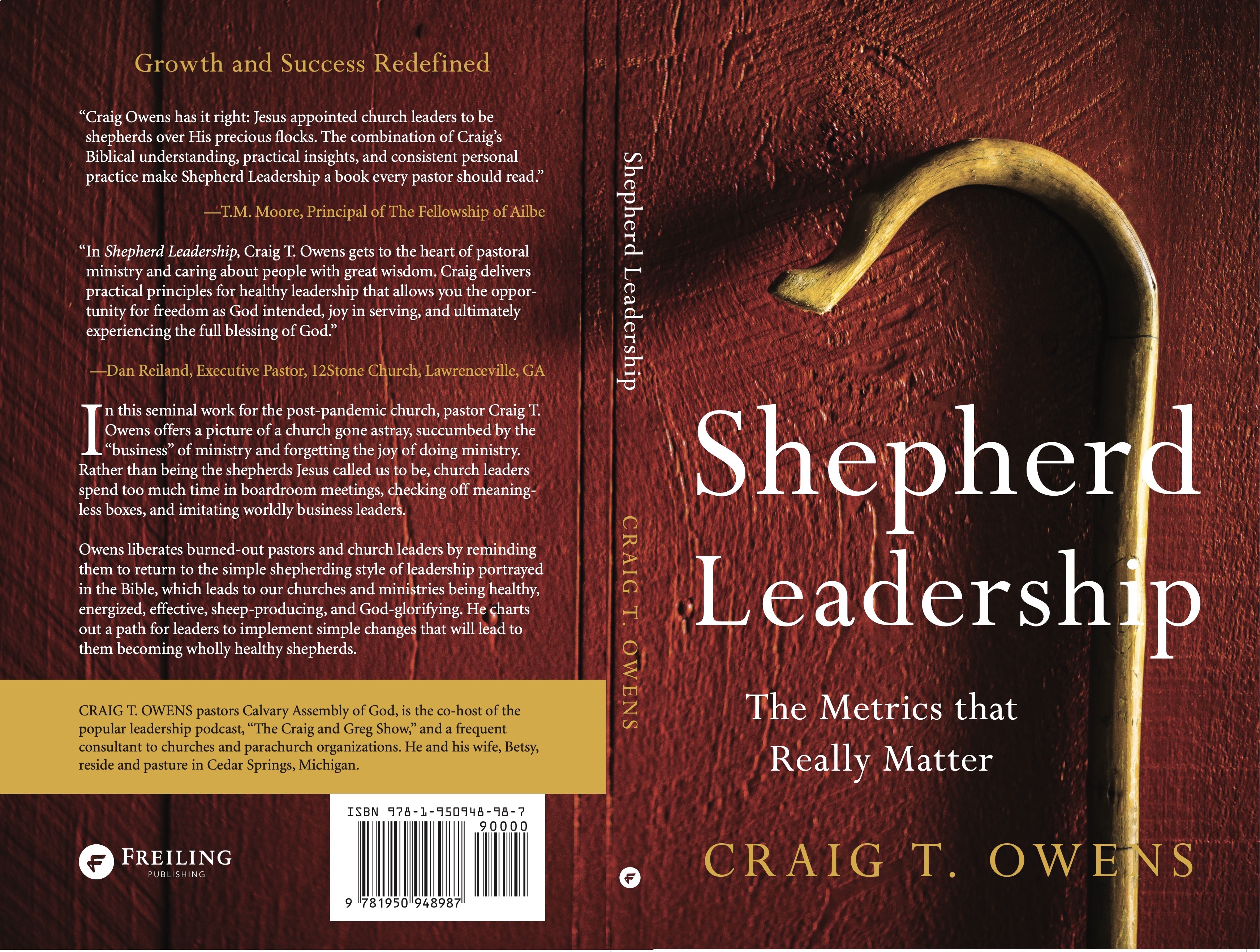
In the Foreword to my book Shepherd Leadership: The Metrics That Really Matter, Dick Brogden observes, “God plucked David from the sheepfold. God chose a sheep to be a shepherd. And though we all are stupid sheep, when God plucks us out of obscurity to serve others, we can have the humble confidence for as long as we are asked to lead that God has chosen us. That confidence both faithfully drives us to our knees and fearlessly propels us against our giants. It is good to be a sheep; it is good to be an under-shepherd. Just remember you are stupid, chosen by the Wise One, and as long as you serve as a shepherd, you and your flock will be safe.”
How true it is that all of us are sheep. The role of the shepherd is to care for the sheep and create a healthy environment for them. The role of healthy sheep is to reproduce more sheep. In this, both shepherds and sheep are ministers—we all minister to those God has placed around us.
God calls all Christians to be ministers. The Church is the sheepfold that equips us, but then we must go out to minister in a way that will bring lost sheep to a personal relationship with Jesus.
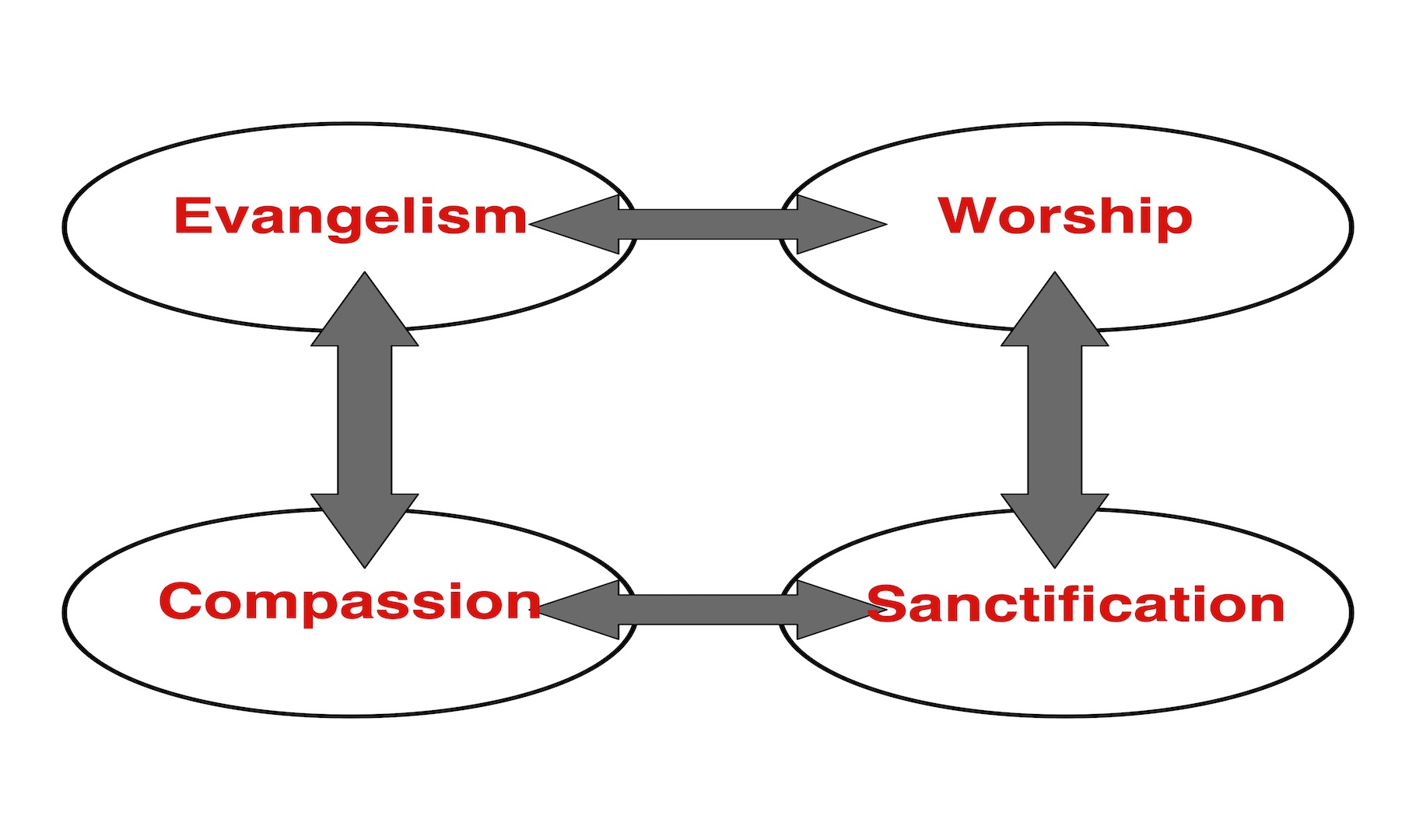
Our foundational truth statement about church ministry says: A divinely called and scripturally ordained ministry has been provided by our Lord for the fourfold purpose of leading the Church in evangelism, worship, sanctification, and compassion.
(1) Evangelism. When we looked at the foundational belief about the Church, we noted that it’s not either-or—evangelism or discipleship—but it’s both-and. Christians are being the Church when they are intentionally living in a way that makes Jesus known (Matthew 10:1, 7-8; 28:18-20).
(3) Sanctification. Remember that we are all in-process of becoming saints (I like to remember this by calling it saint-ification). We need each other to do this, which is why God gives gifts to bring out Christ-like maturity in us (Ephesians 4:1-7, 11-16).
So here are two important questions we need to ask ourselves: (1) Am I doing quality work? (2) Am I faithfully doing my work?
To help answer those questions, I like this thought from Leonard Sweet’s book I Am A Follower: “The most important metrics we must rely on, the crucial ‘deliverables’ we can present, must focus on the newly formed lives of the disciples we are making, the followers who are following Christ into a place of serving Him by serving others. The most important measure of our faithfulness to Christ must be the extent of transformation into the living image of Christ Himself. … The quantifiable fruit of our church is not found in the number of people we can gather on a weekly basis. What counts is what is happening in the lives of those who have gathered.”
These are questions we should all ask the Holy Spirit to reveal to us:
What is happening in my life?
Am I telling others about Jesus?
Am I worshipping God so consistently that everyone can see it?
Am I maturating as a saint and am I helping other saints mature?
Is my faith seen in my compassionate actions?
Our individual answers to those questions will determine the success of our individual churches, which will ultimately determine the effectiveness of the global Church of Jesus Christ. I hope you will take some time to consider these questions for yourself.
This is a weekly series with things I’m reading and pondering from Charles Spurgeon. You can read the original seed thought here, or type “Thursdays With Spurgeon” in the search box to read more entries.
Listen to the podcast of this post by clicking on the player below, and you can also subscribe on iTunes or Spotify.
Present Communion With Jesus
The desire of a renewed soul is to find Christ and to be with Him. … Past communion with Christ is very well: ‘Therefore I will remember Thee from the land of Jordan…’ (Psalm 42:6). But these are only stale meats, and a loving soul wants fresh food every day from the table of Christ. …
A true loving soul, then, wants present communion with Christ. So the question is, ‘Tell me where You feed. Where do You get Your comfort from, O Jesus? I will go there. … Where do You feed Your flock? In Your house? I will go there, if I may find You there. In private prayer? Then I will not be slack in that. In the Word? Then I will read it night and day. Tell me where You feed; wherever You stand as the Shepherd, there will I be, for I want You. I cannot be satisfied to be apart from You. My soul hungers and thirsts to be with You.’
“Without building in sabbath breaks, we run down emotionally, spiritually, mentally, and physically, which means loving God becomes a chore, not a delight (Mark 12:30). This then means loving your neighbor becomes nearly impossible (Mark 12:31). Ultimately, this means that we aren’t able to be the compassionate, wise, strong shepherds that the sheep under our care need us to be. …
“The goal of sabbathing is to infuse more vitality into the shepherd leader for the purpose of pasturing the sheep under that leader’s care. You cannot give hope to others unless you are hope-filled; you cannot give health to others unless you are healthy; you cannot consistently speak wisdom to others unless you are growing in wisdom. All of this healthy growth for the shepherd leader takes place while sabbathing….”
To reiterate what Pastor Spurgeon said: “A true loving soul, then, wants present communion with Christ.” I hope you will always seek that for yourself.
Listen to the podcast of this post by clicking on the player below, and you can also subscribe on Apple, Spotify, or Audible.
In my book Shepherd Leadership: The Metrics That Really Matter, I take two chapters to talk about a leader’s confidence and a leader’s humility. Effective shepherd leaders are learning to balance their confidence and their humility.
In chapter 4, I tell a true story about an alter-ego superhero I created as a way to remind myself of the importance of adding humility to my confidence. I hope you’ll watch the video featuring the artwork of Adam Comrie and the excellent production work of my son-in-love Ian Murphy. And I also hope that you will pick up a copy of Shepherd Leadership for yourself or for a ministry leader in whom you would like to invest.
Listen to the podcast of this post by clicking on the player below, and you can also subscribe on Apple, Spotify, or Audible.
David uses the phrase “no one” three times in verse 4 of the 142nd Psalm. This verse is also the middle verse of the psalm. Since Hebrew literature often puts the central message in the center, we should start with this verse and then see the message that radiates out from the center.
In this middle verse, David realizes that no earthly help can sustain him:
no one is at my right hand with any strength to lend to me
no one is truly concerned for my wellbeing
no one can help my eternal soul
Radiating out from this middle verse we see…
…God, You watch over me, and You are my refuge (vv. 3, 5)
…I pour out my complaint to You, God, and You listen and respond to me (vv. 2, 6)
…God, I cry to You for mercy, and You set me free from my prison (vv. 1, 7)
I find it interesting that David calls it “my prison.” David has learned that God may allow affliction and shaking so that he will see that there is only One who is reliable and stable. Trusting in anything or anyone else becomes, in essence, a prison.
In verse 7, David mentions God’s “goodness to me.” Sometimes this word for goodness is translated “bountiful,” and it comes from a Hebrew word that can mean “to be weaned.” David is sharing with us that our afflictions can wean us from all human help so that we can fully enjoy the bountiful goodness of our loving God!
When it appears that there is no one around to help me, that is actually a good thing.
It’s a good thing because it means that now that everything else has been cleared out of my way, I can clearly see The Only One that truly cares about me both today and forevermore!
Listen to the podcast of this post by clicking on the player below, and you can also subscribe on Apple, Spotify, or Audible.
Why do Christians say things like, “Let’s go to church” or “Let’s go meet with God”?
Do we forget that Jesus said He would never leave us, or that He sent the Holy Spirit to be our constant Companion, or that our very heart is the temple of God’s presence (Matthew 28:20; John 14:16; 1 Corinthians 3:16)? We are naturally self-focused creatures. It takes discipline on our part to keep reminding and re-reminding ourselves that God is always with us.
Psalm 84 and its two Selahs is one way of re-reminding ourselves of God’s abiding presence. The Selahs are reminders to pause and consider, “Where am I?” and to know that the answer can always be, “Surely I am in God’s presence!”
This psalm is divided into three 4-verse stanzas. Stanzas 1 and 2 end with the call to Selah, and all three stanzas feature a powerful name for God: LORD Almighty. When we see LORD in all capital letters, that is God’s covenant name: Yahweh or Jehovah, which means that He is the “I AM that I AM.” Almighty signifies that He is the invincible, un-defeatable Captain of angel armies.
In these two combined titles, we have the personal intimate God of love and the unstoppable God of limitless power! If He were just the God of love, we may not be able to trust His power. If He were just the God of power, we may not be able to approach Him. He is the All-Loving, Ever-Approachable Power.
Another important recurring theme in Psalm 84 is the word blessed. It’s used three times in this psalm, more than in any other single psalm. This word means God’s unmerited favor, and the word either begins or ends each of the three stanzas.
In stanza 1 (vv. 1-4), twice we have that combined title of LORD Almighty. But we must always remember that our God is not distant and unapproachable, but the sons of Korah call Him “my King” and “my God.” At the end of this first stanza, we are invited to Selah—a pause to praise our glorious King!
Stanza 2 (vv. 5-8) begins with that reminder that we are blessed. The psalmists tell us that God’s blessings flow even in my Valley of Baca (or weeping). With God’s presence surrounding me, I can go from “strength to strength”because the LORD Almighty hears my prayer and responds to my prayer! So at the end of this stanza, we are again invited to Selah—this time it’s a pause to pray to our listening God.
In stanza 3 (vv. 9-12), another important word is featured that reminds us that our God is not a stingy King, but One who delights in His children and wants to lavishes them with His blessings: the word is favor. We read, “look with favor on Your anointed one” and “the LORD bestows favor and honor; no good thing does He withhold from those whose walk is blameless.” God’s favorable blessings flow toward us as eternally as He exists!
This psalm is circular: it begins as it ends, so it invites us to continue to praise, continue to pray, and continue to abide in His presence. We’re called not just to know about God’s presence, but to rejoice in His presence.
It’s one thing to know about God’s omnipresence, but it’s an entirely different thing to abide in God’s omnipresence!
This isn’t something that happens overnight. Brother Lawrence reminds us that this is a progressive revelation for Christians: “One does not become holy all at once. … The more one knows Him, the more one desires to know Him. And as knowledge is commonly the measure of love, the deeper and more extensive our knowledge shall be, the greater will be our love: and if our love of God were great we should love Him equally in pains and pleasures.”
I encourage you to Selah frequently so that you can move from mere head knowledge of God’s presence to becoming intimately aware of His closeness!
This is a weekly series with things I’m reading and pondering from Charles Spurgeon. You can read the original seed thought here, or type “Thursdays With Spurgeon” in the search box to read more entries.
Listen to the podcast of this post by clicking on the player below, and you can also subscribe on iTunes or Spotify.
Active Love
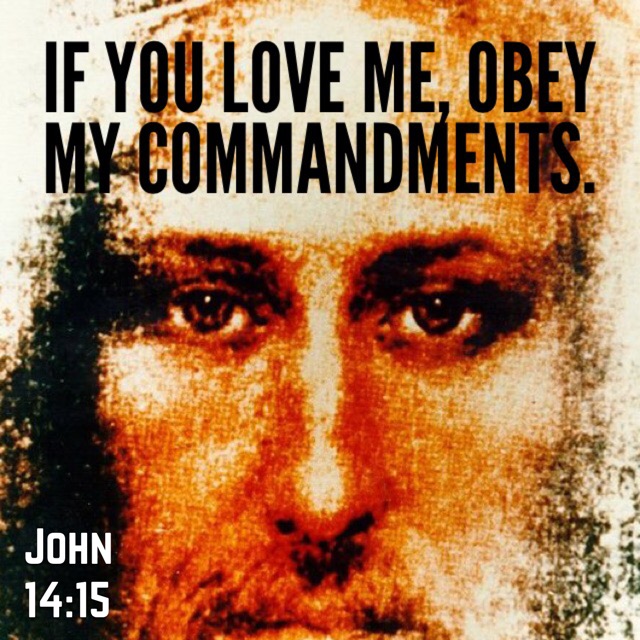
True love next shows itself in obedience. … ‘Tis love that makes our willing feet in swift obedience move.’ We can do anything for those we love, and if we love Jesus, no burden will be heavy, no difficulty will be great. We should rather wish to do more than He asks of us and only desire that He was a little more exacting that we might have a better opportunity of showing forth our affection. …
The apostle says, ‘Let us not love in word or in tongue, but in deed and in truth’ (1 John 3:18). Actions speak louder than words, and we will always be anxious to tell our love in deeds as well as by our lips. The true disciple asks continually, ‘Lord, what do You want me to do?’ (Acts 9:6). He esteems it his highest honor to serve the Lord. …
I believe in an active love that has hands to labor and feet to run as well as a heart to feel, eyes to glance, and ears to listen.



 “burning the midnight oil” is not healthy for a leader [0:45]








 Craig T. Owens