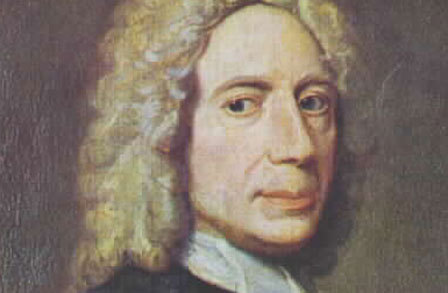
12 Quotes From “The Autobiography Of Charles Spurgeon”

Charles Spurgeon lived exactly as he preached. What a delight that is! Check out my full book review of his Autobiography by clicking here. Also, be sure to check out my weekly Thursdays With Spurgeon series, where I share longer passages from this Prince of Preachers. 

“My sole hope for heaven lies in the full atonement made upon Calvary’s Cross for the ungodly. On that I firmly rely. I have not the shadow of a hope anywhere else.” 

“While my brief term on earth shall last, I should be the servant of Him who became the Servant of servants for me.” 

“For I am persuaded there are more delights in Christ, yea, more joy in one glimpse of His face than is to be found in all the praises of this harlot-world, and in all the delights that it can yield to us in its sunniest and brightest days.” 

“I have found, in my own spiritual life, that the more rules I lay down for myself, the more sins I commit. The habit of regular morning and evening prayer is one that is indispensable to a believer’s life, but the prescribing of the length of prayer, and the constrained remembrance of so many persons and subjects, may gender unto bondage and strangle prayer rather than assist it.” 

“There is nothing that more tends to strengthen the faith of the young believer than to hear the veteran Christian, covered with scars from the battle, testifying that the service of his Master is a happy service, and that, if he could have served any other master, he would not have done so, for His service is pleasant and His reward everlasting joy.” 

“I went to my chamber and told my little griefs into the ears of Jesus. They were great griefs to me then, though they are nothing now. When on my knees I just whispered them into the ear of Him who had loved me with an everlasting love, oh, it was so sweet! If I had told them to others, they would have told them again, but He, my blessed Confidant, knows all my secrets, and He never tells again.” 

“That God predestined, and yet that man is responsible, are two facts that few can see clearly. They are believed to be inconsistent and contradictory to each other. If, then, I find taught in one part of the Bible that everything is foreordained, that is true; and if I find, in another Scripture, that man is responsible for all his actions, that is true. And it is only my folly that leads me to imagine that these two truths can ever contradict each other.” 

“It was said of an old Greek philosopher that he wrote over his door, ‘None but the learned may enter here.’ But Christ writes over His door, ‘He who is simple, let him turn in hither.’” 

“I used to think, sometimes, that if they had degrees who deserved them, diplomas would often be transferred and given to those who hold the plow handle or work at the carpenter’s bench; for there is often more divinity in the little finger of a plowman than there is in the whole body of some of our modern divines. ‘Don’t they understand divinity?’ someone asks. Yes, in the letter of it, but as to the spirit and life of it, D.D. often means Doubly Destitute.” 😀

“When I came to New Park Street Chapel, it was but a mere handful of people to whom I first preached; yet I can never forget how earnestly they prayed. Sometimes they seemed to plead as though they could really see the Angel of the covenant present with them, and as if they must have a blessing from Him. More than once, we were all so awestruck with the solemnity of the meeting that we sat silent for some moments while the Lord’s power appeared to overshadow us. All I could do on such occasions was to pronounce the benediction and say, ‘Dear friends, we have had the Spirit of God here very manifestly tonight; let us go home and take care not to lose His gracious influences.’ Then down came the blessing; the house was filled with hearers, and many souls were saved. I always give all the glory to God, but I do not forget that He gave me the privilege of ministering from the first to a praying people.” 

“It is the extremity of unwisdom for a young man, fresh from college or from another charge, to suffer himself to be earwigged by a clique, and to be bribed by kindness and flattery to become a partisan, and so to ruin himself with one half of his people.” 

“It is of no use to rise before an assembly and hope to be inspired upon subjects of which one knows nothing. If anyone is so unwise, the result will be that, as he knows nothing, he will probably say it, and the people will not be edified. But I do not see why a man cannot speak extemporaneously upon a subject that he fully understands. Any tradesman, well versed in his line of business, could explain it without needing to retire for meditation, and surely I ought to be equally familiar with the first principles of our holy faith. I ought not to feel at a loss when called upon to speak upon topics that constitute the daily bread of my soul.” 
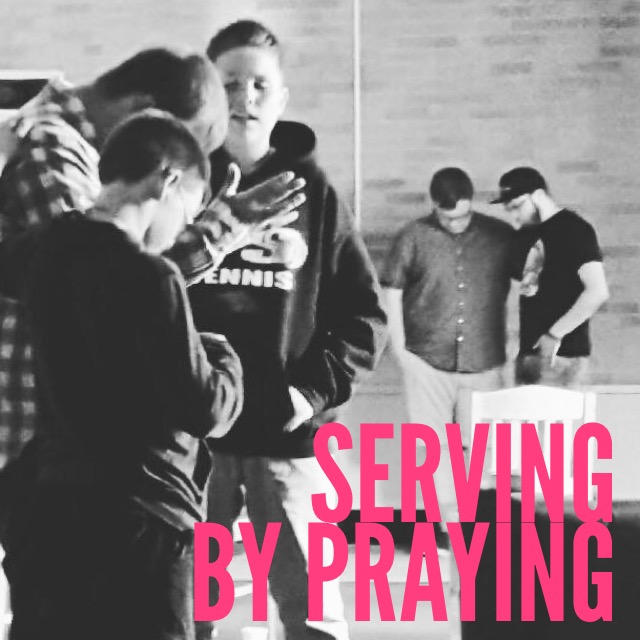
Serving By Praying

Paul and Timothy, bondservants of Jesus Christ, to all the saints in Christ Jesus who are in Philippi, with the bishops and deacons (Philippians 1:1). 

In just his opening line, Paul lists three types of servant-leaders: bondservants, bishops, deacons. 

The servant-leaders are all called to put the needs of the saints ahead of their own needs. They all serve so the saints can shine! And as the saints shine, they attract others to Jesus Christ. 

Jesus is our example of the Ultimate Servant (Philippians 2:5-8), and we are called to follow His example (John 13:12-17). 

One thing that clearly kept Paul, Timothy, and the other servant-leaders in Philippi in this servant’s posture was prayer. Even the physical posture of kneeling in prayer is a posture of a servant who is actively serving. 

  • Paul prayed for the Philippians frequently—In all my prayers for all of you, I always pray with joy (1:4). 
  • He prayed for them to grow in love and knowledge—I pray that your love will overflow more and more, and that you will keep on growing in knowledge and understanding (1:9). 
  • Paul was grateful for the prayers of the saints—I know that as you pray for me and the Spirit of Jesus Christ helps me, this will lead to my deliverance (1:19). 
  • And he closed his letter with a call for them to continue to pray about everything—Don’t worry about anything; instead, pray about everything. Tell God what you need, and thank Him for all he has done (4:6). 

Here are four powerful lessons for all Christians to live out…

(1) Leaders need to pray for the saints, and leaders need the saints to pray for them. 

(2) Leaders need to be prayerful to keep their posture right as servants. 

(3) Saints need to be prayerful for their leaders so that their leaders can continue to serve them in God-honoring ways. 

(4) We all serve best when we are diligent to keep our prayer life vibrant and healthy. 

The Autobiography Of Charles Spurgeon (book review)

For a man who preached up to 10 times per week for nearly 40 years, you would think that people knew all about Charles Spurgeon’s personal life. Although he frequently used some small personal examples in his sermons, he still kept much of his personal life personal. In reading Spurgeon’s Autobiography, I expected to get an inside look, but that was not what I found. 

Like his sermons, Spurgeon’s Autobiography was fascinating. Like his sermons, his recollections of his past are thoroughly steeped in Scripture. I love this! This shows us that this Prince of Preachers didn’t just put on a performance when he stepped into his pulpit, nor did he simply teach Christian principles for others to apply only to their lives; instead, we see a man who truly patterned his life after the Bible. 

I also love the honesty in Spurgeon’s stories. He tells of his struggles before and after his conversion. He talks openly of his disagreements with some “church” people that didn’t behave very Christ-like. He discusses his battles with depression, and with those who were outright critics of his ministry. In other words, Spurgeon reveals himself without putting himself on some sort of pedestal. 

Charles Spurgeon’s sermons are always a delight to read, but I think you will find in his Autobiography a living sermon that we can all emulate. 

City Of God

With “LONG LIVE THE KING!” still reverberating in our ears from Psalm 47, the sons of Korah ask us to zoom out a little farther to see how things begin to change now that the King has assumed His rightful place on the throne.

So Psalm 48 opens with the same praise with which Psalm 47 closed—Great is the Lord and most worthy of praise! The Hebrew word for great means massiveness! God is great beyond comprehension. He is larger than any problem. He is unique. He is uncontainable, unlimited, utterly beyond description. His glory is so bright that no sun is needed (see Revelation 21:23).

His glorious light reveals God’s beauty all around us. As C.S. Lewis noted, “I believe in God as I believe the sun has risen. Not because I can see it, but because by way of it I can see everything else.” Indeed, the psalmist reminds us that the city of our God has become “beautiful in its loftiness”(v. 2).

Look at how majestic our King is, and how majestic He makes His city, with phrases like the city of our Godthe city of the Great King, and the city of the Lord Almighty. 

God makes His city secure forever. 

Selah—pause and consider that. 

About 1200 years after this psalm was written, Augustine would write his book called The City of God in which he contrasted the City of God with the City of Man. He noted how the Romans had gods they trusted in, but the Romans had to “rescue” their gods from the invading barbarians. Rome ultimately fell to those invading barbarians, but, Augustine said, the City of God can never fall because it isn’t a tangible place. The City of God resides inside God’s people. 

So notice that after the Selah the word “city” doesn’t appear anymore. Instead, we read about:

    • God’s temple (v. 9; the Hebrew word is heykal) means the palace of God the King
    • the villages of Judah (v. 11) is translated daughters in the KJV, but it actually means “the beloved apple of My eye” 
    • her towers (v. 12) are something that has grown up because it’s been nourished, not something built up by brick and mortar
    • her citadels (v. 13) are the highest and strongest places, which recalls God’s massiveness that we read in verse 1 

Here’s the question for all of us to ask—Is my heart a City of God or a City of Man? 

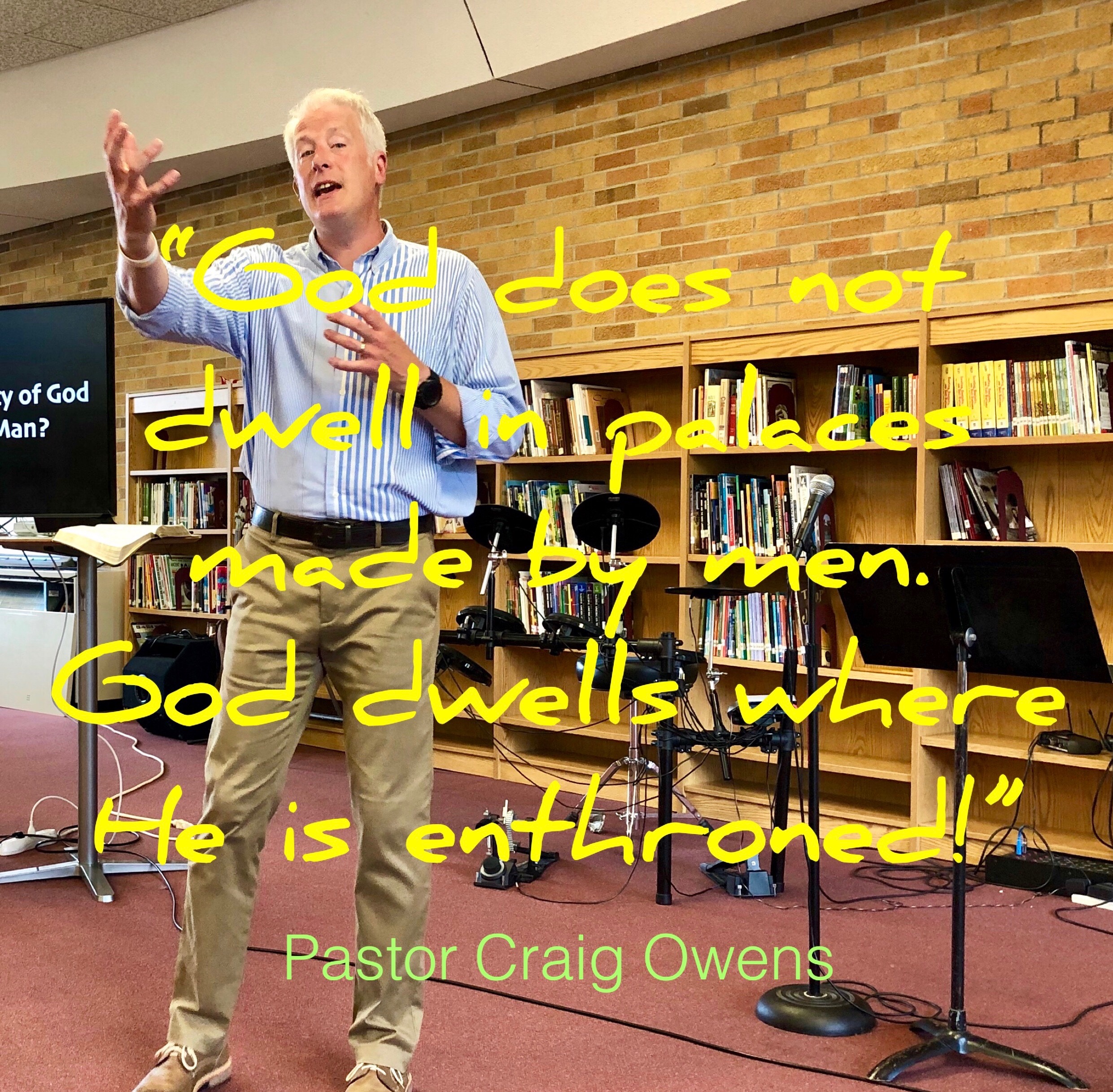
God does not dwell in palaces made by men.

God dwells where He is enthroned! 

When people look at the “city” of my life, can they tell God is on the throne? The telling characteristics of a City of God are a city where…

  • … thoughts continually turn to my King and His unfailing love (v. 9)
  • … praise, rejoicing, and gladness are constantly rising to God (vv. 10, 11)
  • … the King is able to freely walk around His kingdom—anywhere He likes (v. 12)
  • … others can walk around and see what a God-enthroned life looks like (vv. 12, 13)

I’ll ask it again—Can people clearly see that God is the unrivaled King of your heart? 

Join me next Sunday as we continue our look at the Selahs in the Psalms. 

Poetry Saturday—An Acrostic

I am a vile polluted lump of earth;
So I’ve continued ever since my birth;
Although Jehovah grace does daily give me,
As sure as this monster satan will deceive me.
Come therefore, Lord, from satan’s claws relieve me.
Wash me in Thy blood, O Christ,
And grace divine impart;
Then search and try the corners of my heart,
That I in all things may be fit to do
Service to Thee, and sing Thy praises too. —Isaac Watts (written at age 7)

If We Can Dare, God Will Do

“Here and there we meet with one to whom it is given to believe in God with mighty faith. As soon as such a man strikes out on a project, or sets about a work that none but men of his mold would venture upon, straightway there arises a claimer: ‘The man is overzealous,’ or he will be charged with an innovating spirit, rashness, fanaticism, or absurdity. Should the work go on, the opposers whisper together, ‘Wait a little while, and you’ll see the end of all this wildfire.’ What said the sober semi-faithful men to Luther? The monk had read in the Scriptures this passage: ‘A man is not justified by the works of the law, but by the faith of Jesus Christ’ (Galatians 2:16). He went to a venerable divine to ask him about it, and at the same time he complained of the enormities of Rome. What was the good but weak brother’s reply? ‘Go to your cell, and pray and study for yourself, and leave these weighty matters alone.’ Here it would have ended had the brave reformer continued to consult with flesh and blood. But his faith enabled him to go forward alone, if none would accompany him. He nailed up his theses on the church door and showed that one man at least had faith in the gospel and in its God. Then trouble came, but Luther minded it not, because the Father was with him. We also must be prepared, if God gives us strong faith, to ride far ahead, like spiritual light cavalry, who bravely pioneer the way for the rank and file of the army. It were well if the church of God had more of the fleet-footed sons of Asahel—swifter than eagles in their Lord’s service—men who can do and dare alone till laggards take courage and follow in their track. These Valiant-for-Truths will pursue a solitary path full often, but let them console themselves with this thought: ‘I am not alone, but I am with the Father who sent Me’ (John 8:16). If we can believe in God, He will never be in arrears with us; if we can dare, God will do; if we can trust, God will never suffer us to be confounded, world without end. It is sweet beyond expression to climb where only God can lead, and to plant the standard on the highest towers of the foe.” —Charles Spurgeon, in his Autobiography (emphasis added)

Thursdays With Spurgeon—What God Is Doing In Depression

This is a weekly series with things I’m reading and pondering from Charles Spurgeon. You can read the original seed thought here, or type “Thursdays With Spurgeon” in the search box to read more entries.

What God Is Doing In Depression

     This depression comes over me whenever the Lord is preparing a larger blessing for my ministry; the cloud is black before it breaks, and overshadows before it yields its deluge of mercy. Depression has now become to me as a prophet in rough clothing, a John the Baptist, heralding the nearer coming of my Lord’s richer benison. So have far better men found it. The scouring of the vessel has fitted it for the Master’s use. Immersion in suffering has preceded the baptism of the Holy Spirit. Fasting gives an appetite for the banquet. The Lord is revealed in the back side of the desert, while His servant keeps the sheep and waits in solitary awe. The wilderness is the way to Canaan. The low valley leads to the towering mountain. Defeat prepares for victory. The raven is sent forth before the dove. The darkest hour of the night precedes the day-dawn.

From The Autobiography of Charles Spurgeon

Spurgeon was known to have wrestled under the dark clouds of depression frequently throughout his life. As he noted above, “So have better men found it.” Many of us battle the dark waves of depression, myself included. 

But look at how Spurgeon came to see depression in a new light. He began to note that depression was actually the forerunner of a dawn of breakthrough. Think about how many notable people in the Scriptures went through dark valleys prior to God using them in previously unimaginable ways—men like Joseph, Moses, David, Elijah, Jeremiah, Peter, Saul (who would become Paul), and even Jesus Himself. 

The writer of Hebrews records that Jesus learned something during the dark night of His soul that He wouldn’t have learned any other way. Jesus saw God’s dawn coming, so He was able to continue to go through the darksome valley. 

Depression is a serious thing. If you are battling this darkness, there is freedom in admitting it. Spurgeon did, I have, and so have many others. Admit you need help, and then get help. Talking to your doctor or a Christian counselor may be a necessary component toward your healing. 

But in all that you do, please learn to do what these notable folks in the Bible did—and what Charles Spurgeon did: begin to see depression not as your permanent residence, but merely as a dark night that is preceding a glorious dawn!