“Relinquish your demand to understand; accept the fact that many things are simply beyond your comprehension. Because I am infinite and you are finite, the limitations of your mind make it impossible for you to understand much of what happens in your life—and in the world. So it’s vital to make room for mystery in your worldview.
“You are privileged to know many things that were formally mysteries—things that had been kept hidden for ages and generations. The New Testament is full of revelations that came through My incarnation, life, death, and resurrection. You are immeasurably blessed to have this priceless knowledge!
“Nonetheless, the ways I work in your world are often mysterious to you—beyond tracing out. This presents you with a choice: to resent My ways or to bow before Me and wonder and worship.” —Jesus (in Sarah Young’s Jesus Always)
I hope you will choose wonder and worship—that’s what I’m trying to choose.
When someone was out to get David, he turned to God in prayer. And what prayers he prayed!
He didn’t hold back. He came to God with all of his emotions right out in the open. Raw—but honest—emotions.
God called David a man after His own heart, so apparently God loved the honesty even when David asked God to break their arms, turn them into jackal food, burn them with fire, give them black eyes, or even blot their names out of God’s book of life (Psalm 10:15; 63:9-10; 68:1-2; 69:22-28)!
Why do we hesitate to express ourselves like this, to tell God what’s really in our hearts? Do we think He doesn’t know? Do we think He’s going to fall off His throne in shock at our brutal honesty? He already knows what’s in our hearts, so the expression of it is for our benefit. We must get it out in His presence because that’s the only way and the only place where true, deep, lasting healing can happen.
I love what R.T. Kendall reminds us: “Real worship takes place when we are unafraid to express what we feel. Worship ought to bring us to the point where we can be honest. We never need to repress what we feel when we are around Jesus. He will never scold us for our honesty. It doesn’t mean we are right, but if we are being honest, He can help us and bring us to see where we are wrong and to face the truth.” (emphasis mine)
When you hurt, get alone with God and then get real with God. He already knows what’s in your heart, so speak it out. You need to get that poison out of your system so that God can heal you.
Let’s follow this thread from the Old Testament into the New Testament—
“When Aaron trims the lamps at twilight, he shall burn incense. There shall be perpetual incense before the LORD throughout your generations.” (Exodus 30:8)
“Therefore I urge you, brethren, by the mercies of God, to present your bodies a living and holy sacrifice, acceptable to God, which is your spiritual service of worship.” (Romans 12:1)
“For we are a fragrance of Christ to God among those who are being saved and among those who are perishing.” (2 Corinthians 2:15)
“The incense which you shall make, you shall not make in the same proportions for yourselves; it shall be holy to you for the LORD.” (Exodus 30:37)
“Our lives are not to be about us, lived out in private and for self-glory. Our lives are to be about God, lived out in full view of the nations and for His name’s sake.” —Dick Brogden
On what we now refer to as Palm Sunday, Jesus arrived in Jerusalem with the crowd shouting, “Hosanna” because they thought Jesus was going to set things right. In this, they were disappointed. Jesus knew that His time for reigning in Jerusalem hadn’t come yet, and Christ’s passionate journey meant He would not cut any corners!
Before Jesus left Jerusalem that Sunday evening, Mark noted that “He looked around at everything.” He didn’t respond right away to what He saw. This is very important to note because we shouldn’t think that His response on Monday was something spontaneous. No, it was planned out in specific detail.
On Monday morning, Jesus prepared to make the 2-mile trip from Bethany to Jerusalem. The Gospels note quite frequently the amount of time Jesus spent in prayer, including beginning His day in conversation with His Father (see Mark 1:35). On this morning, He must have talked with His Father about everything He had seen in Jerusalem the day before.
En route to Jerusalem, Jesus encounters a fig tree that gives every appearance of life and vitality. It looks like it’s ready to serve people, but upon closer inspection, Jesus discovers that there is no fruit on it. He curses the tree for its deceptive outward appearance. This is definite foreshadowing for what’s about to happen!
Jesus enters the temple and begins to drive out merchants, and moneychangers, and dove sellers. He roars at them, “God says this is to be a place of prayer for all nations, but you have turned it into a den of robbers!” (see Matthew 21:12-17; Mark 11:15-19; and Luke 19:45-48).
The phrases house of prayer and den of robbers are direct quotations from Isaiah and Jeremiah, respectively (Isaiah 56:3-7; Jeremiah 7:1-11), but what do they mean?
The temple had specific courts available—
This buying and selling was undoubtedly happening in the Court of the Gentiles. As the Passover was approaching, people from all over the world were here—some purchasing animals to use as sacrifices, and some exchanging their foreign money for Israelite money for the temple tax.
There was a lot of hustle and bustle, but very little worship. This is what angered Jesus. The activity in the temple was like the fig tree He cursed—it looked like it was fruitful, but that was merely outward deception.
Were the merchants exploiting people? Perhaps. But they were certainly occupying the only space where non-Jews could worship. They were certainly becoming a distraction to any true worship activities. They were clearly becoming the main attraction.
There are two important lessons in this outburst that Jesus gives to all His disciples:
“Let the zeal of the house of the Lord ever eat you up. For example: do you see a brother running [toward sin]? Stop him, warn him, be grieved for him, if the zeal of God’s house has now eaten you up. Do you see others running and wanting to drink themselves drunk? Stop whom you can, hold whom you can, frighten whom you can; win in gentleness whom you can: do not in any way sit still and do nothing.” —Augustine
If you know God’s love, be zealous about those things that keep others from coming in to know God’s love for themselves. Not angry at people, but angry at practices and “religious shows” that hinder people from knowing God’s love like you know God’s love.
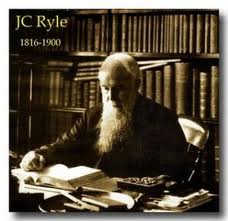
“Sanctification, again, is a thing which depends greatly on a diligent use of scriptural means. When I speak of ‘means,’ I have in view Bible-reading, private prayer, regular attendance on public worship, regular hearing of God’s Word, and regular reception of the Lord’s Supper. I lay it down as a simple matter of fact, that no one who is careless about such things must ever expect to make much progress in sanctification. I can find no record of any eminent saint who ever neglected them. They are appointed channels through which the Holy Spirit conveys fresh supplies of grace to the soul, and strengthens the work which He has begun in the inward man. Let men call this legal doctrine if they please, but I will never shrink from declaring my belief that there are no spiritual gains without pains. I should as soon expect a farmer to prosper in business who contented himself with sowing his fields and never looking at them till harvest, as expect a believer to attain much holiness who was not diligent about his Bible-reading, his prayers, and the use of his Sundays. Our God is a God who works by means, and He will never bless the soul of that man who pretends to be so high and spiritual that he can get on without them.” —J.C. Ryle