Links & Quotes

link quote

“What a great responsibility God has laid upon us preachers of His gospel and teachers of His Word. In that future day when God’s wrath is poured out, how are we going to answer? How am I going to answer? I fear there is much we are doing in the name of the Christian church that is wood, hay and stubble destined to be burned up in God’s refining fire. A day is coming when I and my fellow ministers must give account of our stewardship: What kind of a gospel did we preach? Did we make it plain that men and women who are apart from Christ Jesus are lost? Did we counsel them to repent and believe?” —A.W. Tozer

“Prayer pursues God’s glory by treating Him as the inexhaustible reservoir of hope and help. In prayer, we admit our poverty and God’s prosperity, our bankruptcy and His bounty, our misery and His mercy.” —John Piper

“We love beauty with simplicity, and we love the pursuit of knowledge without effeminacy. We employee wealth properly, for use rather than for noisy display, and we do not consider poverty to be a disgrace but do regard it as shameful for someone not to seek to escape poverty through labor. We citizens of Athens care for both our own domestic concerns and for the affairs of state; those of us engaged in business are not lacking in understanding of public matters. For we alone consider those who avoid engagement in public affairs not as ‘uninvolved’ but as useless. And we, as we judge and reflect carefully on matters, do not consider words to be a hindrance to actions. Rather, the real hindrance to action is to enter into whatever must be done without taking forewarning through discussion.” —Pericles, speaking about Athenian culture, quoted in the Archaeological Study Bible

The serious mental health costs of watching pornography. Don’t be fooled: porn is dangerous!

Tim Dilena talks about the difference between truth and “viral fame” in this video.

Truth! Why marriage shouldn’t end your dating life.

I like Seth Godin’s thoughts on our vocabulary. “It’s not about knowing needlessly fancy words (but it’s often hard to know if the fancy word is needless until after you learn it). Your vocabulary reflects the way you think (and vice versa). It’s tempting to read and write at the eighth-grade level, but there’s a lot more leverage when you are able to use the right word in the right moment.” Read more in Does Vocabulary Matter?

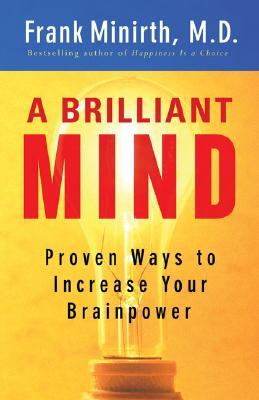
7 Quotes And A Helpful Memory Tool From “A Brilliant Mind”

A Brilliant MindIn his latest book, Dr. Frank Minrith tells us about a vital link between our vocabulary, and the growth in the human brain. It’s really quite fascinating! Check out my review of A Brilliant Mind by clicking here. Below are a few quotes from this book I wanted to share with you, along with a helpful list for increasing your memorization capacity.

“Only 3,500 words separate the culturally literate from others.”

“The average adult probably has a vocabulary of thirty to sixty thousand words. The highly literate may extend to one hundred thousand words. Yet the English language has well over one million words. Moving above the thirty-thousand-word range will greatly enhance our communication skills.”

“Many other tests since Dr. Johnson O’Connor’s have confirmed the correlation between career success and vocabulary knowledge.”

“Neuroplasticity simply means that the brain is capable of being molded: it can change and develop more connections between its many nerve cells so that, to a degree, it can even develop more cells. Neurogenesis is a similar term; it means that the brain is capable of growth and development. … You can increase the number of synapses in your brain by memorizing words. The more words you memorize, the more you can memorize because of the increase in neural synapses.”

“K. Warner Schaie, who investigated cognitive decline, found that the risk of cognitive decline could be reduced by three factors: higher education, extensive reading, and being married to a spouse with high cognitive status.” 

“We are, to a degree, what we repeatedly take into our brains. As we begin to expand our mental capacity through memorization, the brain chemistry is rearranged and memory is stored. Not only do we gain greater memory capability, but our brains actually change and improve. It is as if we program the brain with new software, and therefore we can respond to life around us in a healthier manner.”

Eight memory techniques:

  1. Review
  2. Employ visualization
  3. Use exaggeration
  4. Utilize association—synonyms, antonyms, subordination, relationships, etc.
  5. Use classification
  6. Command yourself—“When you direct the brain to do a task, it releases powerful chemicals in the direction requested. These chemicals are so powerful that if one hundred people with major medical depression—documented by a medical PET scan—are given a placebo, 33 percent will respond and their PET scan often returns to normal.” 
  7. Learn prefixes, suffixes, and roots
  8. See the origins in foreign words

A Brilliant Mind (book review)

A Brilliant MindDr. Frank Minrith opens his book—A Brilliant Mind—with a bold statement. “Whether you are five or ninety-five, you can develop a more brilliant mind. Whether your IQ is 85 or 165, brilliance can be increased. Whether you are a child, a housewife, a blue-collar worker, or a business executive, brilliance is yours for the taking through the exercises contained in this book.”

Quite simply the premise comes down to this: the brain’s neuroplasticity (it’s ability to continue to learn and retain new things) can be increased by simply expanding your vocabulary. Dr. Minrith points out that only 3500 words separate the culturally literate from others, but this expanded vocabulary holds the key.

Dr. Minrith points out that your brain’s synapses can be increased by memorizing new words, and applying them to your daily life. So the bulk of the book contains list after list after list of vocabulary words, arranged in very specific groups. Taking time to learn these words and their meaning is the key to brilliance. Not only that, but it’s a lot of fun developing a burgeoning vocabulary!

Harsh Words

Keep it closedThis is an interesting exchange between God and His people―

God says, “You have said harsh things[*] against Me.” 

“What have we said against You,” the people asked. 

“You have said, ‘It is futile to serve God…’” (Malachi 3:13-14).

We think we know better than God.

We tell God how we think it should be.

We complain that God is letting some people get away with bad stuff, and He’s not rewarding quickly enough those who are doing good stuff.

We think God doesn’t care if we do things our own way.

We think we can better manage our lives than He can.

We act like we’re in charge.

This is speaking harsh, arrogant, rude, terrible words against God. It’s really saying, “I know better, so I should be God.” This not only removes God’s blessing, but invites His punishment.

Ouch! It’s good to examine our thoughts and words to make sure we aren’t thinking or speaking harsh things against God.

[*] Some other translations say things like “You have spoken arrogantly against Me” and “You have said terrible things about Me” and “You have spoken rude words to Me.”

My Accent

My AccentThe prophet Amos opens his book with these words: The words of Amos…. Amos was the one God chose to deliver His message, and Amos never forgot that, not did he let his audience forget.

It’s not a filler phrase, but it becomes the accent by which everyone knew Amos’ voice. Over 40 times in this short book Amos uses phrases like “says the Lord,” or “declares the Sovereign Lord.” Amos constantly reminded himself and anyone who heard him speak that he was not speaking his own thoughts, but he was speaking God’s Word.

I wonder: What accent do people hear when I speak?

I want to be so full of God’s Word and His Spirit that the “says the Lord” accent is my accent.

When I speak I want people to not hear me but hear the God Who speaks through me.

My words are fallible, but God’s Word is perfect.

Jesus said that my words reflect what’s in my heart. May my accent make it so evidence that my heart is full of the Word of God.

13 Quotes From “Yawning At Tigers”

Yawning At TigersYawning At Tigers by Drew Dyck is a wake-up call to any who view God as tame or Christianity as boring. As I read this book I found myself frequently saying, “Yes!” out loud to the truths Drew has shared. I loved this book! You can read my full book review by clicking here. Below are a few of the quotes I highlighted (unless otherwise noted, the quotes are from the author).

“We can’t truly appreciate God’s grace until we glimpse His greatness. We won’t be lifted by His love until we are humbled by His holiness.” 

“Here, the contrast between God and an idol couldn’t be clearer. We are told that after offering sacrifices to the golden calf, the Israelites ‘sat down to eat and drink and got up to indulge in revelry’ (Exodus 32:6). But when God descended on Mount Sinai, ‘everyone in the camp trembled’ (Exodus 19:16). You don’t tremble before an idol. … An idol is safe. It never challenges you. It isn’t threatening. It doesn’t judge sin or demand loyalty. But the Holy One of Israel is a jealous God—passionate and loving, yes, but unspeakably dangerous too.”

“The language we use reveals an awful lot about how we think about God. A cursory examination of the way we speak exposes how pervasive this Jesus-as-my-nonjudgmental-buddy attitude is in the church.” 

“While we know enough about God to receive salvation and enter into a relationship with Him, our knowledge of Him is still far from complete. Our intelligence is too small, our languages too limited. When it comes to God, we are all beginners.”

“So soon as we become satisfied with any picture of God, we are in danger of idolatry.” —Victor White 

“Unfortunately, in our efforts to make the Bible interesting and relevant, we try to normalize God. We become experts at taking something lofty, so unfathomable and incomprehensible, and dragging it down to the lowest shelf. We failed to account for the fact that God is neither completely knowable nor remotely manageable.”

“We lack a practice of personal holiness because we’ve lost a theology of divine holiness. When we neglect a part of God’s nature, we shouldn’t be surprised when that same attribute goes missing in our lives. … The Bible repeatedly makes explicit the connection between God’s holiness and ours. ‘Be holy,’ God says, ‘because I… am holy’ (Leviticus 19:2). The New Testament echoes this theme. ‘Just as He who called you is holy, so be holy in all you do’ (1 Peter 1:15).” 

“Only a God who punishes evil and rights wrongs is ultimately a God of love. … To fear the Lord is not to suggest God is callous or cool. Just the opposite, in fact. It is God’s consuming love that makes Him so dangerous. Because He cares deeply for His creation, He will not tolerate evil and injustice forever.”

“The evidence of the Christian’s zeal and piety was made clear to all the pagans. For example, they alone in such a catastrophic state of affairs gave practical evidence of their sympathy and philanthropy works. All day long some of them would diligently persevere in performing the last offices for the dying and burying them (for there were countless numbers, and no one to look after them). While others gathered together in a single assemblage all who were afflicted by famine throughout the whole city, and would distribute bread to them all. When this became known, people glorified the God of the Christians, and, convinced by the deeds themselves, confessed the Christians alone were truly pious and God-fearing.” —Eusebius

“When we root our sense of identity in God, everything changes. Once our vertical connection is healthy, the horizontal ones tend to thrive. However, a cruel irony comes into play when we seek validation from others that only God can provide. When we lean too heavily on human relationships, we actually end up sabotaging them. We become clingy, controlling. We find ourselves piling expectations on people they were never meant to bear.”

“This doesn’t mean the New Testament is solely about God’s intimacy. Nor does the Old Testament speak strictly about God’s transcendence. The entire Bible speaks of both. All through Scripture we are reminded that God is both great and near.” 

“For people in the throes of suffering, the Bible offers something much different than an answer—it offers a Person.”

“We shall never succeed in knowing ourselves unless we seek to know God.” —Teresa of Avila

11 Quotes From “How High Will You Climb?”

How High Will You Climb?How High Will You Climb? is an abridgment of Dr. John Maxwell’s amazing book The Winning Attitude. Truly, attitude will determine your success in life. I highly recommend either of these books (you can check out my review by clicking here). Below are some attitude quotes I highlighted and one helpful infographic.

“The attitude is an inward feeling expressed by behavior. That is why an attitude can be seen without a word being said.” 

“It is impossible to perform consistently in a manner that is inconsistent with the way we see ourselves. In other words, we usually act in direct response to our self-image. … We should also remember God’s unconditional love and acceptance. He thinks more of us than we do of ourselves. … This principle works in reverse too. How we see ourselves reflects how others see us. If we like ourselves, it increases the odds that others will like us.”

“Others can stop you temporarily, but you are the only one who can do it permanently.”

“Usually wrong decisions are made at the wrong time, and right decisions are made at the right time. The reason? We let our environment control our thinking, which controls our decisions. Therefore, the more decisions that are made in the calm of life, the fewer times storms can bring us down.”

“Failure—we hide it, deny it, fear it, ignore it, and hate it. We do everything but accept it. By acceptance, I don’t mean resignation and apathy. I mean understanding that failure is a necessary step to success. The person who never makes a mistake never does anything.”

“Fear of failure grips those who take themselves too seriously.”

“First, discouragement hurts our self-image. … Discouragement causes us to see ourselves as less than we really are. This fact becomes even more important when we realize that we cannot consistently perform in a manner that is inconsistent with the way we see ourselves. Second, discouragement causes us to evade our responsibilities. … Third, discouragement causes us to blame others for our predicaments. … Fourth, discouragement causes us to blur the facts.”

“When our attitude crashes, we have two alternatives. We can either alter the difficulty or alter ourselves. What can be changed for the best, we must change. When that is impossible, we must adjust to the circumstances in a positive way.”

“We are either the masters or the victims of our attitudes. It is a matter of personal choice. Who we are today is the result of choices we made yesterday. Tomorrow we will become what we choose today.” 

“It is a sad day for any person when he becomes so satisfied with his life, his thoughts, and his deeds that he ceases to be challenged to do greater things in life.”

“When an opportunity for growth is open to you, what do you tell yourself? Will you grasp the chance with a tingle of excitement and say, ‘I can make it work!’ or do you smother it by saying, ‘That’s impractical… too difficult… I don’t think it can be done’? In that moment, you choose between success and failure. You helped to form a habit of either positive or negative thinking by what you tell yourself. So give your ‘better’ self a chance to grow. Form the habit of positive reaction followed by positive action.”

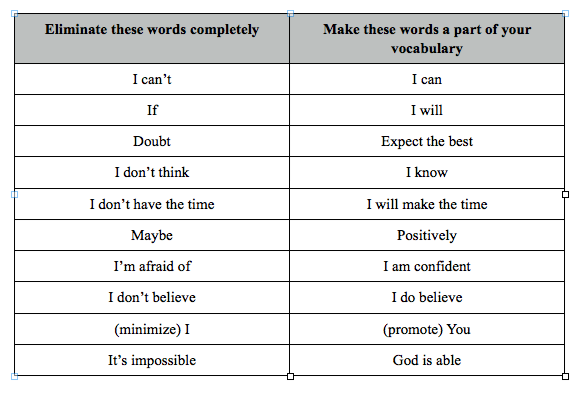
Change your vocabulary


Hyper-Mega Dynamite

Ephesians 1-19One of my favorite scenes in the movie Elf is when Buddy is discovering all the amazing human things in New York City. In a public restroom he stands up on the toilet in his stall to shout to the person occupying the stall next to him, “Have you seen these toilets? They’re ginormous!” It was so amazing to him that gigantic wouldn’t cut it, and neither would enormous, so he combined them together … it’s ginormous!!

When I read Paul’s prayer for the Christians in Ephesus (see Ephesians 1:17-23), I get the sense that even the well-educated apostle was having difficulty finding enough adjectives to describe the amazing inheritance we have in Christ. He mentions things like…

  • Out-of-this-world wisdom,
  • divine revelation,
  • deep and intimate knowledge of God,
  • a flooding of heavenly light,
  • supernatural hope, and
  • an overflowing, incalculable, inestimable, eternally-compounding inheritance!

But then he comes to God’s power and his vocabulary almost fails him. Like Buddy the elf, he starts putting words together to try to convey the vast majesty of this power.

Most Bible translations say something like incomparably great power. But when you look at the Greek you see prefixes like hyper! and mega! and you realize that Paul is saying it’s so beyond gigantic or enormous … it’s ginormous!! 

The word for power is “dynamis,” and many people have said that God’s power is like dynamite. But they have it exactly backwards! Dynamite has only been around for 200 years. When dynamite was created it was named after Christians who were living in the hyper-mega, ginormous, dynamic power of Jesus Christ. Christians’ power wasn’t named after dynamite; dynamite was named after empowered Christians!

This is the power in which Christians can live everyday in every way! This is the power God has for you! If you’re living in anything less than hyper-mega dynamite power, perhaps you should pray for yourself the prayer that Paul prayed for us! 

We’ll be continuing our series in Ephesians this coming Sunday, and I’d love for you to join us.

15 Quotes From “Stopping Words That Hurt”

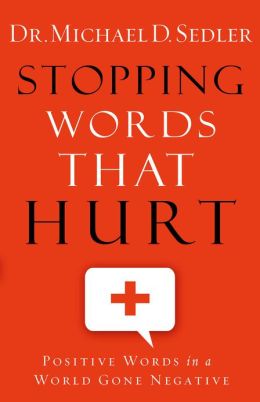
Stopping Words That HurtThere was so much for me to process in Stopping Words That Hurt by Dr. Michael Sedler (you can read my full book review by clicking here). If you’ve ever been hurt by someone else’s words about you, there is help for you in this book. If you’ve ever hurt someone else with the words you’ve spoken, there is help for you in this book.

Bottom line: this book can help cut-off hurtful words and evil reports before they gain momentum. Please read this book!

Here are just a few quotes that stood out to me—

“We are so brainwashed into believing that it is permissible to violate one another verbally that it takes a concentrated effort to begin to have a new thought pattern.”

“It is imperative that you understand this truth: Just listening to an evil report can do tremendous damage to your perspective, viewpoint and overall spirit. … Joining in a negatively-driven conversation, no matter how small the participation, may destroy the testimony of a life. Listening to grumbling and ungodly attitudes eventually contaminates the spirit. The more we allow discontent to be taken in by our spirits, the greater the tendency to compromise our own speech patterns. We are being called to a high standard of living where the rewards for our faithfulness are eternal.”

“It is usual for most of us to listen without questioning. We oftentimes want to support a friend, supervisor or person of influence. In fact, a messenger may single us out because she knows we will not disagree with or question her. Are we being used because of our own gullibility and blindness to negative speech patterns?”

“We must have our antennas up and be prepared when we hear negative comments and subtle innuendos about others.”

“If we are unable to recognize the potential destruction caused by negative words, we will eventually cause injury to those around us. And, sadly, we often deceive ourselves into believing there was justification for our actions.”

“It is rude to knowingly be a part of gossip. It is not good manners to listen to verbal assaults and blatant character assassinations of people who are not present to defend themselves. It is foolishness and ignorance. We must open our eyes and discern when we are listening to evil reports in order to be accepted by the crowd.”

“A bold positive response can put out the fire.”

“Learn to avoid the trap of falling into emotional identification by getting information for yourself. Compare your feelings and thoughts with the Bible’s guidelines. Look for corroboration or contradictions as you assess the situation. And, finally, give a little more weight to the perspective of those who have been faithful, trustworthy and proven people of integrity than the words of a stranger or ‘expert’ who has no track record of honesty.”

“Fear can draw us toward God or pull us away. It can create a desire in us to cling to the truth or alter our perception of the truth. While satan wants to use fear to rob us of our faith in God, we need to continue to speak words of truth and confidence regarding our place with Christ.”

“Impurity occurs when we hear evil reports with our natural ears and minds without seeking spiritual wisdom and understanding. If we accept the words of others as truth, we will become filled with a mixture of philosophies, attitudes and beliefs.”

“A person who has responsibility over others also has great influence. If he or she shares a negative report with the general population, those with unguarded spirits will become contaminated.”

“I speak a strong word of caution to husbands and wives, significant others and close family members. We often take on the offense when a loved one is wronged or slighted. And though they may work through the issue, we still hold on to the anger and bitterness.”

“It is difficult to ‘have ears that hear’ at this point in the process. First of all, we do not see ourselves as defiled or polluted. We think we are right and can handle everything ourselves. We are suspicious about counsel. We question the motives of those giving it. We actually fight the process of cleansing using words such as manipulating, self-centered and controlling to describe the interventions of others. We accuse even our closest friends and supporters of being insensitive and uncaring. Whereas once we received challenges and guidance from others, now we meet each comment or suggestion with disdain and animosity. It is during this phase that people have a tendency to reject the process of cleansing, choosing instead to walk away from purity and to blame and curse others for their lack of support and love.”

“In order to heal with words, we must be willing to be persistent with them. Jesus frequently verbalized His love for His disciples. Once is not enough! Encouragement, praise and positive words continue to feed the soul in the same way water moistures the soil. Soil will eventually dry out and need another dose of fresh water.”

“Great people of God find a way to speak hope into others. They give a sense of purpose, of calling, of future, of destiny to those around them.”

Stopping Words That Hurt (book review)

Stopping Words That HurtContrary the nursery rhyme—Sticks and stones may break my bones, but words will never hurt me—we all know that words do hurt! Dr. Michael Sedler addresses this topic in a unique way in Stopping Words That Hurt.

Reading that title you would think that this is a book about controlling your tongue, but we already know we’re supposed to do that, right? So Dr. Sedler takes a different angle and challenges us to control our thoughts and our environment. He shows us how being receptive to the negative words that others are speaking starts a downward cycle in our hearts and minds that leads to us not only receiving but perpetuating negative reports about others.

This book is not “pop psychology,” but is solidly grounded on biblical principles for heading-off negative reports at their source. Stopping Words That Hurt is filled with practical strategies for confronting gossipers, analyzing our own attitudes, and turning negative environments (where gossip flourishes) into positive environments where people are affirmed and built up.

I plan to use the strategies in this book to help the students that attend the youth center I direct to become catalysts for changing the environment in their schools and homes. Although adults can use this information too, I see a very receptive audience in pre-teens and teenagers. Parents, you need to read this book to be able to help your children as well.

I am a Chosen Books book reviewer.