God’s Truth, Not Your Comfort

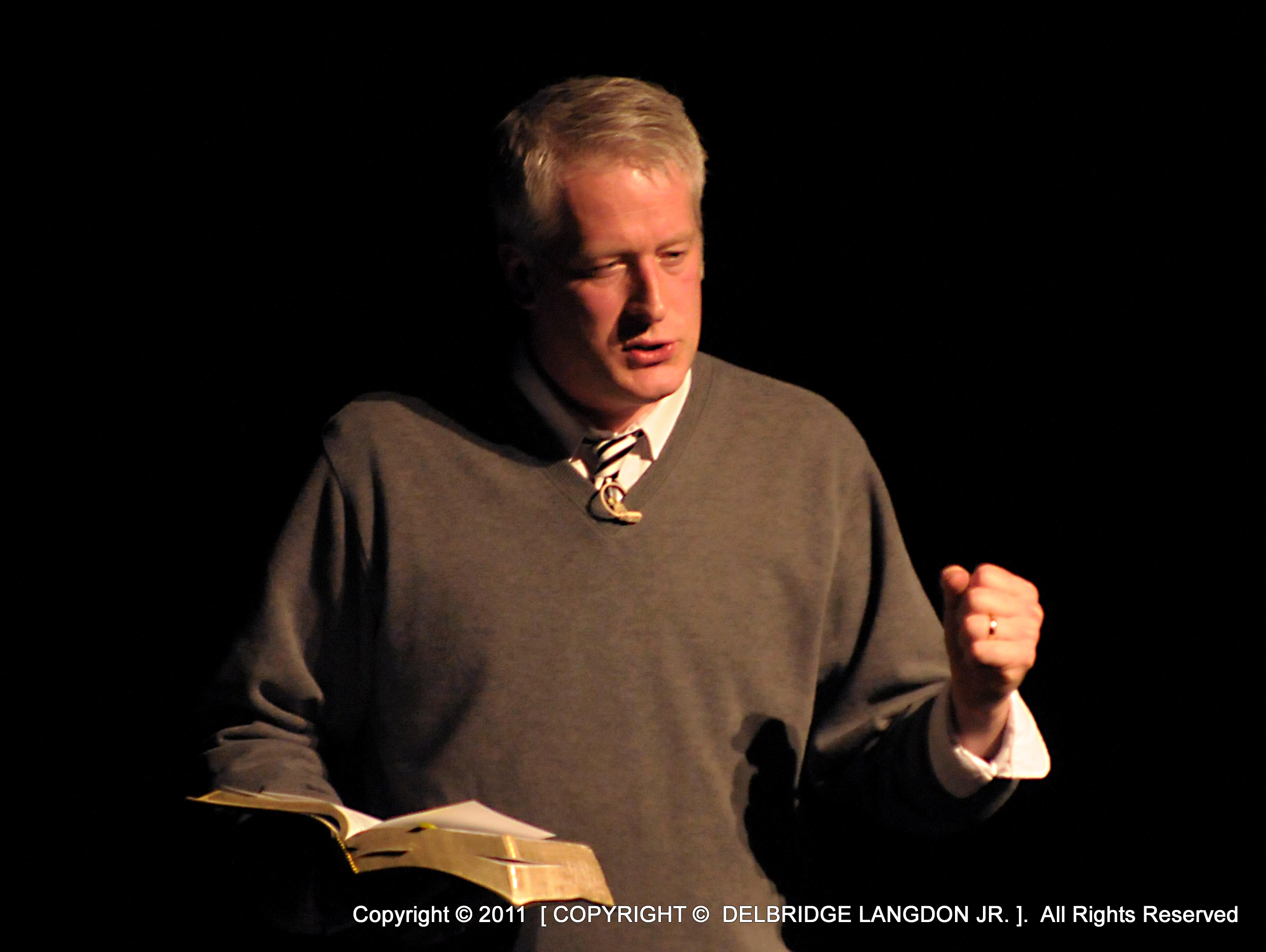
Some time ago I was asked to speak in a church setting outside of my church. The audience was a blend of people from all different church backgrounds, and perhaps even some without any church background. I talked about the hopelessness of trying to pay-off our sin debt on our own, and the amazing love that Jesus showed when He paid our debt in full.

After the service, a couple of pastors in the audience wanted to speak with me about my message. They were moved by what they called “the impact” of the message, and especially about the way I called sin “sin.” As I spoke with them further, I discovered that they were somewhat hesitant to speak so openly and plainly about sin, because it unsettled some people in their congregations.

But here is the sober reality—

The Word of God IS unsettling because we cannot read it or hear it and remain unchanged.

Our job as pastors or preachers is to speak the Word. When we do, the Holy Spirit will bring the necessary conviction and pull hearts toward repentance. Here’s what Oswald Chambers wrote about this:

“When we preach, we are not simply proclaiming how people can be saved from Hell and be made moral and pure; we are conveying good news about God.

“In the teachings of Jesus Christ the element of judgment is always brought out—it is the sign of the love of God. Never sympathize with someone who finds it difficult to get to God; God is not to blame. It is not for us to figure out the reason for the difficulty, but only to present the truth of God so that the Spirit of God will reveal what is wrong. The greatest test of the quality of our preaching is whether or not it brings everyone to judgment. When the truth is preached, the Spirit of God brings each person face to face with God Himself.”

Pastor, just speak the truth. You’re not trying to win a popularity contest, but to share with people how to step into a deeper relationship with God Almighty!

One final thought from Chambers: “Never water down the truth of God. Let it have its way and never apologize for it.”

What Is Successful Church Ministry?

I like to keep asking myself and my leadership team this question: How do we know if our church is successful? 

The apostle Paul uses two words to help answer these questions: Quality and Faithfulness.

But each one’s work will be shown for what it is; the Day will disclose it, because it will be revealed by fire—the fire will test the quality of each one’s work. (1 Corinthians 3:13)

Now it is required that those who have been given a trust must prove faithful. (1 Corinthians 4:2)

So here are two important questions we need to ask ourselves:

  • Am I doing quality work?
  • Am I faithfully doing my work?

To help answer those questions, I like this thought from Leonard Sweet’s book I Am A Follower:

“The most important metrics we must rely on, the crucial ‘deliverables’ we can present, must focus on the newly formed lives of the disciples we are making, the followers who are following Christ into a place of serving Him by serving others. The most important measure of our faithfulness to Christ must be the extent of transformation into the living image of Christ Himself. …

The quantifiable fruit of our church is not found in the number of people we can gather on a weekly basis. What counts is what is happening in the lives of those who have gathered. …It is quite possible to have a ‘successful’ life—and a ‘successful’ church—without God. But it is absolutely impossible to have a truly fruitful one.”

Again, Paul’s advice here is invaluable:

My conscience is clear, but that does not make me innocent. It is the Lord who judges me. Therefore judge nothing before the appointed time; wait till the Lord comes…. (1 Corinthians 4:4, 5)

Pastor, you need to think about these questions about “success.” But they should be questions framed around your quality and faithfulness of work as revealed to you by the Holy Spirit, not by some “expert” or anyone else.

(By the way, if you’re interested in exploring this further, I framed this question a different way in this post.)

UPDATE: This post was one of the seed thoughts that went into fashioning my book Shepherd Leadership: The Metrics That Really Matter.

Getting A Checkup

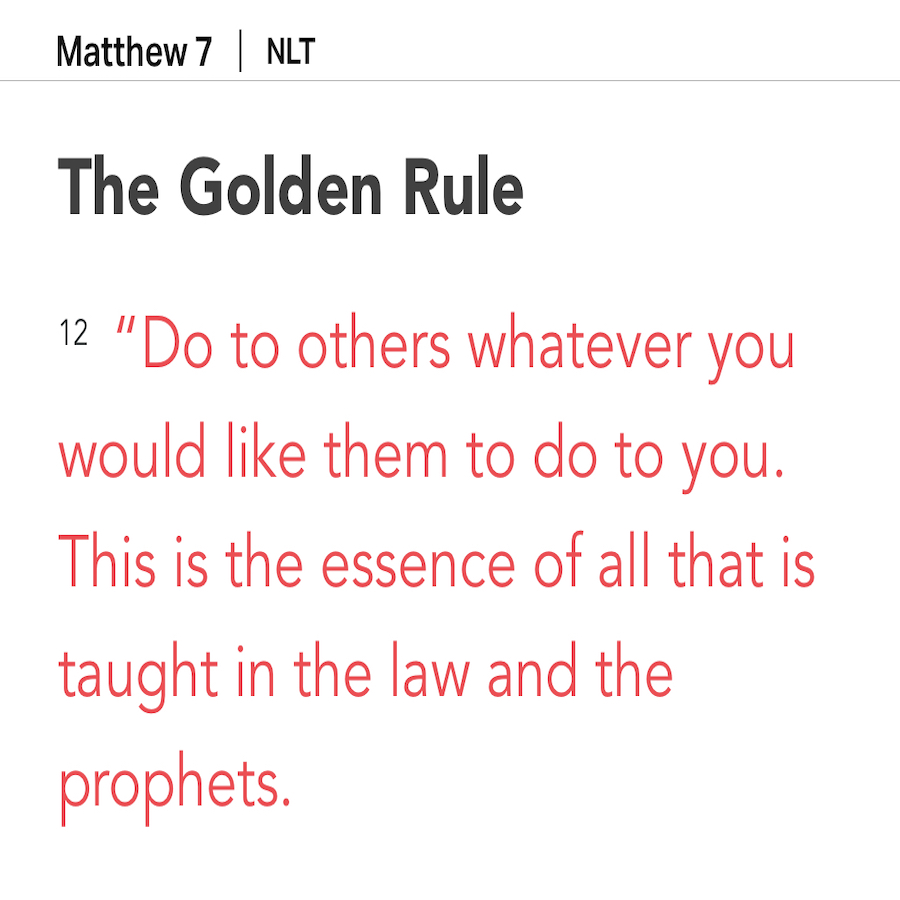
Probably almost everyone has heard the so-called Golden Rule that Jesus gave us:

So in everything, do to others what you would have them do to you, for this sums up the Law and the Prophets. (Matthew 7:12)

Most of the time we apply this verse from an I-perspective. That is, we ask, “How would I want to be treated in this situation,” and then we treat others like that.

What about if we switch it? What if we took the time to find out how the other person wanted to be treated?

In Romans 12, Paul says we are all interdependent on one another (v. 6). And he gives us some ways to live out the Golden Rule from an others-perspective. So from his teaching, here’s a checkup I’m giving myself:

  • Am I truly devoted to others, like I would be to my own family members (v. 10a)?
  • Do I honor others’ wishes ahead of my own (v. 10b)?
  • Do I work to find harmony (v. 16)?
  • Am I willing to do what others think is right (v. 17)?
  • Do I work hard to find a peaceful solution for everyone involved (v. 18)?

Now here’s the real test:

  • How would others answer the above questions about me?
  • How would someone who doesn’t like me answer those questions about me (v. 20)?

This checkup is making me think. How about you?

What Is “Success” For A Church?

“How’s it going,” a fellow pastor asked me. “How’s your church doing?”

If you’re a pastor, you probably get asked this often. How do you answer this question? Do you tell them what your attendance was on Sunday morning? Or about the newest program you’ve started?

When you look in the mirror and ask yourself, “How’s it going,” is your answer related to nickels and noses (offerings and attendance)? Is it how many people complimented your last sermon?

Listen to these sobering words:

Worldliness is not the trap that most endangers us as Christian workers; nor is it sin. The trap we fall into is extravagantly desiring spiritual success; that is, success measured by, and patterned after, the form set by this religious age in which we now live. 

…We have a commercialized view—we count how many souls have been saved and sanctified, we thank God, and then we think everything is all right. (Oswald Chambers)

We need to be very careful about how we define “success” in a church setting. Let’s use Jesus as our example:

  • How big was His congregation? Twelve men. One betrayed Him, nine ran away when the going got tough, and one denied he even knew Him. Even after being raised from the dead (!) there were only 120 people in the upper room.
  • How much money did His church have? Not even enough to buy a gravesite for the Messiah.
  • What did people think of His sermons? Some of His sermons made people so mad they wanted to stone Him. And after one sermon the Bible says: From this time many of His disciples turned back and no longer followed Him (John 6:66).

Maybe “success” in the church is more like…

  • …people being reconciled to God. Remembering that “our work is not to save souls, but to disciple them” (Chambers).
  • …seeing disengaged people becoming actively involved in engaging others with the Gospel.
  • …“Never seek[ing] after anything other than the approval of God” (Chambers).
  • …to say with Jesus, “The Spirit of the Lord is on Me, because He has anointed Me to preach good news to the poor. He has sent Me to proclaim freedom for the prisoners and recovery of sight for the blind, to release the oppressed, to proclaim the year of the Lord’s favor” (Luke 4:18-19).

These are just some of my thoughts. What else should be on this list? How would you define “success” in the church?

I have also shared some questions that can help pastors and ministry leaders better gauge the level of effectiveness in their ministry.

UPDATE: This post was one of the seed thoughts that went into fashioning my book Shepherd Leadership: The Metrics That Really Matter.

Thursdays With Oswald—The New Thinking Of Pentecost

This is a weekly series with things I’m reading and pondering from Oswald Chambers. You can read the original seed thought here, or type “Thursdays With Oswald” in the search box to read more entries.

The New Thinking Of Pentecost

     Everywhere the charge is made against Christian people, not only the generality of Christians, but really spiritual people, that they think in a very slovenly manner. Very few of us in this present dispensation live up to the privilege of thinking spiritually as we ought. This present dispensation is the dispensation of the Holy Spirit. The majority of us do not think according to the tremendous meaning of that; we think ante-Pentecostal thoughts, the Holy Spirit is not a living factor in our thinking; we have only a vague impression that He is here. Many Christian workers would question the statement that we should ask for the Holy Spirit (Luke 11:13). The note struck in the New Testament is not ‘Believe in the Holy Spirit,’ but ‘Receive the Holy Spirit.’ That does not mean the Holy Spirit is not here; it means He is here in all His power, for one purpose, that men who believe in Him might receive Him. So the first thing we have to face is the reception of the Holy Spirit in a practical conscious manner. …

     So as Christians we have to ask ourselves, does our faith stand ‘in demonstration of the Spirit and of power’? Have we linked ourselves up with the power of the Holy Spirit, and are we letting Him have His way in our thinking?

From Biblical Ethics

There are two dangerous extremes: (1) We can become so intellectual, that we never ask for the Holy Spirit’s help, or (2) We can become so “spiritual” that we ignore the development of our intellect.

I believe the proper balance is a both-and approach.

  • In the Old Testament, David asked for the Holy Spirit to search his heart and thoughts (Psalm 139:23-24).
  • Jesus said that the Holy Spirit would guide us into all truth (John 16:13), and that He would help us to recall the things we have heard from Christ (John 14:26).
  • The apostle Paul talked about the Holy Spirit searching our mind and revealing God’s mind to us (1 Corinthians 2:10-16).

(check out all of the above Scriptures by clicking here.)

All of these speak of a partnership. We have to do our part AND we have to listen to the Holy Spirit’s voice. And from personal experience, I’ve found that I think much more clearly and thoroughly when I listen to the Holy Spirit!

Temptation

Have you ever thought, “Well, of course Jesus could say ‘no’ to temptation! After all, He is God.”

Yes, Jesus is fully God. But He is also fully Man. And it was as a Man that He defeated temptation.

“As a Man, without using any of His divine powers, Jesus defeated temptation in the same areas where Eve failed and where we fail. … By this He condemned sin in sinful man, that is, He showed we sin, not because we have to sin, but because we choose to sin and because we ignore the help available through the Word and the Spirit.” —Stanley Horton

We don’t have to sin, but we choose to sin.

Ouch!

“In His temptation, Jesus did not use His divine power to defeat the devil. Still identifying Himself with us as Spirit-filled human, He defeated satan by the same means that are available to us — the Word, anointed by the Spirit. Eve, tempted in exactly the same areas—the lust of the flesh (appetite), the lust of the eyes (desire), and the pride of life—failed (Genesis 3:6; 1 John 2:16). In these areas, which John says together comprise the things of the world or worldliness (1 John 2:15). Jesus won a complete victory for us. He has truly overcome the world (John 16:33). We can do the same by our faith (1 John 5:4).” —Stanley Horton

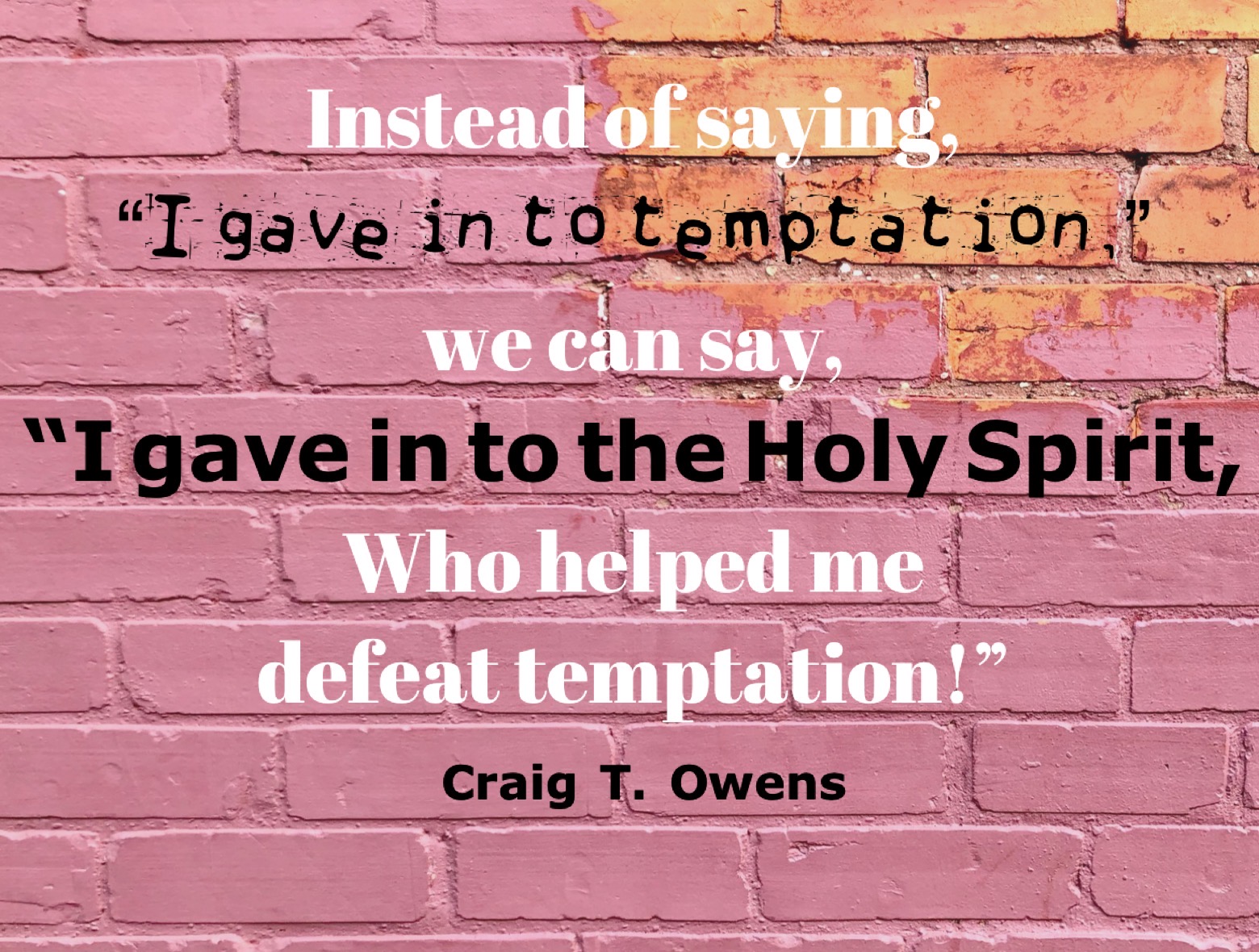
We can do the same thing. Instead of saying, “I gave in to temptation,” we can say, “I gave in to the Holy Spirit, Who helped me defeat temptation!”

Eternal Fruit

I love John Wesley’s commentary on this verse in the Gospel of John:

You have not chosen Me, but I have chosen you and I have appointed you [I have planted you], that you might go and bear fruit and keep on bearing, and that your fruit may be lasting [that it may remain, abide], so that whatever you ask the Father in My Name [as presenting all that I AM], He may give it to you. (John 15:16 AMP)

From John Wesley’s Notes On The Bible:

  • I have chosen and appointed you—for this end, that ye may go and convert sinners.
  • That your fruit may be lasting—that the fruit of your labors may remain to the end of the world; yea, to eternity.
  • That whatsoever you ask—the consequence of your going and bearing fruit will be, that all your prayers will be heard.

Leading others to an eternity with Jesus, bearing fruit that lasts forever, and having complete union with Christ in prayer. Wow! What amazing privileges followers of Jesus can have!

Battling Depression

Have you ever been depressed? I have. I know all too well how depression robbed me of sleep, sapped joy from my day, kept me from smiling and on the verge of tears all the time, made sunny days seem cloudy, caused me to sigh all the time and lose interest in the things that used to bring me pleasure, and brought such a sense of loneliness and isolation.

Did you know that Jesus felt the crushing load of depression too? As He was praying in the Garden of Gethsemane just before His arrest, listen to these words—

  • He began to be sorrowful and troubled
  • He became anguished and distressed
  • He began to show grief and distress of mind and was deeply depressed
  • He said to them, “My soul is overwhelmed with sorrow to the point of death”
  • He prayed more fervently, and He was in such agony of spirit that His sweat fell to the ground like great drops of blood
  • “Abba, Father,” He cried out, “everything is possible for You. Please take this cup of suffering away from Me. Yet I want Your will to be done, not Mine.” (see Matthew 26:37-38; Mark 14:36; Luke 22:44)

The writer of Hebrews wrote this about Jesus—

While Jesus was here on earth, He offered prayers and pleadings, with a loud cry and tears, to the One who could rescue Him from death. And God heard His prayers because of His deep reverence for God. Even though Jesus was God’s Son, He learned obedience from the things He suffered. In this way, God qualified Him as a perfect High Priest, and He became the source of eternal salvation for all those who obey Him. (Hebrews 5:7-9)

We learn something in suffering that we can’t learn any other way. Jesus learned how to experience all of the grief, anxiety, and depression that you and I will ever feel. And that is what qualifies Him to be a perfect High Priest for us.

Our part is to pray. Time and time and time again, not only did Jesus pray, but He encouraged His disciples to pray as well. As you continue to pray, Jesus is your High Priest praying for you. Only He truly knows how to translate the cry of your heart into a language Abba Father can understand.

In all their troubles, He was troubled, too. He didn’t send someone else to help them. He did it Himself, in person. (Isaiah 63:9)

If you’ve missed any of the messages in this series called Where’s God, please check them all out by clicking here.

Preparing The Preacher

A friend of mine was preparing to preach his first sermon at a new church, and he was (as anyone might understand) nervous. He had all sorts of concerns: Is this the right word for this congregation? Will my thoughts make sense to them? Have I prepared enough for this message?

It was that last question that jogged my memory of a quote I had read from Oswald Chambers in his book Approved Unto God. The title of that book comes from a passage a Scripture in which preachers are told to correctly handle the Word of God as a worker that is approved unto God (2 Timothy 2:15).

Check out this pearl of wisdom:

“Keep yourself full to the brim in reading; but remember that the first great Resource is the Holy Spirit Who lays at your disposal the Word of God. The thing to prepare is not the sermon, but the preacher.” —Oswald Chambers (my emphasis)

God doesn’t need His Word prepared—it’s already perfect. But He does need to prepare me to deliver the message. He needs to remove my opinions, my preconceived ideas, my hang-ups with that particular passage, my hesitation to share it.

The Holy Spirit of God needs to prepare me. And I need to let Him do it.

It’s a heavy, awesome responsibility to be “the one” sharing God’s Word to a group of precious people. I dare not even attempt it unless I have let the Spirit prepare me first.

Thursdays With Oswald—Exhausted For God

This is a weekly series with things I’m reading and pondering from Oswald Chambers. You can read the original seed thought here, or type “Thursdays With Oswald” in the search box to read more entries.

Exhausted For God

     Jesus said to Peter, ‘Feed My sheep,’ but He gave him nothing to feed them with. The process of being made broken bread and poured out wine means that you have to be the nourishment for other souls until they learn to feed on God. They must drain you to the dregs. Be careful that you get your supply, or before long you will be utterly exhausted. Before other souls learn to draw on the life of the Lord Jesus direct, they have to draw on it through you; you have to be literally ‘sucked,’ until they learn to take their nourishment from God. We owe it to God to be our best for His lambs and His sheep as well as for Himself.

     Has the way in which you have been serving God betrayed you into exhaustion? If so, then rally your affections. Where did you start the service from? From your own sympathy or from the basis of the Redemption of Jesus Christ? Continually go back to the foundation of your affections and recollect where the source of power is. You have no right to say, ‘O Lord, I am so exhausted.’ He saved and sanctified you in order to exhaust you. Be exhausted for God, but remember that your supply comes from Him. ‘All my fresh springs shall be in Thee.’

From My Utmost For His Highest

He saved and sanctified you in order to exhaust you. I want to be continually filled up and poured out for God. But in order to be of any good to others, I have to keep going back to the Source of life. If I’m not filled up with God’s presence, I will be exhausted, but not in the right way.

I have shared quite a bit about the correct way for godly leaders to be replenished through self-care. Check out these posts.