


 The last Sunday of each year I take some time with our church family to look back to review what we’ve learned. Then we look forward to a theme God is impressing on us for the new year. Check it out here—
Year-End Review (2015 edition)
December 28, 2015 — Craig T. OwensPornography Is Hunting Your Kids
December 28, 2015 — Craig T. Owens Pornography continues to ravage our society. It has a devastating effect on marriages and families, and even on our physical and mental health. Check out some of these latest alarming statistics:
Here are just a few stats on porn usage:
- 12 percent of all internet websites are pornographic.
- 35 percent of all internet downloads are pornographic in content.
- 25 percent of online search engine requests are related to sex, resulting in about 68 million requests a day.
- 40 million Americans consider themselves regular visitors to porn sites.
Not only that, but porn is now seeking out younger and younger kids. The average age that someone is exposed to porn for the first time is 11 years old!
Pornographers are purposely setting up on domains on commonly misspelled words of legitimate websites. Even setting up porn where someone types in .com instead of .edu or .org.
So what do we do? Josh McDowell urges parents to talk their children early and often about pornography:
“When it comes to discussing sex and pornography, how soon is too soon? It’s a question many parents ask. They don’t want to overexpose their children or be guilty of stirring up temptation in their children’s lives. At the same time, they don’t want to risk missing their cue and opening the door for other teachers like classmates, sex ed classes, magazines, and porn. The list of poor teachers is endless. In the face of so many mixed and misinformed messages, perhaps the question we should be asking is how late is too late?”
Parents, we can no longer simply hope our kids don’t get hooked on porn, we need to actively communicate with them. Porn is hunting your kids, so you need to help them know how to defend themselves from this evil.
Links & Quotes
December 27, 2015 — Craig T. Owens
“Although circumstances may bring us into the place of death, that need not spell disaster—for if we trust in the Lord and wait patiently, that simply provides the occasion for the display of His almighty power.” —L.B. Cowman
“Notice the singular ‘commandment’—‘This is His commandment, that we believe in the name of His Son Jesus Christ, and love one another, just as He commanded us’ [1 John 3:23]. These two things are so closely connected for John he calls them one commandment: believe Jesus and love others. That is your purpose. That is the sum of the Christian life. Trusting Jesus, loving people.” —John Piper
“We make progress in overcoming our sin when we have hope that our failures will be forgiven. If you don’t have hope that God will forgive your failures, when you start fighting sin, you give up.” —John Piper
“Impatient believers are offended when they see God working miracles all around them but not in their lives. They’re offended at what they believe is God’s slowness to answer them, and over time they feel neglected and imprisoned. Hebrews tells us such impatience is a form of spiritual laziness: ‘Be not slothful, but followers of them who through faith and patience inherit the promises’ (Hebrews 6:12). We are instructed to follow Abraham’s example: ‘After he had patiently endured, he obtained the promise’ (6:15).” —David Wilkerson
Tim Dilena has some amazing insights for every married couple in this video.
Peace On Earth! Really?
December 22, 2015 — Craig T. Owens For some people, “peace on earth” is just a wish. Perhaps all of this talk of peace and goodwill during the buildup to Christmas is doing just the opposite, and you’re feeling a bit stressed out.
How do you think Joseph felt on the night of his first son’s birth? Do you think he was peaceful, or do you think things weren’t going as he had planned, and his stress level was through the roof? We can learn a very valuable lesson from his life.
Please gather your family and friends around to watch this short 10-minute video before you begin your Christmas celebration. This encouraging word may be just what you need to have a peaceful and joyous Christmas.
(If you have any trouble with the above video, here’s another link to try.)
I encourage you to read the Scriptures I mention in this video. They are:
And the quote from Max Lucado I shared:
“You’ve stood where Joseph stood. Caught between what God says and what makes sense. You’ve done what He told you to do only to wonder if it was Him speaking in the first place. You stared into a sky blackened with doubt. And you’ve asked what Joseph asked. You’ve asked if you’re still on the right road. You’ve asked if you were supposed to turn left when you turned right. And you’ve asked if there is a plan behind the scheme. Things haven’t turned out like you thought they would. Each of us knows what it’s like to search the night for light. Not outside a stable, but perhaps outside an emergency room. On the gravel of a roadside. On the manicured grass of the cemetery. We’ve asked our questions. We’ve questioned God’s plan. And we’ve wondered why God does what He does. The Bethlehem sky is not the first to hear the pleading of a confused pilgrim. If you are asking what Joseph asked, let me urge you to do what Joseph did. Obey.”
Merry Christmas!
Links & Quotes
December 21, 2015 — Craig T. Owens
“Christ did not risk death. He embraced it. That is precisely why He came: not to be served but to serve and give His life a ransom for many (Mark 10:45). … Christmas is for freedom. Freedom from the fear of death. Jesus took our nature in Bethlehem, to die our death in Jerusalem, that we might be fearless in our city. Yes, fearless. Because if the biggest threat to my joy is gone, then why should I fret over the little ones?” —John Piper
“The danger of all dangers would be to lose trust and confidence in the mercy of God. … To distrust Him would be a far more terrible thing than any physical evil which all the enemies of God put together could inflict on us, for without God’s permission neither the devils nor their human ministers could hinder us in the slightest degree.” —Francis Xavier
“Each instant of present labor is to be graciously repaid with a million ages of glory.” —J.W. Alexander
“If God did so much for us when enemies, what will He do, or rather, what will He not do, for us now that we are friends? … If Christ’s death did so much for us, what will not His life do?” —Horatius Bonar
“Ignorant men raise questions that wise men answered a thousand years ago.” —Goethe
[VIDEO] Tim Dilena shares some practical keys for a consistent prayer life.
“I would exhort those who have entertained an hope of their being true converts, and yet since their supposed conversion have left off the duty of secret prayer, and do ordinarily allow themselves in the omission of it, to throw away their hope. If you have left off calling upon God, it is time for you to leave off hoping and flattering yourselves with an imagination that you are the children of God.” —Jonathan Edwards
“For too many of us, Christian experience is episodic rather than continuous, with a few religious experiences interspersed throughout our lives, which are otherwise lived on our own terms. Such people can see little need or use for prayer.” —Ralph Lehman
Eric Metaxas helps us get ready for Religious Freedom Day on January 16.
[VIDEO] Not just at Christmas when you are receiving gifts, but all year long we should be people of appreciation. Check out John Maxwell’s short video—
O Holy Night & O Holy Day
December 21, 2015 — Craig T. Owens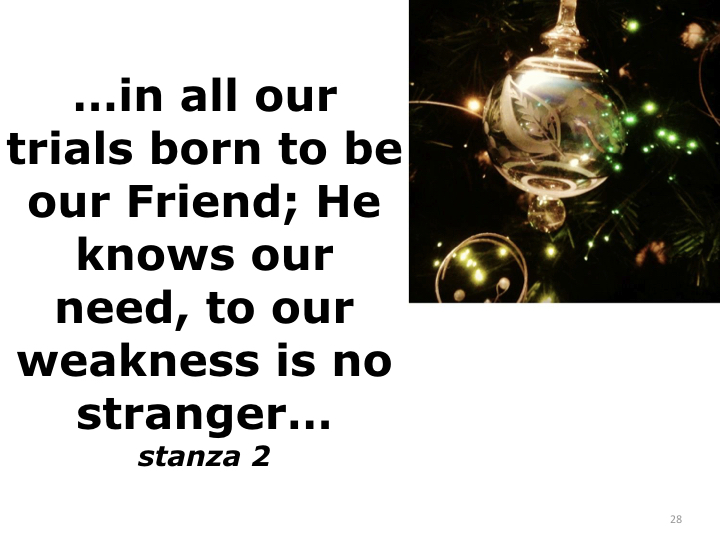 In 1847 an unnamed parish priest sent an unusual request to Placide Cappeau, the commissioner of wines in a small French town: “You are well known for your poems. Would you consider writing a poem for our Christmas mass?” Cappeau was both intrigued and honored, and he soon penned an essay called Cantique de Noel.
Cappeau felt that his poem was more worthy of a song, than just merely a poem, so he turned to his friend Adolphe Adams. Adams was a classically trained musician, but he was also a Jew. Adams said to Cappeau, “You’re asking me to write a melody for a poem that celebrates a Man I do not view as the Son of God, and a poem that celebrates a day I do not celebrate?” But because his friend Cappeau had requested it, he gave it his best effort. Three weeks later, Cantique de Noel was first heard at the Christmas Eve midnight mass.
Cantique de Noel quickly became popular throughout France. But when it was discovered that the lyricist Cappeau had left the church to become a socialist and that the musical composer Adams was a Jew, the Catholic Church banned the song from being sung in any of its churches. Still, the song grew in popularity.
During the build-up to the American Civil War, an abolitionist named John Dwight was especially moved by a line in Cantique de Noel: “Chains shall He break, for the slave is our brother, and in His name all oppression shall cease.” Dwight published his version of Cantique de Noel in his abolitionist magazine with the new title O Holy Night. The song quickly caught on in America.
The opening words of O Holy Night speak to our hearts today, as much as they did to those present at the First Advent—long lay the world in sin and error pining, till He appeared and the soul felt its worth. To pine for something means to long painfully for something just out of our reach. It’s what the psalmist in ancient Israel captured too when he wrote, My soul yearns, even faints, for the courts of the Lord; my heart and my flesh cry out for the living God (Psalm 84:2). There is a longing in all of us to know the Lord!
That’s why Christ’s First Advent is such a blessed, joyous event! In the second stanza we sing—In all our trials born to be our Friend; He knows our need, to our weakness is no stranger. Indeed the writer of Hebrews tells us why Jesus was born as a human (Hebrews 2:14-18), and why we can approach Him confidently (4:15-16).
Christ’s Incarnation allows us to put our faith in Him. When we do, we experience the Atonement. I like to remember this word by saying it at-onement. In other words, the Heavenly Father now sees me at-onement with His Son—when He looks at me, He sees Jesus. That’s why God forgets our forgiven sins (Hebrews 8:12)!
Then the third stanza of O Holy Night begins to tell us how we live out the at-onement every day by loving one another, enjoying His peace, living free and helping others get free too, singing joyfully to God day after night after day after night!
The First Advent was a holy night because Christ’s Atonement it makes us holy. So now all our nights are O holy nights, and all our days are O holy days, and all our work is O holy work, and all our relationships are O holy relationships!
Christ’s First Advent changes EVERYTHING for those who put their faith in Him. Is that you? Are you living in Christ’s at-onement? If not, you can be today by simply asking Him to come into your life.
You can check out some of the other Christmas carols we have looked at here. And check out the video of this message too—
If you have missed any of the messages in our series The Carols Of Christmas, you can find the full list by clicking here.
Holiday To Do List
December 19, 2015 — Craig T. Owens This is a pretty good list!
BuyBe presents- Wrap
giftssomeone in a hug - Send
giftspeace Shop forDonate food- Make
cookieslove SeeBe the lights
May we all keep in mind that Jesus is the reason for the season—
- He came as Emmanuel to be God with us
- His blessings envelope us
- He came to bring peace on earth
- He provides our daily bread
- He is love
- And He calls us to be His light to the world
(I found this picture online but cannot find out who created it. If someone knows, please tell me, as I would love to give them proper credit.)
Links & Quotes
December 18, 2015 — Craig T. Owens
“Foretastes are good. Unless they become substitutes. O, don’t let all the sweet things of this season become substitutes of the final great, all-satisfying Sweetness. Let every loss and every delight send your hearts a-homing after heaven.” —John Piper
“Are you in a season of winter? A lost job… A doctor’s report… A broken marriage? Maybe you feel stuck in winter, like Christmas may never come. As scripture says, God rewards those who diligently seek Him. So just like the wise men of the Christmas story…search for the Lord. Look for Him in the midst of your darkest nights and coldest winters. Hope may seem as distant as a star, but if the Christmas story tells us anything…God is still present. God is still working. And in this very moment, God is near.” —Max Lucado
“If there had been no prophet like Nathan—no piercing, prophetic word—David could have ended up like Saul: spiritually dead, with no Holy Ghost guidance, having lost all intimacy with God. … If you are being probed by God’s Word—if His Spirit isn’t letting you sit comfortably in your sin—then you are being shown mercy. It is the deep love of God at work, wooing you out of death and into life.” —David Wilkerson
“If regrets about yesterday’s decisions and actions help you do better work today, then they’ve served a useful purpose. … Most of the time, though, we use regrets to keep us from moving forward. They paralyze us in the face of possibility. We don’t want to do something if it reminds us of that black hole we have in our past. It’s useful if you can forgive yourself, because the regrets you’re carrying around are keeping you from holding onto the possibility that you can contribute even more tomorrow.” —Seth Godin
Live Action shares an important post: Abortion and the church—what can we do?
Nature shares some science myths that won’t die.
Ty Cobb is my all-time favorite Detroit Tiger. Here is a cool timeline of his life.
[VIDEO] Excellent word from Bobby Conway: How should a Christian vote?—
Links & Quotes
December 15, 2015 — Craig T. Owens
“It’s easy to label what we consider ‘good things’ in our lives as gifts from God and to welcome them with gratitude. But when difficult things happen, we don’t look at them as part of God’s good plan for us. Mary’s example [Luke 1:38] shows us we can also welcome those things we would not necessarily label ‘good,’ confident that God’s gifts sometimes come in perplexing and even painful packages. When we belong to God, we know He will use whatever He allows into our lives for good. Somehow, in God’s hands, these things also become gifts of His grace toward us.” —Nancy Guthrie
“Unless we intend completely to forfeit our holy seasons, and to allow them to be taken captive for the purposes of crass commercialism and narrow-minded narcissism, we need to make the best use of these times as God intends….” —T.M. Moore
“No one who is lost has lost one ounce of value to God. Even if you don’t have a relationship with Him, you have immense value to God. Lostness implies value. Whatever someone is willing to spend to recover something that’s lost shows how valuable that item is. In the most famous verse in the Bible, Jesus clearly explains our value: ‘God loved the world so much that He gave His one and only Son so that whoever believes in Him may not be lost, but have eternal life’ (John 3:16).” —Rick Warren
If you have trouble knowing whether to use their, there, or they’re, this may help.
“By giving to You what You do not need, and what I might enjoy, I am saying more earnestly and more authentically, ‘You are my treasure, not these things.’” —John Piper on fasting
I was going through an Advent reading plan on YouVersion, and I came across this quote: “Each Christmas is practice for the moment of Christ’s second coming, when every knee will bend, either in worship or terror.”
In this video, Brett Kunkle explains from Scripture and from personal observation how we know humans are born into sin.
“Many Christians today…choose to listen only to soft, flesh-assuring preaching. Where there is no convicting word, there can be no godly sorrow over sin. Where there is no godly sorrow for sin, there can be no repentance. And where there is no repentance, there is only hardness of heart.” —David Wilkerson
“We are tempted in our day to be ashamed of the gospel. It is thought to be bare, unintellectual, almost childish by many. Hence, they would overlay it with argument and eloquence, to make it more respectable and more attractive. Every such attempt to add to it is being ashamed of it [Romans 1:16].” —Horatius Bonar
Check out some absolutely stunning pictures from the Hubble Space Telescope!
The Non-Christmas Christmas Carol
December 14, 2015 — Craig T. Owens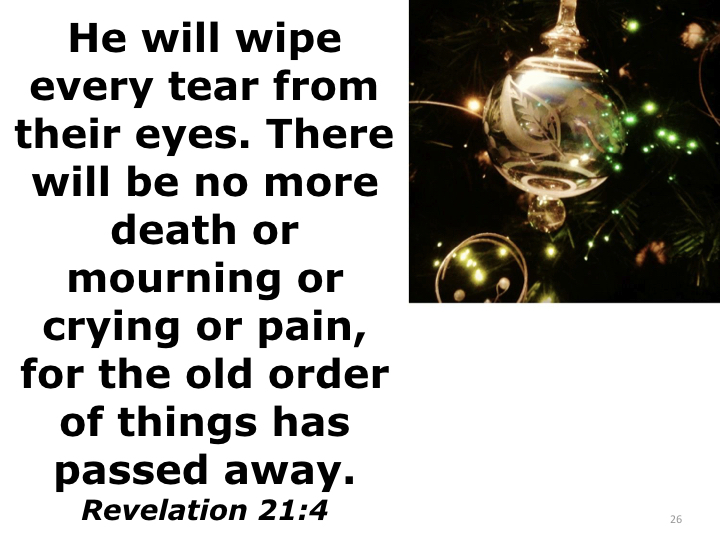 Imagine that I invited you to my house for a Christmas party. When you arrived, I greeted you at the door with a cheerful hello and warmly welcomed you into my home. But as you hung out with the other guests, you might begin to wonder if we were truly celebrating Christmas. After all, when you looked around my house, you saw no Christmas tree, no ornaments, no wrapped gifts, no mistletoe, no Christmas stockings, no manger scene. You might be tempted to say that you were invited to a non-Christmas Christmas party! (By the way: my house IS fully decorated for the season!)
One of our 300-year-old Christmas carols sounds remarkably like my make-believe party. Joy To The World has no mention of angels, no wisemen, no manger, no nativity scene, no virgin birth, no star in the east. It seems like a non-Christmas Christmas carol!
That’s because at this time of year, Christians aren’t celebrating Christmas, but we’re celebrating Advent. Actually we’re celebrating both Advents.
Jesus was born in a Bethlehem manger (His First Advent), but He is also coming again to bring all of earth’s history to a close (His Second Advent). So we celebrate the First Advent, and then look with hopeful anticipation to the Second Advent. That’s exactly what Joy To The World does!
Each of the stanzas of this well-known hymn looks forward with joy to Christ’s ultimate fulfillment of all the prophesies of the Bible. The final joy comes when He reigns as King of Kings and Lord of Lords. But we can still live with joy right now!
The third stanza of this hymn says that Christ has come to make His blessings known far as the curse is found. The Apostle Paul says the same thing—sin used to reign, but the grace of God far exceeds the thorns of sin (see Romans 5:19-21; 6:8-12).
Our ultimate joy comes at the Second Advent of Christ when “He will wipe away every tear from their eyes. There will be no more death or mourning or crying or pain, for the old order of things has passed away” (Revelation 21:4).
So the next time you hear the non-Christmas Christmas carol Joy To The World, be reminded that it’s not Christmas we are celebrating, but Christ’s First Advent. And it’s not some shapeless, indefinable future that awaits us, but we can live in the joy of anticipating Christ’s Second Advent.
Check this out—
If you have missed any of the messages in our series The Carols Of Christmas, you can find the full list by clicking here.
My most-viewed posts


 Craig T. Owens