How’s your EQ? We spend a lot of time (maybe too much time) on IQ, but how high is your emotional quotient? Leaders need this self-awareness, and it starts with humility.
“Sin is the most expensive thing in the universe. If it is forgiven sin, it costs God His only Son. If it is unforgiven sin, it costs the sinner his soul an eternity in hell.” —Charles Finney
J. Warner Wallace writes, “What sets Christianity apart from every other theistic worldview is its foundation in history. Many belief systems offer beautiful wisdom and moral guidance—collections of proverbs that inspire and instruct—but they don’t rest on claims that can be examined or tested. … Christianity is different. It rises or falls on a historical event—the resurrection of Jesus.”
“The Love of God is kinder than the measure of man’s mind.” —A.W.Tozer
“If you are worried about the people outside [the Body of Christ], the most unreasonable thing you can do is to remain outside yourself. Christians are Christ’s body, the organism through which He works. Every addition to that body enables Him to do more. If you want to help those outside you must add your own little cell to the body of Christ who alone can help them. Cutting off a man’s fingers would be an odd way of getting him to do more work.” —C.S. Lewis
Fight The New Drug writes, “Research links porn use to changes in brain circuitry, lower relationship satisfaction, increased loneliness, and shifting sexual expectations.” Check out 17 reasons to not watch pornography.
“But if we are describing, for the moment, the atmosphere of what is generous and popular and even picturesque, any knowledge of human nature will tell us that no sufferings of the sons of men, or even of the servants of God, strike the same note as the notion of the Master suffering instead of his servants. … No mysterious monarch, hidden in his starry pavilion at the base of the cosmic campaign, is in the least like that celestial chivalry of the Captain who carries His five wounds in the front of battle.” —G.K. Chesterton
Listen to the podcast of this post by clicking on the player below, and you can also subscribe on Apple, Spotify, or Audible.
I was asked to share one of the funniest things I’ve seen in church. I didn’t exactly “see” this one, but it still ranks as one of the funniest things I have ever experienced!
In all seriousness, we often are looking for “a sign” to help us confirm the direction God may be leading us. I would invite you to check out my post and video Knowing God’s Will, especially if you are contemplating God’s direction for you.
Listen to the podcast of this post by clicking on the player below, and you can also subscribe on Apple, Spotify, or Audible.
Fifty-eight years ago this weekend, on April 4, 1968, just after 6pm on a balcony of the Lorraine Motel in Memphis, TN, Dr. Martin Luther King, Jr. was cut down by an assassin’s bullet. A powerful voice in the struggle for civil rights for African Americans was silenced, and yet his legacy still lives on more than a half-century later.
A couple of days ago, we remembered another historic death: the crucifixion of Jesus of Nazareth. But unlike Dr. King, today we also celebrate the resurrection of Jesus from the dead!
Does it matter that Jesus was raised back to life? If Dr. King’s legacy can still live on in the life of his followers, even though his body is in the grave, couldn’t the same thing happen for the followers of Jesus of Nazareth? The answer, quite simply, is “No!” This is because Jesus claimed that His kingdom was an eternal Kingdom, and that He came to bring people eternal life (John 3:16). If the Founder of this Kingdom could be held in the grave, what would His followers have to look forward to? Paul said this in 1 Corinthians 15:17-19.
(I’m not going to take the time to go through all the evidence for the resurrection of Jesus here, but I would encourage you to check out our series A.L.I.V.E.
We have named this series after a statement from Jesus, “I will build My Church.” He made this statement before His death and before His resurrection, which tells us that He knew the outcome before those events even occurred.
Look how Paul concludes that the resurrection of Jesus is what gives meaning to the terms “saints” and “Church” in Ephesians 1:15-23. Our faith in what Jesus did for us on the Cross—namely, paying the penalty for our sins—is what justifies us, allowing us to be called saints (2:4-5). Notice how saints are to now live (2:6-10).
Look at those two phrases: “saved…not by works” and “created…to do good works.” As my friend T.M. Moore noted, “We are not saved by good works, but we’re not truly saved without them.” Good works is what characterized the earthly ministry of Jesus (Acts 10:38), and good works are what His saints are now freed and empowered to do (Romans 7:4; 1 Peter 2:12).
Paul goes on to say that saints are who make up the Church of Jesus (Ephesians 2:14-22). The Church is not a building, but saints following the example of Jesus to make the Kingdom of God known in the world (Acts 4:32-35).
A hundred years later, Aristides wrote a letter to Emperor Hadrian about these saints (who were now known as Christians):
“They help those who offend them, making friends of them; do good to their enemies. They don’t adore idols; they are kind, good, modest, sincere, they love one another; don’t despise widows; protect the orphans; those who have much give without grumbling, to those in need. When they meet strangers, they invite them to their homes with joy, for they recognize them as true brothers, not natural but spiritual. When a poor man dies, if they become aware, they contribute according to their means for his funeral; if they come to know that some people are persecuted or sent to prison or condemned for the sake of Christ’s name, they put their alms together and send them to those in need. If they can do it, they try to obtain their release. When a slave or a beggar is in need of help, they fast two or three days, and give him the food they had prepared for themselves, because they think that he too should be joyful, as he has been called to be joyful like themselves.”
Jesus is the eternally-living Founder of His Church, and those who have had their sins forgiven by their faith in His death and resurrection are the living stones of His Church (1 Peter 2:5).
Coming to the Cross makes us saints. Making the Savior known by the way we live makes us the Church.
We can’t do this unless Jesus is alive and actively empowering us (Matthew 28:18-20).
Let me reiterate what my friend wrote, because this is how saints should live: “We are not saved by good works, but we’re not truly saved without them.”
The resurrection of Jesus makes it possible for us to not only be delivered from trying to earn our salvation by doing good works, but to be empowered to do good works so that we compel others want to know Jesus for themselves.
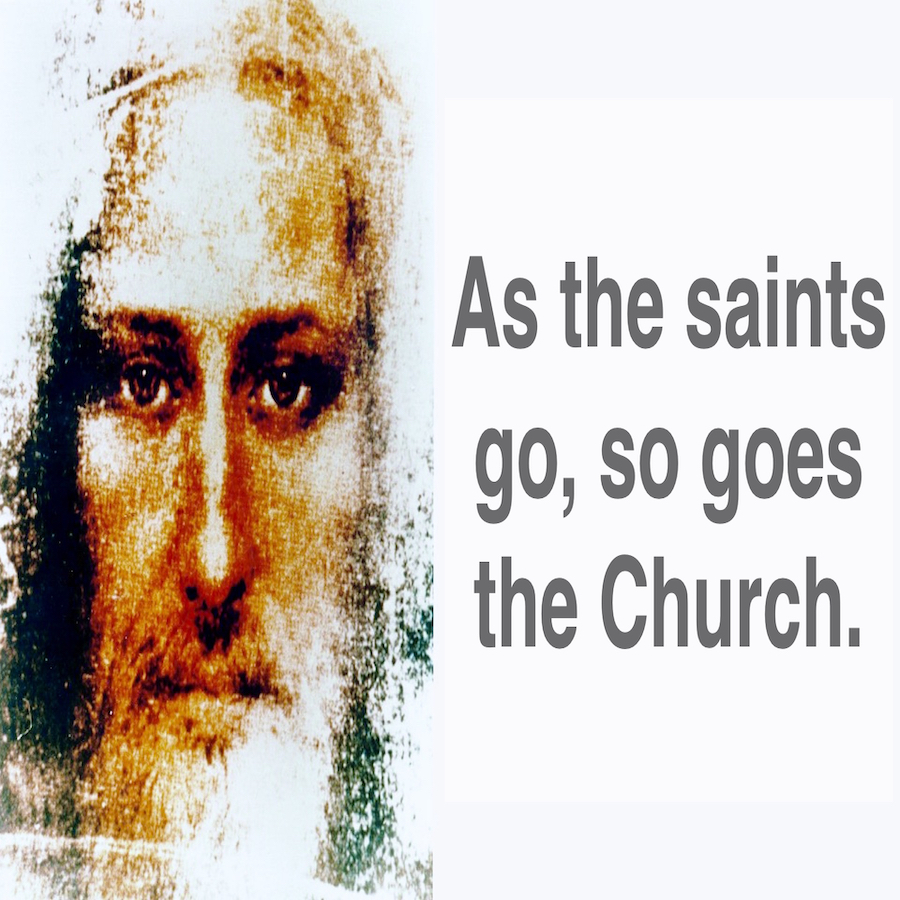
As the saints go, so goes the Church.
Check out all of the messages in this series “I will build My Church” by clicking here.
Before having that difficult conversation, make sure that person you are going to speak to knows two things: (1) God loves them, and (2) You love them. Here’s a great example of how this is done.
A very interesting post on the history of the Shroud of Turin, including some of the most recent scientific studies.
“Many read the Bible the way a mouse tries to remove the cheese from a trap… trying not to get caught.” —Søren Kierkegaard
Is there any historical evidence to the claim that Easter is based on pagan deities or pagan practices? John Stonestreet discusses the lack of solid connections to these claims.
“Today…the church is becoming more of a consumer than a steward. This means we want the church to give us friends, marry us, provide financial help, give us counseling, get us to heaven, help us when our house is flooded, give us good music, and fix our teenagers. All of this while we sit and take it in. Exodus 35 speaks to this. To be clear, when we give our offering, we’re not giving to the Lord something He doesn’t already have a right to. We are just taking our hands off that which already belongs to Him.” —Tim Dilena
One generation after the apostle Paul wrote his stern letters to the saints at Corinth, T.M. Moore explains how we get a glimpse of how that church heeded his words in the letters from Clement.
Dr. Glenn Sunshine and John Stonestreet explain, “Thomas Jefferson is rightly called a hypocrite. In the Declaration of Independence, he wrote the famous lines: ‘We hold these truths to be self-evident, that all men are created equal, that they are endowed by their Creator with certain unalienable Rights, that among these are Life, Liberty and the pursuit of Happiness.’ And yet, Jefferson was among America’s founders who owned slaves.” Check out this insight into Jefferson.
Listen to the podcast of this post by clicking on the player below, and you can also subscribe on Apple, Spotify, or Audible.
A lot of people have offered a lot of opinions on Jesus of Nazareth—He was a good Man, a moral teacher, a great Example. All of those are true, and yet all of them have hidden in them an unspoken belief: Jesus was a good Man but He was not God.
In his book Mere Christianity, C.S. Lewis said this, “Let us not come with any patronizing nonsense about His being a great human teacher. He has not left that open to us. … A man who was merely a man and said the sort of things Jesus said would not be a great man or a moral teacher. He would either be a lunatic—on the level with the man who says he is a poached egg—or else he would be the devil of hell.”
Let’s look at the words Jesus Himself spoke; specifically, what He said about the culmination of His purpose on earth. Quite simply stated, Jesus said He came to die.
Just to keep it simple, let’s confine our evidence to the dialogue of Jesus in the Gospel of Matthew.
In Matthew 17, Matthew records a scene where three of Jesus’ disciples are eyewitnesses to a conversation Jesus has with Moses and Elijah. They see Jesus shining as brightly as the Sun, and they hear a Voice from Heaven affirming the deity of Jesus that causes these men to collapse to the ground in fear. Immediately following this, Jesus tells them that He is going to be killed (Matthew 17:22-23).
Does Jesus have a martyr’s complex? Psychologists say this is when someone is so self-sacrificial that they hurt themselves to benefit others, but their motive is to seek out the praise or recognition from those they are helping. It’s true that Jesus helped others, but He deflected praise away from Himself. Jesus had a different motivation (Matthew 26:2, 52-56). He was crucified for our benefit (Matthew 27:46, 50; Isaiah 53:6; 2 Corinthians 5:21).
Remember that Jesus said He knew that the prophecies were going to be fulfilled. Like the prophecy describing crucifixion before crucifixion was even invented (Isaiah 53:5). He predicted His resurrection too in Matthew 20:17-19!
Not only did Jesus say He would be resurrected, but He said He would return with rewards and punishment (Matthew 25:34, 41).
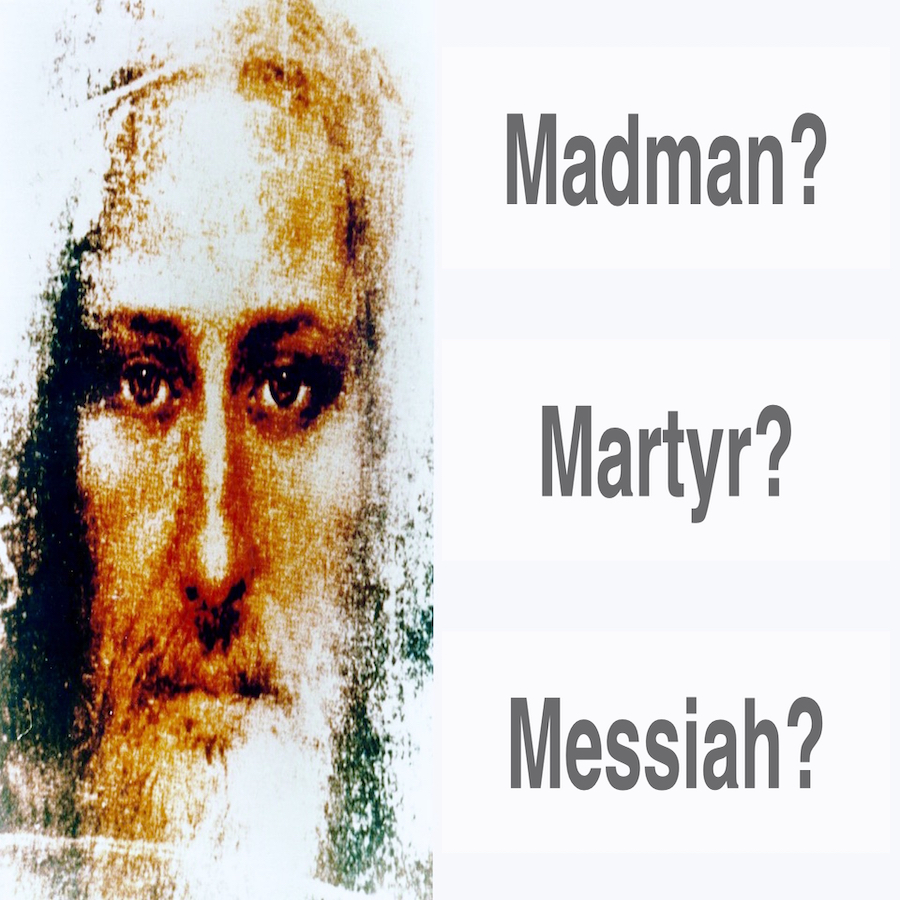
Lots of people have been madmen. But Jesus doesn’t fit this description.
Lots of people have had a martyr’s complex. But Jesus wasn’t seeking glory for Himself, but glory for His Father and eternal life for us.
Lots of people have made outlandish predictions, and some of them have come true. Lots of people have had a messiah complex. But no one has ever claimed He was sent from God to die, lived a perfect life, died precisely as predicted in centuries-old prophecies, and was raised back to life again! The crucifixion of Jesus on an old rugged Cross is proof positive that He is the Messiah He says He is.
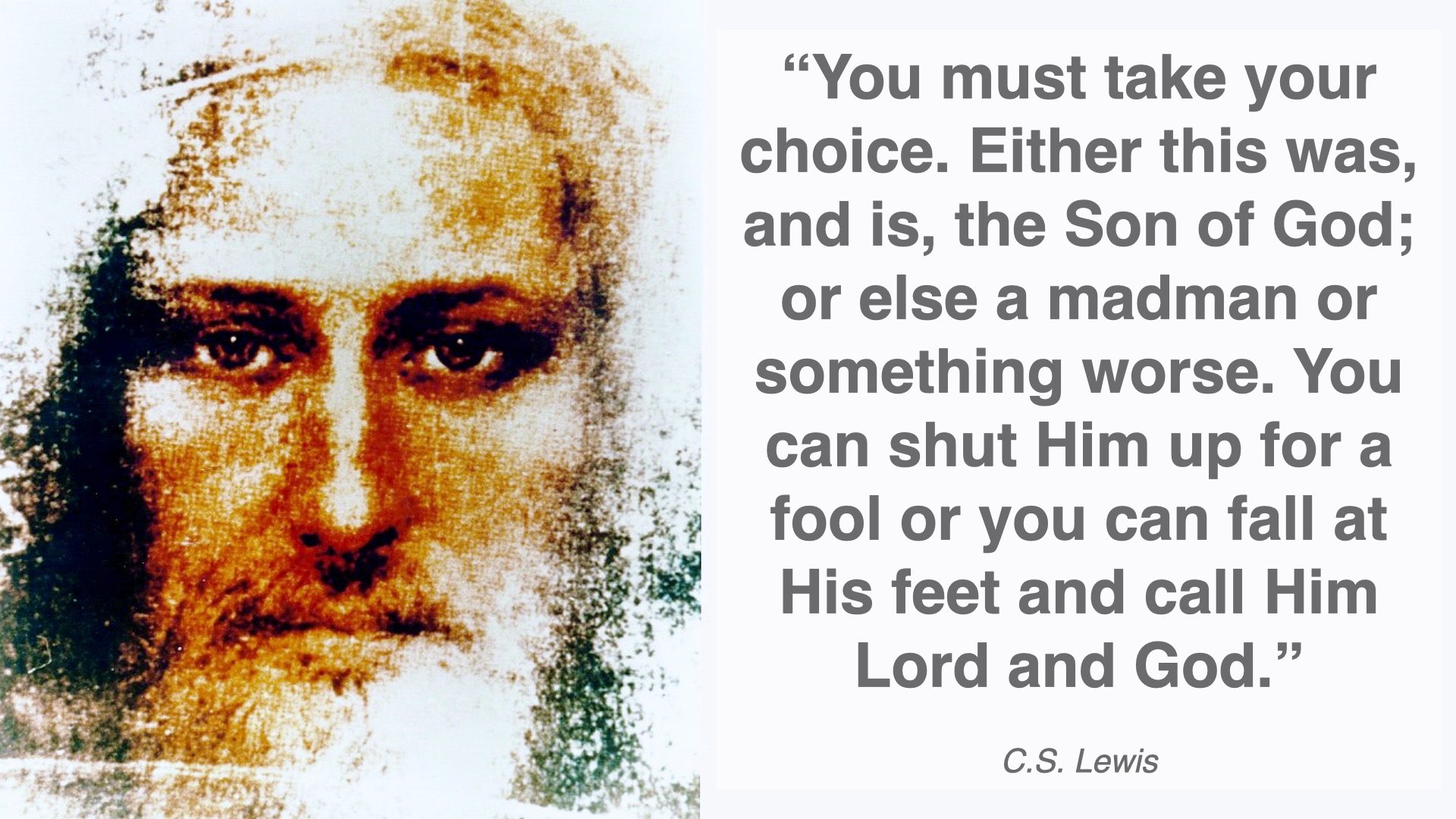
Let’s return to C.S. Lewis: “You must take your choice. Either this was, and is, the Son of God; or else a madman or something worse. You can shut Him up for a fool…or you can fall at His feet and call Him Lord and God.”
We have a choice: Accept Him as Lord and then follow His words and example, or try to make our own way through life, which is the same thing as calling Jesus “a madman or something worse.”
Listen to the podcast of this post by clicking on the player below, and you can also subscribe on Apple, Spotify, or Audible.
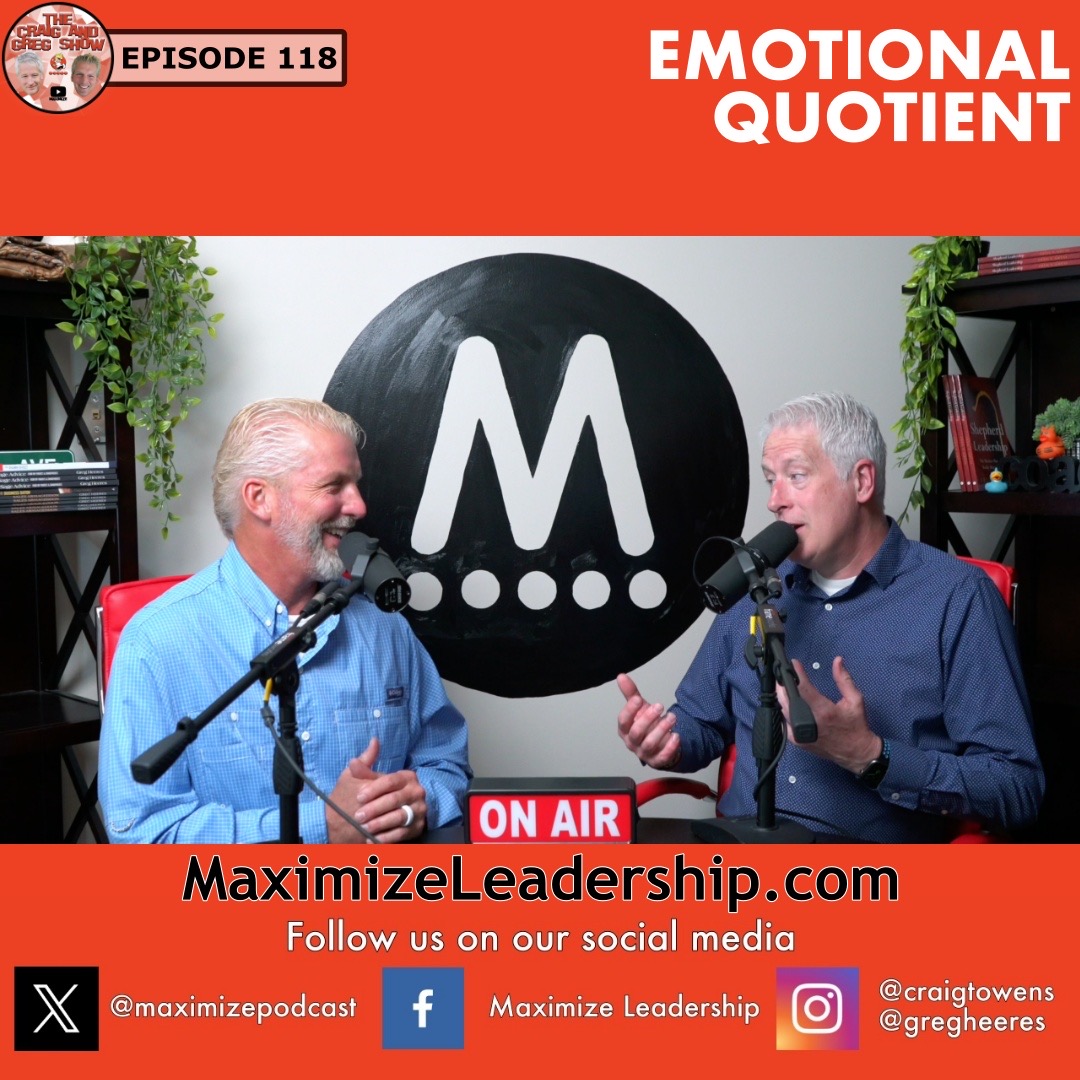
Are you in touch with your emotions? While it might sound like something out of a Hallmark movie to some, having a robust emotional quotient is a vital skill for a leader. Join Greg and me as we get all emotional in this episode.
[0:32] There is something more important than IQ, and that’s EQ.
[1:51] Is EQ innate or is it learned?
[4:08] Is EQ a hard skill or a soft skill? How do we measure EQ?
[5:37] EQ is not necessarily emotional regulation, although it is an important component of EQ.
[6:36] Some thoughts on how we can grow our EQ.
[8:07] Humility is absolutely essential to growing in EQ.
[11:27] Leaders who strive to put others first can grow in EQ.
[15:01] We have to get better at truly seeing people and knowing where they are emotionally.
[16:40] Leaders have to be aware of their own emotional state.
[17:31] It’s invaluable to have a third-party who isn’t emotionally invested in your situation come alongside you to give you perspective.
[18:26] Mentors can help us see ourselves more clearly, which helps us see others more clearly.
[21:30] Leaders need to remember that people are no machines, so we cannot think of them in terms of efficiency.
[23:14] Greg and I share examples of people who taught us how to be more aware of our emotional interactions with people.
[27:05] People want to know that leaders see them and hear them. Remembering this will help leaders grow their EQ.
Listen to the podcast of this post by clicking on the player below, and you can also subscribe on Apple, Spotify, or Audible.
In one of my favorite movies—The Princess Bride—one character believe himself to be very smart. In fact, Vizzini considers Plato, Aristotle, and Socrates to be morons compared to his massive intelligence. But in one section of the movie he keeps using a singular word over and over again, until Inigo says to him, “You keep using that word. I do not think it means what you think it means!” Sometimes I wonder if this is what people want to say to Christians!
Every family has its own unique lexicon—words and phrases mean something to them that they don’t mean to others. Every industry has shorthand for its products and services. Every friend group has their own inside jokes. And we Christians are just as guilty.
Sometimes instead of saying, “Yes” we say, “Amen.”
Instead of calling someone, “Mr. or Mrs.” we call them, “Brother or Sister.”
We soften some of our stronger language by saying, “I’m grieved in my spirit,” instead of saying more honestly, “I’m really ticked off!”
And sometimes, to sound super-spiritual when we pray, we begin to speak in Old English.
Is it any wonder that people outside of our church circles sometimes look at us like we’re a bit off?
So what do we mean by calling ourselves “Christian”? This was not the preferred name for followers of Jesus in the early Church:
Saints—60x (only 4x in Acts)
Believers—43x (26x in Acts)
Disciples—24x (all in Acts)
Christian—3x
The word originates in Acts 11:19-26 (v. 19 references the persecution of 8:1). The Greek language follows the Roman pattern of adding “ian” to the name of a great leader whom others were following. King Agrippa used this word in Acts 26:28, showing us how it has gained traction.
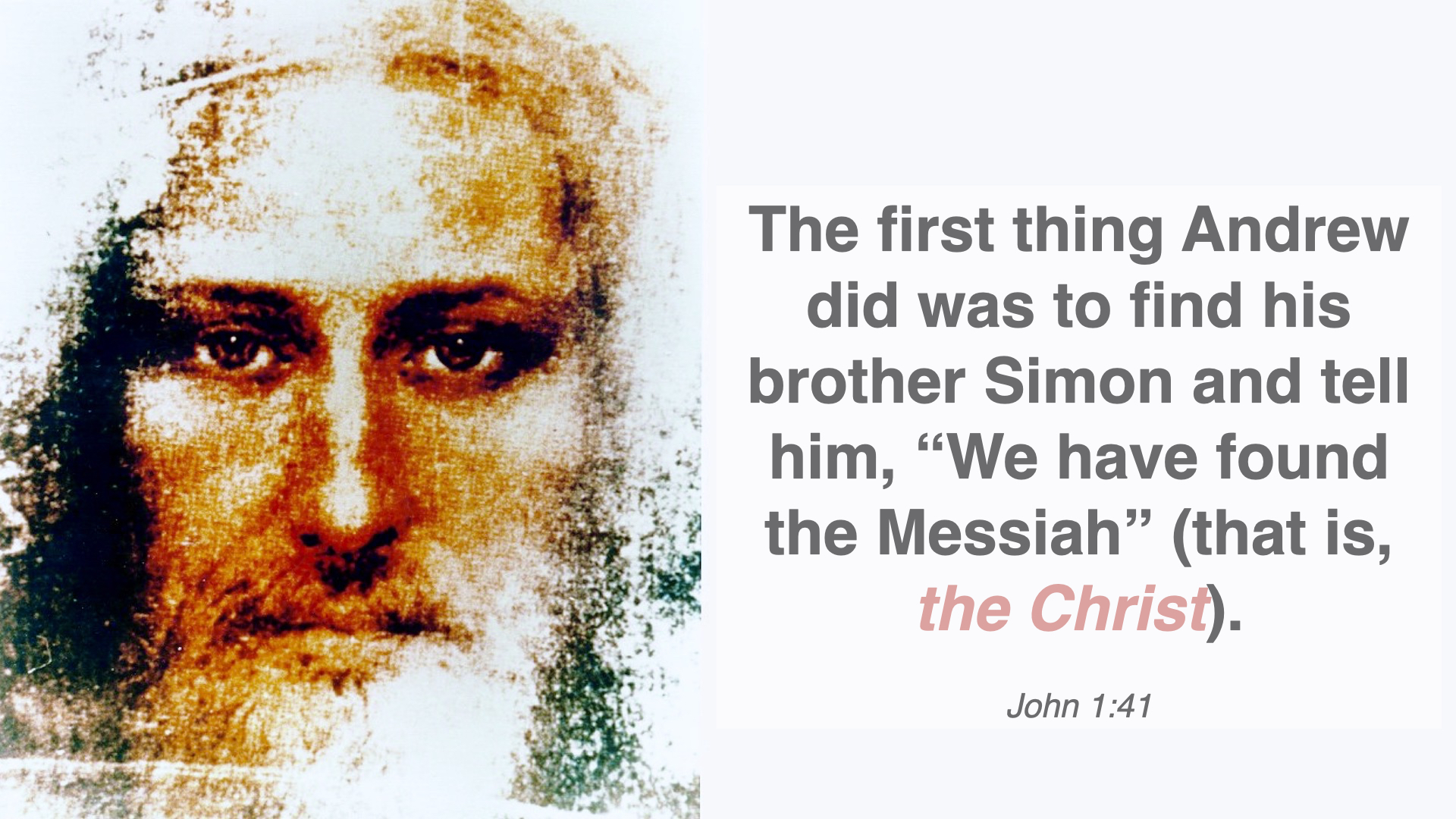
Christ is not a proper name, nor is it the surname of Jesus. Christ means the anointed One. So it’s more correct for us to say, “Jesus the Christ” (as in John 1:41).
So to be a Christian is to follow the Anointed One. To believe that He died to pay the penalty for our sins, and that He rose to life again to give us His eternal life.
To be a Christian is to live like Jesus, or to live as His ambassadors (2 Corinthians 5:11-21).
To be a Christian is to continue to live like Jesus even in the face of opposition (1 Peter 4:12-16; 2:21-23; 3:13-17).
Christians are being the Church when they are intentionally living in a way that makes Jesus known as the Christ—the One and Only Anointed One.
Some excellent questions for Christians to ponder:
What do you mean when you say, “I am a Christian”?
Do others see and hear Jesus in what you do and say?
Does your verbal confession and lifestyle confession compel others to come to Jesus?
Let’s make sure our lives are the best definition of what the Bible says a Christian truly is!
Check out all of the other messages in this series by clicking here.
If leaders want to get the best ideas and implement the best strategies, they must invite everyone on their team to share from their unique perspective. This is the only way to get the whole picture. Check out this full conversation from The Craig and Greg Show.
T.M. Moore writes, “We can know that we love our neighbors when, like Jesus, we go seeking them, in order to touch them with His love.”
This last week marked the 187th anniversary of the first time “O.K.” was first published as an abbreviation. The word’s origin is an interesting story, with some calling it “one of the most ubiquitous terms in the world, and certainly one of America’s greatest lingual exports.”
“Meekness and gentleness are two of the ornaments of our faith. I would that some professed Christians would understand that unholy contentiousness is not after the mind of Christ, it is not according to that gracious command, ‘Take My yoke upon you, and learn of Me; for I am meek and lowly in heart and ye shall find rest unto your souls.’ No, the Christian must be willing to suffer wrongfully, and to bear it in patience; he is never to be one who renders evil for evil, or railing for railing.” —Charles Spurgeon, commenting on Titus 3:2
“Then, since according to the Lord’s warnings the blood of so many will be sought for at the hands of their shepherds, careful watch must be kept, that is, the Word of the Lord must be often preached, and preached by the shepherds, by the Church’s bishops and teachers, that none may perish through ignorance; for he perishes through lack of heed, his blood will be on his own head.” —Columbanus, Letter to Pope Boniface
“Knowledge will forever govern ignorance.” —James Madison
“A good friend is like a four-leaf clover, hard to find and lucky to have.” —Irish proverb
“When a man is getting better he understands more and more clearly the evil that is still left in him. When a man is getting worse he understands his own badness less and less. A moderately bad man knows he is not very good: a thoroughly bad man thinks he is all right. This is common sense, really. You understand sleep when you are awake, not while you are sleeping. You can see mistakes in arithmetic when your mind is working properly: while you are making them you cannot see them. You can understand the nature of drunkenness when you are sober, not when you are drunk. Good people know about both good and evil: bad people do not know about either.” —C.S. Lewis, Mere Christianity
“If you want to win the day, you’ve got to flip the script. How? The Bible is a good starting point. Scripture is more than our script; it’s our script-cure. And that’s more than a play on words. Scripture confronts the false identities and false narratives perpetrated by the Father of Lies. It reveals the heavenly Father’s metanarrative and the unique role that each one of us plays in it.” —Mark Batterson, Win The Day
My books are for my fellow pastors. Shepherd Leadership will help us keep the biblical metrics in mind when we are thinking about our leadership roles. When Sheep Bite is an invaluable resource to help pastors continue to serve their flock, even after being painfully attacked. And Amen Indeed is a book of prayers for pastoral effectiveness.
If you are a pastor—or if you love your pastor—please pick up copies of these books today!
Listen to the podcast of this post by clicking on the player below, and you can also subscribe on Apple, Spotify, or Audible.
Last week we saw that the essential confession is not just, “I believe You are the Christ the Son of the living God,” but also, “I will take up my cross and follow You!” (Matthew 16:16-18, 24). Notice that these are “red letter words”—words spoken by Jesus. They are not “they say” words (like v. 14; Matthew 7:21-23).
Look at the very next red letter words in Matthew 7:24-27. Notice the two parts: hears and puts them into practice. That’s our verbal and our lifestyle confession. What are we hearing and putting into practice? “These words of Mine.”
Jesus is our Cornerstone. The dictionary defines this as, “something that is essential, indispensable; the chief foundation on which something is constructed or developed.”
Some sandy things to build your life upon:
what your family practiced
what your pastor preached
what your friends believe
You know how you will know how sure your foundation is? When the storms come! I recently heard a well-known scholar and Christian apologist in an interview. He was asked by a skeptic of Christianity if he had doubts, and he responded, “Sure, I have doubts. But I choose to believe what the Bible says.” And I thought, “How sad to live this way.” We have a reliable, unshakable foundation in Jesus (2 Corinthians 1:18-22; 1 Corinthians 15:58).
Religions and philosophies have come and gone.
Spiritual giants have stumbled, and fierce tyrants have growled and then died.
Traditions and societies have changed through the millennia.
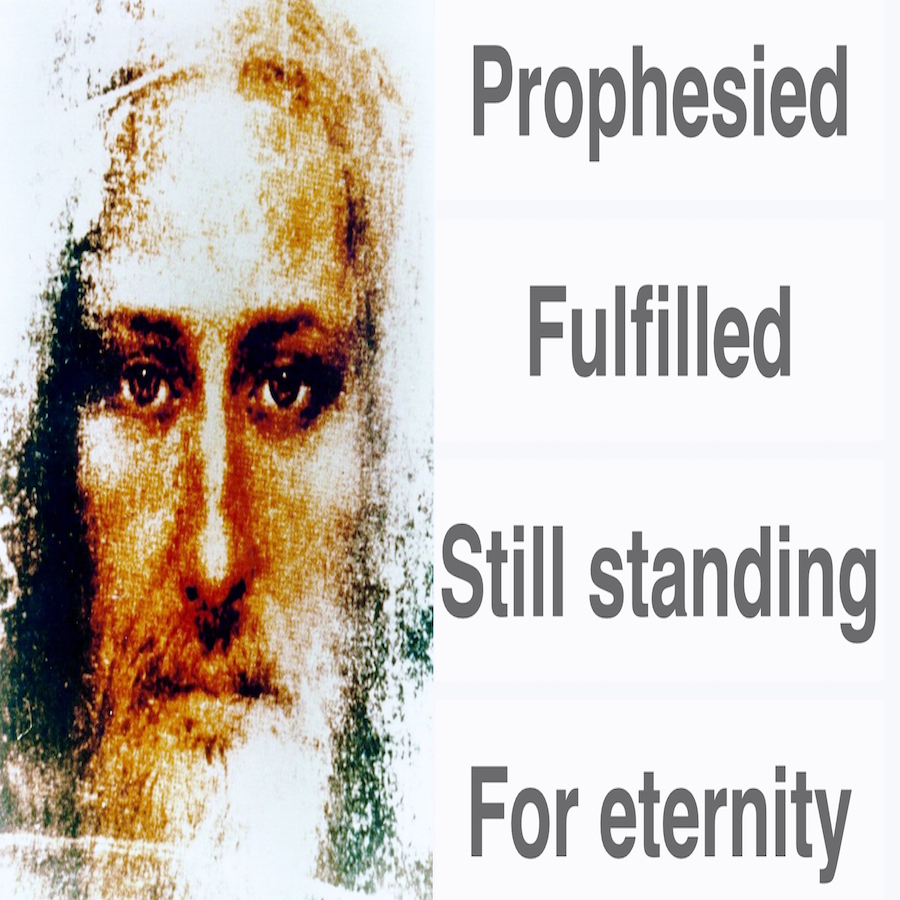
Our Cornerstone remains unmovable and we can stand on Him unshaken. This foundation…
…was prophesied—Isaiah 28:16; Psalm 118:22
…was fulfilled—Matthew 21:42; Acts 4:11-12
…is still standing today—Ephesians 2:19-20; 1 Peter 2:4-6
…will still be standing for all eternity—Revelation 21:5; John 14:1-4
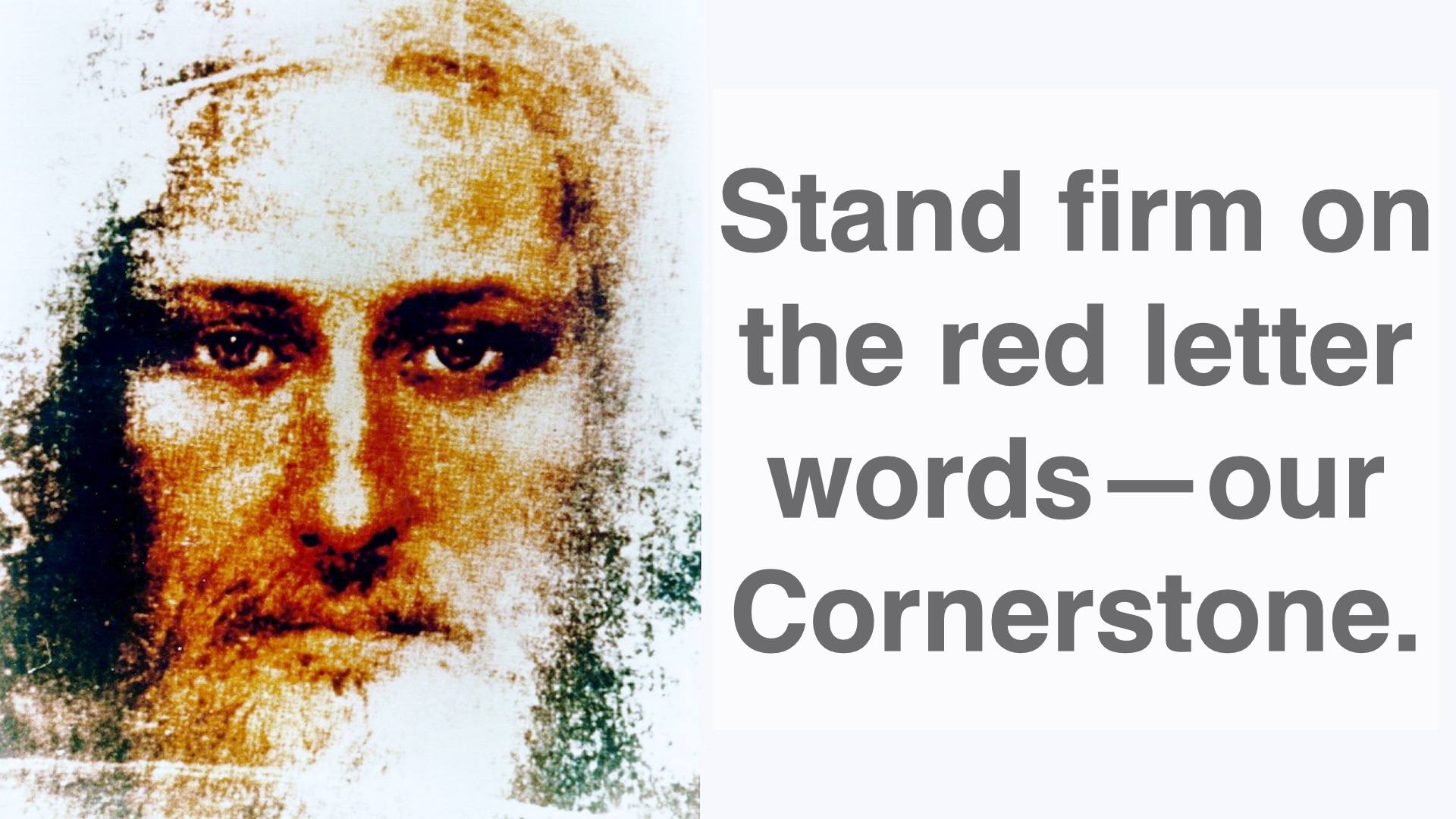
So there is no need to be afraid. There is no need to get frustrated. There is no need to engage in meaningless debates with the “they say” crowd. Stand firm on the red letter words—our Cornerstone.
“On Christ the solid rock I stand, all other ground is sinking sand!”
Check out all of the other messages in this “I Will Build My Church” series here.



 How’s your EQ? We spend a lot of time (maybe too much time) on IQ, but how high is your emotional quotient? Leaders need this self-awareness, and it starts with humility.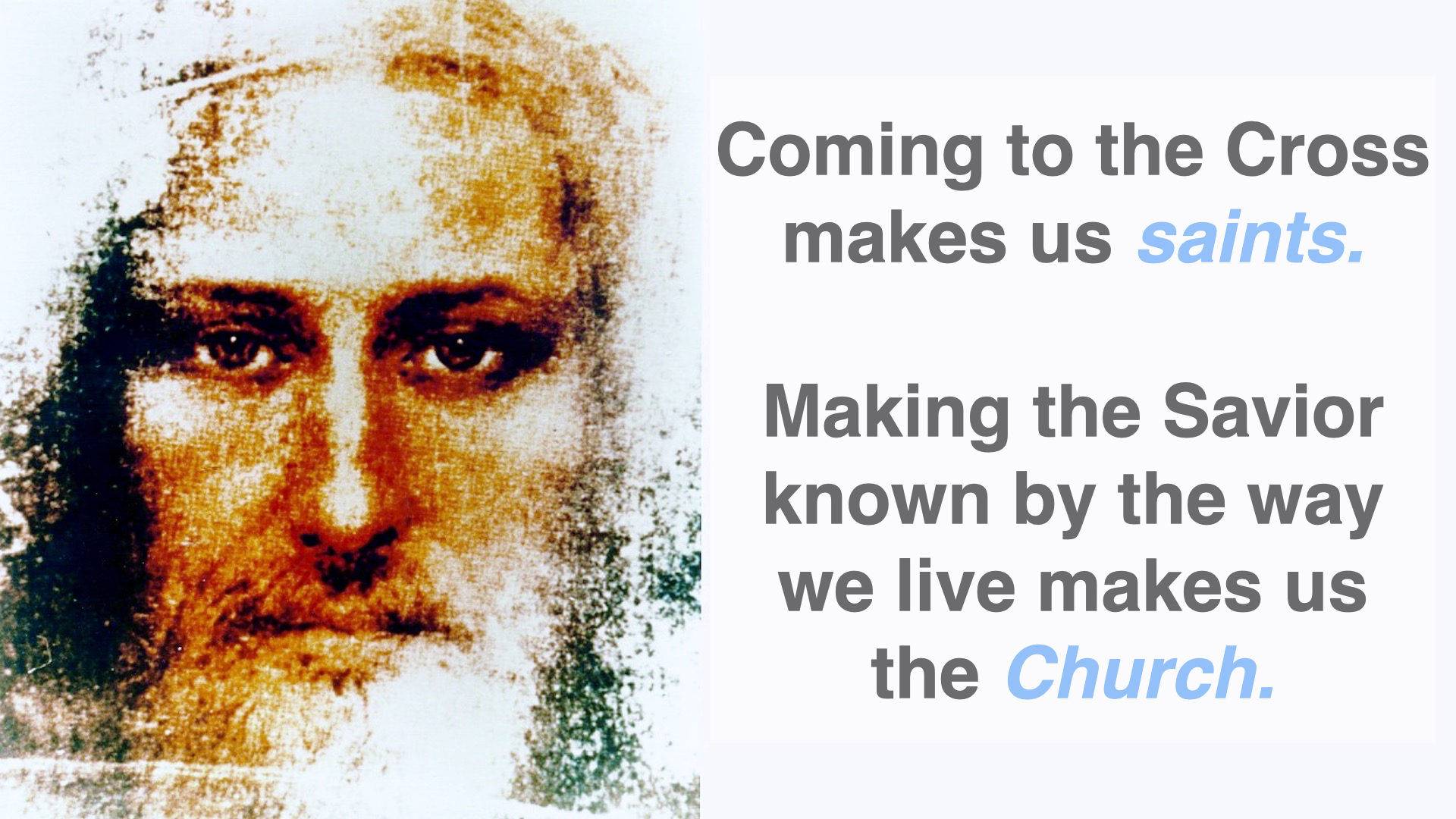



 Craig T. Owens