Poetry Saturday—I Do It Unto Thee

Lord of all pots and pans and things,
since I’ve no time to be a great saint
by doing lovely things…
make me a saint by getting meals,
and washing up the plates.
Warm all the kitchen with Thy love,
and light it with Thy peace;
forgive me all my worrying,
and make my grumbling cease.
Thou Who didst love to give men food,
in room, or by the sea,
accept the service that I do,
I do it unto Thee.
Amen. —Brother Lawrence

A Life Worthy Of The Gospel

Only let your conduct be worthy of the gospel of Christ… (Philippians 1:27).

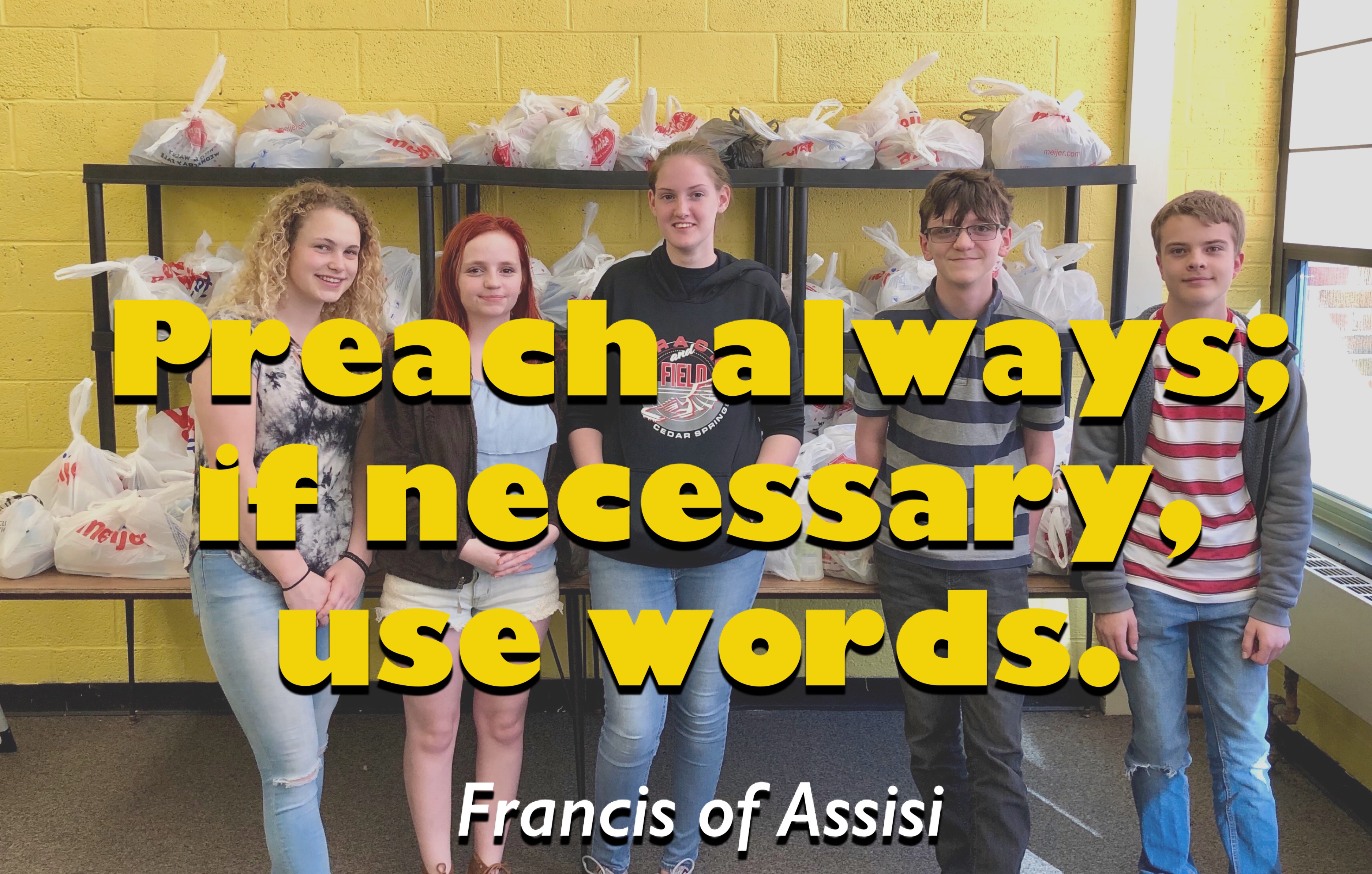
The apostle Paul wanted the Philippians’ living to be their preaching. Much like Francis of Assisi said years later: “Preach always; if necessary, use words.”

The big question is—what does conduct “worthy of the gospel of Christ” look like? I believe Paul identifies at least 15 characteristics in just the next 20 or so verses

  1. It is not a people-pleasing lifestyle. It is a God-honoring, Spirit-lead, Christ-glorifying lifestyle.
  2. It is steadfast, which means it perseveres even through the trials and difficulties.
  3. It is a heart and mind unified with other Christians.
  4. It is bold—“without being frightened in any way by those who oppose you.” 
  5. It is strengthened in Christ and it is in constant fellowship with the Holy Spirit. 
  6. It overflows with loving comfort, affection, and mercy to those around it.
  7. It humbly serves others while confidently refreshing itself in Christ.
  8. It strives to live as Jesus did, seeking always for God to be glorified.
  9. It is obedient to the conviction and direction of the Holy Spirit.
  10. It finds pleasure in doing God’s will.
  11. It doesn’t complain.
  12. It is a blameless and harmless life.
  13. It shines a light that attracts others to God’s love.
  14. It holds fast to the Word of life for the long haul.
  15. It is a rejoicing, contented lifestyle.

Heavenly Father, may it always be said of my life that it is one that is worthy of the gospel of Christ. May I always be sensitive to the nudges of the Holy Spirit to keep my life aligned in this way. In Jesus’ name I pray, Amen! 

Love Securely

Jesus is journeying toward the Cross. On Thursday, it’s His last opportunity to impart His most important thoughts to His disciples. He is about to be arrested, and everything is about to go sideways for the disciples—“this isn’t the way this is supposed to happen!”—and Jesus needs to prepare them with the truth they will need to sustain them through this. 

“I have eagerly desired to eat this Passover with you before I suffer,” Jesus says (Luke 22:15).  

So Peter and John are sent to make arrangements for the Passover meal, but one of the arrangements that they overlooked was the host duties—washing the feet of each guest, anointing them with perfume, and giving them a welcoming kiss. 

As they are eating dinner, Jesus makes four important statements:

  1. “One of you will betray Me”
  2. “All of you will abandon Me”
  3. “I will rise again and restore you”
  4. “I have prayed for you”

These statements get the disciples arguing about who’s going to betray Jesus—“It’s not me, is it?!”—and over how faithful they are—“I would never abandon Him!” Ultimately they begin to argue over who is the greatest disciple among them. 

Jesus not only explains to them how the servant is greater than the master in God’s sight (Luke 22:24-27), but He then becomes the living example of that when He washes their feet (John 13:1-5, 12-17). 

Here’s an important principle—Only secure people can lovingly serve others. 

Insecure people don’t like to serve others because they feel they are being misused, or taken advantage of, or that others will look down on them. 

Jesus “knew” (John 13:1, 3) how much power His Father had given Him, making Him secure enough to serve. Security really means, “I am loved by God, and I know who I am in Him.”

Jesus served out of love: the profound love that He knew His Father had for Him. He gave His disciples the same mandate: Serve others out of love for Me and show the world that you are My disciples (see John 13:34-35).

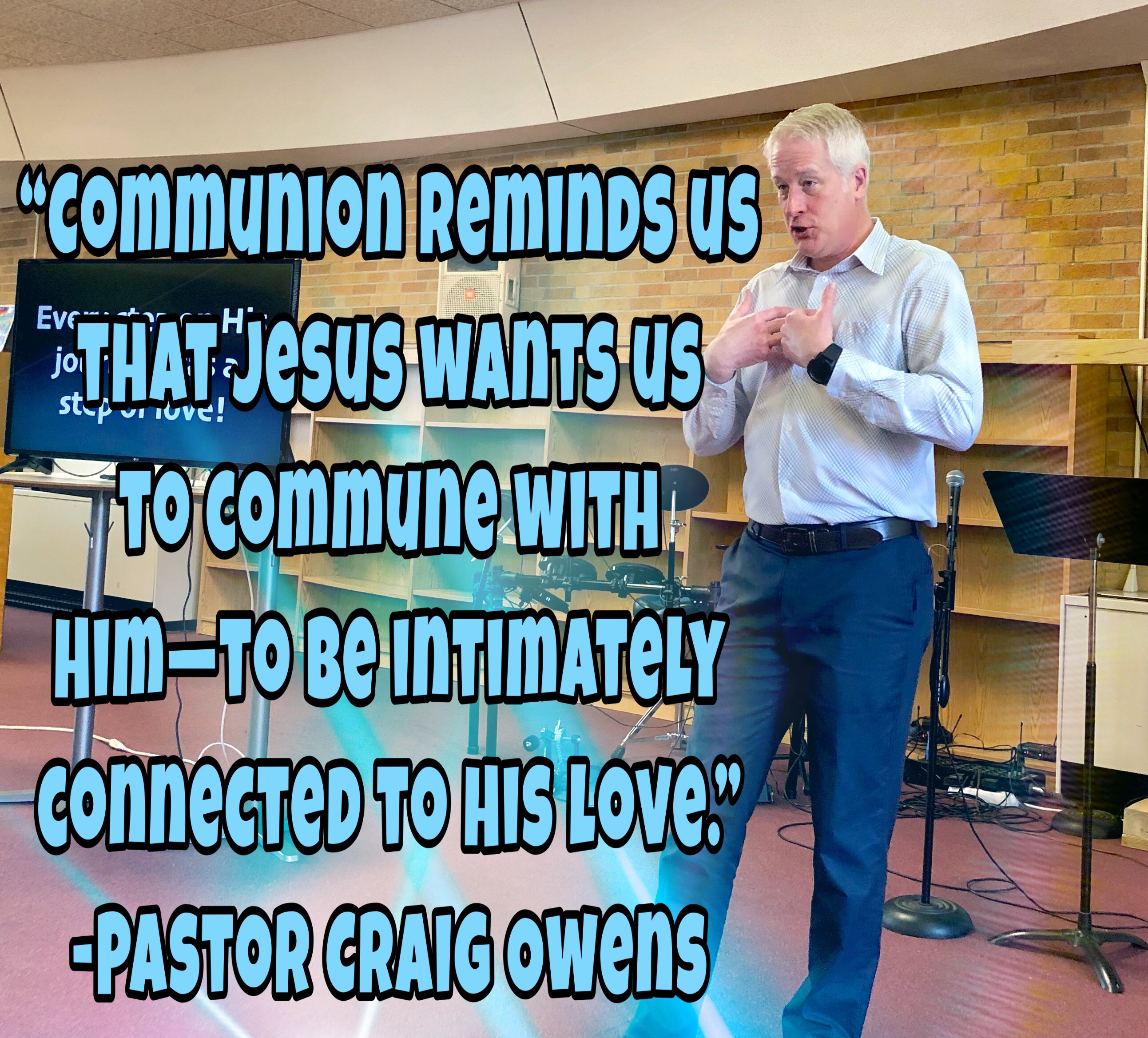
When Jesus ate this last supper with His disciples, He instituted a remembrance celebration that we now call Communion. The root word is “commune” which the dictionary defines as a “conversation with profound intensity and intimacy.” 

This is the type of intimate relationship Jesus had with His Father, and this is the type of relationship He calls us to with Him. The broken bread of Communion reminds us that Jesus can make whole any broken area that would keep us from communing with Him. The cup of Communion reminds us that Jesus can instantly and fully forgive any sin that would keep us from communing with Him. 

Jesus set the example—we are to commune with our Heavenly Father through the way He made by His broken body and His shed blood. It’s out of this communion that we are empowered by His love, and then feel secure enough to serve others in love too. 

Am I Interruptible?

Time after time, Jesus was on His way someplace when someone “interrupted” Him. But was it really an interruption? Do we ever hear Jesus saying, “Not now, I’m busy with someone else”? No! 

Jesus said that every step He took during the day was directed by His Father, so Jesus is our example for dealing gracefully with any “interruptions” by those who need help.

If I pray as Jesus taught—“Your kingdom come, Your will be done on earth as it is in heaven”—then the people He sends my way are never interruptions. Instead, they are people who also need to experience God’s kingdom for themselves, and since God has allowed them to cross my path, that means that God entrusts me with the privilege of showing them God’s kingdom love.

If I am God’s servant, that means I must be interruptible by my Master. 

A servant doesn’t get up in the morning and sit around waiting for the master to tell him every single task to be done that day. The servant gets up and gets busy with what needs to be done. 

But neither does the servant put off the master’s request because he’s busy with a task. The servant doesn’t respond, “I’ll get to that request after I finish what I’m doing,” but instead the servant responds immediately to the master. The master’s requests have priority. 

So too with me. I get up and get busy, but my heart is listening for my Master to “interrupt” me (although it’s not truly an interruption!) with someone who is in need. 

May my heart always be ready to say an immediate “yes!” to anyone my Master sends across my path today. 

Reciprocity

Listen to the podcast of this post by clicking on the player below, and you can also subscribe on AppleSpotify, or Audible.

Reciprocity is a big word that simply means: You will get what you give.

Hear me correctly. I’m not saying give more just to get more. It doesn’t work that way because that’s not true reciprocity; that’s just plain selfishness.

Reciprocity is giving to others just because you have it in your power—and in your heart—to give, and it will “bounce back” to you.

Reciprocity is from your heart. God makes sure you get the return blessings.

And, by the way, if you have something you could give but you don’t give it, your “bounce back” becomes a world that is smaller and smaller, with greater scarcity.

Reciprocity is win-win. Selfishness is lose-lose.

When you’re kind to others, you help yourself; when you are cruel to others, you hurt yourself. (Proverbs 11:17)

The world of the generous gets larger and larger; the world of the stingy gets smaller and smaller. (Proverbs 11:24)

The one who blesses others is abundantly blessed; those who help others are helped. (Proverbs 11:25)

►► Would you please prayerfully consider supporting this ministry? ◀︎◀︎

Responding For Those Who Can’t

Do you know what empathy is? It’s not the same thing as sympathy. Sympathy is just wallowing with someone who is hurting, but empathy goes beyond that. Empathy is a compound word:

em- + -pathos = joined + feeling 

I feel what you feel, but I can respond like you should even when you think you can’t.

Sometimes people get paralyzed by their deep hurts, or crushing depression, or infuriating anger. Someone in sympathy feels the pain, the depression, the anger, but their involvement stops at the feeling stage.

Someone in empathy feels the hurt AND responds in an appropriately healthy way.

Check out what Paul wrote:

Who is weak without my feeling that weakness? Who is led astray, and I do not burn with anger? (New Living Translation)

When someone gets to the end of his rope, I feel the desperation in my bones. When someone is duped into sin, an angry fire burns in my gut. (The Message)

Paul took those feelings his friends and loved ones were experiencing and he turned them into positive action. This is challenging and desperately needed.

Sympathy is easy; empathy is hard work.

Sympathy keeps people paralyzed; empathy helps them move forward.

Sympathy enables people to remain unchanged; empathy gives people a healthy way to respond.

If you want to help your hurting, discouraged, or angry friend, don’t sympathize with her hurt, empathize to help her heal. By responding in a healthy way—a way she isn’t able to yet—and you will help her move to a place of wholeness.

Cursing Or Shining?

There are two ways of dealing with any undesirable things around you: You can curse the darkness or light a candle. Nowhere in the Bible does Jesus say, “Tell bad people how bad they are.” Instead, He tells His followers to love … bless … serve … SHINE

I suppose you could choose to curse…

  • There’s too much pollution
  • Respect is no longer seen
  • Politicians are crooked
  • Newspapers only report bad news
  • Too many marriages end in divorce
  • My kid’s teacher is never available
  • People hide behind Facebook and email
  • My church is boring
  • Halloween is dark and scary

Or you can SHINE…

  • Pick up one piece of trash … recycle your metal and plastic …
  • Write a thank-you note to your local police chief …
  • Run for office yourself … volunteer for a politician you believe in … be an informed voter …
  • Do something newsworthy … use social media to only highlight good news …
  • Date your mate … have dinner with another married couple …
  • Volunteer in a classroom … send an encouraging email to a teacher …
  • Take some cookies to your neighbor … send a handwritten note to a friend …
  • Start praising before you go to church … get involved in a ministry …
  • Light The Night

Light your candle and shine brightly. Then watch and see as others light their candles from yours!

Others First

Listen to the podcast of this post by clicking on the player below, and you can also subscribe on AppleSpotify, or Audible.

I have a friend who has a photo album on Facebook called “Me.” The description says, “Sometimes it is just all about me.” And, sure enough, all of the pictures in that album are just her. I know her well enough to know that this is tongue-in-cheek, because she is not a self-absorbed prima donna.

Sadly, some Christian leaders exhibit the It’s-All-About-Me attitude. This really irks me, especially because we see the exact opposite characteristic in Jesus.

Let me key in on just one example from His public ministry. John the baptizer has just been martyred by King Herod. John was Jesus’ cousin. I’m not sure if you’ve ever had a loved one martyred or even murdered, but I’m sure we’ve all lost a loved one at some point. It might be a little easier to take if we saw it coming, but the sudden deaths always jar us the most. We have to have time to grieve our loss.

Jesus had all of the same emotional responses that you and I have, and He wanted some time away to grieve. He got into a boat with His disciples and headed to a remote place on the other side of the lake. Looking for a little time alone to grieve the death of His cousin, Jesus was met by a huge crowd. He would have been perfectly justified in saying, “Not today.” Or even in saying, “I’m going to let My disciples pray with you today.” Instead, Jesus put the needs of others first.

  • Jesus healed all who were sick
  • He taught them
  • Then He provided food for the nearly 10,000 people who were there
  • After the meal, Jesus sent His disciples (who also needed some grieving time) back across the lake without Him
  • Jesus stayed behind and dismissed the entire crowd. I sort of imagine Him hugging people, shaking hands, and continuing to listen to the questions and concerns of everyone

It was only after this that Jesus went up into the hills to spend some time alone in prayer.

Yes, leaders have to take care of themselves and their people. But good leaders take care of others first.

I unpack this idea in even great detail in my book Shepherd Leadership. If you want to be used as a leader, you must allow the Holy Spirit to cultivate this others-first attitude in you.

►► Would you please prayerfully consider supporting this ministry? My Patreon supporters get behind-the-scenes access to exclusive materials. ◀︎◀︎

Shop With A Purpose

Why do you go shopping?

Just for fun?

As a stress-buster?

For real needs?

Where do you go shopping?

Whichever store is closest?

The one with the best prices?

     The one with the most desirable styles?

How about shopping somewhere that really makes a difference?

Betsy and I were wandering around Rockford, MI, last weekend and stumbled upon an incredible store called The W.A.R. Chest Boutique. W.A.R. stands for Women At Risk. (Please read more about the mission of W.A.R. on their website.)

In a nutshell, W.A.R. sells items made by women who have been rescued from slavery or other oppressive conditions. These women have been taught a skill to make jewelry or clothing or other one-of-a-kind items for your home. And here’s the great part: 90% of the proceeds go back to the women who made the items! Yes, 90 percent!

You can get involved by:

  • Educating yourself on the plight of at-risk women around the world.
  • Shopping at the two W.A.R. boutique locations in West Michigan.
  • Shopping W.A.R.’s items online.
  • Hosting a W.A.R. party in your home.
  • Praying for these women, and for organizations that are helping them.

Don’t just shop. Shop with a purpose.

Never walk away from someone who deserves help; your hand is God’s hand for that person. (Proverbs 3:27)

It’s Hard To Help Someone Up With Your Fists Clenched

Helpful people have to be openhanded people in order to help others.

Tightfisted people may try to help, but they’ll probably bring more hurt than help.

In just one chapter of Deuteronomy (the book that is helping prepare the people to live in the Promised Land) there are several starkly-contrasted words. In fact, these words hardly appear anywhere else in the book, except in this chapter, teaching us how to help the down-and-outer. Like this one:

If there is a poor man among your brothers in any of the towns of the land that the LORD your God is giving you, do not be hardhearted or tightfisted toward your poor brother. Rather be openhanded and freely lend him whatever he needs.

Throughout this chapter, look at the contrasting words…

  • Hardhearted  //  Openhearted
  • Tightfisted  //  Openhanded
  • Grudging heart  //  Give generously
  • Stingy  //  Freely lend
  • Empty-handed  //  Supply liberally

God tells us, “There should be no poor among you.” And, “Give to the poor as the Lord has blessed you.”

Do you know why we’re to give to the poor? So we can receive a greater blessing. Check this out:

Give generously to the poor and do so without a grudging heart; then because of this the LORD your God will bless you in all your work and in everything you put your hand to.(v. 10)

A tightfisted person cannot catch a blessing from God—only the openhanded person can.

A hardhearted person cannot feel God’s love—only the openhearted person can.

Pretty simple: if you want to be blessed, then generously bless others.

Now let’s go do it!