


 I am sometimes amazed at how much Jesus accomplished in just a little over three years of public ministry. What I would have expected to see is a Man burning the candle at both ends—up early, working hard without any breaks each day, very little (if any) leisure time, and then burning the midnight oil.
But instead we see Jesus never seeming to be rushed or exhausted. He takes time for meals with friends, time away from the crowds, and still in just a short period of time He fulfilled hundreds of ancient prophecies and trained His followers to take the Gospel around the globe!
One of the keys is His priority. Notice that I said priority and not prioritieS. Jesus was singularly focused on His Father’s glory and He showed total dependence on Him. I think one of the most telling verses is Mark 1:35: “Very early in the morning, while it was still dark, Jesus got up, left the house and went off to a solitary place, where He prayed.”
If Jesus needed prayer to start His day, how much more do we need this!
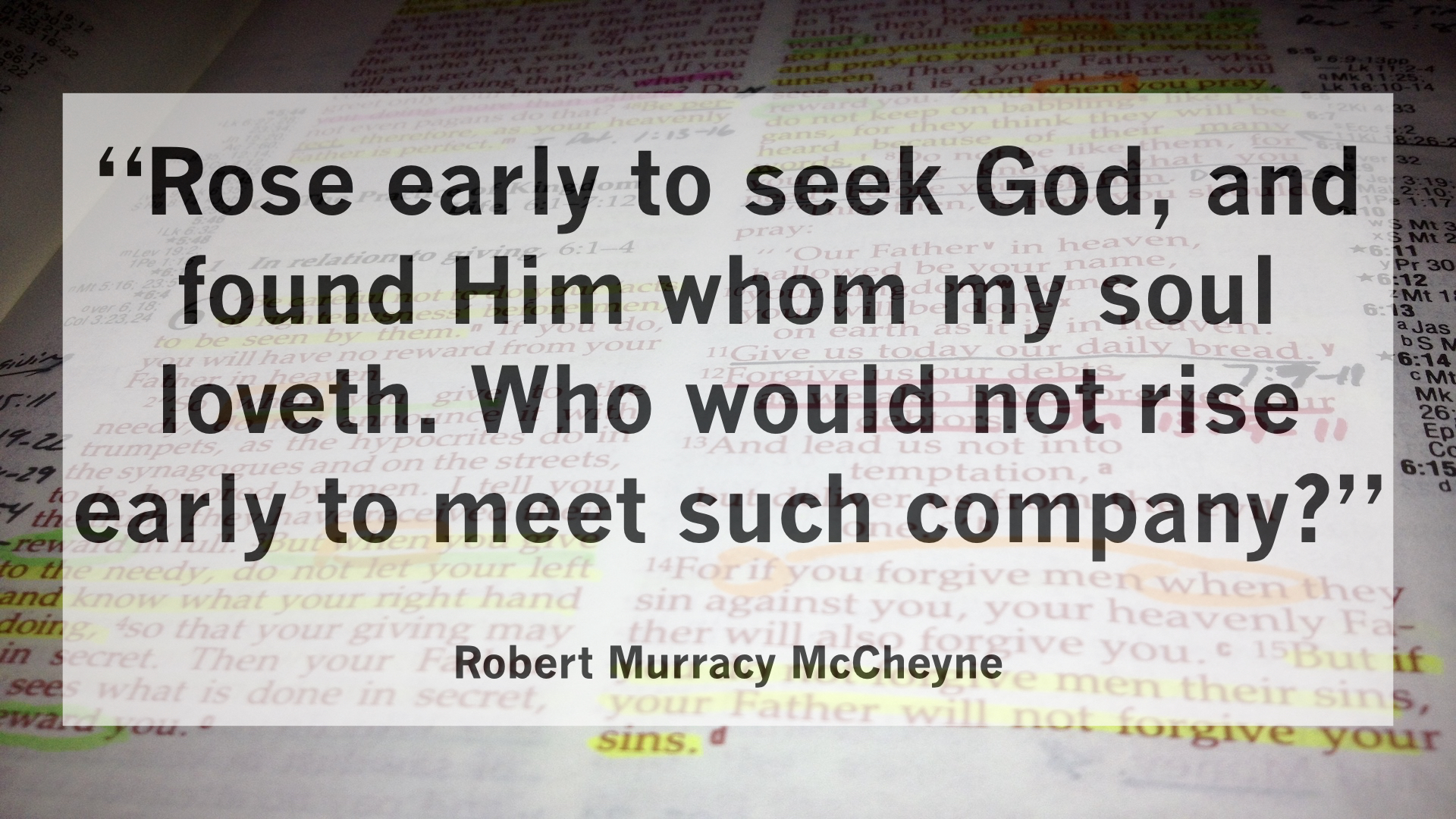
Scottish pastor Robert Murray McCheyne wrote in his journal, “Rose early to seek God, and found Him whom my soul loveth. Who would not rise early to meet such company?”
I am sometimes amazed at how much Jesus accomplished in just a little over three years of public ministry. What I would have expected to see is a Man burning the candle at both ends—up early, working hard without any breaks each day, very little (if any) leisure time, and then burning the midnight oil.
But instead we see Jesus never seeming to be rushed or exhausted. He takes time for meals with friends, time away from the crowds, and still in just a short period of time He fulfilled hundreds of ancient prophecies and trained His followers to take the Gospel around the globe!
One of the keys is His priority. Notice that I said priority and not prioritieS. Jesus was singularly focused on His Father’s glory and He showed total dependence on Him. I think one of the most telling verses is Mark 1:35: “Very early in the morning, while it was still dark, Jesus got up, left the house and went off to a solitary place, where He prayed.”
If Jesus needed prayer to start His day, how much more do we need this!
Scottish pastor Robert Murray McCheyne wrote in his journal, “Rose early to seek God, and found Him whom my soul loveth. Who would not rise early to meet such company?”
(Check out all of the Scriptures in this post by clicking here.)
So why don’t we treat prayer like this? I think there are three main hindrances to keep us from making prayer a priority. (1) Self-reliance. A common phrase we use is, “I need to get to work.” But this puts the emphasis on me—my plans, my abilities, my work ethic. I believe I can do more than pray, but I also believe that I shouldn’t do anything until I have prayed. Prayer, therefore, is a reminder of my utter God-reliance. God has a better plan than we do. God has more wisdom than we do. God has more strength than we do. So wouldn’t it be better to ask Him what we should be doing, how we should be doing it, and then ask Him for the strength to do it? When we have this focus, our prayer time will keep us aligned with His plans and empowered with His wisdom and strength. Look at a couple of examples.- Sarah knew how to believe God because He showed how He kept His promise in His perfect timing (Genesis 21:1-2).
- Mary knew how to pray and behave in alignment with God’s word (Luke 1:31-38). Her prayer shortly after this is sautéed in Scripture, showing how she relied on God to keep His Word (vv. 46-55).
- Saul of Tarsus (who became Paul the apostle) had assurances of God’s direction for his life at almost every turn (Acts 9:15-16, 20:22-24, 21:10-14, 23:11, 27:21-25). Then he writes to his friends at Philippi how God received the glory throughout this whole process (Philippians 1:12-14, 25-26).
 One way we pray in alignment with God’s will is to pray using the Scripture. The Bible is our Prayer Book. Pastor Timothy Keller wrote, “Your prayer must be firmly connected to and grounded in your reading of the Word. This wedding of Bible and prayer anchors your life down in the real God. … Without immersion in God’s words, our prayers may not be merely limited and shallow but also untethered from reality.”
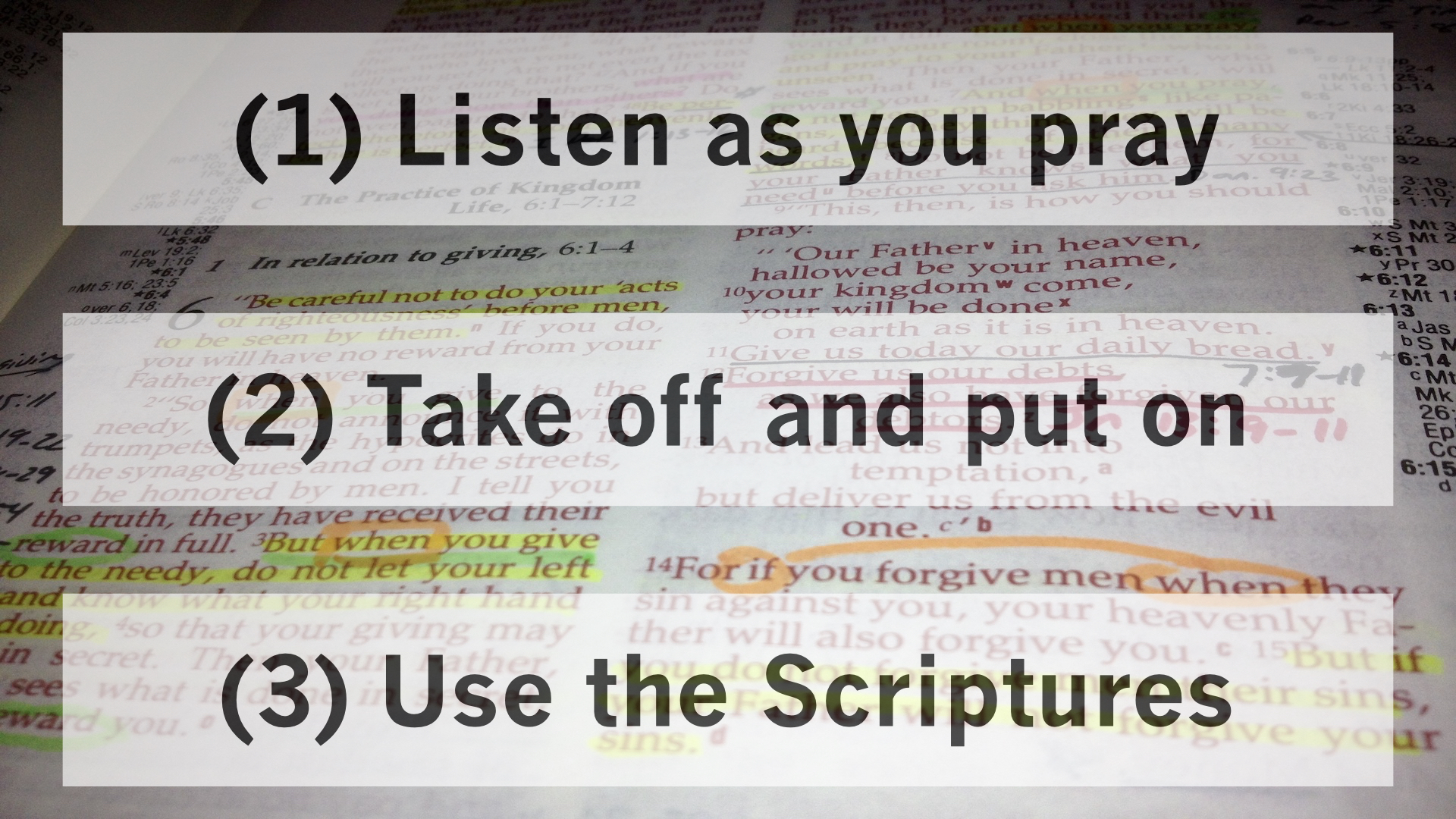
So here are three steps we need to implement to counteract those three hindrances to a consistent, meaningful prayer life:
One way we pray in alignment with God’s will is to pray using the Scripture. The Bible is our Prayer Book. Pastor Timothy Keller wrote, “Your prayer must be firmly connected to and grounded in your reading of the Word. This wedding of Bible and prayer anchors your life down in the real God. … Without immersion in God’s words, our prayers may not be merely limited and shallow but also untethered from reality.”
So here are three steps we need to implement to counteract those three hindrances to a consistent, meaningful prayer life:
- Listen to yourself pray—replace the “I have to” with “God, I trust You to direct me and help me.”
- Track your time in each quadrant and identify just one Quadrant IV activity you can replace with prayer.
- Start turning Scripture into prayers.





 Craig T. Owens