Links & Quotes

John Piper wrote to pastors, “That is the main task of preaching, and the main purpose of small groups and all the ministries of the church: helping people see the greatness of what Christ has purchased for everyone who will value it above the world. Helping people see it and savor it, so that God’s superior worth shines in their satisfaction and in the sacrifices that come from such a heart.”

“The gospel of Christ, what is it? We look at the last two words, ‘of Christ.’ Indeed, if you understand Christ, you understand the gospel. Christ is the Author of it. He, in the council chamber of eternity, proposed to become the Surety for poor fallen man! He, in the fullness of time, worked out eternal redemption for as many as His Father had given Him. He is the Author of it as its Architect and Builder. We see in Christ Jesus the Alpha and the Omega of the gospel. He has provided in the treasury of grace all that is necessary to make the gospel the gospel of our salvation. And as He is the Author of it, so He is the matter of it. It is impossible to preach the gospel without preaching the Person, the work, the office, and the character of Christ. If Christ is preached, the gospel is promulgated, and if Christ is put in the background, then there is no gospel declared.” —Charles Spurgeon

Would you prayerfully consider supporting my Patreon page at only $5 per month?

Josh McDowell addresses the question, “Did Jesus say He is God?

Marshall Seagal wrote an insightful article about patience. He notes, “Patience exists only in a world of disruption, delays, and disappointment. It grows only on the battlefield. We cannot practice patience unless our circumstances call for it—and the circumstances that call for it are the kinds of circumstances we wouldn’t choose for ourselves.”

The Biblical Archeological Report has a history of Egyptian Pharaoh Hophra that is quite fascinating. It’s always so interesting to me to watch how these archeological finds square with the historical records contained in the Bible.

Links & Quotes

“While grief is expressed in words, its resolution is in God and the hope He gives for the future. In a way, the lamentation process is one of coming to grips with all that God wants us to see about our present circumstances.” —Dr. Henry Halley

Welsh dinosaur tracks found in flood rocks: “The evidence continues to stack up in support of the global Flood. The rocks don’t lie!”

In this video, J. Warner Wallace addresses how we can reconcile variations between biblical manuscripts.

My friend Greg Heeres and I have a brand new episode in our leadership podcast called The Craig And Greg Show. This discussion is all about setting good priorities.

Links & Quotes

I love Charle Spurgeon’s definition of godliness: “God Himself is the power of godliness. The Holy Spirit is the life and force of it. Godliness is the power that brings a man to God and bind him to Him. Godliness is that which creates repentance toward God and faith in Him. Godliness is the result of a great change of heart and reference to God and His character. Godliness looks toward God and mourns its distance from Him. Godliness hastens to draw near and rests not till it is at home with God. 

“Godliness makes a man like God. Godliness leads a man to love God and to serve God. It brings the fear of God before his eyes and the love of God into his heart. Godliness leads to consecration, to sanctification, to concentration. The godly man seeks first the kingdom of God and His righteousness and expects other things to be added to him. Godliness makes a man commune with God and gives him a partnership with God in His glorious designs. And so it prepares him to dwell with God forever.”

Viz.Bible has a great way of portraying the data of the Bible in very picturesque ways. Check out this link to see an overview of the Bible like I have bever seen before!

The folks at Axis Ministry provide some amazing insights for parents (and youth pastors) of pre-teens through the early college years. I would highly recommend subscribing to their free weekly email. Here is their Parent’s Guide To Teen Emotions, which is a free PDF for you to download.

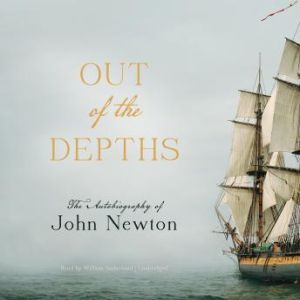
11 Quotes From “Out Of The Depths”

John Newton’s autobiography Out Of The Depths contains a very interesting closing chapter. They are not the words written by John Newton, but the words spoken by him to his friends and parishioners. Here are a few that especially caught my attention. You can check out my full book review of Out Of The Depths by clicking here.  

“If two angels were sent from heaven to execute a divine command, one to conduct an empire and the other to sweep a street in it, they would feel no inclination to change employments.”

“A Christian should never plead spirituality for being a sloven. If he be but a shoe cleaner, he should be the best in the parish.” 

The remaining nine quotes are exclusive content for my Patreon supporters. In addition to book quotes, there are videos and behind-the-scenes views that only these supporters have access to. I would love it if you would prayerfully consider supporting my ministry for just $5 per month.

Links & Quotes

Abraham is commanded by God to sacrifice his son Isaac. Look at Abraham’s faith in just one word: “WE will come back to you.”

Follow me on YouVersion so we can share more thoughts on God’s Word with each other.

Wil Robinson shares a fable from Leo Tolstoy with the three most important questions everyone should ask themselves. The three questions are: How can I learn to do the right thing at the right time? Who are the people I most need, and to whom should I, therefore, pay more attention than to the rest? And, what affairs are the most important and need my first attention?

T.M. Moore reminds us how the promises of God can build courage in us. Check out all of the posts in his series called Brave Heart.

“Faithfulness is displayed in both word and deed—seen best by combining the Great Commission’s instruction to ‘make disciples’ with the second greatest commandment to ‘love thy neighbor.’ The beauty of the Gospel is found in both proclamation and demonstration. Neither comes first; neither comes second. Like the perfect marriage, it’s the duty of the Christians to take on each, giving 100 percent effort to both.” —Gabe Lyons, The Next Christians 

Fight The New Drug shared the results of a study of over 11,000 releationships, the five things the happiest couples have in common, and how pornography can undermine those relationships.

“Oh, that the eyes of sinners may be speedily opened—that they may see the difference of things, the beauty which is in holiness, and the astonishing madness that is in sin!” —Thomas Watson

Science is an important component in seeking truth. The Institute for Creation Research has an excellent perspective on the role of science for a Christian: “While the pursuit of science is certainly noble, it should be situated in its proper context and tackle matters within its empirically defined framework.”

John Piper observes, “The number-one reason why people in such seemingly hopeless situations purchase scratch-offs is because things already look so hopeless for improvement that the so-called ‘stupidity’ of wasting this dollar won’t really make anything worse.” This post elaborates on how the lottery preys on the poor.

No Contradictions

Listen to the podcast of this post by clicking on the player below, and you can also subscribe on AppleSpotify, or Audible. 

…I will hide My face from this city because of all its wickedness. Nevertheless, I will bring health and healing to it… (Jeremiah 33:5-6) 

God’s anger at Judah’s sin is blazing hot! And rightly so: Dr. Henry Halley points out, “Most of the 20 Davidic kings who reigned over Judah during the 400 years between David and the Babylonian exile were very bad. Only a few were worthy of the name of David.” So it is understandable that God would need to punish that sinful nation. 

Then comes that word “nevertheless.” In spite of the rampant sin, God’s promise of restoration is even greater than the pain of His punishment. 

God promises healing, restoration, complete cleansing from sin, and more descendants of David and Levi than can be counted. And He promises this to the exact same people that He promised to punish. 

I don’t know about you, but to me this almost seems like a contradiction. Does God want to punish them or does He want to bless them? 

The apparent contradiction is hard for our finite brains to comprehend. That’s why God makes an important statement to Jeremiah before He begins describing the punishment and the blessings: “Call to Me and I will answer you and tell you great and unsearchable things you do not know” (v. 3). 

Aha! When we call on God to help us with unsearchable things, we find there are no contradictions in God nor in the Bible itself. 

If you feel stumped on a text of Scripture, I have previously shared how I handle the tough texts, but step number one is always calling on God to help. 

C.S. Lewis wrote, “Heaven will solve our problems, but not, I think, by showing us subtle reconciliations between all our apparently contradictory notions. The notions will all be knocked from under our feet. We shall see that there never was any problem”—or any contradiction at all. 

►► Would you please prayerfully consider supporting this ministry? ◀︎◀︎

Links & Quotes

One of the last pictures I took with my Mom ♥

“Love of the Word appears preeminently in our Lord and Savior Jesus Christ. He read it publicly. He quoted it continually. He expounded it frequently. He advised the Jews to search it. He used it as His weapon to resist the devil. He repeatedly said, ‘The Scripture must be fulfilled.’ Almost the last thing He did was to ‘open their minds so they could understand the Scriptures’ (Luke 24:45). I am afraid that man cannot be a true servant of Christ, who has not something of his Master’s mind and feeling towards the Bible.” —J.C. Ryle, Bible Reading 

“The character of our praying will determine the character of our preaching. Light praying will make light preaching. …The preacher must be preeminently a man of prayer. His heart must graduate in the school of prayer. In the school of prayer only can the heart learn to preach.” —E.M. Bounds, Power Through Prayer 

I have blogged several thoughts about the historicity of the Bible. Here’s a post on Breakpoint about yet another archeological discovery that once again vindicates the Bible’s trustworthiness.

“Some pastors and preachers are lazy and no good. They do not pray; they do not read; they do not search the Scripture. … The call is: watch, study, attend to reading. In truth you cannot read too much in Scripture; and what you read you cannot read too carefully, and what you read carefully you cannot understand too well, and what you understand well you cannot teach too well, and what you teach well you cannot live too well. … The devil … the world … and our flesh are raging and raving against us. Therefore, dear sirs and brothers, pastors and preachers, pray, read, study, be diligent.” —Martin Luther

Looking at God’s awesomeness brings a peace that nothing else can.

A very thought-provoking Q&A with Sean McDowell and Dr. Stephen Meyer: Does Science Point to God?

Links & Quotes

“If a claim to spiritual revelation leads us to depend less on the once-for-allness of the historical Word that comes to us by Jesus Christ through the apostles (Hebrews 2:3), then that claim is dubious.” —John Piper

“God, change me today because I have spent time being exposed to Your thoughts in Scripture. As risky as it is, I want Your Word to cut away everything in me that doesn’t look like Jesus.” —Kenneth Blanchard (see Hebrews 4:12) 

A scrip on my back, and a staff in my hand,
I march on in haste through an enemy’s land;
The road may be rough, but it cannot be long;
And I’ll smooth it with hope, and I’ll cheer it with song. —Henry Francis Lyte


Looking forward to beginning a new series at Calvary Assembly of God this Sunday…

The Sovereign King

Listen to the podcast of this post by clicking on the player below, and you can also subscribe on AppleSpotify, or Audible. 

What people were saying about Jesus right from His birth—before He preached a sermon, performed a miracle, or stepped on the toes of religious or political leaders—was revealing the truth. 

As the Gospel of Matthew’s account of Christ’s birth begins, Persian Magi came from Babylon, having been keepers of the Truth handed down to them for over 500 years from Belteshazzar the Chief of Magician. This was the Babylonian name given to the Hebrew exile Daniel. 

Daniel served under multiple kings, even as the regimes changed from Babylonian, to Median, to Persian. He never waiver in his adherence to the Truth that God had spoken. He fearlessly told these world leaders, “The Most High is sovereign over all kingdoms on earth and gives them to anyone He wishes” (Daniel 4:25). 

Most leaders forget this the moment they obtain power. Such is the case of the man the Magi met: King Herod the Great. Listen to how William Barclay describes this monarch: 

“Herod the Great was always despised by the pure-blooded Jews because he was half an Edomite; and we can see the importance that even Herod attached to these genealogies from the fact that he had the official registers destroyed, so that no one could prove a purer pedigree than his own. … 

“He had made himself useful to the Romans in the wars and civil wars of Palestine, and they trusted him. He had been appointed governor in 47 B.C.; in 40 B.C. he had received the title of king. … 

“But Herod had one terrible flaw in his character. He was almost insanely suspicious. He had always been suspicious, and the older he became the more suspicious he grew, until, in his old age, he was, as someone said, ‘a murderous old man.’ … He murdered his wife Mariamne and her mother Alexandra. His eldest son, Antipater, and two other sons, Alexander and Aristobulus, were all assassinated by him. Augustus, the Roman Emperor, had said, bitterly, that it was safer to be Herod’s pig than Herod’s son. … 

“When he was seventy he knew that he must die. … He gave orders that a collection of the most distinguished citizens of Jerusalem should be arrested on trumped-up charges and imprisoned. And he ordered that the moment he died, they should all be killed. He said grimly that he was well aware that no one would mourn for his death, and that he was determined that some tears should be shed when he died.” 

Lord Acton famously said, “Power tends to corrupt and absolute power corrupts absolutely. …  Despotic power is always accompanied by corruption of morality.” This is so obvious in Herod! So we can understand why the city of Jerusalem was disturbed when the Magi arrived! Whether Herod knew the prophecy of the coming Messiah or not, it’s inescapably true that his days and his legacy were numbered (see Isaiah 9:2-7). 

When King Herod heard the announcement from the Magi, his reaction was violent. Perhaps Herod lashed out so ferociously because these words of Truth from the Magi reminded him his end was near, his power was not absolute, he had to answer to The Most High who is sovereign over all. 

We are no better. Oswald Chambers defines sin as “my claim to my right to myself.” We want absolute sovereignty over ourselves, but Jesus will allow no rival to His throne! He is either King over all or else He is not King at all. 

Beware of your own reaction when the Holy Spirit convicts you of a rival to Christ’s throne in your heart. If you lash out like Herod, dismiss it, or try to justify it, that is proof that you needed to hear that word of Truth. Don’t delay: Repent and allow Christ to have His rightful throne.

Jesus came as a Baby and a Savior at his First Advent. He opened the way for us to enter the presence of The Most High God, but it will cost us something to enter. Oswald Chambers tells us: 

“Redemption is easy to experience because it cost God everything, and if I am going to be regenerated it is going to cost me something. I have to give up my right to myself. I have deliberately to accept into myself something that will fight for all it is worth, something that will war against the desires of the flesh, and that will ask me to go into identification with the death of Jesus Christ, and these things produce a struggle in me.” 

Christ’s Second Advent will be as the conquering King and righteous Judge of all humanity. We have precious little time to tell others the good news. People may react violently like Herod did, but that is simply proof that they needed to hear that Truth. 

If you’ve missed any of the messages in our series People Will Talk, you can find the complete list by clicking here. 

►► Would you please prayerfully consider supporting this ministry? ◀︎◀︎

More Than A Legend

Listen to the podcast of this post by clicking on the player below, and you can also subscribe on AppleSpotify, or Audible. 

Many in-the-public-spotlight people will hire a publicist to make them look good. Although this publicist can try to direct the public’s opinion, they cannot control the actual word on the street about their client. What people are talking about in their private conversations is closer to the truth than the publicist’s spin. 

Some skeptics of the claims of Christianity have tried to claim that the New Testament is really a publicity stunt: That the New Testament authors wrote their documents to try to control the narrative of the story of Jesus. But I find it fascinating what people were saying about Jesus from His birth—before He ever preached a sermon or performed a miracle. 

Skeptics may want to claim that what Jesus said or did is a myth. But we need to ask, “Where do myths originate?” Myths come from legends, and legends come from historical facts. J.R.R. Tolkien says in the opening of the Fellowship Of The Ring, “And some things that should not have been forgotten were lost. History became legend. Legend became myth. And for two and half thousand years, the ring passed out of all knowledge.” 

There are those that steadfastly cling to Fact long after others have gotten tired of the Legends, and now only see a Myth. Throughout history those that cling to something others think are out-dated have often been able to bring clarity to confusing things that the modern science of the day couldn’t do. Sometimes these Fact-clingers have been called seers or sorcerers or magicians.  

Some of these magicians show up shortly after the birth of Jesus: 

After Jesus was born in Bethlehem in Judea, during the time of King Herod, Magi from the east came to Jerusalem and asked, “Where is the One who has been born King of the Jews? We saw His star when it rose and have come to worship Him.” (Matthew 2:1-11) 

Some English translations of the Bible translate Magi as “wise men.” This is pretty accurate, but magi can also mean teachers, priests, physicians, astrologers, interpreters of dreams, or magicians. These Babylonian Persians had seen some sort of astronomical occurrence that led them to make a nearly 900-mile journey to Jerusalem. 

For over 500 years these magicians had been clinging to a Fact taught to them by the chief magician of Babylon. Not a fellow Babylonian, but a Hebrew given the name Belteshazzar. He was one who could…

  • …tell someone what they had dreamed about and then interpret it 
  • …solve the deepest riddles 
  • …read and translate an unknown language 
  • …call on supernatural powers to shut the mouths of lions 
  • …foretell future world events 

Belteshazzar the Magician also saw a vision of the pre-incarnate Jesus before Time even began, One whom he called “the Ancient of Days.” And he even saw all the way to the end of Time when this King of kings would judge the entire world.  

These Persian magicians didn’t make an arduous 900-mile journey for a Myth. They didn’t bring gifts fit for a king to honor a Legend. They did all of this because of a Fact: Jesus is Fact. 

We meet another magician on Barnabas and Paul’s first missionary journey. He was a man named Elymas. The English version of the Bible calls him a sorcerer, but in Greek the word is magos, the singular of the word magi. 

He’s called a sorcerer because he tried to make Jesus a Myth. He worked for the Roman proconsul, a man called Sergius Paulus, whom Luke describes as “an intelligent man.” Elymas in essence said, “Sergius, use your intellect. There may have been someone called Jesus (in fact, my own father had that same name), but the stories about His miracles, death, and resurrection have to be mythical!” Sergius Paulus was convinced that the accounts of Jesus were myth until he heard the words of fact spoken by Barnabas and Paul. 

C.S. Lewis wrote in Mere Christianity, 

“A man who was merely a man and said the sort of things Jesus said would not be a great man or a moral teacher. He would either be a lunatic—on the level with the man who says he is a poached egg—or else he would be the devil of hell. You must take your choice. Either this was, and is, the Son of God; or else a madman or something worse. You can shut Him up for a fool… or you can fall at His feet and call Him Lord and God. But let us not come with any patronizing nonsense about His being a great human teacher. He has not left that open to us.” 

So who do you say Jesus is? Is He a Myth? A Legend? A liar? A lunatic? Or is He the Ancient of Days, the Light of the world, the Lord of all Creation? 

Christians, we must have this Fact clear in our own minds, and then—just as the Persian Magi did and as Barnabas and Paul did—let’s clearly tell about this Fact to the world’s skeptics, especially as the world’s modern telling of Christmas seems to be becoming more and more mythical. 

Don’t rail on the Myths and Legends, but use them to show others the Fact of Jesus Christ—the Ancient of Days, Savior, and King! 

(Watch the full message More Than A Legend by clicking on the link below.)

To catch up on all of the messages in our Advent series People Will Talk, please click here. 

►► Would you please prayerfully consider supporting this ministry? ◀︎◀︎