When Trials Come

Notice that the title of this post says “when” not “if.” Maybe this will be a newsflash for some of you (but I highly doubt it): Christians will face trials.

Even the apostle James says, “Dear brothers and sisters, when troubles of any kind come your way, consider it an opportunity for great joy” (James 1:2). Wait, trials are “an opportunity for great joy”? How can that be?!

→ Trials teach us lessons that we can learn in no other way! ←

How much more mature, and wise, and empathetic would we become if instead of trying to get out of the trials that come our way, we would instead see what we could get out of that trial!

We can rejoice, too, when we run into problems and trials, for we know that they help us develop endurance. And endurance develops strength of character, and character strengthens our confident hope of salvation. And this hope will not lead to disappointment. For we know how dearly God loves us, because He has given us the Holy Spirit to fill our hearts with His love. (Romans 5:3-5)

“When trials come we can try to get out of them, or we can learn to get something out of them.”

—Craig T. Owens

So the next time a trial comes your way, ask the Holy Spirit to show you what lessons you can learn by going through the trial.

The Church Needs To Foster Community

“Amid the confusion of Christians mistreating people with gender dysphoria to prop up their sense of self-righteousness, and progressives mistreating them to advance their agenda of autonomy, those with real identity struggles are forgotten. Christ alone understands who we are through and through. And because of that each one of us in our fractured states needs to come to Him. …

“The need of the hour is for biblically faithful compassion. The church needs to open its doors and Christians need to open their hearts so that those struggling to find resolution to their dysphoria—and those who are struggling to find clarity amidst other confusions—can find community and, ultimately, their true identity in Christ. In Christ, they can be understood. …

“God’s original intent is for harmony between one’s soul and one’s body. This is why Christians, of all people, should be compassionately concerned with helping people find mind-body congruence. For the Christian, the mind and the body are both important and were meant to work harmoniously. … This biblical perspective defends our integrity as whole human beings in contradistinction to the secular effort to reduce us to our chemistry and jettison any idea that we have an immaterial mind or soul. …

“That is why the invitation of Christ has come in this order: recognition, repentance, redemption, regeneration. When we recognize our need for the Savior (because of our sins in general, not because of our dysphoria), repentance happens and then we are redeemed. But that redemption works itself out in our lives over time. It is the Holy Spirit who lives and works in us to conform us to Jesus’ likeness. It is not an overnight process, which means the church must do a better job of helping that process along. The church needs to foster community.” —Abdu Murray

Ultimate Wisdom

Last week I posted a quote on some of my social media channels that simply stated: “Our opinions don’t matter if they don’t square with God’s Word on the matter.” This seemed to me to be a fairly uncontroversial statement, but one anonymous reader really took me to task for using the hashtag #objectivetruth. Apparently, he thinks there is no such thing. 

But don’t we all rely on objective, external standards all the time? For instance, a gallon of gasoline is a gallon regardless of where you buy it, or whether you feel like it’s a gallon or not. And when you go to pay for your gasoline, the price isn’t based on how the gas station attendant is feeling at that moment, but on the objective amount posted. 

Psalm 49 is somewhat unusual in that it is a “wisdom psalm.” This psalm feels a lot more like something we would read in Proverbs or Ecclesiastes than it does a prayer or song in the Psalms. 

For instance, the first four verses of this Psalm sound a lot like the opening verses of the Book of Proverbs. And verses 5-13 of the Psalm echo what Solomon wrote in Ecclesiastes 2. 

This psalmist—like Solomon—wants us to understand how important it is to get wisdom. So we are urged to listen intently to those who have hard-won insight, to those who have “been there, done that” so that we don’t have to repeat their folly. 

What is that wisdom? It can be broken down into two profound statements:

(1) Everyone dies. 

That can be a really depressing truth IF your focus is building your own kingdom. If all there is to life is what you can earn and build before you die, only to realize that your “kingdom” ends at your last breath, that can be very depressing. 

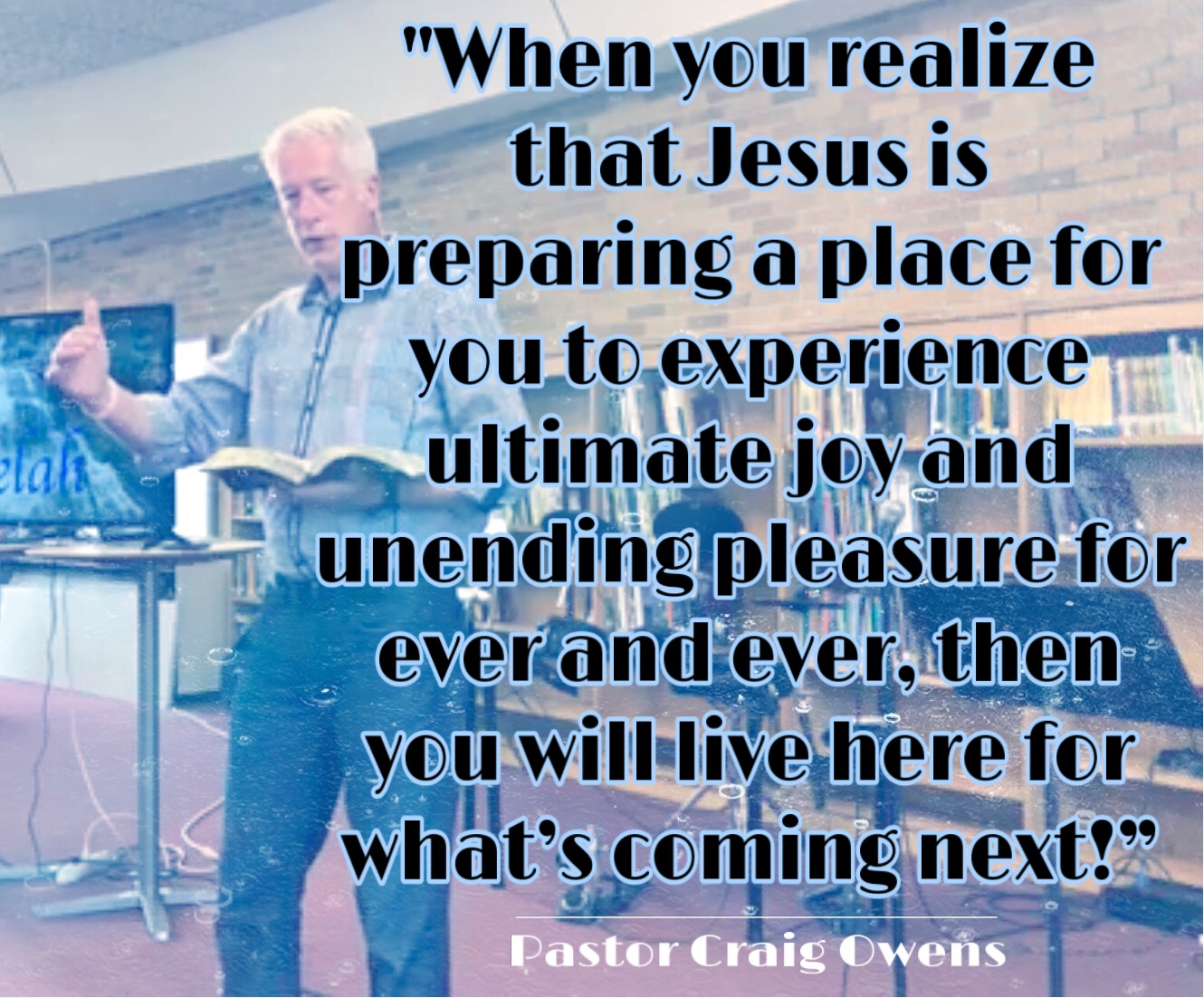
However, this realization that everyone dies can be a very liberating truth IF your focus is on the eternal kingdom that is awaiting you in Heaven. When you realize that Jesus is preparing a place for you to experience ultimate joy and unending pleasure forever and ever, then you will live here for what’s coming next! 

(2) Our eternal destination after we die is determined before we die.

If someone told me that he had discovered the secret to immortality, and then he died and came back to this life to tell me that his theory was correct, it would be wise listen to him. 

That’s exactly what Jesus did for us!

He told us that He would die on a Cross and that He would be raised back to life. AND HE DID IT! His hard-won insight, His “been there, done that” wise words to us are this—“Believe in Me. I died to pay the penalty for the sins that will keep you out of Paradise. So place your faith in what I did, and ask my Father to forgive your sins. Then I promise you that you will spend forever and ever with Me in Paradise!” 

THIS objective truth determines everything else about our lives. 

So I’ll repeat it again—

“Our opinions don’t matter if they don’t square with God’s Word on the matter.” —Craig T. Owens

Join me next Sunday as we continue our series looking at the Selahs in the Psalms. 

If We Can Dare, God Will Do

“Here and there we meet with one to whom it is given to believe in God with mighty faith. As soon as such a man strikes out on a project, or sets about a work that none but men of his mold would venture upon, straightway there arises a claimer: ‘The man is overzealous,’ or he will be charged with an innovating spirit, rashness, fanaticism, or absurdity. Should the work go on, the opposers whisper together, ‘Wait a little while, and you’ll see the end of all this wildfire.’ What said the sober semi-faithful men to Luther? The monk had read in the Scriptures this passage: ‘A man is not justified by the works of the law, but by the faith of Jesus Christ’ (Galatians 2:16). He went to a venerable divine to ask him about it, and at the same time he complained of the enormities of Rome. What was the good but weak brother’s reply? ‘Go to your cell, and pray and study for yourself, and leave these weighty matters alone.’ Here it would have ended had the brave reformer continued to consult with flesh and blood. But his faith enabled him to go forward alone, if none would accompany him. He nailed up his theses on the church door and showed that one man at least had faith in the gospel and in its God. Then trouble came, but Luther minded it not, because the Father was with him. We also must be prepared, if God gives us strong faith, to ride far ahead, like spiritual light cavalry, who bravely pioneer the way for the rank and file of the army. It were well if the church of God had more of the fleet-footed sons of Asahel—swifter than eagles in their Lord’s service—men who can do and dare alone till laggards take courage and follow in their track. These Valiant-for-Truths will pursue a solitary path full often, but let them console themselves with this thought: ‘I am not alone, but I am with the Father who sent Me’ (John 8:16). If we can believe in God, He will never be in arrears with us; if we can dare, God will do; if we can trust, God will never suffer us to be confounded, world without end. It is sweet beyond expression to climb where only God can lead, and to plant the standard on the highest towers of the foe.” —Charles Spurgeon, in his Autobiography (emphasis added)

Do Not Dwell On The Past

“Forget the former things; do not dwell on the past. See, I am doing a new thing! I am a God of surprises—infinitely more creative than you can imagine. … As you journey along your life-path with Me, refuse to let the past define you or your expectations of what lies ahead. You may feel as if the road you are on is tiresome or even a dead end. That is because you’re projecting the past into the future. The roadblock you are straining to see up ahead is really just an illusion. The future is in My hands, and I can do surprising things with it! …

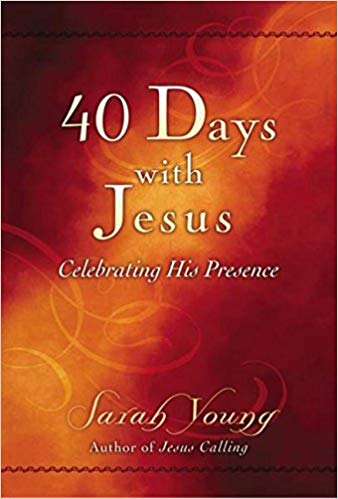
“You need My presence each moment to accomplish My purposes in your life. Sometimes you are tempted to take shortcuts, in order to reach your goal as quickly as possible. But if the shortcut requires turning your back on My peaceful Presence, you must choose the longer route. Walk with Me along paths of Peace; enjoy the journey in My Presence.” —Jesus (in Sarah Young’s 40 Days With Jesus)

Self-Evident

“It happens that we meet together once every year, sometime about the 4th of July. … We run our memory back over the pages of history [to 1776]. We find a race of men living in that day whom we claim as our fathers and grandfathers. They were iron men. They fought for the principle that they were contending for; and we understand that by what they then did, it has followed that the degree of prosperity that we now enjoy has come to us. We hold this annual celebration to remind ourselves of all the good done, of how it was done and who did it, and how we are historically connected with it. …

“We have [among us immigrants] who are not descendants at all of these men. … If they look back through this history to trace their connection with those days by blood, they find they have none. … But when they look through that old Declaration of Independence, they find that those old men say that ‘We hold these truths to be self-evident, that all men are created equal.’ And then they feel that that moral sentiment taught in that day evidences their relation to those men, that it is the father of all moral principle in them, and that they have a right to claim it as though they were blood of the blood, and flesh of the flesh of the men who wrote that Declaration. And so they are. That is the electric cord in that Declaration that links the hearts of patriotic and liberty-loving men together, that will link those patriotic hearts as long as the love of freedom exists in the minds of men throughout the world.” —Abraham Lincoln

Am I The Genuine Article?

Examine and test and evaluate your own selves to see whether you are holding to your faith and showing the proper fruits of it. Test and prove yourselves… (2 Corinthians 13:5). 

The root word for discern in the New Testament Greek is dokimazō. This word means to examine something—scrutinize it closely—to see if it is genuine. We’re instructed to take a close, scrutinizing look at…

  • …our beliefs about God (Romans 1:28)
  • …our understanding of God’s will for our lives (Romans 12:2)
  • …our relationship with God and others (1 Corinthians 11:28) 
  • …our faith (2 Corinthians 13:5)
  • …our motives (2 Thessalonians 2:4)
  • …the teaching we are listening to (1 John 4:1) 

In his book Romans: God’s Glory, Donald Grey Barnhouse discussed the root word for discern (the Greek word dokimos). He said, 

“In the ancient world there was no banking system as we know it today, and no paper money. All money was made from metal, heated until liquid, poured into moulds and allowed to cool. When the coins were cooled, it was necessary to smooth off the uneven edges. The coins were comparatively soft, and of course many people shaved them closely. In one century, more than eighty laws were passed in Athens to stop the practice of whittling down the coins then in circulation. But some money-changers were men of integrity, who would accept no counterfeit money; they were men of honour who put only genuine, full-weight money into circulation. Such men were called dokimos, and this word is used here for the Christian as he is to be seen by the world.” (emphasis mine)

This should be said of every Christian: “They are dokimos—men and women who are honorable and are the real deal. They don’t shave anything off; they don’t water anything down. They can be scrutinized closely and found to be the genuine article.” 

The Bible makes it clear that before the world can call us dokimos, the Holy Spirit first has to stamp that word on us. It’s only after we have allowed Him to scrutinize (and correct) our beliefs, relationships, faith, and motives that we can be labeled dokimos. When we are the real deal in His presence, the world cannot help but see the genuine article when they examine us. 

Let’s live this way! May both God and the watching world be able to call us dokimos! 

40 Days With Jesus (book review)

Martin Luther said, “The Bible is alive, it speaks to me.” Truly, the Bible is God’s Word speaking to us every time we peer into its pages, so I love how Sarah Young strings passages of Scripture together to allow us to hear Jesus speaking to us in a first-person voice. 

40 Days With Jesus was designed as a series of readings during the Lenten season, as we walk with Jesus to the Cross and His resurrection from the dead. But any time is a good time when we can walk with Jesus and hear His unmistakable voice reassuring our hearts. 

Are you walking through a dark time in your life? Know that Jesus is walking with you. 

Do you want to live a life of purpose and lasting value? Listen to Jesus counsel you. 

Are you standing at a crossroads trying to make the right decision? Let Jesus point the way. 

Each time I read a Sarah Young book, it reignites my heart to read the Bible as though Jesus is personally speaking to me. Because He is! 

40 Days With Jesus is a great starting point for you to learn to hear Jesus speaking to you every time you open your Bible. The Holy Spirit will then use those words read in your quiet time to continue to bring you direction and reassurance all throughout your day (John 14:26). 

I highly recommend this book (or any other book by Sarah Young)!

Toot! Toot!

Do we begin again to commend ourselves?… (2 Corinthians 3:1)

Paul didn’t bring letters of reference to Corinth, nor did he ask the Corinthians to write any testimonials on his behalf.

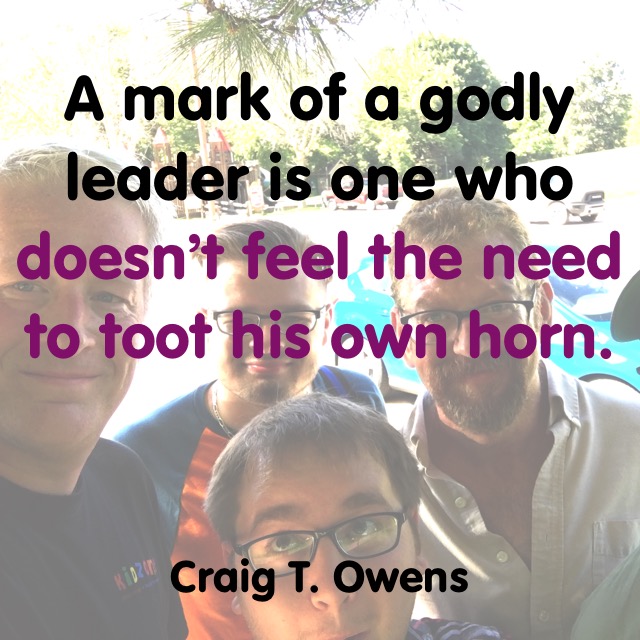
A mark of a godly leader is one who doesn’t feel the need to toot his own horn.

 Paul’s focus was not on what he could get now, but on what would be his in eternity—

  • any “letters of recommendation” would be written on peoples hearts (v. 3)
  • any skills he had came through Jesus (vv. 4-6)
  • he had hope that God was keeping accurate records (vv. 7-11)
  • he had the freedom to speak boldly in love because he wasn’t trying to win man’s approval (vv. 12-13, 18)
  • he saw transformed lives as his real trophy (v. 18)
  • his ministry was through God’s mercy so he remained humbled and encouraged (4:1)
  • he didn’t feel the need to concoct a “marketing plan” nor leverage his pulpit for personal gain (v. 2)
  • he focused on glorifying God alone (vv. 3, 4, 6)
  • his sermons weren’t me-focused, but always others-focused as he became a bondservant to those to whom he ministered (v. 5)
  • he worked only for eternal rewards (vv. 7-12, 16-18)
  • he spoke only what he had already appropriated and faithfully applied to his own life (vv. 13-15)

Our prayer could be very similar to what Paul taught and probably prayed for himself—“May I lead by serving. May I not look for human praise—nor even be tempted to toot my own horn—but lead and minister only to hear applause from the nail-scarred hands of Jesus.” 

As R.T. Kendall reminds us—

“Every day we breathe in and out—in and out—thousands of times a day. There is a day fixed, that unless Jesus comes first, you and I will only breathe out. No amount of money, power, or prestige can alter the date that we each have with death. And at that moment the only thing that will matter is whether we have known Christ and served Him well—that our lives have made a difference. In short: that we are popular in heaven—and famous in hell.”

This is part 37 in my series on godly leadership. You can check out all of my posts in this series by clicking here.

Two Bits Of Evidence

“We have two bits of evidence about the Somebody. One is the universe He has made. If we used that as our only clue, then I think we should have to conclude that He was a great artist (for the universe is a very beautiful place), but also that He is quite merciless and no friend to man (for the universe is a very dangerous and terrifying place). The other bit of evidence is that Moral Law which He has put into our minds.

“And this is a better bit of evidence than the other because it is inside information. You find out more about God from the Moral Law than from the universe in general just as you find out more about a man by listening to his conversation than by looking at a house he has built. Now, from this second bit of evidence, we conclude that the Being behind the universe is intensely interested in right conduct—in fair play, unselfishness, courage, good faith, honesty, and truthfulness.” —C.S. Lewis, in Mere Christianity