3 Hindrances To Prayer

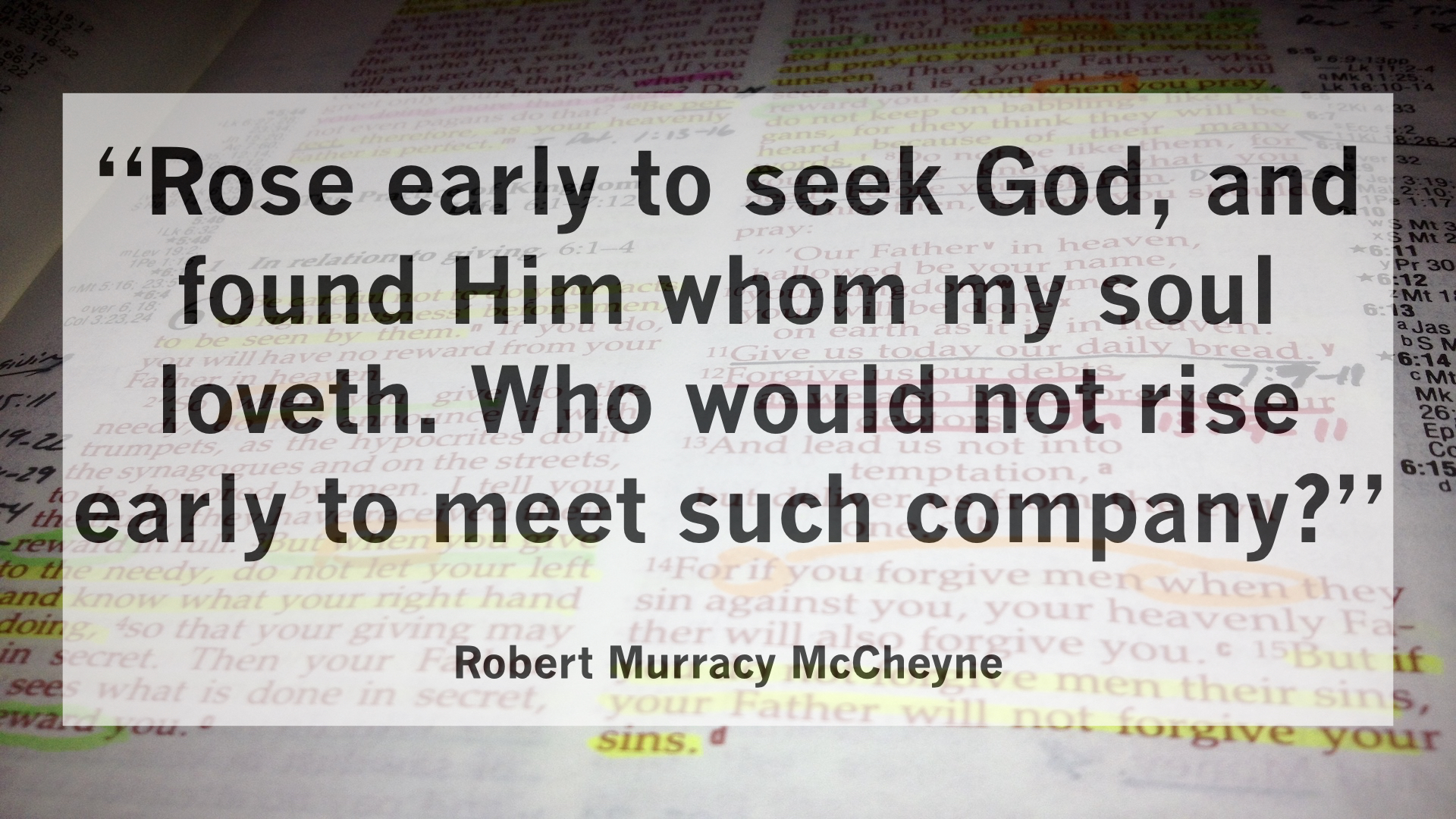
Listen to the podcast of this post by clicking on the player below, and you can also subscribe on AppleSpotify, or Audible.  I am sometimes amazed at how much Jesus accomplished in just a little over three years of public ministry. What I would have expected to see is a Man burning the candle at both ends—up early, working hard without any breaks each day, very little (if any) leisure time, and then burning the midnight oil.  But instead we see Jesus never seeming to be rushed or exhausted. He takes time for meals with friends, time away from the crowds, and still in just a short period of time He fulfilled hundreds of ancient prophecies and trained His followers to take the Gospel around the globe!  One of the keys is His priority. Notice that I said priority and not prioritieS. Jesus was singularly focused on His Father’s glory and He showed total dependence on Him. I think one of the most telling verses is Mark 1:35: “Very early in the morning, while it was still dark, Jesus got up, left the house and went off to a solitary place, where He prayed.”  If Jesus needed prayer to start His day, how much more do we need this!  Scottish pastor Robert Murray McCheyne wrote in his journal, “Rose early to seek God, and found Him whom my soul loveth. Who would not rise early to meet such company?” 

(Check out all of the Scriptures in this post by clicking here.) 

So why don’t we treat prayer like this? I think there are three main hindrances to keep us from making prayer a priority.  (1) Self-reliance. A common phrase we use is, “I need to get to work.” But this puts the emphasis on me—my plans, my abilities, my work ethic. I believe I can do more than pray, but I also believe that I shouldn’t do anything until I have prayed.  Prayer, therefore, is a reminder of my utter God-reliance.  God has a better plan than we do. God has more wisdom than we do. God has more strength than we do. So wouldn’t it be better to ask Him what we should be doing, how we should be doing it, and then ask Him for the strength to do it?  When we have this focus, our prayer time will keep us aligned with His plans and empowered with His wisdom and strength. Look at a couple of examples.
  • Sarah knew how to believe God because He showed how He kept His promise in His perfect timing (Genesis 21:1-2). 
  • Mary knew how to pray and behave in alignment with God’s word (Luke 1:31-38). Her prayer shortly after this is sautéed in Scripture, showing how she relied on God to keep His Word (vv. 46-55). 
  • Saul of Tarsus (who became Paul the apostle) had assurances of God’s direction for his life at almost every turn (Acts 9:15-16, 20:22-24, 21:10-14, 23:11, 27:21-25). Then he writes to his friends at Philippi how God received the glory throughout this whole process (Philippians 1:12-14, 25-26). 
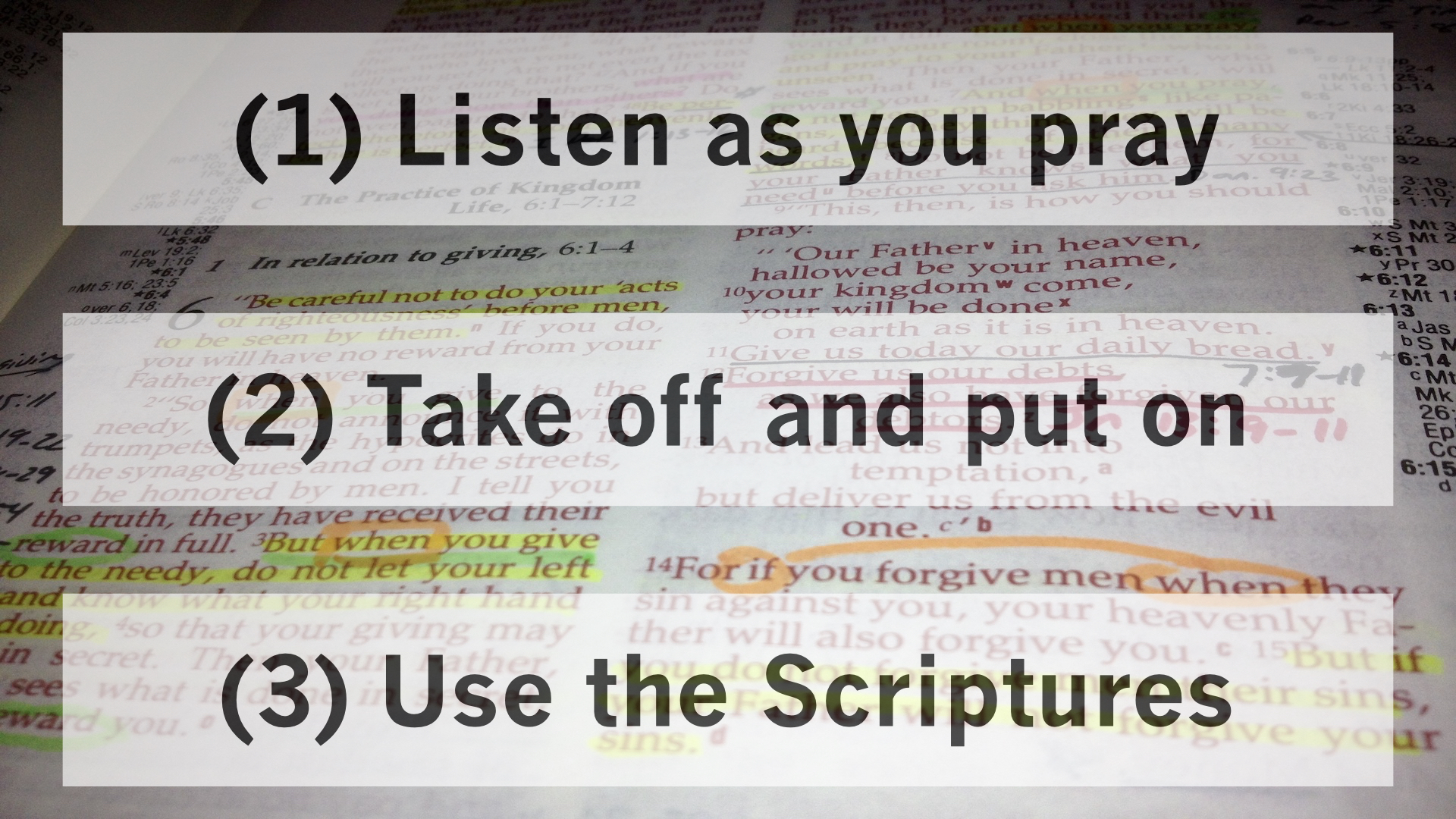
We can live and pray with the same assurance that God is completely in control (Isaiah 55:8-11; Romans 8:26-28).   (2) Distractions. When Martin Luther was asked about his plans for the next day he said, “I have so much to do that I shall spend the first three hours in prayer.” That sounds unrealistic to most of us, but that is because we call too many things “priorities.” We need a singular priority: The knowledge of God’s will and the help that only God can give.  Stephen Covey has a very helpful tool that I use regularly: the urgent/important grid. Bible reading and prayer time is most decidedly a Quadrant II activity. We make time for these important activities by removing unimportant activities from Quadrant IV. The Bible frequently couples a “take off” with a “put on” (see 1 Corinthians 13:11; 2 Timothy 2:4; Ephesians 6:11-18), which should prompt us to ask, “What’s one thing I can take off of my Quadrant IV and put on that time for prayer in Quadrant II?”  (3) Uncertainty. Sometimes we may wonder if our prayers are doing anything. Maybe we think we are not praying the “right way” or perhaps we wonder if we are praying for something in alignment with God’s will or only our own selfishness.  The only two things Jesus said were the “wrong ways” to pray were praying to show off, and babbling like pagans (Matthew 6:5-8). As we read in Romans 8, the Holy Spirit will help us pray, if we will let Him.  One way we pray in alignment with God’s will is to pray using the Scripture. The Bible is our Prayer Book. Pastor Timothy Keller wrote, “Your prayer must be firmly connected to and grounded in your reading of the Word. This wedding of Bible and prayer anchors your life down in the real God. … Without immersion in God’s words, our prayers may not be merely limited and shallow but also untethered from reality.”  So here are three steps we need to implement to counteract those three hindrances to a consistent, meaningful prayer life: 
  1. Listen to yourself pray—replace the “I have to” with “God, I trust You to direct me and help me.” 
  2. Track your time in each quadrant and identify just one Quadrant IV activity you can replace with prayer. 
  3. Start turning Scripture into prayers. 
I will be elaborating more on the idea of using the words of the Bible to form on our prayers as we continue our series Our Prayer Book.  ►► Would you please prayerfully consider supporting this ministry? My Patreon supporters get behind-the-scenes access to exclusive materials. ◀︎◀︎

Make Your People A Priority

Listen to the podcast of this post by clicking on the player below, and you can also subscribe on AppleSpotify, or Audible. 

If you are a leader in your organization, there are a couple of often overlooked actions that are sending clear signals to your teammates. The question is: Are those signals telling them how valuable they are to you and your organization?

Check out this short clip from The Craig And Greg Show where we discuss how performance reviews can be a great opportunity to move your team forward.

If you would like to watch the full Craig And Greg Show episode on performance reviews, check it out here.

You may also be interested in two previous blog posts where I unpack some ideas on how to improve all of the relationships that are meaningful to us—Missing Ingredient and Be All There.  

My new book When Sheep Bite is available for pre-order!

Here are a bunch of ways to get in touch with me and follow along with other projects on which I am involved.  

►► Would you please prayerfully consider supporting this ministry? My Patreon supporters get behind-the-scenes access to exclusive materials. ◀︎◀︎

Links & Quotes

Don’t give in to F.E.A.R. When the devil’s lies make us afraid, remember that F.E.A.R. stands for false evidence appearing real. The Holy Spirit can help you find the true evidence in God’s Word that will confront and dismantle the false evidence. Check out this full message here. I have lots of new content every week, which you can check out on my YouTube channel.

“Meanwhile it is also necessary for the ruler [pastor] to keep wary watch, lest the lust of pleasing men assail him; lest, when he studiously penetrates the things that are within, and providently supplies the things that are without, he seek to be beloved of those that are under him more than truth…” (Gregory the Great). Check out how T.M. Moore unpacks this quote.

The Culture Translator” newsletter from Axis has this sobering reminder of the dangers of pornography. 

What it is: An eye-opening essay in The Free Press describes the impact of pornography on a teen’s developing brain.

What it tells us: The author of this piece, Isabel Hogben, is a homeschooled high schooler living in Redford City, California. In one of several devastating lines, Hogben details how she stumbled upon PornHub when she was only ten years old, even as her very present mother was “making sure I was eating nine differently colored fruits and vegetables on the daily.” Hogben goes on to explain that today’s pornography depicts a synthetically augmented and physically brutal type of sex that makes Playboy magazine look “like an American Girl Doll catalog.” She notes that teens who have never had a physical sexual encounter can’t know the difference between what fake sex and real sex is supposed to be like, skewing their expectations, and that her peers think selling nudes online is normal. As she examines the way porn causes scientifically-measurable changes in the brain, Hogden concludes that porn is not “content” as much as it is a dangerously addictive substance not unlike street drugs.

“Do nothing that you would not like God to see. Say nothing you would not like God to hear. Go no place where you would not like God to find you. Never spend your time in such a way that you would not like God to say, ‘What are you doing?’” —J.C. Ryle

“Learning to say no is not just about courage, but also learning how to prioritize your life and become more productive.” —John Maxwell

Thursdays With Spurgeon—Top Priority

This is a weekly series with things I’m reading and pondering from Charles Spurgeon. You can read the original seed thought here, or type “Thursdays With Spurgeon” in the search box to read more entries.

Listen to the podcast of this post by clicking on the player below, and you can also subscribe on AppleSpotify, or Audible. 

Top Priority

…For the mouth of the Lord has spoken (Isaiah 1:20).

     Every word that God has given us in the Bible claims our attention because of the infinite majesty of Him who spoke it. … See that you refuse not Him who speaks. O my hearer, let it not be said of you that you went through this life, God speaking to you in His book, and you refusing to hear! It matters very little whether you listen to me or not. But it matters a very great deal whether you listen to God or not. It is He who made you. In His hands is your breath. And if He speaks, I implore you, open your ears and be not rebellious. There is an infinite majesty about every line of Scripture, but especially about that part of Scripture in which the Lord reveals Himself and His glorious plan of saving grace in the Person of His dear Son Jesus Christ. …  

     For what He has spoken He still speaks to us, as freshly as if He spoke it for the first time. … 

     God’s Word has a claim, then, upon your attention because of its majesty and its condescension. But, further, it should win your ear because of its intrinsic importance. ‘The mouth of the Lord has spoken,’ so it is no trifle. God never speaks vanity. No line of His writing treats of the frivolous themes of the day. That which may be forgotten in an hour is for mortal man and not for the eternal God. When the Lord speaks, His speech is Godlike, and its themes are worthy of one who is dwelling in infinity and eternity. … 

     He speaks to you of great things that have to do with your soul and its destiny. It is not a vain thing for you, because it is your life. Your eternal existence, your happiness or your misery, hang on your treatment of that which the mouth of the Lord has spoken. … Treat not the Word of the Lord as a secondary thing that might wait your leisure and receive attention when no other work is before you. Put all else aside and hearken to your God.

From The Infallibility Of Scripture

Charles Spurgeon is so on-target with these words. Believe it or not, this sermon was actually delivered to his fellow pastors. But the words are true for all of us—we must make listening to God’s Word our first priority. 

Every single word of Scripture is inspired by the Holy Spirit. And I do mean every single word. Even the order in which the words are listed is inspired. So when you read your Bible, ask the Holy Spirit—the Author of the text—to illuminate the words to you. Ask questions like:

  • What did that mean then? 
  • What does it mean now? 
  • What does it mean for me? 
  • Does something in my life need to change? 

If you make your time with God a priority, He will reveal more of Himself to you each time you open your Bible.

►► Would you please prayerfully consider supporting this ministry? My Patreon supporters get behind-the-scenes access to exclusive materials. ◀︎◀︎

The Danger In Multitasking

Listen to the podcast of this post by clicking on the player below, and you can also subscribe on AppleSpotify, or Audible. 

Peter Drucker noted, “It wasn’t until the twentieth-century that we pluralized the word priority. For most of its history, the word has been singular.” 

If we have too many priorities, we can frequently find them in conflict with each other. This forces us to make an extremely difficult decision: Which priority has a higher priority?! 

My friend Greg Heeres and I recently addressed this in an episode of our leadership podcast called The Craig And Greg Show.  

Ultimately, whatever business or industry or profession we are in, we are in the people business. All of our efforts fail without good investment in people. So our overriding priority must be on the people God has placed around us.

(I wrote post earlier about this called “Am I interruptible?” which is worth your time to check out.)

Marcus Buckingham noted, 

“The human brain is simply not designed to multitask. You can get by doing multiple things at once, but you can’t do them well. Your brain is physically unable to process more than one set of instructions at a time, so while you are juggling all of those actions at once, your brain is scrambling to keep up. Through a variety of experiments measuring brain activity, scientists have discovered that the constant switching back and forth from one activity to another energizes regions of the brain that specialize in visual processing and physical coordination, while simultaneously disrupting the brain regions related to memory and learning. According to the research, ‘We are using our mental energy to concentrate on concentrating at the expense of whatever it is that we’re supposed to be concentrating on.’ Got that? 

“More simply: when we multitask we’re dumber. How much dumber? A recent study for Hewlett Packard exploring the impact of multitasking on performance revealed that the average worker’s functioning IQ drops ten points when multitasking…. (The analogy the researchers used is that a ten-point drop in IQ is equivalent to missing one night of sleep.)”Marcus Buckingham  

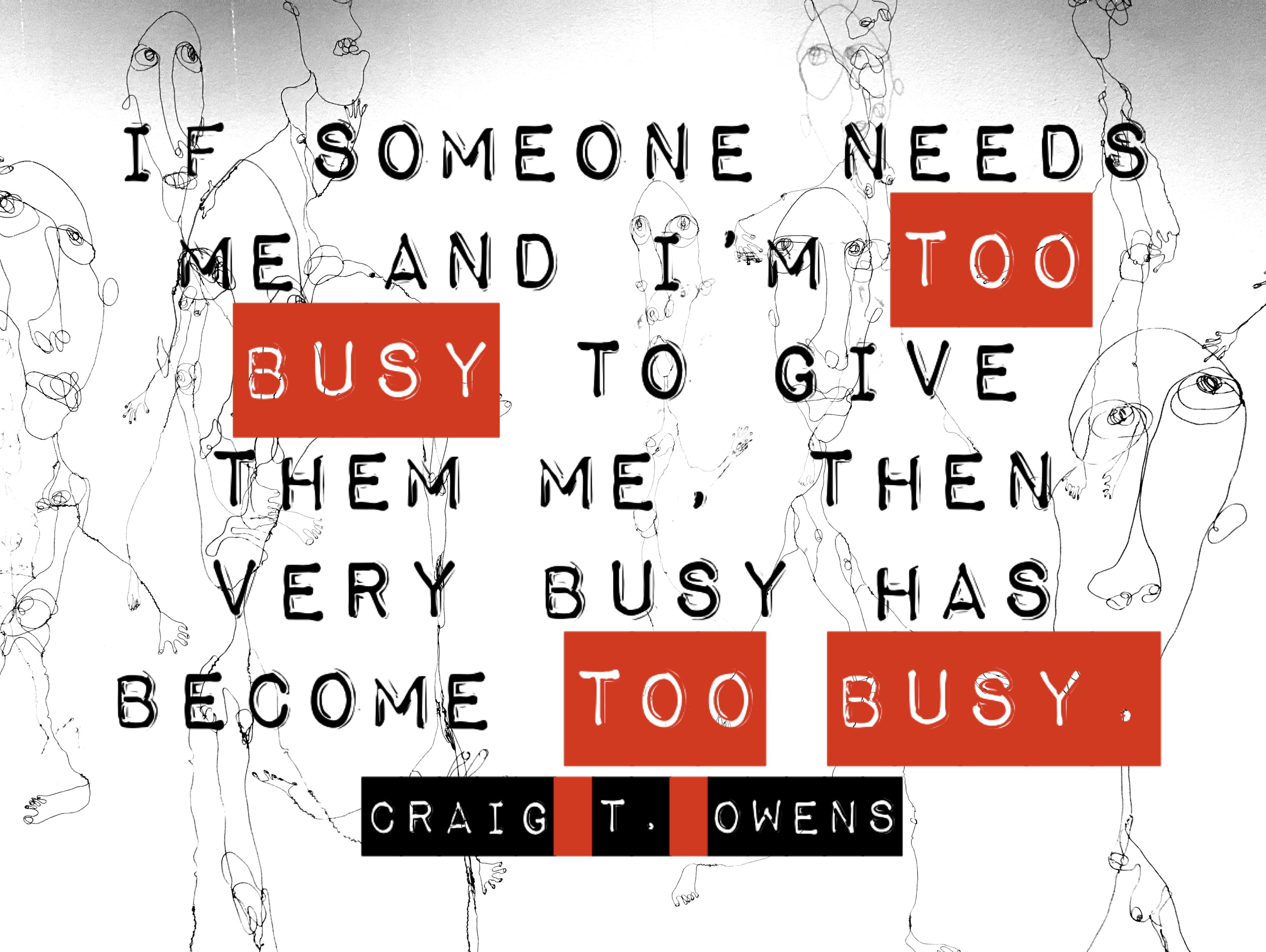
The biggest victim of attempting to multitask is your relationships. Those closest to you suffer the most. If someone needs me and I’m too busy to give them me, then very busy has become too busy and it’s time for me to evaluate who—not what—is my highest priority.

►► Would you please prayerfully consider supporting this ministry? My Patreon supporters get behind-the-scenes access to exclusive materials. ◀︎◀︎

Thursdays With Spurgeon—The Natural Out-Gushing

This is a weekly series with things I’m reading and pondering from Charles Spurgeon. You can read the original seed thought here, or type “Thursdays With Spurgeon” in the search box to read more entries.

Listen to the podcast of this post by clicking on the player below, and you can also subscribe on AppleSpotify, or Audible. 

The Natural Out-Gushing

If you remain in Me and My words remain in you, ask whatever you wish, and it will be done for you. (John 15:7) 

   He does not say, ‘If you abide in Me, and My words abide in you, you will do spiritual things,’ but ‘you will ask.’ By prayer you will be enabled to do. But before all attempts to do, you will ask. The choice privilege here given is a mighty prevailing prayerfulness. Power in prayer is very much the gauge of our spiritual condition. …  

     Prayer comes spontaneously from those who abide in Jesus. … Prayer is the natural out-gushing of a soul in communion with Jesus. Just as the leaf and the fruit will come out of the vine without any conscious effort on the part of the branch but simply because of its living union with the stem, so prayer buds and blossoms and produces fruit out of souls abiding in Jesus. … They do not say to themselves, ‘Now is the time for us to get to our task and pray.’ No, they pray as wise men eat—namely, when the desire for it is upon them. …  

     Habitual asking comes out of abiding in Christ. You will not need urging to pray when you are abiding with Jesus. … 

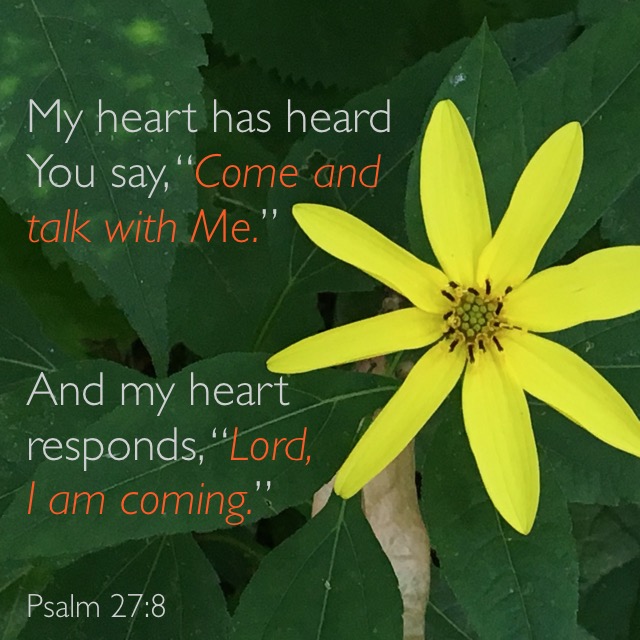
     ‘If you abide in Me, and My words abide in you, you will ask’—and you will not wish to cease from asking. He has said, ‘Seek My face,’ and your heart will answer, ‘Your face, Lord, I will seek’ (Psalm 27:8). … 

     This power in prayer is like the sword of Goliath. Wisely may every David say, ‘There is none like it; give it to me’ (1 Samuel 21:9). This weapon of all-prayer beats the enemy and at the same time enriches its possessor with all the wealth of God.

 From The Secret Of Power In Prayer

When I first met the beautiful young lady that would eventually become my wife, we spent hours and hours and hours talking with each other. It was how I got to know her heart, and how she got to know mine. My conversations with Betsy are still some of the most cherished times I have. 

But what if after we got married I said to Betsy, “I love you, my darling, and I’m so looking forward to a lifetime with you! I will make it a priority to give you my undivided attention for 90 minutes every Sunday morning. Other than that, I’ll be thinking about you while I go about my busy life.” How intimate is this relationship going remain? 

Sadly, this is how many Christians treat their relationship with Jesus. “Thank You for saving me from the penalty of my sin, Jesus! I love You and I’m so looking forward to an eternity with You in Heaven. I will make it a priority to give You my undivided attention every week at church. Other than that, I’ll be thinking about You while I go about my busy life.” 

This is not abiding. 

No branch can remain healthy and produce any fruit if it is only occasionally attached to the vine. In order for the branch to be fruitful, it must be continually abiding in the life-giving sap of the vine. 

Intimacy with Jesus means abiding with Him at all times. It means engaging in conversation with Him at all times. Brother Lawrence commented, “The time of business does not with me differ from the time of prayer; and in the noise and clatter of my kitchen, I possess God in as great tranquility as if I were upon my knees at the blessed sacrament.” 

My friend, let’s all seek to become more aware of the closeness of Jesus. Let us “take delight in the Lord” (Psalm 37:4) and continually engage Him in intimate conversation. As we do, the fruitfulness of our prayer life cannot help but blossom into beautiful things that give God great joy and glory.

►► Would you please prayerfully consider supporting this ministry? My Patreon supporters get behind-the-scenes access to exclusive materials. ◀︎◀︎

The Craig And Greg Show: A Leader’s Top Priority

Listen to the audio-only version of this podcast by clicking on the player below, or scroll down to watch the video.

On this episode of “The Craig And Greg Show” we talk about: 

  • [0:38] What are the origins of the word “priority” and why should priority be singular and not plural? 
  • [0:56] Is it true that multi-tasking increases efficiency? 
  • [2:52] Greg tells a story about shopping with his parents.
  • [3:55] Greg reminds us that the devil uses distraction as a tool.
  • [5:04] I talk about how leaders should set their first priority.
  • [6:32] Why is it so hard to invest in unavailable people?
  • [7:58] I explain how leaders can make time for their “have to” list.
  • [9:58] Greg loves “StrengthFinders” and how it helps leaders learn to work in their strength zone.
  • [10:52] We discuss the book No Is A Beautiful Word.
  • [12:42] How can leaders use the priority vs. priorities paradigm to create margin in their life?
  • [14:36] We throw out the “Not-To-Do List Challenge” for leaders.

Check out this episode and subscribe on YouTube so you can watch all of the upcoming episodes. You can also listen to our podcast on Spotify and Apple.

Links & Quotes

“While grief is expressed in words, its resolution is in God and the hope He gives for the future. In a way, the lamentation process is one of coming to grips with all that God wants us to see about our present circumstances.” —Dr. Henry Halley

Welsh dinosaur tracks found in flood rocks: “The evidence continues to stack up in support of the global Flood. The rocks don’t lie!”

In this video, J. Warner Wallace addresses how we can reconcile variations between biblical manuscripts.

My friend Greg Heeres and I have a brand new episode in our leadership podcast called The Craig And Greg Show. This discussion is all about setting good priorities.

Leaders Lead At Home

Listen to the podcast of this post by clicking on the player below, and you can also subscribe on AppleSpotify, or Audible. 

On a recent episode of The Craig And Greg Show, Greg and I discussed the vitally important role of leading in our families. 

Most parents know they should do this, but one of the things that gets in the way is trying to determine just how “success” should be defined in a family setting. 

Greg and I talk about the distractions to meaningful interactions with our spouse and kids, and I share a story about how I helped my church board understand this concept so that they could support me in this.

The bottom line: Someone else can do our jobs, but we are the only ones who can be the godly spouse for our husband or wife, and the godly parent for kids. Let’s make sure this is always our priority! 

If you would like to watch this full episode of The Craig And Greg Show, please click here. And if you would like to know more about my book which I mentioned in this podcast, please click here. 

►► Would you please prayerfully consider supporting this ministry? ◀︎◀︎

Still Being Fashioned

Listen to the podcast of this post by clicking on the player below, and you can also subscribe on AppleSpotify, or Audible. 

Psalm 119 is a fascinating chapter of Scripture. Not only is it the longest chapter in the Bible (at 176 verses) but it is divided into twenty-two 8-verse sections, corresponding with the 22 letters of the Hebrew alphabet. Each of the verses in the different sections all begin with the same Hebrew letter of that section. 

In the section called yodh, the psalmist wrote, “Your hands formed me and made me; give me understanding to learn Your commands” (v. 73). There is just one Hebrew word for “Your hands” and it also happens to be the name of this section of Psalm 119: Yodh. The psalmist sees God’s hands all over his life, and he welcomes God’s continued involvement in every aspect of his life. 

This yodh section is presented to us in alternating verses: the odd-numbered verses are a declaration, and the even-numbered verses are a corresponding prayer. It looks something like this…

Declaration: You made me

Prayer: May I be a hope-filled testimony to others by my reverence of You

Declaration: You continually discipline and fashion me

Prayer: May I continually find my comfort in Your unfailing love

Declaration: Your compassion is my life and my delight

Prayer: May You deal with those who afflict me while I remain focused on You

Declaration: You bring people into my life on purpose

Prayer: May I be a blameless witness of Your love

In light of this section I declare in prayer: “God, You created me on purpose and for a purpose. What You create, You complete; and what You complete, You complete perfectly. May I remain sensitive to Your Holy Spirit and malleable to Your touch, so that You are glorified through my obedient life.” 

►► Would you please prayerfully consider supporting this ministry? ◀︎◀︎