Thursdays With Spurgeon—“The Hour Has Come”

This is a weekly series with things I’m reading and pondering from Charles Spurgeon. You can read the original seed thought here, or type “Thursdays With Spurgeon” in the search box to read more entries.

“The Hour Has Come” 

After Jesus said this, He looked toward heaven and prayed: “Father, the hour has come. Glorify Your Son, that Your Son may glorify You. (John 17:1) 

     Father, the hour is come.’ This is the hour ordained in the eternal purpose. The hour prophesied of which Daniel sought to know. The hour toward which all hours had pointed. The central hour—the hour up to which man dated and from which they will date again if they read time right. The hinge, pivot, and turning point of all human history! The dark yet delivering hour! The hour of vengeance and of acceptance! ‘The hour is come.’ …  

     You and I look into the hour of darkness, as a frequent rule, and see no further, for our eyes are dim through unbelief. But [Jesus] goes on beyond the hour and His prayer is, ‘Glorify Your Son, that Your Son also may glorify You.’ He fixes His eyes upon the glory that was yet to be revealed and for joy of which He counts even His death to be but an hour—looking upon it as soon to be over and lost in the glory of His Father! 

     In all this, brothers and sisters, let us imitate our Lord and let us keep our eyes not on the present, but on the future; not on this light affliction, which is but for a moment, but on the far more exceeding and eternal weight of glory that will come of it. And let us with holy confidence, whenever our hour of darkness arrives, resort to our God in secret. The best preparation for the worst hour is prayer! The best remedy for a depressed spirit is nearness to God! 

From The Son Glorified By The Father And The Father Glorified By The Son 

Solomon became depressed when his gaze went no higher than “under the sun.” We, too, can become quite overwhelmed by our trials if our eyes only look at the present hour of darkness. 

The writer of Hebrews tells us to keep our eyes on Jesus who conquered in His hour of darkness—Fixing our eyes on Jesus, the pioneer and perfecter of faith. For the joy set before Him He endured the Cross, scorning its shame, and sat down at the right hand of the throne of God. Consider Him who endured such opposition from sinners, so that you will not grow weary and lose heart (Hebrews 12:2-3). 

No matter what you are going through, keep your eyes on Jesus. Don’t give in to the darkness because Jesus has made you more than a conqueror if you will remain in Him (Romans 8:37-39). 
 

Loitering Words

These are the last words of David: “The inspired utterance of David son of Jesse, the utterance of the man exalted by the Most High, the man anointed by the God of Jacob, the hero of Israel’s songs. The Spirit of the Lord spoke through me; His word was on my tongue. The God of Israel spoke, the Rock of Israel said to me: ‘When one rules over people in righteousness, when he rules in the fear of God, he is like the light of morning at sunrise on a cloudless morning, like the brightness after rain that brings grass from the earth.’” (2 Samuel 23:1-4) 

Look how David describes himself: 

  • Inspired by God
  • Exalted by the Most High 
  • Anointed by God 

This statement by David reminds me of the words Moses spoke about himself: “Moses was a very humble man, more humble than anyone else on the face of the earth” (Numbers 12:3)! 

David also said that he was the hero of Israel’s songs. The King James Version says he was “the sweet psalmist of Israel.” However he is described, these are his last words. Literally, that means that his words loitered. They hung around. They continued to impact people’s lives long after he was gone.

Look how long his words loitered. When the Church prayed in Acts 4, they quote David’s prophetic words, stating that they were spoken through the Holy Spirit. David said that’s exactly how he was speaking—“the Spirit of the Lord spoke through me; His word was on my tongue” (v. 2), and God Himself is recorded as speaking through David in verse 3.

God’s words were on David’s lips because God’s Spirit was in David’s heart.

David was both confident of this and humbled by this.

  • Confidently he said he “rules over people in righteousness” and “my house [is] right with God” (v. 5). 
  • Humbly he said “he rules in the fear of God” and God was the One who “brought to fruition my salvation” (v. 5). 

God is still looking for people through whom He may speak loitering words.

May our prayer be—God, You are still looking for men and women through whom You can impart loitering words. You want to put Your words in the mouth of those who are righteous in Your sight and who walk in reverent fear of Your holiness, those who acknowledge Your love and Your sovereignty. O God, make me that person! I don’t want to speak idle words, but life-changing, God-glorifying, Spirit-empowered words that will loiter, and impart truth, and bring people to Jesus. Show me what I need to change to be the one through whom You will speak Your loitering words.

Trespassers

Psalm 59 is the prequel to David being betrayed by the Ziphites as well as the incident in the cave between himself and King Saul. 

This psalm is also called an imprecatory psalm, which is the theological way of saying, “Get ‘em, God!” Since King Saul has sent assassins to try to kill David, you can understand why David is praying this way. But I sort of wonder why he inserts a Selah pause after two rather angry-sounding sentences in verses 5 and 13. 

When we are reading—or even praying—an imprecatory prayer, here are some important things to keep in mind: 

  • This prayer is inspired by the Holy Spirit. All of the words in the prayer, including the Selah pauses, are directed by the Holy Spirit. Getting our angry thoughts out in God’s presence is the safest place to vent. 
  • This is a prayer for justice because an injustice has been done, not just a prayer because David is upset with someone. 
  • Since this prayer says, “Get ‘em, God,” it’s a prayer that turns matters over to God as the Ultimate Judge, taking the judgment out of my hands. 

Really this is a prayer that seeks to balance something vital: The desire to see evil punished while at the same time desiring to see all evildoers come to salvation. 

Think of it this way: When I sin, do I want to meet a God of justice or a God of mercy? Since we are to treat others the way that we would want to be treated, if I want to receive God’s mercy, I have to desire that for others too. Even those evildoers who have hurt me. 

David’s first Selah pause comes after saying that he is innocent of any offense or wrongdoing. When we pray an imprecatory prayer, we would do well to ask the Holy Spirit to search our hearts to reveal any trespasses we have committed (see Psalm 19:12-13; 139:23-24). 

David’s second Selah pause comes after he says, “Then it will be known to the ends of the earth that God rules over Jacob.” Is my “Get ‘em, God” prayer a desire for me to be seen as the overcomer or for God to be seen as glorious? 

As long as my focus is on my trespassers, my focus is off my God. 

I cannot be consumed by thoughts of “them” because then I rob myself of thoughts of Him! 

So when you get angry enough at someone who has trespassed against you that you want to pray a “Get ‘em, God” prayer, Selah pause and pray, “Holy Spirit… 

  • …show me my trespasses; 
  • …help me forgive my trespassers; and
  • …help me to focus on my God, and not on my trespassers or my forgiven trespasses.” 

If you have missed any of the other messages in our Selah series, you can find links to all of them listed here. 

Thursdays With Spurgeon—Seeds Of Revival

This is a weekly series with things I’m reading and pondering from Charles Spurgeon. You can read the original seed thought here, or type “Thursdays With Spurgeon” in the search box to read more entries.

Seeds Of Revival 

     How did Jesus Christ save souls in olden times? By the foolishness of preaching. And if you will look down through church history, you will find that, wherever there has been a great revival of religion, it has been linked with the preaching of the gospel! … Ah, my dear friends, the world will never be saved by Methodist doctors, or by Baptist doctors, or anything of the sort! But multitudes will be saved, by God’s grace, through preachers! It is the preacher to whom God has entrusted this great work! Jesus said, ‘Preach the gospel to every creature’ (Mark 16:15). 

     But men are getting tired of the divine plan. They are going to be saved by the priest, going to be saved by the music, going to be saved by the theatricals, and who knows what! Well, they may try these things as long as they like, but nothing can ever come of the whole thing but utter disappointment and confusion—God dishonored, the gospel travestied, hypocrites manufactured by thousands, and the church dragged down to the level of the world! Stand to your guns, brothers, and go on preaching and teaching nothing but the Word of God, for it still pleases God, by the foolishness of preaching, to save those who believe! And this test still stands true: ‘Jesus Christ is the same yesterday, today, and forever.’ …  

     Well, you may try to do without prayer meetings if you like, but my solemn conviction is that, as these decline, the Spirit of God will depart from you and the preaching of the gospel will be of small account. …  

     The Holy Spirit works all the good that is ever done in the world, and as the Holy Spirit honors Jesus Christ, so He puts great honor upon the Holy Spirit. If you and I try, either as a church or as individuals, to do without the Holy Spirit, God will soon do without us. Unless we reverently worship Him and believingly trust in Him, we will find that we will be like Samson when his locks were shorn. He shook himself as he had done before, but when the Philistines were upon him, he could do nothing against them. Our prayer must always be, ‘Holy Spirit, dwell with me! Holy Spirit, dwell with Your servants!’ We know that we are utterly dependent upon Him. Such is the teaching of our Master, and ‘Jesus Christ is the same yesterday, today, and forever.’

From The Unchangeable Christ 

Charles Spurgeon is exactly right. Only the gospel of Jesus Christ can change our world today. For this message to go out in all of its life-changing power requires three things: 

  1. Pastors who will preach the Word of God. Music, opinions, and theatrics will not change lives. 
  2. Prayer. Both those in the pulpit and those in the seats of the church must be praying. 
  3. Reliance on the Holy Spirit. Without the Holy Spirit’s empowerment, we won’t be effective at all. 

Do you want to see a revival? Encourage your pastor to preach well, keep on praying, and keep on asking for the Spirit’s empowerment!


Messes

My good friend Josh Schram shared a powerful message in our Selah series. 

David is the anointed king, but instead of living in a palace, he’s living in a cave. From this cave, David gave us Psalm 57. 

Here are some of my takeaways from Josh’s message, but I would encourage you to watch this 20-minute video for yourself

Takeaways: 

  • To get where God needs me to be, I often have to go through things I never expected. 
  • Even my “cave times” are directed by God. 
  • “David didn’t get down on Saul’s level; he got down on his knees.” —Josh Schram 
  • If David had taken matters into his own hands, what would his legacy have been? Instead, he worshiped God, and let God take care of Saul. 
  • “We don’t worship God because our circumstances are good but because our God is good.” —Josh Schram 
  • My little messes become big messes when I try to handle them myself. I need to run to my Heavenly Father for help with all of my messes! 

If you have missed any of the messages in our Selah series, you can access all of them by clicking here. 

How To Pray When You’ve Been Stabbed In The Back

Sadly, some of the people who do us the most harm are those whom we least expected to hurt us. They seemed to have our back, but then they are stabbing us in the back! 

It’s sad, but it shouldn’t be totally unexpected. Matthew Henry said it well: “Never let a good man expect to be safe and easy till he comes to heaven. … It is well that God is faithful, for men are not to be trusted. 

David learned that lesson. He rescued the town of Keilah from the Philistines, only to hear that King Saul has called out his army to destroy Keilah and kill David. This prompted David to leave Keilah and flee to the Desert of Ziph. It appears that David has given Saul the slip, but the Ziphites send a message to the king saying, “We know where David is hiding, and we’ll gladly hand him over to you.” 

Here’s the painful part for David: Both Keilah and Ziph were in Judah—David’s tribe! His own family—that should have had his back—stabbed him in the back instead! 

I wish I could say this was a once-in-awhile thing, but we all know that it’s not. In fact, this sort of betrayal probably happens more often than we would care to admit. 

It was during this time of betrayal by the Ziphites that David wrote the 54th Psalm. In the opening verses, David laments the ruthless, Godless men that have betrayed him. And then comes that word of pause: Selah. 

I believe this Selah may have come when “Jonathan went to David at Horesh and helped him find strength in God” (1 Samuel 23:16). One of the definitions of Selah is to weigh things to see what is more valuable. Notice that Jonathan took David’s attention off his evil betrayers and turned it to his loving God. So in the very next phrase after the Selah we read David saying, “Surely God is my help; the Lord is the One who sustains me.” 

Notice four key components of David’s prayer—

  1. David’s motive for praying. In the opening verse, he says, “Your Name…Your might.” To me, that sounds a lot like the opening words to the model prayer Jesus taught us: “Hallowed be Your Name.” 
  2. David’s prayer. He said, “Hear my prayer, O God; listen to the words of my mouth.” It’s interesting to note that David says nothing to the Ziphites themselves, but he only speaks of them when he is alone with God in prayer.  
  3. Prayer’s result. David didn’t have to try to make things right on his own because God took care of it—evil recoiled on those who stabbed David in the back. 
  4. David’s praise. Notice the words “I will praise Your Name…[You] have delivered me.” Again, this praise and focus on God sounds like the end of the model prayer Jesus taught us: “Yours is the kingdom, and the power, and the glory forever!” 

When enemies assail, when you have been stabbed in the back, don’t look to men for help and don’t take matters in your own hands. Instead take a Selah. Consider that God is worthy of your attention, and not the “ruthless men” who hurt you. Turn your pain over to God and say with David: Surely God is my help; the Lord is the One who sustains me. 

Evil will recoil on evildoers, you will be kept safe, and you will be vindicated by God’s might! 

If you missed any of the messages in our Selah series, you can find them all by clicking here. 

7 Quotes From “Faith Of Our Founding Fathers”

Parents, please download a FREE copy of this book to help educate your children on the biblical faith that informed the decisions of our Founding Fathers (link in the book review). You can read my complete book review of Faith Of Our Founding Fathers by clicking here. 

“The Bible is the best of all books, for it is the word of God, and teaches us the way to be happy in this world and in the next. Continue therefore to read it, and to regulate your life by its precepts.” —John Jay 

“Only a virtuous people are capable of freedom. As nations become corrupt and vicious, they have more need of masters.” —Benjamin Franklin 

“While we are zealously performing the duties of good Citizens and Soldiers we certainly ought not to be inattentive to the higher duties of Religion. To the distinguished Character of Patriot, it should be our highest Glory to add the more distinguished Character of Christian.” —George Washington 

“In this situation of this assembly, groping as it were in the dark to find political truth, and scarce able to distinguish it when presented to us, how has it happened, sir, that we have not hitherto once thought of humbly applying to the Father of lights, to illuminate our understandings? … I have lived, Sir, a long time; and the longer I live the more convincing Proofs I see of this Truth, That God governs in the Affairs of Men! And if a Sparrow cannot fall to the Ground without His Notice, is it probable than an Empire can rise without His Aid?—We have been assured, Sir, in the Sacred Writings, that ‘except the Lord build the House, they labor in vain that build it.’ I firmly believe this; and I also believe that without His concurring Aid we shall succeed in this political Building no better than the Builders of Babel…. I therefore beg leave to move, That henceforth Prayers, imploring the Assistance of Heaven, and its Blessing on our Deliberations, be held in this Assembly every Morning before we proceed to Business.” —Benjamin Franklin 

“And can the liberties of a nation be thought secure when we have removed their only firm basis, a conviction in the minds of people that these liberties are of the gift of God? That they are not to be violated but with His wrath? Indeed, I tremble for my country when I reflect that God is just; that His justice cannot sleep for ever….” —Thomas Jefferson 

“The diminution of public virtue is usually attended with that of public happiness, and the public liberty will not long survive the total extinction of morals.” —Samuel Adams 

“Neither the wisest constitution nor the wisest laws will secure the liberty and happiness of a people whose manners are universally corrupt.” —Samuel Adams

Personalizing The Prayers Of The Bible

Much of the Bible is given to us in a conversational format, and many of those conversations are between humans and God.

My desire is that we wouldn’t just read through the Bible, but we would learn to pray through the Bible. The Scripture is full of prayers people have already prayed. We have the benefit of seeing the setting that led to the prayer, the prayer itself, and then the outcome of the prayer. 

The Holy Spirit can help us make each prayer in the Bible our own prayer. They can become personalized to the situations we face. 

In this 5-minute video, I demonstrate how I turned Psalm 27 into a prayer. Below the video is the text of this psalm so you can see how I began the prayer. After watching this video, I encourage you to begin to use God’s Word as a launching point for your prayers for your situations. 

The Lord is my light and my salvation—whom shall I fear? The Lord is the stronghold of my life—of whom shall I be afraid?

When the wicked advance against me to devour me, it is my enemies and my foes who will stumble and fall.

Though an army besiege me, my heart will not fear; though war break out against me, even then I will be confident.

One thing I ask from the Lord, this only do I seek: that I may dwell in the house of the Lord all the days of my life, to gaze on the beauty of the Lord and to seek Him in His temple.

For in the day of trouble He will keep me safe in His dwelling; He will hide me in the shelter of His sacred tent and set me high upon a rock.

Then my head will be exalted above the enemies who surround me; at His sacred tent I will sacrifice with shouts of joy; I will sing and make music to the Lord.

Hear my voice when I call, Lord; be merciful to me and answer me.

My heart says of You, “Seek His face!” Your face, Lord, I will seek.

Do not hide Your face from me, do not turn Your servant away in anger; You have been my helper. Do not reject me or forsake me, God my Savior.

Though my father and mother forsake me, the Lord will receive me.

Teach me Your way, Lord; lead me in a straight path because of my oppressors.

Do not turn me over to the desire of my foes, for false witnesses rise up against me, spouting malicious accusations.

I remain confident of this: I will see the goodness of the Lord in the land of the living.

Wait for the Lord; be strong and take heart and wait for the Lord.

A Mother’s Thunderous Prayer

Hannah only appears in the first two chapters of 1 Samuel, but her legacy thunders through her son, and its rumblings continue to reverberate today. At first glance, it seems somewhat ironic that Hannah’s name means grace (undeserved favor) because we tend to think of a grace-filled person as quiet and unassuming. We don’t typically think of grace as thundering, but indeed it does! 

Notice 3 P’s from Hannah’s life—

  1. Hannah is grace personified. She didn’t crumble because of Peninnah’s taunts, nor did she compromise on her heart’s prayer because of Elkanah’s compliments. She never responded verbally to either Peninnah or Elkanah, but she took all her anguish to God in prayer. 
  1. Hannah is persistent in prayer. Hannah lives out the definition of importunity—unswerving, unabated, persistent prayer. The Bible tells us, “year after year…in bitterness of soul Hannah wept much and prayed to the Lord … she kept on praying to the Lord.” Notice an important contrast: Peninnah means jewels (from earth), while Hannah means grace (from God). God wants to give us answers that are eternal.  
  1. Hannah is piously reverent. Three times Hannah called herself a servant. She is respectful to the high priest Eli even when he falsely accuses her of being drunk. After Eli assures Hannah that God is going to grant her prayer request, notice her reverent actions—she broke her fast, her face was no longer downcast, she worshipped before the Lord, and she and Elkanah tried again to get pregnant.  

Hannah’s anguish drove her to God. Year after year her bitterness of soul kept her in God’s presence. And after God answered her prayer, her rejoicing continued to keep her in God’s presence. She was importunate in prayer.

But also notice that God was silent while Hannah prayed year after year. Oswald Chambers says, “God’s silences are His answers. … Some prayers are followed by silence because they are wrong [this wasn’t Hannah’s case], others because they are bigger than we can understand.” 

God was going to give Hannah a son, but the time wasn’t right yet. God needed a strong man in a dark time, and it wasn’t dark enough yet. 

Israel had to sink into even deeper darkness. While Samuel was still a young man, the Israelite army was defeated, Eli and his two sons all died, and the ark of the covenant of the Lord was captured. This prompted Eli’s daughter-in-law to name her son Ichabod—God’s glory has departed. 

This darkness allows Samuel to lead the people into a revival and then on to victory (1 Samuel 7:3-10). But notice how God responded to Samuel’s revival prayer—the Lord thundered with a loud thunder against the Philistines and threw them into such a panic that they were routed before the Israelites. 

God’s response was a fulfillment of Hannah’s prayer. After God answered her and gave her a son, Hannah’s song of rejoicing foretold God’s response that was coming years later in Samuel’s revival—“It is not by strength that one prevails; those who oppose the Lord will be broken. The Most High WILL thunder from heaven…. 

Hannah’s song of rejoicing after years and years of bitter, importunate, persistent prayer was prophetic—and God’s thunderous answer to Hannah’s prayer is still rumbling today! 

Moms, don’t stop praying! God wants to answer your prayer. The Holy Spirit will help you pray (Romans 8:26). God’s timing IS coming. He will thunder His thunder in answer to your persistent prayer! 

If you have missed any of the posts in our We Are: Pentecostal series, please click here to access them.

Poetry Saturday—Jesus, Saviour, Grow In Me

O Jesus, Saviour, grow in me,
and all things else recede:
to You my heart would nearer be,
from sin be daily freed.

Each day embrace my weakness, Lord,
with Your supporting might;
and let my death be lost in life,
my darkness in Your light.

Let faith in You and in Your strength
my every motive move;
may You alone be my delight,
my passion and my love.

Fill me with gladness from above,
hold me by strength divine.
Lord, let the glow of Your great love
through my whole being shine.

Show me Your glory more and more,
Lord, holy, wise, and true!
Your living image I would be,
in joy and sorrow too.

Make this poor self grow less and less,
and be Yourself my aim;
and through Your grace, make me each day
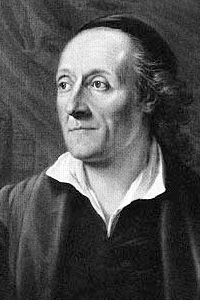
more worthy of Your name. —Johann K. Lavater