Prayer Changes My Attitude

Listen to the podcast of this post by clicking on the player below, and you can also subscribe on AppleSpotify, or Audible. 

In The Matrix, Neo is fascinated by a young man who appears to be bending spoons simply by looking at them. Neo sits down on the floor across from this young man and takes a spoon in his hand. Although young, this boy gives sage counsel to Neo, “Don’t try to bend the spoon, for that is impossible. Instead remember that there is no spoon. That way you will see that it is not the spoon the bends, but you are the one who bends.” 

There is a nugget of truth here for anyone who has ever been face-to-face with an impossible situation. The God who does the “impossible” has offered us the means to see His omnipotence at work—He has told us that we can bring our impossibles to Him in prayer. Prayer changes things! 

In God’s perfect will, sometimes the impossible is done before our very eyes, and sometimes we see that it is not the situation that bends, but it is we who bend, becoming more godly, wise, and mature because of what God has imparted to us. Heartfelt prayer is never a meaningless exercise. Without exception, something is changed with every single prayer we offer to God. 

There are many of us who have experienced a miraculous answer to prayer. We prayed to God in a bitter season of our life and experienced His sweetness come to our rescue. These answered prayers are testimonies of God’s love and power. 

Think about people you know who are struggling with the bitterness of life. I wonder: do they know that there is a sweetness that only God can bring? Brian Ridolfi noted, “Vinegar is not bitter to those who have not tasted honey.” Peter told us we are to crave more and more of God’s sweetness “now that you have tasted that the Lord is good” (1 Peter 2:2-3). This isn’t primarily for us, but it is to us and through us so that a watching world can recognize their bitterness as contrasted to the sweetness in our Savior. 

One of the things prayer changes is my attitude about the things of God. When I say “attitude” I am referring to how an airplane pilot defines this term: The nose of the plane in relation to the horizon. If the attitude of the plane is up, the plane and all of its passengers are climbing. 

There is a man we meet in the Gospels whose name means “whom God enlightens.” The answer to prayer he received was an attitude-changer for him, everyone around him, and his family. Check out his story in Luke 8:40-56. 

Jairus is called “a ruler of the synagogue.” He is the final authority on what happens in his synagogue. He came and “fell at [Jesus’] feet, pleading with Him” [pleaded earnestly—Mark 5:23], which sounds like a posture of intense prayer to me! 

We don’t know how long the journey was to Jairus’ home, but it was made longer by “the crowds [that] almost crushed [Jesus].” It was made even longer by an interruption of yet another healing (vv. 43-48). During this delay, there is not a word of protest from Jairus as he is clinging to his faith in Jesus. 

Jairus gets the news, “Your daughter is dead.” 

Jesus reignited Jairus’ faith with the words, “Don’t be afraid; just believe, and she will be healed.” Matthew 9:18 records Jairus’ renewed faith-filled prayer as he acknowledges, “My daughter has died.” 

The family and friends gathered at Jairus’ house were “wailing and mourning.” The AMPC says, Jesus saw “the tumult and the people weeping and wailing loudly” (Mark 5:38). Why? Because they knew she was dead—this was now an impossible situation. 

But let me ask you: Is it possible that Jesus allowed this delay so that the little girl would become beyond all human hope? I think it is. Jesus was going to do something that absolutely no one could take any credit for. Jesus said, “Stop wailing. She is not dead but asleep.” They laughed at Him! 

After this dead little girl stood up, who was laughing then? I think Jesus was—He always gets the last laugh and the best laugh! 

The Greek word for “wail” (alaladzo) has an interesting root word (alala) which means the cry of soldiers running to the battlefield. And then when those soldiers return victoriously, they have a total change in their attitude so alaladzo is now a joy-filled shout (Psalm 47:1; 66:1-3).  

(1) Jairus had an attitude change. I believe became a Christ-follower in the truest sense of the word. Why do I think this? Because we know his name. There are four “synagogue rulers” described in the New Testament: three that become Christians we know by name (Crispus [Acts 18:8], Sosthenes [Acts 18:17], Jairus) and one who remains anonymous because he was bitter that Jesus healed someone on a Sabbath (Luke 13:14). 

(2) The scorning mourners who knew the girl was dead had an attitude change. They spread the laughter everywhere (Matthew 9:26). 

(3) What about us? An encounter with Jesus changes us (Romans 12:2; 2 Corinthians 3:18). In order to “taste and see” how good God is, we must be people who are consistently prayerful and expectant of His wonder-working power. Let’s change our wailing into a battlecry, our mourning into praise, so that God can chance our tears into laughter! 

A world steeped in bitterness needs to see the sweetness of our God—Come and see what God has done, His awesome deeds for mankind! (Psalm 66:5). 

Keep up with all of the messages in this prayer series by clicking here. 

►► Would you please prayerfully consider supporting this ministry? My Patreon supporters get behind-the-scenes access to exclusive materials. ◀︎◀︎

Links & Quotes

Jesus showed us how to remain faithful as a shepherd even in the face of painful attacks. If you are a pastor—or if you love your pastor—please check out my books Shepherd Leadership and When Sheep Bite. 

I have a lot of new video content on my YouTube channel every week. Please check it out and subscribe so you don’t miss anything.

Every year I see the same unsubstantiated claims that the Christian celebration of Christmas is a hodgepodge of pagan and cultic myths cobble together and hijacked by Christians. Here are three myths refuted by archeological evidence.

Dr. Allen Tennison points out how Luke emphasizes the work of the Holy Spirit all throughout his Gospel, and then continues that theme as he moves into the Book of Acts.

“One of the first gospel blessings is that of complete justification. A sinner, though guilty in himself, no sooner believes in Jesus than all his sins are pardoned. The righteousness of Christ becomes his righteousness, and he is accepted in the Beloved.” —Charles Spurgeon 

“For the apostle Paul, as, indeed, for all the apostles and early Christians, the Church is the Body of Christ, the continuing incarnation of the reigning and conquering King of Glory. The Church, according to the apostles, is the centerpiece of Christ’s historical agenda (Matthew 16:18). Whatever Christ intends to do on earth prior to His imminent return, the focal point of that work will be in and through His Church. … We do not have the mind of Christ if we are not thinking the same way about His Body, the Church. We need the Church, and if we do not think this is so, then we do not have the mind of Christ. We need the Church. But we need it according to the purpose with the guidance and blessing of the Lord Jesus Christ.” —T.M. Moore 

What an amazing story of faithfulness! The faithfulness of God is seen in the loving actions of an unnamed Sunday School teacher and in a lifelong missionary.

Cold-case detective J. Warner Wallace contrasts blind belief and unreasonable belief with what he calls forensic faith. His conclusion: “A forensic faith gives you confidence in uncertainty, strength in adversity, and the ability to engage intellectually with both believers and skeptics. It transforms faith from mere hope into informed trust, and that makes all the difference in how you live out your beliefs in a world that’s constantly questioning them.”

“Depression is one of satan’s most dynamic weapons to divert you from God’s purpose for your life. If he can scatter a little dejection here and there in your thoughts—and even in your prayers—he can convince you to remove your breastplate of righteousness because it is too cumbersome and will go against your material and temporal interest. Do not give in that easily!” —William Gurnall, The Christian In Complete Armor 

Prayer Changes Things

In the sci-fi movie The Matrix, a character named Neo is fascinated by a young man who appears to be bending spoons simply by looking at them. Neo sits down on the floor across from this young man and takes a spoon in his hand. Although young, this boy gives sage counsel to Neo, “Don’t try to bend the spoon, for that is impossible. Instead remember that there is no spoon. That way you will see that it is not the spoon the bends, but you are the one who bends.” 

Although this is a science fiction movie, there is a nugget of truth here for anyone who has ever been face-to-face with an impossible situation. The God who does the “impossible” has offered us the means to see His omnipotence at work—He has told us that we can bring our impossibles to Him in prayer. 

Prayer changes things! 

In God’s perfect will, sometimes the impossible become completed before our very eyes, and sometimes we see that it is not the situation that bends, but it is we who bend, becoming more godly, wise, and mature because of what God has imparted to us. 

Heartfelt prayer is never a meaningless exercise. Without exception, something is changed with every single prayer we offer to God. I invite you to join me for this series of messages looking at what prayer changes. 

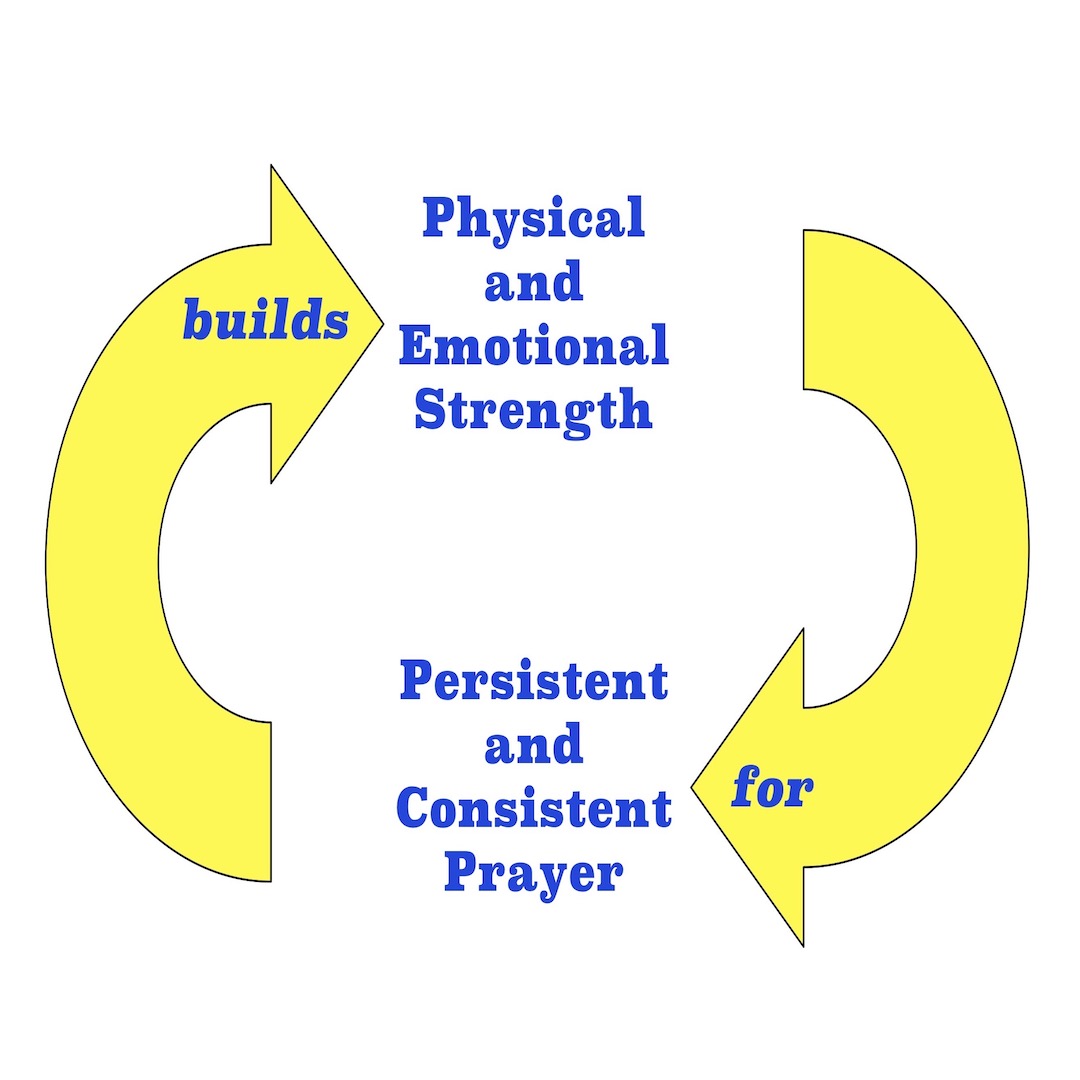
Prayer changes…

Year-End Review (2025 Edition)

Listen to the podcast of this post by clicking on the player below, and you can also subscribe on AppleSpotify, or Audible. 

I like to take some time at the end of each calendar year to both look back and look forward. Throughout biblical history, whenever God was ready to take His people into a new chapter, He always took time for them to review the ground they had already covered. So as we get ready to go into 2026, here is a look back at the things God taught us in 2025 through these sermon series I shared with the wonderful folks at Calvary Assembly of God.

Our Prayer BookGod has given us an amazing Book! The Bible addresses the human condition—all our desires, frustrations, hopes, and the only path on which we can find eternal and unfading joy. The Bible not only tells us how to live, but it also tells us how to pray. And it’s as we pray that the principles in the Scripture come alive with fresh applications for our daily life. We don’t have to fumble around, attempting to find the right words to pray and then wondering if those prayers were heard on high. We can learn to pray in agreement with God’s perfect will. God has spoken to us through His Word, and He invites us to use His words to form our prayers back to Him. I love beginning each new year with a reminder of the power of prayer.

When Sheep Bite SheepNo one likes to be mistreated—especially when the one that hurts us is one we would have thought of as an ally or even a friend. These slights become even more painful when they take place inside the Christian community. When sheep bite sheep, our natural response is to lash out to try to even the scales of justice. But the Bible consistently and clearly calls Christians to pursue a supernatural response. This is a highly practical series of messages on how you can respond in a Christ-honoring way when you are bitten by another sheep in God’s pasture.

Grief Into JoyAt the end of your rope … down for the count … nothing but gray skies all around … unable to see any light at the end of the long, dark tunnel. Ever been there? The reality is, we all have been there. But the good news is that we don’t have to stay there! God is always at work to turn our apparent no-win, dark, hopeless situations into something bright and glorious! He is working in ways that no human mind could have dreamed up, and working on our behalf in a way no human power could ever hope to rival. God specializes in turning grief into joy! We are approaching the time of year where we remember the death of Jesus. Without a doubt that was the darkest, most grief-stricken day in all of history. Yet that time of mourning was completely forgotten in the overwhelming joy that exploded from an empty tomb on Resurrection Sunday!

We Are: PentecostalPentecost for over 1500 years was a celebration in Jerusalem that brought in Jews from all over the world. But on the Day of Pentecost which came just ten days after Jesus ascended back into heaven, the meaning of Pentecost was forever changed! Followers of Jesus—now empowered by an infilling of the Holy Spirit—began to take the good news of Jesus all over the world. These Spirit-filled Christians preached the Gospel and won converts to Christ even among hostile crowds, performed miracles and wonders, stood up to pagan priests and persecuting governmental leaders, and established a whole new way of living as Christ-followers. We, too, can be Pentecostal followers of Jesus Christ today. We can experience an anointing and an empowering in our lives that turns ordinary Christianity into extraordinary Christianity!

All Hail King JesusThe Bible closes with a vivid picture of Jesus as the undisputed King of kings, and we look forward to that time when all creation bows before Him. Even more so, we cannot wait to be with our King for ever and ever! The psalmists of Israel also foresaw the coming of this King, especially in the example they had in their King David. Many of the poetic words they penned esteemed Jesus as the King for Whom they longed. David himself not only saw the future coming of the Eternal King, but he also looked back in time to see Jesus reigning as King before time began. It is these royal psalms that we will be studying as we celebrate the first arrival on Earth of our King and as we anticipate the second coming of our Royal Majesty. The more clear our vision is of this King, the more we will worship Him, follow Him, and invite others to know Him as their own Lord and Master.

B.A.S.I.C. ChristianityWhen someone invites Jesus into their heart, they are immediately justified in God’s sight and have the assurance of Heaven as their eternal home. But then the question comes, “Now what?” Our justification is immediate but our sanctification is an ongoing, lifelong process. Sanctification is what brings fruitfulness to a Christian’s life and what allows that fruitful life to be a testimony to others. The Bible gives us the B.A.S.I.C.s of this Christian life, and that’s what we will be exploring over the next few weeks.

Earnestly ContendJude, the half-brother of Jesus, wrote a letter to the church. He said he was hoping to write about salvation, but looking at the conditions in the culture around him, he felt urged by the Holy Spirit to challenge Christians to “contend for the faith that was once for all entrusted to the saints.” What does this word “contend” mean for us today? Are Christians supposed to be combative about sharing their faith? Are they supposed to argue with anyone and everyone who disagrees with them on any point? Jude gives us Holy Spirit-inspired wisdom to understand how to deal with those who have departed from the purity of biblical truth.

What To Do In A CrisisLook back through the pages of history and you will see a common theme. Whether it’s world history or your own personal history, you have so much for which you can give thanks. In tough times, we tend to become forgetful because we are so focused on the intensity of the moment. But if we will simply look back in time, we will see just how faithful God has been to us. We bring our focus back to Him in our trying times when we remember and rehearse “the wonderful things He has done” (Psalm 107). The season of Thanksgiving is a good time for us to be reminded of the powerful resource we have when we are giving thanks for our blessings. Thankful people are confident people because they choose hope in God’s faithful provision over grumbling about their current circumstances.

Jesus Is…Over 700 years before He was born in Bethlehem, God spoke through the prophet Isaiah to describe the Messiah that was coming. Peter said that until the advent of Jesus, the prophets continued to scour the evidence of who this Messiah was going to be. When Jesus finally came to earth as a Man, young and old alike were thrilled to proclaim that the One they had been longing for had made His long-expected appearing! As Jesus lived on earth, died on Calvary, and was resurrected back to life, He continued to fulfill all that had been prophesied about Him. Isaiah said of Jesus: “He will be called Wonderful Counselor, Mighty God, Everlasting Father, Prince of Peace.” This Advent season we will take some time to unpack what each of these majestic titles mean. We will explore how Jesus demonstrates that He is truly worthy of each of these titles, and we will see how that knowledge should thrill our hearts as we celebrate His first Advent and eagerly long for His Second Advent.

If you live in northern Kent County and don’t have a home church, I would be thrilled for you to visit me at Calvary Assembly of God this year.

►► Would you please prayerfully consider supporting this ministry? My Patreon supporters get behind-the-scenes access to exclusive materials. ◀︎◀︎
Using The Bible To Pray

Listen to the podcast of this post by clicking on the player below, and you can also subscribe on AppleSpotify, or Audible.

During the first year of [Darius’] reign, I, Daniel, learned from reading the Word of the Lord, as revealed to Jeremiah the prophet, that Jerusalem must lie desolate for seventy years. So I turned to the Lord God and pleaded with Him in prayer and fasting. I also wore rough burlap and sprinkled myself with ashes. (Daniel 9:2-3 NLT) 

Reading the Word of God prompted Daniel to pray to the God that is revealed in the Word, and the prayer he offered to God was grounded in biblical promises—in God’s own promises (vv. 4-19). 

It’s like when children are speaking to their earthly fathers and say, “Dad, you promised,” it gets the attention of that father’s heart because he wants to keep his word. 

God hasn’t forgotten His promises; in fact, He is always at work to fulfill what He has said. But when we pray, “Father, according to Your promise to me,” we are praying words that resonate with His heart. He delights for His children to see Him at work. And He is glorified when we praise Him for fulfilling what He has promised. 

When we end our prayer with “in the name of Jesus, Amen,” that is not just some magical phrase that we tag on, but it is a reminder that we can come boldly before God’s throne with our petition. And prayers that are aligned with the heart of God—prayers that are grounded in the Word of God—have the “Amen” of Jesus added to them (Hebrews 10:19-22; 2 Corinthians 1:20). 

We never need to be at a loss for words when we go to our Heavenly Father in prayer. Read His Word, see the Holy Spirit illuminate and apply the Word to your circumstances, and then pray confidently in the name of Jesus.

For pastors and shepherd leaders, my book Amen Indeed contains over 100 biblically-based prayers for many of the situations we face in our ministries. My prayer for you is that this book will help you learn how to use the Bible as your Prayer Book.

►► Would you please prayerfully consider supporting this ministry? My Patreon supporters get behind-the-scenes access to exclusive materials. ◀︎◀︎
Don’t Cross The Line

Listen to the podcast of this post by clicking on the player below, and you can also subscribe on AppleSpotify, or Audible. 

The apostle Paul writes something pretty straightforward: “Do not be anxious about anything” (Philippians 4:6). What might not seem so straightforward for us is this: What exactly is anxiety? 

The root word for anxious simply means to care for something or to care about something. Paul uses this word in a positive sense earlier in this letter when he praises Timothy for his concern for the wellbeing of the saints (2:19-22). In another letter, Paul told the Corinthians he had a deep concern for their spiritual growth (2 Corinthians 11:28) and that he desired for them to care in a similar way for their fellow saints (1 Corinthians 12:25). All of these instances use the same Greek word. 

(Check out all of the Scriptures in this post by clicking here.) 

The problem is when care crosses the line to become worry. 

A clear example of this is seen in the activities of Martha. She cared deeply about providing for the needs of Jesus, wanting to provide appropriate hospitality for Him, but her focal point switched from Jesus to food (Luke 10:38-42). Luke tells how Martha crossed the line from concern to anxiety by stating that “Martha was distracted by all the preparations.” Jesus redirected her to the one thing that “is better,” which was a devotion to Him. 

Care can turn to worry in the simplest of areas. 

Being careful about my physical health—food, clothing, shelter—is a legitimate concern, but Jesus warns about these things becoming a focal point and causing me to cross the line from concern to worry (Matthew 6:25-34). Wanting to answer well those who criticize my Christian faith is a noble concern, but obsessing over my word choices crosses the line (Matthew 10:19). Desiring to please my wife is perfectly natural and even commendable, but putting her on a pedestal crosses the line into worry (1 Corinthians 7:32-34). 

The crucial discipline to keep me from crossing the line from concern to worry and anxiety is to keep the right focal point. I am not my own provider; God is (James 1:17; Matthew 6:8; Luke 11:11-13). 

So in the same verse that Paul tells us “do not be anxious about anything” he also tells us to pray about everything. Peter says essentially the same thing this way, “Give all your worries and cares to God, for He cares about you” (1 Peter 5:7 NLT). God cares about me and the things I care about more than I do. He wants me to focus on Him, not on the things I care about, because He can provide for me perfectly. His provision keeps me from worrying about anything. 

Don’t worry about anything; pray about everything. 

That is my safeguard against crossing the line from legitimate concern to anxiety-causing worry. 

►► Would you please prayerfully consider supporting this ministry? My Patreon supporters get behind-the-scenes access to exclusive materials. ◀︎◀︎
Kept From Self-Deception

Keep me from lying to myself; give me the privilege of knowing your instructions. (Psalm 119:29 NLT) 

We all have a tendency to judge others by what they said or did, but we usually judge ourselves by what we intended to say or do. This is the essence of self-deception: lying to ourselves. 

In verse 18, the psalmist asks for his eyes to be open to the truth in God’s Word; in verse 29 the prayer is for him to see if he is truly applying that truth. We could personalize this prayer: “Give me the privilege of knowing that I am really applying Your instructions to my life.” 

Give me understanding and I will obey Your instructions; I will put them into practice with all my heart (v. 34). May the Holy Spirit prompt me to do this today. Amen!

God’s Timing Is Perfect

In the month of Kislev in the 20th year of the Israelites’ exile in Babylon, Nehemiah began to pray for favor when he spoke with King Artaxerxes. In the month of Nisan—four months later—Nehemiah was finally given the opportunity to speak with the king about his heart’s desire to travel to Jerusalem (Nehemiah 1:1–2:6). 

Jeremiah dictated all of God’s words to Baruch in the 4th year of King Jehoiakim’s reign. Presumably, Baruch begin sharing these words immediately, but it wasn’t until the 9th month of the 5th year that these words appeared to hit home (Jeremiah 36:1-6, 8-9). 

In the 3rd year of King Cyrus’ reign, Daniel was shown a vision from God and he began to pray for God to give him the meaning of the vision. Twenty-one days later and angel arrived with the answer (Daniel 10:1-12) 

Zechariah and Elizabeth prayed and tried to get pregnant until Elizabeth became post-menopausal. Even after they stopped praying and stopped trying, Gabriel told them their prayer had been heard and Elizabeth became pregnant (Luke 1:5-25).

God’s timing is perfect! 

What has God promised you? Are you still praying for it? Still believing for it? Are you still doing what you need to do to see it happen? If God spoke it to you, He has not forgotten you! Don’t believe the lie that the window of opportunity has closed!

If it seems slow in coming, wait patiently, for it will surely take place. It will not be delayed. (Habakkuk 2:3)

Related posts:

See all of the Scriptures here.

Links & Quotes

As I was studying the Book of Jude, I came across this phrase, “Though you already know all this, I want to remind you.” This prompted these three quick thoughts that I want to share with my fellow pastors.

I have a lot of new video content on my YouTube channel every week. Please check it out and subscribe so you don’t miss anything.

Using the words from Isaiah 40:10-11, Sarah Young has Jesus speaking these words to us: “Adverse circumstances become growth opportunities when you affirm your trust in Me no matter what.”

Ken Blanchard has long used a challenge for leaders to catch their teammates doing something right. That phrase has now become the title of a biography about Ken. He says, “Great leaders who want to encourage and motivate their people set up a positive cycle:

  1. A great leader catches someone doing something right and praises them. 
  2. The leader’s praise helps the person feel good about themselves. 
  3. People who feel good about themselves produce good results. 
  4. A great leader notices when people produce good results. 
  5. See #1.”

This is a very encouraging read for men! Scott Hubbard writes, “You may not have ability for preaching and teaching, as Timothy did. But the Holy Spirit does not leave any Christian giftless. … You may have a small vision for your life; God does not.”

An amazing series from T.M. Moore on the law in a Kingdom economy. T.M. writes, “Christians don’t keep the Law to be saved; we keep it because we are saved, because it is the path that Jesus walked (1 John 2:1-6); and we recognize its value for helping us realize more of the life of holy, righteous, and good works for which we have been redeemed (Romans 7:12; Ephesians 2:8-10).” 

Geologists have discovered what Creationists already proposed about plate tectonics related to the Flood described in the Bible. “Flood geologists have predicted that plate motion slowed at the end of the Flood year, and now conventional scientists are finding it to be true.”

The Assemblies of God has always responded to popular religious trends with solid biblical exegesis. The “latter day rain” movement in the 1940s is a good example.

“Mature leaders swallow their egos and recognize God as their power source. They walk confidently in His authority, but never assume credit for it. Faith enables them to stretch, while humility enables them to stoop.” —John Maxwell

Did I Write This Book?

Listen to the podcast of this post by clicking on the player below, and you can also subscribe on AppleSpotify, or Audible. 

I would like to tell you about my newest book which I didn’t really write. On this episode of The Podcast, I’ll tell you all about Amen Indeed.

You can see the clip from the Ailbe Podcast where the idea for Amen Indeed was first sparked by clicking here. 

If you are a pastor—or if you want to give your pastor a special gift—please check out Amen Indeed. 

►► Would you please prayerfully consider supporting this ministry? My Patreon supporters get behind-the-scenes access to exclusive materials. ◀︎◀︎