Links & Quotes

Psalm 133 tells us that in order for us to sharpen others—and for us to be sharpened by them—we have to be around other them. Christian saints put a high priority on spending time with others.

I have lots of new content every week, which you can check out on my YouTube channel.

From Desiring God’s Here We Stand series comes this great snippet from the history of the Reformation: “[John] Calvin intended to go to Strasbourg for a life of peaceful literary production. But while Calvin was staying the night in Geneva, William Farel, the fiery leader of the Reformation in that city, found out he was there and sought him out. It was a meeting that changed the course of history, not just for Geneva, but for the world. Calvin remembers, ‘Farel, who burned with an extraordinary zeal to advance the gospel, immediately learned that my heart was set upon devoting myself to private studies . . . and finding that he gained nothing by entreaties, he proceeded to utter an imprecation that God would curse my retirement, and the tranquillity of the studies which I sought, if I should withdraw and refuse to give assistance, when the necessity was so urgent. By this imprecation I was so stricken with terror, that I desisted from the journey which I had undertaken.’”
I am always fascinated by the way archeology affirms the historicity of the Bible! Here is an archeological biography of King Artaxerxes I.

Have you ever heard people claim that celebrity deaths seem to come in threes? It does seem that many times the major cataclysmic events happen in bunches. Dr. Roy Spencer has an interesting post (with corresponding data) in which he outlines the role of randomness in these events.

“In Hebrews 12:2 the writer uses a participle—‘fixing your eyes’—to describe what should be the characteristic orientation of our every waking moment. True and full faith wants to say with David, ‘I have set the Lord always before me’ (Psalm 16:8). … If we are living full faith, having the eye of our heart fixed on the world of unseen things, the reality of that world and all its beauty, goodness, and truth will begin to be evident in our daily lives, filling our lives with the overflowing Presence of Jesus Christ (John 7:37-39).” —T.M. Moore 

“There are three kinds of people in the world; those who have sought God and found Him and now serve Him, those who are seeking Him, but have not yet found Him, and those who neither seek Him nor find Him. The first are reasonable and happy, the second reasonable and unhappy, and the third unreasonable and unhappy.” —Blaise Pascal 

Evolutionists are now using language that sounds like words Creationists use: “Flowers like hibiscus use an invisible blueprint established very early in petal formation that dictates the size of their bullseyes—a crucial pre-pattern that can significantly impact their ability to attract pollinating bees.” Check out this article from the Institute for Creation Research.

Another very helpful apologetic video from J. Warner Wallace. This video explains how the origin of DNA is best explained not by scientific theories but by the existence of God. 

Using passages from Pilgrim’s Progress and weaving them with Scripture, Greg Morse shares five powerful steps for those struggling with depression or even suicidal thoughts. 

Just as the smallest enzyme is invaluable to the human body, the gift God has given you is invaluable to the Body of Christ. Check out the full sermon called Let’s grow together.

“Give Me This Hill”

Listen to the podcast of this post by clicking on the player below, and you can also subscribe on AppleSpotify, or Audible. 

Let’s review the historical background for the Psalms of Ascent. The Jewish people made four pilgrimages to Jerusalem each year, which sit about 2500 fee above sea level, so this was a physical climb. But this also has a spiritual lesson for us today: We are to continue progressing in our walk with God—upward and onward! 

The songs of ascent that these pilgrims sang give us life-changing lessons that we can still apply today. 

I’m sure there were some pilgrims who thought, “We have to go to Jerusalem.” Just as there are some people today who may something like, “I have to tithe.” But when you have experienced the blessing that comes from obedience, your “have to” turns to “get to” really quickly! 

There is a longing in Psalm 128 for God’s blessing. In fact, we see it in nearly every verse: blessed (v. 1), blessing and prosperity (v. 2), blessed (v. 4), bless and prosperity (v. 5), and peace (v. 6). 

We have to remember that our obedience doesn’t earn God’s blessing, but rather our obedience keeps us in the place where we can receive God’s ever-flowing blessings. When I have experienced the blessing that followed even my “have to” attitude, I now joyfully “get to” obey because I know that keeps me in a blessed place. 

But even knowing that these blessings are flowing for us, sometimes we still get weary. Sometimes it seems as if we are being faithful but we aren’t seeing the results that perhaps we saw before. 

Think about these pilgrims ascending 2500 feet year after year after year. It was challenging enough during the golden days of King David and King Solomon, but can you imagine the feelings of futility during the dark days? Perhaps during the exile when the temple was in ruins, or after the exile when the temple didn’t look as it did before and there were overlords ruling Israel? And then it was unquestionably true that the older a pilgrim got, the harder the climb became for them. 

But the struggle keeps us reliant on God. Like Solomon said, “The way of life winds upward for the wise, that he may turn away from hell below” (Proverbs 15:24). The longer I walk, the more I get to rely on God’s help, and the sweeter He becomes to me! 

(Check out all of the Scriptures in this post by clicking here.) 

I love the line in the hymn Great is Thy Faithfulness, “Strength for today and bright hope for tomorrow—blessings all mine with ten thousand beside.” Because of God’s blessings that I’ve already experienced, I can trust Him for more, even in the struggle of the climb. 

Look at some of these promises that come out in other biblical translations. 

  • Blessed are those who fear God (NIV) = “How joyful are those who fear the Lord” (NLT) 
  • Blessing and prosperity will be yours (NIV) = “You will enjoy the fruit of your labor” (NLT) and “You will eat what you worked so hard to grow” (NET) 

The middle of this psalm is in verses 3-4. Remember above when I said nearly every verse contains a word of blessing? I didn’t list verse 3, but there is language in this verse that makes it pregnant with blessing—Your wife will be like a fruitful vine within your house; your sons will be like olive shoots around your table. 

You may ask, “How is this a blessing?” 

The phrase “under their own vine and under their own fig tree” appears throughout the Old Testament. It described a blessed, prosperous, happy, and peaceful home. It was a home at peace within because there was also peace without. 

This described the golden era of King Solomon—During Solomon’s lifetime Judah and Israel, from Dan to Beersheba, lived in safety, everyone under their own vine and under their own fig tree (1 Kings 4:25). 

After the northern kingdom of Israel fell and the southern kingdom of Judah was surrounded by the Assyrian forces of King Sennacherib, the king’s field commander tried to entice them the people with similar words—

Do not listen to Hezekiah. This is what the king of Assyria says: “Make peace with me and come out to me. Then each of you will eat fruit from your own vine and fig tree and drink water from your own cistern until I come and take you to a land like your own—a land of grain and new wine, a land of bread and vineyards, a land of olive trees and honey. Choose life and not death! Do not listen to Hezekiah, for he is misleading you when he says, ‘The LORD will deliver us.’” (2 Kings 18:31-32)

Notice that he said the land would be “a land like your own.” He was trying to get them to compromise, to no longer listen to God’s voice, to no longer climb up into God’s presence. Much like satan tempted Adam and Eve to eat the forbidden fruit with the promise, “You will be like God.” 

But these blessings in Psalm 128 don’t come from fearful “have to” obedience to man, but from reverencing God above all else. So the longing of verses 1-4 become the prayer of verses 5-6 (notice the word may used three times in these verse). 

The focus of our longing—where we need to keep our eyes—is on God’s heavenly throne: Zion, Jerusalem, Israel (vv. 5-6; Micah 4:1-5). 

In an earlier story, Caleb may have gotten tired while he waited for God to fulfill His promise to him, but he always trusted God as he walked on (see Joshua 14:9-12).

What promises of God are you still praying for?
What are you longing to see accomplished?
What has God already done that you can look back on?

In The Pilgrim’s Progress, Christian is facing another high hill when he says—
The Hill, though high, I covet to ascend,
The Difficulty will not me offend;
For I perceive the Way to life lies here.
Come, pluck up Heart, let’s neither faint nor fear;
Better, though difficult, the Right Way to go,
Than wrong, though easy, where the End is Woe. (John Bunyan)

Don’t give in.
Don’t give up.
Keep climbing.

Like Caleb say, “It may have been 85 years of walking and climbing, but I’ll keep climbing. GOD, GIVE ME THIS HILL!” 

If you would like to check out the other songs of ascent that we’ve already studied, please click here. 

►► Would you please prayerfully consider supporting this ministry? My Patreon supporters get behind-the-scenes access to exclusive materials. ◀︎◀︎

A Christlike Response To Skeptics

Listen to the podcast of this post by clicking on the player below, and you can also subscribe on AppleSpotify, or Audible. 

God is precise in His promise making and promise keeping. He doesn’t just fulfill promises in a vague way or in “the spirit of the law,” but He attends to the jots and tittles of every single detail.  

Last week we saw the example of Jesus going into a dark place to bring the light of hope. It’s the same for us: God uses circumstances to direct our steps into dark places because people need to see the light. 

But people living in darkness sometimes don’t like the light. 

When we feel like our message of hope is being ignored or rejected (or we’re even being persecuted for sharing the truth) we have a natural emotional response that begins to bubble up. That emotion is anger. How do I know this? Because Jesus experienced this too. 

We can do two things with our anger: 

  1. We can blast skeptics with righteous judgment <or> 
  2. We can follow the example of Jesus  

In The Pilgrim’s Progress, Faithful told how a man came and beat him because he had broken the law. Even when Faithful begged for mercy the man said, “I don’t know how to show mercy to anyone.” This man was Moses the Lawgiver. Faithful explained what finally gave him relief: “He would have finished me off, but then One came by, and told Him to stop. I did not know Him at first, but as He went by, I saw the holes in His hands and in His side and I concluded that He was Jesus.” 

Moses had every right to be angry, and he expressed it a way that tried to finish off Faithful. 

Jesus also got angry, but let’s see what He did with it. 

(Check out all of the Scriptures I list below by clicking here.)

In Matthew 12:9-10 we see the motive of the skeptics: catch Jesus doing something wrong. This opposition came from the religionists—they weren’t interested in the truth, they were interested in proving themselves right and righteous. 

As they are asking their entrapping question, Luke tells us that “Jesus knew what they were thinking” (Luke 6:8). And Mark tells us that Jesus then asked a question of His own (Mark 3:4-5). These religionists refused to answer His question, and their stubborn hearts made Jesus deeply angry! 

So Jesus answered His own question, concluding that the Sabbath was the day that god intended for healing and helping. To prove this point, Jesus then healed the shriveled hand of the man who stood before Him (Matthew 12:11-14). In response to this, the Pharisees plotted with the Herodians on how to kill Jesus (Mark 3:6). 

Matthew then writes, “Aware of this, Jesus withdrew from that place (Matthew 12:15). He didn’t withdraw in fear, but in complete awareness of His Father’s plan. Part of that plan was not for Jesus to win argument, but for Him to win souls. 

Perhaps in His anger in the moment, Jesus would have spoken words that were too harsh. There is a time to speak, but it’s usually not in the heat of the moment. In fact, Laurence J. Peter rightly said, “Speak when you are angry, and you will make the best speech you’ll ever regret.” 

So in fulfillment of another prophetic word given in Isaiah 42, Jesus withdrew to continue His teaching and healing ministry (Matthew 12:17-21). 

What does this mean for us today? I think we can see five important responses in these prophetic words: 

  1. I am to serve others as Jesus did—even those who want to silence me.  
  2. I can let the Holy Spirit use this opposition to bring greater fruitfulness out of my life (Galatians 5:19-26).  
  3. I don’t need to win an argument with skeptics. 
  4. I can be a peacemaker that points people to the Prince of Peace (1 Peter 2:8-12). 
  5. I should live in the assurance of ultimate victory, just as Jesus did (1 Peter 2:23).  

God gets the final word, the decisive word, and the best word, so I don’t have to try to win arguments with skeptics. Like Jesus, I can love and serve in a way that leaves them an unmistakable testimony. 

To check out the other messages in this series called Jots and Tittles: Why it matters that God is in the smallest of details, please click here. 

►► Would you please prayerfully consider supporting this ministry? My Patreon supporters get behind-the-scenes access to exclusive materials. ◀︎◀︎

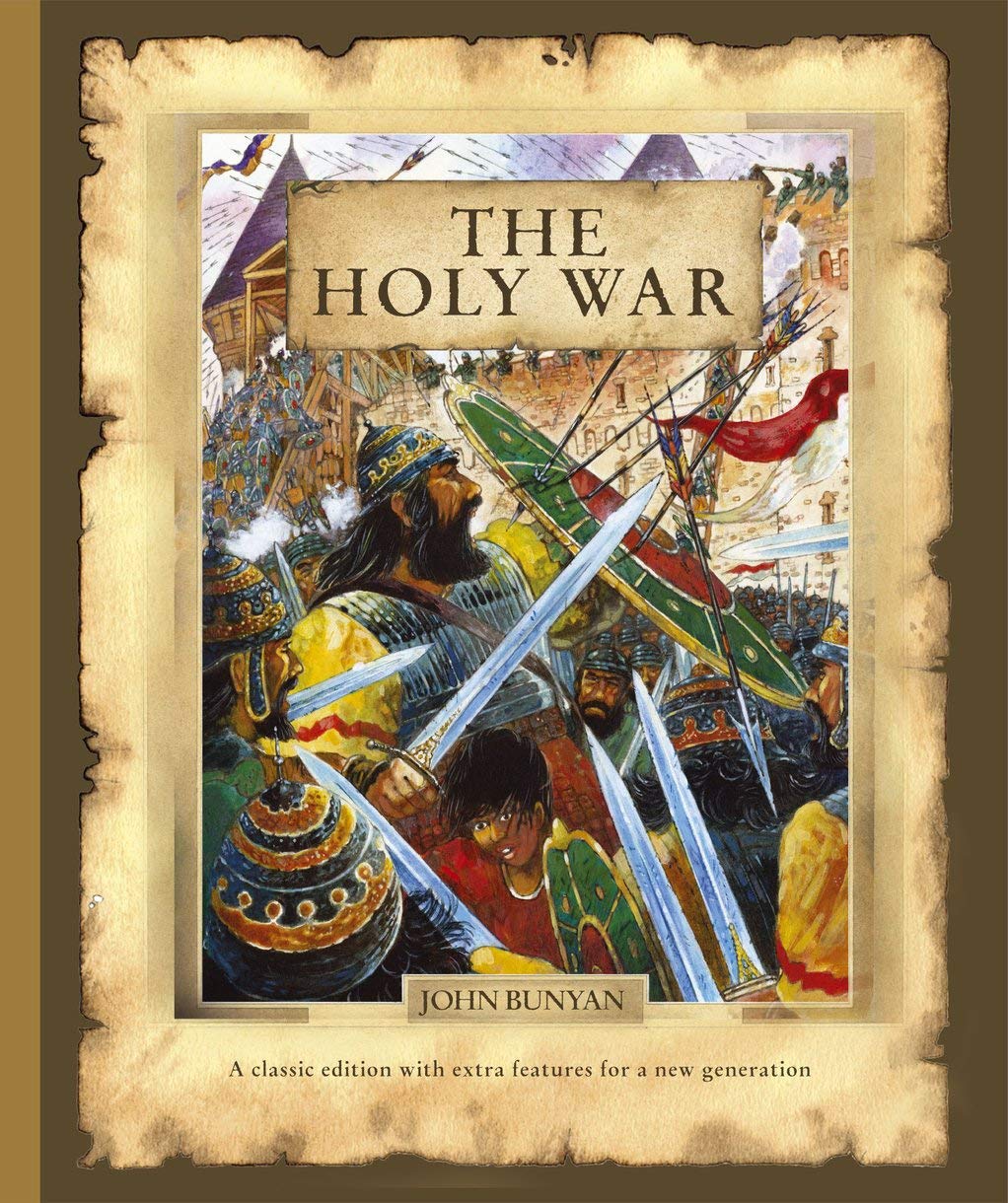
The Holy War (book review)

Listen to the podcast of this post by clicking on the player below, and you can also subscribe on AppleSpotify, or Audible. 

Many of the principles taught in the Bible are conveyed to us through graphic stories. Think about some of the imagery the prophets of the Old Testament used or even the parables Jesus used in the New Testament. In fact, even the Hebrew language of the Old Testament and the Greek language of the New Testament are very picturesque languages. John Bunyan takes full advantage of this in his book The Holy War. 

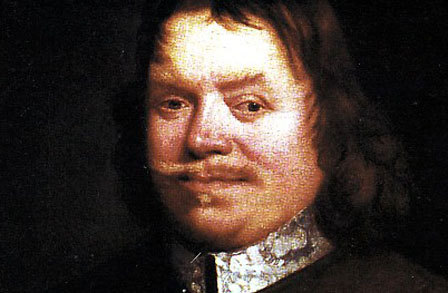
If you have ever read a John Bunyan book or sermon, it is quite obvious that the Bible is his Source Book. In fact, Charles Spurgeon said of him, “Why, this man is a living Bible! Prick him anywhere—his blood is Bibline, the very essence of the Bible flows from him. He cannot speak without quoting a text, for his very soul is full of the Word of God.” Much like The Pilgrim’s Progress, The Holy War is steeped in biblical imagery that makes the story so engaging. 

The title and subtitle of the book alone tell you the essence of the story: The holy war made by Shaddai upon Diabolus for the regaining of the metropolis of the world, or the losing and taking again of the town of Mansoul. With the assault taking place on Ear-gate and Eye-gate of Mansoul by such combatants as Lord Incredulity or Mr. Forget-Good, and the servants of King Shaddai such as Captain Conviction, Mr. Justice, and Mr. True-Man drawing up battle lines against the town, you can quickly see how picturesque the language truly is. 

Much in the vein of C.S. Lewis’ The Screwtape Letters, Bunyan also lets us hear the correspondence and war counsels of Lucifer and his minions, as well as the conversation between King Shaddai and His Son Emmanuel. 

As with anything I’ve ever read from John Bunyan, The Holy War is entertaining and insightful. If you have read and enjoyed The Pilgrim’s Progress, I think you will thoroughly enjoy this book as well. 

►► Would you please prayerfully consider supporting this ministry? My Patreon supporters get behind-the-scenes access to exclusive materials. ◀︎◀︎

Poetry Saturday—Selections From “The Pilgrim’s Progress”

Listen to the podcast of this post by clicking on the player below, and you can also subscribe on iTunes or Spotify.

The hill, though high, I covet to ascend,
The difficulty will not me offend;
For I perceive the way to life lies here.
Come, pluck up heart, let’s neither faint nor fear;
Better, though difficult, the right way to go,
Than wrong, though easy, where the end is woe. —John Bunyan’s Christian, in The Pilgrim’s Progress

He that is down needs fear no fall;
   He that is low, no pride:
He that is humble ever shall
   Have God to be his Guide.
I am content with what I have,
   Little be it or much:
And, Lord, contentment still I crave,
   Because Thou savest such.
Fullness to such a burden is
   That go on pilgrimage:
Here little, and hereafter bliss,
   Is best from age to age. —John Bunyan’s Mr. Great-heart, in The Pilgrim’s Progress

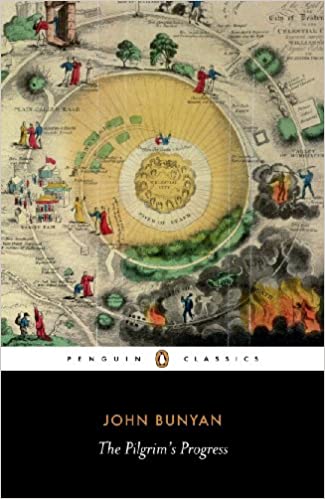
The Pilgrim’s Progress (book review)

Listen to the podcast of this post by clicking on the player below, and you can also subscribe on iTunes or Spotify.

Charles Spurgeon said of John Bunyan, “Prick him anywhere—his blood is Bibline, the very essence of the Bible flows from him. He cannot speak without quoting a text, for his very soul is full of the Word of God.” Although this can be said of all Bunyan’s books and sermons, it is abundantly clear in The Pilgrim’s Progress. 

In my mind it’s easy to classify this book as “a classic” because of its enduring message. The journey through life for pilgrims like Christian, Hopeful, Faithful, Christiana, and you and me resonate with readers all over the world. In over the nearly 350 years since this book was first published, the pilgrimage has connected with Christians and seekers alike because it is the pilgrimage we are all on. 

In The Pilgrim’s Progress it’s not hard to identify the biblical messages because Bunyan literally names them for what they are, using names like Talkative, Mr. Worldly Wiseman, the Giant Despair, Mr. Great-heart, the Interpreter, and many more. Some biblical stories are portrayed in this book just as they are in the Bible, while others are fairly easily seen for all modern-day pilgrims to learn their lessons. 

As I’ve said before about this book, it’s an excellent one for parents to read aloud to their children. Then as their kiddos get a bit older, there is an easy-to-read version called Little Pilgrim’s Progress for them to read on their own. But I still highly recommend the original version of Bunyan’s classic in its 17th-century English. To me, the Old English in a story like this makes it feel like an epic adventure story, which, in fact, it is because it is every Christian’s story still to this day. 

I can’t urge you enough to make The Pilgrim’s Progress a friend that you visit often.

Book Reviews From 2020

Shadows And Light

Have you ever been afraid? Even scared half to death? Once there was the biggest, lumpiest, scariest monster hunched in my room just waiting to pounce on me! My mouth was so dry that I couldn’t even call out for help. Finally, I got enough moisture in my mouth to be able to yell out, “DAD!!” When my Dad came into my room and turned on the light, the monster disappeared. But right where he had been waiting to pounce on me was my desk chair with a hoodie hanging on the back. 

Sometimes we’re scared because of what we don’t see clearly or can’t fully understand because there’s not enough light for us to make out the details. 

On the night Jesus was born, an angel announced the news of His birth to some nearby shepherds. The angel was coming with good news, but Luke writes that the shepherds were terrified! I like the picturesque language of the King James Version that says they were “sore afraid,” as if they shook so much it made them sore!  

Why were they so terrified? I think it’s because they knew that when angels show up that means God Himself is close by! In fact, Luke emphasized that it was an angel of the Lord who shone with the glory of the Lord. 

For their entire lives, these shepherds had been trying to live by the law. They had been told that this is what would make them acceptable to God. The law told them how to live, and how to make things right with God if they broke a law. If they didn’t make things right, God would punish them. So perhaps they were sore afraid because they weren’t ready to meet God. 

But the angel told them something unexpected: Today your Savior has been born! A Savior, not a Judge! 

This is what God promised through one of His prophets: “The days are coming,” declares the Lord, “when I will make a new covenant with the people of Israel. I will put My law in their minds and write it on their hearts. I will forgive their wickedness and will remember their sins no more.”  

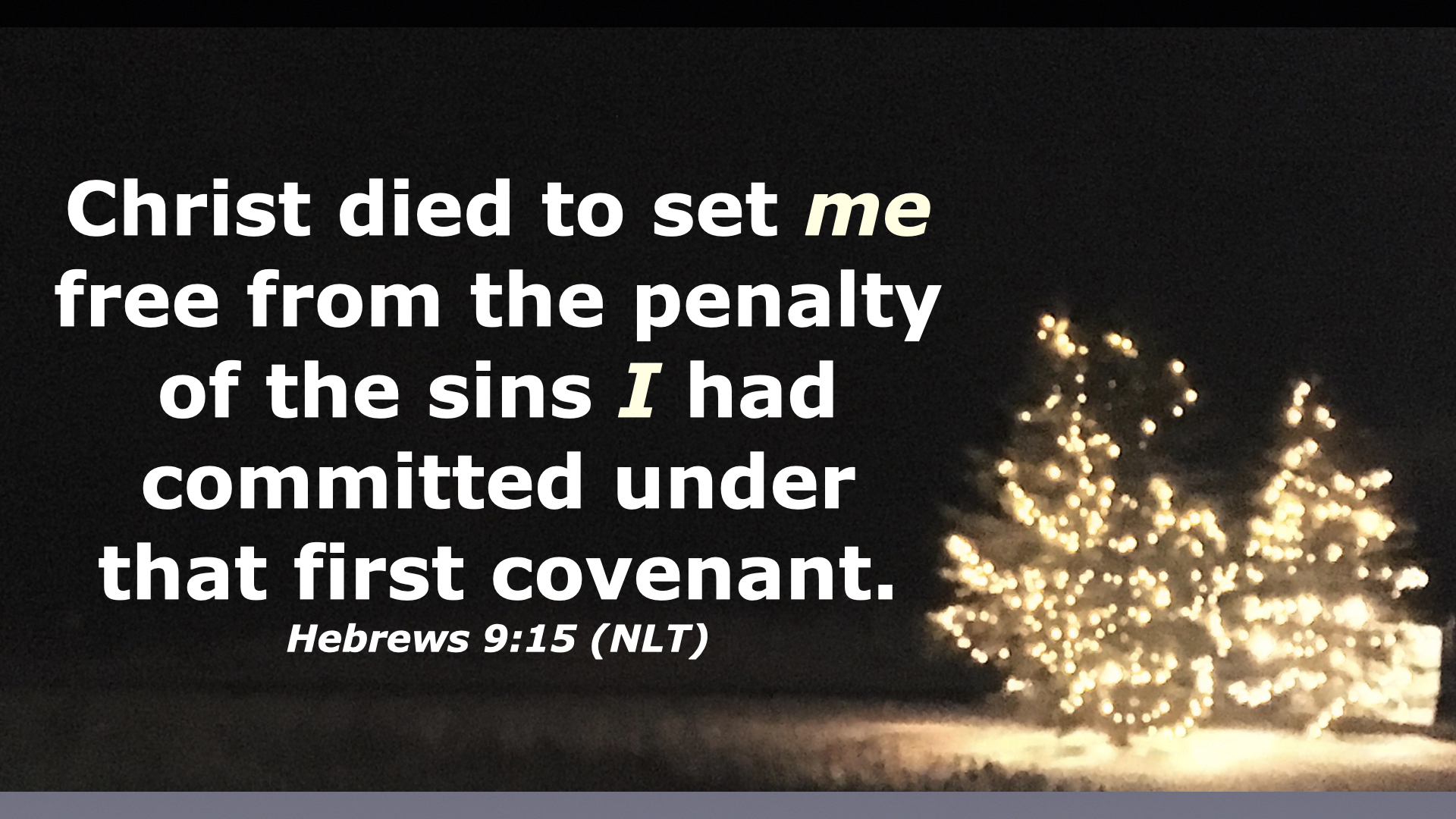
The writer of Hebrews said all of the laws were just a “shadow of what is in heaven” (Hebrews 8:5). This shadow was the source of fear, but now Jesus had come as the Light of the world and as our Savior. Jesus came to take away the penalty of sin: Christ died to set them free from the penalty of the sins they had committed under that first covenant (Hebrews 9:15). 

In The Pilgrim’s Progress, Faithful told how a man came and beat him because he had broken the law. Even when Faithful begged for mercy the man said, “I don’t know how to show mercy to anyone.” This man was Moses the Lawgiver. 

Faithful explained what finally gave him relief: “He would have finished me off, but then one came by, and told him to stop. I did not know Him at first, but as He went by, I saw the holes in His hands and in His side and I concluded that He was Jesus.” 

The Advent of Jesus was to let the punishment for breaking the law fall on Him instead of us! 

The Law says, “Clean yourself up first and then you can come to God. But if you miss anything, God will bring down the hammer of His judgment!” Jesus says, “Come to Me just as you are. If you ask Me, I will forgive your sins. I’ll clothe you in My robe of righteousness so you can stand faultless and unafraid before God” (see Romans 8:1; Galatians 3:26-27).  

This is very Good News indeed! It means we can join in the song of the angels: Glory to God in the highest heaven, and on earth peace to those on whom His favor rests. 

Links & Quotes

link quote

Some good reading from today…

This is tough reading, but very vital: How the normalization of pornography fuels the rape culture.

“What a gracious thing for us that Jesus Christ never thinks about what we have been! He always thinks about what we are going to be.” —A.W. Tozer

“So seldom does God find a Christian whose only goal in life is to know and to do His will—as Jesus did—and who never says, ‘God, where are You?’ but instead prays, ‘God, where am I in this matter of obedience and dependence?’” —David Wilkerson

“Remember Luther, Knox, Calvin, Wycliffe, Bradford, Latimer, and many others! Under God these men owed their liberty of speech and liberty of conscience to the fact that the world thrust them out from all hope of its favor, and so loosed their bonds.” —Charles Spurgeon

“Lay not fast hold upon the things of earth. He who is but a lodger in an inn must not live as though he were at home.” —Charles Spurgeon

Desiring God has released an updated version of The Pilgrim’s Progress with some cool features. If you download the ebook version, it’s free!

Poetry Saturday—Valiant For Truth

John BunyanWho would true valour see,
Let him come hither;
One here will constant be,
Come wind, come weather;
There’s no discouragement
Shall make him once relent
His first avowed intent
To be a pilgrim.
Whoso beset him round
With dismal stories.
Do but themselves confound;
His strength the more is.
No lion can him fright.
He’ll with a giant fight.
But he will have a right
To be a pilgrim.
Hobgoblin nor foul fiend
Can daunt his spirit;
He knows he at the end
Shall life inherit.
Then fancies fly away,
He’ll fear not what men say;
He’ll labour night and day
To be a pilgrim. —Mr. Valiant-for-truth in John Bunyan’s Pilgrim’s Progress