God Provides For His Servants

Listen to the podcast of this post by clicking on the player below, and you can also subscribe on AppleSpotify, or Audible. 

God promised to provide for Jeremiah if he remained faithful to preach the word God had given him. Jeremiah did deliver a hard message that turned out to be highly unpopular, and as a result those who heard his sermon became quite angry with Jeremiah. 

In what I think is a very human response, Jeremiah began to complain to God—

   Your words were found, and I ate them; and Your words were to me a joy and the rejoicing of my heart, for I am called by Your name, O Lord God of hosts. I sat not in the assembly of those who make merry, nor did I rejoice; I sat alone because Your powerful hand was upon me, for You had filled me with indignation. Why is my pain perpetual and my wound incurable, refusing to be healed? Will You indeed be to me like a deceitful brook, like waters that fail and are uncertain? (Jeremiah 15:16-18 AMPC) 

God had to speak a correcting word to Jeremiah— 

   If you return and give up this mistaken tone of distrust and despair, then I will give you again a settled place of quiet and safety, and you will be My minister; and if you separate the precious from the vile—cleansing your own heart from unworthy and unwarranted suspicions concerning God’s faithfulness—you shall be My mouthpiece. Let them return to you—not you to the people. (v. 19) 

Jeremiah got over his pity party and once again continued to faithfully deliver God’s message, despite what people thought of him or said about him. Jeremiah even remained resolute in his devotion to God when the rulers of the people abused Jeremiah or threw him into prison or threatened to kill him. 

Just as God promised, as the Babylonians pressed in on Jerusalem, the people flocked back to Jeremiah to ask him to intercede before God on their behalf (21:1-2; 37:3; 42:2)

Remember that God had promised to take care of Jeremiah, assuring him of a place of quiet and safety. God also said, 

   Truly your release, affliction, and strengthening will be for good purposes; surely, Jeremiah, I will intercede for you with the enemy and I will cause the enemy to ask for your aid in the time of evil and in the time of affliction. (15:11) 

This promise was fulfilled when Nebuzaradan—the commander of the imperial guard in Nebuchadnezzar’s army—came to Jerusalem:

   Now Nebuchadnezzar king of Babylon had given these orders about Jeremiah through Nebuzaradan commander of the imperial guard: “Take him and look after him; don’t harm him but do for him whatever he asks.” … [Nebuzaradan] had found Jeremiah bound in chains among all the captives from Jerusalem and Judah who were being carried into exile to Babylon. When the commander of the guard found Jeremiah, he said to him, “The Lord your God decreed this disaster for this place. And now the Lord has brought it about; He has done just as He said He would. All this happened because you people sinned against the Lord and did not obey Him. But today I am freeing you from the chains on your wrists.” (39:11-12; 40:1-2) 

God never promises His servants their task will be easy, but He does promise both temporal provision and eternal rewards for His servants who remain faithful to Him and to His calling. 
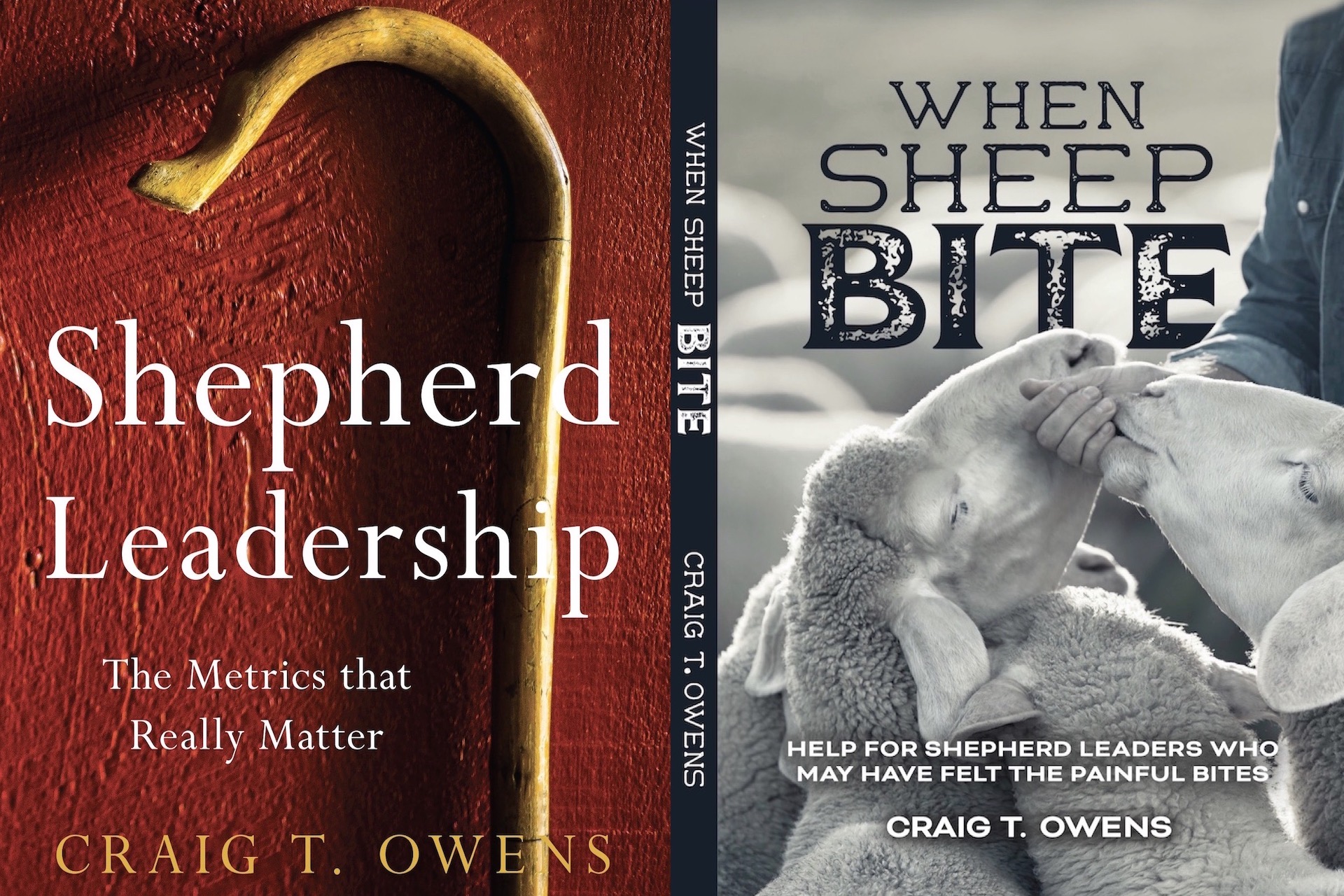
In my book Shepherd Leadership, I talk about a time God had to correct me when I was throwing myself a pity party. 

And in my book When Sheep Bite, the entire third section contains biblical strategies to help God’s servants not give in to the very natural response of fight-or-flight, but how to tap into the supernatural response of faithfulness. 

If you are a spiritual leader, I would encourage you to pick up a copy of both of these books. And keep in mind that God always provides for His servants. 

►► Would you please prayerfully consider supporting this ministry? My Patreon supporters get behind-the-scenes access to exclusive materials. ◀︎◀︎
Rebelling Against Government And God

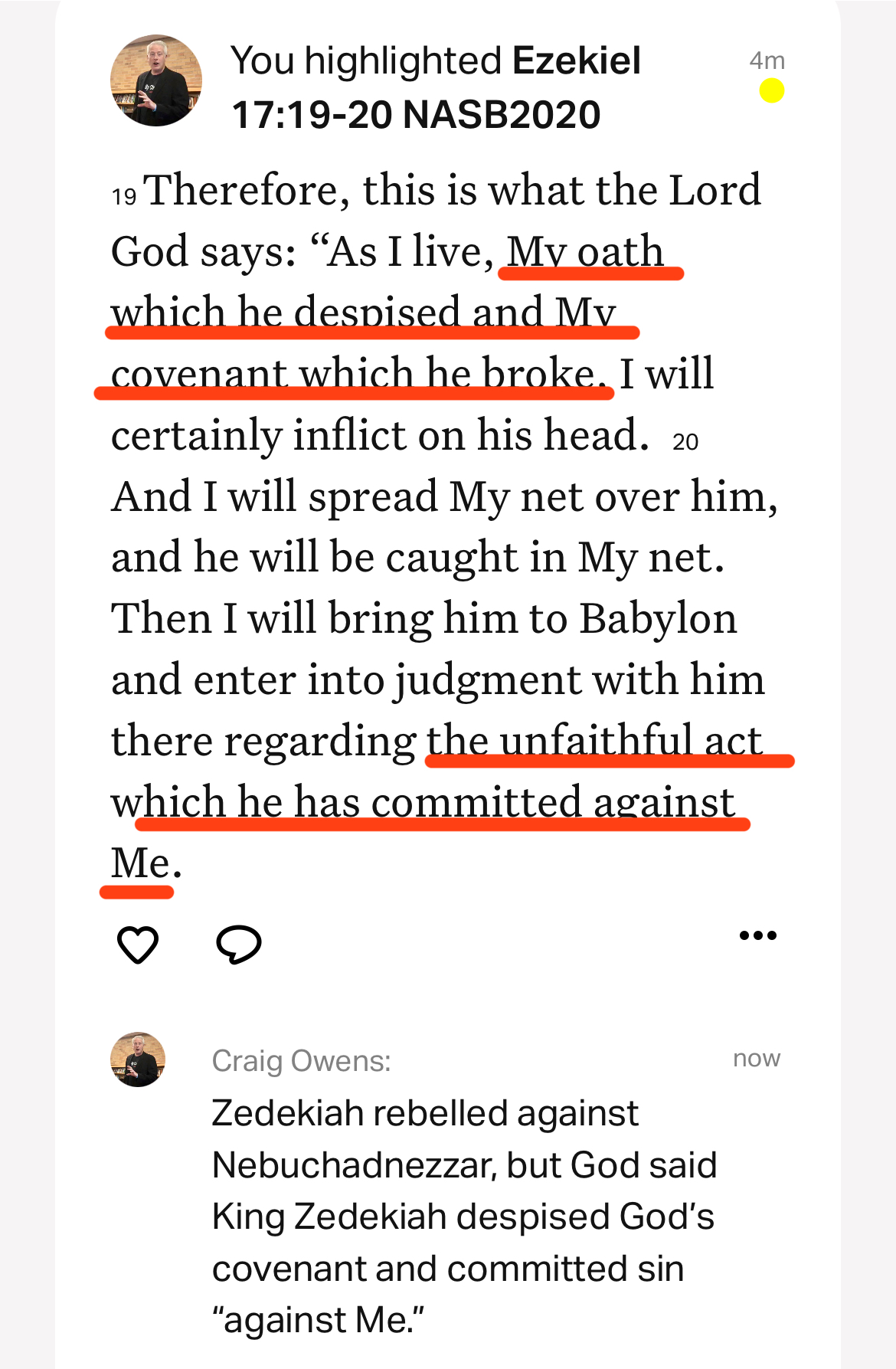
Therefore, this is what the Lord God says: “As I live, My oath which he [Zedekiah] despised and My covenant which he broke, I will certainly inflict on his head. And I will spread My net over him, and he will be caught in My net. Then I will bring him to Babylon and enter into judgment with him there regarding the unfaithful act which he has committed against Me. (Ezekiel 17:19-20) 

Zedekiah rebelled against Nebuchadnezzar, but God said King Zedekiah despised God’s covenant and committed sin “against Me.” 

All governing authorities on earth are God’s servants. God used Babylon as His means of punishing Judah for her sin. When King Zedekiah conspires with Pharaoh to attack Nebuchadnezzar, God says Zedekiah is really rebelling against God Himself!

Christians are called to pray for those in governmental leadership. To dig a little deeper on this topic, check out two previous blog posts and sermon videos:

Worth The Effort

Listen to the podcast of this post by clicking on the player below, and you can also subscribe on AppleSpotify, or Audible. 

The Bible is not only the inspired Word of God but it is rooted in history too. Every prayer was prayed by a real person in distress, and every song of praise was lifted up by someone who personally experienced God’s deliverance. 

The reason why this is so important is that it makes God’s Word relatable and applicable to us. If the Bible merely contained moral stories set in some make-believe world, we may have a hard time seeing how to apply the principles to our daily lives. But, thankfully, this isn’t the case. We can read the real-life experiences of real historical people and then we can allow the Holy Spirit to help us apply this inspired Word to our lives. 

There is a collection of 15 songs in the Book of Psalms called “The Songs of Ascent.” Even these songs have an important historical background. 

The books of Kings and Chronicles tell the sad history of Israel and Judah sliding farther and farther away from God until finally, God must punish them. He punishes Judah by bringing King Nebuchadnezzar against them, who destroyed the temple at Jerusalem and carried the people into exile in Babylon. But even as they are being taken away, God speaks a prophetic word through Jeremiah that in 70 years He will raise up another leader, Cyrus king of the Persians, who will allow the exiles to return home. You can read all of these historical accounts in 2 Chronicles 36:15-23; Jeremiah 29:10-14; and Isaiah 44:28-45:6. 

Second Chronicles ends with this proclamation from King Cyrus: “The Lord, the God of heaven, has given me all the kingdoms of the earth and He has appointed me to build a temple for Him at Jerusalem in Judah. Anyone of His people among you—may the Lord his God be with him, and let him go up” (2 Chronicles 26:23). 

The phrase “let him go up” is both literal (since Jerusalem is 2500 feet above sea level) and spiritual. Listen to these words from King Solomon, “The way of life winds upward for the wise, that he may turn away from hell below” (Proverbs 15:24 NKJV). 

The Songs of Ascent were a rallying cry—an encouragement to all pilgrims to keep climbing up. 

In Hebrew literature, the main point is usually found in the middle of the poem or story, unlike our Western literature which puts the payoff at the end. In the first Song of Ascent, the middle is verse 4. But the second half of Psalm 120 seems out of place for people ascending up to Jerusalem to worship God. Verse 5 begins with the words, “Woe to me.” 

The psalmist is expressing his pain in living among the people of Meshech and Kedar. The people of Meshech were vicious people who traded human lives for money and who conducted themselves as terrorists (Ezekiel 27:13; 32:26). Their name literally means “drawing away.” The people of Kedar were nomadic sons of Ishmael. Being nomadic means they were never at rest. Their name literally means “dark place.” Very noteworthy is that there is no mention of God in verses 5-7.  

The middle verse of this song (v. 4) turns the people of Meshech and Kedar over to God. It is a reminder that we are not the ones to dispense justice. If God knew how to overthrow the powerful kingdoms of Judah, Babylon, and the Medes, if He knew to call Cyrus by name at just the right moment, He also knows how to deal with these sinners. 

This Song of Ascent shows the stark contrast between keeping our eyes on the dark culture around us versus keeping our eyes on the God who is never weighed down by the darkness. As we go higher up, we focus more on God; as His saints focus on Him, His light shines on them; as His light shines on them, they point sinners living in dark valleys to the God of light and love. 

Staying down is easy. Getting up requires intentional effort. Going up requires us to overcome the pull of sin and the frustration of watching for judgment to fall on sinners. 

Continually going up glorifies God, has eternal rewards for saints, and creates a compelling testimony for sinners.

Going up is a lot of effort, but the rewards are so worth it! As the apostle Paul reminded his friends in Rome, “I consider that our present sufferings are not worth comparing with the glory that will be revealed in us” (Romans 8:18). Let’s keep climbing up and let’s keep lifting our eyes to the only One who has the eternal light. 

If you’ve missed any of the messages in our look at the Songs of Ascent, you can find them all here. 

►► Would you please prayerfully consider supporting this ministry? My Patreon supporters get behind-the-scenes access to exclusive materials. ◀︎◀︎
Respectful Boldness

Listen to the podcast of this post by clicking on the player below, and you can also subscribe on AppleSpotify, or Audible. 

As we near the crucifixion of Jesus, we begin to see how politics plays a role in so many decisions. The Sanhedrin is trying to balance their popularity with the Jewish people and their standing with powerful leaders in the Roman government. Pontius Pilate is trying to balance how the Sanhedrin portrays him to the Jewish people and what those in Rome are telling Caesar Tiberius about him. King Herod Antipas also has issues with balancing the pressure from the Sanhedrin with the popularity of Jesus. 

Luke gives us a very telling statement about the politics of the day when he writes, “That day Herod and Pilate became friends—before this they had been enemies” (Luke 23:12). How did they become friends over this issue of what to do with Jesus? Remember that the Sanhedrin is a common thorn-in-the-side for both of them, and the political axiom that still holds to this day says, “The enemy of my enemy is my friend.” 

I point out all of the political maneuverings during this pivotal time because these political balancing acts are still being played out today and Christians will end up in the crosshairs. 

Pilate was trying to appease the Sanhedrin but there was no Roman law that Jesus had broken that was deserving of the death penalty they were demanding. So twice Pilate tells these religious leaders, “I will punish Him and then release Him.” In fact, without waiting for their approval, Pilate subjects Jesus to the tortuous punishment known as flagellation (Luke 23:13-22; John 19:1-11). 

I think Pilate believed that if they saw Jesus so humiliated and beaten down they would back off from their desire for His death. But Pilate miscalculated their commitment to seeing Jesus eliminated from the scene. 

Pilate finally gives in and says, “You take Him and crucify Him. As for me, I find no basis for a charge against Him.” But the Jewish religious leaders insisted, “We have a law, and according to that law He must die, because He claimed to be the Son of God.” 

If you have ever watched a movie about the gladiatorial games in the Roman Colosseum, you’ve probably viewed the scene where one combatant is disarmed and helpless. Before the victor strikes his deathblow he will look to Caesar in the stands. The Roman Caesar will either give a thumbs-up signal to pardon the victim or he will give a thumbs-down signal to send the defeated one to their death. 

Pilate has this same authority here in the region of Judea. The Sanhedrin knew Pilate had the power of life and death, so did the convicted prisoner Barabbas, and so did Jesus. 

Pilate asks Jesus, “Don’t You realize I have power either to free You or to crucify You?” 

There was another king who called himself “king of kings” but God called him “My servant.” He was King Nebuchadnezzar of Babylon. Daniel, an exile from Israel who was Nebuchadnezzar’s prime minister, reminded him where his authority originated, “The Most High is sovereign over all kingdoms on earth and gives them to anyone He wishes” (Daniel 4:17). 

In the same way, Jesus addressed Pilate, “You would have no power over Me if it were not given to you from above.” 

John Piper wrote: “This does not intimidate Jesus because Pilate’s authority over Jesus is subordinate to God’s authority over Pilate. Jesus gets His comfort at this moment not because Pilate’s will is powerless, but because Pilate’s will is guided. Not because Jesus isn’t in the hands of Pilate’s fear, but because Pilate is in the hands of Jesus’s Father.” 

Jesus shows us an important principle: Should we respect our leaders (even the ungodly ones)? Yes! Should we fear them? No! 

We don’t fear them because their power is limited to just this life and is under the control of the Most High God (Luke 12:4). Peter and John learned this lesson well, as we see in their interaction with the same Sanhedrin that turned Jesus over to Pilate (see Acts 4:1-10). What Jesus and these apostles demonstrate for us is respectful boldness.

In light of this, here are five things Christians should keep in mind. When persecution comes against us, we should respond like this: 

  1. Be prepared—Matthew 5:11-12; John 15:20
  2. Be respectful—1 Peter 2:17 
  3. Be loving—Matthew 5:44
  4. Be prayerful—Acts 4:27-30
  5. Be bold—Acts 4:18-20

(Check out all of the above Scriptures by clicking here.)

Jesus taught us there is a time for eloquent silence, but when the Holy Spirit needs us to speak, He will give us the respectfully bold words to share. Jesus said, 

On My account you will be brought before governors and kings as witnesses to them and to the Gentiles. But when they arrest you, do not worry about what to say or how to say it. At that time you will be given what to say, for it will not be you speaking, but the Spirit of your Father speaking through you. (Matthew 10:18-20)

Respectful? Yes. Fearful? No. Respectful, loving, prayerful boldness is how we will glorify the Most High God in the face of persecution. 

If you’ve missed any of the other messages in our series of Bold Claims, you can find them all here. 

►► Would you please prayerfully consider supporting this ministry? My Patreon supporters get behind-the-scenes access to exclusive materials. ◀︎◀︎

Highly Esteemed

Listen to the podcast of this post by clicking on the player below, and you can also subscribe on AppleSpotify, or Audible. 

“Highly esteemed” is how two different angels addressed Daniel (Daniel 9:23, 10:11). This was a title they obviously heard from God Himself. At both instances, Daniel was in a time of intense and sustained prayer and fasting. 

While I was speaking and praying, confessing my sin and the sin of my people Israel and making request to the Lord my God for His holy hill … Gabriel, the man I had seen in the earlier vision, came to me…. (Daniel 9:20-21) 

At that time I, Daniel, mourned for three weeks. I ate no choice food; no meat or wine touched my lips; and I used no lotions at all. (Daniel 10:2-3) 

Prayer was a regular habit for Daniel and prayer was also what Daniel turned to immediately in times of trouble (Daniel 2:18, 6:10). 

We see the same thing in the lives of two notable women in the New Testament. Elizabeth is described as an upright woman who observed all of God’s commandments blamelessly. She continuously prayed that she might get pregnant, and then Gabriel came to bring the good news of her upcoming pregnancy. Elizabeth responded by saying, “The Lord has done this for me.… He has shown me His favor” (see Luke 1:5-25). 

Mary was also a righteous woman who was steeped in Scripture (as we can see in her song of praise). When Gabriel appeared to her, he called her “highly favored” (see Luke 1:26-55). 

A righteous, prayer-filled lifestyle also brings favor and esteem with earthly kings. Daniel and his friends fasted and prayed, which led to King Nebuchadnezzar’s favor directed to them (Daniel 1:11-20, 2:48-49). After three days of prayer and fasting, Queen Esther found favor in the eyes of King Xerxes, which led to the salvation of all the Jewish people (Esther 4:15—5:3). And Nehemiah’s sustained prayer over four months won the favorable reply from King Artaxerxes (see Nehemiah 1:1—2:8). 

If you want to hear deep things from God, if you want to be called “highly esteemed” by the Most High, if you want to gain favor with earthly kings, you must be committed to the sustained work of prayer and righteous living. If you would like to dig into this deeper, check out 4 Thoughts To Help Prayer Become A Daily Habit.

►► Would you please prayerfully consider supporting this ministry? My Patreon supporters get behind-the-scenes access to exclusive materials. ◀︎◀︎

The Lingering Effects Of Poor Leadership

Surely these things happened to Judah according to the Lord’s command… (2 Kings 24:3). 

I am intrigued by the succession of the last kings of Judah just before Jerusalem falls in 586 BC. The leadership authority has been completely undermined by the downward spiral of sin in the previous leaders. As a result, the kings of Judah are now just an “empty suit,” with someone else exerting the real influence.

King Josiah was the last God-fearing king Judah had. After Josiah died, “the people of the land” made Jehoahaz king of Judah. He only reigned three months. 

After Jehoahaz died, “Pharaoh Neco made Eliakim son of Josiah king” after Egypt subdued Judah. Pharaoh changed his name to Jehoiakim, took all of Judah’s treasures, and imposed a tribute on Judah, forcing Jehoiakim to tax all the citizens. 

Later on, Jehoiakim became a vassal king of Nebuchadnezzar. After Jehoiakim died, his son Jehoiachin only reigned as king for three months before he was deposed by Nebuchadnezzar. 

Nebuchadnezzar then “made Mattaniah” king. He also imposed tribute and changed the king’s name to Zedekiah. 

King Zedekiah rebelled and was executed, after which Nebuchadnezzar “appointed Gedaliah as governor.” Gedaliah was assassinated shortly thereafter, completing the collapse of Judah and sending the people into exile in Babylon for the next 70 years. 

[Check out all of the biblical references for these sad events by clicking here]

Oh, what misery for the people of Judah for this last 20-year span under these final kings! The consequences of the leaders’ continual rebellion against God brought such uncertainty and heartache for the citizens. 

A mark of a godless leader is the wake of misery that follows him for generations afterward. 

Lord God, help me to see that my actions today have consequences for tomorrow. I want to leave an empowering, God-honoring legacy for the next generations, but this can only happen as I remain obedient to You! 

This is part 51 in my series on godly leadership. You can check out all of my posts in this series by clicking here

Certainty In Uncertain Times

… Perhaps the Lord will act in our behalf … The God we serve is able to save us from the furnace…but even if God does not save us… (1 Samuel 14:6 and Daniel 3:17-18).

We often remember and even hold in high regard those leaders who rise up in times of crisis or uncertainty. But I think we might be shocked if we knew exactly how scared these seemingly unflappable leaders actually were! 

The Philistines really had the Israelites on the ropes. Israel’s army was slowing melting away, as soldiers one by one were deserting and heading home. The Philistines had captured all of the sword-makers, so that there were only two swords left—one for King Saul and one for his son Jonathan. 

And to make matters even more desperate, the Philistines occupied all the strategic high ground, so that even if the Israelites were going to attempt an attack, they would have to scale the cliffs in order to do so.

For Jonathan, this situation was unbearable. So he said to his armor-bearer (keep in mind that this armor-bearer didn’t really have any armor to bear!), “Let’s go attack the Philistines.” And then he adds this line that probably didn’t instill too much confidence in anyone, “Perhaps the Lord will give us victory.” 

Perhaps?!

Many years later, when the nation of Israel was in exile in Babylon, three Jewish young men found themselves in a literal hot spot. King Nebuchadnezzar had built an enormous statue of himself and commanded that everyone bow down and worship it. Shadrach, Meshach, and Abednego had been promoted into leadership positions in the capital city of Susa, so there was no hiding in the outreaches of the countryside for them. Their disobedience to the king’s command would make them stand out to everyone. The king had ordered that anyone who disobeyed his edict would be thrown into a fiery furnace. 

Shadrach, Meshach, and Abednego were God-fearing men and knew that they could not worship any other god except Yahweh. When the king confronted their disobedience, they also responded with words that didn’t sound very confident, “God can save us, but we’re not sure if He will save us. But even if He doesn’t, we’re not going to bend our knee.” 

If?!

“Perhaps” and “if” don’t sound like very confident words, do they? 

And yet these godly leaders were totally certain in their uncertain times. They weren’t certain of the outcome, but they were certain of God’s ability to bring the ultimate victory. Even in dark times of crisis, godly leaders are certain that God is greater than their uncertain circumstances. 

A mark of a godly leader is one who has a certain confidence in God even in an uncertain crisis.

Jonathan, and Shadrach, and Meshach, and Abednego would all tell us, “Whether God was going to give us victory in the moment of crisis or not, we will remain in God’s presence! We will not compromise. We will not give in to fear. We will not disobey God. We will continue to cling to Him—rescue or not—knowing that He will be glorified in whatever way He chooses to respond.” 

These young men teach an invaluable lesson for all of us even today: Trust God no matter how uncertain the times are. 

This is part 45 in my series on godly leadership. You can check out all of my posts in this series by clicking here.

Four Kings Of Kings

When C.S. Lewis first introduces us to the land of Narnia in The Lion, The Witch and The Wardrobe, we discover that the White Witch has Narnia seemingly under her iron fist, and has made it so that it’s always winter but never Christmas. 

“Come on!” cried Mr. Beaver, who was almost dancing with delight. “Come and see! This is a nasty knock for the Witch! It looks as if her power is already crumbling. … Didn’t I tell you, that she’d made it always winter and never Christmas? Didn’t I tell you? Well, just come and see!” 

And then they were all at the top and did see.

It was a sledge, and it was reindeer with bells on their harness. But they were far bigger than the Witch’s reindeer, and they were not white but brown. And on the sledge set a person whom everyone knew the moment they set eyes on him. He was a huge man in a bright red robe (bright as holly-berries) with a hood that had fur inside it and a great white beard that fell like a foamy waterfall over his chest. … Some of the pictures of Father Christmas in our world make him look only funny and jolly. But now that the children actually stood looking at him they didn’t find it quite like that. He was so big, and so glad, and so real, that they all became quite still. They felt very glad, but also solemn.

“I’ve come at last,” said he. “She has kept me out for a long time, but I have got in at last. Aslan is on the move. The Witch’s magic is weakening.” 

I think the Israelites waiting for their Messiah must have felt a little like the Narnians: always winter, but never Christmas; trapped under the iron-fisted rule of Babylon, and Persia, and Rome. 

But as they approached what we now call the year 1 AD, winter is about to end and the Advent of CHRISTmas is about to occur at long last! 

You might think that the birth of Jesus brought us the King of Kings. But actually, there were three other “king of kings” that preceded Jesus, who all helped to fulfill God’s ultimate plan. 

Nebuchadnezzar was the king of Babylon. God called him “My servant” and also gave him the title king of kings (Jeremiah 27:6; Ezekiel 26:7). It was he who defeated Judah and took captives with him to Babylon. Among those captives was a young man named Daniel. 

God gave Daniel the ability to interpret Nebuchadnezzar’s dream which foretold of three other kingdoms which would follow Babylon, with the fourth kingdom being called a kingdom of iron. History shows us that Babylon was defeated by the Medes, who were in turn defeated by the Persians, who were themselves defeated by the Greco-Romans. 

Artaxerxes was king of the Persians, and he called himself king of kings (Ezra 7:12). He helps to facilitate the Jews’ return back to Jerusalem, and even helped fund their efforts to rebuild the temple of Solomon and reestablish worship there. 

In 44 BC, Julius Caesar was assassinated, and Octavius was named in Caesar’s will as his adopted son and heir. Eventually, Octavius quelled a 20-year-long civil war and established himself as the unquestioned ruler of the Roman Empire. He changed his name to Caesar Augustus, which means the exalted one. But all throughout the Mediterranean world archeologists have discovered numerous other titles for Caesar Augustus—Divine, Son of God, God Incarnate, God from God, Lord, Redeemer, Liberator, Savior of the World, and King of Kings. 

Historian Luke records these words, “In those days Caesar Augustus issued a decree” (Luke 2:1). This decree called everyone to return to his hometown to be registered in Rome’s census. This decree meant that Joseph was obligated to return to Bethlehem. He took his pregnant wife with him to arrive just in time for Jesus to be born. 

JesusTHE eternal and ultimate King of Kings—was born in Bethlehem just as had been prophesied 700 years earlier in the winter of Israel’s captivity: 

But you, Bethlehem Ephratah, you are little to be among the clans of Judah; yet out of you shall One come forth for Me Who is to be Ruler in Israel, Whose goings forth have been from of old, from ancient days (eternity). (Micah 5:2) 

The coming of THE King of Kings is proof that God sees you too. God brought the king of kings named Nebuchadnezzar, and Artaxerxes, and Caesar Augustus to power just to move two “average Joes” 70 miles from Nazareth to Bethlehem so that THE King of Kings could be born there to fulfill the prophesy. 

God has a plan for your life. His plan for you was in place before you were even conceived in your mother’s womb. And—even this very moment—He is watching over world events to make sure that every detail of His plan is fulfilled (see Ephesians 2:10; Psalm 139:16; Jeremiah 1:12)! 

If you ever feel like you are in a “winter” season of your life—always winter and never Christmas—just remember that God sees you, He has a plan for you, and He will bring an end to your winter just in time to bring you CHRISTmas!

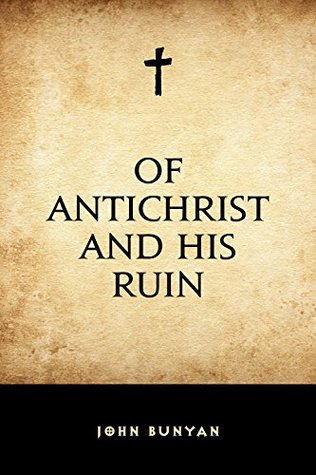
9 Quotes From “Of Antichrist And His Ruin”

Of Antichrist And His RuinJohn Bunyan’s works are steeped in Scripture. His thoughts about the Antichrist and other end times events are either directly taken from biblical passages, or else his line of reasoning fits perfectly with the intent of the Scriptures. You can read my full book review by clicking here. Below are some quotes I found enlightening.

“Coercion, in anything connected with religion, whether it imposes creeds, liturgies, or modes of worship, is Antichrist: whom to obey, is spiritual desolation, and if knowingly persevered in, leads to death.” —George Offor, editor

“As God therefore did put it into the hearts of the wicked kings of Babylon, to distress in His church and people for their sins; so He put it into the hearts of the kings of the Medes and Persians, who were to be, in a sense, their saviors; to ease them of those distresses, to take off the yoke, and let them go free.”

“This twenty years we have been degenerating, both as to principles, and as to practice; and have grown at last into an amazing likeness to the world, both as to religion and civil demeanor.” 

“Take heed in laying the cause of your troubles in the badness of the temper of governors. … God is the chief, and has the hearts of all, even of the worst of men, in His hand. Good tempered men have sometimes brought trouble; and bad tempered man have sometimes brought enlargement to the churches of God: Saul brought enlargement (1 Samuel 14:28). David brought trouble (2 Samuel 12:10).) Ahab brought enlargement (1 Kings 21:29). Jehoshaphat and Hezekiah did both sometimes bring trouble (2 Chronicles 19:2; 20:35; 32:25). Therefore, the good or bad tempers of men sway nothing with God in this matter; they are the sins or repentances of His people, that make the church either happy or miserable upon earth.”

“Antichrist is the adversary of Christ; an adversary really, a friend pretendedly. So then, Antichrist is one that is against Christ; one that is for Christ, and one that is contrary to Him (and this is that mystery of iniquity [2 Thessalonians 2:7]). Against Him in deed; for Him in word, and contrary to Him in practice. … Christ prefereth His Father’s will above heaven and earth: Antichrist prefereth himself and his traditions above all that is written, or that is called God, or worshiped.”

“Nor can all the fallen angels, with all the members and limbs of Antichrist, cause that their brat should abide so much as one day longer than our God’s prefixed time.”

“Now, by ordinances of Antichrist, I do not intend things that only respect matters of worship in Antichrist’s kingdom, but those civil laws that impose and enforce them also; yea, that enforce that worship with pains and penalties, as in the Spanish Inquisition. … What could the king of Babylon’s golden image have done, had it not been for the burning fiery furnace that stood within view of the worshipers (Daniel 3)? Yea, what could that horrible command, to pray for thirty days to neither God nor man, but to the king, have done, had it not been for the dark den and the roaring lions therein ready to devour those that disobeyed it (Daniel 6)? … For as the furnace would have been next to nothing, if void of fire; and the den as little frightful, if destitute of lions; so these laws will be as insignificant, when Christ has slain that spirit that is in them; that spirit that causes that as many as will not worship the image of the beast, should be killed.”

“What say ye now, ye sons of God! Will you learn to make a judgment of things according to the mystery of the wisdom of God, or will ye longer conclude according to sense and reason?”

“Cold blasts in November are not received with that gentleness as are colder in March and April; for that these last cold ones are but the farewell notes of a piercing winter; they also bring with them the signs and tokens of a comfortable summer. Why, the church is now at the rising of the year; let then the blasts at present, or to come, be what they will, Antichrist is assuredly drawing towards his downfall.”