George Matheson On The Value Of Waiting

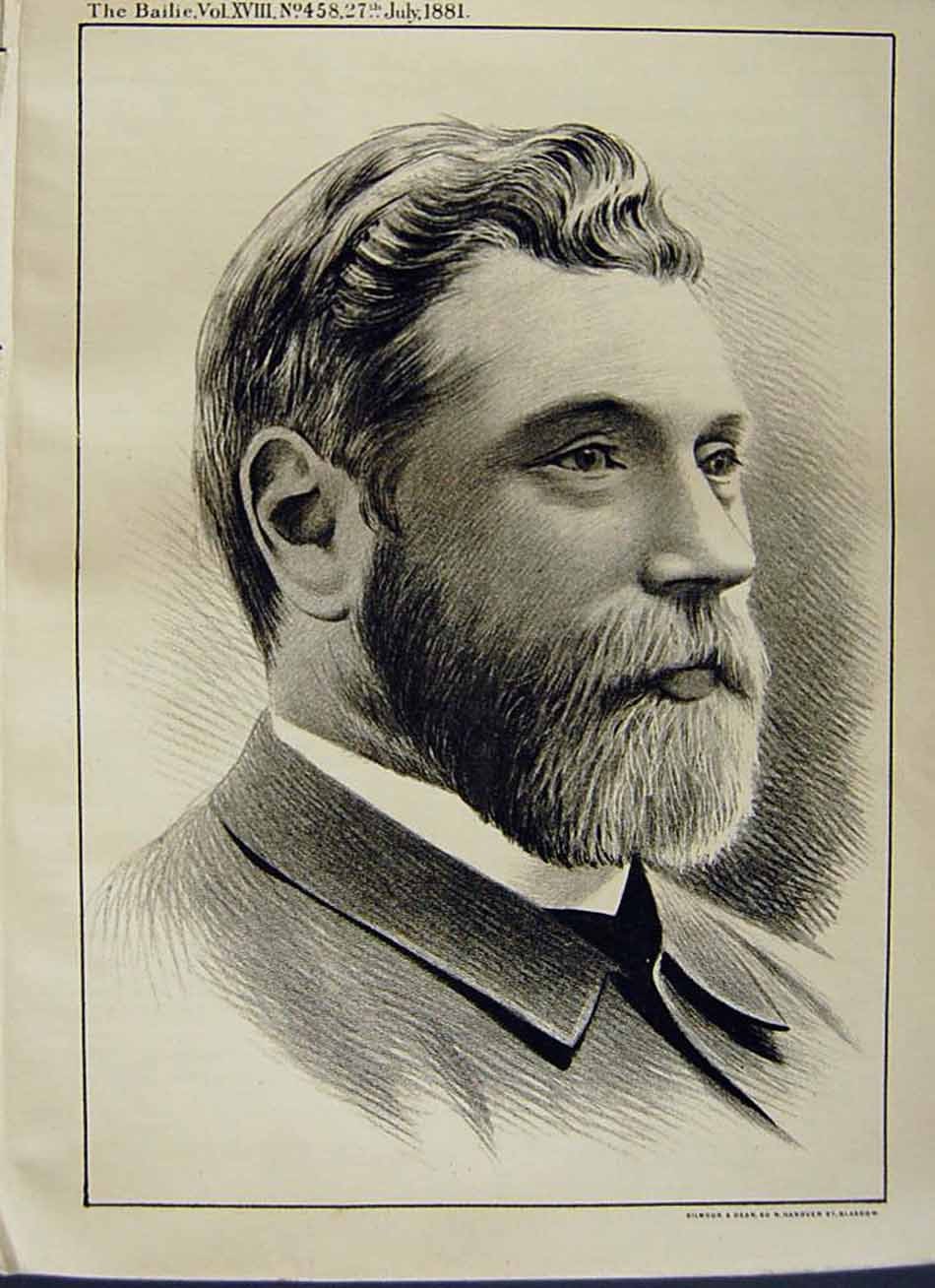
George Matheson“The Spirit requires not only a service of work but also a service of waiting.

“Dear Holy Spirit, my desire is still to be led by You. Nevertheless, my opportunities for usefulness seem to be disappointed, for today the door appears open into a life of service for You but tomorrow it closes before me just as I am about to enter. Teach me to see another door even in the midst of the inaction of this time. Help me to find, even in the area of service where You have closed a door, a new entrance into Your service. Inspire me with the knowledge that a person may sometimes be called to serve by doing nothing, by staying still, or by waiting.” —George Matheson

Thursdays With Oswald—The Harmony Of Health

Oswald ChambersThis is a weekly series with things I’m reading and pondering from Oswald Chambers. You can read the original seed thought here, or type “Thursdays With Oswald” in the search box to read more entries.

The Harmony Of Health

     Health, or physical harmony, is a perfect balance between our organism and the outer world. … The great error of the healthy-minded cult is that it ignores a man’s moral and spiritual life. … The attitude to sickness in the Bible is totally different from the attitude of people who believe in faith-healing. The Bible attitude is not that God sends sickness or that sickness is of the devil, but that sickness is a fact usable by both God and the devil. 

   Happiness or moral harmony is a perfect balance between our inclination and our environment. … The Bible reveals that a man can have physical health at the cost of his moral welfare, and happiness at the cost of spiritual welfare. 

   Holiness, or spiritual harmony, is a perfect balance between our disposition and the law of God. … 

   The devil tries to make us think that when we have entered into the sanctified life, all is done; it is only begun. We have entered into Jesus Christ’s finished work, but remember, says Paul, you have attained to nothing yet; everything is perfectly adjusted, now began to attain and to “grow up into him in all things. These three things develop slowly together: first, the basis of spiritual holiness; second, the building of moral happiness; and third, the decoration of physical health. A full-grown man in Christ Jesus is one who has become exactly like Christ Jesus. “Till we all come…unto the measure of the stature of the fullness of Christ” (Ephesians 4:13). 

From The Philosophy Of Sin

Quite simply Oswald Chambers identifies health as a perfect balance:

  • Physical health balances outside germs against inside defenses.
  • Emotional health balances outside circumstances with inside coping mechanisms.
  • Spiritual health balances God’s law (outside) with our obedience to that law (inside).

Furthermore, Chambers says that Jesus Christ is our measuring stick. We must study God’s Word, and watch Jesus closely to see how He lived out the perfect balance of the Scriptural principles so that we can attain “unto the measure of the stature of the fullness of Christ.”

Thursdays With Oswald—The Value Of Temptation

Oswald ChambersThis is a weekly series with things I’m reading and pondering from Oswald Chambers. You can read the original seed thought here, or type “Thursdays With Oswald” in the search box to read more entries.

The Value Of Temptation

     Temptation is not sin…. Temptation is something that exactly fits the nature of the one tempted, and is therefore a great revealer of the possibilities of the nature. … A good illustration of temptation is the way steel is tested. Steel can be “tired” in the process of testing, and in this way its strength is measured. … Temptation trains innocence into character or else into corruption. … 

     If the power to disobey were removed, our obedience would be of no value, for we should cease to be morally responsible. It is gloriously possible not to sin, but never impossible to sin, because we are moral agents. Morality must be militant in this order of things, but we can be “more than conquerors” every time. …

     Spiritual life is attained…by moral choices, whereby we test the thing that presents itself to us as being good. … Health is the balance between my physical life and external nature. If the fighting force on the inside begins to dwindle or is impaired, I get diseased, things outside begin to disintegrate my vital force. … The same is true spiritually; if I have enough spiritual fighting capacity, I will produce a character like Jesus Christ’s. Character must be attained, it is never given to us.

From The Philosophy Of Sin

It is interesting to think that what tempts us is a revealer of what’s really inside of us. We need to watch carefully what is enticing us toward sin, because that will help us see the areas of weakness in our lives.

God allows temptation to occur as a means of helping us submit that area of revealed weakness to His control. Lust is wanting something my way, and sin is when I give in to that lust. What I should do instead of giving in is submit that area of weakness to Christ’s Lordship.

I can develop the same character that Jesus Christ exhibited on earth, IF I will allow the Holy Spirit to develop that “vital force” in me. The Holy Spirit doesn’t give me character, but He gives me strength to overcome temptation and thus develop that Christ-like character.

Don’t confuse temptation with sin. But don’t treat temptation lightly either. See temptation for what it really is: (1) a revealer of an area of weakness in your heart, and (2) an opportunity for you to develop Christ-like character.

Thursdays With Oswald—Are You Self-Made Or God-Made?

Oswald ChambersThis is a weekly series with things I’m reading and pondering from Oswald Chambers. You can read the original seed thought here, or type “Thursdays With Oswald” in the search box to read more entries.

Are You Self-Made Or God-Made?

     It is possible to be perfectly real to ourselves but not real to God; that is not reality. It is possible to be perfectly real to ourselves and real to other people, but not real in our relationship to God; that is not reality. The only reality is being in harmony with ourselves and other people and God. That is the one great reality towards which God is working, and towards which we are working as we obey Him. … 

     The critical moment in a man or woman’s life is when they realize they are individually separate from other people. When I realize I am separate from everyone else, the danger is that I think I am different from everyone else. Immediately I think that, I become a law to myself; that means I excuse everything I do, but nothing anyone else does. ‘My temptations are peculiar,’ I say; ‘my setting is very strange; no one knows but myself the peculiar forces that are in me.’ … This sense that I know what other people do not know, that I have a special intuition that tells me things, is even more dangerous than the sense of individualism because it leads to spiritual deception in a religious nature and to hard intellectual conceit in a natural nature. … 

     Self-realization naturally cares nothing about God, it does not care whether Jesus lived or died or did anything at all. For ourselves we live and for ourselves we die; that is self-realization that leads to death and despair; it is absolutely and radically opposed to Christ-realization. True self-realization is exhibited in the life of Our Lord, perfect harmony with God and a perfect understanding of man; and He prays “that they may be one, even as We are one.” … 

     God’s purpose is to make us real, that is, to make us perfectly at one with all our own powers and perfectly at one with God, no longer children but understanding in our heads as well as in our hearts the meaning of the Redemption, and slowly maturing until we are a recommendation to the redeeming grace of our Lord Jesus Christ.

From The Philosophy Of Sin

Oswald Chambers says we have a choice: Will we try to be a self-made man or woman, OR will we allow the Holy Spirit to make us a God-made man or woman? Only the second option puts us in touch with ourselves, others, and God.

F.B. Meyer On The Purpose Of Obstacles

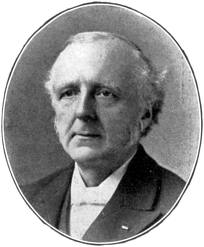
F.B. Meyer“God will make our obstacles serve His purposes. …

“The obstacles may be untruths told about us; a difficult occupation; ‘a thorn in the flesh’ (2 Corinthians 12:7); or our daily cross. And often we pray for their removal, for we tend to think that if only these were removed, we would live a more tender, pure, and holy life. … These are the very conditions we need for achievement, and they have been put in our lives as the means of producing the gifts and qualities for which we have been praying so long.

“We pray for patience for many years, and when something begins to test us beyond our endurance, we run from it. We try to avoid it, we see it as some insurmountable obstacle to our desired goal, and we believe that if it was removed, we would experience immediate deliverance and victory. This is not true! We would simply see the temptations to be impatient end. This would not be patience.

“The only way genuine patience can be acquired is by enduring the very trials that seem so unbearable today. Turn from your running and submit. … There is nothing in your life that distresses or concerns you that cannot become submissive to the highest purpose. Remember, they are God’s mountains. He puts them there for a reason, and we know He will never fail to keep His promise.” —F.B. Meyer

Thursdays With Oswald—God’s Plan For Building Spiritual Muscles

Oswald ChambersThis is a weekly series with things I’m reading and pondering from Oswald Chambers. You can read the original seed thought here, or type “Thursdays With Oswald” in the search box to read more entries.

God’s Plan For Building Spiritual Muscles

     If a man has used his arm only for writing, and then becomes a blacksmith, he will groan for days with the tremendous pain in the deltoid muscle until by practice the time comes when there is no more pain because the muscle has become rightly adjusted to its new work. 

     The same thing happens spiritually, God begins to teach us how to walk and over and over again we begin to howl and complain. May God save us from the continual whine of spiritual babes—“Teach us the same things over and over again, don’t give us the revelations of God which are painful, give us the ‘simple gospel,’ what we have always believed, don’t tell us of things we have never thought about before, because that causes pain” (Hebrews 5:12). Of course it does. 

     Thank God there is a pain attached to being saved, the pain of growing until we come to maturity where we can do the work of a son or daughter of God. … 

     Look back over your life in grace, whether long or short, and ask yourself which are the days that have furthered you most in the knowledge of God—the days of sunshine and peace and prosperity? Never! The days of adversity, the days of strain, the days of sudden surprises, the days when the earthly house of this tabernacle was strained to its last limit, those are the days when you learned the meaning of this passion of “Go.” 

From The Philosophy Of Sin

The only way to build physical muscles is to push them beyond their comfort level.

The only way to build physical stamina is to run farther than you have run before.

The only way God can build our spiritual muscles—and our spiritual stamina—is to push us beyond our comfort zone, to challenge us to go deeper and farther than we’ve gone before. Don’t push Him away. God loves you too much to leave you where you are!

3 Quotes For Uncommen Husbands

Uncommen HusbandsI recently finished a reading plan on YouVersion called Uncommen Husbands. Here are some quotes that I especially appreciated from Brian Goins’ insights.

“Paul indicates there a came a time in his life when he grew out of an immature, boyish love and embraced a more mature, and dare we say, manly love [1 Corinthians 13:11]. If we’re going to love our wives like Christ loved the church, we must let the boy die. And in marriage, that’s far easier said than done. Check out the comparisons below:

  • Boys retaliate quickly when hurt; manly love is patient and kind.
  • Boys require constant affirmation; manly love is not arrogant or rude.
  • Boys stew, stammer, and hold grudges when they don’t get their way; manly love does not insist on its own way; it is not irritable or resentful.
  • Boys try to win every argument; manly love does not rejoice at wrongdoing, but rejoices with the truth.
  • Boys have a short fuse; manly love bears all things.
  • Boys write people off when wronged; manly love believes God’s best for the relationship.
  • Boys lose hope after they’re hurt; manly love always hopes for reconciliation regardless of the pain.
  • Boys expect to be served; manly love endures all things.”

“Paul says, ‘cherish’ our bride like we cherish our own bodies. The word means, ‘bring warmth to,’ and from which we derive our words, thermal and thermostat. … When Paul tells us to love our wives as we love our own bodies, he’s encouraging us to cherish their emotional needs in the same way we cherish our own physical needs. If she’s chilly, it’s our job to warm her up. If she’s steaming, then we help lower the mercury. In other words, the call to cherish means we have to engage when we’d rather shrink back.”

“I’m not sure Paul was the most popular men’s retreat speaker. When he spoke, some fell asleep…and then fell out a window (Acts 20:9). He admitted to the church at Corinth his messages were a bit convoluted (1 Corinthians 2:3-5). Even his buddy Peter threw him under the bus for his ivory tower verbiage (2 Peter 3:15-16).

“Then there was his unfortunate use of the word nourish in Ephesians 5:28. I’m pretty sure every guy in the audience cringed a bit when Paul said to husbands, ‘nourish’ your wife. We may think of nutritious foods, but in Paul’s day, the word often referred to nursing moms. Try and get that picture out of your head.

“When my wife used her God-given equipment to nourish our children I don’t ever remember a time when I asked her, ‘Honey, when was the last time you fed the baby?’ and she responded, ‘Oh, I don’t know, it’s been a few days.’ Because instinctively a mom knows her baby’s nourishment has to be consistent, catered to their tastes, and is crucial for their survival. In the same way, Paul calls husbands to nourish their brides. Is your love consistent? I don’t know about you, but I rarely miss a meal. Unless I’m fasting (for a very short time!), about every 4-5 hours I feed the beast. It’s all too common for our wives to go months between meals: a date night, taking a walk, go on an adventure, a simple text saying, ‘are you tired? You should be because you’ve been running through my mind all day long,’ or a well thought out letter. Nourishment must be ongoing. Is your love catered to her tastes? You’re not going to catch me at the all-you-can-eat tofu bar. Unless I’m on the mission field, I generally nourish my body with stuff I like. It’s common to give love the way we want to receive love. But your love language probably doesn’t match hers. Want to know if you are catering to her ‘love’ taste buds, ask this UNCOMMEN question: ‘Honey, do you feel the depth of my love? Not do you know it, but do you feel it? If not, how can I nourish your soul?’ Do you realize your love is crucial to her survival?”

Poetry Saturday—Pressed

Annie Johnson FlintPressed beyond measure ; yes, pressed to great length.
Pressed so intensely, beyond my own strength;
Pressed in the body and pressed in the soul,
Pressed in the mind till the dark surges roll.
Pressure from foes, and pressures from dear friends.
Pressure on pressure, till life nearly ends.

Pressed into knowing no helper but God;
Pressed into loving His staff and His rod.
Pressed into liberty where nothing clings;
Pressed into faith for impossible things.
Pressed into living my life for the Lord,

Pressed into living a Christ-life outpoured. —Annie Johnson Flint

Thursdays With Oswald—6 Questions About Your Relationship With Jesus

Oswald ChambersThis is a weekly series with things I’m reading and pondering from Oswald Chambers. You can read the original seed thought here, or type “Thursdays With Oswald” in the search box to read more entries.

6 Questions About Your Relationship With Jesus

“How much more shall the blood of Christ, Who through the enteral Spirit offered Himself without blemish unto God, cleanse your conscience from dead works to serve the living God?” (Hebrews 9:14)

     Our right to ourselves in every shape and form was destroyed once and for ever by the death of Jesus, and we have to be educated into the realization of what this means in all its fullness. We have to come to a relationship to the Cross in thought as well as in life. … 

     We are here with no right to ourselves, for spiritual blessing for ourselves; we are here for one purpose only—to be made servants of God as Jesus was. …

   “How much more” does the death of Jesus mean to us today than it ever has before? Are we beginning to be lost in wonder, love and praise at the marvelous loosening from sin, and are we so assimilating the nature of Jesus that we bear a strong family likeness to Him? …

     The most devout among us are too flippant about this great subject of the death of Jesus Christ. When we stand before the Cross, is our every common pious mood stripped off? … 

     How does all the profound thought underlying the death of Jesus touch us? The writer to the Hebrews instantly connect it with conscience—“How much more shall the blood of Christ,…cleanse your conscience from dead works to serve the living God?” Has conscience the place in our salvation and sanctification that it ought to have? … 

     Are you thankful to God for your salvation and sanctification, thankful He has purged your conscience from dead works? Then go a step further; let Jesus Christ take you straight through into identification with His death until there is nothing left but the light at the foot of the Cross, and the whole sphere of the life is hid with Christ in God. 

From The Philosophy Of Sin

I challenge you: take some time to thoughtfully answer these questions.

7 Quotes On Hungering & Thirsting From “The Blessing Of Humility”

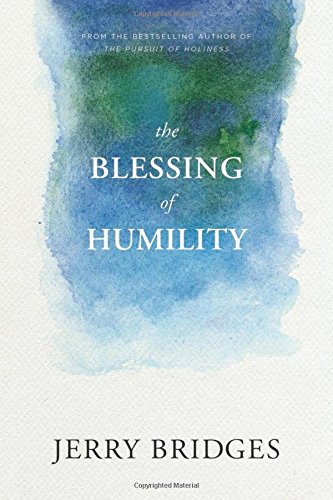
The Blessing Of HumilityAs I stated in my review of Jerry Bridges’ book The Blessing Of Humility, reading through these thoughts slowly—Beatitude by Beatitude—would bring about the most life-changing impact. In that spirit, I will be sharing some noteworthy quotes one Beatitude at a time. Here are some quotes on blessed are those who hunger and thirst for righteousness (Matthew 5:6)…

“To hunger and thirst for righteousness, then, indicates a strong overwhelming desire for righteousness. … Righteousness denotes the state of being right. Biblically, it means perfect according to God’s law in every way: thought, word, deed, and even motive.”

“At the moment we trusted Christ as Savior, we were justified—declared by God to be righteous. You will never be more or less righteous before God any day of your life than you were the moment you trusted Christ as your Savior. This raises another question: Why should I hunger and thirst for that which I already have? The answer is that the more we grow and mature in the Christian life, the more sensitive we become to the sin and failure we see in our lives. It is not that we necessarily sin more but rather that we become more aware of and mourn over the sin that is already there. As that happens, we hunger more and more after the righteousness we have only in Christ.”

“There is a legitimate sense in which we are to hunger and thirst for that perfect righteousness we already have in Christ. This should be a continual daily attitude of all growing Christians because we continue to sin every day.”

“There is a second righteousness that we should hunger and thirst for: the experiential righteousness we are to pursue every day. God has inextricably linked together the righteousness we have in Christ and the righteousness we should pursue. He does not give one without the other. Therefore, whoever hungers and thirsts after the righteousness we have in Christ will also hunger and thirst to be righteous in his or her daily experience.” [See 2 Timothy 2:2; 1 Peter 2:24; 1 John 3:10]

“It is clear from Scripture, then, that we are to pursue an experiential righteousness. But what will cause us to hunger and thirst for it? The answer is twofold. First, as we have already observed, the new nature is inclined by the Holy Spirit to pursue righteousness. … The second motivation is gratitude for the righteousness we have in Christ.”

“There will be no growth in experiential righteousness apart from a regular intake of the Word of God.”

“We are absolutely dependent on the Holy Spirit to work in us Himself and to enable us to work. We cannot make one inch of progress toward experiential righteousness without His divine enablement.”

I have previously shared quotes on:

Quotes on the remaining Beatitudes will be posted next week so stay tuned. Even better: subscribe to my blog, and you’ll receive the new quotes directly in your email inbox.