Thursdays With Oswald―Utterly Unwonderful & Ordinary

Oswald ChambersThis is a periodic series with things I’m reading and pondering from Oswald Chambers. You can read the original seed thought here, or type “Thursdays With Oswald” in the search box to read more entries.

Utterly Unwonderful & Ordinary

     What the natural reason would call an anti-climax is the very climax of God’s supernatural grace whereby a man having going through the most wonderful experience, emerges and lives an unwonderful, ordinary life. … 

     It is one thing to go through a crisis grandly, but a different thing to go through every day glorifying God where there is no witness, no limelight, and no one paying the remotest attention to you. … 

     It takes God’s incarnated Spirit to make you so absolutely humanely His that you are utterly unnoticeable.

From Not Knowing Where

I love the story of George Washington’s life. After having given so much in service to the newly-formed United States of America, his greatest desire was to return to a common, ordinary life, out of the spotlight.

Too many times we think that becoming a more mature Christian means that God is going to give us a bigger platform, or a more visible place to minister. But as Oswald Chambers shows through the life of Abraham, after his obedience to give up his son Isaac, he led a very “unwonderful, ordinary life.”

Some thoughts I’m pondering―

  • Am I willing to continue to follow God in the ordinariness of life? Or do I need to always have a crisis?
  • Is God more precious to me in the routine day-to-day living? Or do I need to have to be in a life-or-death struggle to know His promises and power are true?

Christian maturity is allowing God to give me a “humanely… unwonderful, ordinary life” that glorifies Him.

Links & Quotes

link quote

“Search the Scriptures. Do not merely read them—search them; look up the parallel passages; collate them; try to get the meaning of the Spirit upon any one truth by looking to all the texts which refer to it. Read the Bible consecutively: do not merely read a verse here and there—that is not fair.” —Charles Spurgeon

“How does the Lord reward His diligent ones? It has been my experience that when I walk arm in arm with Jesus, so in love with Him, rewards break out on all sides. Everything I do or have is blessed: my wife, children, friends, ministry. There comes a life of Christ within that flows like a mighty river. Yes, we’ll have trials and tribulations. But through it all He rewards us with manifestations of His presence. … Those who neglect the Lord soon spin out of control as the devil moves in and takes over. Such a person has a devastated self-image. His or her feelings and thoughts cannot be curbed, and their tongue wags and moves under the power of bitterness and anger.” —David Wilkerson

Small problems can become huge problems if they are not addressed early on. Max Lucado has a great reminder in his post Go After The Small Drips.

Here is a great way to check out lots of books. Frank Viola has a link to a special offer from Leaders Book Summaries.

“If the Holy Spirit is obeyed the stubbornness is blown out, the dynamite of the Holy Ghost blows it out.” ―Oswald Chambers

[VIDEO] John Maxwell reminds us that only mature people can compromise to make relationships successful. Check this out―

Links & Quotes

link quote

I love studying my Bible, and I have loved discovering the great work at The Overview Bible Project! They have a new free email course that will send you a weekly email with a summary of every book of the Bible. Please sign up for this course by clicking here.

“If all experienced God in the same way and returned Him an identical worship, the song of the Church triumphant would have no symphony, it would be like an orchestra in which all the instruments played the same note.” —C.S. Lewis

“God’s grace was God’s acting in Paul to make Paul work hard. So when Paul says, ‘Work out your salvation,’ he adds, ‘it is God who works in you, both to will and to work for His good pleasure’ (Philippines 2:13). Grace is power from God to do good things in us and for us.” —John Piper

“Society will be better off if the facts about pornography use and its consequences are widely and effectively circulated so that people from all walks of life can take account of them.” Read more in this post: Is Porn To Blame For The Declining Marriage Rate?

“‘Used to be,’ is not necessarily a mark of failure or even obsolescence. It’s more often a sign of bravery and progress. If you were brave enough to leap, who would you choose to ‘used to be’?” —Seth Godin

12 Quotes From “12 Huge Mistakes Parents Can Avoid”

12 Huge MistakesI highlighted a lot in Tim Elmore’s newest book 12 Huge Mistakes Parents Can Avoid … a lot! This is book that every parent (or grandparent) should read because it’s never too late to invest the best in our (grand)children. You can read my full book review of this must-read book by clicking here. Below are just a few of the quotes I highlighted in this book.

“I believe we have under-challenged kids with meaningful work to accomplish. We have overwhelmed them with tests, recitals, and practices, and kids report being stressed-out by these activities. But they are essentially virtual activities. Adults often don’t give significant work to students—work that is relevant to life and could actually improve the world if the kids rose to the challenge. We just don’t have many expectations of our kids today.” 

“Every parent and teacher wants to see their kids succeed in school, in sports, and in life, but making it impossible to fail isn’t the answer. Removing failure, in fact, is a terrific way to stunt maturity. … As parents, we’ve given them lots of possessions but not much perspective. As educators, we’ve given them plenty of schools but not plenty of skills. As coaches, we’ve taught them how to win games but not how to win in life. As youth workers, we provide lots of explanations but not enough experiences. As employers, we’ve mentored them in profit and loss but haven’t shown them how to profit from loss.”

“Truth be told, when kids have heard they are excellent without working hard or truly adding value to a team, the praise rings hollow to them. Our affirmation must match their performance.”  

“When people—especially young people—know they are free to try something and fail, their performance usually improves. It brings out the best in them. But if they are preoccupied with trying not to fail, they become paralyzed:

  • Failure can create resilience.
  • Failure can force us to evaluate.
  • Failure can motivate us to better performance.
  • Failure prompts creativity and discovery.
  • Failure can develop maturity.”

“Our constant caving begins to foster a constant craving in them. They want clarity. With boundaries unclear, they need more direct attention from Mom or Dad. Unwittingly, we actually breed insecurity and instability in our kids. This may sound strange, but consistency may be your best friend as a parent because it aids in your authority and in your child’s development.” 

“Removing the consequences takes one of two roads. We either excuse their behavior and remove negative outcomes, or we actually step in and pay the consequence for them. When we do this, we frequently relieve the stress. We bring immediate peace to the situation, so we get addicted to this pattern. Unfortunately, we don’t see the long-term problems we are causing. Removing the consequences from our children’s lives brings short-term tranquility but long-term trouble.”

“‘You can do anything you want.’ I recognize why we say this, but as our kids grow older, we must help them to see what we really meant. … We really meant, if they set their mind to do something, they’ll be amazed at what they can pull off. The catch is, it needs to be something with in their gift area. They cannot simply make up a dream or copy a friend’s dream and call it theirs. Dreams should be attached to strengths.” 

“We have created a world of conveniences, filled with smart phones, microwaves, Internet shopping, and online banking. The subtle message is that struggles are to be avoided. We want as much convenience as possible. In fact, we feel entitled to it. But we failed to see that when we remove the struggles from our children’s lives, we begin to render them helpless. They don’t have the opportunity to develop the life skills they’ll need later on. Further, when we step in to control their levels of struggle, they don’t learn how to be in control or under control themselves. In fact, all they learn is how to be controlled.”

“Ironically, the things young people want to avoid are necessary for them to mature authentically. Slow, hard, boring, risky, laborious… these are the very challenges that prepare me to become a good man, a good husband, a good father, a good employee, a good employer. Many life skills that once naturally developed in us now atrophy in today’s culture. So we must be far more intentional about leading our kids into opportunities to build these skills.” 

“When we affirm looks or clothing—external matters instead of internal virtues—kids values become skewed. Remember, what gets rewarded gets repeated. Without realizing it, we are reinforcing cosmetic features—usually features that are not in their control. … We should be doing just the opposite. We must affirm effort and behavior, which are in their control, instead of characteristics that are out of their control. If we do this, we begin to foster a growth mindset instead of a fixed mindset.”

“We mistake hurtful with harmful. Many times, hurting helps us. In fact, removing the hurt may be harmful. … When we hurt, we can learn important truths about ourselves and about others, truth that will be beneficial later in our lives. … We confuse disturbance with damage. We hate being disturbed. Our days are so full, we often hope and pray we won’t face any unexpected disturbances as we pursue our goals. The fact is, however, that on our way to those goals, we fall into unhealthy ruts. Interruptions force us out of those ruts. Interruptions are not damaging at all. They are the very items that save us from our tunnel vision. We need to be disturbed from time to time. Interruptions are wake-up calls that rouse us from our apathy or complacency.” 

“I know you think kids are tired of you talking about the good old days. But I’ve found most kids love hearing stories of how we adults struggled to learn the same life skills when we were young. It’s all part of growing up.”

Links & Quotes

link quote

Some good reading from today…

“There are no unsacred places; there are only sacred places and desecrated places.” —Wendell Berry

“It may be that when we no longer know which way to go that we have come to our real journey. The mind that is not baffled is not employed. The impeded stream is the one that sings.” —Wendell Berry

“Wherefore seeing that all Christians know that the death of the religious beggar amongst the dogs, licking his sores, was better than the death of the wicked rich man in all his silks and purples, what power hath the horror of any kind of death to affright their souls that have led a virtuous life?” —Augustine

Parents & teachers should especially check out Tim Elmore’s post: 5 Ways To Cure The “Cool Kid” Curse. In this post he mentions his book Artificial Maturity; click here to read my review of this outstanding resource.

“We have thus plainly before us the principle, that our Lord in His infinite wisdom and superabundant love, sets so high a value upon His people’s faith, that He will not screen them from those trials by which faith is strengthened.” —Charles Spurgeon

8 Quotes From “The Christian’s Secret Of A Happy Life”

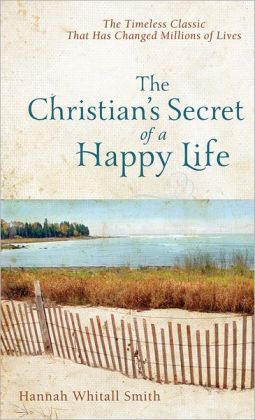
The Christian's SecretSometimes people slap the label “timeless classic” on a book just because it’s old. But in the case of The Christian’s Secret Of A Happy Life by Hannah Whitall Smith, the label is well-deserved. The thoughts she shares are so biblically-grounded that they truly are timeless. You can read my full book review by clicking here. I highlighted way too many things to share them all, but here are a few quotes that I especially liked.

“You have been forced to settle down to the conviction, that the best you can expect from your religion is a life of alternate failure and victory, one hour sinning, and the next repenting, and then beginning again, only to fail again, and again to repent. … Can we dream that the Savior, who was wounded for our transgressions and bruised for our iniquities, could possibly see of the travail of His soul and be satisfied in such Christian lives as fill the Church today? … Can we, for a moment, suppose that the holy God, who hates sin in the sinner, is willing to tolerate it in the Christian, and that He has even arranged the plan of salvation in such a way as to make it impossible for those who are saved from the guilt of sin to find deliverance from its power?” 

“Positive transformation is to take place. So at least the Bible teaches. Now, somebody must do this. Either we must do it for ourselves, or another must do it for us. We have most of us tried to do it for ourselves at first, and have grievously failed; then we discover, from the Scriptures and from our own experience, that it is something we are unable to do, but that the Lord Jesus Christ has come on purpose to do it, and that He will do it for all who put themselves wholly into His hands and trust Him without reserve. … The Lord’s part is to do the thing entrusted to Him. He disciplines and trains by inward exercises and outward providences. He brings to bear upon us all the refining and purifying resources of His wisdom and His love. He makes everything in our lives and circumstances subservient to the one great purpose of causing us to grow in grace, and of conforming us, day by day and hour by hour, to the image of Christ.”

“Sanctification is both a step of faith, and a process of works. It is a step of surrender and trust on our part, and it is a process of development on God’s part. By a step of faith we get into Christ; by a process we are made to ‘grow up into Him in all things.’ By a step of faith we put ourselves into the hands of the Divine Potter; by a gradual process He makes us into a vessel unto His own honor, meet for His use, and prepared to every good work. … The maturity of a Christian experience cannot be reached in a moment, but is the result of the work of God’s Holy Spirit, who, by His energizing and transforming power, causes us to grow up into Christ in all things. And we cannot hope to reach this maturity in any way other than by yielding ourselves up, utterly and willingly, to His mighty working.” 

“Just as we reconcile the statements concerning a saw in a carpenter’s shop when we say, at one moment, that the saw has sawn asunder a log, and the next moment declare that the carpenter has done it. The saw is the instrument used; the power that uses it is the carpenter’s. And so we, yielding ourselves unto God, and our members as instruments of righteousness unto Him, find that He works in us to will and to do of His good pleasure, and we can say with Paul, ‘I labored; yet not I, but the grace of God which was with me.’ … Just as the potter, however skillful, cannot make a beautiful vessel out of a lump of clay that is never put into his hands, so neither can God make out of me a vessel unto His honor unless I put myself into His hands.”:

“Most Christians are like a man who was toiling along the road, bending under a heavy burden, when a wagon overtook him, and the driver kindly offered to help him on his journey. He joyfully accepted the offer but when seated in the wagon, continued to bend beneath his burden, which he still kept on his shoulders. ‘Why do you not lay down your burden?’ asked the kind-hearted driver. ‘Oh!’ replied the man, ‘I feel that it is almost too much to ask you to carry me, and I could not think of letting you carry my burden too.’ And so Christians, who have given themselves into the care and keeping of the Lord Jesus still continue to bend beneath the weight of their burdens, and often go weary and heavy-laden throughout the whole length of their journey. … It is generally much less difficult for us to commit the keeping of our future to the Lord than it is to commit our present. We know we are helpless as regards the future, but we feel as if the present is in our own hands, and must be carried on our own shoulders; and most of us have an unconfessed idea that it is a great deal to ask the Lord to carry ourselves, and that we cannot think of asking Him to carry our burdens too.”

“He is our Father, and He loves us, and He knows just what is best, and therefore, of course, His will is the very most blessed thing that can come to us under any circumstances. I do not understand how it is that the eyes of so many Christians have been blinded to this fact. But it really would seem as if God’s own children were more afraid of His will than of anything else in life—His lovely, lovable will, which only means loving-kindnesses and tender mercies, and blessings unspeakable to their souls!”

“You have trusted Him as your dying Savior; now trust Him as your living Savior. Just as much as He came to deliver you from future punishment did He also come to deliver you from present bondage. Just as truly as He came to bear your stripes for you has He come to live your life for you.” 

“The one chief temptation that meets the soul at this juncture is the same that assaults it all along the pathway, at every step of its progress; namely, the question as to feelings. We cannot believe we are consecrated until we feel that we are: and because we do not feel that God has taken us in hand, we cannot believe that He has. As usual, we put feeling first, and faith second, and the fact last of all. No, God’s invariable rule in everything is, fact first, faith second, and feeling last of all; and it is striving against the inevitable when we seek to change this order.”

Links & Quotes

link quote

Some good reading & watching from today…

“What matters is not the accomplishments you achieve; what matters is the person you become.” —Dallas Willard

“God-given dreams have to do with unselfishness and the serving and blessing of others. Dreams that are initiated out of our own imaginations tend to be primarily focused on ourselves and what we can ‘get.’” —Jeff Hlavin

“Pray against pride, dear friends, wherever you may be. Pride will grow on a dunghill, as well as in the king’s garden. Pray against pride and vainglory, and God give you grace to keep it under!” —C.H. Spurgeon

[VIDEO] John Maxwell reminds us that you don’t have to be a cosmetologist to make someone else beautiful.

Mark Atteberry addresses an article about why millennials are leaving churches, and he does a great job refuting the main points.

Great encouragement from David Wilkerson for anyone praying for a wayward child or spouse.

Planned Parenthood’s stance: if it’s consensual, then violent sex is okay. Again I ask, “Why are my tax dollars funding this garbage?!” Check out this transcript from Live Action’s latest undercover investigation

PLANNED PARENTHOOD: OK. Um, role-play absolutely is normal. Um, it’s—I would say anything within the sexual world is normal as long as it’s consensual 

15-YEAR-OLD: OK. 

PLANNED PARENTHOOD: —between the two people. So if you feel like—like, if he threw out role-play and you were like, “That sounds really weird,” or “I feel really uncomfortable with that,” and he still, like, pressured you, then that is not normal. 

15-YEAR-OLD: OK.

PLANNED PARENTHOOD: But if you were like, “Yeah, I’m open to it, whatever,” and you try it and it felt weird, so you said that, and he was like, “Yeah, that—whatever, that’s fine, let’s not do that again,” that’s also normal.

The Christian’s Secret Of A Happy Life (book review)

The Christian's SecretAlthough originally written in 1875, The Christian’s Secret Of A Happy Life by Hannah Whitall Smith is as relevant today as it was 140 years ago.

Hannah is quick to point out that happiness is not the goal for a Christian, but a closer walk with Jesus Christ is. When we are walking close with Him, happiness that comes from peace, security, and consistent growth in faith is the natural byproduct.

Hannah is a Quaker and she wrote nearly two centuries ago, so some language differences are to be expected. But I found that when the “old English” began to show up more liberally in certain passages, it was the author’s way of really getting excited about what she had to say! Other than that, the principles and the examples she uses to make her points are fairly timeless.

The book is divided into three sections, and the middle section—called Difficulties—was one of my favorites. What made it so intriguing was the practical and biblical way Hannah explained the difficulties Christians face, and the God-honoring way out of those problems.

This is an excellent devotional-style book for both new and experienced Christians.

“The Lord’s part is to do the thing entrusted to Him. He disciplines and trains by inward exercises and outward providences. He brings to bear upon us all the refining and purifying resources of His wisdom and His love. He makes everything in our lives and circumstances subservient to the one great purpose of causing us to grow in grace, and of conforming us, day by day and hour by hour, to the image of Christ.” —Hannah Whitall Smith

Thursdays With Oswald—The Most Audacious Verse

Oswald ChambersThis is a weekly series with things I’m reading and pondering from Oswald Chambers. You can read the original seed thought here, or type “Thursdays With Oswald” in the search box to read more entries.

The Most Audacious Verse

     The faith that does not react in the flesh is very immature. Paul was so identified with Jesus Christ that he had the audacity to say that what men saw in his life in the flesh was the very faith of the Son of God. Galatians 2:20 is the most audacious verse in the Bible! Paul is not referring to his own elementary faith in Jesus Christ as his Savior, but to the faith of the Son of God, and he says that that identical faith is now in him.

From Conformed To His Image

Do you think that Paul is being audacious?

If so, do you think that Chambers is right that we can have that sort of faith?

If so, what’s it going to take?

5 Noteworthy Quotes In “Stand Strong”

Stand StrongNick Vujicic does an excellent job in his book Stand Strong in helping students, parents, and teachers learn how to overcome bullies. You can read my full review of Stand Strong by clicking here.

I have already shared some of Nick’s quotes from this book, and some quotes specifically relating to the emotional toll bullying can have on those being picked on. Nick also makes the point that there are some invaluable lessons to be learned by overcoming adversity in our lives. Here are some of the quotes that Nick shared in his excellent book.

“You don’t develop courage by being happy in your relationships every day. You develop it by surviving difficult times and challenging adversity.” —Epicurus

“All the adversity I’ve had in my life, all my troubles and obstacles, have strengthened me. … You may not realize it when it happens, but a kick in the teeth may be the best thing in the world for you.” —Walt Disney

“Comfort and prosperity have never enriched the world as much as adversity has.” —Billy Graham

“Most of the verses written about praise in God’s Word were voiced by people who were faced with crushing heartaches, injustice, treachery, slander, and scores of other difficult situations.” —Joni Eareckson Tada

“Friendships provide a context in which children develop, but of course so do negative peer relations. … We should expect that both types of relationships, as different as they are, present opportunities for growth.” — psychologist Maurissa Abecassis