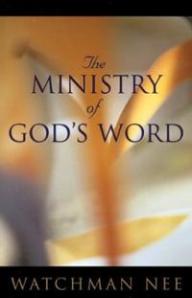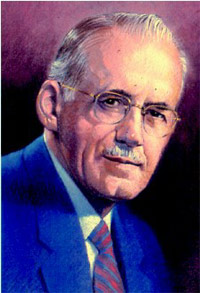
As a pastor I am frequently in awe that God would use me to share His Word with His people. At times it can feel almost overwhelming. Reading Watchman Nee’s teaching to pastors in The Ministry Of God’s Word I feel equal parts heaviness and encouragement.
The heaviness comes from the even deeper realization that Nee brings to pastors of their awesome responsibility before God to be the messengers of His Word. Nee makes it clear that if a pastor’s heart or mind is not as tuned in as possible, the message will be diminished in its delivery.
The encouragement comes from the realization of how much the Holy Spirit wants to help a preacher get his heart, mind, spirit, memory, and even vocabulary in a place that can be used greatly by God.
Pastors, this is not an easy-to-read book. Not because of the vocabulary, but because of the deepness of the subject matter. You will find yourself confronted at every page. But as you persevere through Nee’s challenging message, you will feel God’s Spirit moving to equip you for even great ministry of God’s Word.
And I would be remiss if I didn’t say thank you to my son Harrison for giving this book to me as a gift. Thank you, son!
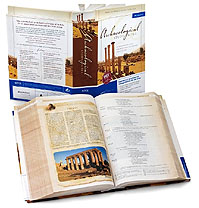
Normally I post book reviews after I have completely read a book. But since I’m going to be working my way through The Archeological Study Bible for quite some time, I thought now was as good a time as any to share my thoughts.
I have never been able to read through the Bible in a year. I find too many fascinating subjects that keep me locked into a passage, and so it ends up putting me hopelessly behind such a rigorous reading schedule. In this study Bible, I’m finding even more fascinating reading that is making God’s Word come alive (and consequently causing me to pause even longer on certain passages)!
Since archeology and anthropology put human history in order, I am reading through the Scripture in its chronological order (i.e. not in the order the books appear in the Bible, but in the order the historical events occurred. There is a helpful chronological list on BibleGateway.com). The Archeological Study Bible is adding such a richness to the places and people and customs that are chronicled in Scripture. With each commentary, map, chart, graph, or in-depth article, I am learning about the cultures in which the people of the Bible lived, and the prevailing thoughts and customs in which biblical writers wrote the Spirit-inspired Scriptures. It is quite fascinating!
If you would like to add a new level of richness to your Bible study, this study Bible should definitely be a part of your library.
My dear fellow pastor, please be on guard! Be careful to remain physically fit, spiritually full, emotionally strong, and mentally stimulated. Keep your relationships healthy and guard against the attacks of the enemy.
Heed these wise words of A.W. Tozer—
“Yet the ministry is one of the most perilous of professions. The devil hates the Spirit-filled minister with an intensity second only to that which he feels for Christ Himself. The source of this hatred is not difficult to discover. An effective, Christ-like minister is a constant embarrassment to the devil, a threat to his dominion, a rebuttal of his best arguments and a dogged reminder of his coming overthrow. No wonder he hates him. satan knows that the downfall of a prophet of God is a strategic victory for him, so he rests not day or night devising hidden snares and deadfalls for the ministry. Perhaps a better figure would be the poison dart that only paralyzes its victim, for I think that satan has little interest in killing the preacher outright. An ineffective, half-alive minister is a better advertisement for hell than a good man dead. So the preacher’s dangers are likely to be spiritual rather than physical, though sometimes the enemy works through bodily weaknesses to get to the preacher’s soul.”
What do you do to keep yourself healthy and on-guard?
My oldest son is graduating from high school this year, and my wife and I wanted to take him on a special trip for spring break. So we spent the week touring Washington, D.C.
I have never visited our nation’s capital before, and after being there, I’m sorry that I didn’t make that trip earlier! I am bit of a history buff, so seeing all of the historical landmarks and learning more about the people who contributed to the success of America was amazing!
Here are a few reflections I have from my time…
I need to be more grateful. So many people have sacrifice so much for me to enjoy the freedom I could easily take for granted, if I’m not careful.
I need to study more. Our history is so rich! For me it’s fun to learn about the men and women of our past, but it’s more important than that. If we don’t learn the lessons of the past, we are doomed to repeat the same mistakes of the past.
I need to pray more. Our elected officials face an enormous challenge each and every day. Scripture is clear that prayer for those in our government commanded of us, but the Bible also says that praying for them is beneficial for us.
I need to learn more about Cedar Springs history. The great men and women of American history weren’t all born in Washington, D.C., nor did they all live or work there. I live in a community of hard-working, innovative, passionate individuals. The next Lincoln, or Jefferson, or Jay, or Webster might be right here in my community, and I want to be prepared to support them.
I need to visit Washington again soon. For three solid days we took in everything we possibly could, and we hardly scratched the surface. I can’t wait to go back to learn more!
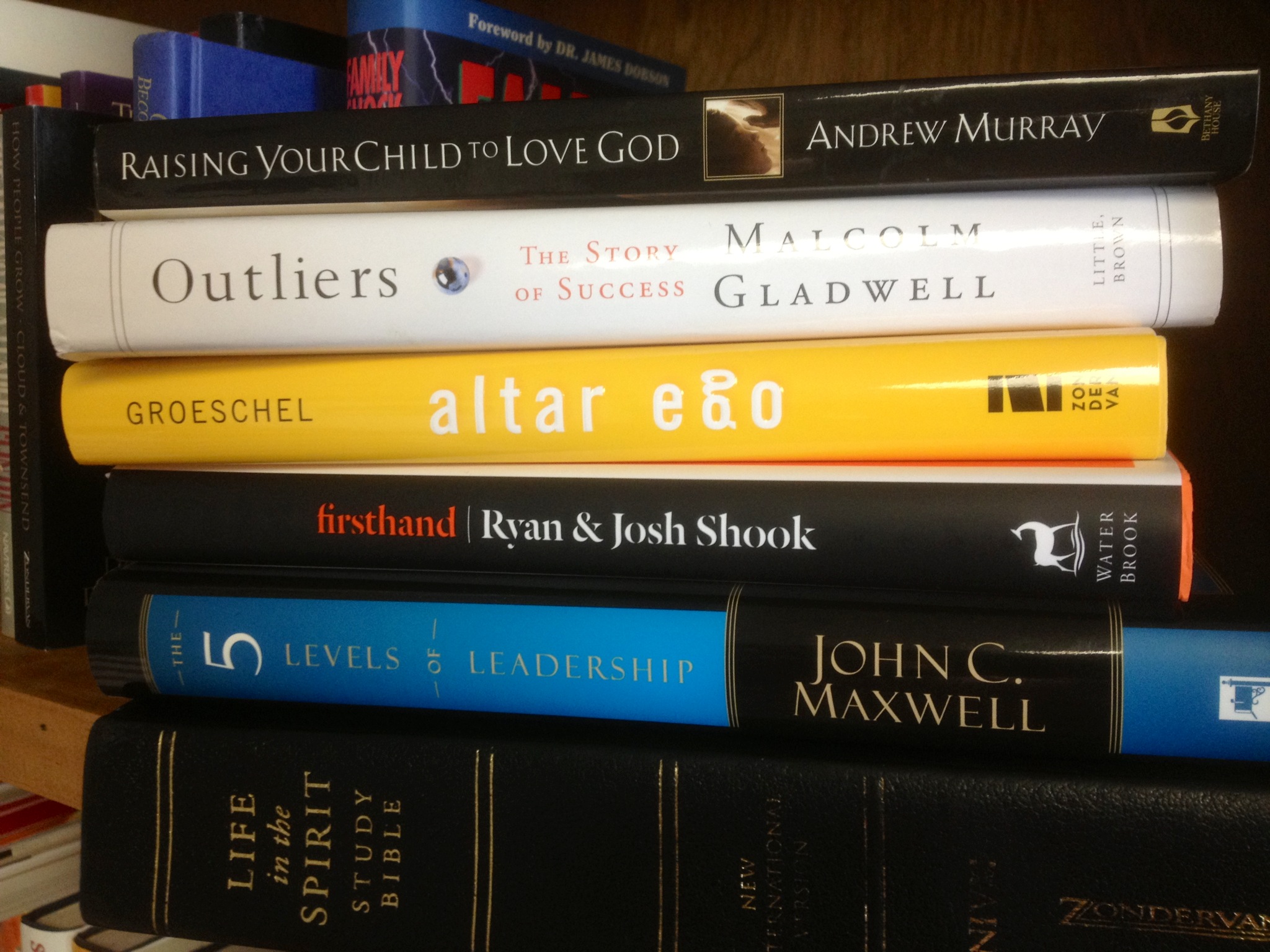
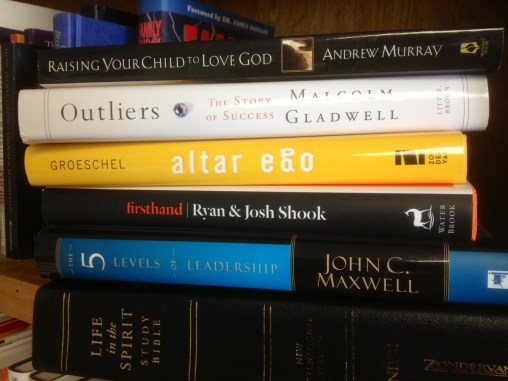
It’s no secret that I like to read. I read a little for pleasure, but mostly I read because it makes me a better Christian, a better husband, a better dad, a better preacher. It expands my horizons. It gives me new ideas. It teaches me life lessons. It gives me insights to share with others.
My first priority is to read my Bible every day, and then all of my other reading is filtered through that prism of Scripture. I don’t read only “Christian” books, but I do only read good books.
It’s true: Leaders are readers. If you want to lead more and lead better, read more and read better.
“When a very young minister, I asked the famous holiness preacher, Joseph H. Smith, whether he would recommend that I read widely in the secular field. He replied, ‘Young man, a bee can find nectar in the weed as well as in the flower.’ I took his advice (or, to be frank, I sought confirmation of my own instincts rather than advice) and I am not sorry that I did. John Wesley told the young ministers of the Wesleyan Societies to read or get out of the ministry, and he himself read science and history with a book propped against his saddle pommel as he rode from one engagement to another.” —A.W. Tozer
“Keep yourself full with reading. Reading gives you a vocabulary. Don’t read to remember; read to realize.” —Oswald Chambers
“It is a dreadful deception that learning and mental growing are strictly associated with school. Good reading should be the vocation of a lifetime.” —John Piper
“Paul says to Timothy, so he says to everyone, ‘Give yourself to reading.’ He who will not use the thoughts of other men’s brains proves that he has no brains of his own. You need to read. Renounce as much as you will all light literature but study as much as possible sound theological works, especially the Puritans and expositions of the Bible. The best way for you to spend your leisure is to be either reading or praying.” —C.H. Spurgeon
“The reading of all good books is like conversation with the finest men of past centuries.” —Rene Descartes
“After all that professors may do for us, the real University is a collection of good books.” —Thomas Carlyle
“Ignoring good books enfeebles vision and strengthens our most fatal tendency; the belief that the here and now is all there is.” —Allan Bloom
Listen to the podcast of this post by clicking on the player below, and you can also subscribe on Apple, Spotify, or Audible.
Take just a moment to read these words from the apostle Peter—
So then, dear friends, since you are looking forward to this, make every effort to be found spotless, blameless and at peace with Him. … Therefore, dear friends, since you have been forewarned, be on your guard so that you may not be carried away by the error of the lawless and fall from your secure position. But grow in the grace and knowledge of our Lord and Savior Jesus Christ…. (2 Peter 3:14, 17-18)
How do I know I’m looking forward and growing? Here’s a checklist that needs to be reviewed regularly:
I hope we can all answer “Yes” to more and more of these items!
Growth is not automatic—this is especially true for spiritual growth. Growth must be intentional or it will not happen. I want to keep going forward in Christ!
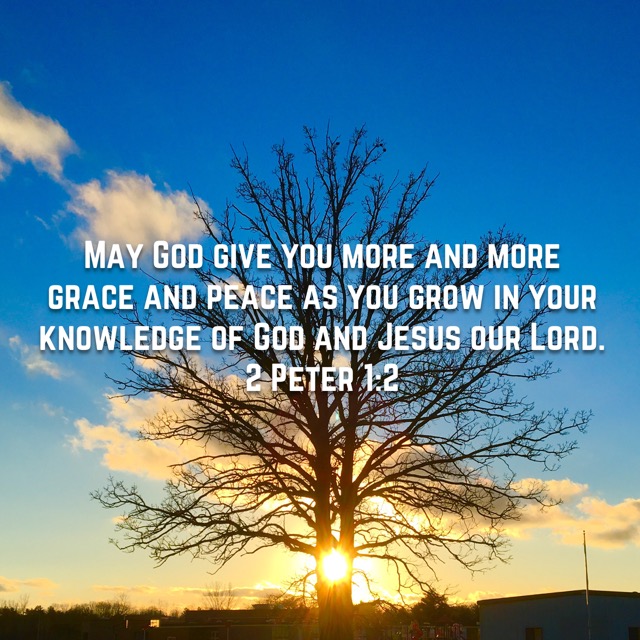
May we add our “Amen” to Peter’s prayer: May God give you more and more grace and peace as you grow in your knowledge of God and Jesus our Lord (2 Peter 1:2).
►► Would you please prayerfully consider supporting this ministry? My Patreon supporters get behind-the-scenes access to exclusive materials. ◀︎◀︎
Don’t ever think you know it all.
Because you can’t!
There’s no way you can know it all.
So keep on learning.
Keep on digging into God’s Word.
Keep on letting the Holy Spirit teach you.
God is the only Know-It-All.
And He wants to teach you too.
Listen to the podcast of this post by clicking on the player below, and you can also subscribe on Apple, Spotify, or Audible.
The words Paul writes to Timothy (his young protege) are the wise counsel of a seasoned veteran to a young pastor. These are words of wisdom that pastors should be especially attentive to, but they also apply to anyone who is in a position of leadership (like a parent, teacher, coach, or employer).
After challenging Timothy to set an example by his lifestyle, Paul adds these words—
Be diligent in these matters; give yourself wholly to them, so that everyone may see your progress. Watch your life and doctrine closely. Persevere in them, because if you do, you will save both yourself and your hearers. (1 Timothy 4:15-16)
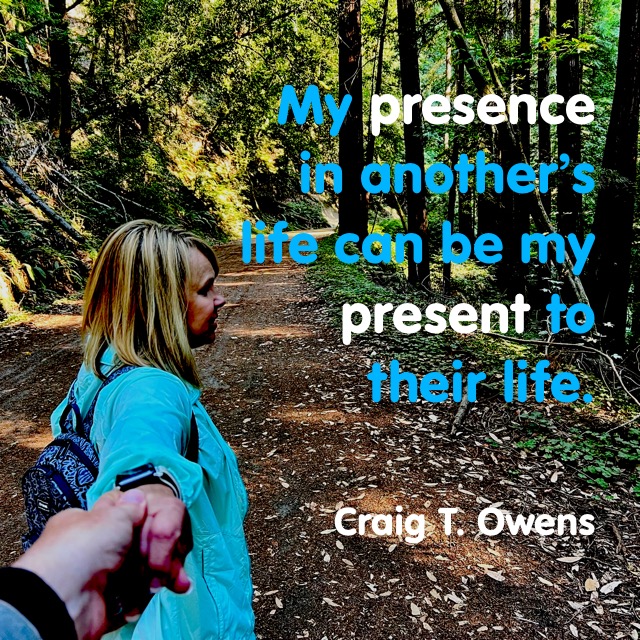
“So that everyone may see your progress.” Quite simply: you have to be present—you have to be around people so they can see what’s going on in your life. Your presence in their lives is your present to their lives!
I need to monitor what I’m doing and why I’m doing it; what I’m teaching and how I’m teaching; what I believe and why I believe it.
I need to have goals and benchmarks. I need to make my goals—and my successes and failures in hitting my goals—known to others.
I need to be in it for the long haul. It’s awfully difficult to be an example in the present if my eyes and thoughts are always on “the next thing” down the road.
Look at the blessings—the presents—of living this way: You will save both yourself and your hearers.
Are you living so that everyone may see your progress? If not, start giving the present of your presence today!
►► Would you please prayerfully consider supporting this ministry? My Patreon supporters get behind-the-scenes access to exclusive materials. ◀︎◀︎
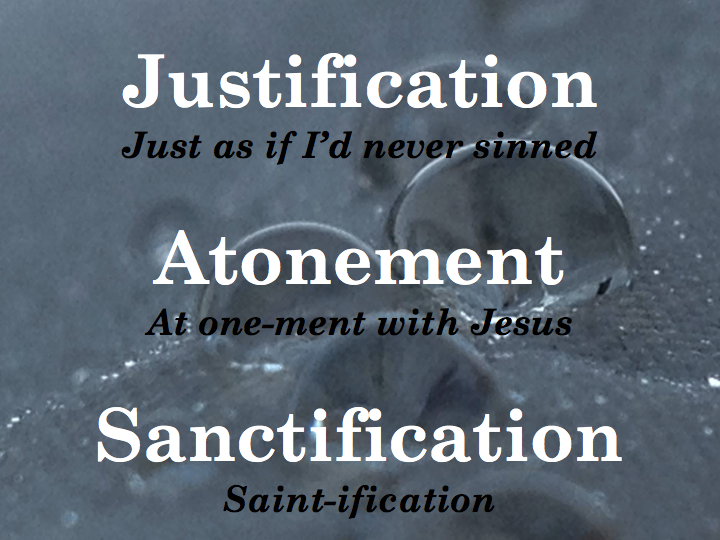
I shared these helpful memory devices this morning, and perhaps they will be helpful to you as well. Some of the terms theologians use can be somewhat confusing, perhaps just because the words look so big! But the nice thing about the big words, they come from much smaller root words.
In these instances, these are just a different way of stating the big words, to help you remember the importance of their definitions.
Justification = just-as-if I had never sinned. When your sins have been forgiven, you appear to God just as if you had never sinned, so you have been justified by your faith (see Romans 3:22-24).
Atonement = at one-ment with Jesus. Christ said that He was the way, the truth, and the life, and that no one could come into the Father’s presence except through Jesus. So atonement makes at one-ment with Jesus, which allows us to enter into God’s presence (see Romans 3:25).
Sanctification = saint-ification. The Holy Spirit begins a process in our lives where He is forming us into saints. Whereas justification and atonement are one-time events, sanctification is an ongoing process that is conforming us more and more into the image of Jesus (see 2 Thessalonians 2:13).
I hope this helps you understand and apply these terms.