I often hear people say, “I’m waiting for a word from God” when they are making a decision. Or sometimes someone will say, “I’m not sure what God wants me to do here.”
Many years ago the phrase WWJD―what would Jesus do?―was all the rage. It came from a renewed interest in Charles Sheldon’s book In His Steps. In order to do what Jesus would do (and say), we must be familiar with what Jesus did (and said). Jesus Himself said that the Holy Spirit would remind us of everything He had done and said (John 14:26).
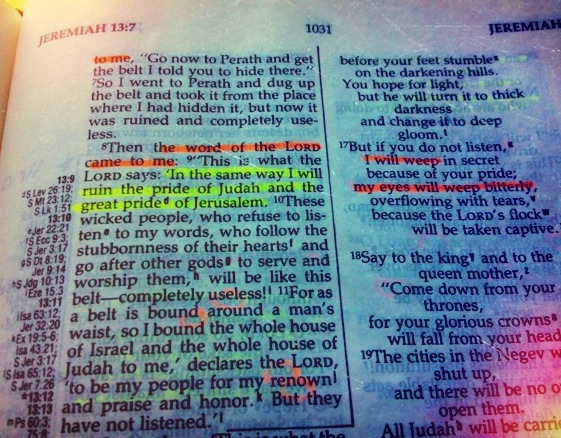
Jeremiah was one of the most prolific prophets of Israel, with his writings making up the longest book in the Bible. Yet one thing clearly stands out―over 420 times Jeremiah uses phrases like:
The Word of the Lord came to me
Declares the Lord
The Lord said to me
What the Lord says
Hear the word of the Lord
Open your ears to the words of His mouth
It’s hard to know what Jesus would do, or the direction God would have you go, or the God-honoring decision that you should make if you haven’t read His Word! He has so much to say to you, and the Holy Spirit is just waiting to help you apply God’s Word to your particular situation.
If you want to make better decisions, and do and say things more like Jesus did and said, be like Jeremiah and be immersed in God’s Word more and more.
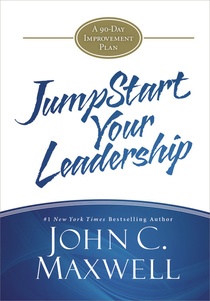
John Maxwell always gives his readers a treasure-trove of helpful thoughts for personal growth! I would highly recommend anyone to grab any one of his books and dive in. But a good place to start may be JumpStart Your Leadership.
This book is setup as a 90-day journey of leadership growth. Whether someone is just beginning in a leadership position, or has been in a position of leadership for quite some time, this is a tremendous resource. Each day has a quote, a short teaching point from John Maxwell, and then a page to respond to the question of the day. After three months, I am confident you will feel your leadership surging forward.
Small book, big dividends. Get this book and get growing!
It’s no secret I love to read. But why do I read? It’s not just to get more information, but to have the tools to help others. Every year I reevaluate my reading list, and ask God to guide me to the wise people from whom I need to learn.
Check out these words from Charles Spurgeon―
“Paul is inspired, and yet he wants books [2 Timothy 4:13]. He has been preaching for at least thirty years, and yet he wants books! He had seen the Lord, and yet he wants books! He had had a wider experience than most men, and yet he wants books! He had been caught up into the third heaven, and had heard things which it was unlawful for a man to utter, yet he wants books! The apostle says to Timothy and so he says to every preacher, ‘Give attendance to reading’ [1 Timothy 4:13]. The man who never reads will never be read; he who never quotes will never be quoted. He who will not use the thoughts of other men’s brains, proves that he has no brains of his own. Brethren, what is true of ministers is true of all our people. You need to read.” ―Charles Spurgeon
“When you die, it does not mean that you lose to cancer. You beat cancer by how you live, why you live, and in the manner in which you live.” —Stuart Scott
“Hang this text up in your house; read it every day; take it before God in prayer every time you bend the knee, and you shall find it to be like the widow’s cruse, which failed not, and like her handful of meal, which wasted not: it shall be unto you till the last of December what now it is when we begin to feed upon it in January.” —Charles Spurgeon, commenting on Hebrews 2:18
“This verse is full of encouragement for imperfect sinners like us, and full of motivation for holiness. It means that you can have assurance that you stand perfected and completed in the eyes of your heavenly Father not because you are perfect now, but precisely because you are not perfect now but are ‘being sanctified,’ ‘being made holy’—that, by faith in God’s promises, you are moving away from your lingering imperfection toward more and more holiness.” —John Piper, commenting on Hebrews 10:14
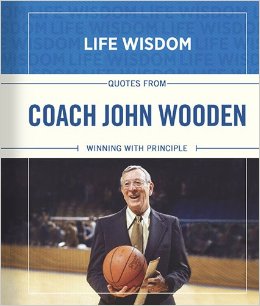
Not only did John Wooden win, and win, and win on the basketball court, he won off the basketball court too. Literally decades after he stopped coaching, his players still traced their off-the-court success to the principles Coach taught them, and they continued to seek out his wise counsel. Winning With Principle is a collection of quotes from this legendary coach.
Coach Wooden was a lifelong learner. He relied on lessons his father taught him, he continued to read and memorize other wise people, and he continually learned how to adapt with the changing times. Some people have called Wooden’s maxims “homespun wisdom,” but I call it down-to-earth practical wisdom.
There are dozens of books that Wooden’s former players have written on the life lessons they leaned from Coach, but it’s best to hear from the man himself. This book of quotes is the perfect introduction to this amazing man’s wisdom.
“Lord, show me just so much (neither more nor less) about myself as I need for doing Thy will now.” —C.S. Lewis personal prayer
“The whole problem of our life was neatly expressed by John the Baptist when he said (John 3:30) ‘He must increase, but I must decrease.’ This you have realised. But you are expecting it to happen suddenly: and also expecting that you should be clearly aware when it does. But neither of these is usual. We are doing well enough if the slow process of being more in Christ and less in ourselves has made a decent beginning in a long life (it will be completed only in the next world).” —C.S. Lewis
For my pastor friends: “Our preaching and teaching must endeavor to promote three kinds of love: a proper self-love, love for God, and love for our neighbors.” —T.M. Moore
“Among those who are able to enjoy God with us, we love some whom we help, some by whom we are helped, some whose help we need and whose wants we supply, and some on whom we bestow no benefits and from whom we await none ourselves. Be that as it may, we should desire that all enjoy God with us and that all the assistance we give them or get from them should be directed toward this end.” —Augustine
[VIDEO] John Maxwell on the value of exploring new things—
“The worst form of ill association is ungodly marriage. I do not know anything that gives me more satisfaction than to see our brethren and sisters, who have walked in the faith of God, united in marriage—the husband and wife, both fearing and loving God. It is a delightful spectacle, and bids fair to be the means of building up the church with a generation which shall fear the Lord. But a very fruitful source of ruin to church members is that of a young man or a young woman choosing an ungodly partner in life. They never can expect God’s blessing upon it. They tell you sometimes they hope to be the means of their friend’s conversion. They have no right to hope such a thing; it so seldom occurs. The much more likely thing is that the ungodly one will drag the other down to his level, than that the godly one shall pull the other up.” —Charles Spurgeon
“If homosexuals are bullied, we need to protect them. If they’re unjustly discriminated against, we need to help them. If they’re treated with contempt, the person hurting them should be stopped. If a family member comes out as gay and then is belittled, harmed, or vilified, then the offending family needs to be corrected. If Christians ridicule people who identify as gay or lesbian, they need to admonished. If a church doesn’t welcome seekers of all stripes (including people who identify as gay, lesbian, or bisexual), then it needs to change. But none of these circumstances are reasons to reinterpret Scripture to affirm homosexuality.” This is from a fascinating article: Bad Reasons To Adopt Pro-Gay Theology.
“Prudence means practical common sense, taking the trouble to think out what you are doing and what is likely to come of it.” —C.S. Lewis
“Resentment simply cannot dwell in a loving heart. Before resentfulness can enter, love must take its flight and bitterness take over.” —A.W. Tozer
“No nation ancient or modern has ever lost the liberty of freely speaking, writing or publishing their sentiments, but forthwith lost their liberty in general and became slaves.” —John Peter Zenger (in 1735 after winning his case that established the precedent for our freedom of the press)
“Never leave growing till the life to come!” —Robert Browning
“Why should you turn from God when you turn to your books, or feel that you must turn from your books in order to turn to God? If learning and devotion are as antagonistic as that, then the intellectual life is in itself accursed and there can be no question of a religious life for a student, even of theology.” —B.B. Warfield
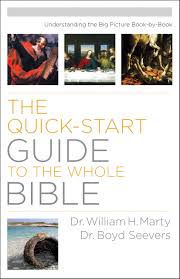
Zig Ziglar once quipped, “Every day I read the newspaper and I read my Bible. That way I know what both sides are up to!” I couldn’t agree more. Everything I read gets filtered through the Bible, but the Bible is a huge volume and one could lose sight of the big picture while trying to read through it. This is where The Quick-Start Guide To The Whole Bible by Drs. William Marty and Boyd Seevers become a valuable resource.
The book is laid out in the same order as the 66 books of the Bible, and each chapter follows the same sequence. For each book you will learn (1) the setting, (2) the summary, and (3) the significance. With each chapter only being a few pages long, it’s a great introduction before reading a book of the Bible.
In the setting you will be reminded of the events occurring in history at the time of the book, which helps give perspective to what you will be reading in the Bible. In the summary you will notice the overarching themes to look for while you read. And in the significance you will discover how this book of the Bible fits into the overall big picture of the whole of Scripture.
Keep this book close to your Bible, and read the corresponding chapter before you begin reading a new book in your Bible. I think you will get so much more out of your Bible reading time by doing this.
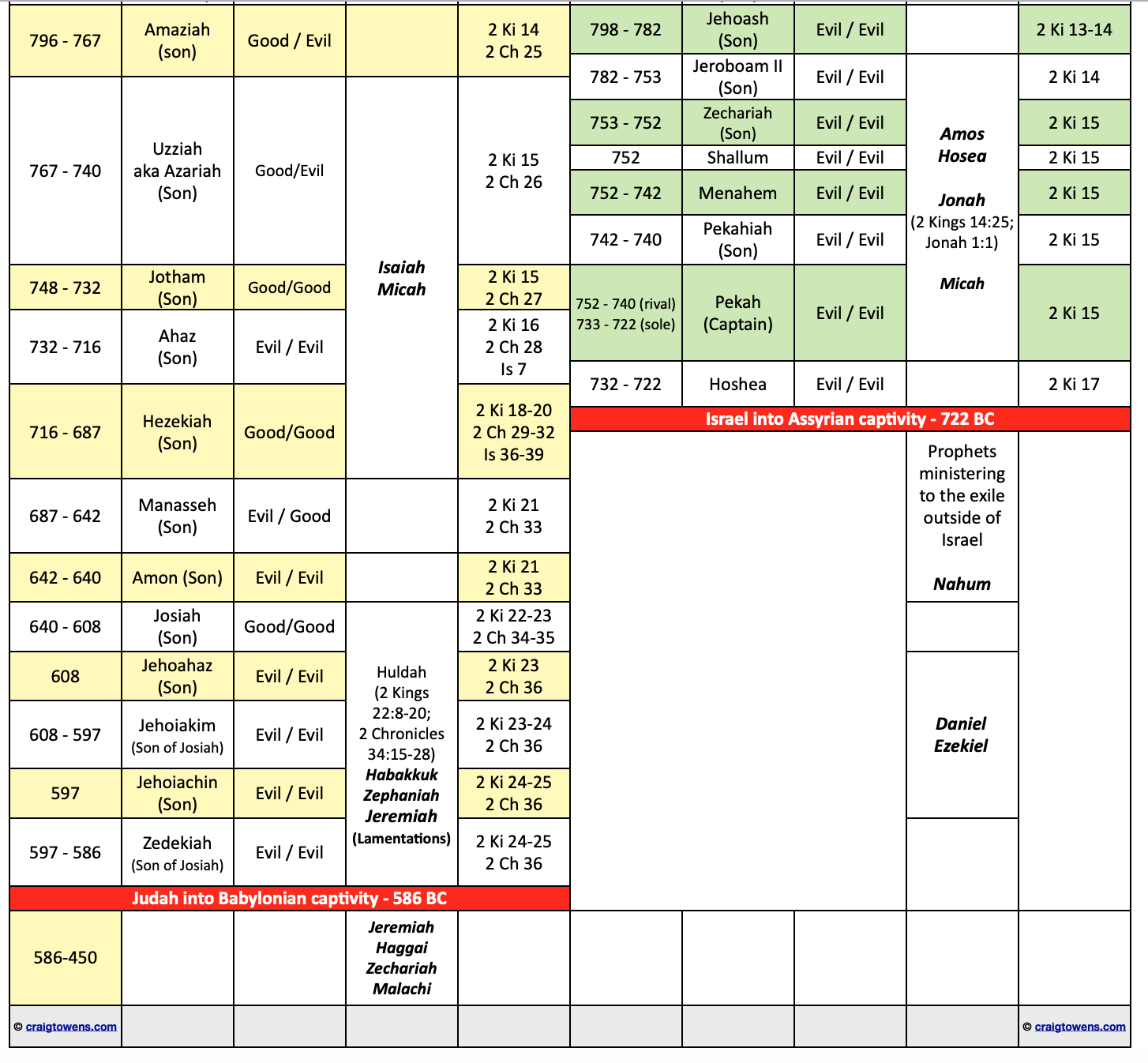
On the Biblegateway website, Jacob Edson has taken my chart and added even more details and cross-references to related Scriptures for each of the kings on this chart.
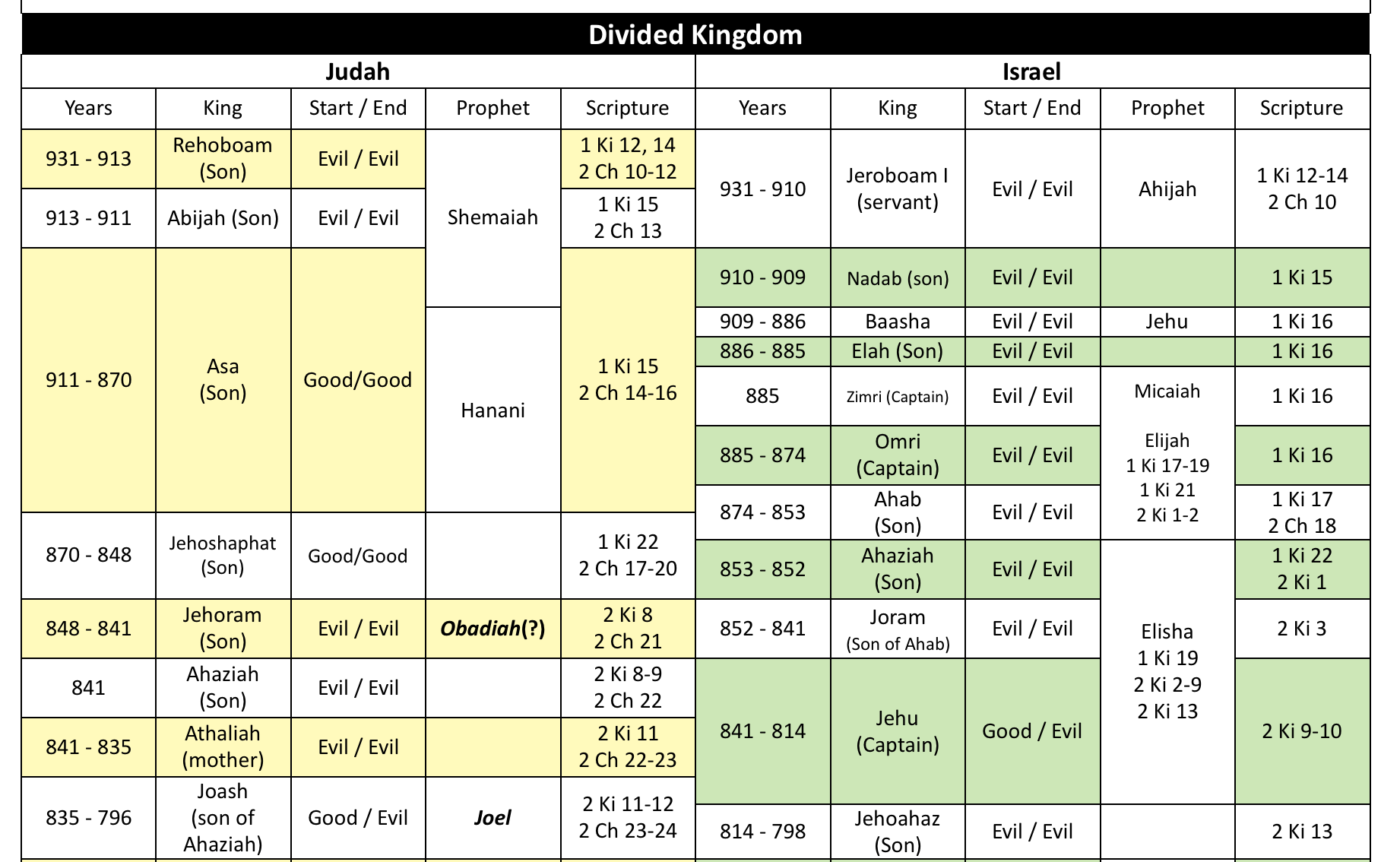
One challenging point in history is the divided kingdoms of Israel (the 10 northern tribes) and Judah (the 2 southern tribes). What makes it challenging when reading straight through the Bible is the history is covered in 1 and 2 Kings and then again in 1 and 2 Chronicles. In the midst of these kingdoms, several prophets are sent by God. Some of these prophets only have their words recorded in Kings or Chronicles, while others have their words recorded elsewhere in the Bible (usually the book name is the prophet’s name).
In trying to keep all of these people and messages clear in my mind, I have put together a list of all the kings and prophets during the period of the divided kingdom (roughly 931-586 BC).
You can click the picture above to get a larger view, or you can download a PDF copy by clicking here → Kings of Israel & Judah ←
I am not a biblical scholar, nor do I have a history degree. This is just a chart I put together to help me in my Bible reading, and I thought it might help someone else too. I would welcome any corrections or clarifications that anyone would offer on this humble work.
Not all of these updates are reflected in the screenshots on this page, but they are all in the PDF version.
**UPDATE 1: several people pointed out some tweaks I needed to make to this chart, and I am grateful for the input! This is the revised copy as of August 28, 2017.
**UPDATE #2: a few more tweaks … this is the revised version as of July 31, 2014.
**UPDATE #3: I have posted a chart zooming in on the chronology of the Old Testament prophets which I recreated from the Archeological Study Bible. You can read it and download it by clicking here.
A couple of notes:
Prophets who also have their words recorded in a book that bears their name are listed in bold italics.
The “start / finish” designation for each of the reign of the kings is clearly my subjective opinion.
Sometimes you will see dates for two kings’ reigns that overlap. These are where there was a co-regency (that is a father and son ruling simultaneously).
The prophets that are listed under the Israel side after Israel had gone into captivity are the prophets that God was using to speak to the Israelites in exile.
**UPDATE #4: I continue to do more research and get feedback from people far wiser than me. The latest version is dated August 28, 2017.
**UPDATE #5:The original chart stopped when Israel and Judah went into captivity. I have now added another line to show the prophets who continued to prophesy to both the exiles in Babylon, as well as to those who returned to Israel later.
**UPDATE #6: Scholars are unsure of the date of Obadiah. We know that it took place after invaders had caused problems in Judah (Obadiah 11)—and Edom responded in a way that angered God. Some scholars place this date after Nebuchadnezzar’s conquest of Judah in 586 BC, but since post-exilic prophets always named Nebuchadnezzar or Babylon, I think it’s more likely to have occurred during the reign of Jehoram around 840 BC (see also 2 Chronicles 21:8-10). Added Huldah as a prophetess during the reign of Judah’s King Josiah.
**UPDATE #7: Thanks to Anthony Wimmer, this chart is now available in French → Rois d’Israel & Juda
**UPDATE 8: I am always appreciative of the interaction with those who have downloaded my chart and are digging into the dates. After a few conversations, I have modified the chart slightly on the lower right quadrant of the last page to show those prophets who were ministering to the Israelites who were in captivity.
Near the beginning of Pleasure & Profit In Bible Study, Dwight Moody states the purpose of his book: “We cannot overestimate the importance of a thorough familiarity with the Bible. I try to lose no opportunity of urging people by every means in my power to the constant study of this wonderful Book. If through the pages that follow, I can reach still others and rouse them to read their Bibles, not at random but with a plan and purpose, I shall be indeed thankful.”
I am thankful that D.L. Moody took the time to pen this book for us. Though over a century old, his words are bringing a renewed excitement to studying my all-time favorite book: The Bible.
Moody devoured God’s Word, and had amazing recall of all he read. He reminds us that anything we are full of will be much easier to recall and apply. He then allows us a glimpse into his personal study time, showing us how he reads his Bible, what he looks for, how he marks certain passages, and other ways to engage Scripture.
If anyone ever felt like their Bible reading or studying was in a rut, this book will be a welcome rejuvenator. Even for those who already appreciate their time studying God’s Word, Pleasure & Profit will bring new insights for your study time.