This is a weekly series with things I’m reading and pondering from Charles Spurgeon. You can read the original seed thought here, or type “Thursdays With Spurgeon” in the search box to read more entries.
Church On Fire
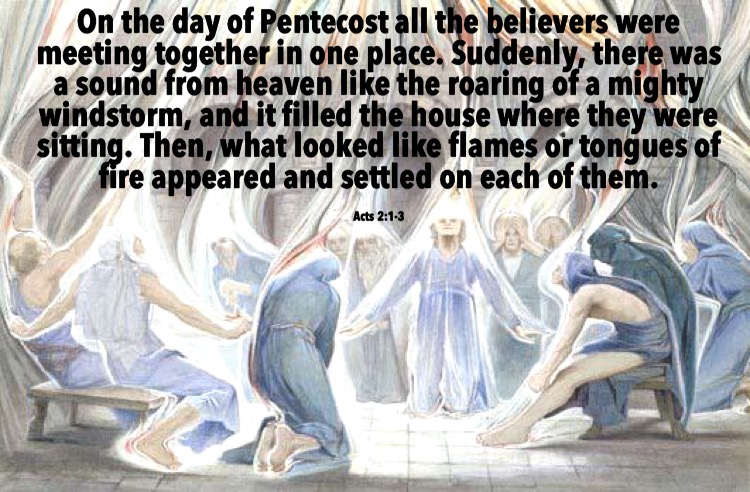
On the day of Pentecost all the believers were meeting together in one place. Suddenly, there was a sound from heaven like the roaring of a mighty windstorm, and it filled the house where they were sitting. Then, what looked like flames or tongues of fire appeared and settled on each of them. (Acts 2:1-3)
We are poor, empty things by nature, and useless while we remain so. We need to be filled with the Holy Spirit. Some people seem to believe in the Spirit of God giving utterance only, and they look upon instruction in divine things as of secondary importance. Dear, dear me! What trouble comes when we act upon that theory! How the empty vessels clatter, rattle, and sound! … Where the Spirit of God is truly at work, He first fills and then gives utterance—that is His way. …
Full! Then they were not cold, dead, and empty of life as we sometimes are. Full. Then there was no room for anything else in any one of them! They were too completely occupied by the heavenly power to have room for the desires of the flesh! Fear was banished; every minor motive was expelled! The Spirit of God, as it flooded their very beings, drove out of them everything that was extraneous. They had many faults and many infirmities before, but that day, when they were filled with the Spirit of God, faults and infirmities were no more perceptible! They became different men from what they had ever been before. Men full of God are the reverse of men full of self! …
The next Pentecostal symbol was utterance. … When the Spirit of God really comes upon a man, he does not wait till he has gathered an audience of the size that he desires, but he seizes the next opportunity! He speaks to one person. He speaks to two. He speaks to three—to anybody. …
When the Spirit of God fills a man, he speaks so as to be understood. … The crowd not only understood, they felt. There were lancets in this Pentecostal preaching, and the hearers ‘were pricked in their heart’ (Acts 2:37). … Those are the two effects of the Holy Spirit—a fullness of the Spirit in the ministry and the church, and next, a fire ministry and a church on fire, speaking so as to be felt and understood by those around!
From Pentecostal Wind And Fire
Oh, how I want this today!
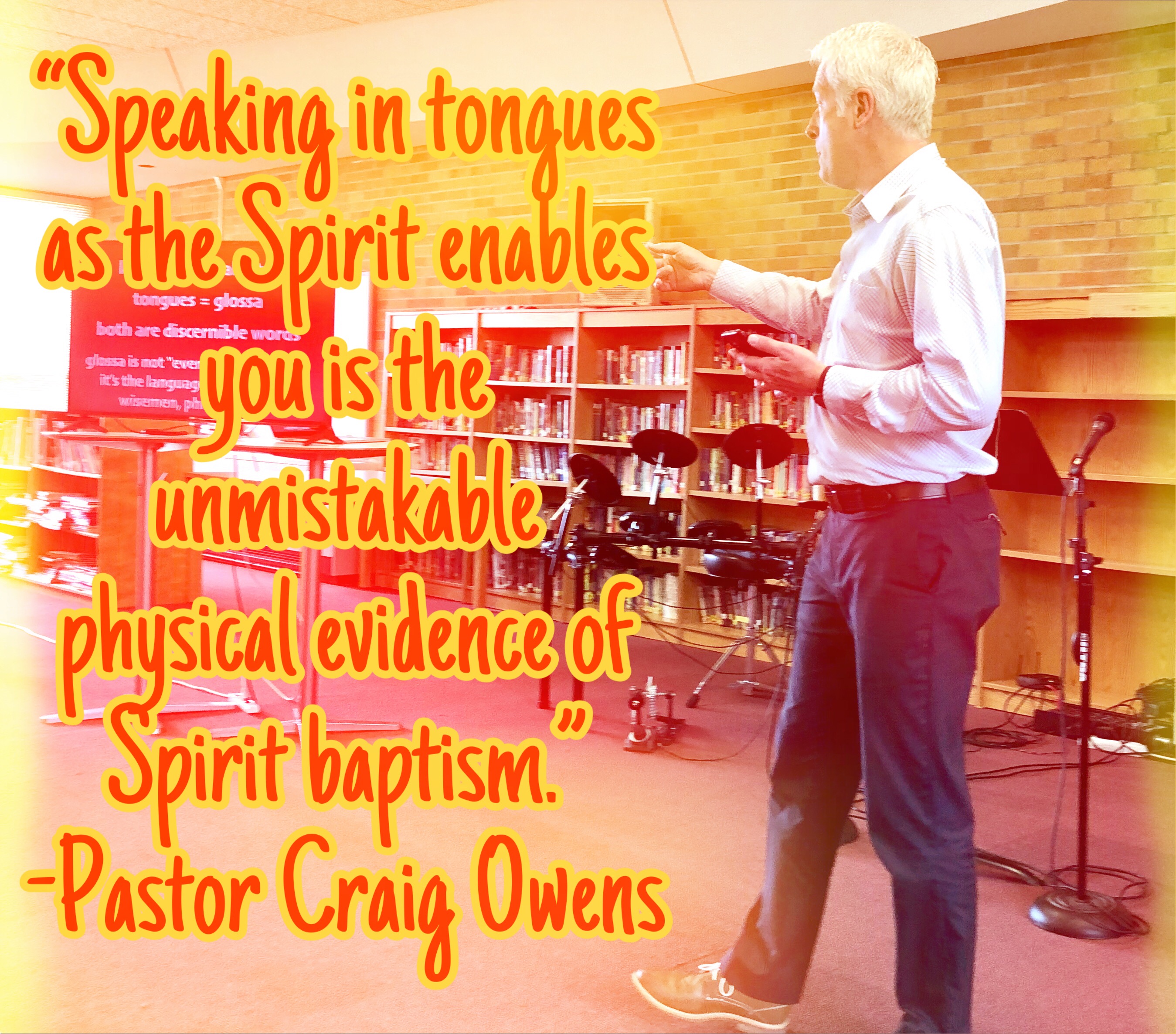
Let’s seek the fullness and the utterance that can only come through the baptism in the Holy Spirit! Let’s be set on fire so that we can impact the world around us!
I love reading, and I love sharing my love of good books with others! Here is a list of the books I read and reviewed in 2020. Click on a title to be taken to that review.
This is a weekly series with things I’m reading and pondering from Charles Spurgeon. You can read the original seed thought here, or type “Thursdays With Spurgeon” in the search box to read more entries.
The Purpose Of The Baptism In The Holy Spirit
On the day of Pentecost all the believers were meeting together in one place. Suddenly, there was a sound from heaven like the roaring of a mighty windstorm, and it filled the house where they were sitting. Then, what looked like flames or tongues of fire appeared and settled on each of them. (Acts 2:1-3)
Ordinary winds blow from this or that quarter of the skies, but this descended from heaven itself. It was distinctly like a downdraft from above. This sets forth the fact that the true Spirit, the Spirit of God, comes from neither this place nor that, neither can His power be controlled or directed by human authority. His working is always from above, from God Himself! The work of the Holy Spirit is, so to speak, the breath of God, and His power is always, in a special sense, the immediate power of God. …
Tongues of flame sitting on each man’s head symbolized a personal visitation to the mind and heart of each one of the chosen company. The fires came not to consume them, for the flaming tongue injured no one. To men whom the Lord has prepared for His approach, there is no danger in His visitations. They see God and their lives are preserved. They feel His fires and are not consumed. This is the privilege of only those who have been prepared and purified for such fellowship with God. The intention of the symbol was to show them that the Holy Spirit would illuminate them as fire gives light. ‘He will guide you into all truth’ (John 16:13). …
But the fire does more than give light; it inflames, and the flames that sat upon each show them that they were to be ablaze with love, intense with zeal, burning with self-sacrifice, and that they were to go forth among men to speak not with the chill tone of deliberate logic, but with burning tongues of passionate pleading, persuading, and entreating men to come to Christ that they might live! The fire signified inspiration. God was about to make them speak under a divine influence, to speak as the Spirit of God should give them utterance. …
O You who are our God, answer us by fire, we pray! Answer us both by wind and fire and then we will see You to be God indeed. The kingdom comes not and the work is flagging. Oh, that You would send the wind and fire! You will do this when we are all of one accord: all believing, are expecting, and all prepared by prayer. Lord, bring us to this waiting state!
According to the dictionary, fear is a distressing emotion we feel whether the threat is real or imagined. Five hundred years ago, Michel de Montaigne said, “My life has been filled with terrible misfortune; most of which never happened.” Even more recently, an extensive study found that 85 percent of things people feared never happened!
According to the dictionary, faith is trust in something even without proof or evidence. That sounds tremendously close to the biblical definition of faith: Now faith is the assurance—the confirmation, the title deed—of the things we hope for, being the proof of things we do not see and the conviction of their reality—faith perceiving as real fact what is not revealed to the senses. (Hebrews 11:1 AMP)
Mary is the second person to whom an angel says “Do not be afraid” in the First Advent story. Consider her story alongside Zechariah’s story and especially notice when these words were spoken. The angel Gabriel first tells Mary, “Greetings, you who are highly favored! The Lord is with you.”
Mary’s initial response is being “greatly troubled.” This Greek word means an internal agitation that today psychologists would call “cognitive dissonance.” In other words, what Mary believed about herself didn’t line up with what God believed about her. Her next response is wondering how she could ever measure up to God’s high standard of her.
It’s at this point that Gabriel says those key words, “Do not be afraid, Mary, you have already found favor with God.” She didn’t have to make herself worthy of God’s favor because she already had it! Now Mary just had to believe it.
Fear is overcome by clinging to God’s words instead of the world’s words.
Mary did indeed choose this. Her song (in vv. 46-55) is loaded with Old Testament references, and she concludes by singing to God, “You have helped Your servant Israel, remembering to be merciful to Abraham and his descendants forever, even as You said to our fathers.”
Here’s the truth—
Your Word, Lord, is eternal; it stands firm in the heavens. (Psalm 119:89)
God is not human, that He should lie, not a human being, that He should change His mind. Does He speak and then not act? Does He promise and not fulfill? (Numbers 23:19)
And Jesus would tell us that clinging to God’s words puts us on the surest of foundations that no storm of life could ever shake (Luke 6:46-49)!
Clinging to God’s words lets us realize God’s grace toward us.
If you know Jesus as your Savior, you can insert your name in the same place where Gabriel said to Mary: “Do not be afraid, ____________, you have found favor with God!”
This is a weekly series with things I’m reading and pondering from Charles Spurgeon. You can read the original seed thought here, or type “Thursdays With Spurgeon” in the search box to read more entries.
The Initiation Of Power
Whatever the Holy Spirit was at the first, He is that now, for as God, He remains forever the same. … We would greatly grieve the Holy Spirit if we supposed that His might was less today than in the beginning. …
If at the commencement of the gospel we behold the Holy Spirit working great signs and wonders, may we not expect a continuance of and, if anything, increased displays of His power as the ages roll on? …
It ought not to be forgotten that Pentecost was the feast of firstfruits. It was the time when the first ears of ripe corn were offered to God. If, then, at the commencement of the gospel harvest we see so plainly the power of the Holy Spirit, may we not most properly expect infinitely more as the harvest advances and, most of all, when the most numerous sheaves will be gathered? May we not conclude that if the Pentecost was thus marvelous, the actual harvest will be still more wonderful?
From Pentecostal Wind And Fire
When Jesus was approaching the Cross, He gathered His disciples together to tell them what was coming. One of the assurances He gave His followers was this: “I assure you, most solemnly I tell you, if anyone steadfastly believes in Me, he will himself be able to do the things that I do; and he will do evengreaterthings than these, because I go to the Father” (John 14:12).
Pentecost wasn’t the culmination, it was the initiation.
Pentecost was the launching point for followers of Jesus to be filled with dunamis power that would enable them to go into all the world and preach the gospel, and to have signs and wonders follow to confirm the preaching of the Word.
As Spurgeon said, we greatly grieve the Holy Spirit when we attempt to put Him in a box as to what He can or can’t do today, or if we try to limit Him to one era of long-past history. The Holy Spirit is as vital for a Christian today as He was on that Pentecost Sunday described in Acts 2!
And David knew the Lord has established him as king over Israel and that his kingdom had been highly exalted for the sake of His people Israel. (1 Chronicles 14:2)
“David knew” reminds me of “Jesus knew” in John 13:3.
Both knew God had placed them exactly where they were supposed to be.
Both knew the authority God had given them.
Both knew the power that was theirs to use.
Both knew they could do self-glorifying, self-promoting things with their power. Yet both used their authority and power to serve others: “for the sake of His people.”
Have you ever had a really good scare? Maybe in the dark or when you were young? Then in the light or as you got older you thought, “Why was I afraid of that?” Our relief came from the fact that we think we know more. But here’s the problem: there is a difference between a healthy fear and an unhealthy fear, so not every fear is something we should try to alleviate.
Sometimes we treat too lightly the things that are really quite powerful. Consider the arrival of Jesus in Bethlehem. There are more angels sent by God surrounding this one event than anywhere else in all the Bible. Yet all four angelic appearances have the same message: “Do not be afraid.”
Why would people fear what we now celebrate as such a joyous event? I think it’s because God Himself—the All-Holy Creator of the Universe—is coming near to sinful man (see John 1:9; 1 Timothy 6:15-16).
God is holy, and His holiness is unapproachable by sin. At the exact same moment, God is love, and His love desires for us to approach Him. We cannot make this happen on our own, which leads to more fear.
In the Greek language of the New Testament phobeō is the main word for “fear.” This word can be defined as either fleeing from a terrible thing or clinging in obedience to an awesomely reverent thing. Jesus said the same things when He told us, “I tell you, my friends, do not be afraid of those who kill the body and after that can do no more. But I will show you whom you should fear: Fear Him who, after your body has been killed, has authority to throw you into hell. Yes, I tell you, fear Him” (Luke 12:4-5).
In the Advent story, the first appearance of “Do not be afraid” is when an angel appears to Zechariah. Why would Zechariah be so afraid at the approach of God? I think there may have been three reasons:
Herod was king—making the society Zechariah lived in politicized and irreligious
Zechariah was without a priestly heir to carry on his family name
his wife Elizabeth may have sinned—at least that’s what people would have whispered about her barrenness
All of this added up to Zechariah feeling like God was displeased with them and that He was only coming close to bring fiery judgment.
The angel told Zechariah not to fear because “your prayer has been heard.” In other words, “I am inviting you to trust in what God HASalreadydone versus trusting in what you might or might not be able to do on your own.” Phobeō was an invitation to choose reverential obedience (holy fear) of the eternal over the terror of the temporal.
Sadly, Zechariah initially clung to the negative phobeō. Yet after Elizabeth did conceive and John was born, this was transformed into holy, reverential fear, as heard in the Spirit-inspired song he sang. Notice in Luke 1:67-75 Zechariah’s emphasis on all that God has done: He has come, He has redeemed, He has raised, He said, He has kept His covenant, He has rescued, He has enabled.
Have you put yourself in the category of “unworthy of God’s favor”? Has fear crippled you—like it had done with Zechariah—from continuing to pray, believe, and try?
Fear is an invitation to evaluate in who or in what I have placed my trust.
I invite you to accept the invitation to take your eyes off the temporary and put them on the Eternal One. “…The time is coming quickly, and what I show you will come true. It may seem slow in coming, but wait for it; it will certainly take place, and it will not be delayed.”(Habakkuk 2:3 GNT)
Check out the other messages in this Do Not Be Afraid series by clicking here.



 What shall the dying sinner do





 Craig T. Owens