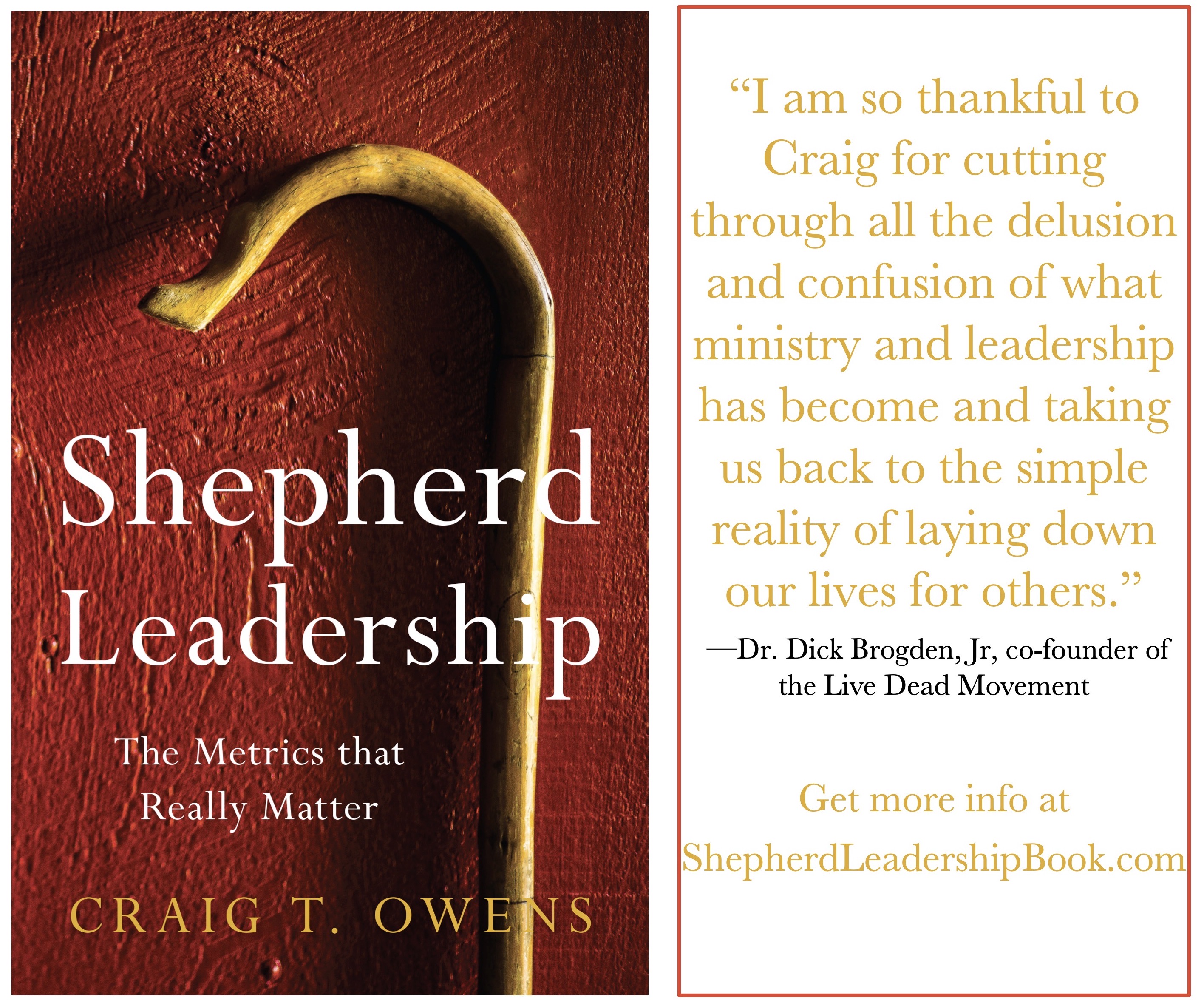
“Stunningly, the Good Shepherd has put the care of His foolish flock into the hands of under-shepherds who tend to be somewhat stupid ourselves. The grand gamble only works if under-shepherds studiously lead in the way that Jesus instructed us to—and therein is the rub, for none of us naturally agrees with His model. Our flesh, culture, ambitions, and propensities all fight Shepherd Leadership like the plague. We may kiss the concept theoretically, but we fundamentally flee from it functionally. …
“It is good to be a sheep; it is good to be an under-shepherd. Just remember you are stupid, chosen by the Wise One, and as long as you serve as a shepherd, you and your flock will be safe.
“The book you are about to read is a refreshing look at leading as a sheep, of serving like our Chief Shepherd. I trust you will benefit from it as much as I did.”
Listen to the podcast of this post by clicking on the player below, and you can also subscribe on Apple, Spotify, or Audible.
Our Advent series this year has been called “People Will Talk,” but we have one more person to learn from who says nothing. We have none of her words inside quotation marks, and yet Luke was inspired by the Holy Spirit to share her story with us. Her wordless message speaks volumes, if we’re willing to listen.
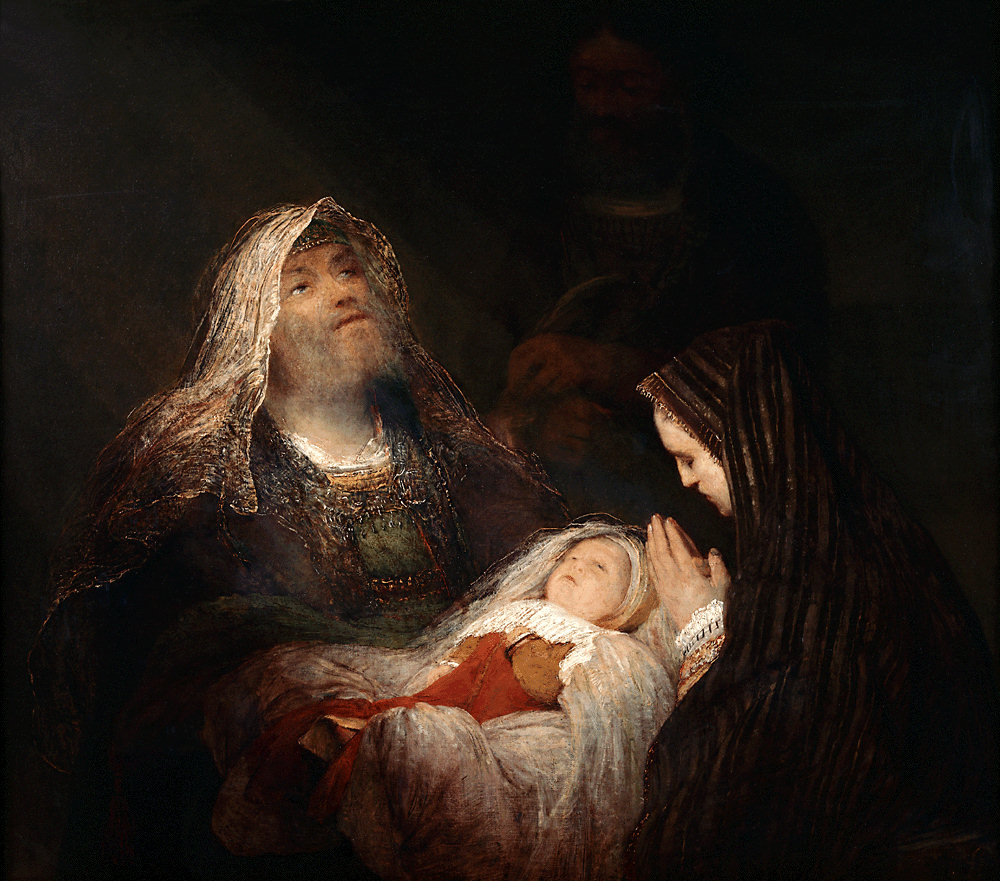
Anna, like Simeon, was one of the “Quiet in the Land.” Luke describes her as “very old.” The Greek phrase can either mean that she was a widow for 84 years after seven years of marriage, or simply that she was 84 years old. In either case, we don’t see her sitting withdrawn and inactive because of her old age, but we see her taking the initiative. She is the one who comes up to Joseph, Mary, and Jesus.
Luke also calls her a “prophetess.” Not someone bitter about her widowhood, but someone who truthfully and lovingly spoke God’s Words. Throughout the Bible, we see that a prophet or prophetess is less foretelling the future than they are forth-telling the promises of God. Of course the “-ess” at then end of “prophet” reminds us that Anna is a woman. As a woman she was excluded from certain parts of the temple, but instead of picketing or making a scene Luke says she spends her time worshipping, fasting, praying, and waiting for the fulfillment of God’s promised Messiah.
I imagine that her mere presence must have changed the atmosphere wherever she went!
I’m not sure if Charles Dickens had Anna in mind when he wrote A Christmas Carol, but the way the Ghost of Christmas Present added his blessing to busy people is what I imagine Anna’s role being in the temple—
“But soon the steeples called good people all, to church and chapel, and away they came, flocking through the streets in their best clothes, and with their gayest faces. And at the same time there emerged from scores of bye-streets, lanes, and nameless turnings, innumerable people, carrying their dinners to the bakers’ shops. The sight of these poor revelers appeared to interest the Spirit very much, for he stood with Scrooge beside him in a baker’s doorway, and taking off the covers as their bearers passed, sprinkled incense on their dinners from his torch. And it was a very uncommon kind of torch, for once or twice when there were angry words between some dinner-carriers who had jostled each other, he shed a few drops of water on them from it, and their good humor was restored directly. For they said, it was a shame to quarrel upon Christmas Day. And so it was! God love it, so it was!”
Both Anna in the New Testament and Hannah in the Old Testament mean graceful. Or as I like to remember that word: someone full of grace. When she approaches Joseph, Mary, and Jesus, Luke says she “gave thanks.” This comes from a unique Greek word in the New Testament. The root word is usually translated confession, which means saying the same words as others. But the prefix Luke adds means “in place of.” This means that Anna was speaking thankful words in place of the other words being spoken around her.
Anna spoke counter-culturally. Instead of being a cultural thermometer, she was serving as a thermostat to change the culture around her. This is the same kind of lifestyle that Jesus calls us to live. And it’s a lifestyle that Paul sums up in one succinct verse: “Let your gentleness [or we could say ‘grace-fullness’] be evident to all. The Lord is near” (Philippians 4:5).
After Ebenezer Scrooge’s encounter with the three spirits, his life was transformed—
“Scrooge was better than his word. He did it all, and infinitely more.… He became as good a friend, as good a master, and as good a man, as the good old city knew, or any other good old city, town, or borough, in the good old world.
“Some people laughed to see the alteration in him, but he let them laugh, and little heeded them; for he was wise enough to know that nothing ever happened on this globe, for good, at which some people did not have their fill of laughter in the outset; and knowing that such as these would be blind anyway, he thought it quite as well that they should wrinkle up their eyes in grins, as have the malady in less attractive forms. His own heart laughed: and that was quite enough for him.
“…And it was always said of him, that he knew how to keep Christmas well, if any man alive possessed the knowledge. May that be truly said of us, and all of us! And so, as Tiny Tim observed, God bless Us, Every One!”
As Christians, may both our actions and our reactions be so grace-filled, and may our gentleness be so evident to everyone all year long, and may we live so counter-culturally that people cannot help but see that we are grace-filled by the Spirit of Jesus Christ!
Listen to the podcast of this post by clicking on the player below, and you can also subscribe on Apple, Spotify, or Audible.
Christmas time finds me sampling a whole lot of delicious treats, and I’m not complaining at all! But I’m a pretty simple guy, so one of my favorite treats is just plain old peanut butter. I love it! Sometimes I stick my spoon right in the jar and eat a big spoonful.
But then there’s the age-old problem: How do you get peanut butter off the roof of your mouth? You can use your tongue or try blowing on it. Or you can use your finger!
But then there’s another problem: How do you get peanut butter off your finger? Blow it? Shake it? Or eat it!
Hmm, now I seem to be back to the original problem: How do you get peanut butter off the roof of your mouth?
Maybe you’ve tried to solve one problem, only to create another problem. And then when you solve that problem you find yourself right back where you started! Round and round it goes!
The Israelites were facing much the same situation. They sinned, God punished them through King Nebuchadnezzar, they tried to rebel, they were taken into captivity, and then they were finally allowed to return to Jerusalem after 70 years. But they still weren’t in charge of their own fate. First it was the Babylonians calling the shots, then the Medians, then the Persians, and then the Romans. Luke begins the birth story of Jesus with the words “in the days of Caesar Augustus” (Luke 2:1).
The Israelites were waiting for God to restore their Promised Land to them. Some people believed a miraculous champion was going to come on the scene (much like Samson of old), and some thought a new anointed king from King David’s line would appear and rally an army to himself.
We can understand this because of one of the prophecies from Isaiah 9 that talks about a warrior and God’s zeal.
That word “warrior” got people pumped up! As did the promise that “the zeal of the LORD Almighty will accomplish this”! For many, this was their proof that God wanted His people to rule this Promised Land for themselves
We’ve been going through a series called People Will Talk, and these voices of a miraculous champion or a new king from David’s line were loud voices to be sure. But interestingly, the Bible doesn’t record much of what these loud voices were saying.
Also among the people of this time there was another group that were called “the Quiet in the Land.” These were people who didn’t talk very much, but instead they clung to the promise spoken by God Himself of the Messiah. One of these quiet ones was a man named Simeon.
He was called “righteous and devout” and someone “waiting for the consolation of Israel.” Which meant he carefully attended to the prophecies of Scripture. The Amplified Bible says that Simeon “lived in prayerful expectancy [of] the Lord’s Christ.”
I left out an important part of that prophecy in Isaiah 9—something that I think the loud ones overlooked or downplayed too. In between those words about “warrior” and “God’s zeal” we read this: “For to us a Child is born, to us a Son is given. The government will be upon His shoulders. And He will be called Wonderful Counselor, Mighty God, Everlasting Father, Prince of Peace” (Isaiah 9:6).
What does the “Prince of Peace” have to do with a warrior? Quite simply, when Jesus the Messiah came, the struggle was over. Jesus was the Warrior King who defeated the enemy of sin that kept us out of God’s presence.
The loud Israelites believed God wanted His people to rule their Promised Land for themselves. But God wanted a people exclusively for Himself. ALL people—Jews and Gentiles alike—regardless of where or when they lived!
Jesus is the way into God’s presence. He told us, “I am the way, the truth, and the life” (John 14:6).
You can try to solve your own problems, but only Jesus can bring the ultimate salvation. In the Christmas carol Come, Thou Long-Expected Jesus, check out the lyrics of the second stanza:
Born Thy people to deliver,
Born a child and yet a King,
Born to reign in us for ever,
Now Thy gracious kingdom bring.
By Thine own eternal Spirit,
Rule in all our hearts alone;
By Thine all sufficient merit,
Raise us to Thy glorious throne.
A relationship with Jesus means there is no more struggle of trying to solve our own problems, or figure out how things are supposed to work, or pushing down one problem only to have another one pop up. We come to the One and Only One who can raise us to His glorious throne forever and ever!
Advent is a celebration of the end of our struggle because Jesus has made the way for us to have peace with God.
Listen to the podcast of this post by clicking on the player below, and you can also subscribe on Apple, Spotify, or Audible.
What people were saying about Jesus from His birth—before He preached a sermon, performed a miracle, or stepped on the toes of religious or political leaders—was revealing the truth. I’ve already discussed the words of the Magi and King Herod the Great, but all of these men also interact with another group (Matthew 2:1-6). Matthew calls them “all the people’s chief priests and teachers of the law.”
This group was commonly called the Sanhedrin. It was an influential body of 70 + 1 leaders (Numbers 11:16), whose influence was felt in the temple in Jerusalem, in the synagogues in small villages, in King Herod’s throne room, and in the palace of the Roman governors.
Notice that Matthew says “chief priests” in the plural. At the time of the birth of Jesus, Caiaphas was high priest and Annas his father-in-law was the former high priest. In the time of the early church, Annas is again called the high priest (Luke 3:2; John 18:13; Acts 4:6)
Even under the Roman government the Sanhedrin held tremendous power…
they were experts in the Mosaic law and its application (Matthew 22:35)
Jesus said, “the teachers of religious law and the Pharisees are the official interpreters of the law of Moses” (Matthew 23:2 NLT)
Jesus also said they had storehouses of helpful knowledge (Matthew 13:52)
they decided who would get to use their authority (Mark 11:27-28; 1:22)
they were keepers of the traditions and became “indignant” when those traditions weren’t followed (Mark 7:5; Matthew 21:15)
they were exorcists (Mark 9:14-17; Acts 19:13-14)
Jesus said these leaders would be instrumental in His death (Matthew 16:21)
they had their own armed guards and prisons (Mark 14:43; Acts 4:1; 5:18)
yet they were afraid of the opinions of the people (Luke 22:1-2; Mark 11:31-32)
Jesus said they were “the official interpreters of the law,” yet they oftentimes interpreted the law to benefit themselves.
When Herod asks them where the Messiah is to be born, they quote Micah 5:2 as saying, “a Ruler who will be the Shepherd of My people Israel.” But the word they use for “Ruler” means a leader with authority, or a governor (the same word is used for Joseph in Acts 7:10). Remember Herod’s violent temper and his insane suspicion? The word these religious leaders used gave them an “out.” They were almost saying to Herod, “When the Messiah does come, He will be a governor, which means there’s a good chance that He would report to you.” This “tame” interpretation was an attempt to keep them in the good graces of King Herod the Great
But Micah himself uses the word for “Ruler” that means one with absolute dominion. Jesus will be THE Sovereign King.
After hearing that this long awaited Messiah had finally been born in fulfillment of the prophecies, take a look at their response—
they said .
they did . (even though Bethlehem was only 6 miles away!)
How sad!
But I think this is because they believed themselves to be “in” with Jehovah because they so carefully kept the rules. They didn’t need a Messiah to save them because—in their minds—they believed they were already saved from God’s punishment.
Keeping religious rules doesn’t save anyone.
Honoring age-old traditions doesn’t save anyone.
Only coming to Jesus saves anyone!
A key prophecy about Jesus in Isaiah 9:2 says that the Messiah will save us from darkness and shadows. What exactly are these?
The writer of Hebrews tells us that the law and rules are merely shadows of the True Substance. God said through Isaiah that relying on the rules keeps us trapped in meaningless religious traditions. But Jesus came as the Light and as the Substance that set us free. His death and resurrection made it possible for our sins to be forgiven (see Hebrews 10:1-7; Isaiah 1:11-14, 18).
Rules don’t take us into God’s presence, but Jesus does. Not just talking about Jesus, but coming to Jesus as our Savior and Lord.
People will talk about Jesus—even you may talk about Him. That doesn’t do anything. But when we do more than talk—when we come to Him to follow Him as our Ruler and Shepherd—then we find forgiveness and freedom.
Let’s not just talk about Jesus, but let’s be actively obedient!
When Faith Frodsham was teaching at the Peniel Bible Institute, she wrote home to tell her father Stanley about her frustration over the small size of her class. She wondered if she was really being successful with such a small class.
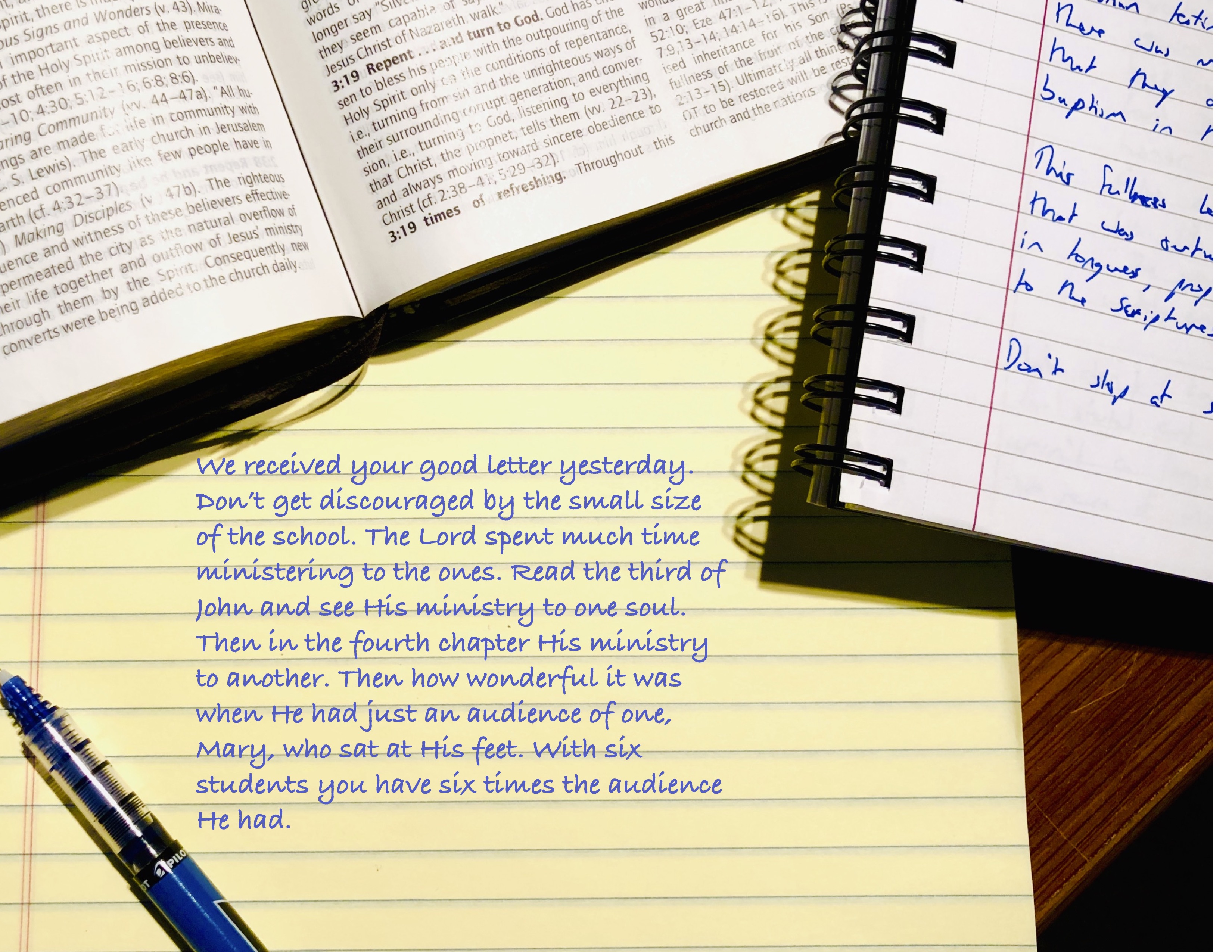
“We received your good letter yesterday. Don’t get discouraged by the small size of the school. The Lord spent much time ministering to the ones. Read the third of John and see His ministry to one soul. Then in the fourth chapter His ministry to another. Then how wonderful it was when He had just an audience of one, Mary, who sat at His feet. With six students you have six times the audience He had.”
Success is not about big numbers, but about quality time invested faithfully and for God’s glory.
I wrote my book Shepherd Leadership: The Metrics That Really Matterto address this misconception which discourages so many pastors and other ministry leaders. If you are involved in ministry, I truly believe this book will give you a new encouraging perspective.
Listen to the podcast of this post by clicking on the player below, and you can also subscribe on Apple, Spotify, or Audible.
“Come to Me, all you who are weary and burdened, and I will give you rest. Take My yoke upon you and learn from Me, for I am gentle and humble in heart, and you will find rest for your souls. For My yoke is easy and My burden is light.” —Jesus Christ (in Matthew 11:28-30)
Walking alongside my Mom through her battle against cancer has been bittersweet—bitter in the struggle, but sweet in the lessons. Although I wish that my Mom didn’t have to suffer with this accursed disease, during this journey not only have we had wonderful conversations, but I’ve learned more about the closeness of Jesus in all our suffering.
In a very small way, I’ve gotten to do for my Mom what my Savior does for me every day: Lift heavy burdens. The strong, loving hold that Jesus has on each of His children brings a security and a sweetness that is beyond compare!
The question is: Will I keep my arms wrapped tightly around my Savior and trust Him to hold me securely, or will I let go of Him and attempt to carry my own burdens?
When the burdens of life seek to overwhelm us, Oh, that we might cling all the more tightly to the only One who can hold us securely!
Listen to the podcast of this post by clicking on the player below, and you can also subscribe on Apple, Spotify, or Audible.
What people were saying about Jesus right from His birth—before He preached a sermon, performed a miracle, or stepped on the toes of religious or political leaders—was revealing the truth.
Daniel served under multiple kings, even as the regimes changed from Babylonian, to Median, to Persian. He never waiver in his adherence to the Truth that God had spoken. He fearlessly told these world leaders, “The Most High is sovereign over all kingdoms on earth and gives them to anyone He wishes” (Daniel 4:25).
Most leaders forget this the moment they obtain power. Such is the case of the man the Magi met: King Herod the Great. Listen to how William Barclay describes this monarch:
“Herod the Great was always despised by the pure-blooded Jews because he was half an Edomite; and we can see the importance that even Herod attached to these genealogies from the fact that he had the official registers destroyed, so that no one could prove a purer pedigree than his own. …
“He had made himself useful to the Romans in the wars and civil wars of Palestine, and they trusted him. He had been appointed governor in 47 B.C.; in 40 B.C. he had received the title of king. …
“But Herod had one terrible flaw in his character. He was almost insanely suspicious. He had always been suspicious, and the older he became the more suspicious he grew, until, in his old age, he was, as someone said, ‘a murderous old man.’ … He murdered his wife Mariamne and her mother Alexandra. His eldest son, Antipater, and two other sons, Alexander and Aristobulus, were all assassinated by him. Augustus, the Roman Emperor, had said, bitterly, that it was safer to be Herod’s pig than Herod’s son. …
“When he was seventy he knew that he must die. … He gave orders that a collection of the most distinguished citizens of Jerusalem should be arrested on trumped-up charges and imprisoned. And he ordered that the moment he died, they should all be killed. He said grimly that he was well aware that no one would mourn for his death, and that he was determined that some tears should be shed when he died.”
Lord Acton famously said, “Power tends to corrupt and absolute power corrupts absolutely. …Despotic power is always accompanied by corruption of morality.” This is so obvious in Herod! So we can understand why the city of Jerusalem was disturbed when the Magi arrived! Whether Herod knew the prophecy of the coming Messiah or not, it’s inescapably true that his days and his legacy were numbered (see Isaiah 9:2-7).
When King Herod heard the announcement from the Magi, his reaction was violent. Perhaps Herod lashed out so ferociously because these words of Truth from the Magi reminded him his end was near, his power was not absolute, he had to answer to The Most High who is sovereign over all.
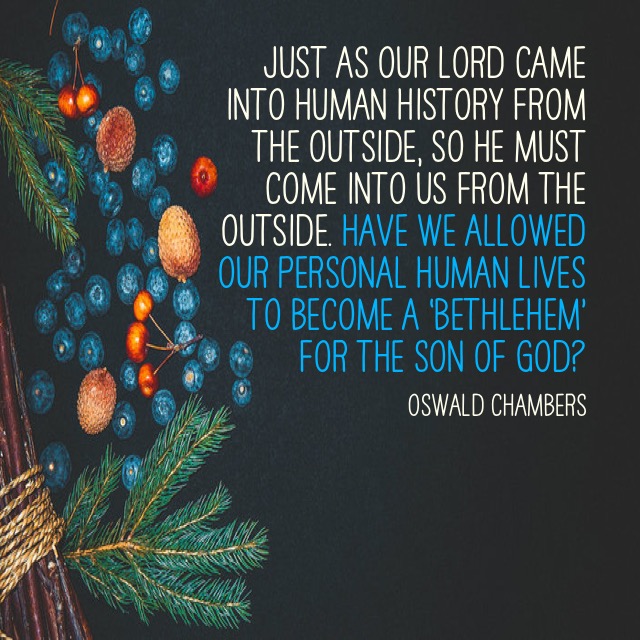
We are no better. Oswald Chambers defines sin as “my claim to my right to myself.” We want absolute sovereignty over ourselves, but Jesus will allow no rival to His throne! He is either King over all or else He is not King at all.
Beware of your own reaction when the Holy Spirit convicts you of a rival to Christ’s throne in your heart. If you lash out like Herod, dismiss it, or try to justify it, that is proof that you needed to hear that word of Truth. Don’t delay: Repent and allow Christ to have His rightful throne.
Jesus came as a Baby and a Savior at his First Advent. He opened the way for us to enter the presence of The Most High God, but it will cost us something to enter. Oswald Chambers tells us:
“Redemption is easy to experience because it cost God everything, and if I am going to be regenerated it is going to cost me something. I have to give up my right to myself. I have deliberately to accept into myself something that will fight for all it is worth, something that will war against the desires of the flesh, and that will ask me to go into identification with the death of Jesus Christ, and these things produce a struggle in me.”
Christ’s Second Advent will be as the conquering King and righteous Judge of all humanity. We have precious little time to tell others the good news. People may react violently like Herod did, but that is simply proof that they needed to hear that Truth.
But let’s look at this from another angle: Before there was an Old Testament and a New Testament, what did those who lived in the days of Jesus call what we now refer to as “the Old Testament”? They called it Scripture.
Here’s a clip from a recent sermon where I discuss more in-depth why our New Testament is really the best commentary we have on the Old Testament:
I invite you to check out a couple of other resources:
This is a weekly series with things I’m reading and pondering from Charles Spurgeon. You can read the original seed thought here, or type “Thursdays With Spurgeon” in the search box to read more entries.
Listen to the podcast of this post by clicking on the player below, and you can also subscribe on iTunes or Spotify.
Forgiven And Forgiving
Forgiving one another, even as God for Christ’s sake has forgiven you. (Ephesians 4:32)
Now observe how the apostle puts it. Does he say, ‘forgiving another’? No, that is not the text. If you look at it, it is ‘forgiving one another.’ One another! Ah, then that means that if you have to forgive today, it is very likely that you will, yourself, need to be forgiven tomorrow, for it is ‘forgiving one another.’ … Let us begin our Christian career with the full assurance that we will have a great deal to forgive in other people, but that there will be a great deal more to be forgiven in ourselves! …
Note again: When we forgive, it is a poor and humble business compared with God’s forgiving us, because we are only forgiving one another—that is, forgiving fellow servants. But when God forgives us, the Judge of all the earth is forgiving, not His fellows, but His rebel subjects, guilty of treason against His majesty! For God to forgive is something great—for us to forgive, though some think it great—should be regarded as a very small matter. … What we owe to God is infinite, but what our fellow creature owes to us is a very small sum. …
If anyone here who is a Christian finds a difficulty in forgiveness, I am going to give him three words that will help him wonderfully… Here they are again: ‘For Christ’s sake.’ …
I do not know how to put this next word I am going to say. It is a paradox. You must forgive or you cannot be saved. But at the same time, you must not do it from compulsion, you must do it freely. … Remember, it is of no use for you to put your money into that offering box as you go out unless you remember, first, to forgive your brother. God will not accept the gifts, prayers, or praises of an unrelenting heart. … The very prayer that teaches you to ask for mercy bids you say, ‘And forgive us our debts, as we forgive our debtors’ (Matthew 6:12). Unless you have forgiven others, you read your own death warrant when you repeat the Lord’s Prayer!
From Forgiveness Made Easy
We honor the forgiveness that God has extended to us by liberally forgiving others. And our forgiveness of others shows them just how loving and forgiving our God is too!
I add my prayer to Charles Spurgeon’s that you would grasp the truth that we can forgive one another for Christ’s sake because God has forgiven us for Christ’s sake. Let’s all grow in this Christian maturity!



 Pastor shepherds are also sheep themselves. Pastors can only lead well to the extent that they are being led by the Great Shepherd!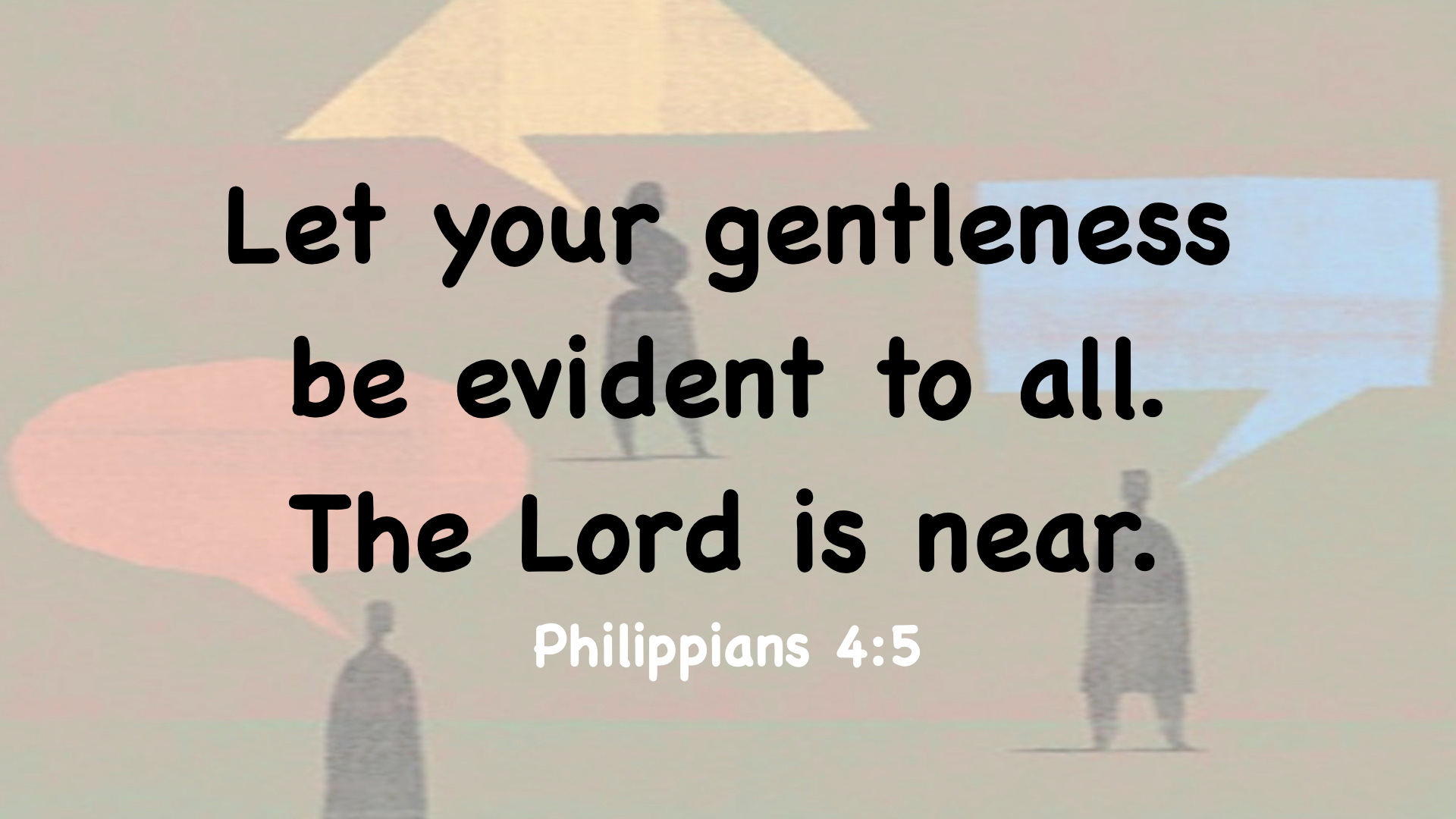








 Craig T. Owens
The Best Commentary On The Old Testament
December 8, 2021 — Craig T. OwensListen to the podcast of this post by clicking on the player below, and you can also subscribe on Apple, Spotify, or Audible.
But let’s look at this from another angle: Before there was an Old Testament and a New Testament, what did those who lived in the days of Jesus call what we now refer to as “the Old Testament”? They called it Scripture.
Here’s a clip from a recent sermon where I discuss more in-depth why our New Testament is really the best commentary we have on the Old Testament:
I invite you to check out a couple of other resources:
►► Would you please prayerfully consider supporting this ministry? ◀︎◀︎
Share this: