This is a weekly series with things I’m reading and pondering from Charles Spurgeon. You can read the original seed thought here, or type “Thursdays With Spurgeon” in the search box to read more entries.
Listen to the podcast of this post by clicking on the player below, and you can also subscribe on Apple, Spotify, or Audible.
The Mouth Of The Lord Has Spoken
…For the mouth of the Lord has spoken (Isaiah 1:20).
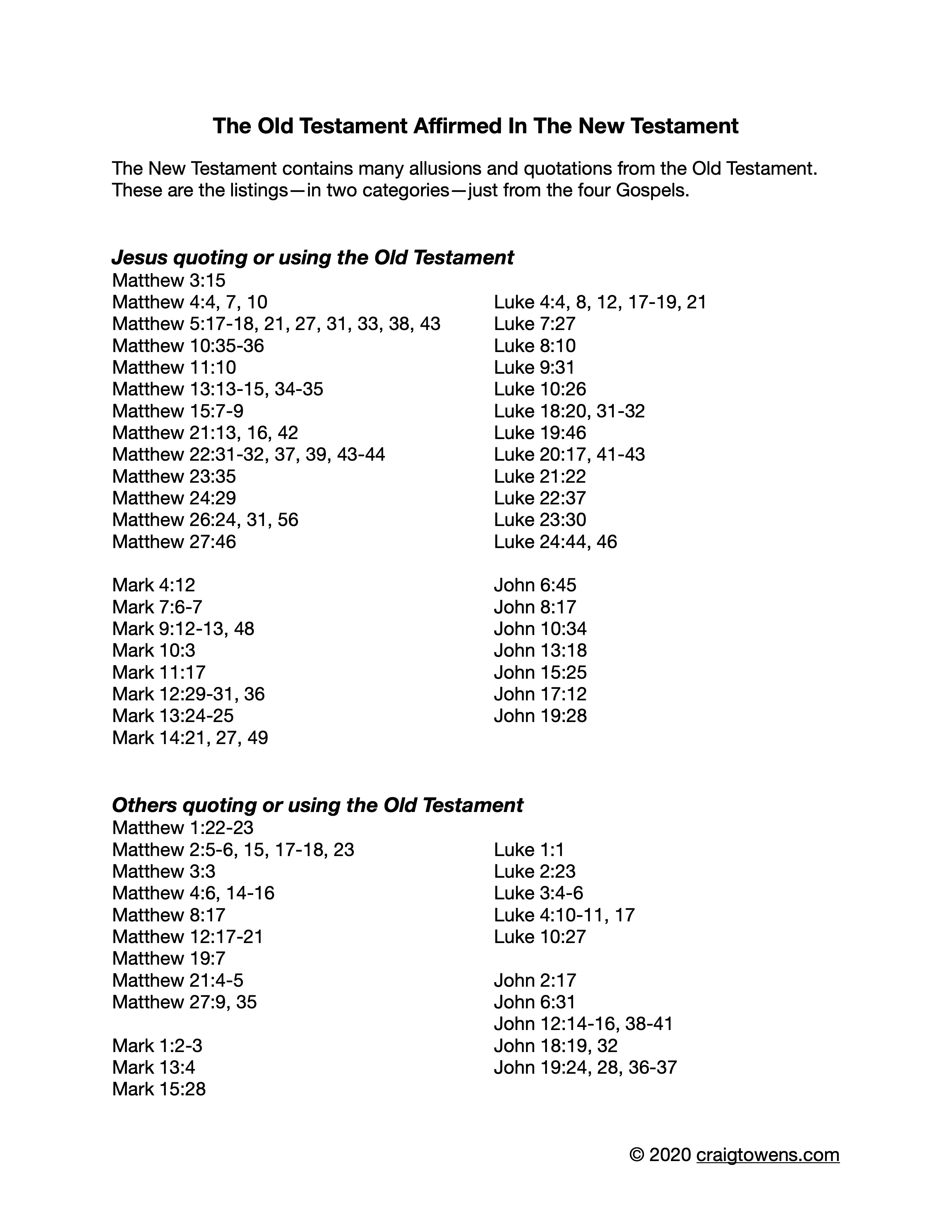
However this sacred Book may be treated nowadays, it was not treated contemptuously, nor negligently, nor questioningly by the Lord Jesus Christ, our Master and Lord. It is noteworthy how He reverenced the written Word. The Spirit of God rested upon Him personally, without measure, and He could speak out of His own mind the revelation of God, and yet He continually quoted the Law, and the Prophets, and the Psalms…. I am sure, brethren, we cannot be wrong in imitating the example of our divine Lord in our reverence for that Scripture, which cannot be broken. …
The New Testament writers sit reverently down before the Old Testament and receive God’s words as such without any question whatever. You and I belong to a school that will continue to do the same, let others adopt what behavior they please. As for us and for our house, this priceless Book will remain the standard of our faith and the ground of our hope so long as we live.
When we read the Bible, we are reading words from the mouth of God Himself!
This Book is the measure of truth, the guide for our lives, and the blessed assurance we need as we anticipate the second advent of Jesus. We need to be much in this Sacred Book!
Listen to the podcast of this post by clicking on the player below, and you can also subscribe on Apple, Spotify, or Audible.
After the outpouring of the Holy Spirit on that Day of Pentecost immediately following Christ’s ascension, Christians were speaking in languages that they had not learned. As they did so, they were “declaring the wonders of God” in all the languages of the world. Some people mocked, saying they were merely babbling drunks, but everyone in Jerusalem was “amazed and perplexed” at this remarkable event, which prompted Peter to preach a powerful sermon (Acts 2:8-21).
Peter began his sermon by quoting words “spoken by the prophet Joel” (Joel 2:28-32). It’s unlikely that Peter had a copy of Joel with him, so this quotation was delivered from memory and Peter’s sermon was given spontaneously as the Holy Spirit empowered him. In looking at the passages in both Joel and Acts, I see three notable differences.
Joel begins by saying, “And afterward I will pour out My Spirit,” but Peter begins with the words, “In the last days…I will pour out My Spirit.” I’ll address this point further in just a moment.
Peter inserts “and they will prophesy” at the end of verse 18, a phrase that Joel didn’t say at the end of Joel 2:29. I think this is the Holy Spirit emphasizing that what the crowd heard was indeed prophecy, not mindless babbling.
Joel concludes with “before the coming of the great and dreadful day of the Lord,” but Peter says, “before the coming of the great and glorious day of the Lord.” The word Joel uses for “dreadful,” meaning an awesome day worthy of reverence, was a day of sorrow for those about to be judged guilty, and a day of supreme rejoicing for those about to be judged innocent in God’s sight. The word Peter uses for “glorious” is the only time this Greek word is used in the New Testament. The word is epiphanes: where we get our English word “epiphany”—a light has dawned and the truth is finally realized!
Let’s go back to the difference between “afterward” in Joel and “in the last days” in Acts. In a sense, the “afterward” for Peter was what everyone was experiencing right then—after the death, burial, and resurrection of Jesus, and after the outpouring of the Holy Spirit that Jesus had promised (John 16:7; Acts 1:4-5).
Let’s also consider the “afterward” in Joel’s day. What came before was a disaster of locusts consuming the land, which prompted Joel to call for the solemn response of prayer and fasting. This heartfelt response from godly people trigged God’s outpouring of His Spirit—the afterward—that led to a blessing “before the coming of the great and dreadful day of the Lord” (Joel 2:1-3, 10-13).
Both Joel and Peter conclude that it is God’s desire that “everyone…be saved”! The outpouring of the Holy Spirit was to help people have an epiphany of both their sin and the salvation that Jesus purchased on His Cross.
The word “disaster” comes from the Latin word disastros. The root word astros pertains to the heavenly lights (star, sun, moon), and the prefix “dis-” is a pejorative (something that has a belittling effect). So disaster really means no guiding lights, or hopeless darkness.
Jesus was prophesied to step into this hopeless darkness and bring light and hope—“The people walking in darkness have seen a great light; on those living in the land of deep darkness a light has dawned” (Isaiah 9:2). Zechariah prophesied that Jesus was the fulfillment of this: “Because of the tender mercy of our God, by which the rising sun will come to us from heaven to shine on those living in darkness and in the shadow of death, to guide our feet into the path of peace” (Luke 1:78-79).
Jesus is THE Epiphany, THE Ultimate Light, but He also tells us, “You are the light of the world (John 8:12; Matthew 5:14).
In a world of hopeless darkness, Christians are to be Christ’s Light-bearers.
We cannot do this on our own.
The Holy Spirit’s empowerment ignites and then aligns our light-bearing to a disaster-prone world.
When Joel saw disaster coming, he called for a fast. This fast led to the outpouring of God’s empowerment on godly people, so they could take the Light to those lost in deep darkness. I think the same response is needed from Christians today.
When it appears this world is plunging deeper into darkness—when we hear of disasters (remember that disastros means people are without Light)—we need to pray and fast so that the Holy Spirit can be reignited in us, so that we can then be realigned to best shine the light of Jesus brightly.
Our lives can and should be the epiphany of Christ’s love for the world to see! Let’s all pray: “Holy Spirit, make us Your epiphany to a dark world!”
If you’d like to check out the other messages in our series We Are: Pentecostal, please click here.
Listen to the podcast of this post by clicking on the player below, and you can also subscribe on Apple, Spotify, or Audible.
One of my favorite classes that I took in college was a philosophy class where we studied the rules of logic. I found it so intriguing to learn how to construct or deconstruct an argument by looking at the premises and its conclusion.
One of the keywords that we would look at is “therefore.” This helped us understand what the conclusion of an argument was. If the argument was made well, what came after the “therefore” was a natural progression from the premises. With that in mind, I always keep an eye out for the “therefores” when I am reading my Bible.
Except I have noticed that God frequently uses “therefore” in unexpected ways.
The classic rules of logic lay out connecting and supporting premises that flow to a natural “therefore” conclusion. But God’s conclusions typically defy natural, conventional logic. His conclusions are frequently supernatural!
Notice a couple of examples from Isaiah. God’s people are suffering the natural consequences for their open rebellion against God. In my mind, the natural “therefore” would be: “You are getting what you deserve.” However, God’s supernatural “therefore” is: “I have taken this cup of My wrath from you” (Isaiah 51:21–22).
In another example, the way God’s people were behaving and the way the enemies of God’s people were treating them, the natural “therefore” that I would expect is: “No one revered God’s name any longer.” But God’s supernatural “therefore” declares: “All people will know My name. All people will know I have fulfilled what I foretold, and all will revere Me” (Isaiah 52:6).
Ultimately, these supernatural conclusions were proven true by Jesus. Our Savior drank our cup of wrath on our behalf and gave us His cup of righteousness in its place. The natural conclusion of Christ’s work for us is also God’s supernatural conclusion: God exalted Jesus to the highest place of honor and reverence (Philippians 2:5–11).
My natural logic fails. God’s supernatural logic succeeds. Always!
His supernatural conclusions should always lead to my revering and glorifying Him even more. Let me encourage you in your Bible study time to pay close attention to God’s “therefores” and rejoice in His Christ-exalting supernatural work.
Listen to the podcast of this post by clicking on the player below, and you can also subscribe on Apple, Spotify, or Audible.
Then the king of Assyria sent his field commander with a large army… (Isaiah 36:2).
The enemies of God’s people always use the same tactics.
(1) Sending an intimidating force that seems overwhelming and invincible.
King Sennacherib didn’t send a small detachment of soldiers, but he sent “a large army” to try to intimidate the people of Judah.
(2) Asking doubt-inducing questions.
The field commander asked questions like…
On what are you basing this confidence of yours?
On whom are you depending?
Do you think Jehovah can save you from this?
(3) Fomenting distrust in God’s wisdom and ability.
Once the seeds of doubt had been sown, the field commander attempted to water those seeds by making accusations like…
Do not let Hezekiah deceive you: God can’t help you with this one!
The gods of other nations didn’t help them, so what makes you think your God will help you?
(4) Offering a compromise.
Then came the offer to give in…
Come now, make a bargain with my master and I’ll give you more riches than you can imagine!
Make peace with me while you have the chance, and I promise you will have a trouble-free life!
All of these tactics attempted to play on the fears of people who felt surrounded and overwhelmed.
But I love to remember that the acrostic of the word F.E.A.R. is False Evidence Appearing Real. The field commander in King Hezekiah’s time, and satan today, use the tactics of fear to try to get us to compromise.
King Hezekiah gave us a great example to follow. When he received the field commander’s letter with all of the threats listed, he “spread it out before the Lord” (Isaiah 37:14)! Isaiah reminded the people not to be afraid of the threats of the enemy, because those threats were actually blasphemy against God. And then God tells Hezekiah quite simply, “I will take care of this!”
And God did indeed take care of it.
Without the armies of Judah ever having to lift a sword or a spear or shield, God broke the power of the enemy and sent them away in shame!
When the enemy seems to be surrounding you today, he will use these same tactics. He will try to overwhelm you, get you to doubt what God has said, try to induce you to distrust God, and then offer you a compromise. All the devil has on his side is false evidence that he attempts to make look real.
So do what King Hezekiah did: Spread out those threats before God. Go to His Word and read again what He has already promised you. Then stand firm in faith. God will take care of your adversary!
Listen to the podcast of this post by clicking on the player below, and you can also subscribe on Apple, Spotify, or Audible.
C.S. Lewis, like many atheists, wondered if the God of the Bible might be an egomaniac because He is always encouraging people to praise Him. In his book Reflections on the Psalms, Lewis wrote a thoughtful response to this after he had become a Christian:
“Just as men spontaneously praise whatever they value, so they spontaneously urge us to join them in praising it. ‘Isn’t she lovely? Wasn’t it glorious? Don’t you think that magnificent?’ … I think we delight to praise what we enjoy because the praise not merely expresses but completes the enjoyment; it is its appointed consummation. It is not out of compliment that lovers keep on telling one another how beautiful they are; the delight is incomplete till it is expressed. … This is so even when our expressions are inadequate, as of course they usually are. But how if one could really and fully praise even such things to perfection—utterly ‘get out’ in poetry or music or pain the upsurge of appreciation which almost bursts you? Then indeed the object would be fully appreciated and our delight would have attained perfect development. The worthier the object, the more intense this delight would be.”
His phrase, “our expressions are inadequate” is especially true when we are attempting to appreciate and praise the Infinite, the Eternal, the Omnipresence, the Omnipotence of our God and Savior! But the biblical authors call for Christians to mature in this—we want to keep praising, keep expressing, until we finally find the perfect fulfillment in His presence.
Paul talks about the maturing nature of love—when I was a child, I talked like a child, I thought like a child, I reasoned like a child (1 Corinthians 13:11)—but then he prays for us to grow in both our understanding and our expressions of our Savior’s love (Ephesians 1:17-19).
I like the wording of Ephesians 1:19 in the King James Version: the exceeding greatness of His power to us-ward. The word “exceeding” means God pours out in a way that is beyond human imagining. The Greek word that Paul uses for “greatness” is only used here, and it reinforces the truth that God is beyond our full comprehension. And then Paul adds that this overflowing, incomparable power is directed “to us-ward”!
Paul then prays for us to be able to understand ever-increasing new dimensions of this transcendent power and ability that God directs to us through His Son Jesus, and for us to be able to express it (Ephesians 3:14-19). In other words, we are to grow in our experience of Jesus so that we can grow in our praise to Jesus.
The incomparable Jesus means at least four things for us. It means Jesus is…
…beyond comparison. Isaiah, God Himself, and the psalmists ask rhetorically, “Who is like God? Who could ever compare to Him?” (Isaiah 40:13-14, 18, 25; Psalm 89:5-8).
…matchless in His power. Isaiah 40:12 says God holds the waters of the world in the hollow of His hand. How much water is this? Scientists estimate the Earth’s water supply to be 326 quintillion gallons of water (that’s 326 followed by 18 zeros)! Not only does God hold all of the water, but He directs its activities on behalf of His children (Exodus 15:11-13).
…unequaled in knowledge.Isaiah 40:12, 26 tell us that all of the stars in our universe fit onto God’s outstretched hand, and that He knows all of the stars by name. How many stars is this? Astronomers calculate the heavens to contain 10 septillion stars (that’s 10 followed by 24 zeros)! Not only does God know each star by name, He knows each human by name, and thesmallest of details about each of them (Isaiah 49:16; Matthew 10:29-31).
…inimitable in His care. We humans can get to the end of our strength, but God never does. He cares for us unlike anyone else or anything else ever can (Isaiah 40:28-31). The Lord hears His people when they call to Him for help. He rescues them from all their troubles (Psalm 34:17).
Knowing we have a Savior like this, why would you ever settle for anything less The Genuine?!
Our incomparable Jesus wants us to pray in His incomparable name so that our incomparable Father can answer in a way that brings Him incomparable glory! We’re helped, He’s lifted up, and others are drawn to Him.
Listen to the podcast of this post by clicking on the player below, and you can also subscribe on Apple, Spotify, or Audible.
…the fear of the Lord is the key to this treasure (Isaiah 33:6).
What treasure is Isaiah referring to? There is an amazing list of blessings in this chapter! Things like…
God’s graciousness
God’s strength
Salvation
God’s justice
God’s righteousness
A sure foundation
“A rich store of salvation and wisdom and knowledge”
Eternally secure in God’s presence
Seeing God’s beauty
Having evil people removed from my life
Peace
How do I get the key to this treasure? By placing my faith in Jesus. Jesus paid the price, so He could take the key from the devil and hold it securely. When I am in Him, I have access to this key to God’s riches!
With all of this treasure accessible to me, how do I now live? In a word: Nobly. “But the noble make noble plans, and by noble deeds they stand” (Isaiah 32:8). I am a child of God, a joint-heir with Jesus. I lack no good thing, so I can live securely, gracefully, and nobly. I must live this way to bring glory to my Lord and my Master every single day!
Listen to the podcast of this post by clicking on the player below, and you can also subscribe on Apple, Spotify, or Audible.
Isaiah 52–53 contain a description of Jesus as a servant leader. One phrase describes Him like this: “See, My Servant will act wisely” (Isaiah 52:13).
That phrase “act wisely” is translated in some other translations of the Bible as “deal prudently.” I like that word prudently. It’s not a word that we use very often today, but it’s one that sets God’s servant leaders apart from worldly leaders.
Prudent can be described as…
circumspect
intelligently speaking and acting
teaching skillfully
having increasing understanding and insight
helping others grow in understanding
behaving appropriately
living wisely
guiding oneself and others willingly
What happens to the leader who lives and leads this way? Listen to the entire verse that I only quoted a portion of earlier—
See, My Servant will act wisely; He will be raised and lifted up and highly exalted.
Notice that this exalted person is described as a servant—not just anyone’s servant, but Jehovah’s servant. As a servant of God, Jesus becomes a servant of all. And as a servant of God, He is exalted and honored above all.
Jesus is every leader’s Ultimate Example of this. Jesus set aside every prerogative He had that would give Him the right to do things His way, in order to make Himself a servant of God and a servant of mankind (Philippians 2:6-11; Mark 10:45). Jesus gave all of His followers this example to emulate (John 13:15-17), so Paul tells us our “mindset should be the same as that of Christ Jesus” (Philippians 2:5).
I need to ask myself a question—and I would invite you to ask yourself this too: As a leader, am I growing in Christlike prudence?
A mark of a godly leader is one who can see his growth in prudence.
Jesus, may You be pleased as I follow Your example of living and leading prudently. Holy Spirit, help me see the areas in my life where I need to submit to You. Father, may You be pleased to bless my leadership as it aligns with Your heart. I want to act wisely, lead prudently, and help others to follow this example of Jesus for themselves.
This is part 61 in my series on godly leadership. You can check out all of my posts in this series by clicking here.
Listen to the podcast of this post by clicking on the player below, and you can also subscribe on Apple, Spotify, or Audible.
All this also comes from the Lord Almighty, whose plan is wonderful, whose wisdom is magnificent (Isaiah 28:29).
Throughout the Scripture, God always makes clear the two options we have: Our way or His way.
Man’s way is described like this: “For it is: do this, do that, a rule for this, a rule for that, a little here, a little there” (v. 10). In other words, man says, “We’ve got this all figured out. We have a plan for everything.”
Until they don’t.
Until the world is not going according to plan, and worldwide panic sets in, and a new plan needs to be formulated. In the meantime, people are fearful, angry, confused, and panicking.
God describes His way like this: “See, I lay a stone in Zion, a tested stone, a precious cornerstone for a sure foundation; the one who relies on it will never be stricken with panic” (v. 16).
So here’s the decision everyone will have to make: Will I trust the puny plans of a finite human, and experience the panic that sets in when those plans fail? Or will I put my trust in the only One whose plans are never thwarted? One plan leads to panic, and the other leads to peace.
Listen to the podcast of this post by clicking on the player below, and you can also subscribe on Apple, Spotify, or Audible.
I think we all know the cliche, “Beauty is in the eye of the beholder.” But isn’t that too shallow? Are we really saying that beauty is only what we can see on the surface? Instead, I think we should say, “True beauty is in the heart of the beholder.”
Where does beauty begin? What is its source?
Jesus told us, “Love your neighbor as yourself.” I can only love others to the level that I love myself, and that also means that I can only see beauty in others as I see it in myself. But if I try to achieve this by just loving myself or telling myself how beautiful I am, my pride comes in and crumbles the whole foundation.
So the first thing Jesus told us was to go to the Source—to Love Himself: “Love the Lord your God with all your heart and with all your soul and with all your mind and with all your strength” (Mark 12:30-31). When we come to our Heavenly Father through our beautiful Savior we discover how beautiful we are in Him. We are clothed in the righteous robes of Jesus, which makes us as beautiful as He is. Then our Father sings His love to us (see Song of Songs 2:10, 4:7).
The dictionary defines beauty this way: “The quality present in a thing or person that gives intense pleasure or deep satisfaction to the mind.” But the word beauty originated from a Latin word that meant good or virtuous. Sadly, our vain world has made beauty something that is only skin deep, and very rarely is someone’s goodness or virtue described as beautiful.
Let me say it again: “True beauty is in the heart of the beholder.” Peter and Jesus both make this same point, reminding us that something beautiful on the outside can actually be covering up something quite ugly on the inside, or to say it another way: true beauty is far deeper than merely what we see with our eyes (1 Peter 3:3-4; Matthew 23:27).
On the other hand, Isaiah prophesied about Jesus that, “there was nothing beautiful or majestic about His appearance, nothing to attract us to Him” (Isaiah 53:2 NLT). Outwardly, especially at His crucifixion, Jesus was grotesque, but this ugliness was our ugliness—our sin, and our disease, and our pride that Jesus took on Himself. He willingly took on our ugliness to allow us to exchange ashes for beauty, mourning for rejoicing, and sin for righteousness (Isaiah 53:2-5; 61:1-2, 9-10).
So in prayer, we go to the One who isn’t beautiful in the eyes of a vain world. Jesus made Himself nothing, taking on the very nature of a servant, He came not to be served but to serve, He washed dirty feet, He hung out with sinners, He didn’t stay at the Ritz (He didn’t even have a home of His own), and He had only one set of clothes to wear. But He willingly took on all of our pain and sin so that He could take away our ugly robes and clothe us in His beautifully perfect robe of righteousness.
It’s only when I know how beautiful and loved I am in God’s sight that I can begin to love others and see the beauty in them.
Looking at True Beauty is the only way I can see myself correctly. Looking at True Beauty I can see the intrinsic worth and beauty in others.
Prayer takes me to the beautiful Savior. Prayer reveals Christ’s beauty in me. Prayer brings His beauty to a vain world.
“Without prayer the Christian life, robbed of its sweetness and its beauty, becomes cold and formal and dead; but rooted in the secret place where God meets and walks and talks with His own, it grows into such a testimony of divine power that all men will feel its influence and be touched by the warmth of its love.” —E.M. Bounds
I pray that we will know this truth—that true beauty is in the heart of the beholder—and that we will truly know that Real Beauty is only found when we gaze at our beautiful Savior.
This is a weekly series with things I’m reading and pondering from Charles Spurgeon. You can read the original seed thought here, or type “Thursdays With Spurgeon” in the search box to read more entries.
Listen to the podcast of this post by clicking on the player below, and you can also subscribe on Apple, Spotify, or Audible.
Beautiful Homegoing
You shall come to the grave at full age, as a sheaf of grain ripens in its season. (Job 5:26)
The Christian’s death is always timely. ‘You shall come to the grave at full age.’
‘Ah,’ says one, ‘that is not true. Good people do not live longer than others. The most pious man may die in the prime of his youth.’ But look at my text. It does not say you will come to your grave in old age, but in a ‘full age.’ … All fruits do not get ripe and mellow at the same season. So it is with Christians. They are at a ‘full age’ when God chooses to take them home. …
There are two mercies to a Christian. The first is that he will never die too soon. And the second is that he will never die too late. …
‘But,’ say some, ‘how useful might they have been had they lived.’ Ah, but how damaging they might have been! And were it not better to die than to do something afterward that would disgrace them and bring disgrace to the Christian character? Were it not better for them to sleep while their work was going on than to break it down afterward? …
Again, the Christian never dies too late. … God is too good a Husbandman to leave His wheat in the field too long and let it shale out. …
Now the last thing is that a Christian will die with honor. … I think there are two funerals for every Christian: one is the funeral of the body, and the other of the soul. Funeral, did I say, of the soul? No, I meant not so. I meant not so. It is a marriage of the soul. For as soon as it leaves the body, the angel reapers stand ready to carry it away. They may not bring a fiery chariot as they had for Elijah. But they have their broad spreading wings. I rejoice to believe that angels will come as convoys to the soul across the ethereal plains. … I think the most honorable and glorious thing we will ever behold, next to Christ’s entrance into heaven and His glory there, is the entrance of one of God’s people into heaven.
From The Death Of The Christian
As I mentioned last week, this sermon was so providential in its timing for me because my precious mother went Home to be with Jesus just days before I opened to this sermon from Charles Spurgeon.
We are comforted by the promises Rev. Spurgeon shares because they are based on the truth in God’s Word. “Good people pass away; the godly often die before their time. But no one seems to care or wonder why. No one seems to understand that God is protecting them from the evil to come. For those who follow godly paths will rest in peace when they die” (Isaiah 57:1-2).
At my Mom’s graveside committal service I shared this—
One of my favorite authorsC.S. Lewis made a comment, “You don’t have a soul. You are a soul. You have a body.”
This part that we called Claudia Owens was just the body that carried around who she really was. What a beautiful soul that we got to experience for 78 years. What shined through was so sweet and graceful and wonderful. What a glimpse we got! But a joy to know that it was only a glimpse. That the part of my Mom that was so beautiful that we got to see, was only a fraction of her full beauty! The part that was really her, that is at Home with her Savior Jesus now is shining in all its brilliance. …
We will all miss her and we will grieve our loss. But as the apostle Paul reminded us, we don’t grieve as those who have no hope. We know that to be absent from the body is to be present with the Lord. We know that this body is sown perishable ravaged by the disease of cancer, but that my Mom is now in a place with no more tears or disease. We know that the same Savior that prepared a place for Claudia has prepared a place for us.
And we concluded with this prayer that can be offered up for every Christian who has died at their “full age”:
Heavenly Father,
We commit this body to the ground with the full assurance that her soul is in your everlasting presence. Holy Spirit, help us in our grief to be reminded of the hope of eternal life that we all share. Thank You, Jesus, for purchasing this hope on which we stand.
As I mentioned last week, if you don’t have this blessed assurance of the marriage of your soul when you take your last breath here on earth, please don’t hesitate to contact me.
















 Craig T. Owens