What Can I Change In Me?

Listen to the podcast of this post by clicking on the player below, and you can also subscribe on AppleSpotify, or Audible. 

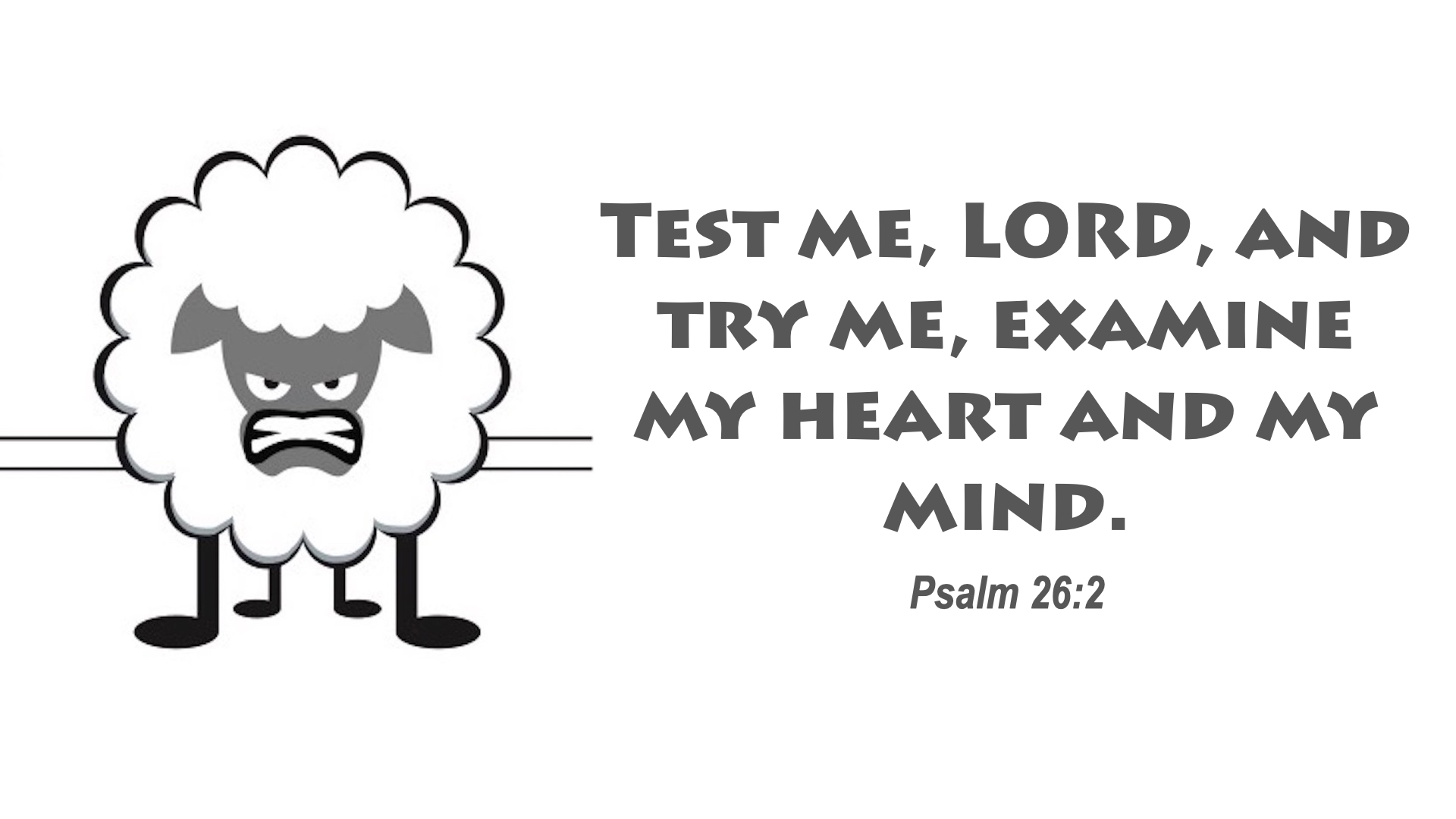
When a shepherd leader is bitten by a sheep under their care, it’s quite natural to say, “What’s wrong with them?” Let me highlight that word: natural. 

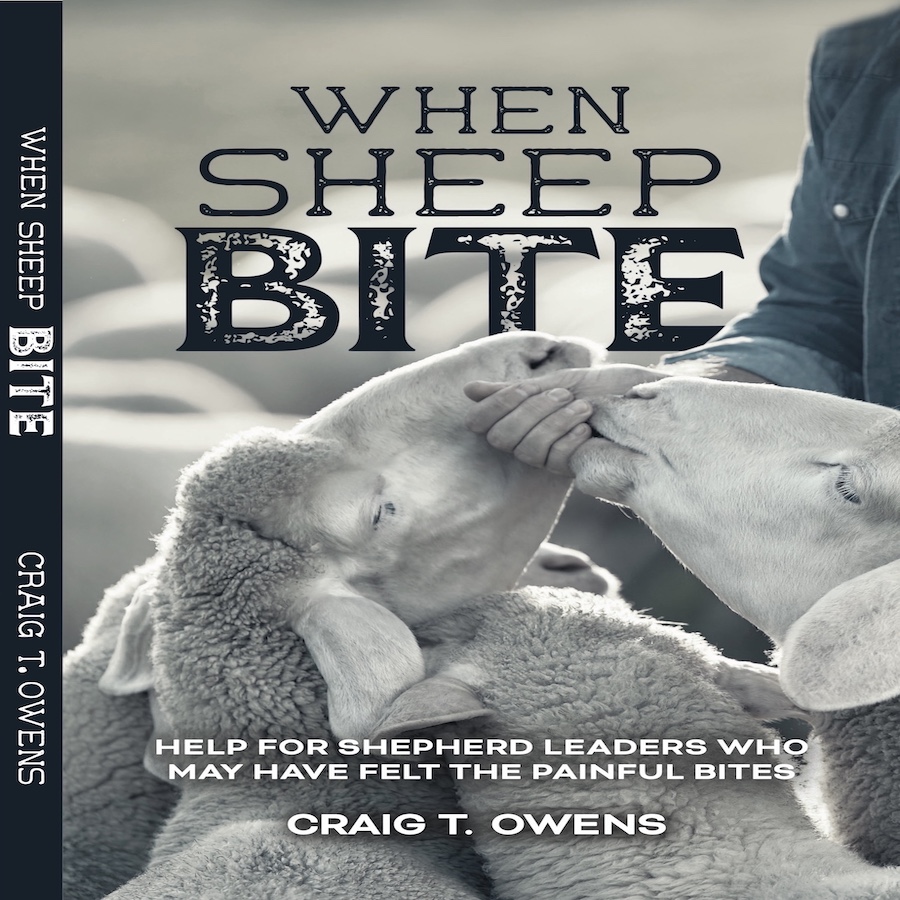
In my book When Sheep Bite, I contrast the natural response with the supernatural response. It takes a lot of work because “natural” comes just so, well, naturally. But to respond supernaturally is going to take some re-training. 

We need to be able to reflect after we’ve interacted with a biting sheep. If we reacted in an inappropriate way, we need to ask forgiveness and attempt to make things right. Then we need to engage in some Holy Spirit-led introspection to switch the natural question of, “What’s wrong with them” to the supernaturally-led question, “What can I change in myself?” 

In a recent interview with Karl Vaters on his Church Lobby Podcast, we talked a bit about this topic. 

One chapter in my book is titled ‘Is God Trying to Get My Attention?’ Here’s an excerpt—

     Pain always takes priority. It always gets our attention and demands to be attended to immediately. We don’t schedule painful things on our daily “To Do” list, but that painful item will become the one and only thing which clamors to be addressed. 

     The same thing is true when the sheep bite and kick their shepherd. It hurts, it demands an immediate response, and it seems to become the only item on our agenda. But I would like to advocate that we don’t respond immediately. Why? Because our primal, gut-level response is almost always very shortsighted, and frequently, upon reflection, we later end up second-guessing what we said or did. 

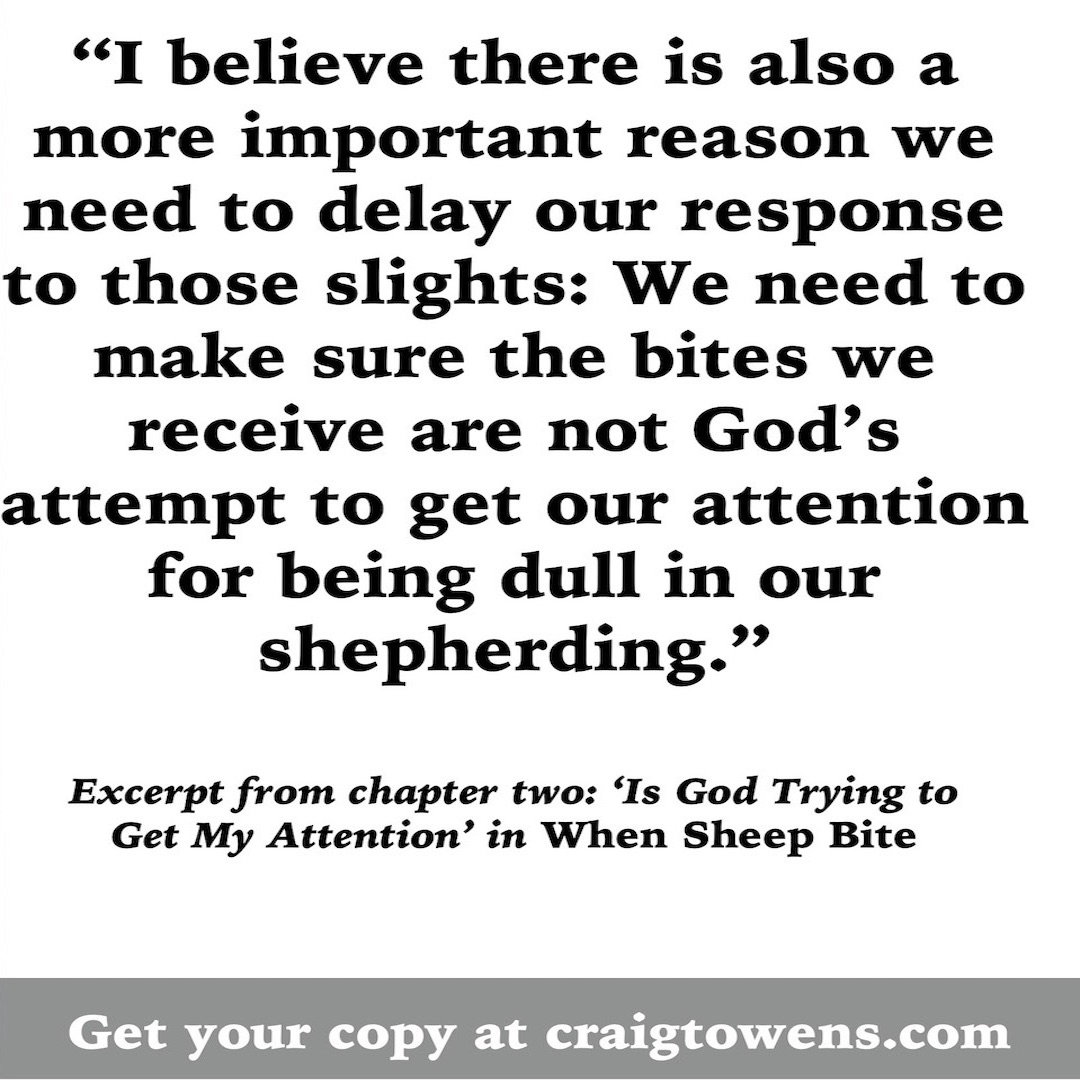
     I believe there is also a more important reason we need to delay our response to those slights: We need to make sure the bites we receive are not God’s attempt to get our attention for being dull in our shepherding. God told Jeremiah, “For the shepherds have become dull-hearted, and have not sought the Lord” (Jeremiah 10:21 NKJV). As a result, God had to send something painful to those religious leaders to make them aware of the dullness that had set in. 

I conclude this chapter with a prayer for shepherds who have been bitten—

     Father, Your sheep continued to wallow in the unhealthy habit of biting the hand that fed them and cared for them. In Your perfect love, You knew just how to discipline them, always with a heart of drawing these wayward sheep back to You. I ask You to please cultivate this loving heart in me. 

     Jesus, even as You were nailed to the Cross by the very sheep You came to save, You didn’t lash out in anger but lovingly prayed, “Father, forgive them for they don’t know what they are doing.” You know how much it hurts when my loving shepherding of these flock under my care is repaid with bites and kicks and abandonment. Jesus, help me to learn to respond in loving forgiveness as You did. 

     Holy Spirit, as David prayed, so I pray, “Search me.” As I do, please show me where my words, actions, or attitudes have rubbed the sheep under my care the wrong way and prompted them to lash out. Help me to repent, forgive, and ask forgiveness. Even if the attack was unprovoked by anything I have done, my heart’s desire is for none to be lost so please help me learn how to bring about restoration. 

     I pray this in the name of my Good Shepherd, Jesus. Amen.

To find out more about When Sheep Bite, or to pick up a copy for yourself, please click here.

►► Would you please prayerfully consider supporting this ministry? My Patreon supporters get behind-the-scenes access to exclusive materials. ◀︎◀︎

Links & Quotes

I’ve got a great Christmas gift idea for you to give to your favorite pastor: a copy of my book When Sheep Bite. I promise you that your pastor has been bitten and that there will be more bites in the future. This book will bring about the healing and restoration that your pastor needs.

I have lots of new content every week, which you can check out on my YouTube channel.

“Good advice is always certain to be ignored, but that’s no reason not to give it.” —Agatha Christie 

Skeptics of the Bible will often point to incidents in the Scripture that they would consider genocide. How are Christians to respond to these claims? J. Warner Wallace helps us respond thoughtfully and biblically. 

Our Creator crafted a perfect environment for life to flourish on Earth. This isn’t random chance, but intelligent precision. Check out this short clip that outlines the devastation that would occur with even the smallest of changes.

“Let us remember, dear friends, that as we meet at our tables today with our sisters and brothers from distant parts, we are also invited by our elder Brother, our divine Friend, to join with Him in a higher feast, the way there sprinkled with His own blood. Let us not forget, as we are blessed with the providential bounties for the nourishment of these frail bodies that Christ the Lord summons us to a spiritual feast.” —Rev. James Cruickshanks, November 21, 1861 

“The apostle Paul explained that the power of God at work within us, the power of His indwelling Holy Spirit, is exceedingly abundantly greater than all we could ever ask or think (Ephesians 3:20). Greater for what? For a clearer vision of Christ and more intimate communion with Him (Colossians 3:1-3; 2 Corinthians 3:12-18). More continuous and abundant yields of spiritual fruit (Galatians 5.22-23). Greater consistency and effectiveness in the exercise of spiritual gifts for ministry (1 Corinthians 12:7-11). More power to bear witness for Christ, to love God and our neighbors, and to advance His rule of righteousness, peace, and joy on earth as it is in heaven (Acts 1:8; Matthew 22:34-40; Romans 14:17-18).” —T.M. Moore [check out all of the Scripture here

Links & Quotes

I shared this video last week with my Patreon supporters. When we’re unclear about all that God has asked us to do, the first step is to obey the part that is clear to us. Check out my blog post Clearing up the Confusion for more insight on how Peter handled this.

I have lots of new content every week, which you can check out on my YouTube channel.

T.M. Moore calls on Christians to recognize the God-given authority our leaders have. Not just recognize, but submit to that authority: “We show that we believe the Lord and trust in His Word, and we demonstrate the evidence of that faith when we submit to our church leaders as unto the Lord (Colossians 3:23-24). Submitting to proper authorities is an integral component of full faith. If we want to gain the benefit God intends for us from those appointed to lead, we’re going to have to learn to submit.”

“Talent is never enough. With few exceptions the best players are the hardest workers.” —Earvin Magic Johnson

“Take your job seriously, but don’t take yourself too seriously.” —Alex Trebek

The American Bible Society reports that Gen Z is engaged with Scripture less than any other generation. But here is a sad outcome: “Scripture Engagement is associated with significantly lower anxiety levels among all Americans, but especially among Generation Z. The anxiety score for Bible Engaged Gen Z respondents (3.4) is less than half that of the anxiety score for Bible Disengaged Gen Z respondents (7.1).”

What if the qualifications in Acts 6:3 were the only qualifications we used for selecting folks for ministry assignments: (a) good reputation, (b) full of the Holy Spirit, and (c) full of wisdom?

Clearing Up The Confusion

Listen to the podcast of this post by clicking on the player below, and you can also subscribe on AppleSpotify, or Audible. 

The apostle Peter had a very unusual encounter with a vision and with the voice of Jesus. 

It was so unusual that Luke records that Peter was “wondering“ and later on “still thinking“ about what he had seen and heard, and what the implications of the vision were (Acts 10:17, 19). In the KJV, the word for “wondering” is translated “doubted within himself.” The Greek words that Luke uses here mean perplexed and entirely at a loss. In essence, Peter was asking, “What did I just see? What in the world does this even mean?!” 

(Check out all of the Scriptures in this post here.) 

The vision came to Peter as he was praying on the roof of Simon‘s house. Because he was still on the roof when some men from Cornelius the centurion arrived, I believe this means that Peter stayed in an attitude of prayer while he was still wondering. That is an excellent posture for us to remain in as well when we are unclear as to what to do next. 

As I mentioned, Luke says that Peter “was still thinking” about what he had seen and heard (v. 19). This is a different Greek word which means to revolve in mind. In other words, Peter didn’t brush it off or think it was simply too complex for him to grasp, but he continued to look at it, wondering about what it could mean. 

I believe Peter is desirous to obey God, but he just doesn’t know what that obedience is supposed to look like. Instead of shutting down or launching out too quickly, Peter continues to wait for some illumination. 

It was at this point—while still in a prayerful, thoughtful posture—that the Holy Spirit could speak to him. The Holy Spirit simply said, “there are some men here to see you. You must not hesitate to go with them“ (vv. 19-20). 

Although Peter couldn’t see this yet, his obedience would actually be the first step toward understanding and applying the vision. 

It was as Peter talked with his visitors that afternoon, and then as he heard Cornelius‘ story the next day, that the application became clear to him. We can gather this when we hear Peter say, “God has shown me“ (v. 28). As he was retelling this story to some Jewish Christians later, he also said, “then I remembered what the Lord had said” (11:16). 

For Peter and his companions that traveled with him, God’s message in the vision became crystal clear when they all saw “that the gift of the Holy Spirit had been poured out even on Gentiles” (10:45-47). 

Here are some important takeaways for all of us. When God speaks a word to us that seems to be confusing, we must stay in a prayerful, expectant posture. Don’t brush it off, and don’t jump to any conclusions. Like Peter, stay in prayer and wait for a clearer word from the Holy Spirit. When the Holy Spirit reveals something else to you, walk forward in the part that is clear. It is as you are walking in obedience that God‘s full message will become clear to you. 

►► Would you please prayerfully consider supporting this ministry? My Patreon supporters get behind-the-scenes access to exclusive materials. ◀︎◀︎

Links & Quotes

My book Shepherd Leadership has five chapters dedicated to the health and wellbeing of pastoral leaders. One important principle: Only healthy shepherds can help their sheep get healthy.

I have lots of new content every week, which you can check out on my YouTube channel.

Clinton Manley has a great post on the way the Holy Spirit empowers a Christian’s life. He tells of this work in terms of an adventure: “We were made to go to God, the Home for our souls, made to enjoy God more and more forever, to really live. And the only way to get there is by following the Way crossing the only Bridge that brings us to God (John 14:6; 1 Peter 3:18). And we can only walk that Way when God’s own breath fills our lungs and animates our steps, when His Spirit sets us walking in a new direction as new creations on new adventures.”

“In a February 1, 1871, letter to his best friend, botanist Joseph Dalton Hooker, Charles Darwin suggested a warm little pond was the site where primitive life first arose.” All these year later, evolutionists are still trying to discover this “little pond,” but all of their attempts end in frustration as even fellow naturalistic scientists poke holes in their theories.

Even among the reformers, Conrad Grebel was consider something of a radical. “Grebel was convinced that the city councilmen should have no authority over the church and its practice — more so, they should have no authority over the word of God itself. On the flip side, he didn’t think the church should have authority over the state either, and he opposed compulsory tithing and the like. The seeds of a separation between church and state were germinating. To us, this separation is as familiar as the air we breathe; to them, it was revolutionary.” Read more about both Grebel and other reformers here.

“If we would rise into that region of light and power plainly beckoning us through the Scriptures of truth, we must break the evil habit of ignoring the spiritual. We must shift our interest from the seen to the unseen.” —A.W. Tozer

“Success is dangerous. One begins to copy oneself and to copy oneself is more dangerous than to copy others.” —Pablo Picasso

Christian apologist J. Warner Wallace has a great strategy for responding to skeptics who claim that the Bible contradicts itself.

The Logic Of Jesus

And Jesus responded and said to the lawyers and Pharisees, “Is it lawful to heal on the Sabbath, or not?” But they kept silent. And He took hold of him and healed him, and sent him away. And He said to them, “Which one of you will have a son or an ox fall into a well, and will not immediately pull him out on a Sabbath day?” And they could offer no reply to this.

The logic of Jesus is supported by the proof of His miracles and His knowledge of Scripture. This makes His arguments airtight so that none of His opponents can even respond to Him, much less refute Him. 

We have the same things available to us:

(1) The Word of God which the Holy Spirit illuminates to our minds, and which He helps us use when critics attack.  

(2) The example of our lives which have been changed by a personal encounter with Jesus. 

(3) The logical connection of Scripture to the situation in which we find ourselves. 

But remember, we are not trying to win arguments, but we are trying to win souls! The Holy Spirit will help us engage all of the things mentioned above only if our heart’s attitude is focused on glorifying God, not glorifying our rhetorical prowess. 

Check out a related post: A Christlike Response to Skeptics. 

I also have several posts addressing how we can use logic in a God-honoring way.

Don’t Try To Grow Your Ministry

Listen to the podcast of this post by clicking on the player below, and you can also subscribe on AppleSpotify, or Audible. 

Ministry was booming in Samaria, and Philip was at the center of the activity. People were getting saved, healed, and set free from demonic possession. 

And then an angel tells Philip it is time to move on. We don’t see Philip debating or negotiating, but we just see his immediate obedience. As Philip is traveling the route the angel gave him, he sees a chariot approaching. The Holy Spirit then speaks to Philip and says, “Get close to that chariot and stay near it.” It was then that Philip hears the man in the chariot reading aloud from the Book of Isaiah, so he asks him if he understands what he is reading. This high-ranking official from Ethiopia then invites Philip into his chariot to explain the meaning to him. 

Philip had to leave Samaria in time to cross paths with the Ethiopian official who was heading home from Jerusalem—they met in the middle of a desert. An angel got Philip started. The Holy Spirit refined where Philip needed to be. And then Philip took it from there. 

If Philip had been trying to “grow” a successful ministry, he may have downplayed or even ignore the messages he received. But Philip wasn’t concerned about bigger numbers, just quicker obedience. 

Philip’s quick obedience placed him precisely where God needed him to be, precisely when he needed to be there! (See Acts 8:4-40.)

In my book Shepherd Leadership, I have a chapter entitled “Don’t Try to Grow Your Ministry.” A portion of what I wrote comes from Philip’s quick obedience—

     Don’t try to grow your ministry. First, because it’s not yours, it’s His; and second, because your measure of success is probably more slanted toward quantitative measurements than qualitative. Jesus wasn’t concerned about bigger numbers: “What do you think?” He asked, “If a man has a hundred sheep, and one of them goes astray, does he not leave the ninety-nine and go to the mountains to seek the one that is straying?” (Matthew 18:12). 

     Philip went to Samaria to tell people about Jesus. He didn’t go there because it fit his plan, but because Jesus said, “You will be My witnesses in Jerusalem, and in all Judea and Samaria, and to the ends of the earth” (Acts 1:8). Philip’s obedience brought God’s success: hundreds turned to Jesus as their Savior, demon-possessed people were delivered, the sick were healed, and the new Christians were baptized in the Holy Spirit. Yet God called Philip to leave these “ninety-nine” and go to the desert to cross paths with just one confused and wondering sheep (Acts 8). After that, Philip virtually disappears from Luke’s historical record. 

     What’s the value of one government official’s life? God says that his value is incalculable. Apparently, God knew that Philip was the perfect shepherd to lead this Ethiopian to the pasture where he would accept Jesus as his Savior. Philip was obedient, a sheep was saved, and God was pleased. But I wonder how many people today might think Philip’s ministry was unsuccessful because he left a bigger ministry in Samaria to go to a smaller ministry in the desert? Bishop William C. Abney said, “I’m still waiting for a leader to say, ‘God called me to a smaller ministry.’ We usually only say, ‘God called me’ when it’s something bigger. God’s math doesn’t work our way.” 

     The Chief Shepherd made this commitment to His sheep: “And I will give you shepherds according to My heart, who will feed you with knowledge and understanding” (Jeremiah 3:15). My prayer is that we would much rather feed a few sheep where God has directed us and given us His heart than for us to try to manufacture success that is measured by how many nickels and noses we can count. 

Philip demonstrates for us that it’s not about bigger numbers, it’s about obedience to God’s voice in the moment, and then hearing our Chief Shepherd’s voice at the end of our life saying, “Well done, good and faithful servant.” 

The subtitle of my book is “The metrics the really matter.” I invite you to pick up a copy today! 

►► Would you please prayerfully consider supporting this ministry? My Patreon supporters get behind-the-scenes access to exclusive materials. ◀︎◀︎

How Am I (Really) Doing?

Listen to the podcast of this post by clicking on the player below, and you can also subscribe on AppleSpotify, or Audible. 

I’d like to ask you a simple but important question, “How are you doing?” Let me also give you a better way of asking and answering this question.  

Check out this episode of The Podcast. 

The biblical passages I reference in this video—Luke 18:9-14; James 4:6; 1 Peter 5:5; Galatians 6:4-5; Galatians 5:22-23. 

I wrote more about the attitude of the pharisee and the tax collector in my post Prideful Prayer. 

And I blogged about friends who love us enough to tell us the truth in my posts That’s What Friends Are For and Sharper Thinking. 

►► Would you please prayerfully consider supporting this ministry? My Patreon supporters get behind-the-scenes access to exclusive materials. ◀︎◀︎

Links & Quotes

Is it okay to pray a prayer written by someone else? Sure! But let’s use those prayers merely as guides to help us form our own personalized prayers to our loving Heavenly Father. I shared a whole series on prayer that you may want to check out.

I have lots of new content every week, which you can check out on my YouTube channel.

T.M. Moore wrote, “The Holy Spirit comes to dwell in believers with an agenda. His agenda is not ours, and unless we can put our agendas aside, we will never line up with His to realize more of the presence, promise, and power of the Kingdom of God. The Spirit has not come to make us ecstatically happy. He has not come to fulfill our every wish. He comes to bring forth in us distinctly Kingdom values and virtues: love, joy, peace, patience, kindness, goodness, faithfulness, gentleness, and self-control. He comes to distribute among us spiritual gifts, God-given abilities to serve one another in caring and sharing ways. He comes to empower us as witnesses for Jesus, both in how we live and what we say. And He comes to build our churches up into Christlikeness by our unified and focused work.”

I am really enjoying these mini-biographies of key leaders in the Reformation presented by Desiring God. One that I found especially fascinating is about Menno Simons—“If you are familiar with the contemporary Mennonites, you may be surprised to learn that the group’s founder started as a Catholic priest who had never read the Bible.” Yet, near the end of his life, Menno wrote, “Although I resisted in former times Thy precious Word and Thy holy will with all my powers…nevertheless, Thy fatherly grace did not forsake me, a miserable sinner, but in love, received me…and taught me by the Holy Spirit until of my own choice I declared war upon the world, the flesh, and the devil…and willingly submitted to the heavy cross of my Lord Jesus Christ that I might inherit the promised kingdom.”

“What strikes me is that there’s a very fine line between success and failure. Just one ingredient can make the difference.” —Andrew Lloyd Webber 

This past Sunday I spoke to my congregation about how Christians should behave biblically during an election season. Someone forwarded to me a related graphic from the Pentecostal Evangel magazine (a publication of the Assemblies of God) from 1984. I love these reminders for Christians!

Researchers unveiled the largest brain map ever completed. It was of a fruit fly, whose brain “includes nearly 140,000 neurons and captures more than 54.5 million synapses”! It took four years to complete this map. “All told, the researchers identified 8,453 types of neuron—much more than anyone had expected. Of these, 4,581 were newly discovered.” This level of complexity and order in a fruit fly is astounding to me. Can you imagine what it would take to map the much larger and more complex human brain?! Truly, David was right when he said that we are wonderfully made by our Creator!

“Freely, willingly and joyfully do good to everyone, serve everyone, suffer all kinds of things, love and praise the God who has shown such grace. Thus, it is just as impossible to separate faith and works as it is to separate heat and light from fire!” —Martin Luther

“Faith the mother of all good works justifieth us, before we can bring forth any good work: as the husband marryeth his wife before he can have any lawful children by her.” —William Tyndale

Empowered For Obedience

Listen to the podcast of this post by clicking on the player below, and you can also subscribe on AppleSpotify, or Audible. 

In the 40 days between His resurrection and His ascension, we read that Jesus was with His disciples “giving instructions through the Holy Spirit” (Acts 1:2). 

I think this word “instructions” in the NIV is too soft. The other translations say things like:

  • commandments (NKJV) 
  • orders (NASB & NET) 
  • instructed and commanded (AMPC) 

The Greek word Luke uses in Acts 1:2 is entellomai and it is a word that carries weight. Throughout the New Testament this word is used to identify…

  • …the words of God (Matthew 4:6, 15:4; Luke 4:10; Acts 13:47; Hebrews 9:20) 
  • …the words of Moses (Matthew 19:7; Mark 10:3; John 8:5) 
  • …the words of Jesus (Matthew 17:9, 28:20; Mark 11:6; John 14:31; 15:14, 17; Acts 1:2, 13:47) 
  • …the words of recognized leaders (Mark 13:34; Hebrews 11:22) 

(Check out all of the above Scriptures by clicking here.)

In the Septuagint (the Greek translation of the Old Testament) this word is used seven times. Five of these times link together the words “command” and “covenant” (Deuteronomy 4:13; Joshua 23:16; Judges 2:20; Psalm 111:9–10; Jeremiah 11:3–4). The other two times express God’s strong promise-keeping power that is awe-inspiring (Psalm 90:11, 91:11). 

In other words, these aren’t just any words, but they carry an awesome authority with them. These are binding commands. They are not merely wise counsel or suggestions for godly living. They are indispensable to the Christian life. 

Luke points out that Jesus gave these commands “through the Holy Spirit” because it is only through the Holy Spirit that you and I can understand them, apply them, and be empowered to obey them. 

Jesus uses the same word entellomai in the Great Commission (Matthew 28:20) as well as in Acts 1:2. Clearly, the Scripture is telling us that we are powerless to understand and powerless to obey without the Holy Spirit’s daily empowerment. Jesus would never give us commands that we were unable to carry out, which is why He gives us instructions through the Spirit, and then the Spirit gives us the power to joyfully obey those commands. 

Don’t ever think that you are on your own in trying to figure out what Jesus said, and how you are going to live it out.

I discuss the role of the Holy Spirit in a Christian’s life in much greater detail in my series called We Are: Pentecostal. 

►► Would you please prayerfully consider supporting this ministry? My Patreon supporters get behind-the-scenes access to exclusive materials. ◀︎◀︎