In just a 17-verse span, the Book of Hebrews uses today, daily, and day seven times (see Hebrews 3:7—4:7).
We are encouraged to hear the Holy Spirit’s voice today, and to respond to His voice today. Today my heart will be hardened or softened by how I respond to sin and righteousness (3:13, 15; 4:7).
Today is determining my tomorrow’s effectiveness for the Kingdom of God. Help me, Holy Spirit to hear Your voice and respond to you today.
Listen to the podcast of this post by clicking on the player below, and you can also subscribe on Apple, Spotify, or Audible.
Last week I reminded you about the greeting in the early church. One saint would say to another, “He is risen!” and the other person would respond, “He is risen indeed!”
That word “indeed” is important. In Greek, the word is ontōs—in point of fact, as opposed to what is pretended or fictitious. Our English dictionary says something similar, but adds something I think is memorable: in fact; in reality; in truth—used for emphasis, to confirm and amplify a previous statement.
The word ontōs is only used a few times in the Old Testament. In Jeremiah, God speaks to His people, calling them to return to Him. The people respond, “We will come to You. Indeed the world is deception; indeed You are our salvation” (see Jeremiah 3:22-23).
In the New Testament, Paul said that if the law could have saved us, there would have been no reason for Jesus to die on a Cross and be resurrected back to life—Galatians 3:21-22. When He died for our sins, the Roman centurion overseeing His crucifixion recognized that Jesus was indeed the righteous Savior (Luke 23:47; Matthew 27:54). Jesus said of Himself that He came to give freedom indeed (John 8:36).
When we put our faith in Jesus as our Savior, we are indeed saved from the death penalty that our sins deserve. We are justified through our faith in our crucified and risen Savior. We are now free indeed to participate in the eternal life Jesus gave us!
The Bible uses three pictures of the life we are now free to enjoy. Since we camped out in the Book of Ephesians last week, let’s return there to see these three pictures—
(1) The Building of the Lord—Ephesians 2:19-22
We have to stay on the foundation of Jesus, if we want to build something lasting (Matthew 7:24, 26). This means we have to submit to sanctification process of the Holy Spirit (or as I like to say this word: “saint-ification”). When guests come over, you dust and vacuum. If you don’t clean again, dust will accumulate. Jesus isn’t a one-time or occasional Guest, but He wants to abide in us (Revelation 3:20).
(2) The Body of Christ—Ephesians 4:3-6, 12-13, 16
Look a the phrases “…make every effort … works of service … become mature….” These are all ongoing processes which we need for healthy growth (Hebrews 5:12-13). As our physical bodies age, we lose 3-5% of our body’s muscle mass every year unless we are actively working to add muscle. Body building requires (a) protein intake, (b) exercise, (c) rest and recovery—God’s Word applied and resting in the work of the Holy Spirit.
(3) The Bride of Jesus—Ephesians 5:25-28, 33
We don’t want to be like this out-of-touch husband, whose wife said to him on their 40th anniversary, “I remember on our wedding day how you told me you loved me. How come you never say that any more.” The husband replied: “If anything changed, I would have let you know.” We need to be continually falling in love with our Bridegroom! Listen to how Jesus addressed these saints at Ephesus. He tells them they have persevered through the difficult times (Revelation 2:1-3), yet they have forsaken the most important thing: their first love (v. 4). If we’ve done this, we need to remember, repent, and return to Jesus (v. 5).
If we’re not maturing, we’re declining.
If we are only going through the motions, where is the satisfaction? Where is the freedom indeed?
Listen to these tough—but needed—words from John Piper:
“The problem with the church today is not that there are too many people who are passionately in love with heaven. The problem is not that professing Christians are retreating from the world, spending half their days reading Scripture and the other half singing about their pleasures in God all the while indifferent to the needs of the world. The problem is that professing Christians are spending ten minutes reading Scripture and then half their day making money and the other half enjoying and repairing what they spend it on. It is not heavenly-mindedness that hinders love. It is worldly-mindedness that hinders love, even when it is disguised by a religious routine on the weekend.”
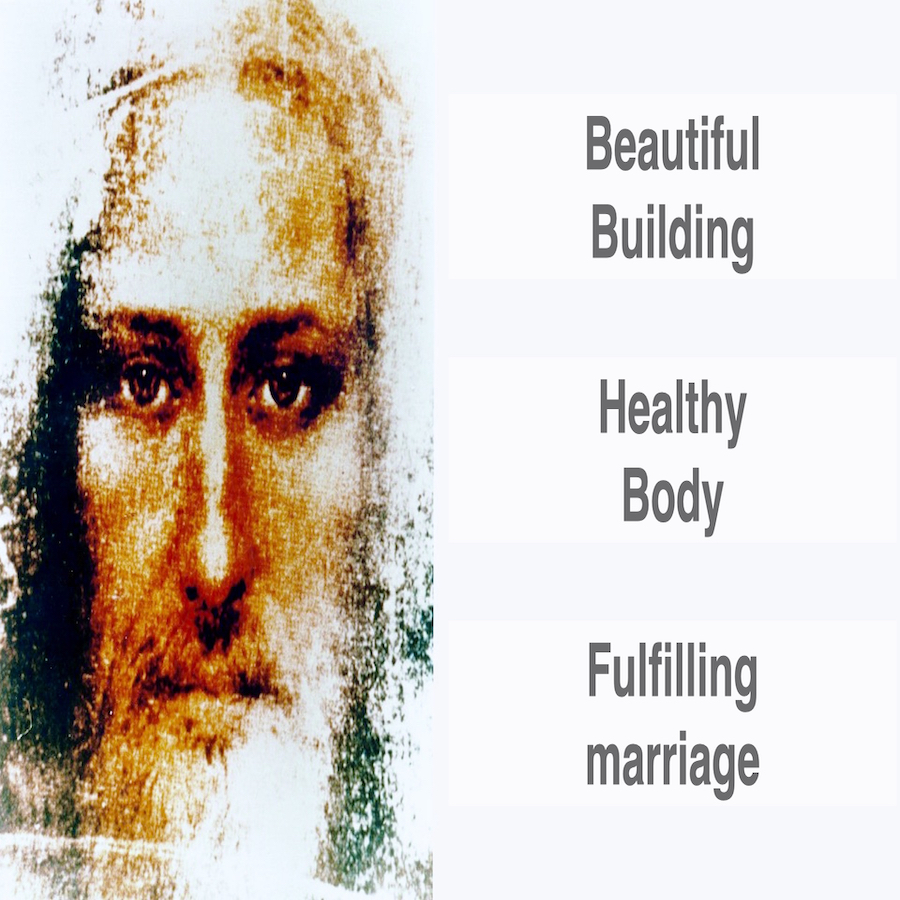
Continuing to mature in our faith makes the Building more beautiful, the the Body healthier, and the Marriage more fulfilling! Let’s keep maturing so that we honor Jesus as our Savior and Lord.
For God so loved the world that He gave His one and only Son, that whoever believes in Him shall not perish but have eternal life. (John 3:16)
Then I said, “Here I am—it is written about Me in the scroll—I have come to do Your will, My God.” (Hebrews 10:7)
“How lowly did Jesus become to purge away our sins and that by Himself, too, using His own body to be the means, by His sufferings, of taking away our guilt. Not by proxy did He serve us, but by Himself. Oh, this is wondrous love!” —Charles Spurgeon
And by that will, we have been made holy through the sacrifice of the body of Jesus Christ once for all. (Hebrews 10:10)
It was by faith that Abel brought a more acceptable offering to God than Cain did. Abel’s offering gave evidence that he was a righteous man, and God showed His approval of his gifts. Although Abel is long dead, he still speaks to us by his example of faith.(Hebrews 11:4 NLT)
I want to live my life so in step with God that people can say of me as the writer of Hebrews said of Abel: “Although Craig is long dead, he still speaks to us by his example of faith.”
Don’t you want that for your life too?
I believe God wants that to be said of your life. Are you ready?
You can start today by putting your name in the blank: Although ________ is long dead, they still speak to us by their example of faith.
Listen to the podcast of this post by clicking on the player below, and you can also subscribe on Apple, Spotify, or Audible.
In the mid-1930s, a German who fought in World War I as a lieutenant colonel published his book Infantry Attacks. This book recounted his heroic and innovative tactics that earned him battlefield success throughout that war. As World War II loomed, the popularity of this officer and his book compelled Adolf Hitler to appoint him field commander, even though he didn’t come from the prestigious family lines that were typical of other German officers.
This field commander began adapting the tactics he had used with his infantry in WWI to the tanks that were now under his command in WWII. His success was so swift and noteworthy in northern Africa that he quickly earned the nickname “the Desert Fox.” This is Edwin Rommel.
In Infantry Attacks, Rommel describes how his shock troops used speed, deception, and deep penetration into enemy territory to surprise and overwhelm. He used innovative tactics like assigning a small team of men to approach enemy lines from the direction in which his enemy expected the attack, which was really just concealing the bulk of his troops who were sneaking to the flanks and rears of the defenders to take them by surprise. These tactics usually intimidated his enemies into surrendering, which helped him avoid unnecessary risks to his supply lines and soldiers.
But were these tactics truly innovative? If we look back in history we will discover a masterful tactician that used these maneuvers with his troops 3000 years before Rommel did!
Joshua was the renown field commander of the Israelite army as they moved into the Promised Land. See if some of his tactics sound similar to those Rommel employed.
A fake frontal assault to distract the enemy from the concealed special forces—Joshua 8:1-7, 18-19
An early-morning surprise attack after an all-night march—10:7-10
A divide-and-conquer campaign: the southern campaign was a relentless push (10:29-38, 41-42); the northern campaign relied on a surprise attack (11:1-9)
Joshua knew God’s voice (Exodus 33:11) and we see it in his tactics. Notice how many times we read about Joshua hearing God’s voice (8:1, 18; 10:8, 10, 42; 11:6, 8). In fact, “The Lord said” appears 15 times in the Book of Joshua!
The only time Joshua experienced any casualties at all was when he attacked the little town of Ai after their major victory at Jericho without getting God’s tactics first (7:1-12). In this case, Joshua made his tactics based on what “they said.”
Presumption is so dangerous! We should never think, “This is how God did it last time, so I’ll just copy-and-paste that same prayer and that same tactic in this situation.” After the Israelites repented of their sin, God did give them the precise tactics to defeat Ai, which is what we already saw in Joshua 8.
The next update we read about Joshua’s troops is, “The whole army then returned safely to Joshua in the camp at Makkedah” (Joshua 10:21). That isn’t miraculous, but it is the expected outcome because all of Joshua’s tactics were from God Himself.
The United States had a general who matched wits with Rommel in WWII. General George Patton wrote this in his diary, “In forty hours I shall be in battle, with little information, and on the spur of the moment will have to make the most momentous decisions. But I believe that one’s spirit enlarges with responsibility and that, with God’s help, I shall make them, and make them right.”
General Patton was half-right: God will give directions, but we don’t have to wait until we’re in the heat of the battle; God can give us perfect tactics before the battle begins.
This reminds me of what God said through the prophet—“Whether you turn to the right or to the left, your ears will hear a Voice behind you, saying, ‘This is the way; walk in it’” (Isaiah 30:21). This is foretelling what Jesus said the Holy Spirit would do for us (John 14:26, 16:13). God’s Voice must be the one and only Source of guidance in our spiritual warfare.
Remember what God told Joshua in Joshua 1:7-8 that he should read and meditate on God’s word at every moment. The writer of Hebrews addresses the same idea about God’s Voice that is heard through His Word, and how this is to be our weapon and Source of strategy as well (Hebrews 4:1-12).
The perfect tactic for every situation, every conversation, every attack, every opportunity is found in the inspired Word of God. Never presume you know what to do, but let the Holy Spirit illuminate the perfect tactic to you for each unique situation.
If you have missed any of the messages in our series called The Lord’s Army, please click here.
Listen to the podcast of this post by clicking on the player below, and you can also subscribe on Apple, Spotify, or Audible.
Sometimes when Christians get anxious about a situation, it appears that they have forgotten that God is just as loving and strong today as He was in the good ol’ days. We need to guard against this misunderstanding.
Let’s use this prayer to remember that God isn’t just the God of the good ol’ days, but He is still just as loving and powerful today as He has ever been—
“God, You have been faithful—You have rescued me. Now help me to see that You are still Sovereign over this current situation—You are doing something in the midst of this crisis.”
Listen to the podcast of this post by clicking on the player below, and you can also subscribe on Apple, Spotify, or Audible.
Heartfelt prayer is never a meaningless exercise. Without exception, something is changed with every single prayer we offer to God. Last week, we talked about how prayer changes our attitude.
Here’s an important question: What do you expect is going to happen when you pray? Or maybe we should ask the question the opposite way: What do you expect is going to happen when you don’t pray? The writer of Hebrews talks about our expectation in coming to God (Hebrews 11:6).
Recall that last week that we used the word “attitude” as a pilot understands it; that is, the direction of the nose of the plane takes the rest of the plane and all its passengers up or down. The same thing is true of our expectation in prayer: it also impacts those around us.
There was a father that comes to Jesus with a heavy burden on his heart: his demonically-afflicted son (Mark 9:14-18). The man came in a posture of prayer (Matthew 17:14-15) only after he had first gone to the followers of Jesus, but they could not heal this boy.
Why? I don’t think they expected that they could ask for God’s power to be released. How sad! Look at what they had already experienced:
the miraculous feeding of the 4000 (Mark 8)
a deaf and mute man healed (Mark 7)
Jesus walking on the water and feeding 5000 people (Mark 6)
Jairus’ daughter raised to life (Mark 5)
And probably most shocking of all, they themselves had been used by God to heal people—“They went out and preached that people should repent. They drove out many demons and anointed many sick people with oil and healed them” (Mark 6:12-13).
Jesus calls His disciples an “unbelieving generation” (9:19). Some translations use the word “faithless” (like the NKJV and NLT). The Greek word here is a- (without) + -pistos (faith) = apistos. Literally translated it means without trust in God.
Bu I think maybe Jesus was really saying, “O unexpecting generation!”
Their lack of expectation negatively impacted the praying father. He originally came in faith for healing, but now he says to Jesus, “If You can” (Mark 9:20-22).
Jesus calls on this father to banish the “if” (vv. 23-24). At the word of Jesus, the father’s expectation changes, he believes for a miracle, and the miracle happens (vv. 25-27)!
The disciples wanted to know how to banish the “if” from their hearts, and Jesus gives them an interesting answer in vv. 28-29. He tells them to pray. We are supposed to pray in faith, but that faith comes as we pray (Matthew 17:19-21). Other New Testament writers bring this out as well: James tells us the prayer offered in faith is effective (James 5:15), and Paul tells us to be faithful—or faith-filled—in our praying (Romans 12:12).
Does this sound circular? It is a beautifully circular thing!
Abdu Murray said, “Hope is a positive expectation of a desired future event. Faith is trusting in the One who promised to make that event happen.”
It was the word of Jesus that raised the expectation of the father, that gave him the spark of faith (Hebrews 11:1; Romans 10:17). Then he used that faith to raise his expectation of a miracle from God.
Go back to the biblical record or even your own personal history to see what God has already done. Let the word of Jesus ignite your expectations—let that word raise your expectations!—and then cling to His word as you pray in faith.
Faith fuels your prayer, and prayer fuels your faith. So we need to remain on the lookout for opportunities to pray for ourselves and others (Colossians 4:2).
Let me return to the opening question: What do you expect is going to happen when you pray? If your expectation is too low, start by praying, “God, forgive us of expectations of You that are too low!” Be humbly bold enough to admit, “I do believe, but help my unbelief.” Then when you hear the word of faith, expect the miracle through that faith. The longer you pray, the more you need to include a prayer for your own faith to remain expectant.
The God who gives you faith wants to reward that faith. Let prayer raise your expectations as you continually banish the “if”!
If you have missed any of the other messages in our series Prayer Changes Things, you can find them all by clicking here.
Listen to the podcast of this post by clicking on the player below, and you can also subscribe on Apple, Spotify, or Audible.
I opened an email this week and clicked on the link to login in to my auto and homeowner’s insurance account, and I was greeted on their website with this message, “Peace of mind is the best gift you can give yourself this season.” And I said to myself, “How perfect, because we are looking at the next prophesied name for Jesus which was given before He was born in Bethlehem: Prince of Peace.”
Except there’s a huge problem here. Did you see it in that website message? “The best gift you can give yourself.” Quite frankly: I cannot give myself peace! Colossians 1:21 says, “Once you were alienated from God and were enemies in your minds because of your evil behavior.” All of us have sinned and are hopelessly destined for eternal punishment (Romans 3:23, 6:23a).
Thankfully, Romans 6:23 goes on to say “the gift of God is eternal life in Christ Jesus our Lord.” This is what the fourth prophesied title of Jesus foretells (Isaiah 9:6-7).
Prince means a Ruler or Overseer. Peace is the Hebrew word shalom which means completeness, soundness, and contentment. Some have described shalom as there being nothing missing for us to know this ultimate contentment. Many call this the assurance of our covenant relationship with God.
Isaiah uses the word shalom quite a bit, but he uses it here in chapter 9 for the first time in the Book of Isaiah.
Zechariah saw the covenant as being fulfilled before Jesus the Messiah was born. Noticed the past tense words that culminate in light and peace in Luke 1:67-79. Zechariah concludes his prophetic word by noticing two profound transitions:
The First Advent of Jesus made peace with God possible for us (Luke 2:8-14; Hebrews 2:14-15).
Now we can live in peace (Isaiah 26:3, 12; John 16:33) and we can announce “peace on earth” to others (John 20:21; Romans 10:15).
The Second Advent of Jesus will reveal His unending peace that gives us eternal life in Him (Isaiah 52:7-10; Genesis 3:22; Revelation 22:14).
We have the peace of God because of the Prince of Peace! And we have the message of peace to share with those who don’t know the Prince of Peace. I pray that this Advent season we will messengers of peace to all those who are living in darkness and hostility.
Listen to the podcast of this post by clicking on the player below, and you can also subscribe on Apple, Spotify, or Audible.
Last week we talked about how the title “God” can mean different things to different people. When we are talking about the One True God as He is revealed to us in the Person of Jesus, there is no doubt of Whom we are speaking. The opponents of Christianity knew this too, which is why they tried to get the early saints to not use the name Jesus.
Isaiah 9:6 says that a Child is born and a Son is given, but this Son is given the unusual title of Everlasting Father. Jesus acknowledged this unusualness in this exchange with the Pharisees in Matthew 22:41-45.
“Everlasting” means continuous existence; existing in perpetuity; the Chief by which all other things are ordered and aligned. We see this in Genesis 1:1, where “In the beginning” signifies God started Time but He existed before that moment.
In John 1:1, similar words are used,but here “in the beginning” means if you stand at the moment Time began and were able to look back into the immeasurable eternity that existed before that, God was there. More specifically, the Word of God (Jesus) was there as God. Jesus Himself affirmed this in Revelation 1:8 and 3:14.
Then in 1 John 1:1, the phrase “from the beginning” means that after Time ends, you can look into the infinite eternity that still exists and God is there. Again, Jesus Himself affirms this in Revelation 22:13.
“Father” this is the first word in our biblical Hebrew dictionary. It means father, the head or founder of a family, the protector of the family. Paul says that Jesus fulfills all of these definitions (Colossians 2:9-10, 1:15-22), and the writer of Hebrew opens his epistle with the same thought (Hebrews 1:1-3).
No one on earth has seen God the Father. This makes it difficult to follow Him. Which is why Jesus made His appearing among us (John 1:1, 14, 18).
Paul wanted people to know“the mystery of God, namely, Christ” (Colossians 2:2), and he said that Jesus is the Key that unlocks the treasure-trove of God’s rich love for us. Notice Paul’s progression: teaching the Word (1:25-27) so that we mature (1:28), so that we have the full riches of complete understanding, in order that we may know the mystery of God, namely, Christ (2:2-4).
When Jesus was born, Simeon gave us the same assurance when he saw Jesus and announced that Jesus was the Christ that had been prophesied (Luke 2:25-32), and Jesus Himself told His disciples the exact same thing (John 14:8-9).
Let people see God’s love through your life, all year-round but especially at Christmas. As we said last week, when we talk about Jesus and live for Jesus, we invite others to God, through Jesus, by the Spirit’s illumination.