The Power Of -Ing

Have you ever heard someone say something like:

  • “Wow, look at her. She arrived in style!”
  • “I think I’ve finally arrived.”

This is weird because arriving implies stopping. When I’m driving to the store and I arrive at the store, I don’t keep on driving; I stop at the store. That’s the whole reason I left my house in the first place.

So when we talk about people arriving, do we really mean that they are supposed to stop and park? Correct me on this, but I think the only time we stop in life is when life stops. In other words: We’re dead!

We don’t really want to arrive, do we? We want to hit goals and then keep on going. We want to keep on “ing”ing. Here’s how I’m trying to leverage the power of ing:

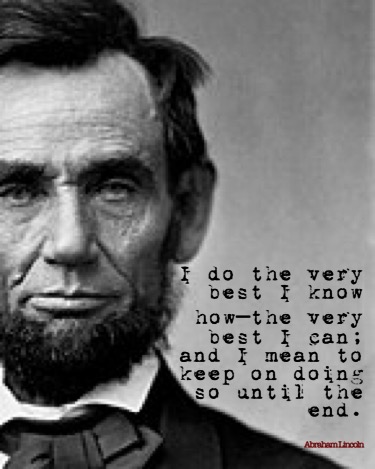
I love the words of Abraham Lincoln, who knew the power of ing:

“I do the very best I know how—the very best I can; and I mean to keep on doing so until the end.”

Don’t arrive. Don’t stop. Keep on “ing”ing the right things—God’s things—and see how God will bless your efforts. There is an incredible power in ing!

Dinner That’s More Than Dinner

The apostles returned to Jesus from their ministry tour and told Him all they had done and taught. Then Jesus said, “Let’s go off by ourselves to a quiet place and rest awhile.” He said this because there were so many people coming and going that Jesus and His apostles didn’t even have time to eat. So they left by boat for a quiet place, where they could be alone. (Mark 6:30-32 NLT)

Sometimes dinner is more than dinner. It’s not just food for our physical bodies; it can be so much more.

The apostles returned from their first ministry assignment. They were so excited to come back and tell Jesus how incredible their time had been. They breathlessly rushed into the house where Jesus was waiting for them. “Master,” Peter started, “You should have seen how Andrew…” and he was cut short by a new visitor.

Next James tried, “Whoa, it was so cool when we…” and yet another distraction.

Time and time again their stories and questions and concerns were interrupted by the busyness of life and ministry. In fact, it got so chaotic that the disciples couldn’t even eat their food, except in quick gulps between visitors.

Finally, Jesus said, “Guys, let’s get out of here. I really want to hear about your ministry. I want to debrief a little with you. And, frankly, we’re all hungry and could use a quiet dinner. Let’s go someplace to hang out together.” Now that’s more than a dinner!

Check out the advantages of simply eating together:

  • Families who eat dinner together eat healthier.
  • Families who eat dinner together have higher communication skills.
  • Children in families who eat dinner together perform better academically.
  • Children in families who eat dinner together are less likely to try cigarettes, illegal drugs, or alcohol.

I love our family mealtimes—it is one of the best times to catch up on what’s happening with everyone. Last night we were joined at dinner by a young couple from our church. After dinner, the kids were off playing and Betsy and I could have a quiet conversation just with our friends. We talked about the newlyweds’ adjustment to marriage, what makes a good church, education, career, china patterns, and the way God speaks to us. We laughed and dreamed and talked about dreams. It was fantastic!

Turn off the TV. Make a healthy dinner. Set aside time to eat with family and friends. Jesus gave us a great example: “C’mon, friends, I really want to spend some quiet time with you.”

So here’s to dinners that are more than dinners.

Too Busy

Listen to the podcast of this post by clicking on the player below, and you can also subscribe on AppleSpotify, or Audible.

Life’s coming at me way too fast today!

Like a runaway commuter train.

I’ve got way too much to get done today!

Like a shorthanded deli owner at the peak of the lunch rush.

My To-Do list is longer than my To-Day’s hours.

What goes first?

What can wait until tomorrow?

What can I delegate to someone else?

Wait… listen to this odd counsel about busyness:

“Tomorrow I plan to work, work, from early until late. I have so much to do that I shall spend the first three hours in prayer.” —Martin Luther

The first hours praying?!?

Not responding to emails.

Not getting a head start on the piles of stuff.

Not folding laundry before the kids get up.

Not going to the office before the phones start ringing.

Yes, get up earlier to pray more!

God knows your schedule.

He knows your To-Do list.

He knows your To-Day’s hours.

He knows what’s important … really important.

God says, “Love Me. Love others. Serve the world.”

“You must love God with all your heart, all your soul, all your mind, and all your strength. And you must love your neighbor as yourself. Nothing else on your To-Do list is more important than these.”—Jesus

Too busy today?

Get up earlier tomorrow and talk to God about it.

“I direct the steps of those who seek Me. I delight in every detail of their lives.” —God

Get up and get praying.

►► Would you please prayerfully consider supporting this ministry? My Patreon supporters get behind-the-scenes access to exclusive materials. ◀︎◀︎

a

Tell Your Story

People often ask me why I read so much, or even why I read the things I read. I like to read widely: classics to contemporary, history to biographies, and even a little poetry.

Tim Sanders wrote a book called Love Is The Killer App. In this wonderful book, he says that reading and studying should be motivated by love. We read and learn so that we can be informed enough to help others who are in need. Not reading just to read, but reading with a purpose. Reading to help tell someone a story. I haven’t found a book that does this better than the Bible.

The world’s greatest storyteller (ever!) was Jesus of Nazareth. Check this out:

With many stories like these, He presented His message to them, fitting the stories to their experience and maturity. He was never without a story when He spoke (Mark 4:33-34, The Message paraphrase).

Jesus could tell a story to anyone at any time. He learned, He studied, He observed, so He would always be ready. He frequently used whatever was at hand to tell His stories—a child, a farmer, fish, bread made with yeast, a coin, a bridal party—but He had to know something about each of those things in order for His stories to be effective for each person’s “experience and maturity.”

Once Jesus encountered a man so demonized that he spent his life naked and living in the graveyard (my friend Jim Wiegand calls him “the naked, cat-eating guy”!). Jesus set this man free from his demons. When this newly-freed man wanted to accompany Jesus, He told him, “Go home to your own people. Tell them your story” (Mark 5:19, The Message).

Tell them YOUR story.

The best story you can tell is your story.

It’s wonderful to read to be informed—I highly encourage this. I love to be able to say, “Benjamin Franklin said…” or “I love the Longfellow poem about…” or “Stephen Covey wrote that we should….” But it’s so much more effective to say, “Here’s what I have learned from my personal encounter with Jesus. Here’s MY story of what Jesus did for me!”

What about you? Do you have a story to tell? If you’re in a relationship with Jesus, you always have a story to tell. Keep walking with Jesus. Keep reading His love letter to you written on every page of the Bible. Then tell YOUR story—the best story of all!

Say What?

I know that you had a very important conversation yesterday. And I also know that you are going to have an extremely important conversation again today. The question is not if you had the conversation, it’s whether or not you heard the conversation clearly?

The most important conversation you will have today is the ongoing conversation you will have all day long with yourself.

But are you clearly listening to what you are saying to yourself?

I was helping Betsy grade some papers from her fourth-grade students and I noticed something consistently appearing on one of her student’s papers. This student performs well academically, and Betsy says her behavior in the classroom is “angelic.” So I don’t think it’s coincidental that this young lady talks to herself positively all day long. On her papers she writes notes to herself like “You R The Best” and “I rock!”

The way you speak to yourself matters.

The way you speak to yourself determines your attitude.

The way you speak to yourself will determine how you treat others.

Jesus said it this way, “Love the Lord your God with all your heart and with all your soul and with all your mind and with all your strength. …[And] love your neighbor as yourself” (Mark 12:30-31).

The way you love yourself determines how you love others.

The way you speak to yourself determines your performance. Dr. James Hardy of the University of Wales says, “Athletes who talk to themselves in a positive way perform better. Thinking good thoughts isn’t enough you have to say them, either muttered or out loud.”

Some of you may be saying some really harsh things to yourself. Some of the things you say to yourself would earn someone else a smack in the mouth if they said the same thing to you.

Listen to what you are saying to yourself! Stop beating yourself up!

Maybe like Betsy’s student, you might even have to write yourself a note or two to remind yourself how valuable you are. You are one-of-a-kind—there’s never been anyone like you before, no one is like you now, and no one will duplicate you in the future.

Make sure that’s the message that’s getting through loud and clear today.

Still Learning

I live by the axiom, “If you’re through learning, you’re through.” So I try to learn something new every day.

I just finished a class called New Testament Survey: a quick overview of the 27 books that compromise the New Testament of the Bible. Here’s a couple of interesting factoids I picked up from my studies:

  • The earliest-written book was James. Interesting, because at one point James thought Jesus (his half-brother) was nuts.
  • Only Matthew uses the term kingdom of heaven; all of the other writers use kingdom of God.
  • Mark uses the word immediately more times than anyone else. Perhaps because his source (Peter) was always doing things so quickly… sort of a ready, FIRE!, aim kinda guy.
  • Luke wrote what is called “the global gospel” for everyone, so he included 45 teachings/events that no one else records.
  • John doesn’t record any of Jesus’ parables.
  • John uses the word believe nearly 100 times— way more than any other writer.
  • Luke talks about the Holy Spirit nearly 60 times in the 28 chapters of Acts.
  • Romans is the longest of Paul’s epistles with 7101 words; Philemon is the shortest with just 355 words.
  • With the exception of the pastoral epistles (1 Timothy, 2 Timothy, Titus) Paul’s letters are arranged in the Bible from longest to shortest.
  • In 1 & 2 Thessalonians (only 136 verses) Paul refers to God, Christ, the Holy Spirit, or a combination thereof more than 150 times.
  • Paul gives Timothy seven word pictures to describe the kind of pastor he should be: son, soldier, athlete, farmer, workman, instrument, and servant.
  • Hebrews is called “the book of better things” so better is used 13 times. This word is used only six times in the remaining 26 books of the New Testament.
  • James wrote 108 verses but issues 50+ direct commands.
  • In John’s three short epistles he uses the word know 33 times, and the word dear ten times.

Keep on learning! There’s a lot of good stuff out there. What have you learned lately?

A Healthy Breakfast

Listen to the podcast of this post by clicking on the player below, and you can also subscribe on AppleSpotify, or Audible.

Health experts say breakfast is the most important meal of the day. Your body has been without food (or fasting) during the hours you are asleep, so in the morning you are breaking your fast = break-fast.

Do you want to lose weight? Eat breakfast. Studies show that those who do best on their diets eat breakfast every morning.

Do you want to fire up your metabolism to burn more calories during the day? Eat breakfast. The way you stoke your body’s engine in the morning determines how it will run all day.

Do you want to maintain a stable blood sugar level so you don’t get sleepy mid-morning? Eat breakfast. A good breakfast regulates your insulin and blood sugar levels.

Do you want to learn more? Eat breakfast. Studies show those who eat breakfast regularly have longer attention spans and greater learning capacities.

What you put in your body in the morning determines the course of the rest of your day.

What you put in your mind in the morning determines the course of the rest of your day, too.

Even if you’re not a “morning person” your mind is highly receptive in the hours right after you wake up. So a healthy mental breakfast goes a long way toward how you will deal with the situations that face you throughout your day.

Just a few things to consider—

  • What’s on your wake-up playlist in the morning? Not-so-cheery headline news? Coarse radio hosts with crude humor? Music with lyrics that are not very uplifting? A harsh buzzer? Perhaps you could rethink your morning mental breakfast with something more positive and affirming.
  • How do you speak to yourself when you wake up? “Ugh, I just gotta get through today”? “I need a vacation”? “Grrr, I hate my job”? Try thinking instead of all of the blessings you have: a roof over your head, a bed of your own, clothes to wear, a family to love, and a family that loves you.
  • How do you speak to others when you wake up? “Leave me alone”? “<Grrrr!>”? Maybe you could serve others the good mental breakfast they need with some kind, encouraging words.
  • What fuel do you put in your mind? Talking heads on the morning TV shows? Your horoscope? Perhaps switching to something more substantial would help fuel your mind for the challenges you are going to face today.

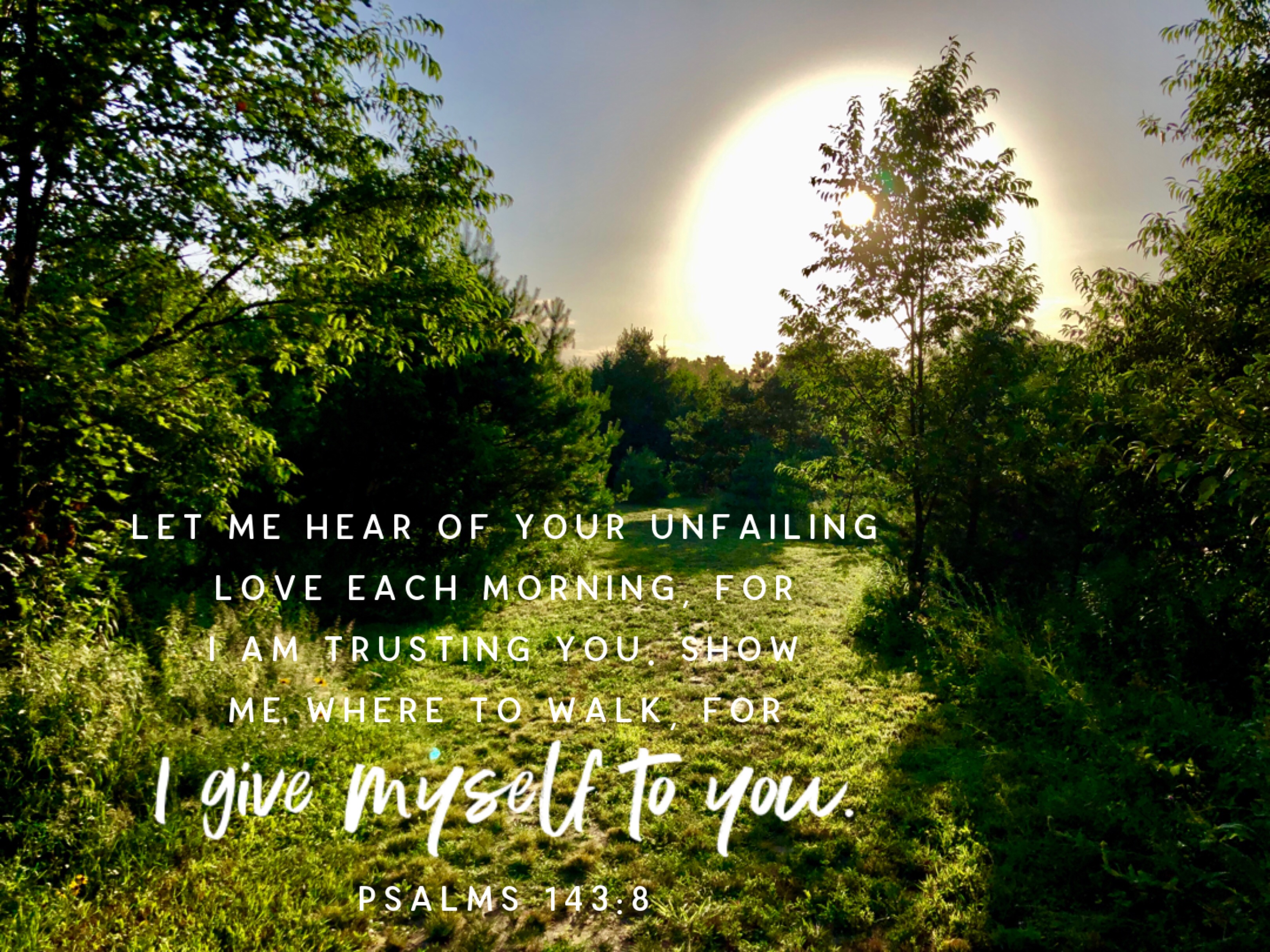
The psalmist David had a God-diet each morning, “Let me hear of Your unfailing love each morning, for I am trusting You. Show me where to walk, for I give myself to You” (Psalm 143:8, The Living Bible).

Jesus had a healthy mental breakfast, too: “Very early in the morning, while it was still dark, Jesus got up, left the house and went off to a solitary place, where He prayed” (Mark 1:35).

So let me ask you: What’s your morning mental breakfast like? do you need to make a diet change? I think a few tweaks and you will begin to see some remarkable changes for the better! Try it out and let me know.

►► Would you please prayerfully consider supporting this ministry? My Patreon supporters get behind-the-scenes access to exclusive materials. ◀︎◀︎

What Jesus Didn’t Say

All throughout the first four books of the New Testament—Matthew, Mark, Luke, and John—there are lots of “red letters” (words spoken by Jesus). But as each of these gospel writers begins to recount the arrest and sham trial of Jesus, I’m struck by how many “black letters” there are. This fulfilled an Old Testament prophesy—

He was oppressed and treated harshly, yet He never said a word. He was led like a lamb to the slaughter. And as a sheep is silent before the shearers, He did not open His mouth (Isaiah 53:7).

The chief priests and the Sanhedrin brought out a string of witnesses to falsely accuse Jesus, but even then these witnesses couldn’t get their stories to jive, so Jesus remained silent. In exasperation the chief priest Caiaphas lashed out at Jesus, “Aren’t You going to answer these charges? Don’t You hear what they’re saying about You? Why won’t You defend Yourself?”

So here’s how Jesus responded to His accusers: But Jesus remained silent (Matthew 26:63). His silence resonated louder than any words could have!

How could Jesus do this? How could He stand silently when all of these nasty things were being said about Him?

He looked back—”…He had done no violence, nor was any deceit in His mouth…” (Isaiah 53:9). All four Gospels record Jesus saying, “You heard Me speaking in public all the time. My life has been on display for You. If I had said or done anything wrong, you could have arrested Me earlier, but the facts are: I haven’t said or done anything sinful.”

He looked forward—”…Because of the joy awaiting Him, He endured the Cross, disregarding its shame…” (Hebrews 12:2). He knew that one wrong word could undo all of the good words which He previously spoke, so He looked forward to the joy that would come after this was over.

I just went through a period of my life where people threw incredibly hurtful lies at me, but what was that compared to the horrific abuse heaped upon Jesus? If He could remain silent, how much more should I?

While I was in the midst of this difficult time, a prayerful friend handed me a notecard which I have kept close to me. Perhaps these words will be helpful to you, too—

May kindness be the response in you
where such a response is not expected.
May gentleness have the power
to overrule an offense and the power to heal. (David Teems)

May this Good Friday be a time of reflection in what Jesus didn’t say. And may I, along with you, learn this power of silence when falsely accused.

My Big Three

three1Busy. Commute. Busy. Lesson prep. Busy. Kids’ schedules. Very busy. Meetings. Extremely busy. Household chores. Hectic busy. Hospital visits. Running-to-catch-myself busy.

In my busyness, something gets squeezed out of my life very easily. I don’t intend for this to happen, in fact it’s the last thing that should ever get squeezed out, but it does. I can tell when it does. Not right away, but soon it catches up with me and I’m running on vapors. I know that when I take the time to put it back into my life, the busyness doesn’t seem so busy anymore.

What is this power source? Consider the life of Jesus.

No one had more to accomplish in such a short period of time than Jesus. He only had three years to find, equip and launch the men who would take His message to all the world. No small task, and not a minute to lose. Yet instead of seeing Jesus run at the frantic pace I so easily slip into, I see these incredible pauses.

Very early in the morning, while it was still dark, Jesus got up, left the house and went off to a solitary place, where He prayed. (Mark 1:35)

How long did He pray? The Bible doesn’t say, but I suspect He was in prayer with His Heavenly Father until His conversation was concluded. It may have been a while, or it may have been somewhat shorter.

Then all throughout the day, Jesus was never rushed or pushed or running helter-skelter, but He seemed to move at just the right speed. This is because Jesus was taking His cues from His Father all day long:

For I did not speak of My own accord, but the Father who sent Me commanded Me what to say and how to say it. I know that His command leads to eternal life. So whatever I say is just what the Father has told Me to say. (John 12:49-50)

Sometimes when there were big decisions or momentous occasions facing Him, Jesus would spend an extended time in prayer. For example:

 One of those days Jesus went out to a mountainside to pray, and spent the night praying to God. When morning came, He called His disciples to Him and chose twelve of them, whom He also designated apostles. (Luke 6:12-13)

I’m trying to make Jesus’ big three my big three:

  1. An untimed conversation with God every morning.
  2. All-day sensitivity to the prompting of the Holy Spirit.
  3. Periodic prayer retreats before making big decisions.

This is taking all of the discipline I can muster, but I must make this my top priority!

The Apathy Of Blurry Eyes

eye-chart1My son, Harrison, had an extensive eye exam today. Now he is asleep in my office.

During his eye exam, his pupils were dilated, so now he has blurry vision. And, apparently blurry vision leads to sleepiness. It’s actually not the eye drops that led to his malaise, but the lack of the ability to see clearly. If he cannot see what’s happening around him, why would he even try to engage in his surroundings. Instead, he’s just accepted his condition as something which can’t change.

This reminds of a man named Bart—

Then they reached Jericho, and as Jesus and His disciples left town, a large crowd followed Him. A blind beggar named Bartimaeus (son of Timaeus) was sitting beside the road. When Bartimaeus heard that Jesus of Nazareth was nearby, he began to shout, “Jesus, Son of David, have mercy on me!”

“Be quiet!” many of the people yelled at him. But he only shouted louder, “Son of David, have mercy on me!”

When Jesus heard him, He stopped and said, “Tell him to come here.”

So they called the blind man. “Cheer up,” they said. “Come on, He’s calling you!” Bartimaeus threw aside his coat, jumped up, and came to Jesus.

“What do you want Me to do for you?” Jesus asked.

“My Rabbi,” the blind man said, “I want to see!”

And Jesus said to him, “Go, for your faith has healed you.” Instantly the man could see, and he followed Jesus down the road. (Mark 10:46-52, NLT)

Were there other blind people that heard Jesus? It’s almost certain there were. Were there other blind people in Jericho? Probably. But it appears that their blindness had caused them to slip into drowsiness and apathy, to simply accept their condition as something which couldn’t be changed.

Bart would not settle! He believed Jesus could change his condition! He called out to Jesus. He shouted even louder to get Jesus’ attention. He threw aside his coat, jumped up and ran to Jesus. He boldly stated his need to see, convinced that he was talking to the one Person who could change his condition.

Jesus said that Bart’s faith—his persistence, his unquenchable desire to see clearly, his belief that Jesus could do something for him—is what brought about his healing.

Have you become accepting of your condition? What’s holding you back from shouting out even louder to Jesus? What have you given up seeking? Don’t hold back—shout out to Jesus again today!