10 Quotes from “True Vine”

I thoroughly enjoyed my 30-day read of True Vine, a devotional by Andrew Murray which focuses on John 15:1-16. I learned a lot during this study, and I highly recommend that you dive into this study too (you can read my full review here).

These are some of the quotes that especially stood out to me from True Vine.

“The branch has but one object for which it exists, one purpose to which it is entirely given up. That is, to bear the fruit the vine wishes to bring forth. And so the believer has but one reason for his being a branch—but one reason for his existence on earth—that the heavenly Vine may through him bring forth His fruit. … The one object of my being a branch, the one mark of my being a true branch, the one condition of my abiding and growing strong, is that I bear the fruit of the heavenly Vine for dying men to eat and live.”

“Consider a moment what this pruning or cleansing is. It is not the removal of weeds or thorns, or anything from without that may hinder the growth. No; it is the cutting off of the long shoots of the previous year, the removal of something that comes from within, that has been produced by the life of the vine itself. It is the removal of something that is a proof of the vigor of its life; the more vigorous the growth has been, the greater the need for the pruning.”

“Many believers pray and long very earnestly for the filling of the Spirit and the indwelling of Christ, and wonder that they do not make more progress. The reason is often this, the ‘I in you’ cannot come because the ‘abide in Me’ is not maintained.”

“There is in the Vine such fullness, the care of the divine Husbandman is so sure of success, that the much fruit is not a demand, but the simple promise of what must come to the branch that lives in the double abiding—he in Christ, and Christ in him. ‘The same bringeth forth much fruit.’ It is certain. Have you ever noticed the difference in the Christian life between work and fruit? A machine can do work: only life can bear fruit. A law can compel work: only love can spontaneously bring forth fruit. Work implies effort and labor: the essential idea of fruit is that it is the silent natural restful produce of our inner life.”

“Begin each day with Him in the morning, to know in truth that you are abiding in Him and He in you. Christ tells that nothing less will do. It is not your willing and running, it is not by your might or strength, but—‘by My Spirit, saith the Lord.’ Meet each new engagement, undertake every new work, with an ear and heart open to the Master’s voice: ‘He that abideth in Me, beareth much fruit.’ See you to the abiding; He will see to the fruit, for He will give it in you and through you.”

“The healthy life of the believer in Christ is equally one of unceasing prayer. Consciously or unconsciously, he lives in continual dependence. The Word of his Lord, ‘You can do nothing,’ has taught him that not more unbroken than the continuance of the branch in the vine, must be his asking and receiving. The promise of our text gives us infinite boldness: ‘Ask whatsoever ye will, and it shall be done unto you.’ …To avail ourselves of the unlimited prayer promises, we must be men who are filled with the Spirit, and wholly given up to the work and glory of Jesus. The Spirit will lead us into the truth of its meaning and the certainty of its fulfillment. Let us realize that we can only fulfill our calling to bear much fruit, by praying much. …Souls are perishing because there is too little prayer. God’s children are feeble because there is too little prayer. We bear so little fruit because there is so little prayer.”

“How can we glorify God? Not by adding to His glory or bringing Him any new glory that He has not. But simply by allowing His glory to shine out through us, by yielding ourselves to Him, that His glory may manifest itself in us and through us to the world.”

“He gave His life to secure a place for His love in our hearts to rule us; the response His love calls us to, and empowers us for, is that we do what He commands us. …We have given a far higher place to privilege than to duty. We have not considered implicit obedience as a condition of true discipleship. The secret thought that it is impossible to do the things He commands us, and that therefore it cannot be expected of us, and a subtle and unconscious feeling that sinning is a necessity have frequently robbed both precepts and promises of their power. The whole relation to Christ has become clouded and lowered, the waiting on His teaching, the power to hear and obey His voice, and through obedience to enjoy His love and friendship, have been enfeebled by the terrible mistake.”

“See here the reason of the lack of prayer, and of the lack of power in prayer. It is because we so little live the true branch life, because we so little lose ourselves in the Vine, abiding in Him entirely, that we feel so little constrained to much prayer, so little confident that we shall be heard, and so do not know how to use His name as the key to God’s storehouse. …Beloved disciple, seek above everything to be a man of prayer. Here is the highest exercise of your privilege as a branch of the Vine; here is the full proof of your being renewed in the image of God and His Son; here is your power to show how you, like Christ, live not for yourself, but for others; here you enter Heaven to receive gifts for men; here your abiding in Christ has led to His abiding in you, to use you as the channel and instrument of His grace. The power to bear fruit for men has been crowned by power to prevail with God.”

“O my Lord, let Thy holy friendship lead me into the love of all Thy commands, and let the doing of Thy commands lead me ever deeper into Thy friendship.”

True Vine (book review)

In my personal Bible reading time, I tend to go rather slowly. I enjoy digging into the words and phrases, the Greek or Hebrew definitions, and the deep truths that can be uncovered in each verse. If you enjoy this type of in-depth Bible study, I think you will enjoy True Vine by Andrew Murray.

True Vine is a 30-day study of John 15:1-16, where Jesus talks about His relationship with us and with the Father, and our relationship with the Father in the language of a vine, branches, and fruit. It may seem like a full month just studying 16 verses is a bit intense, but Andrew Murray’s insights are very easy to grasp.

Each day’s study is not too long, but he pulls out a few insights that are ready-made to apply to your life. And each day’s devotional ends with a prayer that pulls it all together.

It was a very enjoyable study for me. You will enjoy it too, only if you want to go deep.

If you have a Kindle, you can download True Vine for free by clicking here.

[I shared some quotes from this book here.]

My Prayer

I want people to say this after every encounter with me: Everyone was gripped with great wonder and awe, and they praised God, exclaiming, “We have seen amazing things today!” (Luke 5:26)

Why not?

Why do I think this should be something just in the past? Didn’t Jesus say…

I tell you the truth, anyone who believes in Me will do the same works I have done, and even greater works, because I am going to be with the Father. You can ask for anything in My name, and I will do it, so that the Son can bring glory to the Father. Yes, ask Me for anything in My name, and I will do it! (John 14:12-14)

Jesus continues in John 14 to talk about the help the Holy Spirit would bring us. And in Acts 1:8 Jesus tells us that the Holy Spirit is the source of power for being living witnesses.

Oh, how I want the Spirit’s presence!

To be filled.

To be changed.

To be fruitful.

To be a witness.

To bring glory to God!

Let it be: Everyone was gripped with great wonder and awe, and they praised God, exclaiming, “We have seen amazing things today!”

That’s my prayer.

Be A Foolish Preacher

Pastor, do you realize how clever we try to be?

  • We come up with a catchy sermon series and add some stylish graphics.
  • Then we labor over sermon titles that sound so compelling.
  • As we write our sermons we try to dream up memorable patterns, like all three of our main points start with “S,” or we spell out the word “P.E.A.C.E.”

When the truth of the matter is, what we’re saying is foolishness.

Where is the wise man? Where is the scholar? Where is the philosopher of this age? Has not God made foolish the wisdom of the world? For since in the wisdom of God the world through its wisdom did not know Him, God was pleased through the foolishness of what was preached to save those who believe. Jews demand miraculous signs and Greeks look for wisdom, but we preach Christ crucified: a stumbling block to Jews and foolishness to Gentiles, but to those whom God has called, both Jews and Greeks, Christ the power of God and the wisdom of God. For the foolishness of God is wiser than man’s wisdom, and the weakness of God is stronger than man’s strength. (1 Corinthians 1:20-25)

You don’t have to try to make God’s Word clever. It is already profound!

You don’t have to try to make it memorable. The Holy Spirit makes it memorable (John 14:26)!

You don’t have to make the Bible relevant. It is the most relevant, applicable wisdom that humanity has ever known! 

D.L. Moody said it this way:

“If God has given you a message, go and give it to the people as God has given it to you. It is a stupid thing for a man to try to be eloquent. Make your message, and not yourself, the most prominent thing. Don’t be self-conscious. Set your heart on what God has given you to do, and don’t be so foolish as to let your own difficulties or your own abilities stand in the way.”

Don’t try to be clever. Just be Spirit-led and you will utter the most profound, compelling, and memorable words ever spoken by a preacher!

Thursdays With Oswald—In Christ I Can

This is a weekly series with things I’m reading and pondering from Oswald Chambers. You can read the original seed thought here, or type “Thursdays With Oswald” in the search box to read more entries.

In Christ I Can

     We are made sons and daughters of God through the Atonement and we have a tremendous dignity to maintain; we have no business to bow our necks to any yoke saving the yoke of the Lord Jesus Christ [Matthew 11:28-30]. …

     Every detail of our physical life is to be absolutely under the control of the new disposition which God planted in us by means of identification with Jesus Christ, and we shall no longer be allowed to murmur ‘can’t.’ There is no such word as ‘can’t’ in a Christian’s vocabulary if he is rightly related to God; there is only one word and that is ‘can.’

From Biblical Psychology

Sometimes Christians are known more for what we’re against than what we’re for. I think Oswald Chambers would say that is because we don’t really understand the full power of the Atonement.

We can better understand that word by saying it “at one-ment.” We have been made one with Christ. You hear this in Jesus’ prayer for us in John 17, I in them and You in Me, in order that they may become one and perfectly united, that the world may know and definitely recognize that You sent Me and that You have loved them even as You have loved Me.”

When we are in this sort of relationship, we don’t even say can’t to sin. Instead, we say I can live a holy life because of Christ in me!

As Paul said, we can say:

I CAN do everything through Christ Who gives me strength. (Philippians 4:13)

A Warning To Shepherds

If you are a pastor, God sees you as a shepherd (see John 21:15-17; 1 Peter 5:1-4).

If you are a shepherd, there is a heavy responsibility on you to lovingly, attentively care for God’s precious sheep. We cannot shirk this responsibility for even a moment.

God loves His sheep so much that He gave His sheep YOU!

God loves His sheep so much that He will remove you, if He has to.

Consider this:

“What sorrow awaits the leaders of My people—the shepherds of My sheep—for they have destroyed and scattered the very ones they were expected to care for,” says the Lord. Therefore, this is what the Lord, the God of Israel, says to these shepherds: “Instead of caring for My flock and leading them to safety, you have deserted them and driven them to destruction. Now I will pour out judgment on you for the evil you have done to them. …Then I will appoint responsible shepherds who will care for them, and they will never be afraid again. Not a single one will be lost or missing. I, the Lord have spoken!” (Jeremiah 23:1, 2, 4)

This is a HEAVY word, and should not be taken lightly.

Pastor, never assume you are leading God’s sheep in the right paths. Ask the Holy Spirit to tell you if you are leading God’s sheep in the right paths!

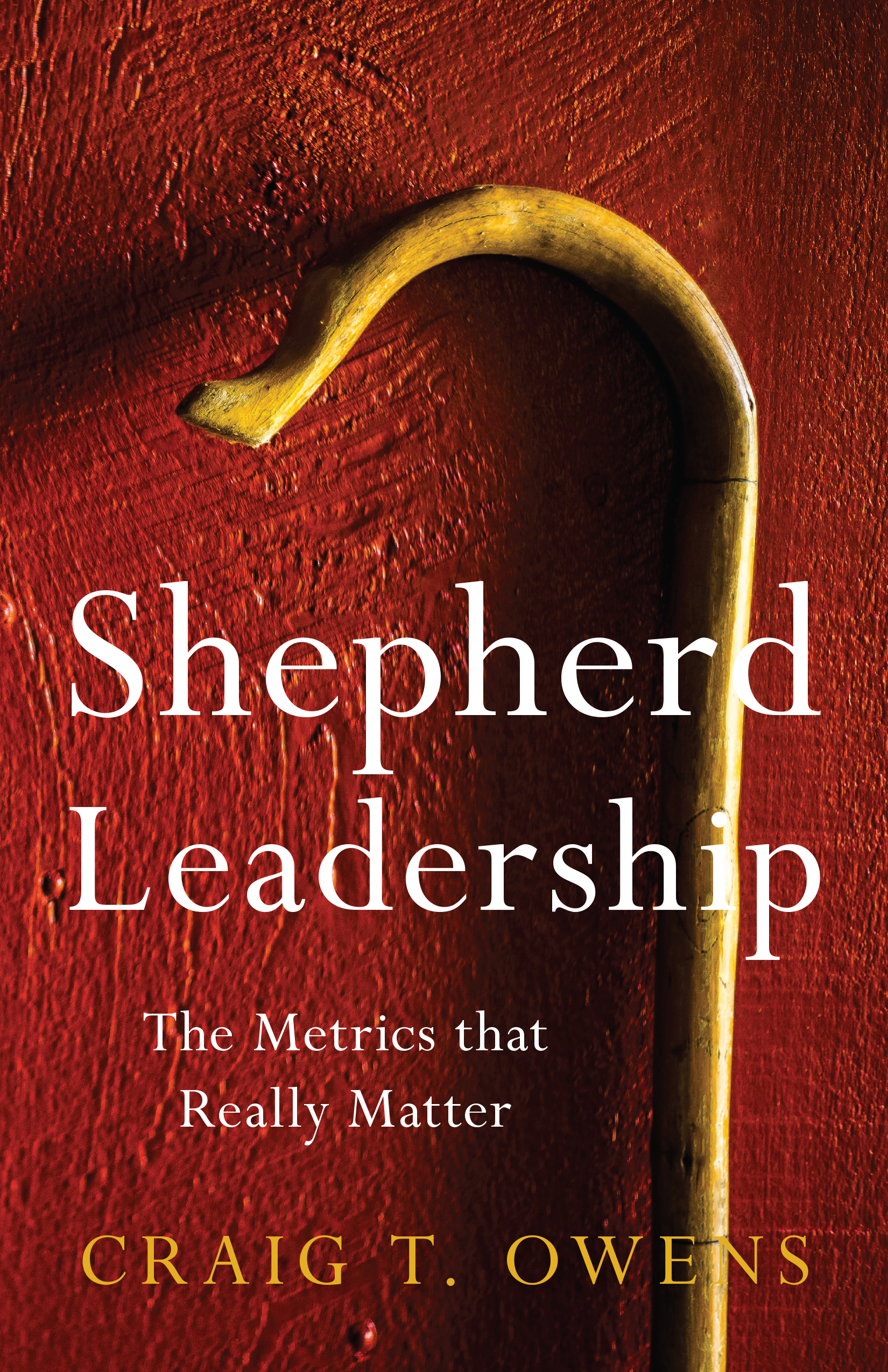
UPDATE: This post was one of the seed thoughts that went into fashioning my book Shepherd Leadership: The Metrics That Really Matter.

What Is “Success” For A Church?

“How’s it going,” a fellow pastor asked me. “How’s your church doing?”

If you’re a pastor, you probably get asked this often. How do you answer this question? Do you tell them what your attendance was on Sunday morning? Or about the newest program you’ve started?

When you look in the mirror and ask yourself, “How’s it going,” is your answer related to nickels and noses (offerings and attendance)? Is it how many people complimented your last sermon?

Listen to these sobering words:

Worldliness is not the trap that most endangers us as Christian workers; nor is it sin. The trap we fall into is extravagantly desiring spiritual success; that is, success measured by, and patterned after, the form set by this religious age in which we now live. 

We have a commercialized view—we count how many souls have been saved and sanctified, we thank God, and then we think everything is all right. (Oswald Chambers)

We need to be very careful about how we define “success” in a church setting. Let’s use Jesus as our example:

  • How big was His congregation? Twelve men. One betrayed Him, nine ran away when the going got tough, and one denied he even knew Him. Even after being raised from the dead (!) there were only 120 people in the upper room.
  • How much money did His church have? Not even enough to buy a gravesite for the Messiah.
  • What did people think of His sermons? Some of His sermons made people so mad they wanted to stone Him. And after one sermon the Bible says: From this time many of His disciples turned back and no longer followed Him (John 6:66).

Maybe “success” in the church is more like…

  • …people being reconciled to God. Remembering that “our work is not to save souls, but to disciple them” (Chambers).
  • …seeing disengaged people becoming actively involved in engaging others with the Gospel.
  • …“Never seek[ing] after anything other than the approval of God” (Chambers).
  • …to say with Jesus, “The Spirit of the Lord is on Me, because He has anointed Me to preach good news to the poor. He has sent Me to proclaim freedom for the prisoners and recovery of sight for the blind, to release the oppressed, to proclaim the year of the Lord’s favor” (Luke 4:18-19).

These are just some of my thoughts. What else should be on this list? How would you define “success” in the church?

I have also shared some questions that can help pastors and ministry leaders better gauge the level of effectiveness in their ministry.

UPDATE: This post was one of the seed thoughts that went into fashioning my book Shepherd Leadership: The Metrics That Really Matter.

Do You Know Your Community?

Jesus called His followers to be salt and light. It’s pretty easy to figure out that the salt cannot season the food if it stays in the saltshaker, and the light cannot illuminate the darkness if it stays covered up. In order to season and shine in your community, you have to know your community.

And, pastor, that starts with you.

What you do is a much more effective sermon that what you say. Pastor, you need to know your community, so that you can be involved in your community, so that you and your church can season and shine in your community together.

So let me ask a couple of questions:

  • Do you know your Mayor / City Manager / Township Supervisor? If you don’t know them, how can you affirm their leadership (Romans 13:1-7)?
  • Do you attend City / Township Council meetings? If you don’t, how will you know what issues they’re wrestling with? If you don’t know those issues, how can you pray effectively for them (1 Timothy 2:1-2)?
  • Are you involved in your community? Don’t just assume people in your community will come to your church to sit among stranger to hear a stranger speak; instead, be so involved in your community that they will come to church to fellowship with friends and hear a friend speak (John 2:1-2).

I opened with the question, “Do you know your community?” But maybe a better way to ask this is, “Does your community know you?”

Does the community come to you to ask for help? This may be the best barometer of your involvement in your community: how often they seek your help or assistance in addressing issues within your community.

If you’re not as involved as you should be, the good news is that it’s never too late to start! Go get involved—go season and shine!

Harmless

When a story from the past is so well known, we can easily insert ourselves into it with a certain bias. When we do this, we read things into the story because of the facts we know now.

For instance, we know Judas betrays Jesus. So when we see his name in any story in the Bible, we immediately associate the word traitor with him, and we can only view him through that lens. Therefore, it’s easy for us to put ourselves in the place of one of the other eleven disciples of Jesus, and assume that they too knew Judas was a traitor.

Except they didn’t.

Look at this verse after Jesus says, “One of you will betray Me”—

His disciples stared at one another, at a loss to know which of them He meant. (John 13:22)

The Eleven were not suspicious of Judas. They didn’t say, “Well, I just knew it was him,” or “I kinda expected that from Judas.”

One of the things Jesus taught His followers was for them to be gentle as doves. I like how the King James Version says it: harmless as doves (Matthew 10:16).

Pastor, I know you especially have been hurt by people in your church. They have betrayed you, gossiped about you, turned on you. If people did that to Jesus, why would you expect anything less? And yet we are still to remain harmless as doves.

The Eleven never suspected a traitor. They were innocent. I think they were so focused on Jesus, they didn’t have time to be cynical about others. We view Judas cynically; they didn’t.

What a testimony to others when we are harmless:

That ye may be blameless and harmless, the sons of God, without rebuke, in the midst of a crooked and depraved nation, among whom ye shine as lights in the world. (Philippians 2:15)

You may have been hurt many (many, many, many…) times in the past. But being harmless means that, like the disciples, we are “at a loss” as to whom it could be when someone tells us there is a traitor in our midst.

  • Stay focused on Jesus, so you may love others as He loves them.
  • Allow God to heal the wounds others have inflicted on you.
  • Ask the Holy Spirit to reveal any cynicism in your heart.
  • Repent of your suspicion of people.
  • Be harmless toward everyone.
  • Grieve over the traitor.
  • Then stay focused on Jesus, not the traitor and not your wound.

Remaining

In John 15, Jesus uses a Greek word that gets translated in the English as remain fifteen times. If anyone uses a single word that many times, you know it must be important. The same Greek word is also translated in and last in this same passage. The word means:

  1. continually present (in reference to time), and
  2. not leaving a certain orientation (in reference to state or condition).

The big idea Jesus is trying to convey here is connectedness. So I’m asking myself, Is my life so connected and reliant on Christ’s life, that it is nearly impossible to perceive two? Do we look and operate like one? Is my life completely sustained by His life? When people look at me, can they tell I am remaining in Jesus?

This same Greek word is translated living in (John 14:10) when Jesus says, “It is the Father living in Me, Who is doing His work.” When we see Jesus, we see the oneness—the remaining—between Father, Son, and Spirit.

This same remaining oneness is possible for me because of the promise of a Helper. Jesus said the Counselor (the Holy Spirit) would be with you (John 14:16). This is the exact same Greek word. The word is used again in the following verse: He lives with you and will be in you.

The Holy Spirit helps me look more and more like Jesus. He helps me remain. He develops the oneness.

Oh, marvel of marvels! To be one with Jesus! To remain—to last! To have Him in me, and I in Him!

I want to remain more deeply, more “one-ly,” that God may be glorified in the lasting fruit that my remaining will allow Him to produce.