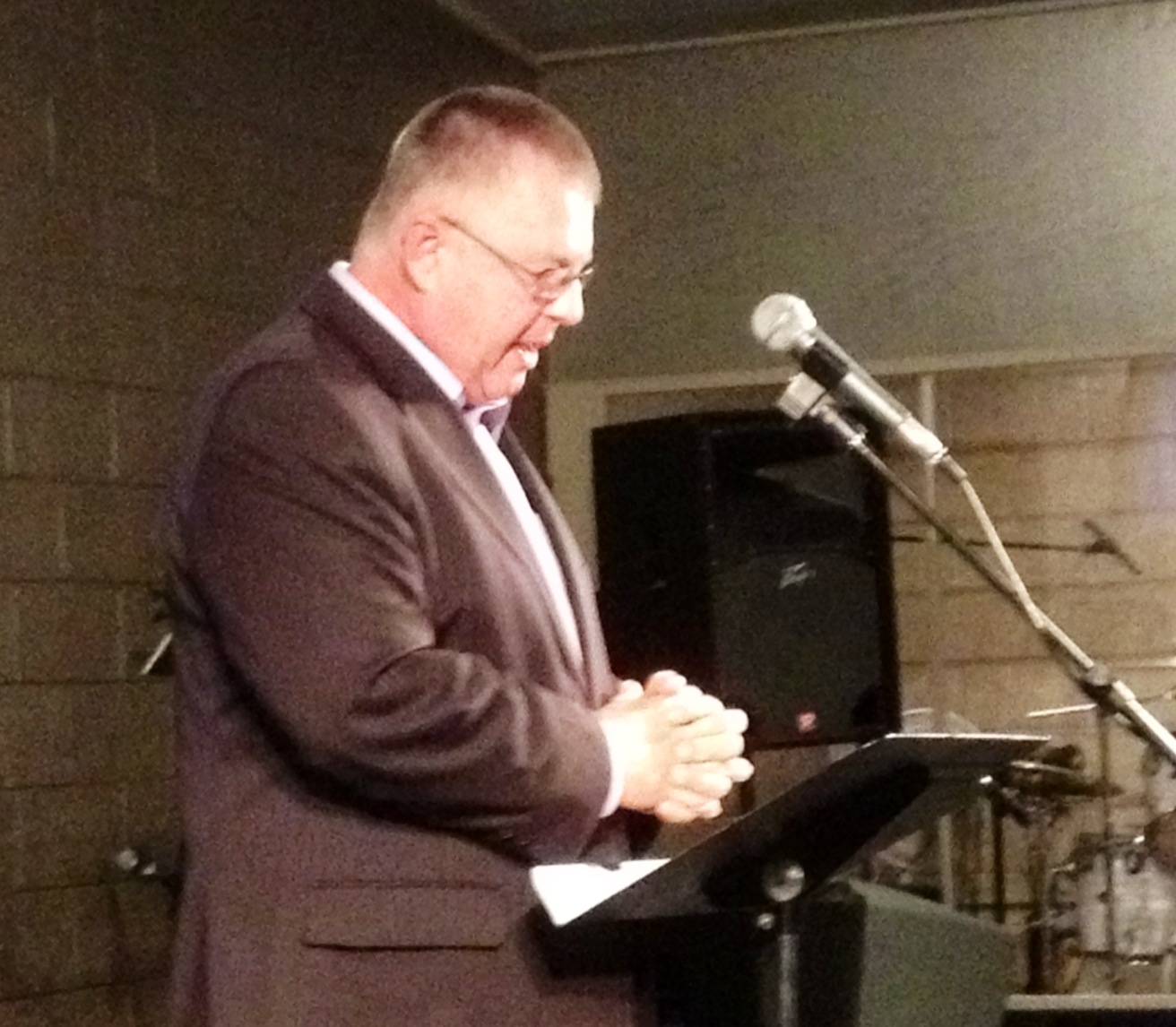
It’s extremely rare that a 19th-century pastor, Jesus Christ, and a noted atheist would all agree on something. But as we wrapped up our series on love today, I had to share these quotes (the added emphasis in the quotes is mine)—
“Never offer men a thimbleful of gospel. Do not offer them merely joy, or merely peace, or merely rest, or merely safety; tell them how Christ came to give men a more abundant life than they have, a life abundant in love, and therefore abundant in salvation for themselves, and large in enterprise for the alleviation and redemption of the world. … Only this fuller love can compete with the love of the world.” —Henry Drummond
“If you love only those who love you, why should you get credit for that? Even sinners love those who love them! And if you do good only to those who do good to you, why should you get credit? Even sinners do that much! … By this all men will know that you are My disciples, if you truly love one another.” —Jesus (Luke 6:32-33; John 13:35)
“Nothing can penetrate the loneliness of the human heart except the highest intensity of the sort of love the religious teachers have preached.” —Bertrand Russell
Listen to the podcast of this post by clicking on the player below, and you can also subscribe on Apple, Spotify, or Audible.
Love is not always flowery and sweet, where everyone gets along, and no one is ever mean or even unkind. Actually that’s not love; that’s selfishness. You’re saying, “I will love you because it makes me feel good. I get something special out of this when I am kind and loving to you.”
The ancient Greeks had different words for love. Whereas we use love for food (“I love my pasta”), and the same word for special people (“I love my wife”). But we all know that I’m not really saying my wife and a plate of spaghetti are on the same level.
So the Greeks had a word for love for the inanimate (like food and music), and a word for this-makes-me-feel-so-good (like sex and alcohol), and a word for treating someone humanely or kindly (sometimes called brotherly love). These are well-known loves, but they are very fragile. The law of diminishing returns says that each time I experience one of these loves, its ability to please me the next time is slightly reduced, until at one point this thing/person no longer satisfy me at all. In fact, they may even cause my stomach to churn in nausea.
But there was one more word the Greeks used for love, that the biblical writers used almost exclusively. This word (agape) is not tuxedos and dancing gowns and chandeliers. This love shows up in work clothes, with callouses on its hands and knees, because it’s determined to serve someone else no matter what!
This is the kind of love God exhibited toward us—God shows and clearly proves His own love for us by the fact that while we were still sinners, Christ died for us (Romans 5:8).
And this is the kind of love Jesus commanded us to exhibit toward others… even toward those we think are unloveable—By this all men will know that you are My disciples, if you love one another. … If you love those who love you, what credit is that to you? Even “sinners” love those who love them. And if you do good to those who are good to you, what credit is that to you? Even “sinners” do that (John 13:35; Luke 6:32-33).
This is the kind of full love that those apart from Jesus Christ do not know, but they can see it and be drawn to it if Christians will demonstrate it. Henry Drummond said this—
“Never offer men a thimbleful of gospel. Do not offer them merely joy, or merely peace, or merely rest, or merely safety; tell them how Christ came to give men a more abundant life than they have, a life abundant in love. … Then only can the gospel take hold of the whole of a man, body, soul and spirit. … Only a fuller love can compete with the love of the world.”
Let’s show the world a fuller love, and in so doing we will show them Jesus!
This is a weekly series with things I’m reading and pondering from Oswald Chambers. You can read the original seed thought here, or type “Thursdays With Oswald” in the search box to read more entries.
Don’t Let Others Stumble Because Of Me
There is a difference between “offense” and “stumbling.” And they were offended in Him. But Jesus said unto them, “A prophet is not without honor, save in his own country…” (Matthew 13:57). But Jesus knowing in Himself that His disciples murmured at this, said unto them, “Does this cause you to stumble?” (John 6:61; see also Matthew 5:29; 11:6; 13:41; 16:23; 17:27; 18:6-7). Offense means going contrary to someone’s private opinion, and it is sometimes our moral duty to give offense.
…Stumbling is different from offense. For example, someone who does not know God as well as you do, loves you and continually does what you do because he loves you, and as you watch him you begin to discern that he is degenerating spiritually, and to your amazement you find he is doing what you are doing. No offense is being given, but he is stumbling, distinctly stumbling.
In 1 Corinthians 8 and 9 Paul talks about not causing someone else to stumble because of what we do. It’s a fine line sometimes between offense and stumbling, but it’s a distinct line that the Holy Spirit can help us discern.
Jesus often offended people because their mindset was so rigid, and He didn’t act in a way that fit their rigid religious stereotypes. But Jesus was very cautious about making sure He never caused someone to stumble. As Matthew points out, Jesus fulfilled the prophesy of Isaiah: He will not quarrel or cry out…. A bruised reed He will not break, and a smoldering wick He will not snuff out… (Matthew 12:19-20; Isaiah 42:1-4).
My prayer: Lord Jesus, please don’t let others stumble because of me! Let me have the discernment of the Holy Spirit to know when to offend, but to never cross the line to cause others to stumble. May I have Your same gentle spirit to not quarrel, and to treat the “bruised reeds” with utmost care.
My son Harrison plays high school baseball. Let’s just imagine that I’m his hitting coach. In order for this relationship to benefit him, a couple of things have to occur:
He has to want to improve, and
He has to want to receive instruction from me.
If he thinks he knows it all already, or if he wants to just hang out with the other guys on the team to try to pick up some tips by being around them, then my role of a coach isn’t going to benefit him much.
Let’s say that Harrison knows he needs to improve, and he’s willing to listen to my instruction. We head out for some batting practice, and he lets pitch after pitch sail by him without ever swinging at the ball. If he never swings the bat, there’s only one piece of advice I can give him: Swing the bat!
The same things hold true for us if we want to improve as pray-ers. We have to want to improve, and we have have to be willing to receive instruction from the Coach (in this case, the Holy Spirit). But we also have to give Him something to work with. If we let opportunity after opportunity sail by without praying about it, there’s only one piece of advice the Spirit can give us: Pray!
Jesus said the Holy Spirit would help lead us into oneness with Him—
The Counselor, the Holy Spirit, whom the Father will send in My name, will teach you all things and will remind you of everything I have said to you. (John 14:26)
If we want to become better pray-ers, here’s how the Holy Spirit can help:
You have to admit that you need help in your prayer life.
You need to read your Bible (the everything that God says to you), and use God’s Word to help form your prayers.
Then, pray… swing the bat of prayer!
As you pray, listen to the voice of the the Counselor, the Holy Spirit, helping you to refine your prayers.
Your prayer time can become more meaningful, if you will tune into the Holy Spirit, and give Him something to work with.
To check out the others messages in this series on prayer called Praying Circles, please click here.
Listen to the podcast of this post by clicking on the player below, and you can also subscribe on Apple, Spotify, or Audible.
Sometimes life is hard and we can lose sight of a very important fact. Through the trials, and the testings, and the difficult situations, and the valleys, and the times we’re tempted to throw in the towel, you must remember this one fact…
Monday morning is one of my favorite times. I reflect back on the great things God did in our service the day before, and I look ahead with anticipation to what He is going to do in this next Sunday. If I look at this here-comes-Sunday-again cycle through merely human eyes, it can appear quite overwhelming. But God has called me to do this, and He energizes me by His Holy Spirit.
I love these words from Pastor James MacDonald—
“Only a pastor who preaches biblically for the glory of Jesus and the feeding of souls, week after week, can understand that pressure. It’s like finals week in college—but it happens every week. Explaining a Bible passage is child’s play compared to digging out a word from the Word about the WORD for your people.
“Can you give your best to it again, Pastor? Can you breathe on a passage of Scripture that is now unfamiliar, until it bursts into flame by the faithful ministry of the Holy Spirit in response to your hard work? Can you stoke that fire until it is bursting within you to be proclaimed as the ‘Bread of Life’?
“Yes, you can—and when you have, you will be exhausted but deeply satisfied in what God will do in and through you as a result. And you will count the days until you GET to do it again.”
Pastor, you can do it again! Doing God’s will, preaching His Word, should be your greatest joy and your greatest source of strength. This is why I don’t like to take Monday as my day off: I get so much more nourishment and refreshment from my time in God’s presence on Monday morning than I would get anywhere else.
Meanwhile [Jesus’] disciples urged Him, “Rabbi, eat something.” But He said to them, “I have food to eat that you know nothing about.” Then His disciples said to each other, “Could someone have brought Him food?”
“My food,” said Jesus, “is to do the will of Him who sent Me and to finish His work.”
Sola Christo means that it is by Christ’s work alone are we saved. We must get this firmly in our minds, and be aware of anything which reduces Christ, augments Christ, or replaces Christ.
I don’t believe in studying cults (the counterfeit). Instead, I study the Real, the Authentic, the One and Only. I want to know Jesus so well, that I can easily spot a counterfeit.
This is a weekly series with things I’m reading and pondering from Oswald Chambers. You can read the original seed thought here, or type “Thursdays With Oswald” in the search box to read more entries.
Prayerful Havoc
There are supernatural powers and agencies of which we are unconscious which, unless we are garrisoned by God, can play with us like toys whenever they choose. The New Testament continually impresses this on us. “For we wrestle not against flesh and blood, but against principalities, against powers, against the rules of the darkness of this world, against spiritual wickedness in high places” (Ephesians 6:12). All that is outside the realm of our consciousness.
If we only look for results in the earthlies when we pray, we are ill-taught. A praying saint performs far more havoc amongst the unseen forces of darkness than we have the slightest notion of. “The effectual fervent prayer of a righteous man availeth much.” We have not the remotest conception of what is done by our prayers, nor have we the right to try and examine and understand it; all we know is that Jesus Christ laid all stress on prayer. “And greater works than these shall he do; because I go unto My Father. And whatsoever ye shall ask in My name, that will I do [John 14:12].”
What an amazing reminder! Prayer is doing havoc in the spiritual realm, but much of that realm is outside of my conscious awareness.
Prayer accomplishes much. I may not see it in the earthlies each time I pray, but I must remain confident that my prayers are always heard and always make an impact.
Don’t let the lack of “visible” results keep you from praying. You may not see with your natural eyes what is happening when you do pray, but you can be assured that nothing at all will happen if you don’t pray!
Remember: “A praying saint performs far more havoc amongst the unseen forces of darkness than we have the slightest notion of.”
Listen to the podcast of this post by clicking on the player below, and you can also subscribe on Apple, Spotify, or Audible.
Aristotle had an insightful quote that was almost accurate—
“Anybody can become angry—that is easy; but to be angry with the right person, and to the right degree, and at the right time, and for the right purpose, and in the right way—that is not within everybody’s power and is not easy.”
I agree with most of this, but I would argue that it’s not within anybody’s power to express their anger in the right way.
The Bible says that our challenge is to not sin when we are angry (Ephesians 4:26). But most anger is selfishly provoked. That means, I’m angry because I have been offended, or my “rights” have been violated, or someone injured me.
If my anger has been selfishly provoked, how can I be expected to express my anger in any other fashion but selfishly?!
Instead of me trying to manage my anger, I need to listen to the Holy Spirit’s voice. There is one important question the Spirit asks us (which comes from Jonah 4:9)—
Do you do well to be angry?
Is it good for me to be angry with this? or should I let this go?
Is my anger righteously provoked? or is it selfishly provoked?
God’s Spirit within you is never silent. He will either confirm that your anger is righteously provoked (as it was with Jesus in John 2:13-17), or it’s selfishly provoked (as it was with Jonah). That’s why you must ask yourself that question and allow the Holy Spirit to help you answer it: Do I do well to be angry?
If you answer “yes,” and the Holy Spirit confirms this in your heart, then He will help you to be angry with the right person, and to the right degree, and at the right time, and for the right purpose, and in the right way (as Aristotle said).
And if you answer “no,” the Holy Spirit is the only one who can help put out the flames of your anger in a healthy way.
So don’t try to manage your temper. Listen to the Holy Spirit asking you, “Do you do well to be angry?” And let Him guide you from there.
If you want to check out the other messages in our series called Ticked Off!you may click here.
I sat enthralled yesterday morning at the ministry of Pastor Bill Leach! He opened my eyes to a well-known passage in Philippians 2:5-11 as I had never before seen it.
In verse 7 the Scripture says that Jesus emptied Himself. Pastor Leach pointed out that this was not by laying something aside, but by taking on the human form. The Divine One became a doulos (the Greek word which means a bondslave with no rights of his own).
“Jesus is truly Man, but not merely Man.”
Jesus understood that being God is not getting, but giving. By taking on the human form, Jesus was showing us that He identified with us and therefore knew what to give us.
“For God so loved the world that He GAVE His One and Only Son.”
When we love someone, we enter into their orbit. We are focused on them and their desires. In the Trinity, each part of the Godhead is orbiting (or dancing) around each other.
In order for us to love God, God had to enter our orbit. We were self-absorbed: we danced only around ourselves. When Jesus took on human form He could enter our orbit—He could dance around us. It’s only then that we could understand how to join the love dance with Him.
Pastor Leach’s message called to my remembrance something I learned from another great pastor, Dave Williams, from 2 Peter 1:
His divine power has given us everything we needfor life and godliness through our knowledge of Him who called us by His own glory and goodness. (v. 3)
This verse sets the stage for what comes next (verses 5-7). The Apostle Peter then tells us to begin to add to our faith and our love dance with God. Add is a compound word that means a lavish dance with no expenses spared!
Because Jesus chose to step into our humanity, He chose to step into our self-centered dance. And now that we have seen Him—the One and Only, who came from the Father, full of grace and truth (John 1:14)—it’s time to leave our self-centered dance behind and join with a new Dance Partner who loves us like no one else ever has or ever will!



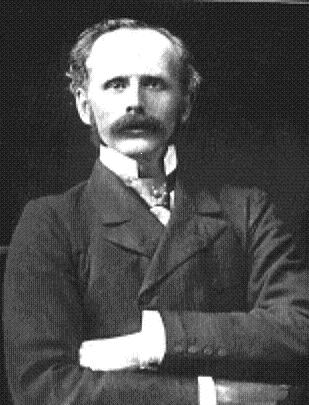 It’s extremely rare that a 19th-century pastor, Jesus Christ, and a noted atheist would all agree on something. But as we wrapped up our series on love today, I had to share these quotes (the added emphasis in the quotes is mine)—
 “If you love only those who love you, why should you get credit for that? Even sinners love those who love them! And if you do good only to those who do good to you, why should you get credit? Even sinners do that much! … By this all men will know that you are My disciples, if you truly love one another.” —Jesus (Luke 6:32-33; John 13:35)