The Emblem Of Suffering And Shame

Listen to the podcast of this post by clicking on the player below, and you can also subscribe on AppleSpotify, or Audible.

Tomorrow we celebrate Good Friday—the day Jesus died a horrific death on Calvary for my sins and your sins. The apostle Paul said Christ’s crucifixion was a stumbling block to many, because it was unimaginable that anyone—especially the perfect Son of God—could be subject to the torturous death reserved for the worst of offenders. But when Jesus became sin for us, that’s just what He was in that moment: the worst of offenders in Holy God’s eyes.
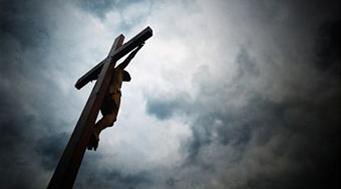
Christ on the Cross    “In the ancient world crucifixion was seen as a particularly disgraceful and grievous form of execution. Assyrian battle reliefs depict a precursor to crucifixion—impaling victims on poles outside the walls of conquered cities. The Persians made wide spread use of crucifixion, although sometimes the crucifixion took place only after the victim had been executed by other means (Herodotus, Histories, 3.125.2-3). There are also reports that crucifixion was used by peoples as varied as the Assyrians, Scythians, Celts, Germans, Britons and inhabitants of India, although the reliability of some of these accounts is questionable. Common to most of these cultures was the perspective that crucifixion was a form of execution reserved for the worst offenders, as well as for slaves.

     “The practice of crucifixion became widespread under Alexander the Great (356-323 B.C.). It became the common form of execution for traitors, defeated armies and rebellious slaves. Later, under the Roman Empire, only non-citizens, lower-class Romans and violent offenders could be crucified. The only possible exceptions were in cases of high treason or desertion during wartime. Slaves were particularly vulnerable to the imposition of crucifixion. Latin literature reflects the dread slaves felt at the prospect of this fate. It was officially accepted as the most painful and disgraceful form of capital punishment, more so than decapitation, being thrown to wild animals or even being burned alive. For these reasons this heinous penalty was often imposed upon foreigners who were seen as threats to Roman rule.

     “There are also accounts of crucifixion being practiced among Jews. Josephus wrote that the Sadducees and high priest Alexander Janneus (in the office from 103 to 76 B.C.) committed the following atrocity against his enemies, the Pharisees: ‘While dining in a conspicuous place with his concubines, he commanded that about 800 of them be crucified, and while they were still alive before their eyes he had the throats of their children and wives cut’ (Josephus, Antiquities, 13.14.2).

     “Victims were often scourged or otherwise tortured prior to crucifixion. Crucifixions were carried out on either a single vertical stake or on a vertical stake with a crossbeam near or on its top. Sometimes blocks were attached to the stake as a seat, footrest or both. Depending upon the presence of these blocks, the victim might linger, alive, for up to three days. The blocks allowed a victim to rest some of his weight, increasing the chance of breathing and proper circulation. Without the blocks a victim’s weight would rest totally upon his arms, which were attached to the crosspiece by ropes, nails or both. This would prohibit breathing and circulation and lead to both brain and heart failure. To end the torture, a victim’s legs could be broken, after which death would quickly follow. Oftentimes the charge against the guilty party would be written out and nailed to the cross above his head. As a deterrent to would-be rebels and criminals, crucifixions were usually carried out in highly visible locations.

     “During Jesus’ lifetime crucifixion was used by the Romans to exercise and gruesomely display their authority over others. This torturous execution was viewed by the Jews as a cursed form of death. Deuteronomy 21:23 states that ‘anyone who is hung on a tree is under God’s curse.’ Documents discovered at Qumran reveal that many Jews of Jesus’ time applied this text to Roman crucifixion. This perspective of crucifixion demonstrates why the apostle Paul wrote that the Cross of Christ was ‘a stumbling block to Jews and foolishness to Gentiles’ (1 Corinthians 1:23). Who would have imagined that the Holy One of God would voluntarily take upon Himself the curse that should have been ours? This emblem of shame has thus become the symbol of our salvation.” —Archaeological Study Bible, “Crucifixion” (page 1757)

As you remember what Jesus did for you on the Cross atop of Golgotha, may you be overwhelmed by the love which held Him fast to such a horrific instrument of death. He endured the suffering and shame of the Cross because He loves you and wants you to be with Him forever.

May we cherish that old rugged Cross and the Savior who suffered and died for us. As we place our faith in His death and resurrection three days later, may we be able to live each day in celebration of the victory Jesus won over hell, death, and the grave!

►► Would you please prayerfully consider supporting this ministry? My Patreon supporters get behind-the-scenes access to exclusive materials. ◀︎◀︎
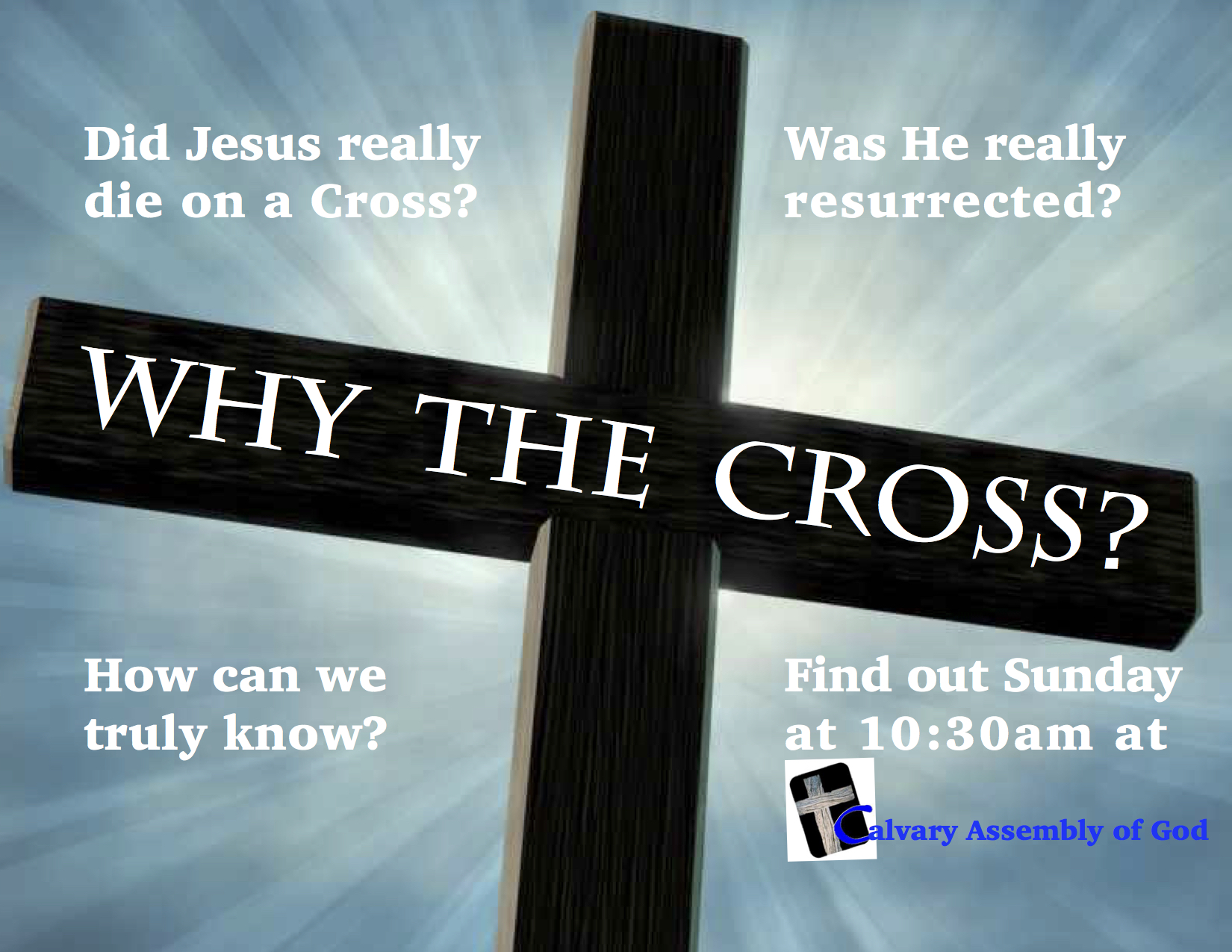
Why The Cross?

Why The CrossCrucifixion seems so extreme (click here to read The Horrors of Crucifixion)! Why would God allow His Son to go through this?

But perhaps we should back up a step or two. Before asking why the Cross maybe there are some other questions we should explore. Questions like…

  • Did Jesus actually die?
  • Is the account true that Jesus came back to life?
  • How can we know for sure?
  • Is this just too fantastic to believe? Or is the evidence reasonable?

These are questions we must all wrestle with, especially those who call themselves Christians. After all, Christian means a follower of Jesus Christ who believes that Jesus in fact died on a Cross and was raised back to life three days later.

Join me this Sunday was we explore the reliability of the evidence. Then on Easter Sunday morning we will consider the claims that Jesus died and came back to life, as well as the claims that this is all make-believe stuff.

You won’t want to miss this! Click here to find a map to our meeting place. If you cannot join us in person, we will be broadcasting live on Periscope (click here to find the account to follow to be notified when the broadcast begins).

The Crushing Weight Of Sin

CrossAs we remember Christ’s awful and glorious work on Calvary this Good Friday, I am reminded of these sobering words from a Charles Spurgeon sermon—

“See Him; like a cart pressed down with sheaves He goes through the streets of Jerusalem. Well may you weep, daughters of Jerusalem, though He bids you dry your tears; they hoot Him as He walks along bowed beneath the load of His own Cross which was the emblem of your sin and mine. They have brought Him to Golgotha. They throw Him on His back, they stretch out His hands and His feet. The accursed iron penetrates the tenderest part of His body, where most the nerves do congregate. They lift up the Cross. O bleeding Savior, Thy time of woe has come! They dash it into the socket with rough hands; the nails are tearing through His hands and feet. He hangs in extremity, for God has forsaken Him; His enemies persecute and take Him, for there is none to deliver Him. They mock His nakedness; they point at His agonies. They look and stare upon Him with ribald jests; they insult His griefs, and make puns upon His prayers. He is now indeed a worm and no man, crushed till you can think scarcely that there is divinity within. The fever gets hold upon Him. His tongue is dried up like a potsherd, and He cries, ‘I thirst!’ Vinegar is all they yield Him; the sun refuses to shine, and the thick midnight darkness of that awful mid-day is a fitting emblem of the tenfold midnight of His soul. Out of that thick horror He cries ‘My God, my God, why hast Thou forsaken Me?’ Then, indeed, was He pressed down! O there was never sorrow like unto His sorrow. All human griefs found a reservoir in His heart, and all the punishment of human guilt spent itself upon His body and His soul. O shall sin ever be a trifle to us? Shall I ever laugh at that which made Him groan?”

May I never treat my sin which took Christ to the Cross as a trifling, laughing, inconsequential matter. May I always strive to live holy, and to live eternally grateful for the price Jesus paid for my sin!

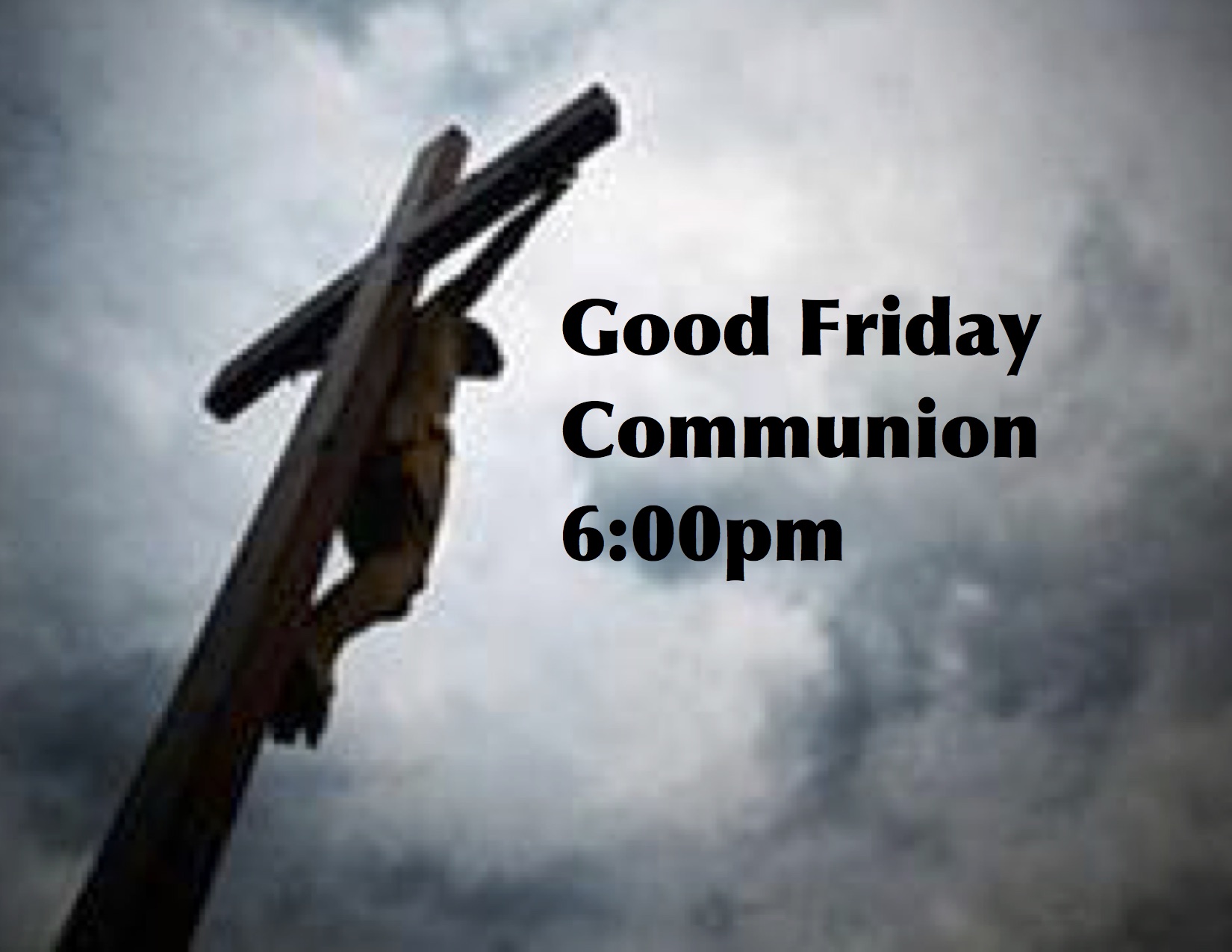
Good Friday Communion Service

Good Friday

Join me this Friday, April 3, at 6pm as we remember what Jesus did for us on Calvary. We will be reflecting on Christ’s sacrificial death in a meaningful time of Communion.

Directions to Calvary Assembly of God can be found by clicking here.

In The Shadow Of The Cross

Listen to the podcast of this post by clicking on the player below, and you can also subscribe on AppleSpotify, or Audible.

Some people really know how to find the deals when they’re shopping. They know where to shop, when to shop, where to find the coupons, and how to find the rebates.

Rebates have always amazed me. I wondered how companies could give away money and still make a profit. Then I read that often up to 70 percent of rebates go unclaimed. Some people say it’s too much work to fill out all the correct forms, others say it takes too long to get their rebate, and still others think the amount they get back isn’t worth the effort.

I’m concerned about Christians who slip into a rebate mentality with God. It seems some Christians believe that they need to “fill out the right forms” in order to claim all that God has for them. They seem to think that salvation isn’t enough, and that they have to add church attendance, offerings, good works, Bible reading and other activities to make sure they don’t miss out.

Not that there’s anything wrong with those activities, but there is something wrong with thinking we have to do something to keep our salvation at its full effectiveness.

If we have placed our faith in Christ’s work on an old rugged Cross, then all of our sins have been forgiven (see Psalm 103:1-5, 10-12; Jeremiah 33:8). This is a gift that is available to everyone (Acts 10:43).

But here’s when I think satan steps in to deceive us: It’s when we feel convicted by the Holy Spirit. God’s Spirit is constantly refining us to make Christ’s image visible in us. But satan wants to twist and pervert this conviction into condemnation.

It’s only in the shadow of the old rugged Cross that I can see my sin correctly. Consider these four points:

(1) The Holy Spirit’s conviction of sin tells me that He desires for me to be more like Jesus―John 14:25-27.

(2) Sin isn’t my master any longer―Romans 6:1-2, 8-11.

(3) My sin never diminishes God’s love for me―1 John 1:8-2:2.

(4) Sin cannot condemn me―Romans 8:1-2.

As we remember and celebrate what Jesus did on Calvary for us, let’s also remember to stay in the shadow of the Cross. It’s only there we can see ourselves accurately from Heaven’s point of view.

If you are in the area and don’t have a church home, I would love for you to celebrate Resurrection Sunday with us! We’ll continue our look at what happened on the old rugged Cross.

►► Would you please prayerfully consider supporting this ministry? My Patreon supporters get behind-the-scenes access to exclusive materials. ◀︎◀︎
Easter Stories (book review)

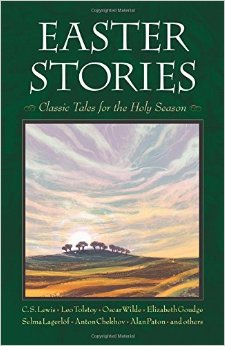
Easter StoriesMiriam LeBlanc has compiled a lovely collection of stories in Easter Stories: Classic Tales for the Holy Season. The stories themselves are not always classics (in the sense of being well known), but the authors are certainly a Who’s Who list.

Some of the better known authors include André Trocmé, Anton Chekhov, C.S. Lewis, The Brothers Grimm, and Oscar Wilde. The stories were collected in this book because they talk about sacrifice, new birth, new beginnings, and new life: all the themes echoed in the biblical story of Christ’s sacrificial death and resurrection.

These are great stories to introduce others to the story of Easter without turning to the passages in the Bible. These stories can introduce the themes of salvation, reconciliation, and new life, which will then allow Christians to lead their family and friends to the foundational stories in Scripture.

This is not only an excellent way to introduce the Easter themes to others, but also to introduce them to some of the more meaningful authors.

I am a Plough Publishing House book reviewer.

12 Quotes From “The Cross Of Jesus”

The Cross Of JesusWarren Wiersbe’s book The Cross Of Jesus is a very easy read, but that doesn’t mean the subject matter is light. It is a sobering look at what Jesus Christ did for us on the Cross, and it’s something at which we should always take a repeated look. You can read my book review by clicking here. Below are some quotes I especially appreciated.

“The Cross was a divine assignment, not a human accident; it was a God-given obligation, not a human option.”

“The fundamental problem lost sinners face isn’t that they’re sick and need a remedy. The problem is that they’re ‘dead in trespasses and sins’ (Ephesians 2:1) and need to experience resurrection. Religion and reformation may cosmetize the corpse and make it more presentable, but religion and reformation can never give life to the corpse. Only God can do that. ‘But God, Who is rich in mercy, because of His great love with which He loved us, even when we were dead in trespasses, made us alive together with Christ’ (Ephesians 2:4-5).”

“If our faith in Jesus Christ isolates us from those who need Him, there’s something wrong with our faith—and our love.” 

“Respectable religion that rejects the blood of the Cross can’t understand the message of the Bible, and it is powerless to deal with sin and sinful human nature. ‘Comfortable religion’ that avoids bearing the Cross and following Jesus is but a religious facade that knows nothing of true discipleship.”

“The Romans and the Jews ‘by lawless hands’ (Acts 2:23) put Jesus Christ to death, and yet their very actions fulfilled the plan of God. Even the wrath of man praises God (Psalm 76:10), and when sinners are doing their worst, God is giving His best. They were ignorant of their own sin. The enormity of their sins never bothered them. They nailed the Son of God to a Cross and then went about their business celebrating Passover!” 

“God still works providentially to create situations that give people opportunity to meet Christ, trust Him, and be saved. No one is ever saved by accident, for meeting Jesus Christ is a divine appointment.”

“Grace is simply the undeserved favor of God. You can’t earn it, buy it, or work for it. You can only receive grace as a gift. But that demands honesty and humility: honesty in admitting that you need to be saved, and humility in confessing that you can’t save yourself.” 

“The salvation Jesus gave to this man was personal. Jesus spoke to this man personally and saved him personally. ‘Assuredly, I say to you.…’ (Luke 23:43). God loves us personally. Writing about Jesus Christ, Paul said ‘…Who loved me and gave Himself for me’ (Galatians 2:20). The Lord Jesus Christ died for us personally. God’s love is shown to us personally, and God saves us personally. God doesn’t deal with sinners as part of a crowd; He doesn’t save people en masse. God saves people individually, one by one.”

“Salvation is not a process. You don’t receive the forgiveness of sins on the installment plan. Salvation is an instantaneous spiritual experience by the power of God when you put your faith in Jesus Christ.”

“‘Christ died for our sins’ (1 Corinthians 15:3) is a statement so simple that a child can believe it and be saved, but so profound that a theologian can never fully understand it.”

“A Crossless life is a wasted life. No matter how much enjoyment we experience or accomplishment we achieve, without the Cross our lives have been fruitless and in vain.”

“The question today is not, ‘Do you thirst?’ because all mankind has a thirst for reality, a thirst for God, a thirst for forgiveness, whether they realize it or not. The real question is ‘How long will you continue to thirst?’ When you trust Jesus Christ as your Savior, you will never thirst again. If you reject Him, you will thirst forever.”

The Cross Of Jesus (book review)

The Cross Of JesusWarren Wiersbe writes early on in The Cross Of Jesus, “Unless we go back to the Cross, we can’t go forward in our Christian life.” How true this is, and what a wonderful job Rev. Wiersbe does in taking us back to the Cross!

This book is divided into four sections: What Jesus saw in the Cross, why Jesus died on the Cross, what Jesus said from the Cross, and how believers should live by the Cross. In essence we go back to the beginning to learn how we should now live because of the work Christ completed on the Cross.

Wiersbe quotes Charles Spurgeon as saying, “On whatever subjects I may be called to preach, I feel it to be a duty which I dare not neglect to be continually going back to the doctrine of the Cross—the fundamental truth of justification by faith which is in Christ Jesus.”

Whether you are wondering what significance Christ’s death at Calvary has for anything, or if you have been a believer in Christ’s atoning death for decades, or you are anywhere in between, going back for a fresh look at the old rugged Cross―and the Savior Who was sacrificed there―is always beneficial. And The Cross Of Jesus is an excellent book to guide you through your journey.

Links & Quotes

link quote

Some great reading (and watching) from the past couple of days.

“This generation has yet to prove all that prayer can do for believing men and women.” —A.W. Tozer

Come, my heart, be calm and hopeful today. Clouds together, but the Lord can blow them away. Since God will not fail me, my faith shall not fail; and as He will not forsake me, neither will I forsake Him.” —Charles Spurgeon

[VIDEO] This is priceless! Watch as a young man with Down Syndrome reads a special letter.

John Piper shares The Greatest Prayer In The World.

Tim Elmore discussing Generation Y: The Inverse Relationship Between Empathy And Narcissism.

This is why I love loving on our missionaries: Home Without A Home.

Some powerful Good Friday quotes compiled by Chilly Chilton in his post Cross Walk.

“Right now you may feel abused and unloved. The devil would have you believe that God has left you to your own devices—that you deserve to suffer, that it’s all over for you, that there is no hope. Beloved, those are lies from hell. God wants more than anything else to rid you of your perverted concept of Him.” —David Wilkerson

The Horrors Of Crucifixion

Good FridayWilliam Barclay, in his commentary on the Gospel of John, wrote graphically about the horrors of crucifixion—

   There was no more terrible death than death by crucifixion. Even the Romans themselves regarded it with a shudder of horror. Cicero declared that it was “the most cruel and horrifying death.” Tacitus said that it was a “despicable death.” It was originally a Persian method of execution. It may have been used because, to the Persians, the earth was sacred, and they wished to avoid defiling it with the body of an evil-doer. So they nailed him to a cross and left him to die there, looking to the vultures and the carrion crows to complete the work. The Carthaginians took over crucifixion from the Persians; and the Romans learned it from the Carthaginians.

   Crucifixion was never used as a method of execution in the homeland, but only in the provinces, and there only in the case of slaves. It was unthinkable that a Roman citizen should die such a death. Cicero says: “It is a crime for a Roman citizen to be bound; it is a worse crime for him to be beaten; it is well nigh parricide for him to be killed; what am I to say if he be killed on a cross? A nefarious action such as that is incapable of description by any word, for there is none fit to describe it.” It was that death, the most dreaded in the ancient world, the death of slaves and criminals, that Jesus died.

   The routine of crucifixion was always the same. When the case had been heard and the criminal condemned, the judge uttered the fateful sentence: Ibis ad crucem, “You will go to the cross.” The verdict was carried out there and then. The condemned man was placed in the centre of a quaternion, a company of four Roman soldiers. His own cross was placed upon his shoulders. Scourging always preceded crucifixion and it is to be remembered how terrible scourging was. Often the criminal had to be lashed and goaded along the road, to keep him on his feet, as he staggered to the place of crucifixion. Before him walked an officer with a placard on which was written the crime for which he was to die and he was led through as many streets as possible on the way to execution. There was a double reason for that. There was the grim reason that as many as possible should see and take warning from his fate. But there was a merciful reason. The placard was carried before the condemned man and the long route was chosen, so that if anyone could still bear witness in his favor, he might come forward and do so. In such a case, the procession was halted and the case retried. (emphasis added)

Always remember that Jesus willingly went through this for you and me.

Surely He took up our pain
    and bore our suffering,
yet we considered Him punished by God,
    stricken by Him, and afflicted.
But He was pierced for our transgressions,
    He was crushed for our iniquities;
the punishment that brought us peace was on Him,
    and by His wounds we are healed. (Isaiah 53:4-5, emphasis added)