Thursdays With Spurgeon—The Humility Of Christ’s Birth

This is a weekly series with things I’m reading and pondering from Charles Spurgeon. You can read the original seed thought here, or type “Thursdays With Spurgeon” in the search box to read more entries.

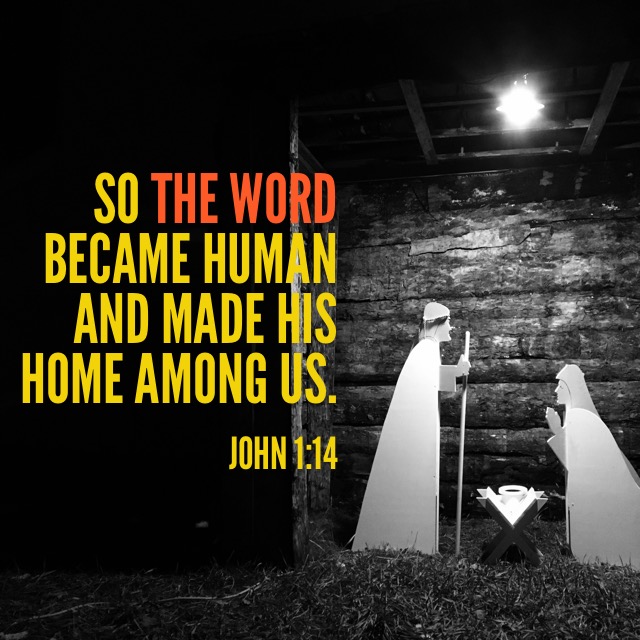
The Humility Of Christ’s Birth

     Moreover, there was a peculiar wisdom ordaining that Jesus Christ should be the Son of the woman, and not of the man, because ‘that which is born of the flesh is flesh’ (John 3:6). Had He been born of the flesh, and merely flesh, He would, naturally, by carnal generation, have inherited all the frailties and the sins and the infirmities that man has from his birth. He would have been conceived in sin and shaped in iniquity, even as the rest of us. Therefore He was not born of man, but the Holy Spirit overshadowed the virgin Mary and Christ stands as the one man, save one other, who came forth pure from His Maker’s hands, who could ever say, ‘I am pure.’ Yes, and He could say far more than that other Adam could say concerning his purity, for He maintained His integrity and never let it go! And from His birth down to His death He knew no sin, neither was guile found in His mouth….

     Let us take courage here. If Jesus Christ was born in a manger in a rock, why should He not come and live in our rocky hearts? If He was born in a stable, why should not the stable of our souls be made into a house for Him? If He was born in poverty, may not the poor in spirit expect that He will be their friend? If He thus endured degradation at the first, will He count it any dishonor to come to the very poorest and humblest of His creatures and tabernacle in the souls of His children? Oh no!

From The Birth Of Christ

If Jesus was only God, He would never have been able to stoop to love us. 

If Jesus was only Man, He would never have been able to help us. 

Only the God-Man has both the power and the love to save use. Truly there is no one like Jesus! 

No one like Jesus our troubles can see
No one can feel them so keenly as He
No one like Jesus our burdens will bear
He and He only can answer our prayer

No one like Jesus could die for our sins
No one but Jesus can make the heart clean
No one but Jesus such mercy can show
He and He only such love can bestow

Jesus, Jesus
Precious Savior
Oh, how I love You
Love and adore You
Thank You, thank You
Precious Jesus
Oh, how You love me
Oh, what a Savior to me —Fanny J. Crosby, No One Like Jesus

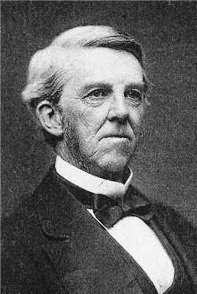
Poetry Saturday—Lord Of All Being

Lord of all being, throned afar,
Thy glory flames from sun and star;
Center and soul of every sphere,
Yet to each loving heart how near!

Sun of our life, Thy quickening ray,
Sheds on our path the glow of day;
Star of our hope, Thy softened light
Cheers the long watches of the night.

Our midnight is Thy smile withdrawn;
Our noontide is Thy gracious dawn;
Our rainbow arch, Thy mercy’s sign;
All, save the clouds of sin, are Thine.

Lord of all life, below, above,
Whose light is truth, whose warmth is love,
Before Thy ever blazing throne
We ask no luster of our own.

Grant us Thy truth to make us free,
And kindling hearts that burn for Thee,
Till all Thy living altars claim
One holy light, one heavenly flame. —Oliver Wendell Holmes

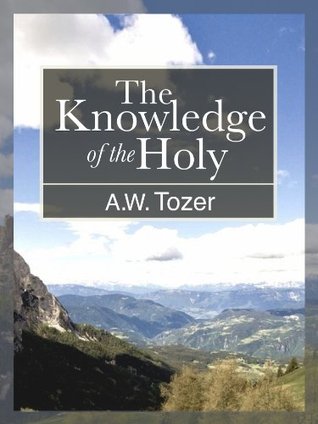
The Knowledge Of The Holy (book review)

One definition of a Christian mystic is someone who engages in deep, prayerful pondering of the nature of God, as He is revealed in the Scriptures, and then emerges from those intimate encounters to share with us what he or she has learned. I would put A.W. Tozer in this category, especially in his book The Knowledge Of The Holy—The Attributes of God: Their Meaning in the Christian Life. 

Tozer himself described the Christian mystic more fully than I could in his book The Christian Book Of Mystical Verse. In that book, Tozer shared some poetic verses from some of his favorite mystical thinkers. He noted, “The hymns and poems found here are mystical in that they are God-oriented; they begin with God, embrace the worshipping soul, and return to God again.” 

In The Knowledge Of The Holy, Tozer takes us on his own personal journey into the immeasurable depths of God’s greatness. Whereas many theologians tend to focus on one attribute of God at a time, Tozer has a God-given ability to help us see all of God’s attributes operating in their infinite fullness. 

Even as Tozer plunges deep into the attributes of God’s self-existence, self-sufficiency, omniscience, omnipotence, omnipresence, love, mercy, justice, grace, and sovereignty, he reminds us, “Because God is immutable He always acts like Himself, and because He is a unity He never suspends one of His attributes in order to exercise another.” 

This is not a book you can ready lightly or casually, or even quickly. This is a book that invites you to read slowly and reverently each of the short chapters, and then to meditate long on the immenseness of an All-Powerful, All-Loving God who wants to reveal Himself to you. 

The Knowledge Of The Holy is a soul-expanding book!

Thursdays With Spurgeon—Born A King

This is a weekly series with things I’m reading and pondering from Charles Spurgeon. You can read the original seed thought here, or type “Thursdays With Spurgeon” in the search box to read more entries.

Born A King

     A very singular thing is this, that Jesus Christ was said to have been ‘born King of the Jews’ (Matthew 2:2). … The moment that He came on earth, He was a king. He did not wait till His majority that He might take His empire—but as soon as His eye greeted the sunshine, He was a King. From the moment that His little hands grasped anything, they grasped a scepter. As soon as His pulse beat and His blood begin to flow, His heart beat royally and His pulse beat an imperial measure and His blood flowed in a kingly current. He was born a King. He came ‘to be ruler in Israel.’ … 

     His goings forth as our Surety were from everlasting [Micah 5:2]. Pause, my soul, and wonder! You had goings forth in the person of Jesus from everlasting. Not only when you were born into the world did Christ love you, but His delights were with the sons of men before there were any sons of men! Often did He think of them; from everlasting to everlasting He had set His affection upon them. … 

     If He had not loved me with a love as deep as hell and as unutterable as the grave, if He had not given His whole heart to me, I am sure He would have turned from me long ago. He knew what I would be and He had time enough to consider it—but I am His choice and that is the end of it. … He knew me before I knew myself—yes, He knew me before I was myself. … 

     Sweet Lord Jesus! You whose going forth were of old, even from everlasting, You have not left Your goings forth yet. Oh, that You would go forth this day to cheer the faint, to help the weary, to bind up our wounds, to comfort our distresses! Go forth, we beseech You, to conquer sinners, to subdue hard hearts, to break the iron gates of sinners’ lusts and cut the iron bars of their sins in pieces! O Jesus! Go forth, and when You go forth, come to me!

From The Incarnation And Birth Of Christ

Think about that for a moment—Jesus had all of eternity to think about you, to see your whole life, and still, He loved you enough to die on a Cross for you! 

That God should love a sinner such as I 
Should yearn to change my sorrow into bliss 
Nor rest till He had planned to bring me nigh 
How wonderful is love like this

Such love, such wondrous love 
That God should love a sinner such as I 
How wonderful is love like this

That Christ should join so freely in the scheme 
Although it meant His death on Calvary
Did ever human tongue find nobler theme 
Than love divine that ransomed me

That for a willful outcast such as I
The Father planned the Savior bled and died 
Redemption for a worthless slave to buy 
Who long had law and grace defied

And now He takes me to His heart a son 
He asks me not to fill a servant’s place 
The far off country wanderings all are done 
Wide open are His arms of grace —C. Bishop, Such Love

Thursdays With Spurgeon—Why Bethlehem?

This is a weekly series with things I’m reading and pondering from Charles Spurgeon. You can read the original seed thought here, or type “Thursdays With Spurgeon” in the search box to read more entries.

Why Bethlehem?

     There [in Bethlehem] cleaved to [Naomi] Ruth the Moabitess, whose Gentile blood should unite with the pure untainted stream of the Jew and should thus bring forth the Lord our Savior, the great King both of Jews and Gentiles. … And in the streets of Bethlehem did Boaz and Ruth receive a blessing that made them fruitful, so that Boaz became the father of Obed and Obed the father of Jesse—and Jesse the father of David. … 

     There is something in the name of the place. Bethlehem Ephrathah. The word Bethlehem has a double meeting. It signifies ‘the house of bread’ and ‘the house of war.’ …

     Bethlehem, you house of bread, rightly were you called, for there the Bread of life was first handed down for man to eat.

     And it is called ‘the house of war,’ because Christ is to a man either ‘the house of bread’ or else ‘the house of war.’ While He is food to the righteous, He causes war to the wicked, according to His own words: ‘Do not think that I came to bring peace on earth. I did not come to bring peace but a sword…’ (Matthew 10:34–36).

     Sinner, if you do not know Bethlehem as ‘the house of bread,’ it will be to you a ‘house of war.’ If from the lips of Jesus you never drink sweet honey—if you were not like the bee, which sips sweet luscious liquor from the Rose of Sharon, then out of the selfsame mouth there will go forth against you a two-edged sword! And that mouth from which the righteous draw their bread will be to you the mouth of destruction and the cause of your ill. … 

     Ephrathah … the meaning of it is ‘fruitfulness’ or ‘abundance.’ … 

     If we are like trees planted by the rivers of water, bringing forth our fruit in our season, it is not because we were naturally fruitful, but because of the rivers of water by which we were planted. It is Jesus who makes us fruitful. ‘If you abide in Me, and My words abide in you, you will ask what you desire, and it shall be done for you’ (John 15:7). Glorious Bethlehem Ephrathah! Rightly named! Fruitful house of bread—the house of abundant provision for the people of God! 

From The Incarnation And Birth Of Christ

Bethlehem wasn’t just a random place for Jesus Christ to be born. God doesn’t do anything randomly. Everything He does has a plan and a purpose. We may have difficulty seeing what the purpose is. As Martin Tupper noted in one of his poems—

We look through a glass darkly, we catch but glimpses of truth;
But, doubtless, the sailing of a cloud hath Providence to its pilot…
Man doeth one thing at once, nor can he think two thoughts together;
But God compasseth all things, mantling the globe like air…

Not only was the birthplace of Jesus purposely chosen by God, so was your birthplace. And your birth parents. And, indeed, everything about you. You are not an accident or some chance encounter. You have been created by God on purpose and for a purpose. 

Let the birthplace of Jesus—all the rich meaning of Bethlehem Ephrathah—be an encouragement to you that God knows and loves you dearly. Your life has meaning and purpose, which you can discover through a personal relationship with your Heavenly Father through Jesus Christ. 

Thursdays With Spurgeon—All The Trinity In Salvation

This is a weekly series with things I’m reading and pondering from Charles Spurgeon. You can read the original seed thought here, or type “Thursdays With Spurgeon” in the search box to read more entries.

All The Trinity In Salvation

     We are, alas, too apt to forget that while there are distinctions as to the persons in the Trinity, there are no distinctions of honor—and we do frequently ascribe the honor of our salvation, or at least the depths of its mercy and the extremity of its benevolence, more to Jesus Christ than we do to the Father. This is a very great mistake.

     What if Jesus came? Did not His Father send Him? If He were made a Child, did not the Holy Spirit beget Him? If He spoke wondrously, did not His Father pour grace into His lips that He might be an able minister of the new covenant? If His Father did forsake Him when He drank the bigger cup of gall, did He not love Him still? And did He not, by and by, after three days, raise Him from the dead and at last receive Him up on high, leading captivity captive?

     Ah, beloved, he who knows the Father, the Son, and the Holy Spirit as he should know them never sets one before another. He is not more thankful to one than the other; he sees them at Bethlehem, at Gethsemane, and on Calvary all equally engaged in the work of salvation.

From The Incarnation And Birth Of Christ

All of the Godhead is involved in our salvation. God doesn’t separate Himself—He is One. 

God the Father planned our salvation and sent His Son (Micah 5:2; Matthew 10:40; Ephesians 1:4-5).

God the Son proclaimed the Father’s good news and purchased our salvation (Mark 10:45; John 3:17; Ephesians 1:9-10). 

God the Holy Spirit seals and confirms our salvation (Galatians 4:4-6; Ephesians 1:13-14). 

We come to the Father, through the Son, by the drawing of the Spirit. We need the full Trinity to bring us fully into His presence forever and ever! 

Thursdays With Spurgeon—Our Father In Heaven

This is a weekly series with things I’m reading and pondering from Charles Spurgeon. You can read the original seed thought here, or type “Thursdays With Spurgeon” in the search box to read more entries.

Our Father In Heaven

     I believe that this prayer [“Our Father in heaven, hallowed be Your name”] was never intended for universal use. Jesus Christ taught it not to all men, but to His disciples, and it is a prayer adopted only to those who are the possessors of grace and are truly converted. In the lips of an ungodly man, it is entirely out of place. Does not one say, “You are of your father the devil, and the desires of your father you want to do” (John 8:44)? Why then should you mock God by saying, “Our Father in heaven”? 

     Let none despise this prayer. It is matchless, and if we must have forms of prayer, let us have this first, foremost, and chief. But let none think that Christ would tie His disciples to the constant and only use of this. Let us rather draw near to the throne of heavenly grace with boldness, as children coming to a father, and let us tell forth our wants and our sorrows in the language that the Holy Spirit teaches us. …

     If we say, “Our Father in heaven,” we must remember that our being sons involves the duty of obedience to God. When I say “my Father,” it is not for me to rise up and go in rebellion against His wishes. If He is my Father, let me note His commands and let me reverentially obey. If He has said, “Do this,” let me do it, not because I dread Him, but because I love Him. And if He forbids me to do anything, let me avoid it. …

     We are one in the family of God and no one is ahead of the other. One may have more grace than another, but God does not love one more than another. One may be an older child than another, but he is not more a child. One may do mightier works and may bring more glory to his Father, but he whose name is the least in the kingdom of heaven is as much the child of God as he who stands among the king’s mighty men. Let this cheer and comfort us when we draw near to God and say, “Our Father in heaven.” … 

     And after you have prayed that, rise up and act it. Say not “our Father” and then look upon your brethren with a sneer or frown. I beseech you, love like a brother and act like a brother. Help the needy. Cheer these sick. Comfort the fainthearted. Go about doing good; minister to the suffering people of God wherever you find them. Let the world take notice of you—that you are when you are on your feet what you are upon your knees—that you are a brother to all the brotherhood of Christ, a brother born for adversity, like your Master Himself.

From The Fatherhood of God

This kind of prayer speaks of…

  • access
  • responsibility
  • power
  • love
  • provision
  • assurance
  • protection
  • acceptance
  • joy
  • and more blessings than we can ever enumerate! 

What a blessing to pray to a Heavenly Father who is also Holy God.

Remain

Poetry Saturday—Give To The Winds Thy Fears

Give to the winds thy fears,
hope and be undismayed;
God hears thy sighs and counts thy tears;
God shall lift up thy head.

Through waves and clouds and storms,
He gently clears the way;
wait thou His time, so shall this night
soon end in joyous day.

Still heavy is thy heart,
still sink thy spirits down?
Cast off the weight, let fear depart,
and ev’ry care be gone.

What though thou rulest not,
yet heav’n, and earth, and hell
proclaim, God sitteth on the throne,
and ruleth all things well.

Leave to His sov’reign sway
to choose and to command.
so shalt thou wond’ring own His way,
how wise, how strong His hand!

Far, far above thy thought
His counsel shall appear,
when fully He the work hath wrought,
that caused thy needless fear.

Thou seest our weakness, Lord,
our hearts are known to Thee;
O lift Thou up the sinking heart,
confirm the feeble knee.

Let us in life, in death, 
Thy steadfast truth declare,
and publish with our latest breath
Thy love and guardian care. —Paul Gerhardt (translated by John Wesley)

Hallowed Be Your Name

Jesus was once asked, “What is the greatest commandment?” He responded by saying, “The Lord our God, the Lord is One,” and then saying we should love God with all our heart, soul, mind, and strength (which fulfills the first four of the Ten Commandments), and then love our neighbor as ourselves (which fulfills the next six of the Commandments).

To live this way, we need to pray this way too! That’s why Jesus taught us a model prayer—which we typically call “The Lord’s Prayer”—in which the first three petitions are for God’s glory (hallowed be Your name; Your kingdom come; Your will be done), and the next three petitions are for man’s help (daily bread, forgiveness, victory over temptation). 

Jesus says we can pray to our Heavenly Father, but we still need to remember that He is also the God of the Hallowed Name. The Greek word for hallowed is made up of two other Greek words: 

  • hagnos is something totally immaculate, blindingly pure, and unapproachable. The apostle Paul said this about God: Our Master, Jesus Christ, is on His way. He’ll show up right on time, His arrival guaranteed by the Blessed and Undisputed Ruler, High King, High God. He’s the only one death can’t touch, His light so bright no one can get close. He’s never been seen by human eyes—human eyes can’t take Him in! Honor to Him, and eternal rule! (1 Timothy 6:15-16) 
  • thalpo means cherished. The same apostle Paul also said that God has given us the right to approach Him as “Abba, Father” or “Daddy, God” (Romans 8:15). 

He is both unapproachable and approachable. He is both awful and lovable. He is both Supreme power and Supreme love. He is both Hallowed and Father. He is unique. Since He is unique, we must approach Him uniquely in holy prayer. But we must always approach first and foremost to reverence His holy Name. As Matthew Henry said, “Let Him have the praise of His perfections, and then let us have the benefit of them.” 

Think of His glory in every request you make of Him. Father, may Your holy, righteous name be hallowed and exalted and made famous as You…

  • … provide my daily bread
  • … forgive me and help me forgive others
  • … give me victory over temptations

Let’s not pray prayers that rob God of His glory. Prayers like:

  • Selfish prayers that are all about me, me, me
  • Doubtful prayers that aren’t really sure God can help
  • Little prayers that insult God’s power and His love
  • Unexpectant prayers that ask God to do something, but we don’t really expect that He will

Let’s be known as people who pray confidently humble prayers. Let’s come to a Father Who is All-Love and to a God Who is All-Powerful—a God Whose power is perfectly balanced by His love, and Whose love is perfectly balanced by His power. May our prayers HALLOW His name! 

Join me this Sunday as we continue to learn more about prayer.