God’s laws, precepts, and commands are given to us because He loves us and wants to keep us safe. His laws keep us in a place where we can experience His abundant blessings!
I have lots of new content every week, which you can check out on my YouTube channel.
“Establishing the Kingdom of God means ending evil, which happens not through violent force or coercive threats but through loving-kindness and patient forgiveness. It’s a world compelled by love instead of fear. … This [the outpouring of the Holy Spirit on the Day of Pentecost] is the beginning of a new world. The old world creates enemies and divides people, falsely claiming that some are loveable and others are throwaways, but not so in the Kingdom of God! In God’s empire, all people mutually love one another without partiality.” —Why Is Pentecost Important? reading plan on YouVersion
In the weekly Culture Translator newsletter from Axis Ministry, they had this insightful reminder about the worldview of pornography: “Pornography is not just sexual entertainment; it is a form of propaganda about what human beings are. In the same way that Scripture has a vision for humanity (that all people are God’s beloved children, worthy of honor and respect, with inherent dignity as his image-bearers), pornography also has a vision for humanity: that people (especially women) are objects to be gawked at, violated, and discarded at will. Porn offers a worldview, and like any other worldview, it shapes the way we think about what people are for—and how they should be treated. ‘Pornography teaches us lies that we ingrain into aspects of our relationships and our lives,’ argues Sam Black, Covenant Eyes’ Director of Recovery Education. These lies include the notion that we can’t live without sex, that sex equals love (or acceptance), and/or that what gives humans value is exclusively their sexual attractiveness. ‘Pornography warps our views of our relationships,’ Black continues, ‘and we haven’t even realized it.’”
“I always turn to the sports page first. They record people’s accomplishments. The front page has nothing but man’s failure.” —Chief Justice Earl Warren
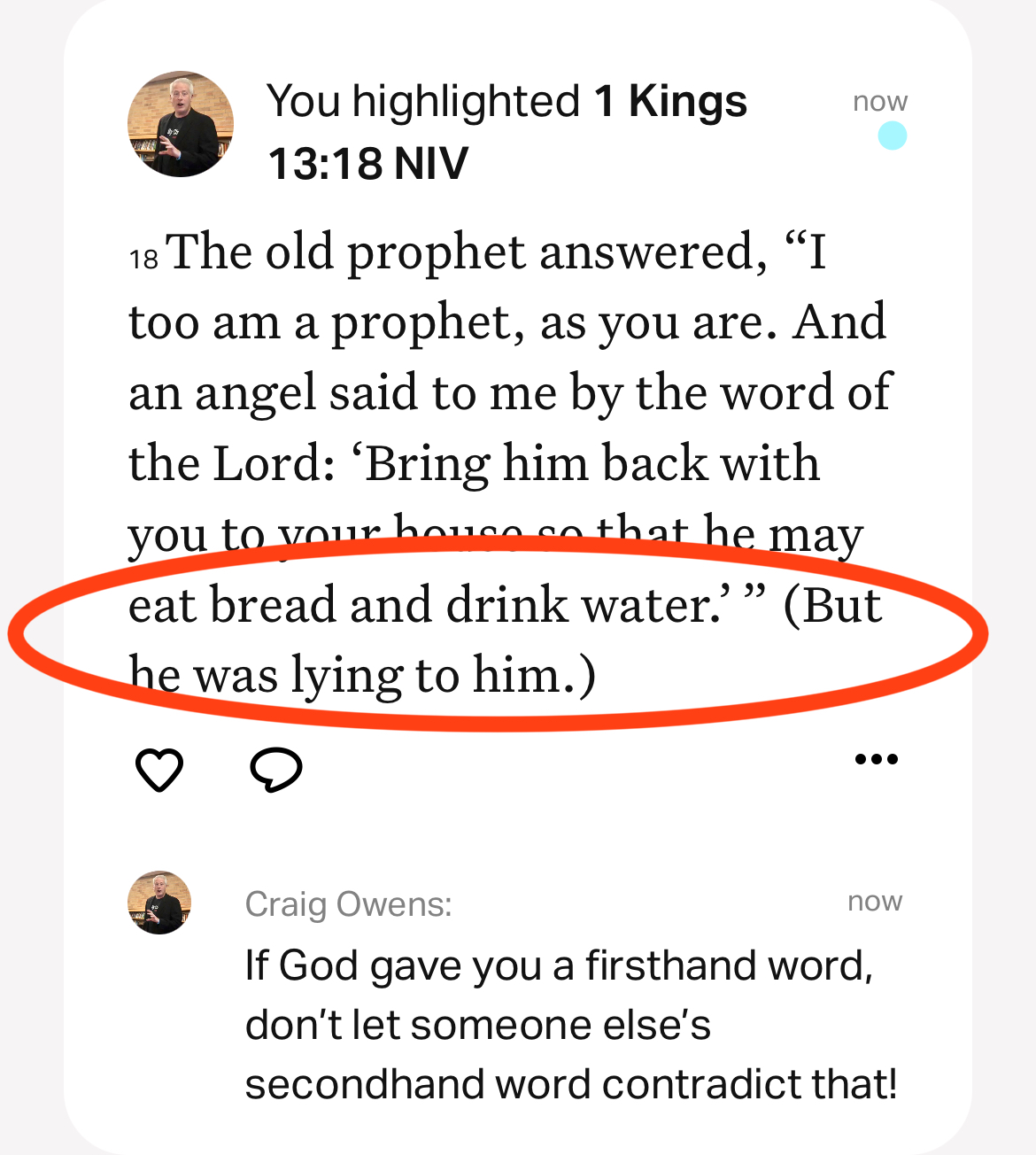
There is a very unusual story told in 1 Kings about a couple of unnamed prophets. One prophet heard from God, delivered the powerful warning God directed him to give, but then disobeyed God because of something another prophet told him that he had heard from God. I shared this commentary on YouVersion, “If God gave you a firsthand word, don’t let someone else’s secondhand word contradict that!”
“All religions are either a preview or a perversion of Christianity.” —C.S. Lewis
“If our relationships with other human beings are going to be meaningful, they will cost us something. Relationships are demanding.” —Herbert Wagemaker
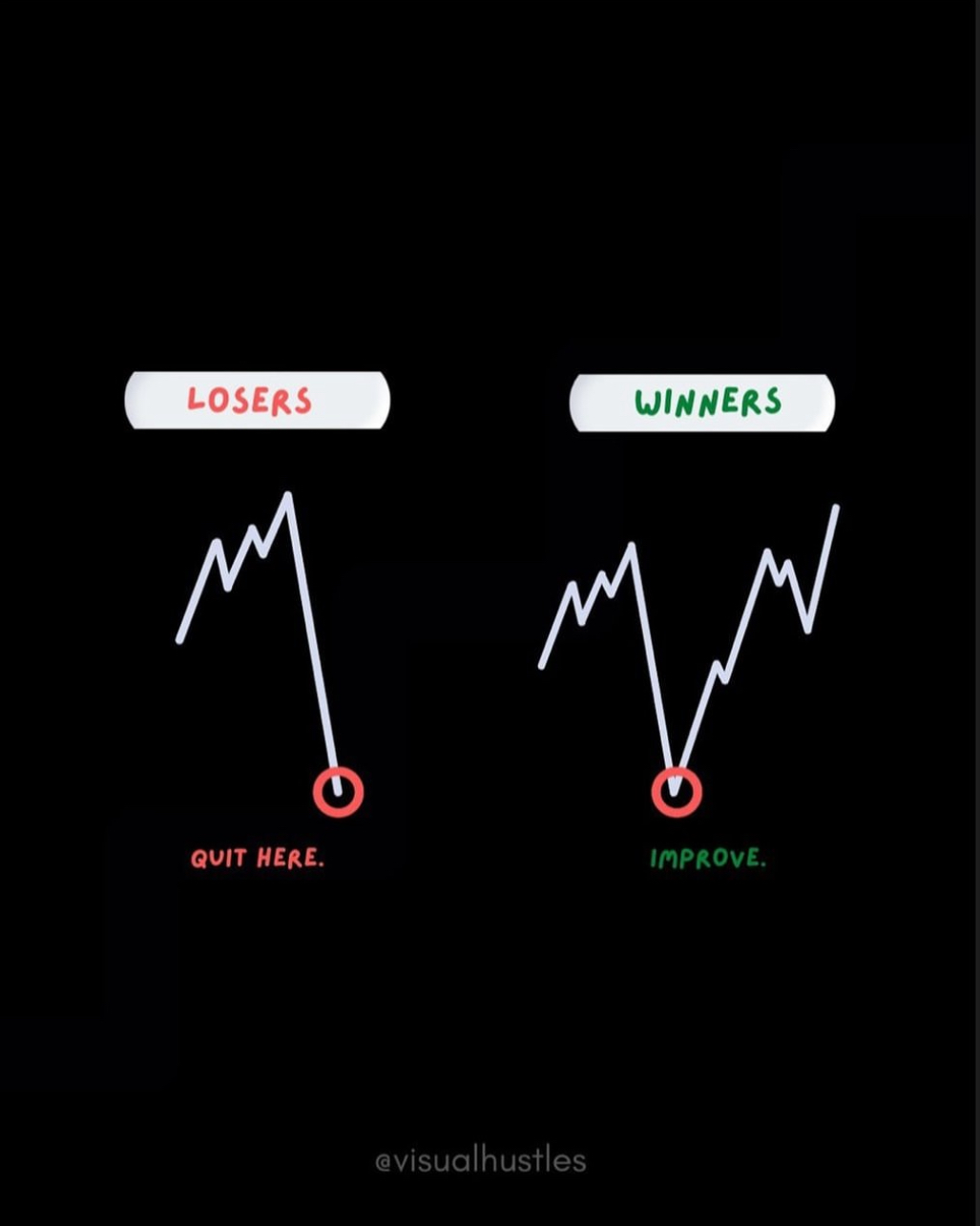
I saw this side-by-side graphic and so many thoughts about perseverance, grit, and stick-to-it-iveness came to mind. It is so true: we all have moments of stumbling. Losers tend to quit when they fall down, but winners learn something from their stumble, improve, and continue to grow. And then I came across this related quote from John D. Rockefeller, “I do not think that there is any other quality so essential to success of any kind as the quality of perseverance.”
Listen to the podcast of this post by clicking on the player below, and you can also subscribe on Apple, Spotify, or Audible.
Psalm 136 calls on us to season absolutely every circumstance and every thought with a reminder to be thankful to God for His everlasting love for us. In the 28 verses of this psalm, we are reminded twenty-eight times that “His love endures forever.”
At every instance we are reminded of God’s eternal attributes: His goodness and His kindness. And at every instance we are reminded to praise God for who He is.
In creation, He reveals His goodness.
In difficult places, He reveals His goodness.
In deliverance, He reveals His goodness.
In His miracles, He reveals His goodness.
In our celebration of His strength, He reveals His goodness.
In our confession of our weaknesses, He reveals His goodness.
In His daily provision, He reveals His goodness.
In keeping us close to Himself, He reveals His goodness.
In His eternal nature, He reveals His goodness.
In our thanks giving, we reveal His goodness to a searching world.
Never, ever miss an opportunity to give God thanks for His ever-enduring love!
This is a weekly series with things I’m reading and pondering from Charles Spurgeon. You can read the original seed thought here, or type “Thursdays With Spurgeon” in the search box to read more entries.
Listen to the podcast of this post by clicking on the player below, and you can also subscribe on Apple, Spotify, or Audible.
Heart’s Desire
Do not fret because of evildoers, nor be envious of the workers of iniquity.For they shall soon be cut down like the grass, and wither as the green herb. Trust in the Lord, and do good; dwell in the land, and feed on His faithfulness.Delight yourself also in the Lord, and He shall give you the desires of your heart. (Psalm 37:1-4)
There is no room for fretting if we remember that God is ours; there is every incentive for sacred enjoyment of the most elevated and ecstatic kind. Every name, attribute, word, or deed of Jehovah should be delightful to us, and in meditating on it our souls should be as glad as the epicurean who feeds delicately with a profound relish for his dainties.
A pleasant duty is here rewarded with another pleasure. People who delight in God desire or ask for nothing but will please God; hence it is safe to give them carte blanche.
When we only have eyes for our God, when our heart craves for only what our Savior can provide, when we have ears that tune out all but what the Holy Spirit whispers to us, then we are living in a place where our hearts are continually delighted with what God provides.
We have to trust the One who gave us His unshakable promises—Be delighted with the Lord. Then He will give you all your heart’s desires (v. 4 TLB). Be delighted with Him and He will—not “may” or “hopefully He will” but He will—give you ALL your heart’s desires! That’s because your desires align with His.
There is an ultimate reward in Heaven but there are incredibly satisfying rewards along the journey to Heaven as well. Take time every day to meditate on the boundless love that God has toward you, and let your heart be transformed so that you only crave the very best that your Heavenly Father has for you!
Listen to the podcast of this post by clicking on the player below, and you can also subscribe on Apple, Spotify, or Audible.
There’s a misconception that many people have about God’s laws: they think that they are intended to rob us of enjoyment, that they restrict our lives and remove our pursuit of happiness.
In actuality, the exact opposite is true. God is love (1 John 4:8). That means everything God does is rooted in His love for us. Including the laws He gives us. He loves us and wants us to stay in the place where we don’t experience the heartache, pain, and disappointment of missing out on His blessings.
God is also happy. Paul calls it “the glory of the blessed God” (1 Timothy 1:11). The word “blessed” can easily be translated as happy. God is happy and He wants us to share in this ultimate happiness.
Consider the blessings that are in first and last of the Ten Commandments:
The first commandment says there is only one God. Far from this being restrictive, it’s a huge blessing. I don’t have to search and compare, I don’t have to make a list of pros and cons and then settle on the best option, but I can enjoy the one and only true God.
The tenth commandment says I don’t need to crave anything outside of what God has given me. Again, this is a huge blessing because it tells me that my loving Father has given me all that I need, that He alone satisfies my cravings.
John Piper gave the essence of idolatry in this line: “Preferring other things above God.” This is why God delights for us to delight in Him. When we do, He is our sole focus. When He is our focus, we enjoy Him immensely and we reject anything that would remove our gaze from Him.
That’s why there is a continuous linkage in all 176 verses of Psalm 119 between God’s laws and our delight—between obedience and satisfaction. When we obey God, we experience His happiness.
The apostle Paul called Christians to live this way: “Whatever happens, conduct yourselves in a manner worthy of the gospel of Christ” (Philippians 1:27). Gospel literally means “good news.” What good news are we supposed to proclaim? The good news that God is happy and that He wants to say to us, “Come and share your Master’s happiness” (Matthew 25:21)!
When I was a kid I struggled with this question: Do I love God just because He first loved me? I thought, “That seems like a cop out. Am I really saying that the only reason I have for loving Him is that He went first?” But then I realized it couldn’t be any other way. How could I love an angry God? How could I ever expect to approach a God who knew all my sins and had the final say on my punishment, and was just waiting for a chance to get His hands on me?
I can only love a loving God. I can only love Him because He first loved me (see Romans 5:8).
In a similar way, I can only crave God because He first craved a relationship with me. Otherwise I’m setting myself up for unimaginable heartbreak and disappointment!
Jesus said it was His Father’s “good pleasure” to reveal Himself to us. No one knows the Son except the Father, and no one knows the Father except the Son. Our heavenly Father craved a relationship with us, so He revealed His Son Jesus to us so that Jesus could reveal the Father to us (see Matthew 11:25-30; John 14:7).
Just as we could only love God because He loved us first, we could only crave a relationship with God because He craved a relationship with us first. It was always His plan to adopt us into His family—this is what gives Him great pleasure (Ephesians 1:5). Then God works in us to fulfill His craving for us, which empowers us to find our deepest longings satisfied exclusively in Him (Philippians 2:13).
Sometimes we get a small taste or experience of earthly pleasure that quickly fades away. C.S. Lewis reminded us, “If I find in myself a desire which no experience in this world can satisfy, the most probable explanation is that I was made for another world.”
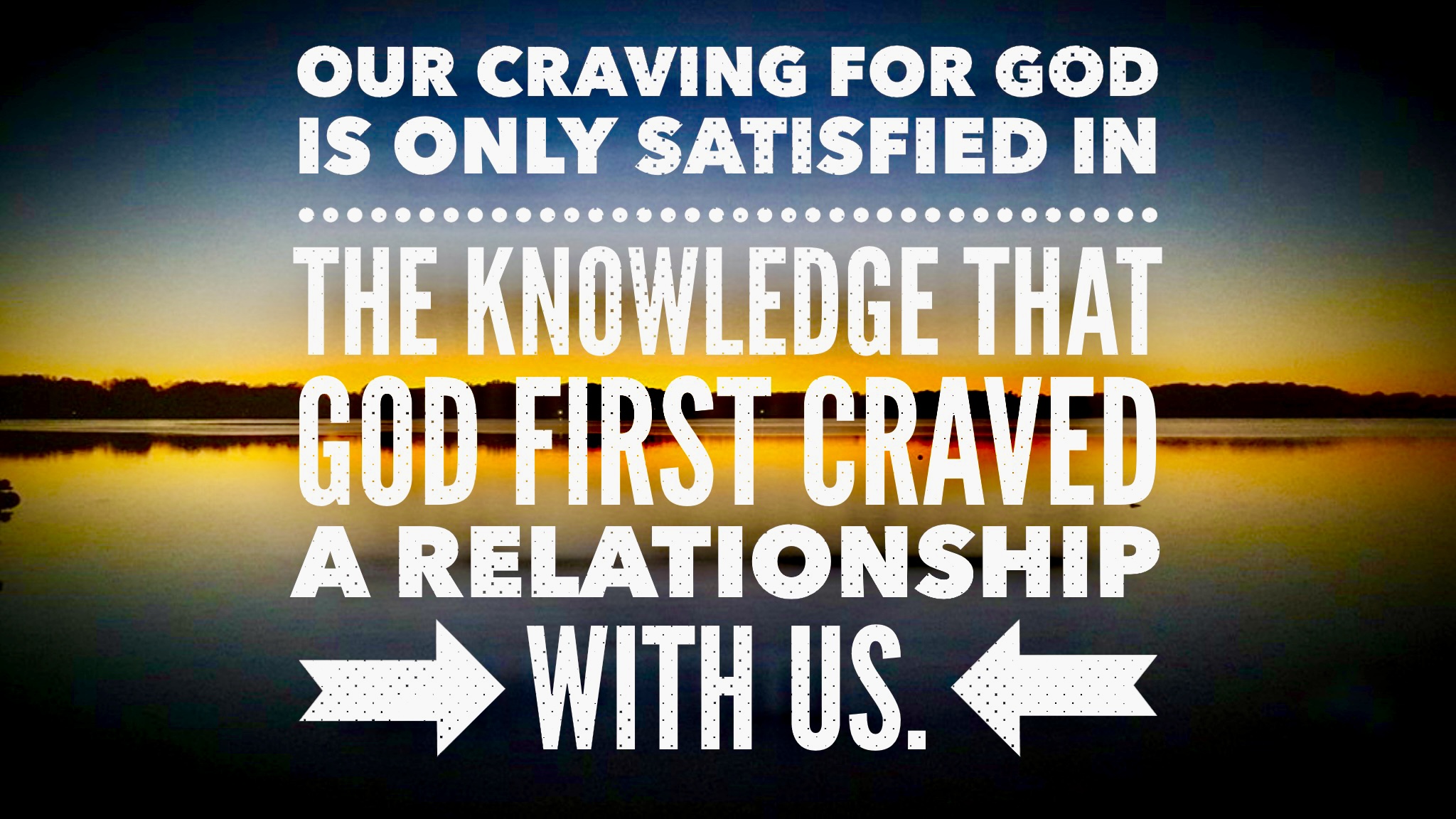
Our craving for God is only satisfied in the knowledge that God first craved a relationship with us. Only the intimacy of our Savior will fulfill our cravings. Anything else will end only in utter disappointment.
This is a weekly series with things I’m reading and pondering from Charles Spurgeon. You can read the original seed thought here, or type “Thursdays With Spurgeon” in the search box to read more entries.
Listen to the podcast of this post by clicking on the player below, and you can also subscribe on Apple, Spotify, or Audible.
Blessed Discipline
Blessed is the man whom You instruct, O Lord, and teach out of Your law, that You may give him rest from the days of adversity, until the pit is dug for the wicked. For the Lord will not cast off His people, nor will He forsake His inheritance. But judgment will return to righteousness, and all the upright in heart will follow it. (Psalm 94:12-15)
First, I will ask you to notice that God’s children are under instruction. Other children may run about and take holiday. They may wander into the woods, gather the flowers, and do very much what they like, but God’s own children have to go to school. This is a great privilege for them, although they do not always think so. Children are not often good judges of what is best for themselves. …
Some of us have learned much from the Lord’s chastening rod! For instance, we have learned the evil of sin. ‘Before I was afflicted I went astray, but now I keep Your Word’ (Psalm 119:67). … Do we not also learn by affliction our own frailty and our own impatience? We are wonderfully patient when we have nothing to suffer, and we are all great heroes and very courageous when there is no fighting to be done. …
Do we not, then, learn also the value of prayer? … Do we ever pray in such dead earnest as when everything seems to be sinking from under our feet and our sweetest cups are full of bitterness? … And then how precious the promises become! As we only see the stars when the shadows gather at night, so the promises shine out like newly kindled stars when we get into the night of affliction! …
And, oh, dear friends, how should we ever know the faithfulness of God if it were not for affliction? We might talk about it and theoretically understand it, but to try to prove the greatness of Jehovah’s love and the absolute certainty of His eternal faithfulness—this comes not except by the way of affliction and trial! …
O Lord, still use the rod if You see that it is necessary. But go on teaching us out of Your Word! We are slow to learn and poor scholars at best, but You may yet make something of us.
In one of my darkest times of affliction, I stumbled upon this poem from Robert Browning Hamilton:
I walked a mile with Pleasure—
She chattered all the way
But left me none the wiser
For all she had to say.
I walked a mile with Sorrow
And ne’er a word said she,
But, oh, the things I learned from her
When Sorrow walked with me.
If you’re going through a difficult time, don’t try to get out of it, but get closer into God’s presence. He is teaching you invaluable lessons during this trial.
God is doing something in me through wicked people and evil times.
But there is one more Selah in this chapter that we need to consider—Do not grant the wicked their desires, O Lord; do not let their plans succeed, or they will become proud. Selah. (v. 8)
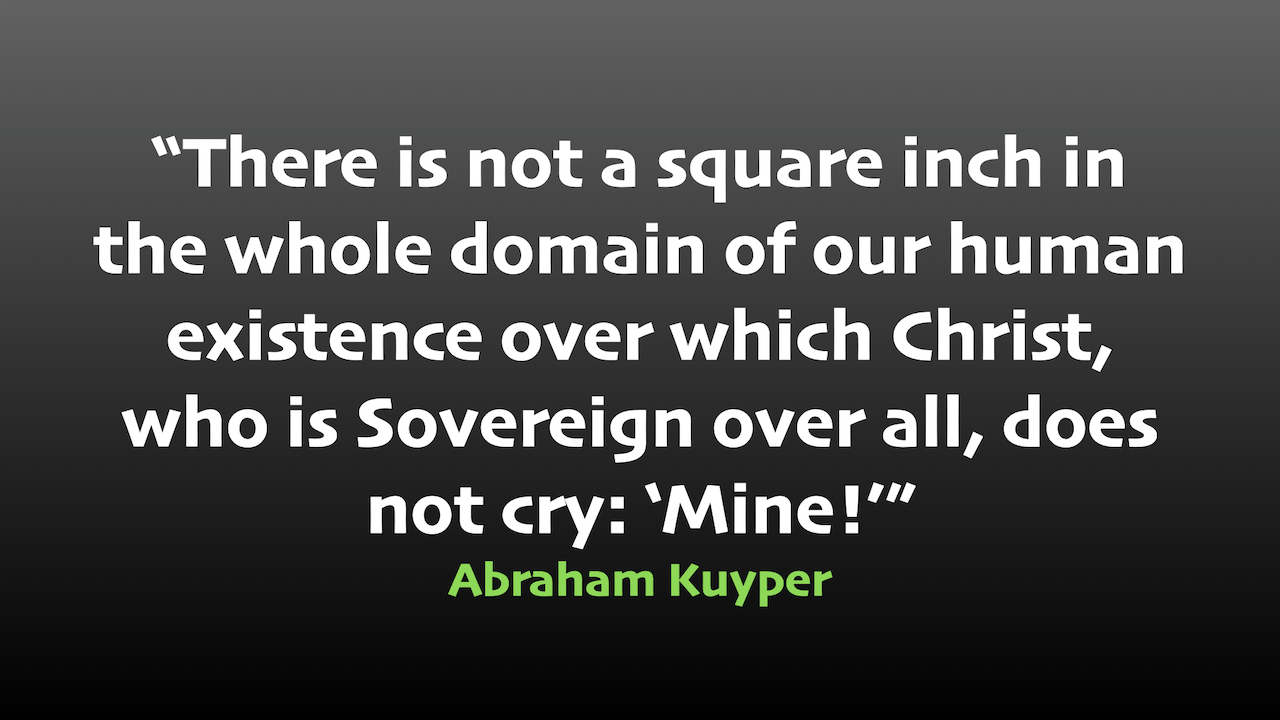
Most ofus would probably agree with Abraham Kuyper who said, “There is not a square inch in the whole domain of our human existence over which Christ, who is Sovereign over all, does not cry: ‘Mine!’”
But the amazing thing here is that God allows David—and you and me—to call Him mine! “O LORD, I say to You, ‘You are MY God’” (v. 6). David goes on to say that God is my strong deliverer who shields me against evildoers (v. 7).
But isn’t David’s God also the God of the wicked? Aren’t they a part of “the whole domain of human existence” that is His? Yes!
So that must mean that God wants even wicked people to call Him, “My God”!
This is exactly what Jesus told us: For God so loved the world [including wicked people] that He gave His one and only Son, that whoever [including wicked people] believes in Him shall not perish but have eternal life. For God did not send His Son into the world to condemn the world, but to save the world [including wicked people] through Him (John 3:16-17).
Just before this third Selah in verse 8 David prays that the plans of the wicked might be thwarted so that proud people don’t become even more proud. That seems okay. But after the Selah David seems to be asking God to let everything that wicked people have planned to boomerang back on them (vv. 9-11).
Hate isn’t the opposite of love, but apathy is the opposite of love. Hate is a very strong emotion that usually comes out when something we love or desire is thwarted or kept from us.
Just as we learned last week that God allows evil people and their slander and wickedness to prune us and make us more fruitful, can’t God give back to evil people exactly what they need to get their attention? Can’t He use their own evil plans for them just as He used them for us? Yes!
If God loves us—and He does—then He must hate anything that keeps us from Him.
If God loves wicked people—and He does—then He must also hate anything that keeps them from accepting the atoning work Jesus did for them on the Cross.
God is love. There is nothing you can do to make God love you any more. There is nothing an evil person can do to make God love them any less.
David’s third Selah is really his reminder that he must leave evil people to the only One who can discipline them in perfect measure. We have to leave evil people to God’s care—the only One who can rescue them. That’s why Jesus told us to “love your enemies and pray for those who persecute you” (Matthew 5:44).
David’s prayer in verses 9-13 does leave evil people in God’s hands, and it’s a prayer you and I can personalize for those whom we desire to know Jesus as their Savior.
It’s not God’s desire that any should perish. So let’s Selah to call God, “My God,” but to also pray that even the wicked people around us will come to the realization that through faith in Jesus, they too can cry out, “My God!”
God gave me a unique story when I was walking through a challenging time with a friend that I needed to leave to God’s care. I called the story The Parable of the Lifeguard. You can watch it in the video below, or you can read it by clicking here.
This is a weekly series with things I’m reading and pondering from Charles Spurgeon. You can read the original seed thought here, or type “Thursdays With Spurgeon” in the search box to read more entries.
Listen to the podcast of this post by clicking on the player below, and you can also subscribe on Apple, Spotify, or Audible.
Proof Of God’s Love
I have written for him the great things of My law, but they were considered a strange thing. (Hosea 8:12)
It is no mean proof of His goodness, that He stoops to, rebuke His erring creatures. It is a great argument of His gracious disposition, that He bows His head to notice terrestrial affairs. … He might dwell alone, far, far above this world, up in the seventh heaven, and look down with calm and silent indifference upon all the doings of His creatures. He might do as the heathens supposed their Jove did, sit in perpetual silence, sometimes nodding his awful head to make the Fates move as he pleased. But Jove never thought of the little things of earth, disposing of them as beneath his notice, engrossed within his own being, swallowed up within himself, living alone and retired. …
We see from our text that God looks upon man, for He says of Ephraim, ‘I have written for him the great things of My law, but they were considered a strange thing.’ But see how when He observes the sin of man He does not dash him away and spurn him with His foot? He does not shake him by the neck over the gulf of hell until his brain does reel and then drop him forever. But rather, He comes down from heaven to plead with His creatures. He argues with them, He puts Himself, as it were, upon a level with the sinner, states His grievances, and pleads His claim.
In all their affliction He was afflicted, and the Angel of His Presence saved them; in His love and in His pity He redeemed them; and He bore them and carried them all the days of old.
But they rebelled and grieved His Holy Spirit; so He turned Himself against them as an enemy, and He fought against them. (Isaiah 63:9-10)
In His love, God both carries us in our adversity AND turns to confront us in our waywardness. BOTH of these actions are proof of His love. My friend, wherever you are and whatever you may be facing, be assured of God’s unquenchable love for you!