7 Quotes On Conquering Fear From “The Seven Laws Of Love”

The Seven Laws Of Love

In The Seven Laws Of Love, Dave Willis gives us some highly practical, biblically-based counsel for investing in all of our relationships. Normally when I share quotes from books, I share all of them at once, but for this book I felt like it would be good to share these quotes a bit more slowly, to give you time to read them and apply them.

The seven laws Dave identifies are:

  1. Love requires commitment (read the quotes here)
  2. Love selflessly sacrifices (read the quotes here)
  3. Love speaks truth (read the quotes here)
  4. Love conquers fear
  5. Love offers grace
  6. Love brings healing
  7. Love lives forever

From law #4, here are some quotes on how love conquers fear—

“Fear may be something natural, but love represents something supernatural. Love has the power to set a positive course for your life and chase away your fears in the process.”

“We do have the power to shape the future, but unless you actually own a time machine, worrying about the past is a complete waste of your time and energy. If you want to live a life of love and the freedom it brings, you’ve got to make peace with your past. We should learn from our past and build on our past but not ever dwell on our past. Just like the rearview mirror in your car, looking at the past gives us perspective; but if you’re staring at it all the time, you’re going to cause a wreck. We need to embrace the moment we are in. Don’t let regrets from yesterday or worries about tomorrow rob you of the peace and blessings God has for you today!”

“The truth is that your past has helped shape your character, but it has nothing to do with your identity. Your identity comes from God alone, and He loves you unconditionally.”

“Don’t get trapped trying to recreate the good old days when your best days are still to come.”

“There isn’t enough room in your heart for both fear and faith, so each day you must decide which one gets to stay.”

“Your character should always be stronger than your circumstances.”

“Your struggles always lead to strength.”

Check out my review of The Seven Laws Of Love by clicking here.

Watch for more quotes from the other laws of love explained in this book throughout this week.

I Wish My Pastor Knew…

I wish my pastor knewOur youth pastor passed out cards to the youth group, and told them they could anonymously finish this sentence: “I wish my pastor knew…

  • … that I regret a lot of my past
  • … I don’t know if I believe in my religion fully
  • … I need to talk to God more
  • … I am nervous about school
  • … even though I act happy I’m the total opposite
  • … I’m really scared to go back to school. I’m scared that I’m going to get really depressed again. I am already struggling with self-harm and being so emotionally tired. I’m scared it’s going to get worse. I just want to be okay. I want to be better.
  • … I have a hard time trying not to hate myself
  • … sometimes I’m very selfish and not Christ-like … a lot of the time actually
  • … that I’m troubled with life
  • … I was losing my mind, feel like I’m not where I need to be, I don’t know where I belong
  • … that I have very little faith, and I am trying to get closer to God. And that I live a sin
  • … about the situation with my brother and how we haven’t spoken in six years

Wow!

Here’s what I learned—

  1. I need to pray more for our youth pastors a lot more than I have been!
  2. Lots of people are hurting. Not just youth, but adults too.
  3. Jesus loves hurting people.
  4. What a privilege—and responsibility—I have as a pastor to show the love of Jesus!

Links & Quotes

link quote

“Christ did not risk death. He embraced it. That is precisely why He came: not to be served but to serve and give His life a ransom for many (Mark 10:45). … Christmas is for freedom. Freedom from the fear of death. Jesus took our nature in Bethlehem, to die our death in Jerusalem, that we might be fearless in our city. Yes, fearless. Because if the biggest threat to my joy is gone, then why should I fret over the little ones?” —John Piper

“The danger of all dangers would be to lose trust and confidence in the mercy of God. … To distrust Him would be a far more terrible thing than any physical evil which all the enemies of God put together could inflict on us, for without God’s permission neither the devils nor their human ministers could hinder us in the slightest degree.” —Francis Xavier

“Each instant of present labor is to be graciously repaid with a million ages of glory.” —J.W. Alexander

“If God did so much for us when enemies, what will He do, or rather, what will He not do, for us now that we are friends? … If Christ’s death did so much for us, what will not His life do?” —Horatius Bonar

“Ignorant men raise questions that wise men answered a thousand years ago.” —Goethe

[VIDEO] Tim Dilena shares some practical keys for a consistent prayer life.

“I would exhort those who have entertained an hope of their being true converts, and yet since their supposed conversion have left off the duty of secret prayer, and do ordinarily allow themselves in the omission of it, to throw away their hope. If you have left off calling upon God, it is time for you to leave off hoping and flattering yourselves with an imagination that you are the children of God.” —Jonathan Edwards

“For too many of us, Christian experience is episodic rather than continuous, with a few religious experiences interspersed throughout our lives, which are otherwise lived on our own terms. Such people can see little need or use for prayer.” —Ralph Lehman

Eric Metaxas helps us get ready for Religious Freedom Day on January 16.

[VIDEO] Not just at Christmas when you are receiving gifts, but all year long we should be people of appreciation. Check out John Maxwell’s short video—

https://youtu.be/Y592ioZqDTw

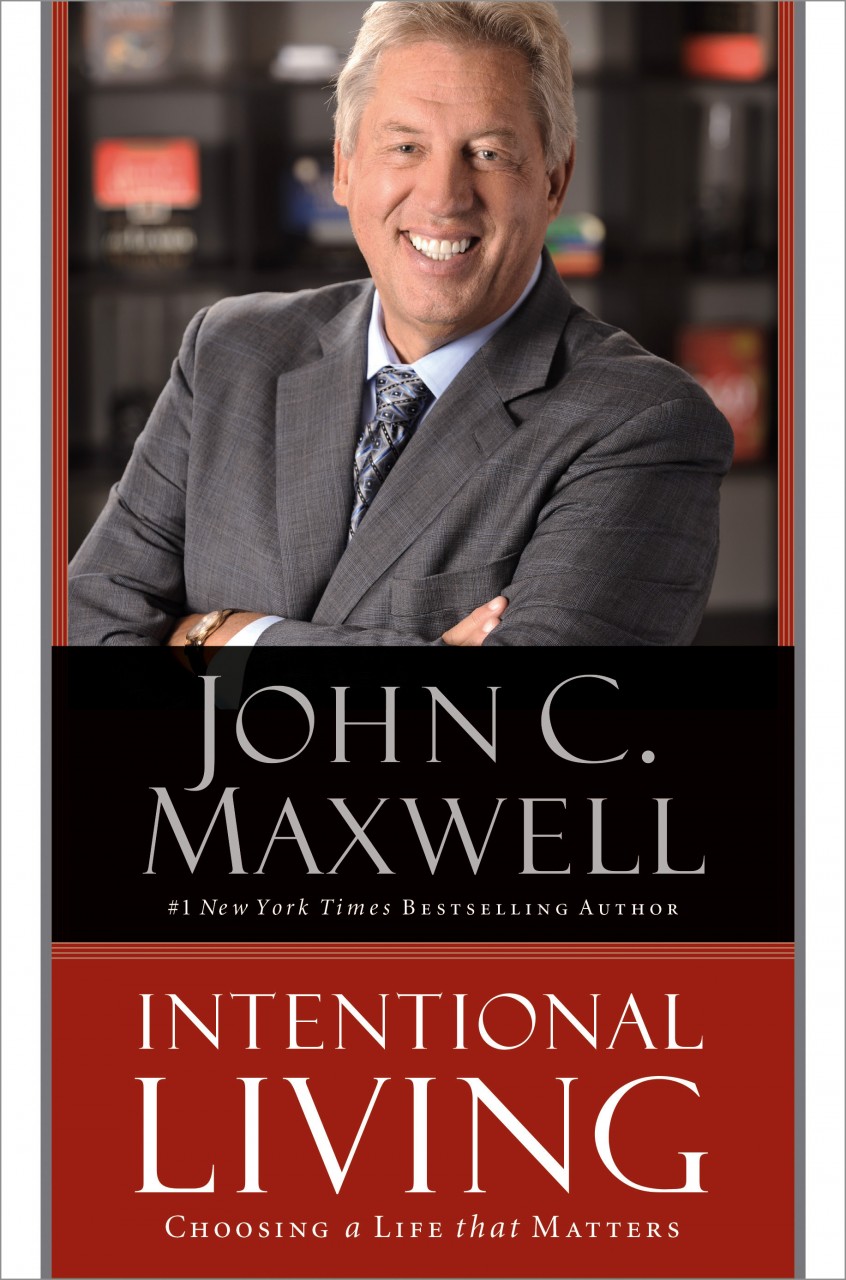
12 More Quotes From “Intentional Living”

Intentional LivingThere’s always tons of great content in a John Maxwell book, and Intentional Living was no exception. Here’s the second set of quotes from Dr. Maxwell from this book.

“Self-centeredness and fulfillment cannot peacefully coexist. They’re incompatible.”

“As you start your day, are you wondering what you will reap, or are you wondering what you will sow? Are you waiting for others to do something for you, or are you busy looking for something to do for others?”

“If you only place a small value upon yourself, rest assured that the rest of the world will not raise the price. And as a result of your own low self-esteem and poor sense of self-worth, you will fail to make a positive difference in the lives of others because you’ll think you have little to offer.”

“History tells us that in every age there comes a time when leaders must come forth to meet the needs of the hour. Therefore, there is no potential leader who does not have an opportunity to better mankind.”

“Once you taste significance, success will never again satisfy you.”

“I know without a doubt that every day since I started asking God to bring me people who desired significance, He has been sending them into my life so that we could make a difference together. And God continues to send them.”

“Almost everything you and I want is on the other side of fear. How do you handle that? … I don’t believe God gives me a dream to frustrate me. He gives me a dream to be fulfilled. … Fear is the most prevalent reason why people stop. Faith is what makes people start. Fear is the key that locks the door to the resources. Faith is the key that opens that door. When your dream of significance is right, it should increase your faith. … Faith should help you see the invisible and do the impossible.”

“There are no great men or women. There are just great challenges that ordinary people like you and me are willing to tackle. … Nothing separates passionate people from passive people like a call to step up.”

“Dreams often come one size too big so that we can grow into them.”

“Most people miss opportunities in life, not because the opportunity wasn’t there, but because they didn’t have a clue what it looked like when it arrived. They never took the time to figure out what they were looking for. It’s all about intentionality. You have to know what you’re looking for if you want to find it.”

“When partnering with people, don’t choose based on what they say they can do, or based on what they did once. Choose based on their regular behaviors. That’s what tells you what their values are. Too often our choices are made by what we could or think we should do rather than what we usually do. We are all human, so we should give everyone the benefit of the doubt. But we also need to be realistic.”

“Plans rarely stay the same, and are scrapped or adjusted as needed. Vision is only refined by failure. It’s important to remain stubborn about your vision, but flexible with your plan.”

To read the first set of Maxwell quotes from Intentional Living, please click here.

To read some of the quotes that John Maxwell used in his book, please click here.

To read my review of Intentional Living, please click here.

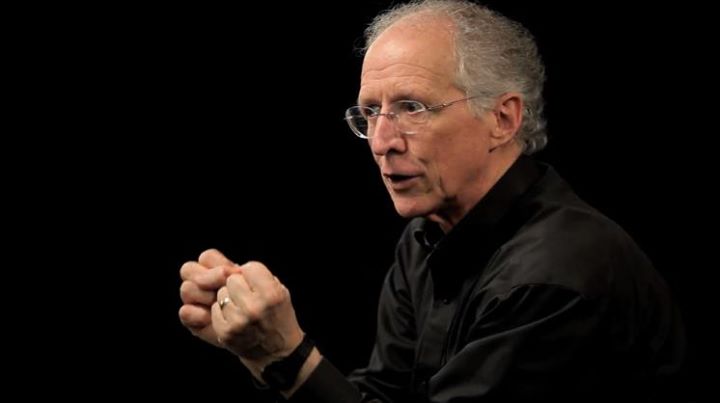
John Piper On Fear

I read this in a devotional from John Piper this morning, and wanted to pass it on.

John PiperOne possible response to the truth that our anxiety is rooted in unbelief goes like this: “I have to deal with feelings of anxiety almost every day; and so I feel like my faith in God’s grace must be totally inadequate. So I wonder if I can have any assurance of being saved at all.”

My response to this concern is: Suppose you are in a car race and your enemy, who doesn’t want you to finish the race, throws mud on your windshield. The fact that you temporarily lose sight of your goal and start to swerve does not mean that you are going to quit the race.

And it certainly doesn’t mean that you are on the wrong racetrack. Otherwise, the enemy wouldn’t bother you at all. What it means is that you should turn on your windshield wipers.

When anxiety strikes and blurs our vision of God’s glory and the greatness of the future that He plans for us, this does not mean that we are faithless, or that we will not make it to heaven. It means our faith is being attacked.

At first blow, our belief in God’s promises may sputter and swerve. But whether we stay on track and make it to the finish line depends on whether, by grace, we set in motion a process of resistance—whether we fight back against the unbelief of anxiety. Will we turn on the windshield wipers?

Psalm 56:3 says, “When I am afraid, I put my trust in You.”

Notice: it does not say, “I never struggle with fear.” Fear strikes, and the battle begins. So the Bible does not assume that true believers will have no anxieties. Instead, the Bible tells us how to fight when they strike. (emphasis mine)

Check out this and other great devotional resources through BibleGateway.com by clicking here.

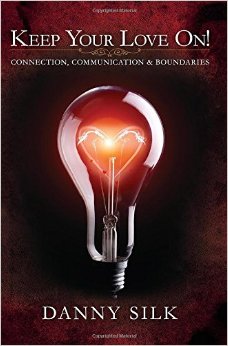
8 More Powerful Relationship Quotes

Keep Your Love OnI have shared a couple of sets of quotes from Danny Silk’s book Keep Your Love On! (which you can read here and here). I have also posted a review on this book here.

This book is a must-read for pastors or counselors who do marriage or family counseling. This is also an excellent book to read if you have a relationship in your life that you would like to see healed or strengthened. Check out a few more quotes below.

“If you cannot communicate your needs to another person clearly, it is obviously going to be very difficult for that person to meet them. That’s why one of the primary tasks of reaching maturity is learning how to express thoughts, feelings, and needs. Those who never learn this skill, however, expect relationships to function without it. They say things like, ‘Well, if you love me, then you will just know what I need. Didn’t you notice that that bothered me? Haven’t you been paying attention? I can’t believe you don’t know that about me.’ Where does this desire or expectation that loved ones have a telepathic ability to know our feelings and needs come from? It comes from powerlessness and fear. It comes from dreaming that everything will turn out magically without actually having to communicate. Powerless people want to win the lottery, get their dream girl/guy with minimal effort, lose weight without exercise, and get their needs met without ever having to say a word.”

“The reason we can’t get our needs met without expressing them is that we were designed to have our needs met through a relational exchange. God made us this way. … Think about it. God, the one Person in the universe Who knows all things, and knows us incomparably better than we know ourselves, never says, ‘Well, obviously I know your needs, so you don’t need to tell Me about them.’ Instead, He repeatedly tells us to ask Him for what we need, and gives us some of the most profound, beautiful, and honest language for doing so—like the Lord’s Prayer, and most of the Psalms. He won’t meet our needs outside of a connection where we have to show up and crack our hearts open to Him, because that very connection is what we need to have our needs met in the first place.”

“If you want to protect your connection and build trust by always communicating respectfully, then your guiding rule must be, ‘It’s my job to tell you about me, and your job to tell me about you.’ The best tool for telling another person about you is an ‘I message.’ The basic structure of the ‘I message’ is: ‘I feel [emotion] when [described experience] and I need to feel [emotion].’” 

“As you construct an ‘I message,’ make sure that you are really expressing a feeling, not an opinion. … If you start to say, ‘I feel like…’ you should stop and check yourself—because what is most likely going to follow is not a feeling, but a judgment. And a judgment statement is actually an expression of mistrust, not trust.”

“Intimacy—‘into-me-see’—is created between two people who can say, ‘We can be ourselves together because you can see into me and I can see into you.’ The experience of intimacy—of being completely known and accepted, and completely knowing and accepting in return—is the most satisfying experience we can have as humans. Intimacy in a safe place brings euphoria. Remember the Garden of Eden? Paradise was the place where a man and a woman were unafraid to be vulnerable and intimate with each other in every way. The problem is that most of us are scared to death to be vulnerable in relationships. The reason is simple: In being vulnerable, we reach for our greatest need while risking our greatest pain.”

“Fear of rejection and shame sets us up to fall for the enemy’s counterfeits. Ever since sin entered the world and humanity became disconnected from God, we have been looking for ways to get our needs met outside of relationship or any scenario where we are required to be vulnerable and risk our hearts. We have always desperately sought the benefits of intimacy without wanting to pay the price. And the enemy continues to offer us the euphoric experiences we think we can control—things like alcohol, drugs, sex, Internet pornography, shopping, carbohydrates, adrenaline, or cash. We use these things to give ourselves a euphoric release and take care of our needs. But the counterfeits always have ugly repercussions, like drunk drivers killing innocent people, young kids destroying their brains, men ignoring the beautiful real women beside them in favor of the images, serious debt, morbid obesity and the host of diseases that accompany it, thrill seekers slowly becoming numb to reality, and selfish jerks not caring who they step on to get what they want. Counterfeits never come through.”

“Every respectful conversation needs one speaker and one listener at all times. … The listening role is the true servant role in a respectful conversation. The listener affirms, ‘Right now, this conversation is about you and your needs. I am here to help you figure them out and find a way to help you get them met.’ But in the end, the listener is really the winner. If I listen well, I will have two vital pieces of information—what you need and what I need to do. With these two pieces of information, I start to identify and take ownership of the problem and create an effective solution.”

“A skilled listener with a servant’s heart is the deadliest weapon against the fear-bombs that threaten connection.”

9 More Quotes From “Keep Your Love On!”

Keep Your Love OnKeep Your Love On! is an outstanding resource for anyone who wants to repair or strengthen a relationship. As I said in my book review, I think pastors and marriage counselors should definitely get a copy of this book. Here are a few more quotes.

“If you want to preserve relationships, then you must learn to respond instead of react to fear and pain. Responding does not come naturally. You can react without thinking, but you cannot respond without training your mind to think, your will to choose, and your body to obey. … Powerful people are not slaves to their instincts. Powerful people can respond with love in the face of pain and fear. This ‘response-ability’ is essential to building healthy relationships.”

“If you were raised with a powerless, fear-driven mindset based on the belief that you can control people and they can control you, then you will naturally perceive God as a controlling Punisher. You will take the laws of the Old Testament—all the verses and stories about wrath, judgment, and the fear of the Lord—and conclude, ‘See, God wants to control us, and we need to be controlled.’ … The problem is that the Bible doesn’t show us a God Who is pursuing the goal of distance between Himself and a bunch of scary sinners. Instead, the Bible reveals a God Who is relentlessly closing that distance and paying the ultimate price to repair the disconnection we created in our relationship.”

“Fear and love are enemies. They come from two opposing kingdoms. Fear comes from the devil, who would like nothing more than to keep you permanently disconnected and isolated. Love comes from God, Who is always working to heal and restore your connection with Him and other people and bring you into healthy, life-giving relationships. … When Paul told Timothy that the spirit of love is also the spirit of power and a sound mind, he implied that its opposite, the spirit of fear, is the spirit of powerlessness and a weak, divided mind. When you grow up partnering with the spirit of fear, as most of us do, you learn to simply hand over your brain and your power, letting fear take control. But as soon as you decide to partner with the spirit of love, you have to think and make powerful choices.”

“Do you want to win the battle between fear and love in your relationships? You can start by making these two fundamental commitments: (1) It’s my job to control myself. I do not get to control other people. (2) My number-one goal and priority in relationships is building and protecting connection.”

“Each display of love, no matter how seemingly small, is a powerful act of spiritual warfare that removes anxiety from the environment, replaces it with freedom and safety, and invites each person to bring his or her best self forward in the relationship.”

“True honor is the practice of two powerful people putting one another before themselves, empowering one another, working together to meet one another’s needs, and adjusting as necessary in order to move together toward the shared goal of the relationship.”

“In order for us to practice self-control, we must have a goal. We must have something we are saying ‘Yes’ to, which necessarily comes with things that we must say ‘No’ to. … When we find ourselves with more freedom than self-control, then that freedom erodes the quality of our life and friendships. Self-control is what allows us to manage increasing levels of freedom in our life and relationships.”

“When you put a person in the position of God, you set him or her up for failure. … Mysterious as it is, making ourselves accountable to God and putting ourselves under His authority is the only way we can become powerful and learn to govern ourselves. … When two people are consistently pursuing a connection with the Perfect One, that connection will set the pace for their connection with each other. They will be learning to love from Love Himself, which can only bring the best into their relationship.”

“The faster you can get to the question, ‘What do you need?’ the faster you can start doing something about it. Unfortunately, because many people are not used to being listened to, they don’t know what they need, or how to communicate it. They think they have to present a solid case for someone to help them, agree with them, or change for them.”

You can read the the first batch of quotes I shared here.

My book review is posted here.

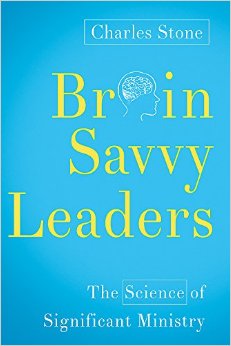
10 Quotes On Emotional Health From “Brain Savvy-Leaders”

Brain-Savvy LeadersOur emotions start in our brain. Charles Stone wrote a very helpful book called Brain-Savvy Leaders, in which he covers a lot of ground inside our heads. One aspect is our emotional health. I encourage you to read my review of this book by clicking here. Below are some quotes Charles shared on our emotional health.

“Gratefulness is actually good for brain and body health.” 

“When the emotionality of leaders takes over, they compromise their ability to lead well in these ways:

  • impulse can overwhelm intention
  • imagination gets pushed aside by instinct
  • defensiveness stifles healthy positions
  • automatic behavior shuts down reflective thought
  • emotionality gets in the way of intentionality.”

“Fear, conscious and unconscious, is prompted by the amygdala. The brain naturally focuses on problems and the negative. It overestimates threats and underestimates opportunities. In fact, two-thirds of the brain cells in our amygdala are primed for negativity and fear. Negative networks in our brain outweigh positive ones by five to one. And negative emotions are more easily consolidated (made more permanent) into our long-term memory than positive emotions.”

“Fear can even be subconscious, especially if we’re surrounded by bad news, critical people, or if our self-talk is constantly negative.”

“Neuroscientists have found that stuffing, denying, or a ignoring our emotions reinforces them, affects short-term memory, increases blood pressure, and robs our brain’s prefrontal cortex of the mental energy it needs.”

“Although it may seem counterintuitive, tagging your emotions, through labeling and naming them by putting feelings into words, actually recruits our impulse break and dampens activity in our panic alarm.”

“Anger is the wind that blows out the lamp of the mind.” —Chinese Proverb

“Since our brains process and remember bad events more thoroughly than good ones…it’s vital that we develop the discipline of being aware of our thoughts. … Thinking about our thinking is called ‘metacognition.’”

“Emotions play a significant role in decision-making and influence how well your team will embrace change. Just presenting facts without engaging positive and hopeful emotions will seldom move your team forward. The brain can only handle so much change at once. Trying to create too much change too quickly can engage the brain’s fear center and cause an away response, thus hindering change.”

“In one research study in Israel, Dr. Tal Shafir looked at the impact of movement on the brain of twenty-two young male and female participants. They looked at video clips of actors performing various emotions that corresponded to sad, fearful, happy, or neutral. Happy movements included raising their arms in the air, skipping, and jumping. Sad movements included closing their chests and slumping forward. The participants then either mimicked the movements or imagined themselves doing them. The emotions they reported mirrored the corresponding movements. So, if you need a mood boost, keep a good posture or throw your arms up and out into the air.”

Previously I shared some other quotes from this book on how we learn, and on how to keep our brain healthy. Please check these out too.

Links & Quotes

link quote

“People most affected by fear are those who hang around negative people. If you’re going to control the negative thoughts in your life, you’ve got to get away from negative people as much as you can.” —Rick Warren

“Liberty cannot be established without morality, nor morality without faith.” —Horace Greeley

“It’s natural enough in our species, as in others, that the young birds should show off their plumage—in the mating season. But the trouble in the modern world is that there’s a tendency to rush all the birds on to that age as soon as possible and then keep them there as late as possible, thus losing all the real value of the other parts of life in a senseless, pitiful attempt to prolong what, after all, is neither its wisest, its happiest, or most innocent period. I suspect merely commercial motives are behind it all: for it is at the showing-off age that birds of both sexes have least sales resistance!” —C.S. Lewis

“Don’t make a decision, large or small, without sitting before God with an open Bible, an open heart, and open ears. Philippians 2:13 says, ‘God is working in you to help you want to do and be able to do what pleases Him.’” —Max Lucado

“Strange as it may seem, one of the primary purposes of being shaken by suffering is to make our faith more unshakable. Faith is like muscle tissue: if you stress it to the limit, it gets stronger, not weaker. That’s what James means here [James 1:2-3]. When your faith is threatened and tested and stretched to the breaking point, the result is greater capacity to endure. … If you think your suffering is pointless, or that God is not in control, or that He is whimsical or cruel, then your suffering will drive you from God, instead of driving you from everything but God—as it should. So it is crucial that faith in God’s grace includes the faith that He gives grace through suffering.” —John Piper

“The promise, made when I am in love and because I am in love, to be true to the beloved as long as I live, commits me to being true even if I cease to be in love. A promise must be about things that I can do, about actions: no one can promise to go on feeling in a certain way. He might as well promise never to have a headache or always to feel hungry.” —C.S. Lewis

“It’s the lives of the saints, not the arguments of the theologians and philosophers, that covert people.” — Pope Benedict XVI

Links & Quotes

link quote

“‘And Enoch walked with God’ [Genesis 5:24]. If so much as this can be truly said of you and me after our decease, we shall not have any reason to complain that we have lived in vain.” —George Whitefield

“A neglect of secret prayer has been frequently an inlet to many spiritual diseases, and has been attended with fatal consequences.” —George Whitefield

“You have heard many men’s dying words, and these are mine: A life spent in communion with God is the pleasantest life in the world.” —Matthew Henry, to a friend when near his death

Sgt. Jason Kelley is a wonderful asset to my hometown, and our surrounding area. So I couldn’t be happier that he has been named Kent County Deputy of the Year!

We are losing a pastor who has been so involved in our city. Pastor Tom Holloway is moving to South Carolina, and I am going to miss him.

A U.S. Army chaplain has found an innovative way to water baptize soldiers. Love it!

Eric Metaxas asks, “How can anyone defend Planned Parenthood after the sickening video came to light this week?” Check out his insightful answer.

[VIDEO] Here is the video from another Periscope broadcast I did about handling fear—