Links & Quotes

In biblical times, the Jews looked down on the Samaritans. But not Jesus. One of His longest conversations is with a Samaritan woman. If He had a poor attitude about her, she would have felt that. Instead, she felt His love. Jesus died so that “whoever believes in Him would not die but would have eternal life.” We need to treat everyone like one of the whoever’s that Jesus died to save.

I have a lot of new video content on my YouTube channel every week. Please check it out and subscribe so you don’t miss anything.

One hundred years ago, William M. Faux called the churches in the Assemblies of God to pray more for our missionaries. “Pray, beloved, pray for missions. Are more workers needed? Yes. Praying is the secret of securing them. Are more funds needed? Yes. Prayer is the force that opens men’s hearts to give to God their resources. Is greater spirituality needed? Yes, surely. Prayer is the agency that brings greater spirituality to the entire church (Matthew 9:38). Louder than the Macedonian cry ‘Come over and help us,’ which rang out to Paul, sounds the cry today, ‘Brethren, pray for us.’ Let the Scripture warning ring in our souls—‘God forbid that I should sin against the Lord in ceasing to pray for you.’ Prayer is the greatest force that we can wield. It is the greatest talent which God has granted us. And this talent He has given to every Christian.”

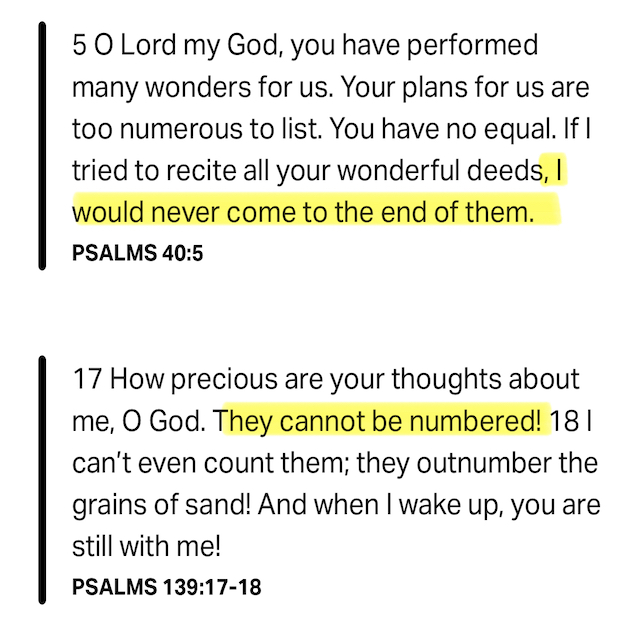
“Faith knows that every seashore on earth has less sand than God has wondrous deeds and thoughts toward us.” —Tanner Swanson

“I had always vaguely felt facts to be miracles in the sense that they are wonderful: now I began to think them miracles in the stricter sense that they were willful. I mean that they were, or might be, repeated exercises of some will. In short, I had always believed that the world involved magic: now I thought that perhaps it involved a magician. And this pointed a profound emotion always present and sub-conscious; that this world of ours has some purpose; and if there is a purpose, there is a person. I had always felt life first as a story: and if there is a story there is a story-teller.” —G.K. Chesterton 

John Piper discusses how Christian apologists can contend for the faith properly without sliding into “word fights.” 

Links & Quotes

Don’t judge your creative efforts by the world’s likes (or even by its silence). If you did your best with the talents that God gave you, the applause from nail-scarred hands is all that really matters.

I have a lot of new video content on my YouTube channel every week. Please check it out and subscribe so you don’t miss anything.

“It will be vain for me to stock my library, or organize societies, or project schemes, if I neglect the culture of myself; for books, and agencies, and systems, are only remotely instruments of my holy calling; my own spirit, soul, and body, are my nearest machinery for sacred service; my spiritual faculties, and my inner life, are my battle axe and weapons of war.” —Charles Spurgeon 

John Piper shares four observations and applications from Philippians 4:8 in answer to a question about how to guard our minds from the impurity in the world. 

“A man who has faith must be prepared not only to be a martyr, but to be a fool.” —G.K. Chesterton 

The paleontological evidence of dinosaur fossils is most easily explained by the Flood described in the Bible. ICR reports, “Virtually every dinosaur fossil ever found is ensconced in sedimentary or (rarely) volcanic sediments, indicating a sudden and catastrophic deposition. … So why would paleontologists entertain bizarre extinction explanations such as slipped discs, sunspots, or magnetic reversals? Because if a scientist dismisses the global Flood out of hand, then anything goes when trying to explain the dinosaur demise.”

Don’t Let This One Thing Block God’s Blessings

Listen to the podcast of this post by clicking on the player below, and you can also subscribe on AppleSpotify, or Audible. 

There is one word that people seem to speak that is blocking the blessings that God wants to send to them. 

Check out this latest episode of The Podcast. 

Get into God’s Word, and let His Word build your faith to cling to Him in faith until His promise ultimately appears. Don’t let the negative people around you, or your current circumstance, or anything else cause you to walk away from the blessing God wants to give you! 

The Scriptures I reference in this episode are Numbers 13:1-28 and 2 Corinthians 1:20. 

You may also be interested in these related posts: 

►► Would you please prayerfully consider supporting this ministry? My Patreon supporters get behind-the-scenes access to exclusive materials. ◀︎◀︎

Links & Quotes

Psalm 133 tells us that in order for us to sharpen others—and for us to be sharpened by them—we have to be around other them. Christian saints put a high priority on spending time with others.

I have lots of new content every week, which you can check out on my YouTube channel.

From Desiring God’s Here We Stand series comes this great snippet from the history of the Reformation: “[John] Calvin intended to go to Strasbourg for a life of peaceful literary production. But while Calvin was staying the night in Geneva, William Farel, the fiery leader of the Reformation in that city, found out he was there and sought him out. It was a meeting that changed the course of history, not just for Geneva, but for the world. Calvin remembers, ‘Farel, who burned with an extraordinary zeal to advance the gospel, immediately learned that my heart was set upon devoting myself to private studies . . . and finding that he gained nothing by entreaties, he proceeded to utter an imprecation that God would curse my retirement, and the tranquillity of the studies which I sought, if I should withdraw and refuse to give assistance, when the necessity was so urgent. By this imprecation I was so stricken with terror, that I desisted from the journey which I had undertaken.’”

I am always fascinated by the way archeology affirms the historicity of the Bible! Here is an archeological biography of King Artaxerxes I.

Have you ever heard people claim that celebrity deaths seem to come in threes? It does seem that many times the major cataclysmic events happen in bunches. Dr. Roy Spencer has an interesting post (with corresponding data) in which he outlines the role of randomness in these events.

“In Hebrews 12:2 the writer uses a participle—‘fixing your eyes’—to describe what should be the characteristic orientation of our every waking moment. True and full faith wants to say with David, ‘I have set the Lord always before me’ (Psalm 16:8). … If we are living full faith, having the eye of our heart fixed on the world of unseen things, the reality of that world and all its beauty, goodness, and truth will begin to be evident in our daily lives, filling our lives with the overflowing Presence of Jesus Christ (John 7:37-39).” —T.M. Moore 

“There are three kinds of people in the world; those who have sought God and found Him and now serve Him, those who are seeking Him, but have not yet found Him, and those who neither seek Him nor find Him. The first are reasonable and happy, the second reasonable and unhappy, and the third unreasonable and unhappy.” —Blaise Pascal 

Evolutionists are now using language that sounds like words Creationists use: “Flowers like hibiscus use an invisible blueprint established very early in petal formation that dictates the size of their bullseyes—a crucial pre-pattern that can significantly impact their ability to attract pollinating bees.” Check out this article from the Institute for Creation Research.

Another very helpful apologetic video from J. Warner Wallace. This video explains how the origin of DNA is best explained not by scientific theories but by the existence of God. 

Using passages from Pilgrim’s Progress and weaving them with Scripture, Greg Morse shares five powerful steps for those struggling with depression or even suicidal thoughts. 

Just as the smallest enzyme is invaluable to the human body, the gift God has given you is invaluable to the Body of Christ. Check out the full sermon called Let’s grow together.

Links & Quotes

A.W. Tozer said, “There’s an awesomeness about God which is missing in our day altogether; there’s little sense of admiring awe in the Church of Christ these days.” May we repent of little prayers and boldly pray to an awesome God who wants to do awesome things that will bring Him glory!

I have lots of new content every week, which you can check out on my YouTube channel.

I always smile at the archeological discoveries which confirm the historicity of the Bible! Discovery after discovery keeps reinforcing that the Bible is a reliable historical document—which is exactly what one would expect from the inspired Word of God. Here are two recent article: (1) An archeological biography of the Assyrian king Ashurbanipal, and (2) The excavation of a rare Roman prison in Corinth that “likely gives us a picture of those that held the apostles as recorded in the New Testament (e.g. Acts 5:18, 12:5, 16:23).”

This is a very informative Q&A session with cold case detective and Christian apologist J. Warner Wallace. But I especially like his answer to the first question: Do Christians have to investigate every other religion to be convinced that the Bible is true?

“Faith untried may be true faith, but it is sure to be little faith, and it is likely to remain dwarfish so long as it is without trials. Faith never prospers so well as when all things are against her: tempests are her trainers, and lightnings are her illuminators. … No flowers wear so lovely a blue as those which grow at the foot of the frozen glacier; no stars gleam so brightly as those which glisten in the polar sky; no water tastes so sweet as that which springs amid the desert sand; and no faith is so precious as that which lives and triumphs in adversity. … Faith increases in solidity, assurance, and intensity, the more it is exercised with tribulation. Faith is precious, and its trial is precious too.” —Charles Spurgeon 

“Mature Christians can be recognized by a variety of indicators. They feast on the Word of God (Hebrews 5:14), persevere in love and good works (Hebrews 6:9-10), bear the fruit of the Spirit rather than the marks of the flesh (Galatians 6:16-23), use their gifts to help build the church (1 Corinthians 12:7-11; Ephesians 4:12-16), teach the things of Jesus to others (Hebrews 5:12: Acts 1:8), and more. This, the New Testament insists, is the condition toward which every Christian strives.” —T.M. Moore (check out all of the Scriptures T.M. references here

“Now is the accepted time, not tomorrow, not some more convenient season. It is today that our best work can be done.” —W.E.B. Du Bois 

Jesus shows us that only secure people can serve others. Insecure people won’t ever make themselves vulnerable, and so they miss out on God’s blessing. I address this in more depth in my book Shepherd Leadership.

Faith Starts Walking

Listen to the podcast of this post by clicking on the player below, and you can also subscribe on AppleSpotify, or Audible. 

Sometimes the way that we show our faith in Jesus is that we hit the road! Check out this important lesson in faith from a loving father.

Check out this episode of The Podcast.

This story of the faith-filled father is found in John 4:46-53, and the prayer that I shared from King David is in Psalm 5:3.

I wrote more about this prayer of David in Prayer Preparation and Prayer Expectation. And I wrote about another man’s faith-filled walking in When Your Walking is Your Praying.

Here are a bunch of ways to get in touch with me and follow along with other projects on which I am involved.

►► Would you please prayerfully consider supporting this ministry? My Patreon supporters get behind-the-scenes access to exclusive materials. ◀︎◀︎

Because You Say So

Listen to the podcast of this post by clicking on the player below, and you can also subscribe on AppleSpotify, or Audible. 

It had been a long, fruitless night of fishing for Peter, Andrew, and their fishing partners. They came back to shore and began to wash their nets which had caught nothing all night long. 

As they washed their nets, no doubt contemplating how they were going to make ends meet without any fish to sell in the marketplace, they listened to an itinerant Preacher. This Man was fascinating to listen to as He talked about Scripture in a way none had ever heard. 

The crowds listening to Him swelled in size—almost spellbound by His kindness and wisdom—until the Preacher had no place left to stand on the shore. Turning to Peter, the Preacher said, “Peter, my name is Jesus. Would you allow Me to stand in your boat so I can continue to speak to all of these good people?” 

Peter welcomed Him onto his ship and pushed out a little ways from shore. There he sat and continued to listen with growing amazement at the way this Man taught. It was unlike anything Peter had heard from any other rabbi. 

When Jesus concluded His sermon and dismissed the crowds, He turned to Peter and said, “Thank you for helping Me. I know it’s been a tough night for you. If you will sail back out to deeper waters, you will be able to let down your nets for a huge catch.” 

Peter smiled and said, “Master, we’ve worked hard all night and haven’t caught a thing. I doubt we will be able to catch anything now.” For a brief moment, Peter contemplated rowing Jesus back to shore, but those words he had heard Jesus speaking were still resonating in his heart, bringing to life a faith he hadn’t known. 

Almost before he realized he was speaking the words, Peter said, “But because You say so, I will obey.” 

No sooner had Peter and Andrew let their nets down into the deep water, than they caught so many fish that their nets almost began to break. They shouted to their partners for help. Even with their combined efforts, the amount of fish they caught nearly sunk their boats! (See Luke 5:1-11.)

What an example Peter has given me! 

It may seem illogical, unconventional, counter-cultural, scary, or embarrassing. But because You say so, I will obey. 

I may lose friends, lose “face,” lose position, lose money, or lose possessions. But because You say so, I will obey. 

I may feel afraid, uncertain, unclear, confused, or skeptical. But because You say so, I will obey.

It’s only in my obedience that I can see Your power, Your lordship, Your wisdom, Your blessing, and Your glory.  So because You say so, I will obey. 

Jesus, You said, “Anyone who loves Me will obey Me” (John 14:23). I do love You, Jesus. No matter what it is, because You say so, I will obey. 

►► Would you please prayerfully consider supporting this ministry? My Patreon supporters get behind-the-scenes access to exclusive materials, like this recent video where I explain how God reveals previously-unknown truths to us. ◀︎◀︎

God’s Word Always Prevails

Listen to the podcast of this post by clicking on the player below, and you can also subscribe on AppleSpotify, or Audible. 

I love the simple but utterly profound statement the angel Gabriel leaves with Mary. Listen to it from different biblical translations:

  • For no word from God will ever fail (Luke 1:37 NIV) 
  • For nothing will be impossible with God (NASB)
  • For the word of God will never fail (NLT) 
  • For with God nothing is ever impossible and no word from God shall be without power or impossible of fulfillment (AMPC)

“No word”—not the single dot of an “i” or the cross of a “t” will be missing. 

The God who never slumbers—the Omnipotent One, the Omniscient One—superintends every single word He has spoken. 

It is His word: “No word from God will ever fail.” It is not the way I desire it to be, or the way culture wants it to be, but it is the way the All-Loving, All-Powerful One has already determined it is going to be. 

The plans God has for me are for His glory. He is working all things out to bring to completion what He has declared. 

God’s words never fail, but they always prevail. It doesn’t matter how dark, hopeless, or even impossible it may seem, His plan always triumphs! 

When I have God’s word on it, I can confidently say, “Worry, be gone! Striving, cease! Doubt, you are a liar! I belong to the One who has spoken His word. I will rest assured in Him until His word prevails. I say as Mary replied to Gabriel, ‘May it be to me as you have said’” (Luke 1:38). 

►► Would you please prayerfully consider supporting this ministry? My Patreon supporters get behind-the-scenes access to exclusive materials, like a map and an app I just shared to help with your personal Bible study time. ◀︎◀︎

Shift Your Faith

Listen to the podcast of this post by clicking on the player below, and you can also subscribe on AppleSpotify, or Audible. 

When Luke says first that “Jesus grew in wisdom,” that is our indication that a healthy mind is at the foundation for every other aspect of health (Luke 2:52). We don’t see Jesus anxious or worried, we don’t see Him confused in His thinking, or even indecisive of what to say or do. So by studying the life of Jesus—and the Scriptures on which He relied—we, too, can improve our mental health. 

This may sound unbelievable when you first read this, but I believe that at their foundation, anxiety and assurance are remarkably similar. The similarity is that they both have faith. 

The dictionary defines faith as a strong or unshakeable belief in something. The biblical definition of faith is remarkably similar: “Faith is confidence in what we hope for and assurance about what we do not see” (Hebrews 11:1). 

Using those definitions of faith, let me point out the similarity and the difference between the anxious mind and the assured mind:

  • Anxiety is faith or expectation that something bad is going to happen. 
  • Assurance is faith or expectation that something good is going to happen. 

But the biggest difference of all is seen in the mental health of the one worried and anxious about the bad things that are coming versus the one who is confidently assured of the good things that are coming. 

If we are going to be mentally healthy people, we need to shift our faith from anxiety to assurance every single time we feel the worry building in our hearts. This isn’t just changing our mindset but knowing what we believe and why we believe it. 

Assurance and anxiety both believe in the unseen. The assured person believes in God’s promises to provide all that we need, while the anxious person doubts their own abilities and resources will be able to sustain them. 

As a result, the assured person has an abundance mindset, while the anxious person has a scarcity mindset. 

These feelings can be traced back to our faith about the origins of the universe. The assured person believes that God transcends this universe—that He existed before time began and spoke all created things into existence (Hebrews 11:3). But the anxious person is still trying to find answers in constantly-changing theories about the universe’s beginning. 

Since the anxious person thinks the universe’s beginning was an accident, they can easily wonder if their own life is an accident. But the assured person believes they have been uniquely and purposefully created by God to have eternal purpose (Psalm 139:13, 16; Jeremiah 1:5). 

Finally, the person who sees the universe and their own life as accidental becomes quite anxious and uneasy when they think about death, and what may or may not come on the other side. But the one who trusts God as their Creator is confident that God is their eternal reward (Hebrews 11:6). 

Hebrews 11 is filled with the accounts of assured people who shifted their faith away from anxiety—believing something bad was going to happen—to the assurance that God was bringing about something incredibly good! Hebrews 12 then invites Christians today to remember that cloud of witnesses and keep our eyes on Jesus, who is described as the Author and Perfecter of our faith, so that we don’t lose hope (Hebrews 12:1-3). 

I’ve previously shared seven strategies for a Christian to maintain a strong mental health. Our eighth strategy is a constant shifting of our faith away from anxiety to assurance. Every single time an anxious thought tempts us to believe something bad is coming, we need to make a shift toward the assurance of God’s goodness. 

Really quickly, here is how we can use the first seven strategies to help us make that shift: 

  1. Pray for the Holy Spirit to help you make a new path. 
  2. Notice your fearful or anxious words and pull them out by the root.  
  3. Confront the thought patterns that are causing fear or anxiety. 
  4. Talk back to those fearful thoughts with the truth from God’s Word. 
  5. Check the inputs that may be causing fear (poor diet, not taking time for solitude, anxious friends, etc.). 
  6. Focus on today—I like the words of the song “strength for today and bright hope for tomorrow! 
  7. Don’t look to escape, but take time to de-escalate. 

If you’ve missed any of the messages in this series on mental health, you can find all of them by clicking here. 

►► Would you please prayerfully consider supporting this ministry? My Patreon supporters get behind-the-scenes access to exclusive materials, like a 10-minute video I just shared on study tips for the poetic books of the Bible. ◀︎◀︎

Links & Quotes

The Holy Spirit knows the best place to use us, the best time to use us, and the best way to use us. We must trust Him! I have lots of new content every week, which you can check out on my YouTube channel.

“In our rush to be thanked or appreciated, or even in our shortsighted compassion, we can undermine the good God is patiently working. In that sense our good is actually evil, for it resists the wisdom, love, and transformative lessons of God.” —Dick Brogden, in Proverbs: Amplified and Applied 

I love this quote in J.R.R. Tolkien’s Fellowship of the Ring when Merry Brandybuck tells Frodo about the stick-to-it-iveness of his friends: “You can trust us to stick to you through thick and thin to the bitter end. And you can trust us to keep any secret of yours closer than you keep it yourself. But you cannot trust us to let you face trouble alone. … We are your friends, Frodo.”

Here is a really cool mini-biography of Evan Jones, who was a missionary to the Cherokee Indians in the early 1800s.

I love this devotional from John Piper about God-given foes and God-given faith. “The logic of fearlessness in the face of adversity is this double truth: Both your adversity and your faith in the face of adversity are gifts of God.”