Listen to the podcast of this post by clicking on the player below, and you can also subscribe on Apple, Spotify, or Audible.
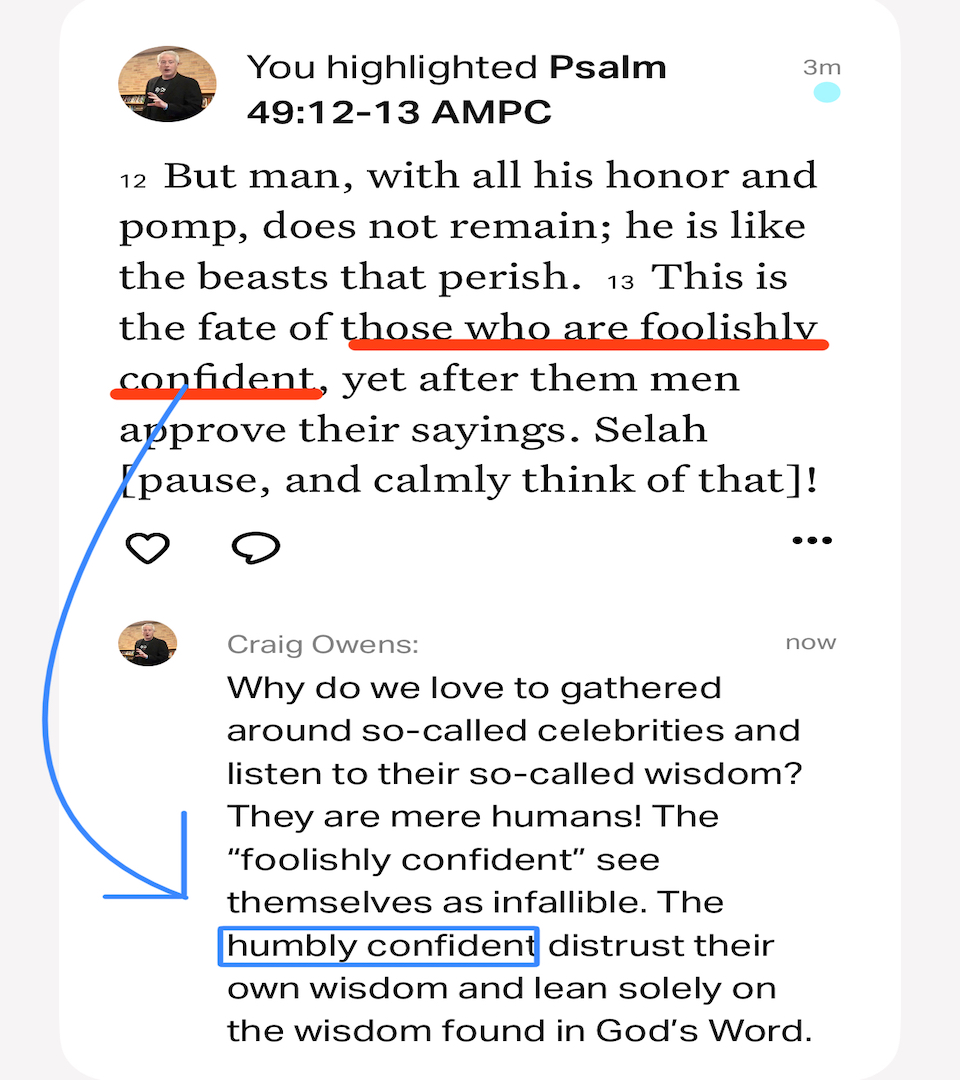
On an episode of The Craig and Greg Show, Greg and I discussed some toxic behaviors that can creep into your workplace and cause major discord. Two attitudes to watch out for are confidence without humility, and humility without confidence.
Check out this full Craig and Greg Show episode here.
Listen to the podcast of this post by clicking on the player below, and you can also subscribe on Apple, Spotify, or Audible.
We live in a celebrity-obsessed culture. Sadly, this unbiblical pursuit has infected our churches too. Let’s talk about this on this episode of The Podcast.
In my book Shepherd Leadership, I have two chapters that address a godly leader’s confident humility and humble confidence. You can also check out several blog posts on videos on this subject by clicking here.
Listen to the podcast of this post by clicking on the player below, and you can also subscribe on Apple, Spotify, or Audible.
As both a consultant and in one-on-one conversations with colleagues, I have lost count of how many times I’ve heard leaders tell me how incompetent their teammates are. When I have gently asked how they could help their teammates improve, the response is usually something like, “I think they are giving me all they have right now.”
There is an age-old leadership principle that goes something like this—
A poor leader doesn’t believe his people can achieve more than they already are, so he stops training them and stops expecting great things from them. His people soon discover the level of performance their leader will settle for, and then gravitate to that level.
The leader then assumes that’s all that his people are capable of achieving, so he accepts it as fact and quits challenging his people to get better.
So both reinforce what the other believes, and the vicious downward cycle continues.
How sad!
But I have found that exemplary leaders believe the best is still to come. They challenge their teammates to strive for greatness. They take time to train, resource, and encourage them to strive for the next level. They don’t beat them up or give up on them when they stumble, but they treat stumbles as learning opportunities. They always believe their teammates can achieve more.
If you were on a team with a leader like that, wouldn’t you want to live up to those expectations? Of course you would! So instead of the vicious downward cycle I just outlined, an environment like this creates a virtuous cycle that keeps pulling people upward.
The apostle Paul talked in virtuous terms about his teammates. He wrote publicly about Timothy (I have no one else like him—Philippians 2:20), Epaphroditus (my brother, co-worker and fellow soldier—Philippians 2:25), Mark (he is helpful to me in my ministry—2 Timothy 4:11), and Luke (the beloved physician and faithful comrade—Colossians 4:14), to name just a few.
Even when he had to speak a challenging, correcting word to the saints in Corinth, he still believed the best for them—
I am not sorry that I sent that severe letter to you, though I was sorry at first, for I know it was painful to you for a little while. Now I am glad I sent it, not because it hurt you, but because the pain caused you to repent and change your ways. … I am very happy now because I have complete confidence in you. (2 Corinthians 7:8-9, 16 NLT)
I love that phrase: I have complete confidence in you!
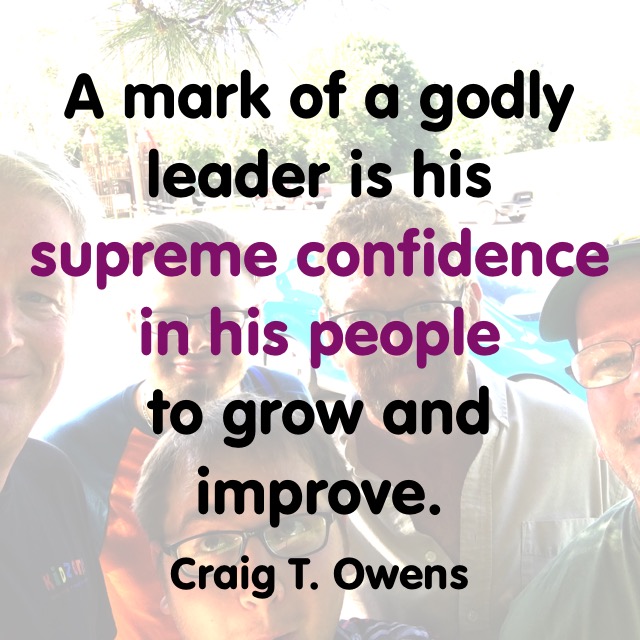
A mark of a godly leader is his supreme confidence in his people to grow and improve.
If you feel like your teammates just aren’t measuring up, can I suggest that you take a look in the mirror? It may be that your expectations of them are too low, that your attitude toward them has been squelched, and that your words and actions are perpetuating a downward cycle.
By changing your attitude toward your teammates, you can put the brakes on that downward pull, and begin a brand new virtuous cycle that pulls your entire team—and your whole organization—up to heights where they have never gone before!
This is part 82 in my series on godly leadership. You can check out all of my posts in this series by clicking here.
Listen to the podcast of this post by clicking on the player below, and you can also subscribe on Apple, Spotify, or Audible.
If you’re a shepherd leader, what do you do when the sheep under your care go, “Grrrr!”?
To make sure that you haven’t done anything that caused the murmuring, you should humbly pray, “Search me, O God” (Psalm 139:23-24). And then, if you see you have done something wrong, repent and make things right. You may want to check out my blog post A Leader’s Sincere Apology.
After this, Moses has given us in Exodus 16:8-9 two actions to take with murmuring sheep:
If it wasn’t anything that you did, you need to remind yourself that the people are murmuring against God.
If it wasn’t anything that you did, you need to remind the sheep that they are murmuring against God.
Listen to the podcast of this post by clicking on the player below, and you can also subscribe on Apple, Spotify, or Audible.
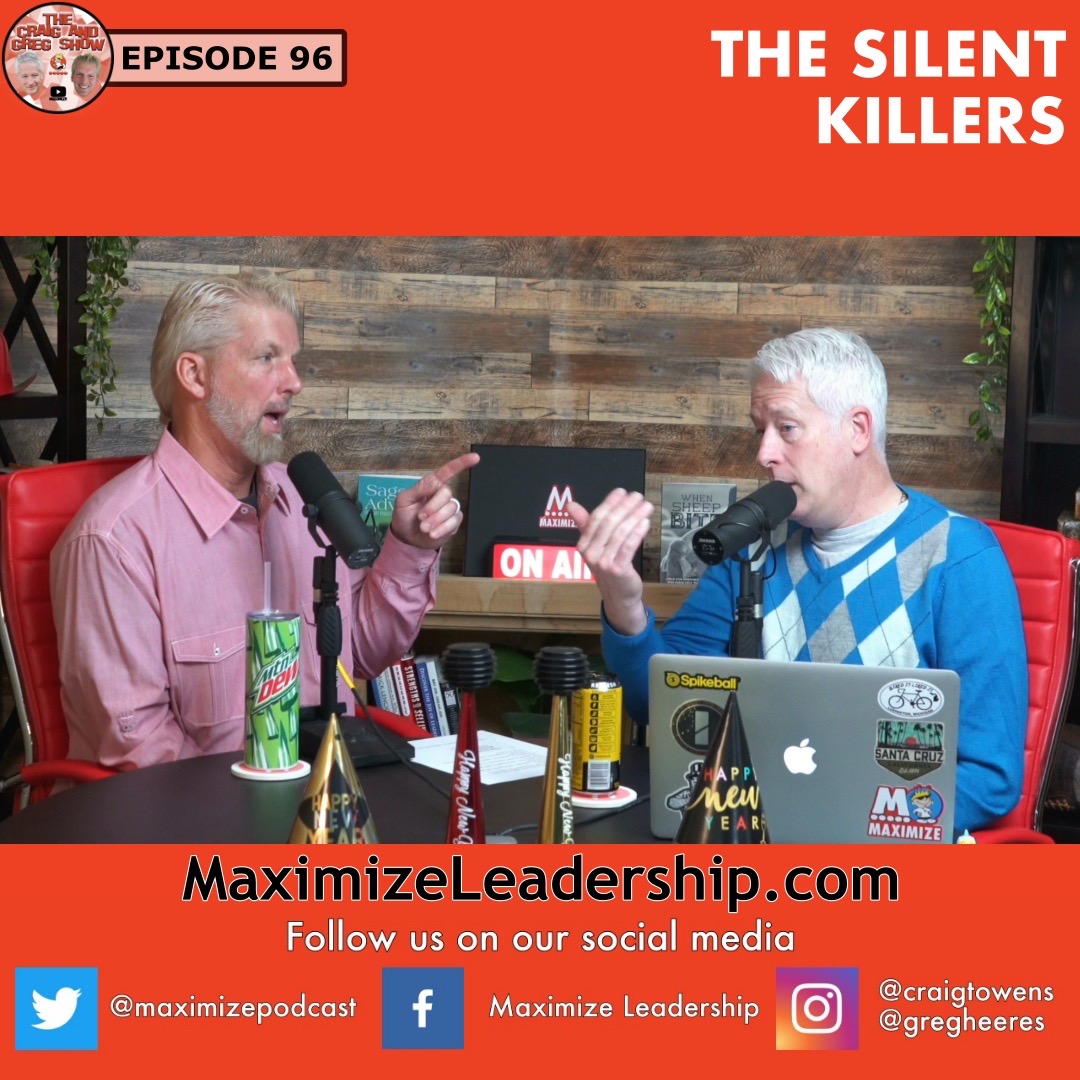
To you the term “silent killer” might conjure visions of a lone assassin from a spy movie, or perhaps more mundane but equally deadly things like high blood pressure or carbon monoxide leaks. In today’s episode Greg and I are discussing toxic behaviors that creep into the workplace. They aren’t quite as deadly as the ones listed above, but can still cause massive anger, frustration, and discord in your organization. Join us as we discuss some of the most prevalent toxins we’ve seen, and highlight how you as the leader are responsible for being the safeguard against them.
[0:20] Toxic things can sneak into our workplace unless we proactively look for them.
[1:35] Leaders need to be honest with their team so their team feels they can be honest with them in return.
[3:43] Greg and I discuss some of the toxic behaviors we have seen that create problems in the workplace.
[3:54] -Gossip
[4:51] -Office Politics
[6:42] -Negative Competition
[8:37] -Negativity
[10:20] -Bureaucracy
[12:46] -Braggadocio
[14:12] -Bashing
[14:46] Toxicity will come to every organization. We as leaders shine in the way we deal with it.
[17:47] When I wrote Shepherd Leadership, I spent two chapters discussing the balance between confidence and humility because of how important it is.
[19:08] One of our main jobs as leaders is to develop others, but toxicity squashes that.
[20:26] A coach can come alongside you to be the “detector” for the silent killers that might be lurking in your organization.
Check out this episode and subscribe on YouTube so you can watch all of the upcoming episodes. You can also listen to our podcast on Spotify and Apple.
Listen to the podcast of this post by clicking on the player below, and you can also subscribe on Apple, Spotify, or Audible.
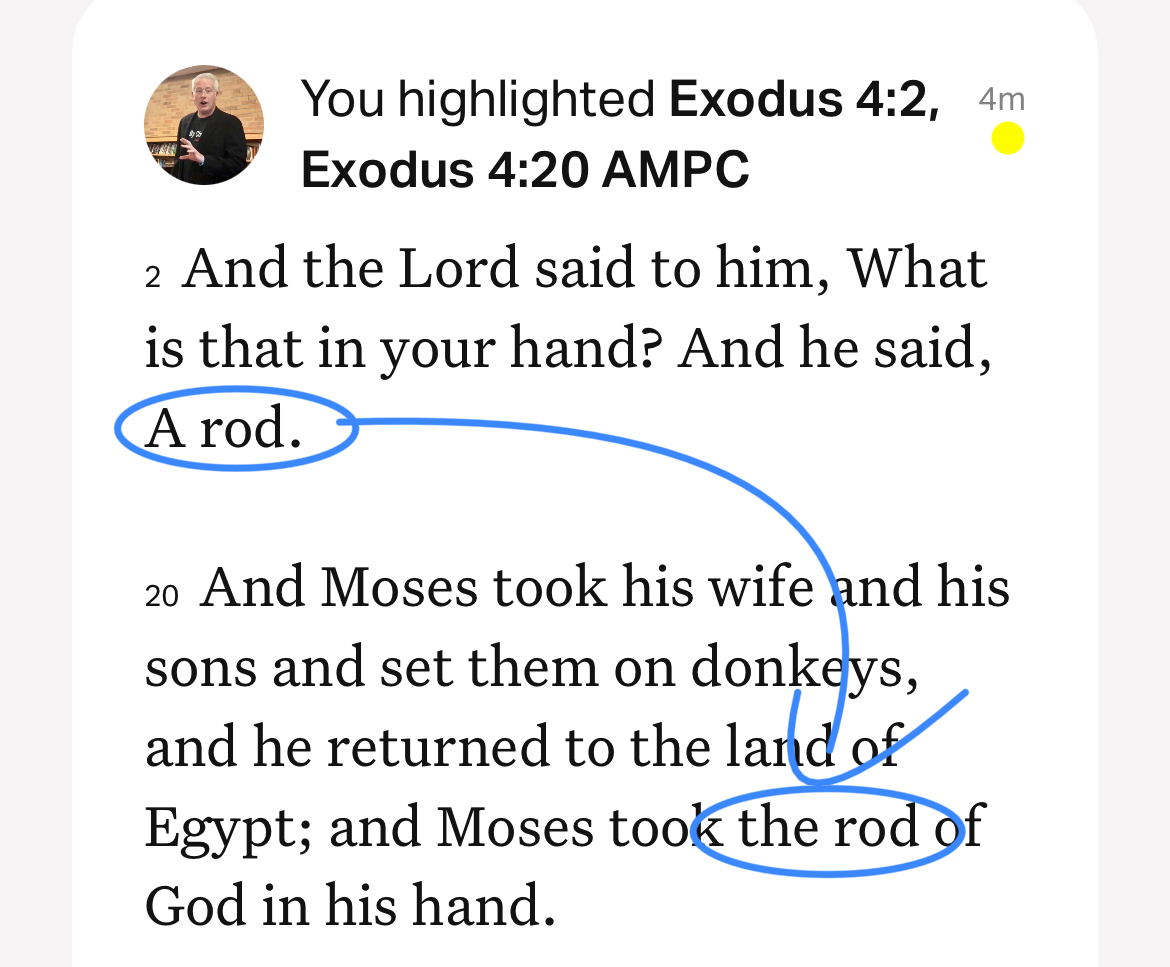
And the Lord said to [Moses], “What is that in your hand?” And he said, “A rod.” … And Moses took his wife and his sons and set them on donkeys, and he returned to the land of Egypt; and Moses took the rod of God in his hand. (Exodus 4:2, 20 AMPC)
What Moses originally called merely “a rod” he later called “the rod of God.” He recognized that what he thought was his was in actuality what God had given him to use.
When we recognize that what’s in our hands isn’t our creation, but a God-given talent, it marks a defining moment in both our maturity and our humility. Or to borrow a phrase I elaborate on in my book Shepherd Leadership, this helps us view our God-given talents or positions with confident humility (or, if you like, humble confidence).
With this shift in Moses’ understanding and language in mind, this is how we should treat every strength God has given us:
• I will have to give an account to God for how I invested or squandered what He entrusted to me
When we realize that we are not self-made men or women, but that any talents, abilities, or opportunities we have are God-appointed, we show a marked maturity in our understanding of our stewardship of God’s gifts. As our maturity grows, our confidence and our humility will grow proportionately. And as we become more confidently humbled in the way we steward God’s gifts, our leadership cannot help but exhibit more of God’s blessing on it.
All of this growth starts with just the simple recognition that what’s in my hands is there only because God placed it there.
Listen to the podcast of this post by clicking on the player below, and you can also subscribe on Apple, Spotify, or Audible.
Last week I shared this thought with you from Pastor Tim Keller: “Your prayer must be firmly connected to and grounded in your reading of the Word. This wedding of Bible and prayer anchors your life down in the real God. … Without immersion in God’s words, our prayers may not be merely limited and shallow but also untethered from reality.”
“Untethered from reality” means that we determine the manner in which we come to God in prayer, the way prayer works, and the way God must respond to our prayer. But what we read in the Bible is the opposite of this (Isaiah 1:11-15).
I think there are two opposite and equal erroneous thoughts about how we approach prayer:
I’m not worthy to come into the presence of an all-holy God
I can waltz right into God’s presence whenever and however I please
Both are wrong and both are strategies the devil has used to keep us prayerless. Either we don’t go to God at all or our prayers are unheard because the Bible says that our arrogance has made our prayer ineffectual.
Our Prayer Book—the Bible—helps us find the balance. George Whitefield noted, “Reading the Bible is a good preparative for prayer, as prayer is an excellent means to render reading effectual.” So here’s what we read about those two errors.
I’m not worthy. God is unapproachable in His holiness, but Jesus has made it possible for us to enter in through His righteousness (1 Timothy 6:15-16; Isaiah 6:1-5; Hebrews 4:1, 14, 16; John 16:23-24).
I can come anyway I want to. Passages like Psalm 15:1-5 and Isaiah 58:2-4 make it clear that we cannot simply approach God in a way of our choosing.
Let’s unpack that second error a little more. We have to be clothed in righteousness in order to come into God’s presence, but we cannot be clothed in a righteousness that is apart from Jesus. When we say that we are praying in the name of Jesus, it means we are praying in the nature of Jesus and through the righteousness of Jesus. We must be wearing His righteous robe (Romans 3:22-24; Isaiah 61:10).
So I think we need to pray before we pray. Let’s try these actions which are tethered to the reality of our Prayer Book.
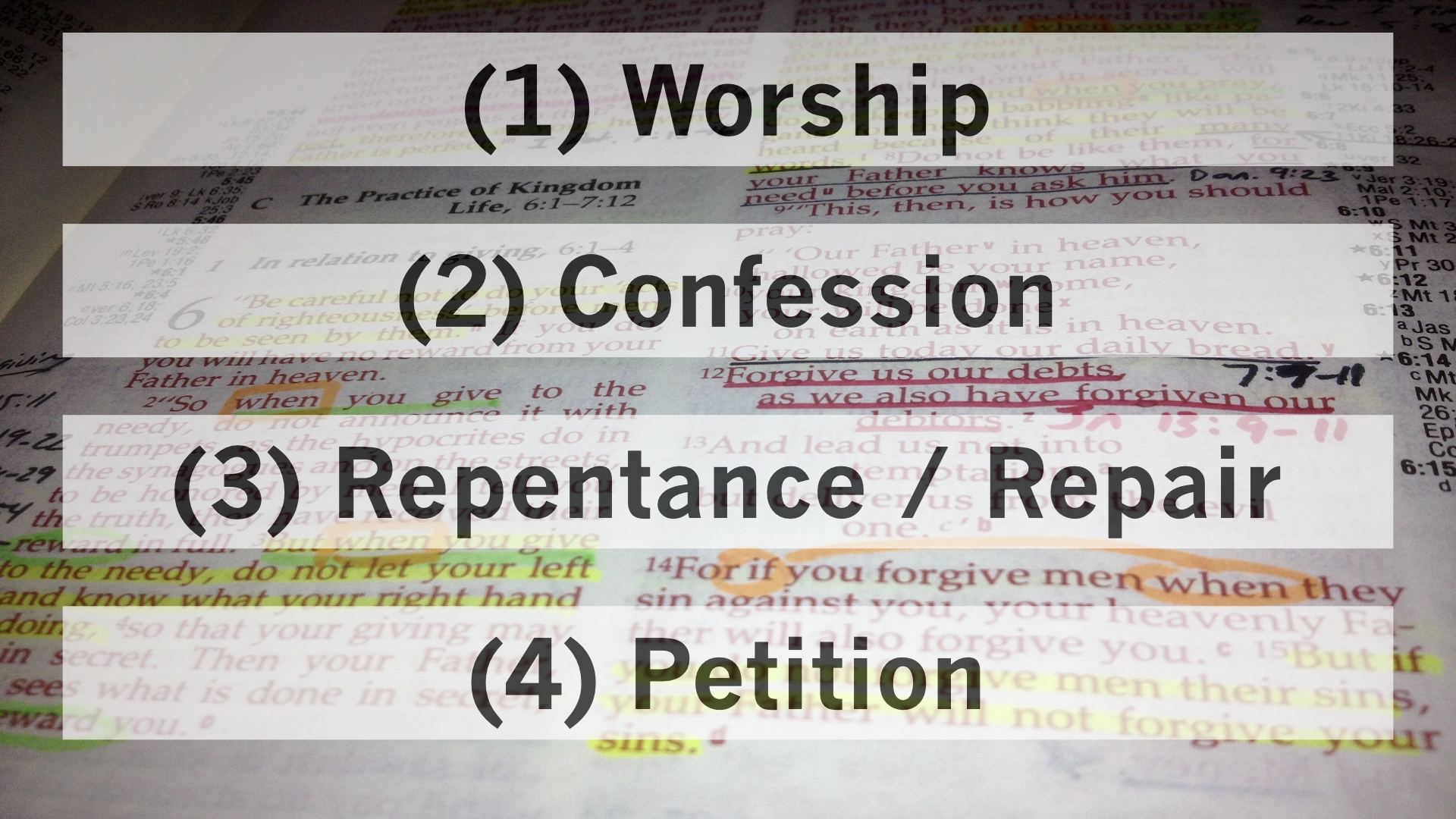
Worship. This is a deep pondering of who God is; it is humbly assigning Him the highest worth. In face, the Old English spelling of this word (“worthship”) gives us insight into what worship does. It is this kind of humility that God responds to (Isaiah 6:5-7; 57:15; Luke 18:9-14).
Confession. As we are worshiping, we will see our inadequacies (much like Isaiah did in Isaiah 6, or the tax collector did in Luke 18). We then need to confession these shortcomings. Dick Brogden wrote, “Confessed sin opens the portals of heaven into our darkness, and light and glory overwhelm shame. Confession is our glory for it lifts our heads and eradicates shame.” We see this so vividly lived out in the prayers of David (Psalm 139:23-24; 51:1-2; 19:12-14).
Repentance. I think we could also call this Repair. After confession where we have fallen short, we resolve now to both take a different path and repair what was damaged (Matthew 5:23-24; Mark 11:25-26; 1 Peter 3:7).
Petition. After worship, confession, and repentance / repair, our heart’s attitude is now in the place for God to heed our cries for His help (1 Peter 3:12).
Let’s learn to pray before we pray. Don’t just rush in and rush out of God’s presence. Take time to worship, confession any sins the Holy Spirit reveals, make things right, and then present your petitions.
Our hearts need to be prepared to present our petitions. This is how we know that God will hear our voice.
Listen to the podcast of this post by clicking on the player below, and you can also subscribe on Apple, Spotify, or Audible.
A recent movie set box office records. Many Hollywood commentators are surmising that it is because the unlikely duo in the movie does something so noble at the end of the movie. Throughout the movie one of the main characters takes to calling himself “Jesus.” At the end of this movie, this character and his friend take the full brunt of the evil on them in the hopes of saving the universe.
Of course, this storyline isn’t new to Hollywood or even in ancient literature. This epic quest is longed for in the human heart, looking for a hero to selflessly sacrifice himself to save everyone else around them.
The only problem is that these heroes aren’t sure if their sacrifice is actually going to work.
This, of course, isn’t the case with Jesus. Angels announce before His incarnation that He will save His people. Jesus Himself says, “I will lay down My life for My friends and I will take it up again.” And in the very last book of the Bible we read that before Time even began, Jesus was already seen as the sacrificial Lamb slain for the deliverance of His people.
This story doesn’t start in Bethlehem, but when John 1:1 says, “In the beginning,” the language there is really saying, “From before there was a beginning, Jesus our Hero already knew the outcome of His selfless sacrifice.”
We see hints and foreshadowing of this Most Epic Story all throughout history and throughout Scripture. Like in Psalm 132—the longest of the Songs of Ascent (at 18 verses, the next longest song is only half its length).
The key verse (v. 10) is in the middle: it connects David and Jesus. The words “Anointed One” is one word in Hebrew: Masiah which is Messiah. In the New Testament,the word Christ also means Anointed One.
What do we learn in the first half of this song. It opens with the words, “O LORD, remember David…” (v. 1).
Because this psalmist mentions the same incident that we discussed in Psalm 131, this is another reason why I think David had the incident of moving the ark of the covenant to Jerusalem in mind when he wrote the previous song (see Psalm 132:2-5; 2 Samuel 6:17). The people continued to rejoices as David made arrangements and provided building materials for his son Solomon to build the temple (vv. 6-9).
Look at how verse 10 connects David to Jesus the Messiah. In verse 2, David swore an oath to the Lord, but he was physically unable to fulfill his promise. In verse 11 (also see 2 Samuel 7:11-16), “The Lord swore an oath to David.”
God was able to fulfill His promise, which we see in the life, death, resurrection, andascension of Jesus, and then in the promised outpouring of the Holy Spirit. On the Day of Pentecost, Peter declares this in his sermon—connecting the work of Jesus to the prophesy of King David (Acts 2:22-36).
We can sum up the first half of Psalm 132 with the words “Remember David.” And we can sum up the second half of this song of ascent with the words “Remember Jesus.”
Remember Jesus [the] Christ, raised from the dead, descended from David (2 Timothy 2:8).
I like this verse from the Amplified Bible: Constantly keep in mind Jesus Christ (the Messiah) as risen from the dead, as the prophesied King descended from David, according to the good news (the Gospel) that I preach.
David swears an oath (v. 2) but has no power to fulfill it. God swears an oath (v. 11-12) and fulfills it (Luke 1:33; Revelation 11:15).
David longs for blessings for the priests and saints (v. 10) but has no power to make it happen. God says, “I will” bless the priests and saints (vv. 13-18; 1 Peter 2:5-9; Revelation 1:6).
All of our longings for a Hero—for salvation, for purpose, for meaning—are fulfilled in Jesus. All of God’s promises for these things are fulfilled in Jesus. All of our life should be lived in this joyful assurance (Hebrews 10:35-39; Revelation 3:11)!
Not only should we not stumble in the homestretch, but we should live in such joyful assurance of God’s promises that we soar across the finish line!
If you cannot remember anything else, remember David and remember Jesus.
Listen to the podcast of this post by clicking on the player below, and you can also subscribe on Apple, Spotify, or Audible.
“Who gave You this authority,” the chief priests twice demanded of Jesus in Luke 20:1-8.
Worldly minded people are always looking for a résumé of accomplishments or the stamp of approval from a superior, so they can demand the unquestioned loyalty from those who report to them. In other words, they are looking for authority from their position that allows them to prove to others that they are in charge.
The “chief priests and the teachers of the law, together with the elders” (v. 1) had earned their positions, or so they thought. They are, therefore, asking Jesus to, “Prove it!” They want to know why Jesus gets to say and do the things He says and does.
Jesus had every right to flex on them! But He knew that His words and deeds spoke for themselves. He “knew that the Father had put all things under His power” (John 13:3) so there was nothing for Him to prove to anyone.
In my book When Sheep Bite, I have a chapter about sheep questioning the authority of their shepherd. In that chapter I wrote—
When our conversation with criticizing sheep hasn’t gone well, and when those unhealthy sheep begin to gossip and then slander, it’s inevitable that they will eventually began to question your authority as a shepherd. Perhaps they think you’re too young and naive, or too old and out of touch. They may question your motives, or the vision you’ve imparted for the church, or your ability to follow through on what you have already shared. Whatever the case, these biting sheep seem to be implying that they know better than you do how this pasture should be run. During times like these, it is tempting to want to “prove” that we are qualified, that we do know what we’re doing, and that we can indeed successfully pursue the vision we’ve articulated for them. Once again, it’s natural to want to say, “I’ll show you just how qualified I am!”
Before we respond, we need to recognize the source of our authority. … Far greater than positional authority is moral authority. This is authority that comes not merely from a title or position, but from who conferred that title or position on the leader. If God has called us and appointed us to this pasture, that is all the authority we need.
Jesus didn’t answer the “Prove it!” demand, but went right on teaching and serving. We need to remember that there is only One to whom we must give an answer. There is only One who can say to us either, “Depart for Me,” or “Well done, good and faithful servant!”
A mark of a godly leader is one who is quietly confident of his moral authority.
As a result, that leader no longer feels the need to prove anything.
This is part 78 in my series on godly leadership. You can check out all of my posts in this series by clicking here.
Listen to the podcast of this post by clicking on the player below, and you can also subscribe on Apple, Spotify, or Audible.
Godly leaders are always striving to use their leadership power to serve others. What exactly does this look like? On a recent Craig And Greg Show episode, Greg and I discussed this important leadership tension.
Check out the full Craig And Greg Show episode here.







 Craig T. Owens