


Love Has A Name (YouVersion reading plan review)
November 20, 2018 — Craig T. Owens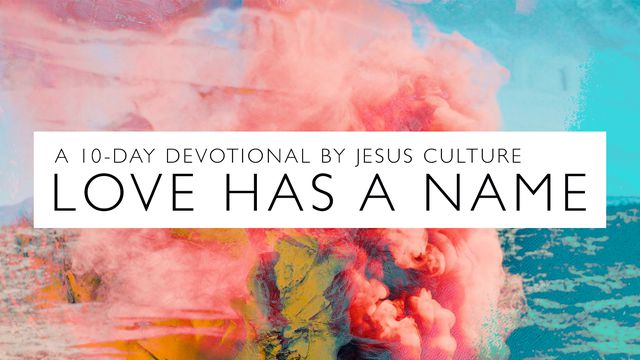 I love listening to the Jesus Culture band lead people in worship! Their humble spirits and biblically-sound lyrics are a powerful combination. If you haven’t checked out their latest album called “Love Has A Name,” please do so! And also check out their YouVersion devotional with the same name.
Love Has A Name is a 10-day reading plan on YouVersion in which the members of the Jesus Culture band have written the devotional for each day. Each devotional is associated with one of the songs on their new album and will take you behind the lyrics to the seed-thought of that song. Then you will also read the biblical passage(s) that were woven into the song’s lyrics.
Each morning during this 10-day reading plan I read the devotional thought, read the Scripture, and then worshiped along with the song that corresponded with that day’s reading, and then journaled some thoughts. I found that hearing God’s Word sung in such a passionate way was a fantastic way to keep God’s Word in my mind and heart all day long.
Please check out both the album and the YouVersion reading plan Love Has A Name.
Poetry Saturday—What Do You Have?
November 17, 2018 — Craig T. Owens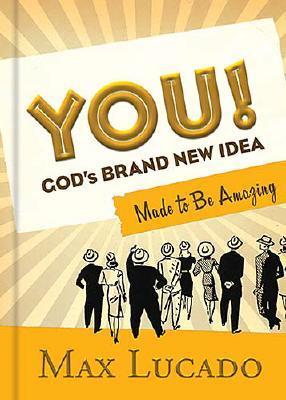 Moses had a staff.
David had a sling.
Samson had a jawbone.
Rahab had a string.
Mary had some ointment.
Aaron had a rod.
Dorcas had a needle.
All were used of God.
What do you have? —Max Lucado, in You!
Thursdays With Oswald—Christianity In The Actual And Real Life
November 15, 2018 — Craig T. OwensThis is a weekly series with things I’m reading and pondering from Oswald Chambers. You can read the original seed thought here, or type “Thursdays With Oswald” in the search box to read more entries.
 Christianity In The Actual And Real Life
A man cannot take in anything he has not begun to think about, consequently until a man is born again what Jesus says does not mean anything to him. The Bible is a universe of revelation facts have no meaning for us until we are born from above; when we are born again we see in it what we never saw before. We are lifted into the realm where Jesus lives and we begin to see what He sees (John 3:3).
By “Actual” is meant the things we come in contact with by our senses, and by “Real” that which lies behind, that which we cannot get at by our senses (cf. 2 Corinthians 4:18). The fanatic sees the real only and ignores the actual; the materialist looks at the actual only and ignores the real. The only sane Being whoever trod this earth was Jesus Christ, because in Him the actual and the real world one. …
When we are born from above we begin to see the actual things in the light of the real. …
Deliverance from sin is not deliverance from conscious sin only, it is deliverance from sin in God’s sight, and He can see down into a region I know nothing about. By the marvelous Atonement of Jesus Christ applied to me by the Holy Spirit, God can purify the springs of my unconscious life until the temper of my mind is unblameable in His sight. …
Everything Jesus says is impossible unless He can put His Spirit into me and remake me from within…. When a man is born from above, he does not need to pretend to be a saint, he cannot help being one. …
There is only one way in which as a disciple you will know that Jesus has altered your disposition, and that is by trying circumstances. … The proof that God has altered our disposition is not that we persuade ourselves He has, but that we prove He has when circumstances put us to the test.
From Studies In The Sermon On The Mount
The truths that the Bible declares are real truths, but they need to be lived out in the actual life of a Christian. Jesus is the only One who has ever done this, but by His Atonement applied to our actual lives by the Holy Spirit, we can begin to live this way as well.
In order to live out real truths in actual life, we have to experience actual life—all of the ups and downs, the victories and defeats, the temptations succumbed to and the temptations overcome—in light of real truth. In every experience, the Holy Spirit can sanctify us. I like to think of that word sanctification like this: saint-ification. If I will allow Him, the Holy Spirit can bring out actual saintly qualities in my life.
The more I allow Him to do this, the more saintliness is seen in my actual life. As Chambers reminds us, then we don’t have to pretend to be a saint, but we cannot help but be an actual one!
Expository Thoughts On The Gospels (book review)
November 13, 2018 — Craig T. Owens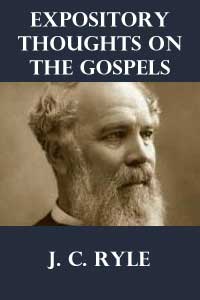 J.C. Ryle was an Evangelical Anglican bishop who lived in England in the latter half of the 19th century. When Ryle’s words—written over 100 years ago—still resound with truth today, I would call that “a classic”! That is exactly what we find in his Expository Thoughts On The Gospels.
The Gospels obviously focus on the life and teaching of Jesus Christ. Ryle takes how Jesus lived and taught and pulls out of them practical applications for Christians in his day, which still have perfect application for Christians today. I think what keeps his words so relevant is how closely he sticks with the biblical texts, seldom straying into his own opinion, but simply saying to us, “Did you see that?”
His thoughts are presented to us section-by-section, not verse-by-verse as many biblical commentators do. This method has two distinct advantages for us: (1) It’s easier to get a “big picture” view of what Jesus was doing and teaching, and (2) It’s more manageable to use this book as a complement to a personal or group Bible study.
In fact, Ryle himself suggested that the design of his commentary was with family devotions in mind. Purposely, he doesn’t delve into deep doctrine so that the youngest or most novice of Christians can gain much insight. But don’t confuse that statement with this being “light reading.” On the contrary, even the most tenured Christian will find ample thoughts to challenge his mind.
I highly recommend this series of commentaries to those who want a deeper Bible study time.
The Dangers In Grumbling
November 12, 2018 — Craig T. OwensGod wants to give us His peace. The Hebrew word is shalom and it means a deep tranquility found in a personal relationship with Jesus that is greater than all external circumstances. Sadly, many people block the shalom God wants them to have.
The “shalom cycle” looks like this…
 Our gratitude for the things God has done fuels our faith in God’s future grace. That faith-filled expectation serves as fuel for our prayers, and answered prayer gives us even more for which we can give thanks.
But the shalom cycle can break down when we forget to be thankful. My friend Scott Troost says that ungrateful people are usually characterized by—
- Being bitter and unforgiving
- Constantly attending their own pity parties
- Struggling with low self-esteem
- Being greedy and covetous for the things they don’t have
Scott goes on to explain how we can stop the grumbling ingratitude from derailing the shalom cycle.
- Be thankful for what you have, instead of wishing for things you don’t have (Philippians 2:14).
- Keep a gratitude journal of all that God has done for you (Habakkuk 3:2).
- Notice how God has given you strength to make it through challenging times in the past (2 Corinthians 12:7-10).
“There’s a huge difference between being thankful for something and being thankful in something. We are to be thankful always.” —Scott Troost
As I talked about last week—we need to think about what we’re thinking about. This is the key to spotting those grumbling, ungrateful thoughts before they derail the cycle and rob us of God’s shalom.
Join us next week for the third part of our 4-part series in which we will be uncovering another way that the shalom cycle can become derailed. Please join us either in person or on Facebook Live.
God’s Silence And God’s Singing
November 8, 2018 — Craig T. Owens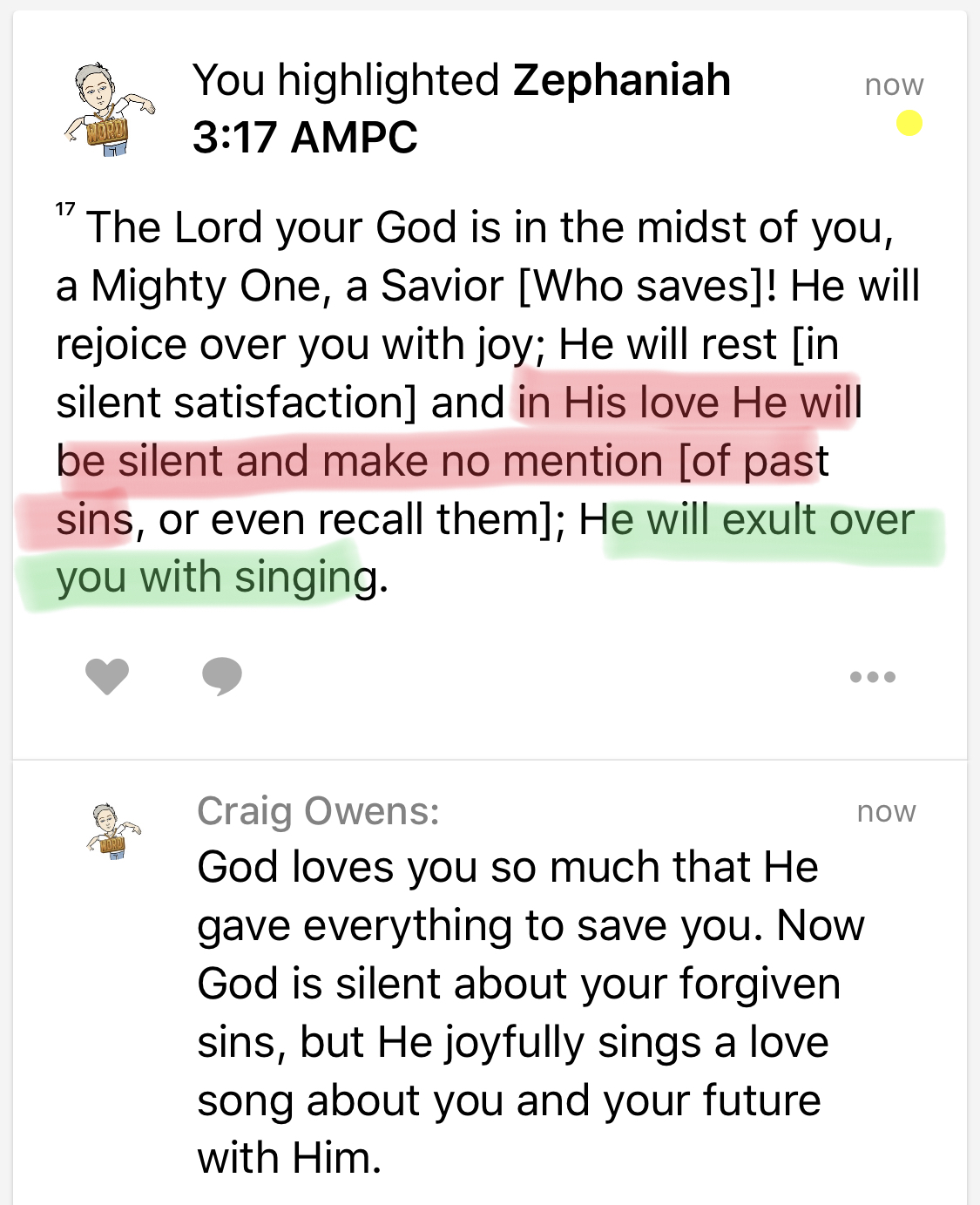 “For the Lord your God is living among you. He is a mighty Savior. He will take delight in you with gladness. With His love, He will calm all your fears. He will rejoice over you with joyful songs.” (Zephaniah 3:17 NLT)
I’ve always loved this verse about God singing over me! I noticed something interesting in the Amplified Bible—not only God’s singing, but His silence. He is silent (making no mention) about my forgiven sins, but He sings His love about my future with Him.
“The Lord your God is in the midst of you, a Mighty One, a Savior [Who saves]! He will rejoice over you with joy; He will rest [in silent satisfaction] and in His love He will be silent and make no mention [of past sins, or even recall them]; He will exult over you with singing.” (Zephaniah 3:17 AMPC)
Kim Walker-Smith wrote, “It’s a love that never stops pursuing us. There are moments when I don’t hear His love and moments when I don’t feel His love, but that does not change the fact that He is always giving His love.” He is always singing His love❣️
Thursdays With Oswald—No Undercover Christians
November 8, 2018 — Craig T. OwensThis is a weekly series with things I’m reading and pondering from Oswald Chambers. You can read the original seed thought here, or type “Thursdays With Oswald” in the search box to read more entries.
No Undercover Christians
The illustrations our Lord uses are all conspicuous—salt, light, and a city set on the hill. There is no possibility of mistaking them. …
“You are the salt of the earth.” Some modern teachers seem to think our Lord said, “You are the sugar of the earth,” meaning that gentleness and winsomeness without curativeness is the ideal of the Christian. Our Lord’s illustration of a Christian is salt, and salt is the most concentrated thing known. Salt preserves wholesomeness and prevents decay. It is a disadvantage to be salt. Think of the action of salt on a wounded, and you will realize this. If you get salt into a wound, it hurts, and when God’s children are amongst those who are “raw” their presence hurts. The man who is wrong with God is like an open wound, and when “salt” gets in it causes annoyance and distress and he is spiteful and bitter. … How are we to maintain the healthy, salty tang of saintliness? By remaining rightly related to God through Jesus Christ. …
“You are the light of the world.” Light cannot be soiled; you may try to grasp a beam of light with the sootiest hand, but you leave no mark on the light. A sunbeam may shine into the filthiest hovel in the slums of the city, but it cannot be soiled. … Thank God for the men and women who are spending their lives in the slums of the earth, not as social reformers to lift their brother men to cleaner sties, but as the light of God, revealing a way back to God.
From Studies In The Sermon On The Mount
God wants you to be His salt and light in the world. Are you willing to do that?
Salt preserves, but it also stings as it does so. Some people will lash out at you for being salt in their presence, but keep on loving them with the love of Jesus.
Light guides, but it also reveals unpleasant things. Some people will lash out at you for revealing sinful things, but keep on loving them with the love of Jesus.
Don’t let the hostile reaction of people send you “underground.” Keep being conspicuously, unmistakably God’s salt and light in a world that is in desperate need of cleansing and illumination!
The Case For Christ Daily Moment Of Truth (book review)
November 6, 2018 — Craig T. Owens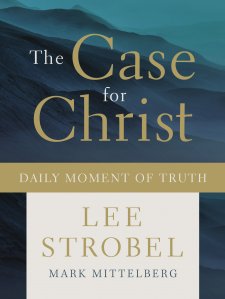 This is a fantastic study guide from Lee Strobel and Mark Mittelberg. It was originally published with the title Today’s Moment Of Truth.
Most Christians will tell you they love God “with all my heart.” That’s a good start, but according to Jesus, there needs to be more. Jesus told us to love God with all our heart, soul, mind, and strength. It’s especially these last two areas that concerned Strobel and Mittelberg enough to put together a wonderful book: The Case For Christ Daily Moment Of Truth.
Strobel and Mittelberg were concerned (and rightly so) that Christians were engaging their heart and soul in their Christian witness, but not developing their mind and strength to the same extent. As a result, when someone challenges them to explain why they believe what they believe, many Christians struggle to answer convincingly.
Lee Strobel and Mark Mittelberg are both top-notch Christian apologists. They don’t just present solid evidence for the Christian faith, but they do so in a winsome, inoffensive way. And through 180 different lessons, they train all who read The Case For Christ Daily Moment Of Truth to do the same.
Each day you will read a quote from a notable atheist or Christian skeptic, and then be trained in solid apologetics to refute their claims. You will be given Scripture verses, proofs from all disciplines of science, and some good old-fashioned common sense. This book will expand your spiritual muscles and your mental muscles. Each day’s reading will only take a couple of minutes, but you will be well-prepared for any challenges to your faith. A must-read for all Christians!
I am a Zondervan book reviewer.
My most-viewed posts


11 Quotes On The Gospel Of Matthew
November 14, 2018 — Craig T. Owens“The rulers of this world have often call themselves Great, Conqueror, Bold, Magnificent, and the like. The Son of God is content to call Himself Savior. These souls which desire salvation may draw near to the Father with boldness, and have access with confidence through Christ. It is His office and His delight to show mercy. ‘For God didn’t send His Son into the world to judge the world, but that the world should be saved through Him’ (John 3:17).”
“Trust Him at all times with all your sorrows. He will not despise you. Pour out all your heart before Him in prayer, and keep nothing back. He can sympathize with His people.”
“Let us beware of resting satisfied with head-knowledge. It is an excellent thing, when rightly used. But a man may have much of it, and yet perish everlastingly. What is the state of our hearts? This is the great question. A little grace is better than many gifts. Gifts alone save no one. Grace leads on to glory.”
“Here is one among many reasons why we ought to be diligent readers of our Bibles. The Word is the sword of the Spirit. We shall never fight a good fight, if we do not use it as our principal weapon. The Word is the lamp for our feet. We shall never keep the King’s highway to heaven, if we do not journey by its light. … Knowledge of the Bible never comes by intuition, it can only be obtained by diligent, regular, daily, attentive, wakeful reading.”
“Aim at letting men see that we find Christianity makes us happy. Never let us forget that there is no religion in looking melancholy and gloomy. Are we dissatisfied with Christ’s wages and Christ’s service? Surely not! Then let us not look as if we were.”
“Let the prayer ‘Lord, increase our faith,’ always form part of our daily petitions. We never perhaps know the weakness of our faith until we are placed in the furnace of trial and anxiety. Blessed and happy is that person who finds by experience that his faith can stand the fire, and that he can say with Job, ‘though He slays me yet will I trust in Him’ (Job 13:15).”
“The more clearly we see Christ’s power, the more likely we are to realize Gospel peace. Our position may be trying. Our hearts may be weak. The world may be difficult to journey through. Our faith may seem too small to carry us home. But let us take courage when we think on Jesus, and not be cast down. Greater is He that is for us than all those who are against us. Our Savior can raise the dead. Our Savior is Almighty.”
“Great grace and common sense are perhaps one of the rarest combinations. … Our Lord Jesus Christ Himself is our most perfect example. None were ever so faithful as He. But none were ever so truly wise. Let us make Him our pattern, and walk in His steps.”
“Let us not be ashamed to say that we expect a literal fulfillment of unfulfilled prophecy. Let us frankly allow that there are many things we do not understand, but still hold our ground tenaciously, believe much, wait long, and not doubt that all will one day be made clear.”
“Are we ever mocked and persecuted and thought foolish because of our religion? Let us bear it patiently and pray for those who persecute us. They know not what they are doing. They will certainly alter their minds one day. We may yet hear them confessing that we were wise and they were foolish. The whole world shall one day acknowledge that the saints of God made a wise choice.”
“We can never attach too much importance to the atoning death of Christ. It is the leading factor in the Word of God, on which the eyes of our soul are to be ever fixed. Without the shedding of His blood, there is no remission of sin. It is the cardinal truth on which the whole system of Christianity hinges. Without it the Gospel is an arch without a key stone, a fair building without a foundation, a solar system without a sun.”
Quotes from Ryle’s comments on the Gospels of Mark, Luke, and John coming soon.
Share this: