8 Quotes From “The Jesus Who Surprises”

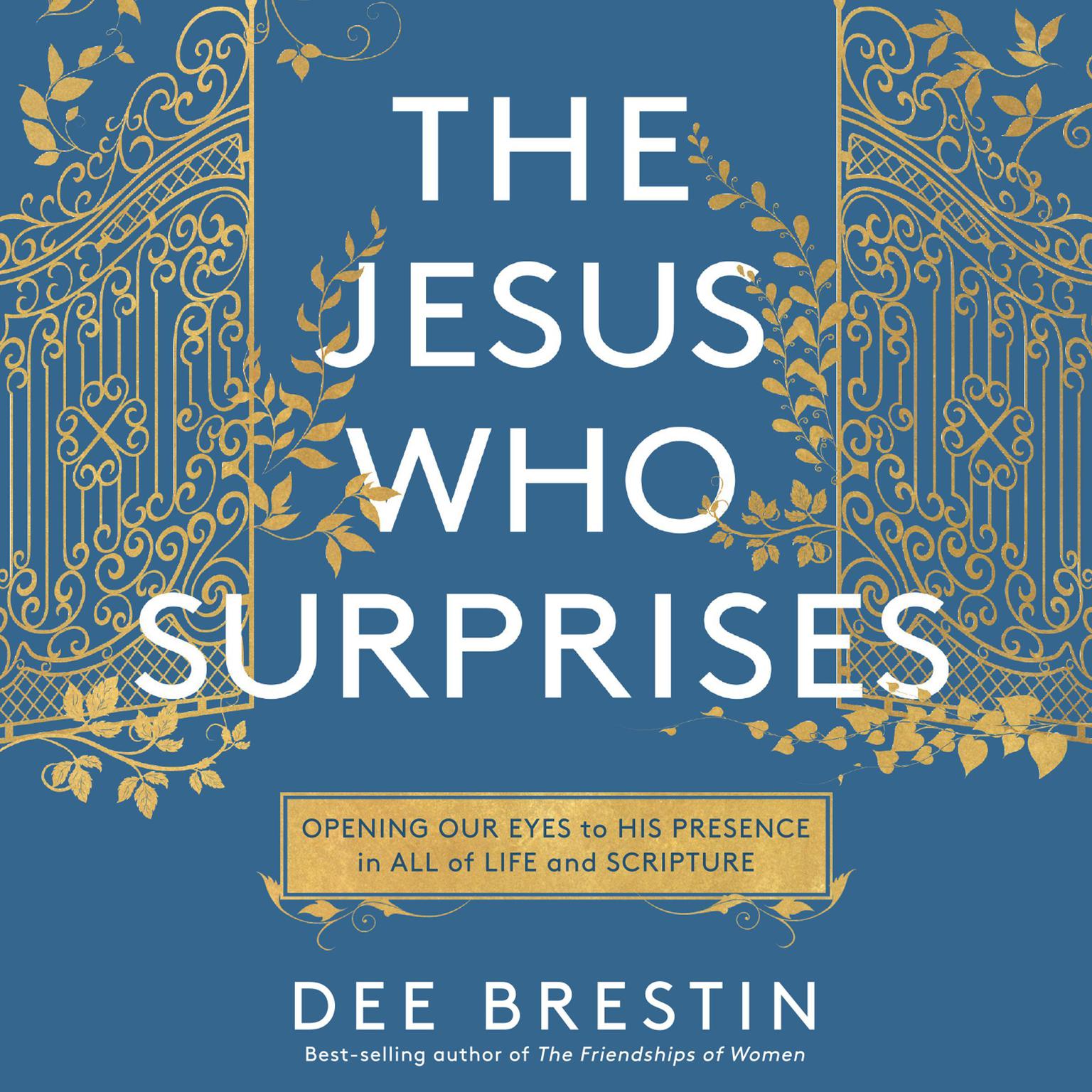
Dee Brestin has given us an excellent “starter’s guide” to help you discover Jesus on every page of the Old Testament. Be sure to check out my full book review by clicking here. 

“Every time we sin, it is because we do not trust the goodness of God, so we endeavor to meet our needs our way.” 

“The blood of innocent lambs spills throughout the pages of the Old Testament but ceases when John the Baptist heralds Jesus as the Lamb of God. Jesus is the only Lamb who can take away our sins (Hebrews 10:4, 10). All other sacrificial lambs were simply a foreshadowing of the One to come.” 

“What satan wants to do is cause attachment disorder between God and us. … satan wants to convince us that God does not love us and does not want the best for us so that we will back away and stop talking to Him, throwing away our only lifeline.” 

“Think about what makes Jesus so angry over and over again—it is the pretense and dishonesty of the Pharisees. He is not angry with Job, Naomi, the prophets, or the psalmists who lament, and indeed He often comes running to them. But He is angry with the Pharisees. They put up a façade, a wall that keeps them from experiencing intimacy with the Lord, and one day He may surprise them by saying, ‘I never knew you; depart from Me’ (Matthew 7:23).” 

“Recording and retelling increases memory—memory that is sorely needed in times of trouble.” 

“God knows the shaking of our world can awaken us to understand what is transitory and what is eternal. If we press into Him, we will discover what can never be shaken.” 

“Prayer is not getting God to give you what you want but dialoguing with Him, listening to Him, submitting to Him, and asking Him to give you what He wants, even if it is costly.” 

“Love is not love if it is only grace. That is enablement.” 

The Jesus Who Surprises (book review)

Oswald Chambers wisely noted, “God did not give a progressive revelation of Himself through the Old Testament: the people progressively grasped the revelation, which is very different.” Jesus is all throughout the Old Testament, giving us ample opportunity to discover Him on every page. A helpful guide to get you started on this journey of discovery is The Jesus Who Surprises by Dee Brestin. 

Dee wrote that she was intrigued by Christ’s words to the questioning disciples walking the road to Emmaus on the morning of His resurrection. These men were having a hard time wrapping their minds around the report from eyewitnesses who said Jesus was alive! As Jesus walked with them (although unrecognized by them for the moment), Luke records, “And beginning with Moses and all the Prophets, He explained to them what was said in all the Scriptures concerning Himself” (Luke 24:27). 

The Jews divided their Scripture—the part we now refer to as the Old Testament—into three sections: the Law, the Writings (the poetic books), and the Prophets. In The Jesus Who Surprises, Dee divides her book into the same three sections, giving us samples of how Jesus surprises us in the pages of each section of the Old Testament Scripture. Each chapter concludes with a Bible study that can be done on your own, or in a small group setting. 

The two disciples on the road Jesus commented to each other later that they felt their hearts burning as Jesus revealed Himself all throughout the Scriptures. I pray that as you read The Jesus Who Surprises you will experience the same burning. Then I believe this book will start you on your own lifelong journey to read the Scriptures for yourself and see Jesus on every single page! 

I am a Multnomah book reviewer. 

The Nearness Of God

I think too often we’re in too big of a hurry when we read the Bible. 

Think with me for a moment how much longer it takes to sing the lyrics of a heart-stirring song than it does to just say the words. The psalms were written as songs, and although the melodies that accompanied them have been lost to the pages of history, we would still do well to move more slowly and deliberately and passionately through these inspired songs. 

Let’s slowly consider Psalm 46 from four different perspectives…

First, as a pause from the noise. Selah can be used three different ways: (1) a pause to reflect; (2) a deep breath to crescendo into something bigger; or (3) a contrast between two very different things. There are three selahs in this psalm, and all of them call us to a pause from something noisy. To pause from…

    • natural upheavals—the earth gives way, the mountains fall, the waters roar, the mountains quake
    • political upheavals—nations are in an uproar, kingdoms fall 
    • religious upheavals—God has to serve the judgment of desolation, as He breaks the bow, shatters the spear, burns the shield

Selah/Pause from these upheavals and reflect—God is our refuge … the Lord Almighty is with us.

Second, notice the contrasts. The songwriter takes us to man’s mountains that fall and quake, but reminds us that THE mountain of God is our sure fortress. In the imagery of water, we see man’s attempts at refreshing that are roaring and foaming, but we also see God’s river that brings life and makes people glad. And look at how man’s use of power results in an uproar, but God makes wars to cease. 

Selah/Pause and reflect—aren’t God’s ways better than man’s ways? 

Third, notice the nearness of God. Twice the songwriter reminds us “The Lord Almighty is with us.” And then we hear God Himself speak to our anxiety-prone hearts, “Be still and know that I am God.” Those words “be still” can also mean “let go.” Let go of earthly things, negative voices, fears, trying to control events. If your hands are full of that, how can you grab onto God?! 

Selah/Pause and reflect—God is calling me to go—and stay—near to Him! 

Fourth, see how God’s peace and protection surrounds AND permeates me. In our Western literature, we are used to the climax—or the payoff—being at the end of the story. The story builds and then comes to a conclusion where the hero prevails. But in Hebrew poetry, the climax—or the payoff—is typically in the middle. So when we read Psalm 46, it’s tempting to say, “Hallelujah! Verse 11 says God is my fortress. That’s the climax, the payoff!” But really the payoff—the most important part—is the middle. In this psalm, that is verse 6. Everything else builds to this and radiates out from this. 

Read this psalm for yourself by reading the verses in this order: 6, 5, 7, 4, 8, 3, 9, 2, 10, 1, 11.

Selah/Pause and reflect—God is not only IN me, He also surrounds me. I’m invited to come close to Him because He is already in me. Nations rage, but His voice in my heart silences the upheaval. He is with me. He is the Most High Sovereign God that controls the outcome of all nations. Earth quakes and kingdoms rumble, but I will have no fear; I will be still and know He is God. He is my refuge, my strength, my help, my fortress! 

Don’t rush the reading of the Psalms. Slowly “sing” these inspired lyrics and listen to how the Holy Spirit will whisper to your heart. 

I’ll be continuing our series on the Selahs in the Psalms this Sunday, and I would love to have you join me. 

God’s Preference Is You

My dear friend Josh Schram relaunched our summertime series looking at the Selahs in the Psalms. “Selah” (or “Interlude” in some Bible translations) can mean either a time of reflection, a deep breath to go into something stronger, or a time to weigh the contrasts. 

Psalm 44 is a classic example of a Selah calling us to weigh the contrasts! The first 8 verses of this psalm celebrate the recollections of God’s past victories, declarations of God being our King, and crescendoing to a note of continual praise—O God, we give glory to You all day long and constantly praise Your name!

Then comes the Selah—pause. 

And after the pause, the scene turns dark. The psalmist now recounts how bad his situation is, descending to the low note of “we collapse in the dust, lying face down in the dirt” (v. 25). 

Josh reminded us how our preferences change over time. Consider the telephone—we’ve gone from push-button corded phones, to phones with longer cords, to cordless phones, to bulk bag phones, to smaller cell phones, to smartphones. It’s very human for our preferences to want more and better. 

But God’s preference never changes. God’s preference is YOU! 

He can never love you any more than He already does. Nor can He love you any less. 

The apostle Paul quotes Psalm 44:22—yet for Your sake we face death all day long; we are considered as sheep to be slaughtered—when he explains that absolutely nothing can separate us from God’s love (see Romans 8:31-39).

In marriage vows, we usually promise to love our spouse “for better or for worse, for richer or for poorer, in sickness or in health.” True love goes through it all! 

God’s love goes through it all with us. That’s why the psalmist’s last words are so hopeful: Rise up and help us; rescue us because of Your unfailing love. His unfailing love is our assurance of His presence and His ultimate rescue. Paul also reminds us “indeed we share in His sufferings in order that we may also share in His glory” (Romans 8:17). 

Josh said, “I want you to remember one thing: Nothing!” Nothing can separate you from God’s love. Ever!  

Hillsong United has some memorable words in their song Highlands—“I will praise You on the mountain, and I will praise You when the mountain’s in my way. … You’re the heaven where my heart is, in the highlands and the heartache all the same.” 

No matter what you’re facing, God’s preference is you. He loves you, and He wants you to grow closer to Him through this trial. Praise Him for His unfailing love on the mountain and in the valley, and then wait in eager expectation for Him to come to rescue you. 

Selah

The word Selah appears nearly 70 times in the Bible, almost exclusively in the Psalms. Although it is primarily a musical term, it applies beautifully to our new summer series. 

Selah can mean…

  • a pause from the noise to reflect;
  • a preparation for an exciting accent; or 
  • a reflective time of consideration

Throughout the Psalms, Selah appears at the end of a verse, at the end of the psalm, or sometimes even mid-sentence. But each one of them is perfectly placed by the Spirit-inspired authors to get us to take a breath and deeply contemplate what we just read or sang. 

Summertime is typically a time for us to pause from our regular routine. Perhaps it’s a vacation, time with friends and family, driving around with the windows down and the music blasting, or just a quiet walk through woods or along a beach. In any case, whether we realize it or not, we’re actually doing Selah in these break-from-the-routine activities. 

Join me this Sunday as we continue our summertime look at each of the Psalms that ask us to Selah. I think you will find that this Sunday summertime pause will be both refreshing and encouraging. You can join me either in person or on Facebook Live. 

If you missed any of the messages this summer, please check them out here:

And you can find the messages from last summer’s Selah series by clicking here.

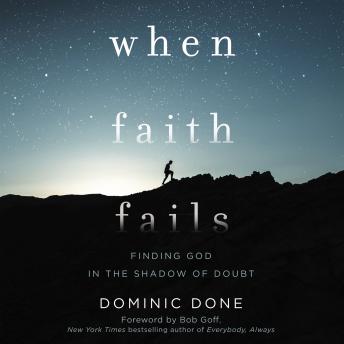
8 Quotes From “When Faith Fails”

We’ve all been there: an unexpected calamity has rocked our faith, making us question what we previously believed to be true. What do we do with these times of doubt? Dominic Done has given us a helpful resource in his book When Faith Fails. Please check out my full book review by clicking here. 

“An anonymous fourteenth-century mystic once said that we find ourselves ‘in a cloud of unknowing.’ That is why we doubt. We don’t always see the sky. However, what we have to be reminded of here is that all of this was part of God’s design. He purposefully made it like this. He built limits into the system. It wasn’t an accident. He knew we would have to live with so many unknowns. And yet He chose for the human story to look this way. … When God decided to create, He could have said yes to a thousand other possibilities. But He didn’t. He chose this world. He chose you. He chose me. Limits and all. And still, He called it ‘good.’ All of this means that doubts are normal. They’re a natural consequence of living in this world.” 

“If all we care about is certainty, we lose the beauty of mystery. If all we value is explanation, we lose the joy of exploration.” 

“We need to stop vilifying those who live in the tension of conflicted faith. Doubt isn’t a malevolent demon that we need to exorcise out of our brothers and sisters with sanctimonious words. It’s part of their story. It’s part of my story. Jude 22 says, ‘Be merciful to those who doubt.’” 

“What if God made the world like this to push us to deeper faith? … Doubts aren’t just an obstacle; they’re an opportunity. Uncertainty can lead us into the beautiful mystery we call God.” 

“What’s vital to note here is that when the Bible uses the word doubt it’s different from the word unbelief (Matthew 14:31 and Hebrews 3:19). This is important because some Christians assume that doubt and unbelief are synonymous. They’re not. Doubt can lead to unbelief, just as doubt can lead to faith. But the two are not the same. Doubt says, ‘I am unsure of what is right.’ Unbelief says, ‘I don’t care about what is right.’ Doubt is searching for the light. Unbelief is choosing to gouge out your eyes. Doubt is pursuing truth, wherever it may lead. Unbelief is content with a lie. Doubt exists somewhere between belief and unbelief. Doubt is the moment of tension, which in and of itself isn’t good or bad. It’s somewhere in between. … Doubt isn’t the end of the story; it’s the suspense within it.” 

“Doubt’s greatest strength is secrecy.… But if we name our doubts and drag them into the light, we may find resolution, or we may discover the tension of authentically living in a doubt-filled faith.” 

“Abraham and Sarah doubted God’s promise (Genesis 17:17-22; 18:10-15). Gideon doubted his calling (Judges 6:36). Job doubted God’s character (Job 7:20-21). John the Baptist, whom Jesus called ‘the greatest of all the prophets,’ doubted if Jesus was the Messiah (Matthew 11:1-6). Peter doubted his faith (Mark 14:66-72). Thomas doubted the resurrection (John 20:24-29). The list goes on. Scripture doesn’t edit out the stories of those who struggled to believe. It weaves their heart-rending struggles into the narrative.” 

“If your faith is being shaken by the suffering you see, don’t be content with cheesy Christian truisms or Facebook clichés. … Lean into the chaos. Cry out to God. Talk to people who have gone through pain and have come out on the other side awash with hope. Immerse yourself in Scripture’s lament and redemption. Dare to say, ‘I will not let You go until You bless me.’” 

Am I The Genuine Article?

Examine and test and evaluate your own selves to see whether you are holding to your faith and showing the proper fruits of it. Test and prove yourselves… (2 Corinthians 13:5). 

The root word for discern in the New Testament Greek is dokimazō. This word means to examine something—scrutinize it closely—to see if it is genuine. We’re instructed to take a close, scrutinizing look at…

  • …our beliefs about God (Romans 1:28)
  • …our understanding of God’s will for our lives (Romans 12:2)
  • …our relationship with God and others (1 Corinthians 11:28) 
  • …our faith (2 Corinthians 13:5)
  • …our motives (2 Thessalonians 2:4)
  • …the teaching we are listening to (1 John 4:1) 

In his book Romans: God’s Glory, Donald Grey Barnhouse discussed the root word for discern (the Greek word dokimos). He said, 

“In the ancient world there was no banking system as we know it today, and no paper money. All money was made from metal, heated until liquid, poured into moulds and allowed to cool. When the coins were cooled, it was necessary to smooth off the uneven edges. The coins were comparatively soft, and of course many people shaved them closely. In one century, more than eighty laws were passed in Athens to stop the practice of whittling down the coins then in circulation. But some money-changers were men of integrity, who would accept no counterfeit money; they were men of honour who put only genuine, full-weight money into circulation. Such men were called dokimos, and this word is used here for the Christian as he is to be seen by the world.” (emphasis mine)

This should be said of every Christian: “They are dokimos—men and women who are honorable and are the real deal. They don’t shave anything off; they don’t water anything down. They can be scrutinized closely and found to be the genuine article.” 

The Bible makes it clear that before the world can call us dokimos, the Holy Spirit first has to stamp that word on us. It’s only after we have allowed Him to scrutinize (and correct) our beliefs, relationships, faith, and motives that we can be labeled dokimos. When we are the real deal in His presence, the world cannot help but see the genuine article when they examine us. 

Let’s live this way! May both God and the watching world be able to call us dokimos! 

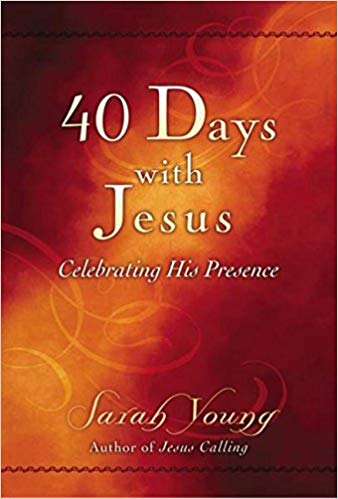
40 Days With Jesus (book review)

Martin Luther said, “The Bible is alive, it speaks to me.” Truly, the Bible is God’s Word speaking to us every time we peer into its pages, so I love how Sarah Young strings passages of Scripture together to allow us to hear Jesus speaking to us in a first-person voice. 

40 Days With Jesus was designed as a series of readings during the Lenten season, as we walk with Jesus to the Cross and His resurrection from the dead. But any time is a good time when we can walk with Jesus and hear His unmistakable voice reassuring our hearts. 

Are you walking through a dark time in your life? Know that Jesus is walking with you. 

Do you want to live a life of purpose and lasting value? Listen to Jesus counsel you. 

Are you standing at a crossroads trying to make the right decision? Let Jesus point the way. 

Each time I read a Sarah Young book, it reignites my heart to read the Bible as though Jesus is personally speaking to me. Because He is! 

40 Days With Jesus is a great starting point for you to learn to hear Jesus speaking to you every time you open your Bible. The Holy Spirit will then use those words read in your quiet time to continue to bring you direction and reassurance all throughout your day (John 14:26). 

I highly recommend this book (or any other book by Sarah Young)!

Does Self-Help Get God’s Help?

This is part 1 in our series looking at phrases that sound biblical and then asking, “Is that in the Bible? 

Statement #1—God helps those who help themselves. Is that in the Bible? No, it is not! 

The reason why I think people have accepted this as biblical is an incorrect view of God. 

  1. Humanism says God is us, which makes us believe, “If it’s going to be, it’s up to me.” 
  2. Fatalism says there is no God and therefore no meaning to life, which makes us believe, “The outcome is what it is and no one has any say in the matter.” 
  3. Deism says there is a God, but it’s hard to get His attention, which makes us believe “He is either disinterested in me or unapproachable. He’s only available for the ‘big’ things.” 

The Bible flat-out rejects all three of these isms. 

Instead, we see a loving, approachable God. One who is both all-powerful and all-loving. He says things like…

  • I made you and know everything about you, and I remain infinitely interested and intimately involved in your life 
  • Come to Me and I will give you rest
  • I want you to cast all your anxieties on Me
  • Don’t be anxious about anything, but tell Me about everything that troubles you (Psalm 139:1-18; Matthew 11:28-29; 1 Peter 5:7; Philippians 4:6)

Not only is “God helps those who help themselves” untrue, but the exact opposite is also true—God helps those who cannot help themselves! 

In Isaiah 40:28-29, we read that God gives strength to the weary and increases the power of the weak. 

“Yes, it is our strength, not our weakness, that is our hindrance and stumbling block.” —Horatius Bonar 

God gives power to the weak. He gives strength to those with no might of their own. God does NOT help those who think they can help themselves! God helps those who cannot help themselves! This is what Jesus came to do, and why we should rejoice in the fact that He does indeed help those who could never rescue themselves (Isaiah 53:4-5; 2 Corinthians 12:9)!

It is our can’ts that God uses as His opportunities to show how limitless He is. Our limitations magnify His love and His power. 

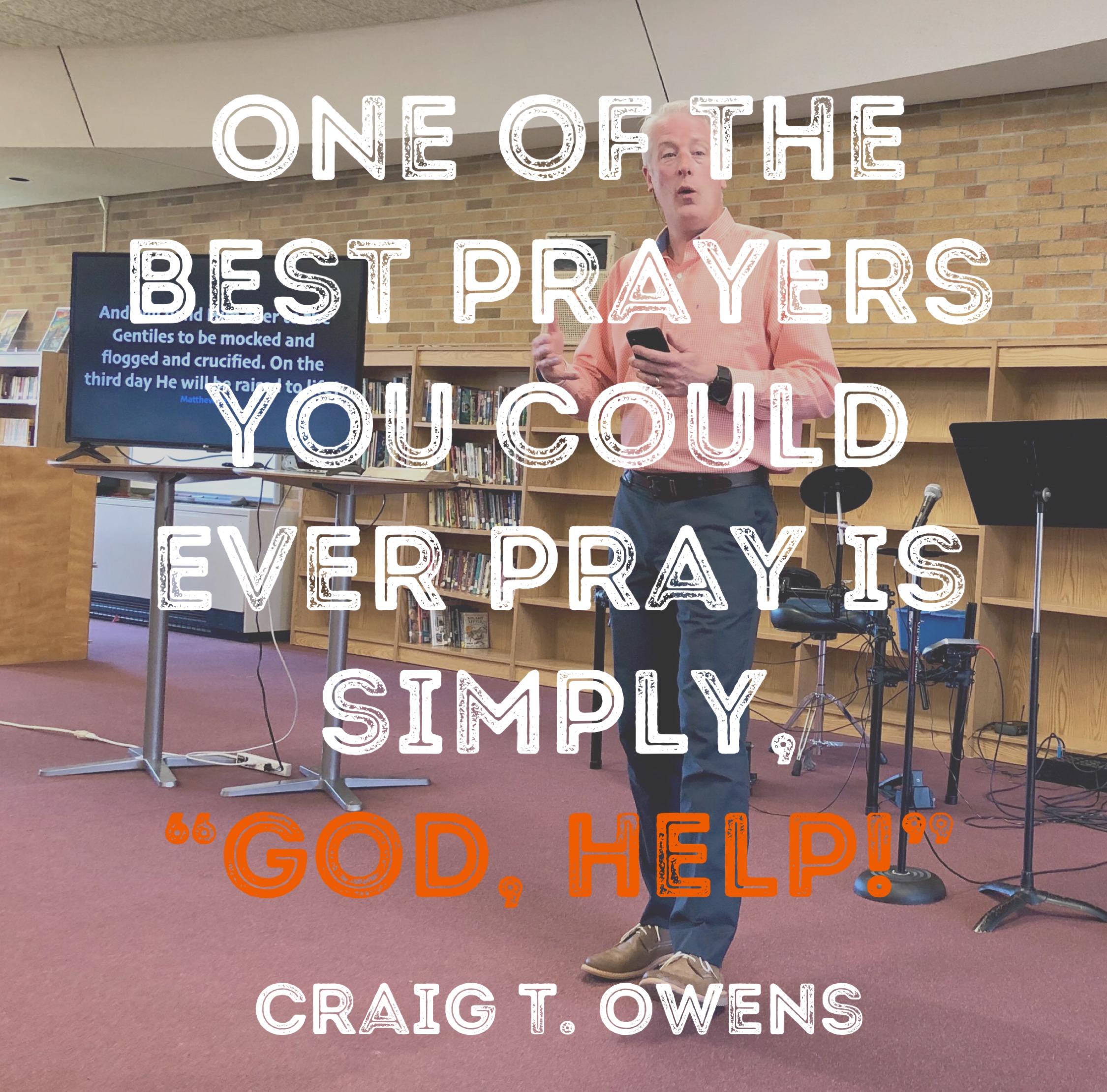
One of the best prayers you could ever pray is simply, “God, help!” This simple prayer acknowledges in just two words that you can’t but He most assuredly can! 

But those who wait for the Lord—who expect, look for, and hope in Him—shall change and renew their strength and power; they shall lift their wings and mount up close to God as eagles mount up to the sun; they shall run and not be weary, they shall walk and not faint or become tired. (Isaiah 40:31 AMP) 

Join me next week as we continue to explore various statements and ask, “Is that in the Bible? 

Thursdays With Spurgeon—The Blessing Of A Promise-Keeping God

This is a weekly series with things I’m reading and pondering from Charles Spurgeon. You can read the original seed thought here, or type “Thursdays With Spurgeon” in the search box to read more entries.

The Blessing Of A Promise-Keeping God

     I do not believe we can preach the gospel if we do not preach justification by faith without works; or unless we preach the sovereignty of God in His dispensation of grace; or unless we exalt the electing, unchangeable, eternal, immutable, conquering love of Jehovah. … 

     All the purposes of man have been defeated, but not the purposes of God. The promises of man may be broken. Many of them are made to be broken. But the promises of God shall all be fulfilled. He is a promise-maker, but He never was a promise-breaker; He is a promise-keeping God, and every one of His people shall prove it to be so.  

From The Autobiography Of Charles Spurgeon

God is not a man, so He does not lie. He is not human, so He does not change His mind. Has He ever spoken and failed to act? Has He ever promised and not carried it through? (Number 23:19)

For the word of God will never fail. (Luke 1:37)

Now I am about to go the way of all the earth. You know with all your heart and soul that not one of all the good promises the Lord your God gave you has failed. Every promise has been fulfilled; not one has failed. (Joshua 23:14)

But joyful are those who have the God of Israel as their helper, whose hope is in the Lord their God. He made heaven and earth, the sea, and everything in them. He keeps every promise forever. (Psalm 146:5-6) 

For all of God’s promises have been fulfilled in Christ with a resounding “Yes!” And through Christ, our “Amen” (which means “Yes”) ascends to God for His glory. (2 Corinthians 1:20)

Our God is a promise-making, promise-keeping God!