Resurrection Appearances Of Jesus

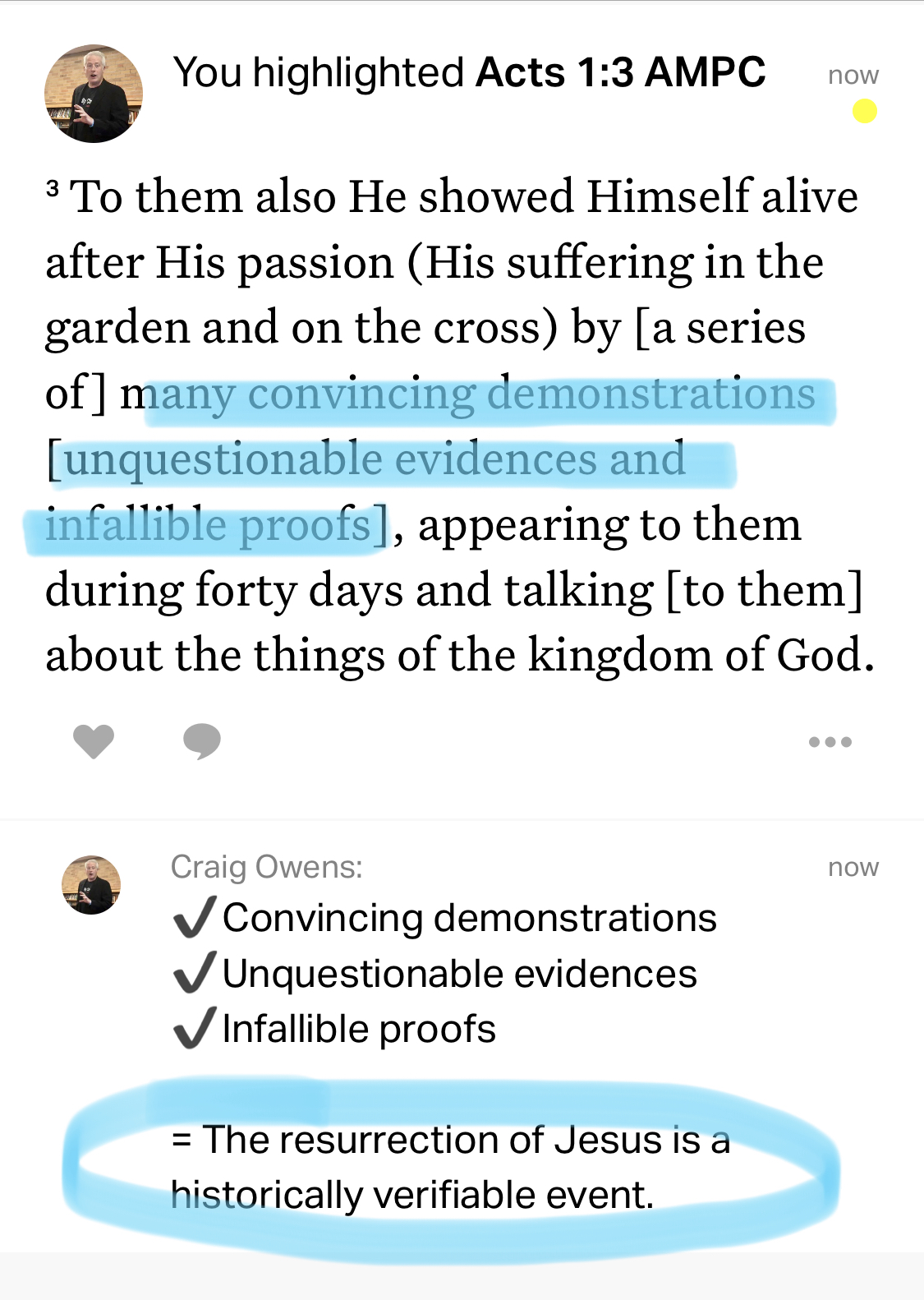
Jesus gave us ample evidence of His bodily resurrection. This is a recreation of a chart found in The Quest Study Bible:I also previously shared an infographic from The Infographic Bible. The historicity of the life, death, and resurrection of Jesus is firmly established making it a historically verifiable event.

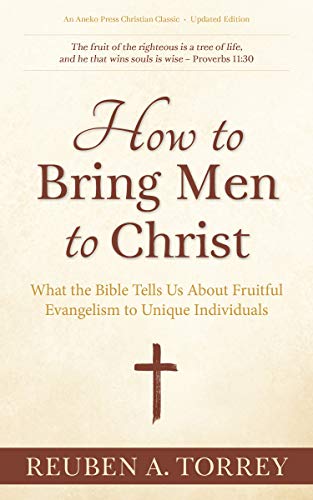
How To Bring Men To Christ (book review)

Listen to the podcast of this post by clicking on the player below, and you can also subscribe on Apple or Spotify.

Among the last words Jesus spoke to His disciples was His commission that after they were empowered by the baptism in the Holy Spirit they should go into all the world, preaching the gospel, and making more disciples of Jesus. R.A. Torrey spent his life fulfilling this commission, and he shares the lessons he learned in his book How To Bring Men To Christ. 

This book is a highly practical guide that is set up almost like an encyclopedia. After a brief introduction, the second chapter is simply entitled “How to begin,” and it outlines the broad, big-picture strokes. Then the next nine chapters are all entitled “Dealing with….” Torrey gives us a detailed listing of passages of Scripture, including how and when to use them, for various types of people, such as: the indifferent, those anxious about their eternal fate, those with false hopes, those who lack assurance of salvation, skeptics, complainers, and the hardheaded. Torrey gives the Christian soul-winner all of the biblical help they will need, plus some personal examples of how he employed these scriptures himself. 

The final two chapters of this book focus on the role of the Holy Spirit in helping Christians progress in their own sanctification and grow in their maturity as soul winners. 

How To Bring Men To Christ can probably be read through quite quickly, but it is a book that many Christians will want to put in a place of reference where they can return to it again and again. All Christians who want to live out the Great Commission that was given to us by Jesus Himself will want to read this highly practical book.

►► Would you please prayerfully consider supporting this ministry? ◀︎◀︎

Thursdays With Spurgeon—Do I Have Faith?

This is a weekly series with things I’m reading and pondering from Charles Spurgeon. You can read the original seed thought here, or type “Thursdays With Spurgeon” in the search box to read more entries.

Listen to the podcast of this post by clicking on the player below, and you can also subscribe on iTunes or Spotify.

Do I Have Faith? 

     Man cannot please God without bringing to himself a great amount of happiness…. It is because [God] gives him the blessings of adoption, pours upon him the bounties of His grace, makes him a blessed man in this life, and ensures him a crown of everlasting life, which he will wear and which will shine with unfading luster when the wreaths of earth’s glory have all been melted away. … If, then, we are right in saying that to please God is to be happy, the one important question is, how can I please God? … 

     Without faith it is impossible to please [God]’ (Hebrews 11:6). That is to say, do what you may, strive as earnestly as you can, live as excellently as you please, make what sacrifices you choose, be as eminent as you can for everything that is lovely and of good repute—yet none of these things can be pleasing to God unless they are mixed with faith. …  

     Have you faith? Shall I help you to answer that question? I will give you three tests, as briefly as ever I can, not to weary you….

    1. He who has faith has renounced his own righteousness. 
    2. Then true faith may be known by this: It begets a great esteem for the person of Christ. Do you love Christ? Could you die for Him? Do you seek to serve Him? Do you love His people? 
    3. He who has true faith will have true obedience. If a man says he has faith and has no works, he lies. If any man declares that he believes in Christ and yet does not lead a holy life, he lies.

From Faith

Both my parents and my grandparents on both sides of my family tree were Christians. They had faith in the God of the Bible. In my younger years, I thought just believing what they believed was good enough. But I had to come to a point where I could say, “I don’t have faith in God because my parents and grandparents do, but because I really believe it is true.” In other words, not just Jesus is the Savior, but Jesus is MY Savior. 

Does having faith mean I have no doubts? No, there are still things I don’t fully understand. Faith means believing God for the things I do understand and still trusting Him with the things I don’t understand yet. 

That’s pretty much the resume of every person in the great faith chapter of the Bible (Hebrews 11). For instance, Noah didn’t understand what a worldwide flood was, but he built an ark in faith; Abraham didn’t know how God would make him the father of many nations, but he moved from his homeland by faith; Joseph didn’t know how God would deliver the Israelites from Egypt, but he gave instructions by faith; and on and on the list goes. 

I commented on Hebrews 11:4 on YouVersion, “I want to live my life so in step with God that people can say of me as the writer of Hebrews said of Abel: ‘Although Craig is long dead, he still speaks to us by his example of faith.’ Don’t you want that for your life too?” 

The Bible itself tells us that faith comes into our heart by hearing the Word of God. If your faith is struggling, I would encourage you to open your Bible, ask the Holy Spirit to illuminate the Word to you, and begin reading with an open heart and mind. That’s exactly what I did, and I came to the conclusion that I believed the God of the Bible not because my parents did, but because He showed Himself to me to be Real. 

If you are struggling with your faith in God, I’d love to talk with you. Please get in touch with me and let’s begin a dialogue.

Godly Anger

Listen to the podcast of this post by clicking on the player below, and you can also subscribe on iTunes or Spotify.

…his anger was aroused… (Job 32:5).

Throughout the story of Job, there is very little insight from the story’s narrator. Other than the first two chapters which set up the story, and the epilogue in the last chapter, the narrator barely utters a word.

That is until a fourth man, who has been on the scene the whole time Job and his friends have been debating, finally cannot help but speak out. His name is Elihu. 

Elihu has been present the whole time Job has been speaking with his other friends, but because Elihu is the youngest, he has held his tongue, awaiting an opportunity to speak. Now the narrator tells us that Elihu “became very angry with Job for justifying himself rather than God. He was also angry with the three friends, because they had found no way to refute Job, and yet had condemned him. … When he saw that the three men had nothing more to say, his anger was aroused. 

The phrase “anger was aroused” is used 31 times in the Bible. Every single instance refers to God’s anger except here. In fact, God uses the same phrase in chapter 42 that Elihu uses here. 

Two things seem to arouse the anger of both God and Elihu (whose name, but the way, means “He is my God”): 

  1. Job justifying himself rather than God 
  2. Job’s friends condemning Job without evidence; in other words, they put themselves in the place of God the Judge  

Here’s what Elihu knew—

To not get angry at the things that anger God is itself a sin.

I need to pay attention to my anger, and I need to express my anger in a respectful, appropriate way. It is wrong to ignore or suppress godly anger, but it is equally wrong to sin in the way that I express godly anger. Remember that the apostle Paul doesn’t say, “Don’t get angry,” but he says, “When you get angry, do not sin” (Ephesians 4:26). 

When God finally speaks in this story, He expresses His anger at the same things Elihu addressed. Interestingly, God says to the oldest friend Eliphaz, “I am angry with you and your two friends,” but God doesn’t call out Elihu for any of his words.  

God gets angry, perhaps more than anyone else in the Bible does, but He never sins in the expression of His anger. We need to make sure that what makes us angry is also what makes God angry. And we need to make sure that our anger is never expressed sinfully. 

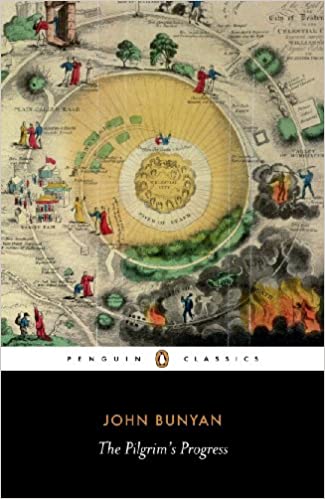
The Pilgrim’s Progress (book review)

Listen to the podcast of this post by clicking on the player below, and you can also subscribe on iTunes or Spotify.

Charles Spurgeon said of John Bunyan, “Prick him anywhere—his blood is Bibline, the very essence of the Bible flows from him. He cannot speak without quoting a text, for his very soul is full of the Word of God.” Although this can be said of all Bunyan’s books and sermons, it is abundantly clear in The Pilgrim’s Progress. 

In my mind it’s easy to classify this book as “a classic” because of its enduring message. The journey through life for pilgrims like Christian, Hopeful, Faithful, Christiana, and you and me resonate with readers all over the world. In over the nearly 350 years since this book was first published, the pilgrimage has connected with Christians and seekers alike because it is the pilgrimage we are all on. 

In The Pilgrim’s Progress it’s not hard to identify the biblical messages because Bunyan literally names them for what they are, using names like Talkative, Mr. Worldly Wiseman, the Giant Despair, Mr. Great-heart, the Interpreter, and many more. Some biblical stories are portrayed in this book just as they are in the Bible, while others are fairly easily seen for all modern-day pilgrims to learn their lessons. 

As I’ve said before about this book, it’s an excellent one for parents to read aloud to their children. Then as their kiddos get a bit older, there is an easy-to-read version called Little Pilgrim’s Progress for them to read on their own. But I still highly recommend the original version of Bunyan’s classic in its 17th-century English. To me, the Old English in a story like this makes it feel like an epic adventure story, which, in fact, it is because it is every Christian’s story still to this day. 

I can’t urge you enough to make The Pilgrim’s Progress a friend that you visit often.

Book Reviews From 2020

Thursdays With Spurgeon—An Exhortation To Preachers

This is a weekly series with things I’m reading and pondering from Charles Spurgeon. You can read the original seed thought here, or type “Thursdays With Spurgeon” in the search box to read more entries.

An Exhortation To Preachers 

He will glorify Me, for He will take of what is Mine and declare it to you. All things that the Father has are Mine. Therefore I said that He will take of Mine and declare it to you. (John 16:14-15) 

     Ah, brothers, the Holy Spirit never comes to glorify us, or to glorify a denomination, or, I think, even to glorify a systematic arrangement of doctrines! He comes to glorify Christ! If we want to be in accord with Him, we must preach in order to glorify Christ. May we never have this thought: ‘I will put that bit in. It will sound well….’  No, no! 

     I would say, ‘Brother, though it is a very delightful piece, strike that out, because if you have had a thought of that kind about it, you had better not put yourself in the way of temptation by using it.’ … 

     Well then, it may be very admirable, and further, it might be a very right thing to give them that precious piece; but if you have that thought about it, strike it out! Strike it out ruthlessly! Say, ‘No, no, no! If it is not distinctly my aim to glorify Christ, I am not in accord with the aim of the Holy Spirit and I cannot expect His help!’ … 

     How then does the Holy Spirit glorify Christ? It is very beautiful to think that He glorifies Christ by showing Christ’s things. If you wanted to do a honor to a man, you would, perhaps, take him a present to decorate his house. But here, if you want to glorify Christ, you must go and take the things out of Christ’s house ‘the things of Christ.’ … 

     Again, I think that the blessed Spirit glorifies Christ by showing us the things of Christ as Christ’s. Oh, to be pardoned! Yes, it is a great thing, but to find that pardon in His wounds, that is a greater thing! Oh, to get peace! Yes, but to find that peace in the blood of His Cross! … That it came from Christ is the best thing about the best thing that ever came from Christ! …  

     He will glorify Me, for He will take of what is Mine and declare it to you.’ Yes, it does glorify Christ for the Holy Spirit to show Christ to us. … Since it is for the honor of Christ for His things to be shown to men, He will show them to us, that we may go and show them to other people.

From Honey In My Mouth

My fellow pastor, I cannot add anything to these wise words except this simple exhortation: Read these words again and ask the Holy Spirit to show you how you can more accurately live this out in your sermon preparation and preaching. 

God bless you, my friend!

Obvious Consequences

I think these correlations are pretty visible in the life of King Jehoshaphat. See if you can spot them too. 

Jehoshaphat “followed [God’s] commands” and “the Lord established the kingdom under his control.” 

Jehoshaphat sent Levites out to teach the people God’s law and “the fear of the Lord fell on all the kingdoms of the land surrounding Judah.” 

Jehoshaphat cried out to God while being pursued by enemies, “and the Lord helped him.” 

Jehoshaphat allied himself with Israel—marrying Ahab’s daughter and going to war with Israel—and he was told, “the wrath of the Lord is on you.” 

“Jehoshaphat resolved to inquire of the Lord” when the enemy was poised to attack and God gave him assurance of victory. 

Jehoshaphat appointed worshipers to lead the army and “the Lord set ambushes” to defeat the enemy, causing His fear to once again fall on the surrounding nations. 

Jehoshaphat allied himself with Israel again and their joint sailing venture ended in shipwreck. 

[check out the biblical texts for all of the above examples by clicking here] 

It seems to me that the blessings of following God and doing things His way, and the consequences of ignoring His commands, are so plainly visible. There really is no excuse for my ignorance on this.

The question is: Will I do things God’s way and enjoy His blessings, or will I continue to try to do things my way and risk God’s wrath?

Thursdays With Spurgeon—The Unity Of Scripture

This is a weekly series with things I’m reading and pondering from Charles Spurgeon. You can read the original seed thought here, or type “Thursdays With Spurgeon” in the search box to read more entries.

The Unity Of Scripture

He will glorify Me, for He will take of what is Mine and declare it to you. All things that the Father has are Mine. Therefore I said that He will take of Mine and declare it to you. (John 16:14-15) 

     Let us never allow anybody to divide between the word of the apostles and the word of Christ! Our Savior has joined them together. ‘I do not pray for these alone, but also for those who will believe in Me through their word’ (John 17:20). And if any begin rejecting the apostolic word, it will be outside the number for whom Christ prays. …  

     Such a doctrine that we are sometimes taunted about as being not revealed by Christ but by His apostles were all revealed by Christ, every one of them! They can all be found in His teaching, but they are very much in parabolic form. It is after He has gone up into glory and has prepared a people, by His Spirit, to understand the truths of God more fully that He sends His apostles and says, ‘Go forth, and open up to those whom I have chosen out of the world the meaning of all I said.’ The meaning is all there, just as all the New Testament is in the Old! … [Jesus Christ] is the Old Testament to which the Epistles come in as a kind of New Testament, but they are all one and indivisible. They cannot be separated. …  

     Remember that the quickest way into a text is praying in the Holy Spirit. Pray the chapter over! I do not hesitate to say that if a chapter is read upon one’s knees, looking up at every word to Him who gave it, the meaning will come to you with infinitely more weight than by any other method of studying it. ‘He will glorify Me, for He will take of what is Mine and declare it to you.’ He will redeliver the Master’s message to you in the fullness of its meaning!

From Honey In My Mouth

Augustine wrote, “Scripture is the unus sermo Dei—the one sermon of God.” 

There is one consistent message in the Bible from Genesis 1:1 through Revelation 22:21, and the Holy Spirit wants to reveal that message to us. He is our Helper that will illuminate to our lives what has already been inspired in the Scripture. 

Jesus is Jehovah God from beginning to end. He is the “one sermon of God” that we can read and understand. Think about this: the same Spirit who inspired the pens of the biblical writers is the same Spirit in you who can help you understand and apply those words to your life. More than that, the Holy Spirit wants to make the Word of God clear to you. 

God is glorified and you are edified when Scripture comes alive in your heart and mind. 

Peter wrote this about Paul, “His letters contain some things that are hard to understand….” But if we don’t take the time to wrestle with that passage, Peter says this is what happens next: “…which ignorant and unstable people distort, as they do the other Scriptures, to their own destruction” (2 Peter 3:16). So, as Spurgeon suggests, begin your Bible reading time in prayer. Then if you come to a difficult text, don’t rush past it and don’t turn too quickly to what another human has written in a commentary, but ask the Holy Spirit to help. (I shared a 5-step process I use for these challenging passages here.) 

Pray, read, pray, apply, pray. The Holy Spirit WILL help you! “Remember that the quickest way into a text is praying in the Holy Spirit.”


Tongues Of Fire (book review)

I am blessed to be the son of Pentecostal parents; and both of my parents come from Pentecostal parents too, as well as two Pentecostal great-grandmothers. That makes me a fourth-generation “holy roller”! But my Pentecostal heritage actually goes back farther than that, which made reading Tongues Of Fire such an enjoyable read. 

This book is billed as a 50-day devotional, with excerpts from sermons and writings of some of the best-known Pentecostals of the last 150 years. Yes, there are some “newcomers” that have some essays in this book as well, but I found the real substantive, enlivening writings to be from those old-timers. 

One of those old-timers said, “The Spirit is the first power we practically experience, but the last power we come to understand” (Oswald Chambers). How sadly true that so many Christians dig no deeper after their moment of conversion! 

It took me much longer than 50 days to read through these devotionals because I spent time pondering the messages and introspecting on their application to my life. 

Whether you are a seasoned Pentecostal, a newcomer, or someone simply hungry for more of God’s Spirit to be manifested in your life, you will enjoy diving into Tongues Of Fire.