24 Quotes from “Andrew Murray’s Daily Reader”

Andrew Murray Daily ReaderOver the course of the last year in reading Andrew Murray’s Daily Reader, I literally took down over 40 pages of Murray’s quotes! The quotes I have listed below are not my favorites, but just some of the quotes from the first few pages of my notes. You can read my book review of this truly amazing devotional book by clicking here.

“The true practice of Christianity strives toward having the character of Christ so formed in us that in our most common activities His temper and disposition will be displayed.”

“May this high privilege awaken your desire for relationship with God, to dwell in sweet fellowship with Him and He with you. May it become impossible for you to be satisfied with anything less.”

“The power to believe a promise depends entirely on our faith in the one who promises. It is only when we enjoy a personal loving relationship with God Himself that our whole being is opened up to the mighty influence of His holy presence and the capacity will be developed in us for believing that He gives whatever we ask.” 

“Sin consists in nothing but this, that man determined to be something and would not allow God to be everything.”

“Even as believers we often make it our first aim to find out who we are, what we desire, what pleases us and makes us happy. Then we bring in God in the second place to secure this happiness.” 

“Nothing except constant fellowship with God can teach you as His child to hate sin as God hates it. Nothing but the close fellowship of the living Christ can make it possible for you to understand what sin is and to detest it. Without this deeper understanding of sin, we cannot truly appropriate the victory that Christ made possible for us.”

“To pray constantly only for ourselves is a mark of failure in prayer. It is in intercession for others that our faith and love and perseverance will be stirred up and that the power of the Spirit will be found to equip us for bringing salvation to people.” 

“Here is God’s provision for our holiness, God’s response to our question ‘How can we be holy?’ When we hear the call ‘Be holy, even as I am holy,’ it seems as if there is, and ever must be, a great gulf between the holiness of God and that of humankind. But in Christ is the bridge that spans the gulf—or better, His fullness has filled it up.”

“To worship is our highest privilege. We were created for fellowship with God: of that fellowship, worship is the most sublime expression. All the disciplines of the Christian life—meditation and prayer, love and faith, surrender and obedience—culminate in worship. Recognizing what God is in His holiness, His glory, and His love; realizing what I am as a sinful creature and as the Father’s redeemed child, in worship I gather up my whole being and present myself to my God. I offer Him the adoration and the glory that is due Him. The truest, fullest, and nearest approach to God is worship.”

“We are in such a habit of evaluating God and His work in us by what we feel that it is very likely that on some occasions we will be discouraged because we do not feel any special blessing. Above everything, when you wait on God, do so in the spirit of hope. It is God in His glory, His power, and His love who is longing to bless you.”

“I would like to convince every believer that Jesus loves you; He does not wish to be separated from you for a moment. He cannot bear it. No mother has delighted more in the baby in her arms than does Christ delight in you. He wants both intimate and unceasing fellowship with you. Receive it, dear believer, and say, ‘If it is possible, God helping me, I must have this filling of the Holy Spirit so that I may know and sense the presence of Jesus always dwelling in my heart.’” 

“Discovering the New Testament standard of commitment is not an easy matter. Our preconceived opinions blind us; our surroundings will exercise a powerful influence. Unless there is a sincere desire to truly know the entire will of God, and a prayerful dependence on the Holy Spirit’s teaching, we will search in vain.”

“If you would be full of the Spirit, be full of the Word. … Just as the Scriptures were spoken and written down as men were moved by the Spirit of God, it is only by the Spirit of God that they can be fully understood.” 

“Our waiting on God can have no higher goal than to have His light shine on us and in us and through us all day.”

“May our daily lives be the bright and blessed proof that a hidden power dwells within, preparing us for the glory to be revealed. May our abiding in Christ the Glorified One be our strength to live to the glory of the Father, our enabling to share in the glory of the Son.” 

“Take every opportunity to humble yourself before God and man. Accept with gratitude everything that God allows from within or without, from friend or enemy, in nature or in grace, to remind you of your need for humbling and to help you in it. Reckon humility to be the mother-virtue, your very first duty before God, the one perpetual safeguard of the soul, and set your heart upon it as the source of all blessing. The promise is divine and sure: He that humbles himself shall be exalted.”

“Love for God and love for our neighbor are inseparable; prayer from a heart that is not right with God or that cannot get along with others can have no real effect. Faith and love are interdependent.”

“In the annoyances of daily life, we must be careful not to excuse a hasty temper, sharp words, or rash judgment by saying that we meant no harm, that we did not hold the anger long, or that it is too much to ask of our human nature not to behave in such a manner. Instead, we must seek to forgive as God in Christ has forgiven us, diffusing anger and judgment.”

“God has called us to live a life in the supernatural. Allow your devotional time each day to be as the open gate of heaven through which light and power stream into your waiting heart and from which you go out to walk with God all day.”

“Every soul is worth more than the world and nothing less than the price paid for it by Christ’s blood. Each is within reach of the power that can be tapped through intercession. We have no concept of the magnitude of the work to be done by God’s intercessors or we would cry out to God for an outpouring of the Spirit of intercession.”

“Prayer and the Word are inseparably linked; power in the use of either depends upon the presence of the other. The Word gives you a subject for prayer. It shows you the path of prayer, telling you how God would have you come. It gives you the power for prayer—courage in the assurance that you will be heard. And it brings you the answer to prayer as it teaches what God will do for you. On the other hand, prayer prepares your heart to receive the Word from God himself, to receive spiritual understanding from the Spirit, and to build faith that participates in its mighty working.” 

“God’s purpose was to bring us back to Himself as our Creator, in whose fellowship and glory our happiness can alone be found. God could attain His purposes and satisfy the love of His own heart only by bringing us into complete union with Christ, so that in Him we can be as near to God as Christ is. Oh, the mystery of the love of God!”

“The knowledge of God’s Father-love is the first and simplest—but also the last and highest—lesson in the school of prayer. It is in personal relationship to the living God and fellowship with Him that prayer begins.” 

“As one of His redeemed ones you are His delight, and all His desire is to you, with the longing of a love that is stronger than death, and which many waters cannot quench. His heart yearns for you, seeking your fellowship and your love. If it were needed, He would die again to possess you. As the Father loved the Son, and could not live without Him—this is how Jesus loves you. His life is bound up in yours; you are to Him inexpressibly more indispensable and precious than you can ever know.”

‘Nuff Said

'Nuff SaidWould you like God to bless your work? Would you like Him to bless all of your work?

He said it pretty simply. There are two actions / attitudes (because the actions must be done with the right attitude) that will bring God’s blessings:

  1. Tithe on what you earn—Deuteronomy 14:28-29
  2. Help the poor—Deuteronomy 15:7-11

‘Nuff said!

15 Quotes From “Stopping Words That Hurt”

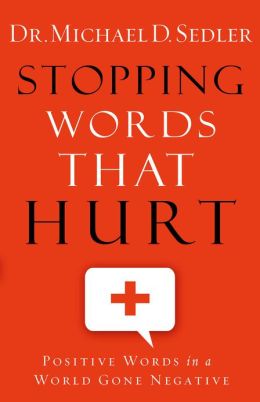
Stopping Words That HurtThere was so much for me to process in Stopping Words That Hurt by Dr. Michael Sedler (you can read my full book review by clicking here). If you’ve ever been hurt by someone else’s words about you, there is help for you in this book. If you’ve ever hurt someone else with the words you’ve spoken, there is help for you in this book.

Bottom line: this book can help cut-off hurtful words and evil reports before they gain momentum. Please read this book!

Here are just a few quotes that stood out to me—

“We are so brainwashed into believing that it is permissible to violate one another verbally that it takes a concentrated effort to begin to have a new thought pattern.”

“It is imperative that you understand this truth: Just listening to an evil report can do tremendous damage to your perspective, viewpoint and overall spirit. … Joining in a negatively-driven conversation, no matter how small the participation, may destroy the testimony of a life. Listening to grumbling and ungodly attitudes eventually contaminates the spirit. The more we allow discontent to be taken in by our spirits, the greater the tendency to compromise our own speech patterns. We are being called to a high standard of living where the rewards for our faithfulness are eternal.”

“It is usual for most of us to listen without questioning. We oftentimes want to support a friend, supervisor or person of influence. In fact, a messenger may single us out because she knows we will not disagree with or question her. Are we being used because of our own gullibility and blindness to negative speech patterns?”

“We must have our antennas up and be prepared when we hear negative comments and subtle innuendos about others.”

“If we are unable to recognize the potential destruction caused by negative words, we will eventually cause injury to those around us. And, sadly, we often deceive ourselves into believing there was justification for our actions.”

“It is rude to knowingly be a part of gossip. It is not good manners to listen to verbal assaults and blatant character assassinations of people who are not present to defend themselves. It is foolishness and ignorance. We must open our eyes and discern when we are listening to evil reports in order to be accepted by the crowd.”

“A bold positive response can put out the fire.”

“Learn to avoid the trap of falling into emotional identification by getting information for yourself. Compare your feelings and thoughts with the Bible’s guidelines. Look for corroboration or contradictions as you assess the situation. And, finally, give a little more weight to the perspective of those who have been faithful, trustworthy and proven people of integrity than the words of a stranger or ‘expert’ who has no track record of honesty.”

“Fear can draw us toward God or pull us away. It can create a desire in us to cling to the truth or alter our perception of the truth. While satan wants to use fear to rob us of our faith in God, we need to continue to speak words of truth and confidence regarding our place with Christ.”

“Impurity occurs when we hear evil reports with our natural ears and minds without seeking spiritual wisdom and understanding. If we accept the words of others as truth, we will become filled with a mixture of philosophies, attitudes and beliefs.”

“A person who has responsibility over others also has great influence. If he or she shares a negative report with the general population, those with unguarded spirits will become contaminated.”

“I speak a strong word of caution to husbands and wives, significant others and close family members. We often take on the offense when a loved one is wronged or slighted. And though they may work through the issue, we still hold on to the anger and bitterness.”

“It is difficult to ‘have ears that hear’ at this point in the process. First of all, we do not see ourselves as defiled or polluted. We think we are right and can handle everything ourselves. We are suspicious about counsel. We question the motives of those giving it. We actually fight the process of cleansing using words such as manipulating, self-centered and controlling to describe the interventions of others. We accuse even our closest friends and supporters of being insensitive and uncaring. Whereas once we received challenges and guidance from others, now we meet each comment or suggestion with disdain and animosity. It is during this phase that people have a tendency to reject the process of cleansing, choosing instead to walk away from purity and to blame and curse others for their lack of support and love.”

“In order to heal with words, we must be willing to be persistent with them. Jesus frequently verbalized His love for His disciples. Once is not enough! Encouragement, praise and positive words continue to feed the soul in the same way water moistures the soil. Soil will eventually dry out and need another dose of fresh water.”

“Great people of God find a way to speak hope into others. They give a sense of purpose, of calling, of future, of destiny to those around them.”

Stopping Words That Hurt (book review)

Stopping Words That HurtContrary the nursery rhyme—Sticks and stones may break my bones, but words will never hurt me—we all know that words do hurt! Dr. Michael Sedler addresses this topic in a unique way in Stopping Words That Hurt.

Reading that title you would think that this is a book about controlling your tongue, but we already know we’re supposed to do that, right? So Dr. Sedler takes a different angle and challenges us to control our thoughts and our environment. He shows us how being receptive to the negative words that others are speaking starts a downward cycle in our hearts and minds that leads to us not only receiving but perpetuating negative reports about others.

This book is not “pop psychology,” but is solidly grounded on biblical principles for heading-off negative reports at their source. Stopping Words That Hurt is filled with practical strategies for confronting gossipers, analyzing our own attitudes, and turning negative environments (where gossip flourishes) into positive environments where people are affirmed and built up.

I plan to use the strategies in this book to help the students that attend the youth center I direct to become catalysts for changing the environment in their schools and homes. Although adults can use this information too, I see a very receptive audience in pre-teens and teenagers. Parents, you need to read this book to be able to help your children as well.

I am a Chosen Books book reviewer.

Thursdays With Oswald—The Word & The Words

This is a weekly series with things I’m reading and pondering from Oswald Chambers. You can read the original seed thought here, or type “Thursdays With Oswald” in the search box to read more entries.

Oswald Chambers

The Word & The Words

     The Bible is the Word of God only to those who are born from above and who walk in the light. Our Lord Jesus Christ, the Word of God, and the Bible, the words of God, stand or fall together, they can never be separated without fatal results. A man’s attitude to our Lord determines his attitude to the Bible. 

     The “sayings” of God to a man not born from above are of no moment; to him the Bible is simply a remarkable compilation of literature—“that it is, and nothing more.” All the confusion arises from not recognizing this. 

     But to the soul born from above, the Bible is the universe of God’s revealed will. The Word of God to me is ever according to my spiritual character; it makes clear my responsibility to God as well as my individuality apart from Him. 

From Christian Disciplines (emphasis mine)

Do you agree with Chambers on this viewpoint?

In light of this, how will you view Scripture differently?

Act Or Attitude?

Listen to the podcast of this post by clicking on the player below, and you can also subscribe on AppleSpotify, or Audible.

Yesterday morning I showed my congregation this verse: As every man hath received the gift, even so minister the same one to another… (1 Peter 4:10 KJV). I then asked them, “What do you think of when you see the word minister in this verse?” The first answer given was “pastor.” Others said things like “encourager” and “helper.”

Then I shared that the Greek word for minister is the word from which we get deacon. I then asked them what deacon made them think of. They answered “administrator” and “leader.”

But the closest definition to what we have today for that Greek word is waiter or waitress. The NIV tries to capture this thought when it translates the same verse: Each of you should use whatever gift you have received to serve others….

Serving is not something that comes naturally to most people, as typically we prefer to be served.    

In biblical times, a disciple was always very devoted to his rabbi. The disciple would serve almost in the role of a servant to his rabbi.

Almost.

Even the rabbis didn’t requite their disciples to remove their sandals, because it was considered so menial and demeaning to the disciple. So foot washing was reserved for the lowliest of servants.

Then along comes Jesus who knows that God has placed all authority under Him (John 13:3), who uses His authority to take on the lowest of lowliest positions: a foot-washer. As He finishes washing, He says, “Now that you’ve seen Me do this, you need to do the same thing: Be the humblest of servants.”

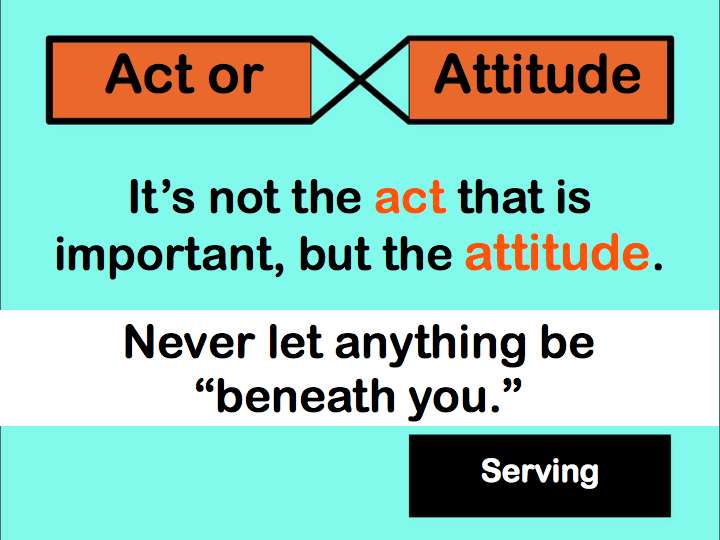
In our culture, most people don’t need to have their feet washed when they come into your home or a restaurant, like they did in first century Israel. It is not the act that is important, but the attitude. Jesus stooped to wash His disciples’ feet. He made Himself lower than anyone else in the room. Jesus showed us that there was nothing beneath Him.

I’ve heard this before: “How do you know you have a servant’s attitude? When you don’t mind that someone treats you like a servant.”

But I think a better question might be: “Do I think anything (or anyone) is beneath me?” If I do, my attitude is not Christ-like (Philippians 2:5-7), nor is it Christ-blessable (John 13:17).

Jesus calls us to be servants—to be waiters and waitresses to others. This will show the love of Jesus like nothing else can.

Check out all of the other messages in our series Live Together by clicking here.

►► Would you please prayerfully consider supporting this ministry? My Patreon supporters get behind-the-scenes access to exclusive materials. ◀︎◀︎

16 Quotes From “God’s Workmanship”

God's WorkmanshipWhere to start? It’s always hard to share a few quotes from a book that is so rich, but I hope these fews quotes will not diminish the depth of Oswald Chambers’ wisdom. These are just a very few of the outstanding quotes from God’s Workmanship (you can read my full book review by clicking here).

“Whenever I say, ‘I want to reason this thing out before I can trust,’ I will never trust. The reasoning out and the perfection of knowledge come after the response to God has been made.”

“We can never become God’s people by thinking, but we must think as God’s people. … Intellect is meant to be the handmaid of God, not the dictator to God. … We have to work out, not our redemption, but our human appreciation of our redemption. We owe it to God that we refuse to have rusty brains.”

“Separating myself from other people is the greatest means of producing deception because there is nothing to clash against me. Immediately people clash against me I know whether my beautiful thinking really expresses ‘me,’ or is a garment that disguises the real ‘me.’ If my actual life is not in agreement with my thinking the danger is that I exclude myself from actualities which bring home to me the knowledge of what I am, in spite of what I think. ‘I am a Christian worker and must put on this garb!’ That is sanctimonious jargon; the only thing that will hold me right is a personal relationship to Jesus, and that life is essentially simple, there is no break into secular and sacred, the one merges into the other, exactly as it did in the life of our Lord.”

“I want to ask a very personal question—How much do you want to be delivered from? You say, ‘I want to be delivered from wrong-doing’—then you don’t need to come to Jesus Christ. ‘I want to walk in the right way according to the judgment of men’—then you don’t need Jesus Christ. But some heart cries out—‘I want, God knows I want, that Jesus Christ should do in me all He said He would do.’ How many of us ‘want’ like that? God grant that this ‘want’ may increase until it swamps every other desire of heart and life.”

“When you are baptized with the Holy Ghost, there is only One you see, One you love, One you live for from early morning till late at night, One you die for. Every thought is gripped and held enthralled by the Master of human destiny, the Lord Jesus Christ, and the whole life is devoted to Him.”

“All that I want to possess without the power to give, is of the nature of sin. … I cannot rob God of anything, but I rob myself of God every time I stick to what I possess.”

“What kind of attitude have we got toward Jesus Christ? are we dictating to Him in pious phraseology what we intend to let Him do in us, or letting His life be manifested in our mortal flesh as we obey?” 

“‘The Truth’ is our Lord Himself; ‘the whole truth’ is the inspired Scripture interpreting the Truth to us; and ‘nothing but the truth’ is the Holy Spirit, ‘the Spirit of truth,’ efficaciously regenerating and sanctifying us, and guiding us into ‘all the truth.’”

“When I am rightly related to God, the more I love the more blessing does He pour out on other lives. The reward of love is the capacity to pour out more love all the time. … I surrender myself—not because it is bad, self is the best thing I have got, and I give it to God; then self-realization is lost in God-realization.”

“Another demand God makes of His children is that they believe not only that He is not bewildered by the confused hubbub of the nations, but that He is the abiding Factor in the hubbub.”

“God never hears prayer because a man is in earnest; He hears and answers prayer that is on the right platform—we have ‘boldness to enter into the holy place by the blood of Jesus’ (rv), and by no other way. It is not our agony and our distress, but our childlike confidence in God.”

“The evidence of the new creation in me is that I submit to God more and more easily, surrender to Him more and more readily. …God does the supernatural re-creating and the setting free of the will, I have to do the doing.”

“You can only be made a Christian by a miracle, and you can stop at any point you like. ‘I don’t intend to go through this’—and you don’t need to; but it will be a terrific awakening when you see Jesus and realize that you prevented His getting glory in your life.” 

“People say they are tired of life; no man was ever tired of life; the truth is that we are tired of being half dead while we are alive. What we need is to be transfigured by the incoming of a great and new life.”

“Resting in the Lord does not depend upon external circumstances, but on the relationship of the life of God in me to God Himself. Fussing generally ends in sin. We imagine that a little anxiety and worry is an indication of how wise we really are; it may be an indication of how wicked we really are. ‘Come unto Me,’ says Jesus, ‘and I will give you rest.’ Do Jesus Christ’s words apply to me? Does He really know my circumstances? Fretting is sinful if you are a child of God. Get back to God and tell Him with shame that you have been bolstering up that stupid soul of yours with the idea that your circumstances are too much for Him. Ask Him to forgive you and say, ‘Lord, I take Thee into my calculation as the biggest factor NOW!’”

“Have you ever realized that God challenges the saints to a tremendous conflict, the conflict of believing the Gospel in the face of an indifferent world? It is easy to say we believe in God as long as we remain in the little world we choose to live in; but get out into the great world of facts, the noisy world where people are absolutely indifferent to you, where your message is nothing more than a crazy tale belonging to a bygone age, can you believe God there?”

If (Blank), Then (Blank)

Listen to the podcast of this post by clicking on the player below, and you can also subscribe on AppleSpotify, or Audible.

Let me set the stage. Jesus is explaining to some of His new followers about finding their identity in God, not in a man. He says to them,

If You hold to My teaching, you are really My disciples. Then you will know the truth, and the truth will set you free. (John 8:31-32)

Notice the order of the if-then: If you hold to my teaching, then you will know the truth.

You see, later on in this discussion Jesus says, “Do you want to know why you can’t hear what I am saying? It’s because you are not listening with an ear to obey” (see vv. 43-47).

In other words, their tendency—and ours too—is to say, “If I hear truth from You, then I will obey.”

But this attitude is pragmatic—it’s like saying, “It has to ring true with what I already know.” But the problem is, Jesus’ teachings are so counter-cultural and counterintuitive that they may never ring true with what you already know.

Instead, my attitude should be, “I will obey. No matter what You say to me, I will do it. Even if it sounds uncomfortable, I will do whatever You tell me.”

If you HOLD to my teaching, then you will KNOW the truth.

God will not speak a word I can hear and understand UNLESS I am committed to obeying every word He speaks. My attitude of obedience must come before His truth will be revealed. Let’s not get this mixed up with, “If You speak the truth, then I will obey.”

►► Would you please prayerfully consider supporting this ministry? My Patreon supporters get behind-the-scenes access to exclusive materials. ◀︎◀︎

New Attitude

“My job is boring. It’s the same-old-same-old every single day. My coworkers are incompetent, and my boss is clueless.”

If you knew nothing else about the person who made that statement, I think you could still predict how they treated their job. Would you think this person values their job? Do you think they work hard? Do they treat their coworkers with respect? Probably not.

How about this one: “My car is a piece of junk. The mileage is lousy, the radio doesn’t work when the weather is cold, and it leaks when it rains.” Can you guess how this person treats their car?

Now flip it around: What about the one who is thankful for his job, or grateful for her car. Now how will he treat his job? his coworkers? her car?

What we praise, we treat with greater respect.

Look at the last of the 150 psalms in the Bible:

Praise the Lord!

   Praise God in His sanctuary;
      praise him in His mighty heaven!
   Praise Him for His mighty works;
      praise His unequaled greatness!
   Praise Him with a blast of the ram’s horn;
      praise Him with the lyre and harp!
   Praise Him with the tambourine and dancing;
      praise Him with strings and flutes!
   Praise Him with a clash of cymbals;
      praise Him with loud clanging cymbals.
   Let everything that breathes sing praises to the Lord!

   Praise the Lord!

Thirteen times in just six verses the psalmist says PRAISE. Because what we praise, we treat with greater respect, awe, reverence. The more you praise God, the more you will find to praise about Him. And the more you praise God, the more your attitude will change about the things around you: your job, your car, your family, your friends, your country, and on and on.

Praise will change your outlook. Let everything that breathes sing praises to the Lord!

Winner Or Whiner?

This morning on John Maxwell’s “Minute With Maxwell” he said: “Winners know they have to do the right thing and then they’ll feel good. Whiners want to feel good before they do the right thing.

I have learned this is true in my life. If I wait until I feel like do something, I’ll make all kinds of excuses to avoid doing it. But if I do what I know I’m supposed to do I’ll feel good that I did it.

Good feelings follow good actions.

Winners do right to feel good.

Whiners wait to feel right before they do anything.

Behavioral psychologist William James wrote: “Action seems to follow feeling, but really action and feeling go together; and by regulating the action, which is under the more direct control of the will, we can indirectly regulate the feeling, which is not. Thus the sovereign voluntary path to cheerfulness, if our cheerfulness be lost, is to sit up cheerfully and to act and speak as if cheerfulness were already there.” (emphasis mine)

So let me ask you: Are you going to be a winner or a whiner today?