Thursdays With Oswald—Serving Like Christ

This is a weekly series with things I’m reading and pondering from Oswald Chambers. You can read the original seed thought here, or type “Thursdays With Oswald” in the search box to read more entries.

Am I Serving Like Christ?

The Son of Man did not come to be served, but to serve… (Matthew 20:28)

     Jesus also said, ‘Yet I am among you as the One who serves’ (Luke 22:27). Paul’s idea of service was the same as our Lord’s—‘…ourselves your bondservants for Jesus’ sake’ (2 Corinthians 4:5). We somehow have the idea that a person called to the ministry is called to be different and above other people. But according to Jesus Christ, he is called to be a ‘doormat’ for others—called to be their spiritual leader, but never their superior. Paul said, ‘I know how to be abased…’ (Philippians 4:12). Paul’s idea of service was to pour his life out to the last drop for others. And whether he received praise or blame made no difference. As long as there was one human being who did not know Jesus, Paul felt a debt of service to that person until he did come to know Him. But the chief motivation behind Paul’s service was not love for others but love for his Lord.

     …The institutional church’s idea of a servant of God is not at all like Jesus Christ’s idea. His idea is that we serve Him by being the servants of others. Jesus Christ actually ‘out-socialized’ the socialists. He said that in His kingdom the greatest one would be the servant of all (see Matthew 23:11). The real test of a saint is not one’s willingness to preach the gospel, but one’s willingness to do something like washing the disciples’ feet—that is, being willing to do those things that seem unimportant in human estimation but count as everything to God.

From My Utmost For His Highest

I cannot add anything to this brilliant observation. But I can tell you the parts that the Holy Spirit is really working in my heart:

  • “…called to be a ‘doormat’ for others—called to be their spiritual leader, but never their superior.” God, help me to keep my pride in check.
  • “The real test of a saint is not one’s willingness to preach the gospel, but one’s willingness to do something like washing the disciples’ feet.” May I never shrink back from willingly serving at the lowest level of society.

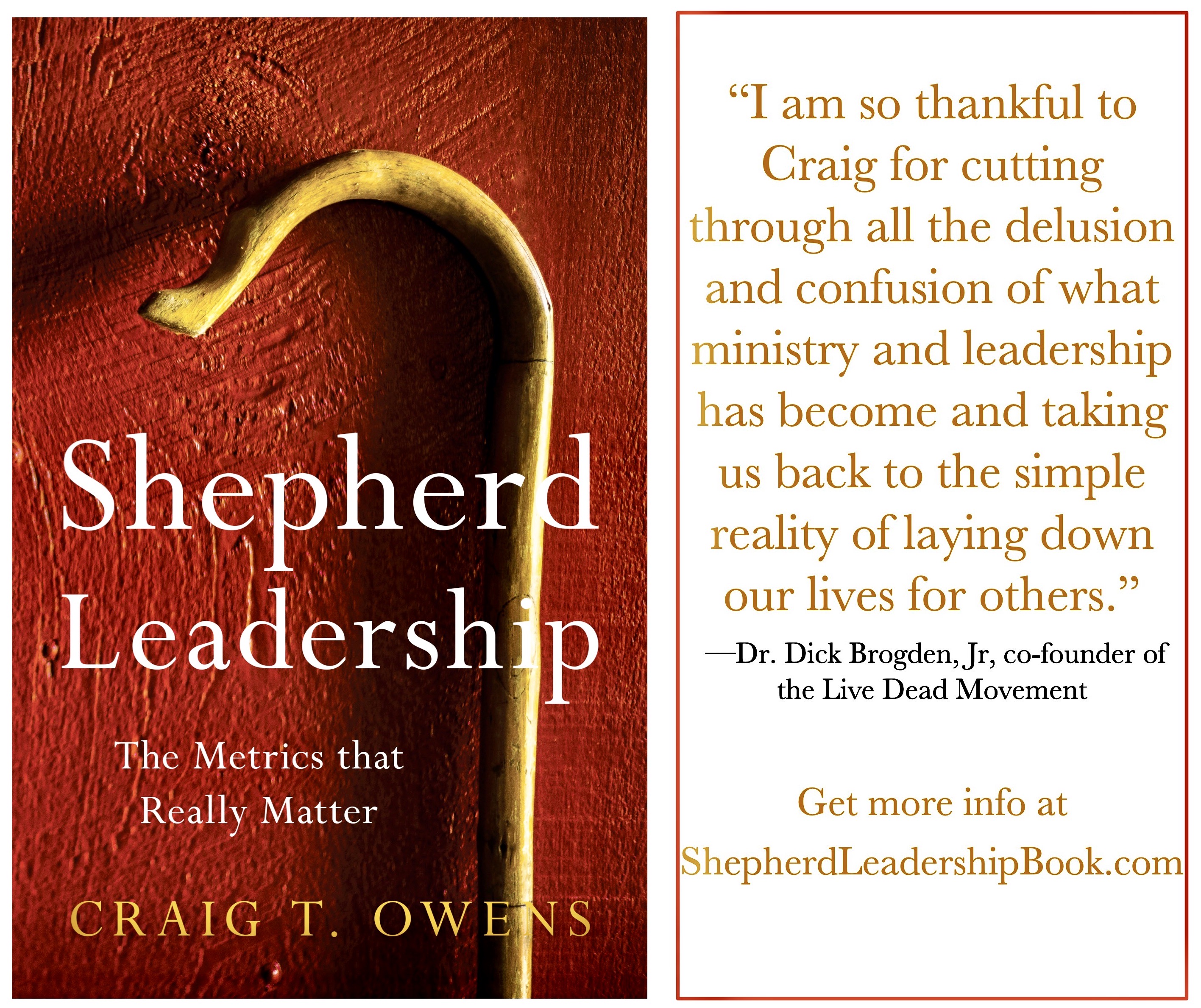
UPDATE: This idea of servant-leaders plays prominently in my book Shepherd Leadership: The Metrics That Really Matter.

Thursdays With Oswald—Why Did God Choose Me?

This is a weekly series with things I’m reading and pondering from Oswald Chambers. You can read the original seed thought here, or type “Thursdays With Oswald” in the search box to read more entries.

Why Did God Choose Me?

Oh, the bravery of God in trusting us! Do you say, “But He has been unwise to choose me, because there is nothing good in me and I have no value”? That is exactly why He chose you. As long as you think that you are of value to Him He cannot choose you, because you have purposes of your own to serve. But if you will allow Him to take you to the end of your own self-sufficiency, then He can choose you to go with Him.

From My Utmost For His Highest

If God chose me because I was so special, and if I did something valuable for Him, who would get the glory for that? I would.

But I want to exalt God only

But we have this treasure in earthen vessels, that the excellency of the power may be of God, and not of us. (2 Corinthians 4:7)

Brothers, think of what you were when you were called. Not many of you were wise by human standards; not many were influential; not many were of noble birth. But God chose the foolish things of the world to shame the wise; God chose the weak things of the world to shame the strong. He chose the lowly things of this world and the despised things—and the things that are not—to nullify the things that are, so that no one may boast before Him. It is because of Him that you are in Christ Jesus, who has become for us wisdom from God—that is, our righteousness, holiness and redemption. Therefore, as it is written: “Let him who boasts boast in the Lord.” (1 Corinthians 1:26-31)

I want to go with You, Lord. Please keep me humble!

Thursdays With Oswald—Fasting From Eloquence

This is a weekly series with things I’m reading and pondering from Oswald Chambers. You can read the original seed thought here, or type “Thursdays With Oswald” in the search box to read more entries.

Fasting From Eloquence

     Belief in Jesus is a miracle produced only by the effectiveness of redemption, not by impressive speech, nor by wooing and persuading, but only by the sheer unaided power of God. The creative power of redemption comes through the preaching of the Gospel, but never because of the personality of the preacher.

     Real and effective fasting by a preacher is not fasting from food, but fasting from eloquence, from impressive diction, and from everything else that might hinder the gospel of God being presented. The preacher is there as the representative of God—‘as though God were pleading through us…’ (2 Corinthians 5:20). He is there to present the Gospel of God. If it is only because of my preaching that people desire to be better, they will never get close to Jesus Christ. Anything that flatters me in my preaching of the gospel will result in making me a traitor to Jesus, and I prevent the creative power of His redemption from doing its work.

From My Utmost For His Highest

So much of pastoring focuses on the preaching. And yet Chambers says, “If it is only because of my preaching that people desire to be better, they will never get close to Jesus Christ.”

He’s right: It’s not about me or my preaching. My focus is on what Jesus said: “And I, if  I be lifted up from the earth, will draw all men unto Me” (John 12:32).

Examination

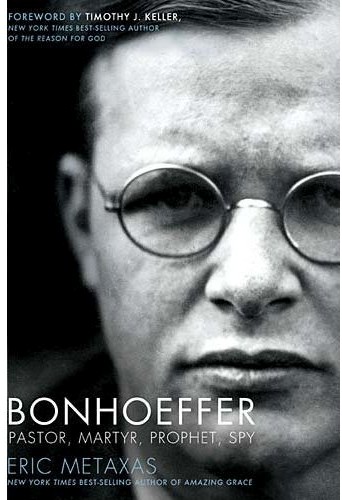
I’m reading Eric Metaxas’ fascinating biography of Dietrich Bonhoeffer.

Here’s something amazing to me: Bonhoeffer had a degree in theology (having studied under some of the most esteemed theologians of the day), taught Sunday School classes, lectured on biblical doctrine, served as an interim pastor for a full year, and even earned his doctoral degree. Yet after all this, people noticed a change in Bonhoeffer.

Listen how he described the change himself:

I plunged into work in a very unchristian way. … Then something happened, something that has changed and transformed my life to the present day. For the first time I discovered the Bible…. I had often preached. I had seen a great deal of the Church, and talked and preached about it—but I had not yet become a Christian. … I know that at that time I turned the doctrine of Jesus Christ into something of personal advantage for myself…. I pray to God that that will never happen again.

If such a man as Dietrich Bonhoeffer discovered that he knew about Jesus without knowing Jesus personally, shouldn’t we, too, “Examine yourselves to see if your faith is genuine. Test yourselves. Surely you know that Jesus Christ is among you; if not, you have failed the test of genuine faith” (2 Corinthians 13:5).

Thursdays With Oswald—A Strong Weakness

This is a weekly series with things I’m reading and pondering from Oswald Chambers. You can read the original seed thought here, or type “Thursdays With Oswald” in the search box to read more entries.

A Strong Weakness

Are not my days few? cease then, and let me alone, that I may take comfort a little, before I go whence I shall not return, even to the land of darkness and the shadow of death. (Job 10:20-21)

     “I see no way out,” says Job. He lies down, not in weakness, but in absolute exhaustion. Job is not talking in a petted mood, but saying that unless God will be a Refuge for him, there is no way out, death is the only thing. In every crisis of life, as represented in the Old Testament as well as in the teaching of Our Lord, this aspect of God is emphasized—“God is our Refuge”; yet until we are hit by sorrow, it is the last thing we seek for God to be. There is a difference between the weakness of refusing to think and the weakness that comes from facing facts as they really are. Job is seeing for the first time that God is the only Refuge, the only way out for him; yet he cannot get at Him through his creed, it is all confusion; the only thing to do is to fling himself on God.

From Baffled To Fight Better

“The only thing to do is to fling [myself] on God.”

Alas, how many times does this become my last resort! Why don’t I learn to fling myself on God my Refuge as my first resort? I must remember this: For when I am weak, then I am strong. (2 Corinthians 12:10)

Do You Speak “Teen-ese”?

I highly respect the work that Dr. Tim Elmore does with teenagers. Since I have two teenagers in my home, one of his latest blog posts about communicating with teens caught my attention. He asked 16- to 24-year-olds their preferred method of communication. Their response:

1. Text messaging

2. Internet (i.e. Facebook.com)

3. iPods and Podcasts

4. Instant messaging

5. Cell phone

6. DVD / CD

7. Books

8. Email

Email is last? Yep! Not only last, but described by one teen as the method for communicating with “old people.”

Ouch!

But as a parent, if I truly want to communicate with my teenagers, I have to learn to speak Teen-ese. It’s selfish of me to try to ask my teenager to communicate the way I’m most comfortable (that would be email, if you hadn’t guessed). If I’m going to get their attention, I need to speak the way they speak.

Paul wrote to the church in Corinth that he did the same thing. He said, “I try to find common ground with everyone.” Paul’s native language—his most comfortable language—would have been speaking to Jews in the synagogue about Christ fulfilling Old Testament law.

But he stretched himself. He learned to speak to non-Jews … to those who knew nothing about the Hebrew Old Testament … to those who worshipped idols … to those who were humanistic philosophers … to soldiers … to slaves … to government officials … to everyone.

Parents, don’t try to make your teenagers talk to you in your comfortable language.

Learn Teen-ese. Make it a goal to understand them, instead of trying to make them understand you. By this, you will show your love and earn their ear.

(Watch for a review on Dr. Elmore’s latest book—Generation iY—coming later this week.)

Sin

I know in politically correct circles it’s not very chic to talk about sin. After all, we’re not supposed to impose our personal values on someone else, right?

Well, I do believe in right and wrong, and the wrong is called sin. So if you are offended by me calling something sin, it would be best for you to stop reading now.

Are you still with me? Then read this: satan…incited David to sin… (1 Chronicles 21:1).

Incited means this wasn’t a straight-up fight. Sin seldom makes a bold, in-your-face attack. Sin isn’t really an ambush. It’s sort of a whispering campaign.

  • Sin is an appeal to ego
  • Sin is a half-truth
  • Sin is an attempt to be subtle
  • Sin is so innocent looking

The Bible says satan lurks like a lion in the underbrush (1 Peter 5:8).

He waits for the perfect opportunity to strike (Luke 4:13).

satan is sneaky (Genesis 3:1).

He lies (John 8:44).

He distorts the truth (Luke 4:9-11).

That’s why I cannot give sin an inch. I have to take every thought captive (2 Corinthians 10:5), and pull everything into the light of The Truth (John 3:20-21).

[Check out all of these verses by clicking here]

It’s not usually the blatant sin that brings down great men and women, but the subtle. So stay on your guard. Always!

Responding For Those Who Can’t

Do you know what empathy is? It’s not the same thing as sympathy. Sympathy is just wallowing with someone who is hurting, but empathy goes beyond that. Empathy is a compound word:

em- + -pathos = joined + feeling 

I feel what you feel, but I can respond like you should even when you think you can’t.

Sometimes people get paralyzed by their deep hurts, or crushing depression, or infuriating anger. Someone in sympathy feels the pain, the depression, the anger, but their involvement stops at the feeling stage.

Someone in empathy feels the hurt AND responds in an appropriately healthy way.

Check out what Paul wrote:

Who is weak without my feeling that weakness? Who is led astray, and I do not burn with anger? (New Living Translation)

When someone gets to the end of his rope, I feel the desperation in my bones. When someone is duped into sin, an angry fire burns in my gut. (The Message)

Paul took those feelings his friends and loved ones were experiencing and he turned them into positive action. This is challenging and desperately needed.

Sympathy is easy; empathy is hard work.

Sympathy keeps people paralyzed; empathy helps them move forward.

Sympathy enables people to remain unchanged; empathy gives people a healthy way to respond.

If you want to help your hurting, discouraged, or angry friend, don’t sympathize with her hurt, empathize to help her heal. By responding in a healthy way—a way she isn’t able to yet—and you will help her move to a place of wholeness.

Encouraging Presence

Have you ever been down in the dumps? Ever been discouraged or blue? Have you ever felt like no one gets you? In those moments, have you asked God for encouragement?

The Apostle Paul was feeling a little down, and he asked God to send him encouragement. God answered this way

But God, who encourages those who are discouraged, encouraged us by the arrival of Titus.

Paul says in the next verse, Titus’ presence was a joy.

This word for encourage simply means showing up for a friend. Do you realize you could be a huge source of encouragement to someone just by showing up?

“A real friend is one who walks in when the rest of the world walks out.” —Walter Winchell

Who needs you to just show up by their side today? Just by showing up, you could be the answer to someone’s desperate prayer for encouragement.

Go, be there for a friend!

Less Giving = Less Good News

We just finished talking about what the Bible says about tithes and offerings at Calvary Assembly of God. Right on the heels of this, I noticed this article in the Grand Rapids Press: “Study reveals church giving at lowest point since Great Depression.”

Here are some of the sad findings:

  • Regular church attendees aren’t even tithing. The average giving is only 2.4% of the attendees’ income.
  • While giving to churches is down, giving to other faith-based organizations is up.
  • The study’s authors noted a “long-term turning inward of congregations.” In other words, of the money that is given to churches, less and less of it is going to needs outside of the church’s walls.
  • Church’s spending on benevolence has dropped 47% since 1968, and now stands at just 0.35% of attendees’ income.
  • “Fewer people are seeing churches as the primary conduit for meeting the larger (charitable and evangelistic) need.”

Paul wrote to the church in Corinth about the overflowing joy of giving to help the needs of others. He commended those with rich generosity, and encouraged the church to excel in this grace of giving.

Here’s the sad fact: The less we give, the less the Good News about God’s love is shared.

God wants us to give because we want to give. Paul even said I am not commanding you to give, but instead…

Each of you must make up your own mind about how much to give. But don’t feel sorry that you must give and don’t feel that you are forced to give. God loves people who love to give. (2 Corinthians 9:7)

Let’s change this around. Let’s buck the nationwide trend. Remember…

MORE GIVING = MORE GOOD NEWS

!