11 Quotes From “The Greatest Thing In The World”

I loved the depth of insight about love from Henry Drummond’s short book The Greatest Thing In The World. This book dives into the definition of love that the Apostle Paul gives us in 1 Corinthians 13. To read my full review, and find the links for a free download of this book, please click here.

These are 11 of my favorite quotes from this book.

“Charity is only a little bit of love, one of the innumerable avenues of love, and there may even be, and there is, a great deal of charity without love. It is a very easy thing to toss a copper to a beggar on the street; it is generally an easier thing than not to do it. Yet love is just as often in the withholding. We purchase relief from the sympathetic feelings roused by the spectacle of misery, at the copper’s cost. It is too cheap—too cheap for us, and often too dear for the beggar. If we really loved him we would either do more for him, or less.”

“We hear much of love to God; Christ spoke much of love to man. We make a great deal of peace with heaven; Christ made much of peace on earth.”

“[Patience] is the normal attitude of love; love passive, love waiting to begin; not in a hurry; calm; ready to do its work when the summons comes”

“Love waives even self-satisfaction.” 

“Politeness has been defined as love in trifles. Courtesy is said to be love in little things.”

“The peculiarity of ill temper is that it is the vice of the virtuous. …No form of vice, not worldliness, not greed of gold, not drunkenness itself, does more to unchristianize society than evil temper. For embittering life, for breaking up communities, for destroying the most sacred relationships, for devastating homes, for withering up men and women, for taking the bloom of childhood, in short, for sheer gratuitous misery-producing power this influence stands alone.”

“Souls are made sweet not by taking the acid fluids out but by putting something in—a great love, a new spirit, the Spirit of Christ. Christ, the Spirit of Christ, interpenetrating ours, sweetens, purifies, transforms all.”

“Willpower does not change men. Time does not change men. Christ does.”

“What we are stretches past what we do, beyond what we possess.”

“Never offer men a thimbleful of gospel. Do not offer them merely joy, or merely peace, or merely rest, or merely safety; tell them how Christ came to give men a more abundant life than they have, a life abundant in love, and therefore abundant in salvation for themselves, and large in enterprise for the alleviation and redemption of the world. Then only can the gospel take hold of the whole of a man, body, soul and spirit, and give to each part of his nature its exercise and reward. … Only a fuller love can compete with the love of the world.” 

“No worse fate can befall a man in this world than to live and grow old alone, unloving and unloved.”

The Greatest Thing In The World (book review)

If you’ve been around Christian circles for any length of time, you probably have heard people talk about the “love chapter” (1 Corinthians 13). And if you’ve heard anyone talk about this love chapter, you probably think you’ve heard all that there is to hear about it. But think again: The Greatest Thing In The World by Henry Drummond will open your eyes to new insights on love.

D.L. Moody heard Henry Drummond share these thoughts live in 1884, and said, “It seemed to me that I had never heard anything as beautiful.” Moody then asked Drummond to not only share this with his congregation but then requested that principals in his schools read this to the students every year.

There are some wonderful insights on love that I think you will thoroughly enjoy in this short book.

If you have a Kindle, you can download The Greatest Thing In The World for free by clicking here. If you don’t have  Kindle, you can read it online for free by clicking here. And be sure to check out some of the quotes I shared from this book by clicking here.

Thursdays With Oswald—Spiritual Perception

This is a weekly series with things I’m reading and pondering from Oswald Chambers. You can read the original seed thought here, or type “Thursdays With Oswald” in the search box to read more entries.

Spiritual Perception 

     The characteristic of a man without the Spirit of God is that he has no power of perception, he cannot perceive God at work in the ordinary occurrences. The marvelous, uncrushable characteristic of a saint is that he does discern God. You may put a saint in tribulation, amid an onslaught of principalities and powers, in peril, pestilence or under the sword, you may put a saint anywhere you like, and he is “more than a conqueror” [Romans 8:31-39] every time. Why? Because his heart being filled with the love of God, he has the power to perceive and understand that behind all these things is God making them “work together for good.” 

From Biblical Psychology

God says, “For just as the heavens are higher than the earth, so My ways are higher than your ways and My thoughts higher than your thoughts” (Isaiah 55:9). So I cannot understand what God is doing if I only use my own powers of perception.

To truly discern what God is doing, I must rely on the Holy Spirit within me.

That is what the Scriptures mean when they say, “No eye has seen, no ear has heard, and no mind has imagined what God has prepared for those who love Him.” But it was to us that God revealed these things by His Spirit. For His Spirit searches out everything and shows us God’s deep secrets. (1 Corinthians 2:9-10)

Oh, how I need the Holy Spirit’s help!

Thursdays With Oswald—Examination

This is a weekly series with things I’m reading and pondering from Oswald Chambers. You can read the original seed thought here, or type “Thursdays With Oswald” in the search box to read more entries.

Examination 

     Sin destroys the power of the soul to know its sin, punishment brings awakening, self-examination brings chastisement and saves the soul from sleeping sickness, and brings it into a healthy satisfaction. 

From Biblical Psychology

There’s so much to unpack in this single sentence…

  • We are very good at self-medicating away any pain (even spiritual pain), so that we never address the source of the pain (Ephesians 4:18).
  • I can be “sin sick” and not even know it because I’m not allowing the Holy Spirit to examine me (1 Corinthians 10:12).
  • The pain of punishment and chastisement is for my eternal benefit (Hebrews 12:5-11).

What do I need to do? Invite the examination of the Spirit:

Search me, O God, and know my heart; test me and know my anxious thoughts. Point out anything in me that offends You, and lead me along the path of everlasting life. (Psalm 139:23-24)

So let a person examine himself first, and then he may eat of the bread and drink from the cup; for a person who eats and drinks without recognizing the body eats and drinks judgment upon himself. This is why many among you are weak and sick, and some have died! If we would examine ourselves, we would not come under judgment. But when we are judged by the Lord, we are being disciplined, so that we will not be condemned along with the world. (1 Corinthians 11:28-32)

Open Door

Listen to the podcast of this post by clicking on the player below, and you can also subscribe on Apple or Spotify.

The phrase open door shows up several times in the New Testament, and it shows up quite a bit in the present-day vocabulary of many Christians too. But I’m not sure we mean the same thing.

I hear Christians saying things like, “I’m praying for God to open a door for a new job,” or “I’m waiting to see what door God will open for my schooling,” or something to that effect. In other words, the open door seems to be for our personal benefit.

The apostle Paul said this:

A great door for effective work has opened to me, and there are many who oppose me (1 Corinthians 16:9).

Let’s get one thing clear: God opens doors (we don’t), and our job is to obediently walk through those open doors (God won’t shove us through them).

Paul knew that the open door was not for his benefit, but for the benefit of those who were presently outside of the Kingdom of God. God opens doors for His people so that those outside His Kingdom can come inside (see Acts 14:27; 2 Corinthians 2:12; Colossians 4:3).

It might look like God opened a door by providing a job, but that job is His means to help you invite others into His Kingdom. The open door (the job, in this case) isn’t primarily for you; it’s for you to invite others in.

That’s why when God opens doors there will be many who oppose you. They are not really opposing you, but they are opposing the opportunity for the kingdom of darkness to be robbed and the Kingdom of God to be enriched.

So when you pray for open doors, remember:

  • When God opens a door, it’s mainly for the benefit of those outside the Kingdom of Heaven
  • You will be opposed by the kingdom of darkness

If you’re ready for both of those, then by all means pray for open doors!

►► Would you please prayerfully consider supporting this ministry? ◀︎◀︎

Be A Foolish Preacher

Pastor, do you realize how clever we try to be?

  • We come up with a catchy sermon series and add some stylish graphics.
  • Then we labor over sermon titles that sound so compelling.
  • As we write our sermons we try to dream up memorable patterns, like all three of our main points start with “S,” or we spell out the word “P.E.A.C.E.”

When the truth of the matter is, what we’re saying is foolishness.

Where is the wise man? Where is the scholar? Where is the philosopher of this age? Has not God made foolish the wisdom of the world? For since in the wisdom of God the world through its wisdom did not know Him, God was pleased through the foolishness of what was preached to save those who believe. Jews demand miraculous signs and Greeks look for wisdom, but we preach Christ crucified: a stumbling block to Jews and foolishness to Gentiles, but to those whom God has called, both Jews and Greeks, Christ the power of God and the wisdom of God. For the foolishness of God is wiser than man’s wisdom, and the weakness of God is stronger than man’s strength. (1 Corinthians 1:20-25)

You don’t have to try to make God’s Word clever. It is already profound!

You don’t have to try to make it memorable. The Holy Spirit makes it memorable (John 14:26)!

You don’t have to make the Bible relevant. It is the most relevant, applicable wisdom that humanity has ever known! 

D.L. Moody said it this way:

“If God has given you a message, go and give it to the people as God has given it to you. It is a stupid thing for a man to try to be eloquent. Make your message, and not yourself, the most prominent thing. Don’t be self-conscious. Set your heart on what God has given you to do, and don’t be so foolish as to let your own difficulties or your own abilities stand in the way.”

Don’t try to be clever. Just be Spirit-led and you will utter the most profound, compelling, and memorable words ever spoken by a preacher!

FLEE!!

Many times pastors point to passages of Scripture that tell us to fight the enemy. Put on the full armor of God! Take your stand! Storm the gates of Hell! You are more than a conqueror!

Those are all true, but

There is also a time to run away from a battle. 

Flee from sexual immorality … Flee from idolatry … (1 Corinthians 6:18; 10:14).

These two enemies usually form a two-headed monster. Look throughout the Bible and you will see that when the Israelites worshipped anything other than God, they did it with idols and illicit sexual practices.

The Greek word for “sexual immorality” is porneo. This is where we get our word pornography. And isn’t pornography nothing more than idolatry of the naked human body?

Porneo is defined as:

  • Prostituting one’s body to the lust of another
  • Unlawful sexual activity
  • Being drawn away by another into idolizing something illicit
  • Defiling yourself sexually

What do we do with this? FLEE!!

You cannot fight the two-headed monster of Porneo with your willpower. You must run away! 

Porneo is not something to be tamed or controlled. It’s a monster from which you must flee! 

This is not a temptation you can control. It’s one you must avoid at all costs! 

Look at Joseph: He left his cloak in her hand and ran out of the house.

Don’t resist the urge—FLEE!!

Don’t take a cold shower—RUN AWAY!!

Get out. Stay out. Get as far away as possible from this two-headed monster.

You cannot win this fight; you must by all means avoid this battle. 

No Puffiness, Please

Here’s a quick fill-in-the-blank statement:

Now about ______________________: We know that we all possess knowledge. Knowledge puffs up, but love builds up. (1 Corinthians 8:1)

Fill in this blank with something you consider (as Dr. Charles Ryrie calls them) a “morally indifferent” practice. In other words, something that is not a black-in-white, do-it-and-you’re-sinning issue. What goes in your blank?

  • …skipping church?
  • …drinking alcohol?
  • …smoking a cigar?
  • …dancing?

We all have knowledge about such things, but where’s the love?

Love builds up. Knowledge only benefits me; love benefits all. The Amplified Bible says it this way, “love edifies and builds up and encourages one to grow to his full stature.

The Greek word for builds up means “to promote growth in Christian wisdom, affection, grace, virtue, holiness, blessedness; to grow in wisdom and piety.”

The question, “Does this fill-in-the-blank item hinder a weaker brother?” is too puffy. The better question is, “Does this help my weaker brother grow?”

That’s the question love asks.

Love avoids the negative-growth items and even the neutral-growth items. Love seeks only those things which promote positive growth.

It’s too puffy to ask, “Does this hurt someone.”

It’s too puffy to say, “This is no big deal!”

We need to ask, “Does this help everyone?” If we can’t answer “yes,” leave it alone!

Thursdays With Oswald—Practice, Practice, Practice

This is a weekly series with things I’m reading and pondering from Oswald Chambers. You can read the original seed thought here, or type “Thursdays With Oswald” in the search box to read more entries.

Practice, Practice, Practice 

     If we do not go on practicing day by day and week by week, working out what God has worked in, when a crisis comes God’s grace is there right enough, but our nature is not. Our nature has not been brought into line by practice and consequently does not stand by us, and down we go and then we blame God. We must bring our bodily life into line by practicing day by day, hour by hour, moment by moment, then when the crisis comes we shall find not only God’s grace but our own nature will stand by us, and the crisis will pass without any disaster at all, but exactly the opposite will happen, the soul will be built up into a stronger attitude towards God. 

From Biblical Psychology

Allen Iverson (in)famously said, “We’re talking practice. Not a game, not a game, not a game. We’re talking practice.”

Guess what? As Christians, we cannot skip practice.

If we want to be victorious in the big things, we have to practice doing the little, moment-by-moment things right. We cannot just flip a switch and win a victory.

Do you want to be successful? You’ve got to practice!

Do you not know that in a race all the runners run, but only one gets the prize? Run in such a way as to get the prize. Everyone who competes in the games goes into strict training. They do it to get a crown that will not last; but we do it to get a crown that will last forever. Therefore I do not run like a man running aimlessly; I do not fight like a man beating the air. No, I beat my body and make it my slave so that after I have preached to others, I myself will not be disqualified for the prize. (1 Corinthians 9:24-27)

What Is Successful Church Ministry?

I like to keep asking myself and my leadership team this question: How do we know if our church is successful? 

The apostle Paul uses two words to help answer these questions: Quality and Faithfulness.

But each one’s work will be shown for what it is; the Day will disclose it, because it will be revealed by fire—the fire will test the quality of each one’s work. (1 Corinthians 3:13)

Now it is required that those who have been given a trust must prove faithful. (1 Corinthians 4:2)

So here are two important questions we need to ask ourselves:

  • Am I doing quality work?
  • Am I faithfully doing my work?

To help answer those questions, I like this thought from Leonard Sweet’s book I Am A Follower:

“The most important metrics we must rely on, the crucial ‘deliverables’ we can present, must focus on the newly formed lives of the disciples we are making, the followers who are following Christ into a place of serving Him by serving others. The most important measure of our faithfulness to Christ must be the extent of transformation into the living image of Christ Himself. …

The quantifiable fruit of our church is not found in the number of people we can gather on a weekly basis. What counts is what is happening in the lives of those who have gathered. …It is quite possible to have a ‘successful’ life—and a ‘successful’ church—without God. But it is absolutely impossible to have a truly fruitful one.”

Again, Paul’s advice here is invaluable:

My conscience is clear, but that does not make me innocent. It is the Lord who judges me. Therefore judge nothing before the appointed time; wait till the Lord comes…. (1 Corinthians 4:4, 5)

Pastor, you need to think about these questions about “success.” But they should be questions framed around your quality and faithfulness of work as revealed to you by the Holy Spirit, not by some “expert” or anyone else.

(By the way, if you’re interested in exploring this further, I framed this question a different way in this post.)

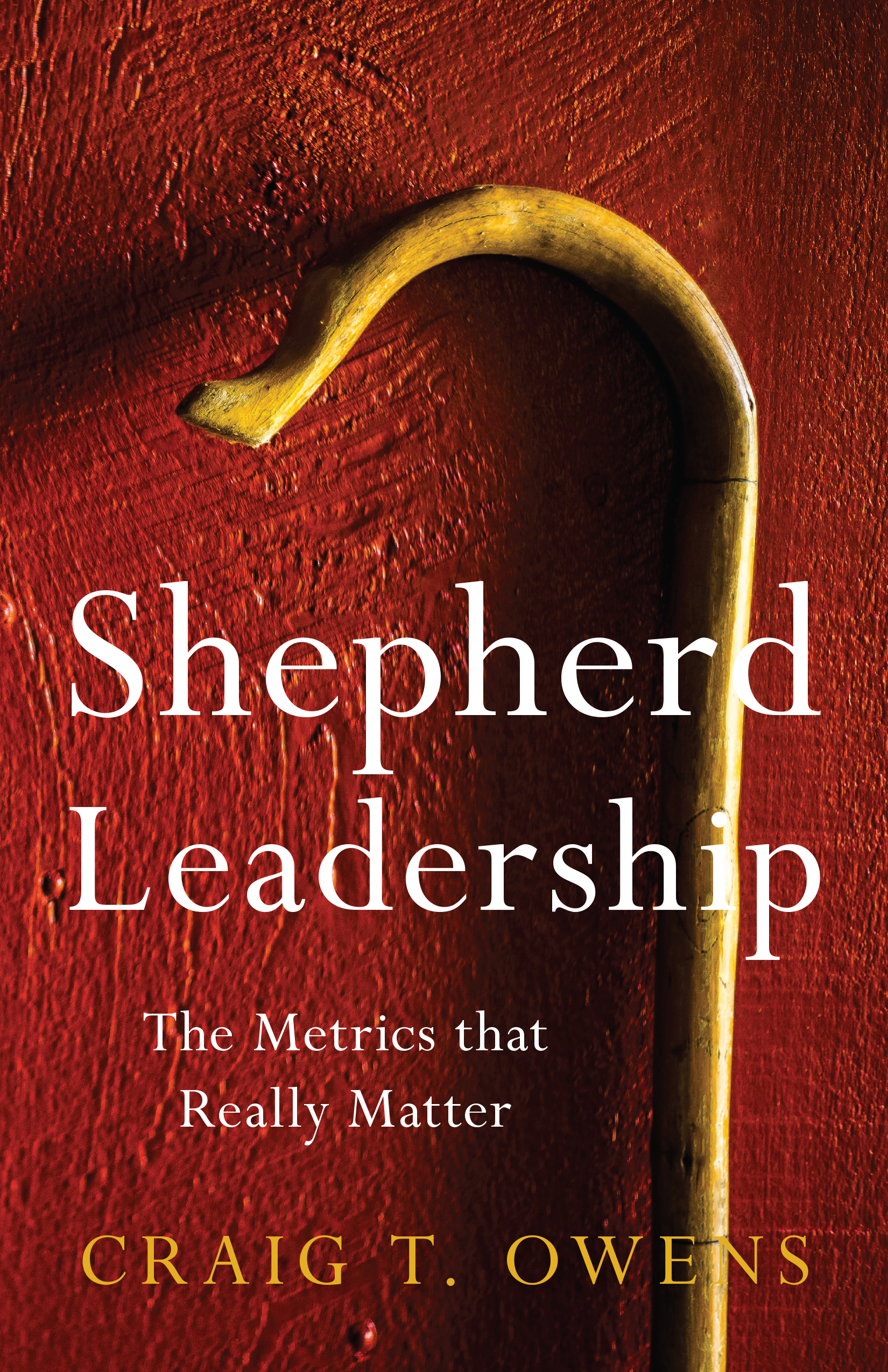
UPDATE: This post was one of the seed thoughts that went into fashioning my book Shepherd Leadership: The Metrics That Really Matter.