“But friendship is precious; not only in the shade, but in the sunshine of life.” —Thomas Jefferson
“People are just about as happy as they make up their minds to be.” —Abraham Lincoln
“Humility is the foundation of all the other virtues hence, in the soul in which this virtue does not exist there cannot be any other virtue.” —Augustine
When you praise God, despite your surroundings, you magnify Him. And when you magnify God, you invite others to magnify Him with you!
“Manhood first and then gentleness.” —Ralph Waldo Emerson
Dan Reiland wrote, “Church leadership always carries with it seasons of success and setbacks, momentum and grind, joy and discouragement. Yet, we all do better through those seasons when we have learned the rhythms of resilience—the lifelines we need.” Check out the 6 sustaining lifelines for leaders that he shared.
The Institute for Creation Research reported, “Two separate studies claim massive tsunamis and earthquakes from an asteroid impact profoundly affected the rock record. … [Yet] these global phenomena are better explained by the global Flood described in Genesis.”
“Anger makes dull men witty, but it keeps them poor.” —Francis Bacon
This is a weekly series with things I’m reading and pondering from Charles Spurgeon. You can read the original seed thought here, or type “Thursdays With Spurgeon” in the search box to read more entries.
Listen to the podcast of this post by clicking on the player below, and you can also subscribe on Apple, Spotify, or Audible.
Beware Of Grumblers
None is so wise as the man who knows nothing. His ignorance is the mother of his impudence and the nurse of his obstinacy; and though he does not know a bee from a bull’s foot, he settles matters as if all wisdom were at his fingers’ ends—the pope himself is not more infallible. Hear him talk after he has been at a meeting and heard a sermon, and you will know how to pull a good man to pieces if you never knew it before. He sees faults where there are none; and if there be a few things amiss, he makes every mouse into an elephant. …
Those who know nothing are confident in everything; hence they are bullheaded beyond measure. Every clock and even the sundial must be set according to their watches. … Venture to argue with them, and their little pots boil over in quick style; ask them for a reason, and you might as well go to a sandpit for sugar. …
Faultfinding is dreadfully catching: One dog will set a whole kennel howling, and the wisest course is to keep out of the way of a man who has the complaint called the grumbles. … Dogs, however, always will bark; and what is worse, some of them will bite, too. But let decent people do all they can, if not to muzzle them, yet to prevent them from doing any great mischief.
From John Ploughman’s Talks of Plain Advice For Plain People
Charles Spurgeon—the prince of preachers—could also use a sarcastic tone to a great effect when it was needed! This whole book was supposed to be a sort of “shop talk” to the everyday working man. These are not flowery sermons, but straight-shooting for decent people.
Spurgeon was right that grumbling and faultfinding are dreadfully catching! King Solomon says that we waste our time trying to reason with such foolish people who believe themselves to be smarter than the rest of us. So Solomon’s advice is to simply leave them alone.
Let’s all make sure we’re not the grumbling, barking, growling dogs that Spurgeon identifies in this passage, and then let’s do all we can to keep the contagion of a grumbler contained. To paraphrase the apostle Paul, “Don’t be overcome by grumbling, but overcome grumbling by walking away or with gratitude” (Romans 12:21).
The prophet Micah foretells that the Messiah will arrive in dark times. Enemies will surround Israel, and Israel’s ruler will receive a nasty punch to the jaw. Demonic strongholds, witchcraft, and idolatry will appear to be gaining the upper hand.
And then Micah turns his attention to a small village just south of Jerusalem—a village so small that it is often overlooked—a village from which no one would expect Israel’s Deliverer.
And yet, Micah writes, “But you, Bethlehem Ephrathah, though you are small among the clans of Judah, out of you will come for Me One who will be Ruler over Israel, Whose origins are from of old, from ancient times” (Micah 5:2).
Jesus the Deliverer was born in the little town of Bethlehem, and His birth there 700 years after Micah foretold it is our proof that God always gets the last word, the decisive word, and the best word!
Please join me this Sunday for our Advent series Bethlehem Is Proof! I would love to have you join me in person, but you can also watch the sermons on Facebook or YouTube.
If you’ve missed any of the messages in this series, check them out here:
Listen to the podcast of this post by clicking on the player below, and you can also subscribe on Apple, Spotify, or Audible.
Did God really call me to this position? Did I hear God correctly when I made that big decision? Now that times are tough, is that an indication that it may be time for me to move on, or am I supposed to persevere through this?
I have experienced this myself, and I have walked with many other leaders who have experienced this same thing. A situation arises in your organization that makes you question whether you are truly the leader for this time, or whether it may be time for someone else to step in.
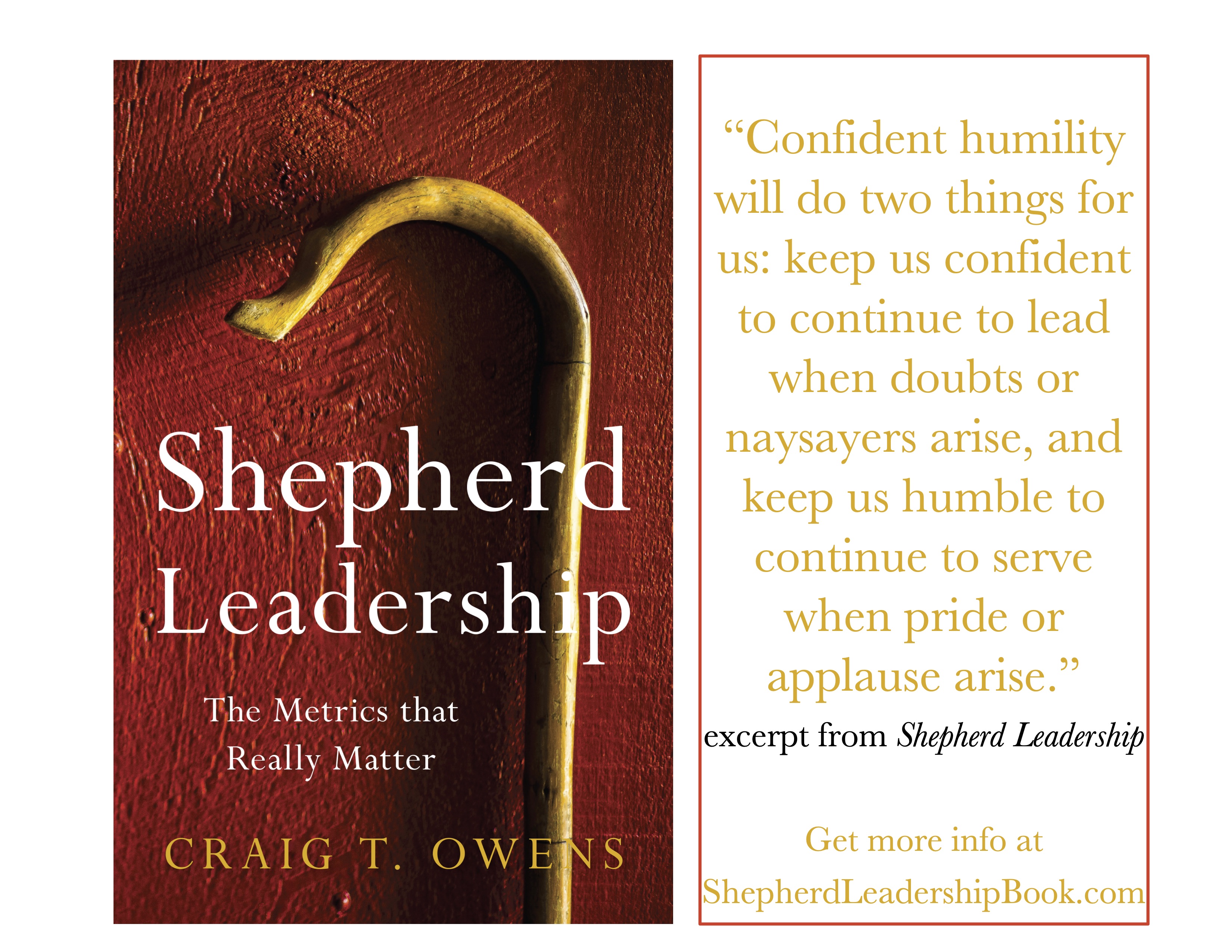
In my book Shepherd Leadership, I share a story from my leadership journey where I had to wrestle with the thought of whether I truly heard from God or not. Check out how I shared my story with some ministry interns…
Because of this incident, and many like it, I am a huge proponent of journaling. I have found it so comforting to be able to return to thoughts, answered prayers, Scriptures that have been revealed to me, and confirmations from friends. To read what God spoke to me on specific dates has helped to renew my confidence in His call for my life. I would highly recommend that you take up this discipline of journaling as well, especially during the times that you are contemplating a big decision.
I would also humbly recommend that you check out Shepherd Leadership, particularly two chapters where I talk about a leader’s confidence and a leader’s humility. When these are correctly balanced, we can make much better decisions during the questioning times. My book is available in print or ebook and as an audiobook.
[0:30] Change is a four-letter word for some people.
[2:05] What holds people back from embracing change?
[4:39] How does a leader’s pride play into successful change?
[5:50] People don’t buy-in to change overnight, which is why a change catalyst is needed.
[9:00] Improvement committee can work well to help an organization make changes.
[10:49] The unselfishness of leaders is key for making effective changes.
[12:22] Who should be on your improvement committee?
[14:34] The benefit of diversity on your teams.
[16:55] The right and wrong ways to roll out changes.
[19:59] Give and get lots of feedback during the change process.
[21:14] What is unacceptable for a leader in the arena of change?
[23:16] How can leaders overcome the fears that your teammates have about changes?
[27:13] We can help you with changes in your organization.
Check out this episode and subscribe on YouTube so you can watch all of the upcoming episodes. You can also listen to our podcast on Spotify and Apple.
Listen to the podcast of this post by clicking on the player below, and you can also subscribe on Apple, Spotify, or Audible.
The word “amazed” shows up numerous times throughout the Gospels, almost always associated with something Jesus said or did. He would heal someone, calm a storm, silence His detractors, or teach persuasively. And the people marveled!
But there are two instances where Jesus Himself is amazed, where the Bible says He marveled at what someone said.
The first is when a centurion asked Jesus for help, but said he didn’t need Jesus to be personally present. He told Jesus that just a word from Him would be more than enough to heal a sick servant. Jesus was amazed at this man’s faith, and as a result, the servant was healed (Matthew 8:10; Luke 7:9)!
The second time that Jesus was amazed was when He was visiting His hometown and the people with whom He grew up didn’t believe He was who He claimed to be. As a result, Jesus was amazed and the Bible says He was unable to do many miracles there (Mark 6:6). How sad!
It’s still true today. Either Jesus will be amazed at our faith or He will be amazed at our unbelief. When we have faith in Him—when we stand amazed and in awe and in expectation of His power—He is amazed and can perform miracles. But when we push Jesus away and say, “We can take care of this ourselves,” Jesus is also amazed. But this type of amazement results in Jesus being unable to unleash His miraculous power on our behalf.
Let’s learn this amazing lesson, and always stand amazed at who Jesus is and what Jesus can do. When we are amazed, and our faith grows stronger, Jesus will be amazed at our faith and will move on our behalf in amazing ways!
Listen to the podcast of this post by clicking on the player below, and you can also subscribe on Apple, Spotify, or Audible.
Last week I mentioned over-dramatic kids complaining, “I’m starving!” Or people with expensive phones complaining about a slow internet connection. We’re really good at expressing what we want, aren’t we? In fact, we’re really good at loudly letting everyone around us know that we want something.
But here’s a good question: Are we just as quick to loudly express our gratitude?
It’s innate human nature to behave this way. No one has to teach a child to express their desires—loudly! But we do have to teach our children to say, “Thank you.” And sometimes it takes even more prompting to get them to say it loud enough for others to hear, and sincere enough for others to believe that they are truly grateful.
So why would we expect it to be any different just because we happen to be older? That’s why we’ve noted that the attitude of gratitude is a great attitude, and it’s also an attitude that makes the grateful person stand out from the crowd.
G.K. Chesterton noted, “In life you can take things one of two ways: you can take them for granted or you can take them with gratitude.” Sadly, it seems that “for granted” is what is typically exhibited. In fact, I think the granted-to-grateful ratio is 10-to-1.
Luke alone tells a story in his Gospel about ten men with leprosy (Luke 17:11-19). All ten lepers had no problem calling out their need for healing “in a loud voice.” And they called out to the right Person, as they called Jesus “Master.” This word shows that they believed He could do something no one else could do. Indeed, Jesus shows His authority over leprosy with just the word, “Go” and “as they went, they were cleansed.”
All ten were quick to loudly express their desire for healing and to call on the authority of Jesus, but only “one of them…came back, praising God in a loud voice.” Both Luke and Jesus affirm that all ten men were cleansed on the outside—their skin no longer showed the ravages of leprosy, but only to the one grateful man did Jesus say, “Your faith has healed and saved you” (v. 19 MSG).
The Greek word here is sōzō. This is the same word used for the eternal salvation that Jesus alone can bring. Check out John 3:17, John 10:9, Acts 2:21, and Romans 10:9. This is better than just physical cleansing, it’s wholeness that lasts for eternity!
E.M. Bounds wrote, “Gratitude and murmuring never abide in the same heart at the same time.” Sadly, the ratio of grumblers-to-praisers is only going grow as we move closer and closer to the end of the age, culminating in people who have the outward appearance of godliness (like the nine cleansed lepers) but ignore the true power of God for salvation (see 2 Timothy 3:1-5).
In this take-everything-for-granted, focus-on-the-outward culture, those 1-in-10 stand out. Those who have gone beyond skin-deep cleaning to soul-deep salvation, and who loudly express their gratitude, are the ones the apostle Paul declares shine brightly and influence those around them (Philippians 2:14-16).
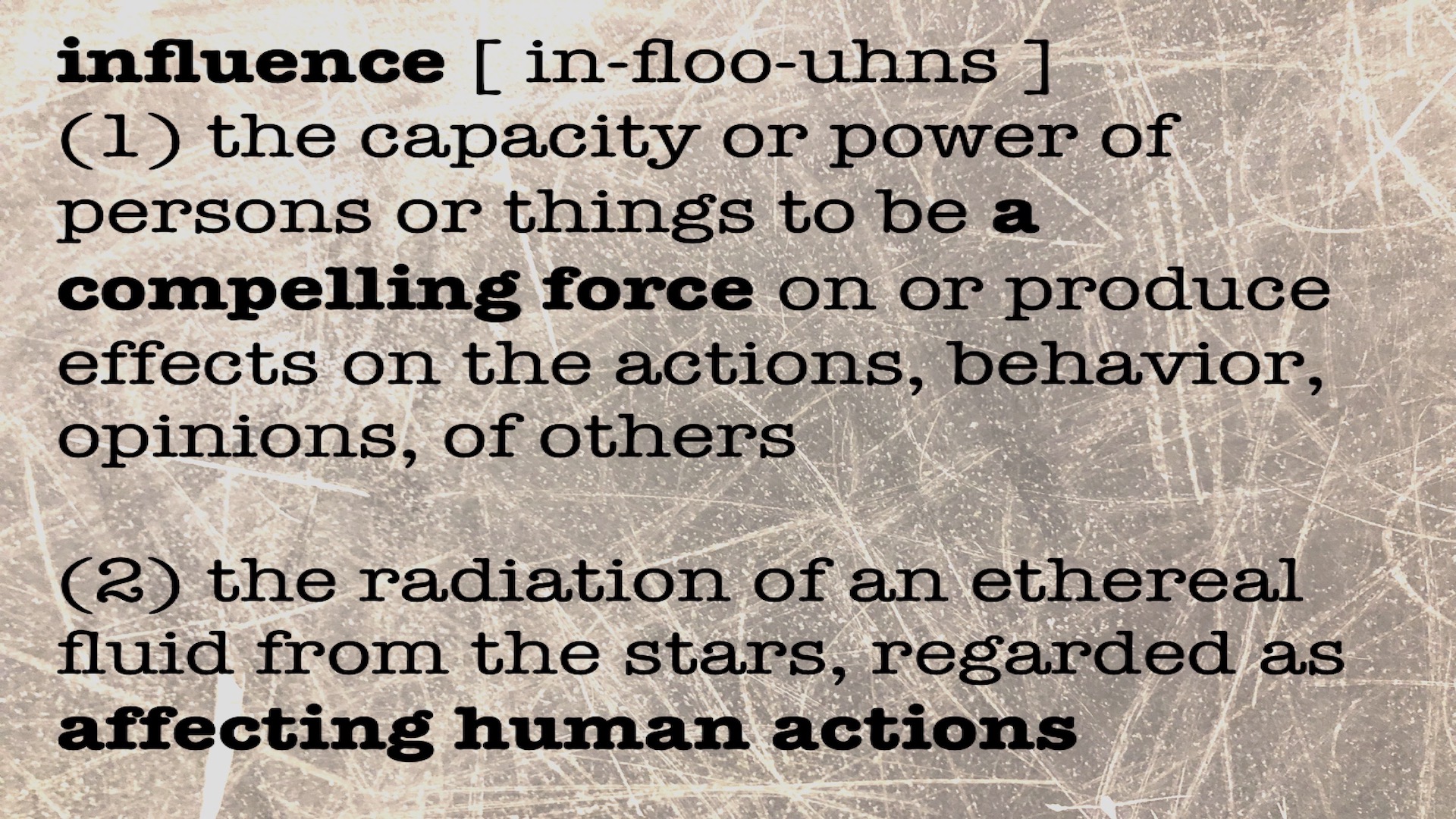
The origin of the word influence comes from a power people thought those bright stars had to affect the lives of humans. So your consistent gratitude is influencing those around you, and giving them a star to chart their course, more consistently than almost anything else you can do.
So shine on! Praise God loudly, quickly, and sincerely for what He has done for you! Be the 1-in-10! And then watch your influence impact everyone who encounters you.
Listen to the podcast of this post by clicking on the player below, and you can also subscribe on Apple, Spotify, or Audible.
Imagine if 700 years before you were born there was a prophecy given about you (Matthew 3:3). Or if on the day of your birth your father said, “And you, my child, will be called a prophet of the Most High; you will go on before the Lord to prepare the way for Him” (Luke 1:76).
This was John the Baptist.
With these kinds of announcements and the stamp of approval from God Himself, it’s really quite astounding how humble John remained:
“After me comes One Who is more powerful than I, Whose sandals I am not worthy to carry” (Matthew 3:11).
“[Jesus] must increase, but I must decrease” (John 3:30).
The confidence that he was God’s man for the hour gave John boldness to speak truth to religious leaders, wealthy people, and Roman soldiers (Matthew 3:7-12; Luke 3:7-20). Yet his humility was almost his undoing.
John preached boldly, fulfilling the prophecies that were made about him. But when Jesus came to him to be baptized, John’s humility caused him to defer initially. Then Jesus reminded him that His baptism was necessary “to fulfill all righteousness. Then John consented” (Matthew 3:13-15).
Whether I am lacking confidence to speak or lead boldly, or lacking humility to let someone else take the lead, I need to return to the Word of God—just as John did. Both his confidence and his humility were balanced by words spoken over him by God. So it must be for you and me too.
Confidence without humility or humility without confidence can trip me up and cause me to miss out on all that God needs me to do. So my daily prayer must be: Holy Spirit, may I be sensitive to every correction and adjustment You need to make in me. Illuminate the Scriptures that I need to apply to my life that will keep me in a healthy, balanced place.
I wrote about this tension between confidence and humility in my book Shepherd Leadership. This was also a topic of conversation in two interviews I did, which you can find here and here. Healthy leaders need the proper balance of confidence and humility to keep their leadership in a place that God can use powerfully.
Listen to the podcast of this post by clicking on the player below, and you can also subscribe on Apple, Spotify, or Audible.
We said last week that nobody likes to be around a complainer, although many complainers would say they’re not complaining but just sharing facts. In their mind, they have a legitimate right to let everyone know how they’ve been short-changed, gotten a bad deal, or experienced something that no one else has gone through.
Have you ever heard your kids say, “I’m starving”? And perhaps you think, “Do you really know what starving is?” Or what about people waving their very expensive phones around as they complain, “Isn’t there any WiFi here?!”
This isn’t a glass half-full or half-empty thing. This is really closing your eyes to the fact that many people don’t even have a glass, or if they do have a glass, they don’t have access to the water that they need.
I was delivering some Christmas toys to a family and I discovered they had lost everything they owned. When I came to their house their furniture was mismatched, their food and clothes were donated, and their kids only had a couple of simple toys to play with. And yet this family was happy to be together!
That sort of puts things in perspective, doesn’t it?
We have to choose grumbling or gratefulness, but as E.M. Bounds noted, “Gratitude and murmuring never abide in the same heart at the same time.” So if you are complaining about what you don’t have, you cannot be grateful for what you do have.
There is a fascinating story told in all four Gospels of a woman named Mary. She was an uninvited guest at a house where Jesus and His disciples had been invited to dinner. Jesus was not there because someone was grateful to have Him in his home, but because Simon the Pharisee and his cronies were trying to find a reason to accuse Jesus of wrongdoing.
Simon was so focused on his “gotcha” moment that he completely overlooked his host duties. He didn’t wash Jesus’ feet, nor greet Him with a kiss, nor anoint Him with perfume, as the custom of the day demanded. But Mary, standing behind Jesus at the dinner table, washed Jesus’ feet with her tears, kissed His feet, and anointed Him with an entire bottle of costly perfume! She did all of this out of gratitude for what she had received from Jesus.
First, I would like you to consider what Mary didn’t have:
a seat at the table—even though the dinner was in her hometown of Bethany, her brother Lazarus was invited to the meal, and her sister Martha was serving the meal
a good reputation—twice Simon the Pharisee said, “Does Jesus even know what kind of woman she is? Does He know she is a sinner?”
the acceptance or approval of others—even the disciples thought her gesture of anointing Jesus with so much perfume was a wasted extravagance
Next, let’s look at what Simon did have:
an elevated position as a Pharisee
considerable wealth—he had servants and a home large enough for a big dinner party
healing from leprosy—the Gospels refer to him as “Simon the leper” which tells us that he had been healed of his leprosy
Now, let’s consider what the disciples did have:
an enviable position as disciples of Jesus
a dinner invitation to Simon’s house
access to the financial resources that people gave to Christ’s ministry
and let us never overlook the fact that they had access to Jesus Himself like no one else had
Finally, let’s look at what Mary did have:
forgiveness—Luke says this about her, “A woman who HAD lived a sinful life”
Gratitude is truly a great attitude. Grateful people stand out because they don’t grumble about what they don’t have, but they are focused on what they do have.
Mary knew that she didn’t have the outward marks of success or favor or approval, but she did have the assurance that she had been forgiven. For that, she was more than willing to give everything she had to Jesus in thankful worship!
And as a result, look what Mary now has:
the kind words of Jesus—He assured her that she was forgiven (Luke 7:47)
Jesus as her defender—He told His disciples, “Leave her alone” (John 12:7)
an eternal testimony—Jesus said that wherever the Gospel was preached, people would tell Mary’s story (Matthew 26:13)
I think a good way to sum up the distinguishing way grateful people live is like this: They don’t grumble about what they don’t have, but they are extremely grateful for what they do have.
When you find grumbling slipping out of your mouth, remind yourself of just how much you have been given. Even if you think to yourself, “I don’t have much,” you can be assured that you have Jesus, and He is more than enough! And with that assurance, let your gratitude be lifted up in extravagant, fragrant praise to God.
















 Craig T. Owens